SBI Holdings Rejects $10B XRP Claim, Clarifies 9% Ripple Equity

TheNewsCryptoPublished on 2026-02-16Last updated on 2026-02-16

Abstract

SBI Holdings CEO Yoshitaka Kitao clarified that the company does not hold $10 billion in XRP tokens, refuting a recent claim. Instead, SBI owns more than 9% equity in Ripple Labs, estimated to be worth around $3.6 billion. Kitao emphasized that this stake provides strategic value and reduces exposure to XRP's price volatility, calling it a "hidden asset." He also confirmed SBI's recent acquisition of a majority stake in regulated crypto exchange Coinhako to strengthen its position in Asia, potentially supporting Ripple's ecosystem. Meanwhile, Ripple CEO Brad Garlinghouse expressed confidence in Ripple becoming a trillion-dollar company, despite XRP's recent price decline of over 6% in 24 hours, trading at $1.48.

Yoshitaka Kitao, CEO of SBI Holdings, put an end to the discussion and clarified that the company does not hold $10 billion in $XRP tokens, but it owns a massive equity stake in Ripple Labs itself.​

As the debate started on February 15 from the user named @strivex_, who mentioned, “SBI, a major partner of Ripple and holder of $10 billion in #XRP.” In response, the CEO of SBI Holdings explained that Ripple owns about 9% of Ripple Labs rather than directly holding $10 billion in XRP.

Since equity in Ripple Labs provides the company with strategic impact and value growth without having to risk price volatility from holding crypto XRP, as he mentioned, “So our hidden asset could be much bigger.”

​Then, in a follow-up tweet, Kitao mentioned, “when it comes to Ripple Labs’ total valuation, which obviously includes its ecosystem that Ripple has created, that would be enormous. SBI owns more than 9 % of that much,” when calculated, 9% stake in Ripple Labs would be worth around $3.6 billion.

​Also, Kitao confirmed that SBI Holdings had acquired a majority stake in Coinhako, a regulated cryptocurrency exchange, on February 13, which is part of its strategy to strengthen its position in the Asian crypto market, which may support Ripple’s ecosystem by providing a platform for XRP trading and adoption.

Ripple’s Long-Term Vision

Previously, on February 12, during the XRP Community Day on X, Brad Garlinghouse, CEO of Ripple labs said, There WILL be a Trillion Dollar Crypto company and I don’t have any doubt that Ripple has that opportunity. But the target goes beyond corporate growth. He stated, “Ripple’s reason for existence is driving success around XRP and the XRP ecosystem.”​

As Ripple continues to focus on XRP, where the present market conditions are showing a persistent downtrend, as of writing, XRP is down over 6% in the last 24 hours and is trading at $1.48, with a monthly down of about 28%, amid wider crypto market weakness.

​Highlighted Crypto News Today:

Russia Flags $129B in Annual Crypto Activity

TagsSBI Holdingsxrp

Related Questions

QWhat did SBI Holdings CEO clarify regarding the company's holdings in XRP and Ripple Labs?

AYoshitaka Kitao clarified that SBI Holdings does not hold $10 billion in XRP tokens but owns a 9% equity stake in Ripple Labs.

QHow much is SBI Holdings' 9% stake in Ripple Labs estimated to be worth?

AThe 9% stake in Ripple Labs is estimated to be worth around $3.6 billion.

QWhat strategic advantage does SBI Holdings gain by holding equity in Ripple Labs instead of XRP?

AEquity in Ripple Labs provides strategic impact and value growth without exposure to the price volatility of holding cryptocurrency like XRP.

QWhat recent acquisition did SBI Holdings make to strengthen its position in the Asian crypto market?

ASBI Holdings acquired a majority stake in Coinhako, a regulated cryptocurrency exchange, on February 13.

QWhat did Ripple Labs CEO Brad Garlinghouse state about Ripple's future during the XRP Community Day?

ABrad Garlinghouse stated that he believes there will be a trillion-dollar crypto company and that Ripple has the opportunity to achieve this, emphasizing Ripple's reason for existence is driving success around XRP and its ecosystem.

Related Reads

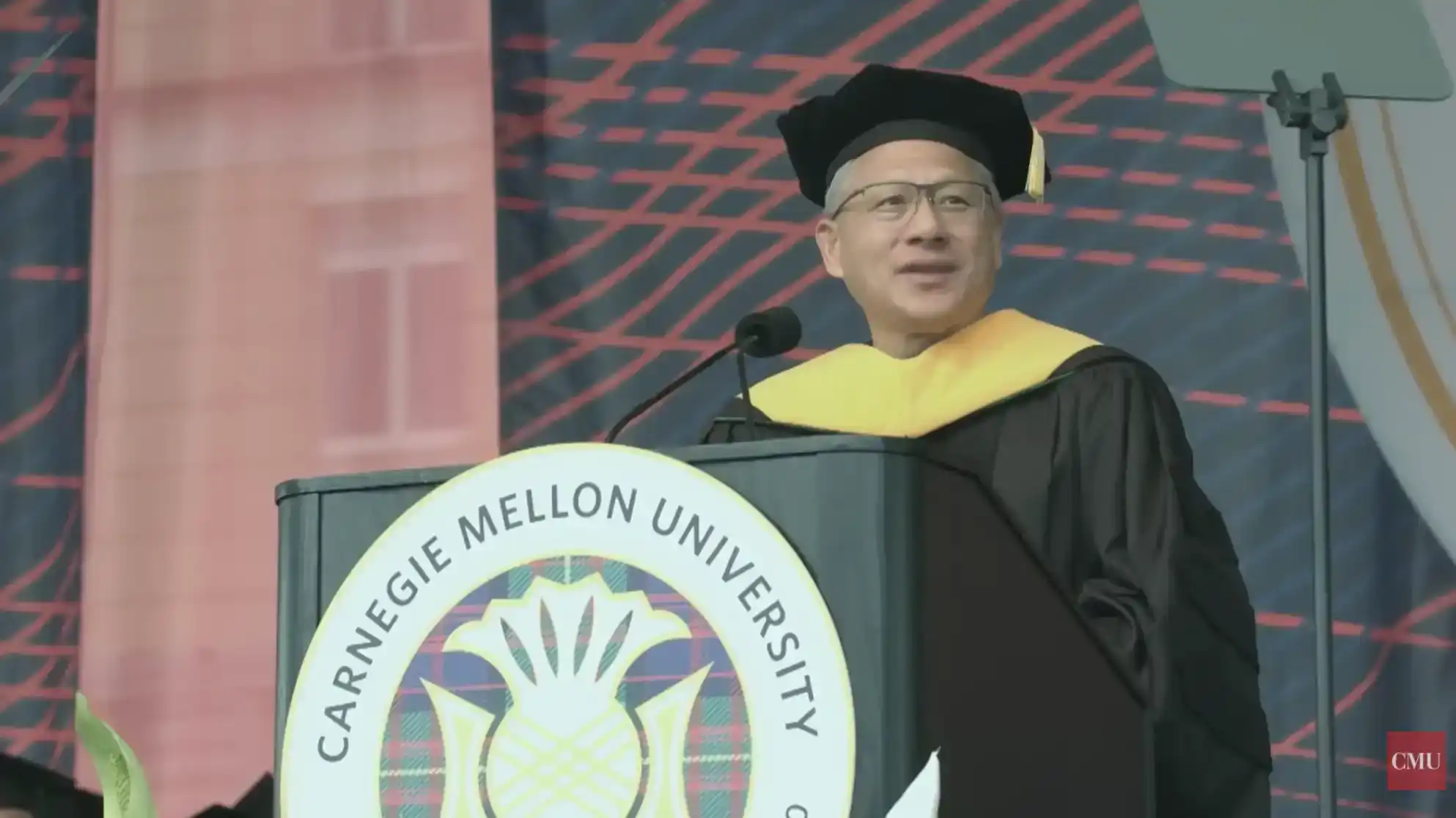
Jensen Huang's CMU Speech: In the AI Era, Don't Just Watch, Build

Jensen Huang, CEO of NVIDIA and a first-generation immigrant, delivered the commencement address to Carnegie Mellon University's class of 2026. He shared his personal journey from a humble background to founding NVIDIA, emphasizing resilience, learning from failure, and the responsibility that comes with leadership. Huang framed the present moment as the dawn of the AI revolution, a shift he believes is more profound than previous computing waves. He described AI as fundamentally resetting computing—moving from human-written software to machines that understand, reason, and use tools. This will create a new industry for generating intelligence and transform every sector. While acknowledging AI's potential to automate tasks and displace some jobs, Huang distinguished between the *tasks* of a job and its core *purpose*. He argued AI will augment human capability, not replace humans. The real risk, he stated, is not AI itself, but people being left behind by those who effectively use AI. He presented AI as a generational opportunity for massive infrastructure investment—in chip factories, data centers, energy grids, and advanced manufacturing—that could re-industrialize nations like the U.S. and bridge the digital divide by making computing and intelligent tools accessible to all. Huang called for a balanced approach: advancing AI safely and responsibly, establishing prudent policies, ensuring broad access, and encouraging universal participation. He urged the graduates not to fear the future but to engage with optimism and ambition, reminding them of CMU's motto, "My heart is in the work." His core message was clear: this is their moment to actively build and shape the AI-powered future, not merely observe it.

marsbit57m ago

Jensen Huang's CMU Speech: In the AI Era, Don't Just Watch, Build

marsbit57m ago

The Era Has Arrived Where Human Writers Must Prove They Are Not Machines

The article describes an era where AI-generated content is flooding the market, forcing human authors to prove they are not machines. It begins with the example of dozens of AI-written, error-ridden biographies of Henry Kissinger appearing on Amazon within hours of his death, a pattern repeated for other deceased celebrities and even living experts who find fraudulent books under their names. This spam content has exploded, with monthly new book releases on platforms like Amazon reaching 300,000 by late 2025. The issue spans genres, from suspiciously high proportions of AI-written teen romance and self-help books to dangerous, AI-generated foraging guides containing lethal advice. The platforms' automated review systems, designed to catch plagiarism and banned words, are ill-equipped to detect AI-generated text that avoids these pitfalls while being nonsensical or fraudulent. The problem has infiltrated traditional publishing. A major publisher, Hachette, had to recall a bestselling horror novel after AI detection tools suggested 78% of its content was machine-generated. An acclaimed European philosophy book was later revealed to be entirely written by AI under a fake author persona. In response, authors are fighting back. At the 2026 London Book Fair, 10,000 writers published a blank book titled "Don't Steal This Book" containing only their signatures—using emptiness as a protest weapon in an age of AI overproduction. Initiatives like the "Human Author Certification" program have emerged, ironically placing the burden on humans to prove their work is not machine-made. The article warns of a vicious cycle: AI-generated low-quality books pollute the data used to train future AI models, leading to "model collapse" and an ever-worsening flood of digital waste, eroding trust in publishing and devaluing human creativity.

marsbit1h ago

The Era Has Arrived Where Human Writers Must Prove They Are Not Machines

marsbit1h ago

Trading

Spot
Futures

Hot Articles

What is XRP 2.0

XRP 2.0: A New Frontier in the Cryptocurrency Landscape Introduction to XRP 2.0 In the ever-evolving realm of cryptocurrency, new projects continuously emerge, vying for attention and adoption. One such promising initiative is XRP 2.0, a novel cryptocurrency project designed to leverage advanced blockchain technology and robust encryption methodologies. While the name draws parallels with Ripple’s XRP, it’s crucial to note that XRP 2.0 operates independently, focusing on enhancing transaction security, privacy, and scalability. As the digital financial landscape increasingly embraces decentralized solutions, XRP 2.0 aims to contribute meaningfully to web3 and the overall expansion of crypto projects. What is XRP 2.0? At its core, XRP 2.0 is a cryptocurrency project that aims to create a secure and decentralized digital currency ecosystem. Its foundational technology integrates sophisticated blockchain principles with cutting-edge encryption techniques. The overarching goal of XRP 2.0 is to establish itself as a reliable and efficient platform enabling swift transaction execution while prioritizing enhanced privacy protections for its users. The project is promoted as a solution to many limitations faced by existing cryptocurrencies, proposing a system that can handle a higher volume of transactions with improved speed and privacy. This versatility positions XRP 2.0 as a significant contender in a marketplace riddled with various digital currencies. Who is the Creator of XRP 2.0? The identity of the creator behind XRP 2.0 has been flagged as ‘Wilbur.’ However, comprehensive details regarding Wilbur or their associated entity remain elusive. The anonymity of many cryptocurrency creators is not an uncommon phenomenon in the industry, often designed to maintain a degree of privacy and security. Who are the Investors of XRP 2.0? As of now, specific information related to the investment foundations or organizations supporting XRP 2.0 is not publicly available. In the cryptocurrency sector, the backing by reputed investors can significantly influence a project's credibility and success, yet the transparency regarding the financial supporters of XRP 2.0 has not been established. How Does XRP 2.0 Work? XRP 2.0 stands out by employing a combination of blockchain technology and advanced encryption algorithms that ensures secure and decentralized transactions. Its innovative structure includes unique features designed to foster user engagement and broaden functionalities beyond conventional cryptocurrency transactions. Among these features, XRP 2.0 incorporates AI-powered capabilities, such as text-to-image and text-to-speech functionalities. These additions are designed to enhance the interactive experience for users, promoting broader applicability across various sectors. By bridging technological advancements with user-centered design, XRP 2.0 aims to capture the attention of a diverse range of individuals and enterprises looking to integrate cryptocurrency solutions into their operational frameworks. Timeline of XRP 2.0 Understanding XRP 2.0 requires examining the milestones that have defined its journey thus far: July 23, 2023: XRP 2.0 is introduced as a novel cryptocurrency project, aiming to revolutionize secure and decentralized transaction capabilities in the blockchain domain. September 8, 2023: The launching of another project, XRP20, occurs, marking the emergence of an ERC-20 token on the Ethereum blockchain that remains unrelated to XRP 2.0. November 13, 2023: The XRP Ledger undergoes a significant update with the release of rippled server software version 2.0.0. It is essential to note that this development is disconnected from the XRP 2.0 cryptocurrency project. Key Points About XRP 2.0 To distill the essence of XRP 2.0, several critical factors emerge: Unique Features: The inclusion of features like AI-powered text-to-image and text-to-speech further diversifies the potential applications of XRP 2.0. Blockchain Technology: The framework utilizes advanced blockchain mechanisms and encryption protocols, ensuring a secure and decentralized environment for transactions. Scalability and Privacy: XRP 2.0 prioritizes enhanced privacy protections in transaction processes and the scalability necessary to accommodate a growing user base. No Affiliation with Ripple: Importantly, despite its name, XRP 2.0 does not have any allegiance or collaboration with Ripple’s XRP, distinguishing its operational framework and objectives within the cryptocurrency ecosystem. Conclusion XRP 2.0 represents an ambitious venture into the cryptocurrency sphere, aiming to offer a combination of security, privacy, and efficiency in digital transactions. By integrating sophisticated technologies and user-friendly features, the project sets out to broaden the horizons of what cryptocurrency can achieve in today's digital economy. While the anonymity of its creator and lack of disclosed investors might raise questions for some, XRP 2.0's focus on advanced functionalities and decentralisation enhances its appeal amidst an increasingly crowded crypto market. As the cryptocurrency landscape continues to evolve, XRP 2.0 may yet emerge as a pivotal player in the expansion of secure and scalable blockchain solutions.

941 Total ViewsPublished 2024.04.01Updated 2024.12.03

What is XRP 2.0

Discussions

Welcome to the HTX Community. Here, you can stay informed about the latest platform developments and gain access to professional market insights. Users' opinions on the price of XRP (XRP) are presented below.

活动图片