Pump.fun Launches Direct Investment, Spending $3 Million to Buy 12 New Meme Tokens

Odaily星球日报Published on 2026-01-20Last updated on 2026-01-20

Abstract

Pump.fun, a leading meme token launch platform, has announced the creation of an investment division called Pump Fund. The fund will launch its first initiative, the "Build in Public (BiP)" hackathon, with an allocation of $3 million to invest in 12 new tokens launched on its platform. Each selected project will receive $250,000 at a valuation of $10 million. Beyond financial backing, Pump.fun will provide mentorship from its founders and other resources. This marks the platform's first direct financial investment into specific meme tokens, signaling strong support for the selected projects. The BiP hackathon requires participants to launch a token on Pump.fun, publicly build a product, retain at least 10% of the token supply, and actively engage with the community on social media and through live streams. Project selection will prioritize organic user growth and long-term sustainability over marketing hype. Applications opened on January 19th and will run for 30 days, with the first winners announced on February 18th. The program is designed to be ongoing. This initiative aims to identify and fund promising new meme tokens with real utility and community traction.

Original | Odaily Planet Daily (@OdailyChina)

Author | Azuma (@azuma_eth)

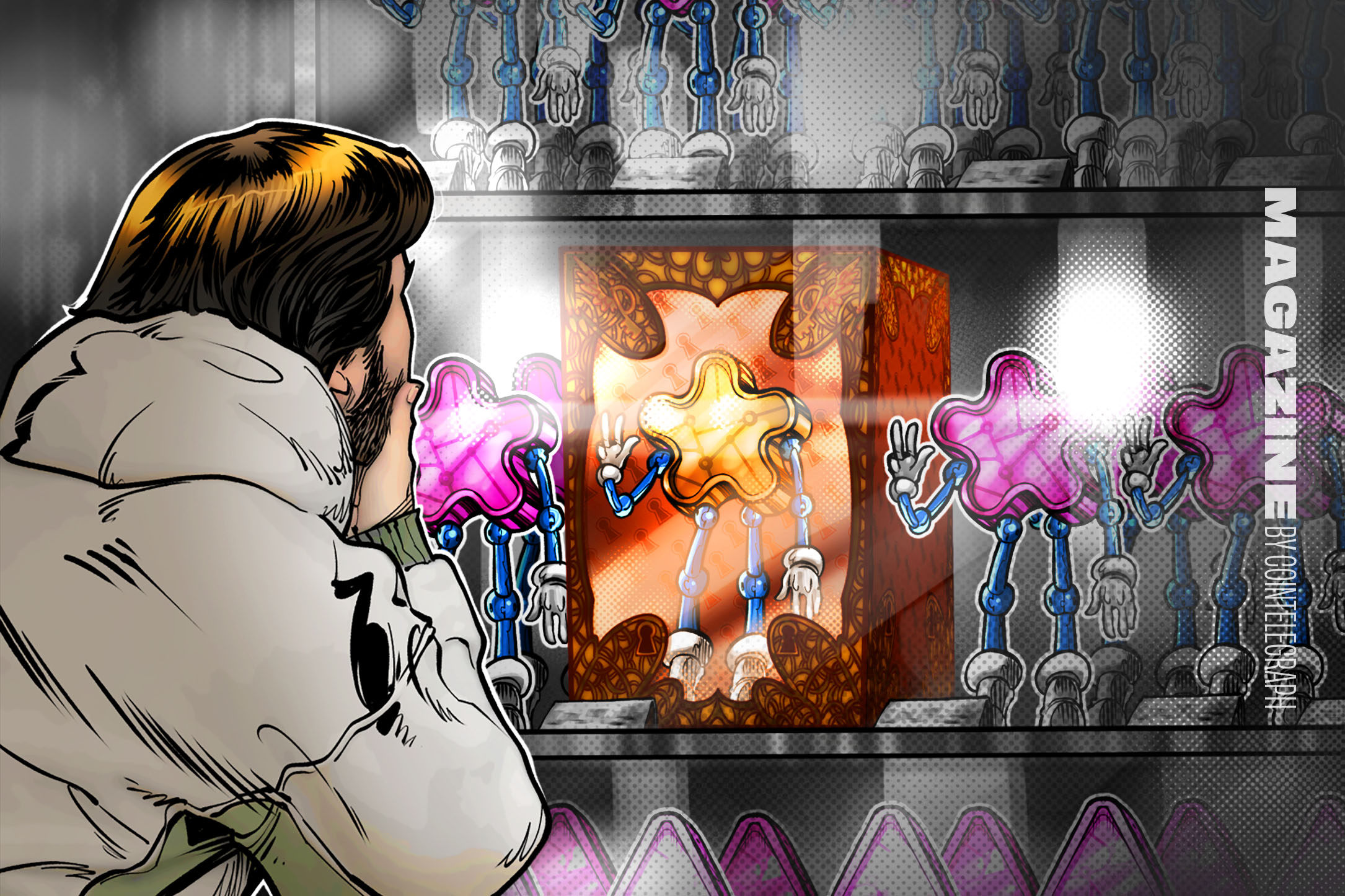
On the morning of January 20th, Pump.fun officially announced the launch of its investment division, Pump Fund. Pump Fund will initiate its first project, the Build in Public (BiP) Hackathon, this month, investing $3 million in 12 new tokens issued through the platform, with $250,000 allocated to each token, corresponding to a valuation of $10 million. In addition to financial support, Pump.fun will also provide professional guidance from its founders and other substantial resources.

As the project with the strongest revenue-generating capability in the entire Meme sector, this is the first time Pump.fun has openly used official channels to directly invest real money to express support for specific Meme tokens (the attitude may be more important than the funding scale). Therefore, the selected tokens are highly likely to become the seed players in the Meme sector in the coming period.

Pump.fun's Revenue-Generating Capability

Pump.fun's staggering revenue capability is no secret. Data compiled by analyst Adam (@Adam_Tehc) on Dune shows that Pump.fun's historical total revenue has reached $954.8 million. Although daily revenue has significantly declined as the Meme hype cooled, single-day revenue still amounts to hundreds of thousands of dollars.
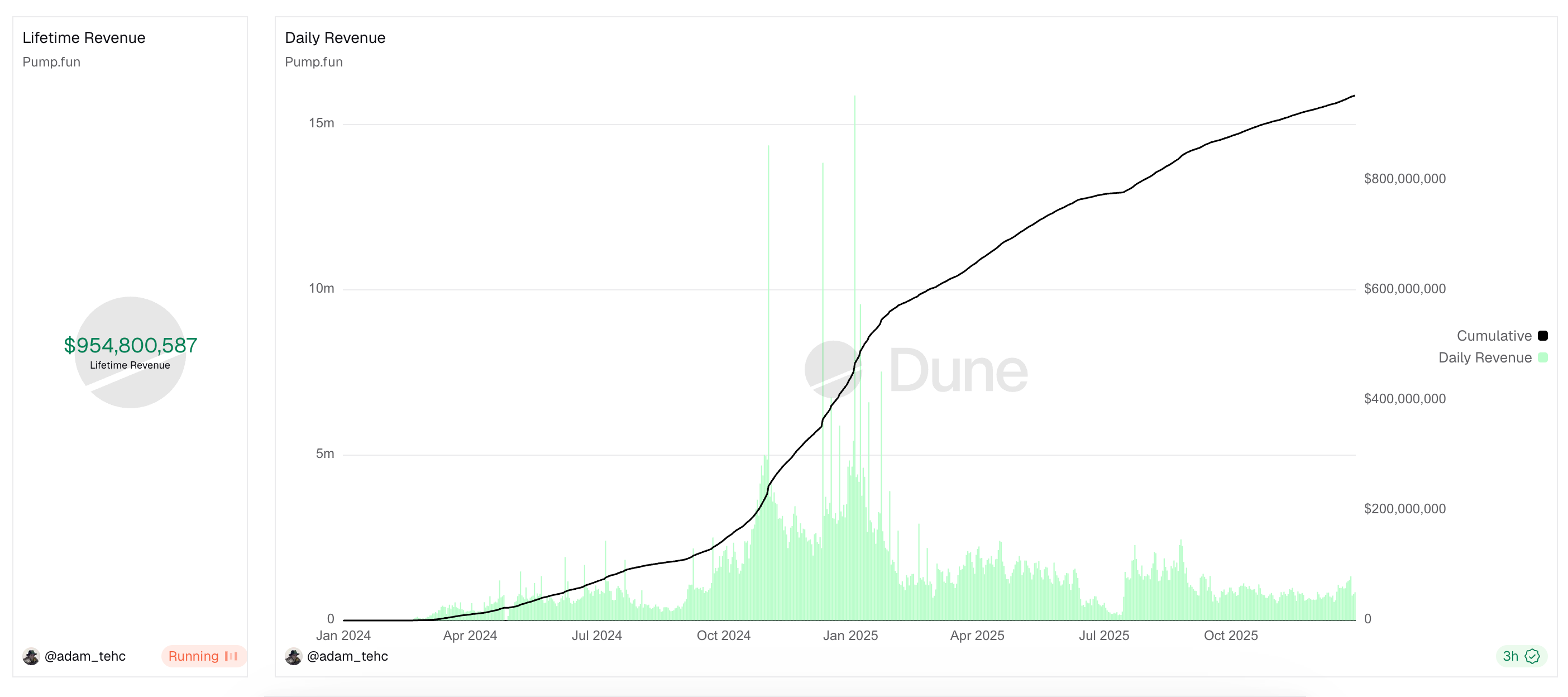
Holding massive real funds, Pump.fun is exploring other ecological feedback paths beyond PUMP token buybacks. Pump Fund and its affiliated BiP Hackathon are Pump.fun's latest attempts.

BiP Hackathon Details

According to the description on the BiP Hackathon's dedicated page, the project aims to support founders who issue tokens on Pump.fun and publicly build products. Unlike the traditional hackathon model where participants rely on VCs or judges for evaluation to compete for prizes, the BiP Hackathon intends to introduce token performance as a variable, allowing the market to determine whether a project is worth advancing, while enabling users to become the earliest investors in the project.

When discussing this key difference, Pump.fun founder Alon stated on X: "Before Pump.fun, my co-founder and I tried many different ideas. Consumer finance, DeFi, SocialFi, NFTs—but all failed. One of the biggest problems we encountered was that we found it very difficult to get our products in front of users. Trying to reach the right user base was extremely tedious work..."

Specifically, the BiP Hackathon requires:

  • Participants must issue a token on Pump.fun and then publicly build a product;
  • Participants must also hold at least 10% of the token supply to align interests;
  • Finally, the event strongly encourages founders to speak publicly on social media like X or livestream on Pump.fun to maintain effective communication with the community.

Regarding the types of participating projects, Pump.fun has not imposed any restrictions; they are not even limited to cryptocurrency-related products. Projects from different market stages and various verticals can participate.

As for how the 12 winning projects will ultimately be selected, Pump.fun did not provide specific rules but pointed out two main principles: first, organic user growth and genuine appeal are preferred over connections and flashy promotions; second, in addition to the appeal of the product itself/social media, the long-term sustainability of the project will also be assessed.

Key Timelines to Note

According to the BiP Hackathon's schedule, the application process opened on January 19th. Participants need to launch their tokens at the time of application and begin public building (including livestreaming development progress, regularly sharing updates, and maintaining community interaction). The application window will be open for 30 days. On February 18th, Pump.fun will announce the first batch of winning projects and provide funding (at least one will be announced). Considering that some projects may need more time to gain market attention and demonstrate appeal, the program will continue to run long-term.

So the timeline is quite clear. If you want to spot potential opportunities among this batch of Meme tokens, you need to start paying attention to newly issued tokens on Pump.fun from now on, especially those with Pump Fund or BiP tags. Although the first batch of winning tokens won't be announced until 30 days later, tokens likely to be selected by Pump.fun will inevitably show competitiveness before then.

Overall, while this Pump.fun event may not drive a collective sentiment recovery in the Meme market, it can at least contribute some new tokens with clearer evaluation dimensions.


Trending Cryptos

Related Questions

QWhat is the purpose of the newly announced Pump Fund by Pump.fun?

APump Fund will invest $3 million in 12 new meme tokens launched on the platform, with $250,000 per token at a valuation of $10 million, and provide professional guidance and resources.

QHow much total revenue has Pump.fun generated historically according to the article?

APump.fun has generated a historical total revenue of $954.8 million.

QWhat are the key requirements for projects to participate in the Build in Public (BiP) hackathon?

AParticipants must launch a token on Pump.fun, publicly build a product, hold at least 10% of the token supply to align interests, and strongly encouraged to communicate publicly on social media or via live streams.

QWhen will the first batch of winning projects for the BiP hackathon be announced?

AThe first batch of winning projects will be announced on February 18th, at least one month after the application opened on January 19th.

QWhat principles will Pump.fun use to select the 12 winning projects in the BiP hackathon?

ASelection will prioritize organic user growth and genuine traction over connections and hype, and evaluate long-term sustainability alongside product and social media appeal.

Related Reads

Dan Koe: The Counterintuitive Truth—You Don't Need to Remember Everything You Read

Dan Koe: The Counterintuitive Truth — You Don't Need to Remember Everything You Read The central idea is that deliberately trying to remember information is often misguided. True learning isn't about memorizing facts but about having important knowledge surface naturally when needed through use. Most forgetting is normal, not a failure. The article reframes learning using a control theory framework—a four-step feedback loop: having a clear Goal, accurately Sensing your current state, Comparing the gap, and Acting to close it. Most learning stalls because people only do step 2 (blind input) without a goal to create the necessary "error signal" for focused action. The most effective method is to start with output, not input. Begin a meaningful personal project first, and learn only what's necessary to complete it. This project-driven, "just-in-time" learning ensures knowledge is contextual and retained. The concept of a "Second Brain" often fails because it becomes a digital graveyard—over-collected and under-utilized. The goal should be building a "Second Subconscious"—a dynamic system that proactively surfaces relevant ideas during creation, not a static storage vault. Tools like Obsidian+Claude or Eden can help by automating organization and enabling semantic search, but their value depends on linking knowledge to active projects. Ultimately, what matters is not what you store, but what you filter and internalize. Focus on ideas that shape your worldview, use projects as filters, and transform collected material through writing and sharing. AI should be used to reduce friction in research and editing, not to formulate your core views. In conclusion, remembering is a byproduct, not the goal. Knowledge that sticks comes from pursuing personal goals, applying it in real projects, and digesting it through creation. The tools are merely aids; the crucial step is to start doing meaningful work and let the necessary knowledge find you.

marsbit54m ago

Dan Koe: The Counterintuitive Truth—You Don't Need to Remember Everything You Read

marsbit54m ago

A New Era: The Fundamental Transformation of China's Entrepreneurs

A profound generational shift is underway among Chinese entrepreneurs. The wealth and influence once dominated by real estate and internet giants is now being claimed by a new wave of founders driving breakthroughs in AI, semiconductors, and robotics. This change is vividly reflected in 2026's wealth rankings. Figures like Zhang Yiming (ByteDance), Liang Wenfeng (DeepSeek), Chen Tianshi (Cambricon), and Wang Xingxing (Unitree Robotics) are ascending. Their wealth stems not from traditional business models but from market expectations for future technological competitiveness, with AI, chips, and smart hardware becoming the primary engines of wealth creation. Their common trait is a foundational focus on technology, often starting from the laboratory rather than a business plan. Examples include Chen Tianshi's decade-long push in AI chips, Liang Wenfeng's core algorithmic innovations at DeepSeek with a compact team, and Zhu Yiming's "no salary until profitable" 9-year journey to build Changxin Memory into a global DRAM player. This transition marks a fundamental shift in China's economic imperative: from commercial expansion and learning to indigenous innovation and deep industrial capability. While the previous generation built the foundational market and infrastructure, this new cohort is tasked with achieving global leadership in core technologies, moving China from "keeping pace" to pioneering original, breakthrough innovations that are industrialized at scale. The baton is being passed to those competing on the world stage through technological originality.

marsbit54m ago

A New Era: The Fundamental Transformation of China's Entrepreneurs

marsbit54m ago

Once-Popular Web3 Enters Wave of Layoffs

The once-hot Web3 industry is experiencing a severe wave of layoffs. While many companies attribute job cuts to AI-driven restructuring, the primary reason is often financial pressure. The Web3 sector, at the intersection of tech and finance, has been hit particularly hard. Employees at major cryptocurrency exchanges report sudden, impersonal layoffs—often with system access revoked overnight—and minimal or no severance. Common tactics include setting impossible performance targets or terminating employees for minor policy violations. The working atmosphere has become toxic, marked by intense monitoring, excessive meetings, and management obsessed with control and internal politics rather than product innovation. The industry's core business model is collapsing. Exchange revenue from trading fees and listing charges has plummeted due to a decline in quality projects and retail investor exodus. Events like the massive forced liquidation on October 10th further shattered confidence. Competition from on-chain derivatives platforms and prediction markets is intensifying the downturn. As layoffs continue, displaced workers struggle to find new opportunities. Many transition to the AI sector, but face significant bias from traditional finance and even some AI firms, which view crypto industry experience with suspicion. The current downturn appears more structural than cyclical, driven by unsustainable practices, internal strife, and a failure to innovate, raising questions about the industry's future trajectory.

marsbit1h ago

Once-Popular Web3 Enters Wave of Layoffs

marsbit1h ago

Trading

Spot

Hot Articles

Discussions

Welcome to the HTX Community. Here, you can stay informed about the latest platform developments and gain access to professional market insights. Users' opinions on the price of MEME (MEME) are presented below.

活动图片