Microsoft Open-Sources Cutting-Edge Voice AI Family VibeVoice: Processes 90-Minute Multi-Speaker Conversations in One Go, Rapidly Gains 27K Stars on GitHub

marsbitPublished on 2026-03-30Last updated on 2026-03-30

Abstract

Microsoft has open-sourced VibeVoice, a cutting-edge family of speech AI models for Automatic Speech Recognition (ASR) and Text-to-Speech (TTS). The project, gaining 27K stars on GitHub, offers powerful long-audio processing, multi-speaker dialogue generation, and real-time capabilities under an MIT license for local deployment. Key models include: - **VibeVoice-ASR-7B**: Processes up to 60 minutes of audio, outputs structured transcriptions with speaker identification, timestamps, and supports over 50 languages. - **VibeVoice-TTS-1.5B**: Generates expressive, 90-minute multi-speaker (up to 4 voices) conversations with natural flow and emotional nuance. - **VibeVoice-Realtime-0.5B**: Enables real-time TTS with ~300ms latency for interactive applications like voice assistants. The framework addresses limitations in long-sequence processing, speaker consistency, and naturalness. It includes safety features like audio watermarking and has sparked community-developed tools (e.g., a voice input method). Available on GitHub and Hugging Face, VibeVoice aims to advance innovation in content creation, accessibility, and voice interaction.

Microsoft recently open-sourced a cutting-edge voice AI model family named VibeVoice, which encompasses capabilities such as automatic speech recognition (ASR) and text-to-speech (TTS). The project has quickly garnered attention in the developer community due to its powerful long-audio processing, multi-speaker natural conversation generation, and real-time low-latency features. It has already gained approximately 27K Stars on GitHub.

As an open-source research framework, VibeVoice uses the MIT license, supports local deployment, requires no cloud subscription fees, and aims to promote collaboration and innovation in the field of speech synthesis. The model family mainly includes three core members, each with its own focus, collectively addressing the pain points of traditional voice AI in long-sequence processing, speaker consistency, and natural fluency.
VibeVoice-ASR-7B: A Structured Speech-to-Text Tool for Up to 60 Minutes

VibeVoice-ASR-7B is a unified speech-to-text model capable of processing audio files up to 60 minutes long in one go, directly outputting structured transcription results. The output includes not only "who is speaking" (speaker identification) and "when they speak" (precise timestamps), but also "what was said" (detailed content), and supports custom hotwords to effectively improve the recognition accuracy of proper nouns or technical terms. The model supports over 50 languages and is suitable for complex scenarios like long meeting recordings and podcast transcriptions.

Community developers have already built practical tools based on this model, such as a voice input method named Vibing, which supports macOS and Windows platforms. User feedback indicates that its recognition speed and accuracy perform well, significantly improving daily voice input efficiency.

VibeVoice-TTS-1.5B: Expressive Speech Generation for 90-Minute Multi-Speaker Content

VibeVoice-TTS-1.5B is a core model focused on text-to-speech, capable of producing continuous audio up to 90 minutes long in a single generation, supporting natural dialogue simulation with up to 4 different speakers. The generated speech is expressive, sounds natural and fluent, and can simulate realistic pauses, emphasis, and emotional transitions, making it very suitable for producing podcasts, long-form audio narratives, audiobooks, or multi-character dialogue content.

Compared to many traditional TTS models that only support 1-2 speakers, VibeVoice-TTS has achieved significant breakthroughs in long-form, multi-speaker consistency. Its underlying architecture uses continuous speech tokenizers (acoustic and semantic tokenizers) combined with a low frame rate design (7.5Hz), greatly improving computational efficiency for long-sequence handling.

VibeVoice-Realtime-0.5B: Real-Time TTS with ~300ms Latency

VibeVoice-Realtime-0.5B focuses on real-time scenarios, supporting streaming text input with an initial audio output latency of approximately 300 milliseconds, while also being able to generate long-form speech of about 10 minutes. This model is particularly suitable for interactive applications requiring immediate responses, such as real-time voice assistants or live broadcast dubbing scenarios.

Additionally, the project introduces experimental speaker support, including multilingual voices and various English style variants, providing developers with more customization options.

AIbase Review: Microsoft's open-sourcing of VibeVoice not only lowers the barrier to using high-performance voice AI but also provides a complete solution for local deployment. The project was briefly taken down due to potential misuse risks but was later re-released with safety mechanisms such as embedded watermarks and audible disclaimers, reflecting the principles of responsible AI development. Currently, developers can obtain model weights on the GitHub repository and Hugging Face, and quickly try them out on platforms like Colab.

With continued contributions from the open-source community (such as optimized forks for Apple Silicon), VibeVoice is expected to accelerate adoption in fields like content creation, accessibility tools, and voice interaction. Interested developers can visit the official Microsoft project page to explore further.

Project address: https://github.com/microsoft/VibeVoice

Trending Cryptos

Related Questions

QWhat is the name of the open-source voice AI model family recently released by Microsoft, and how many stars has it received on GitHub?

AThe open-source voice AI model family is called VibeVoice, and it has received approximately 27,000 stars on GitHub.

QWhat are the three core models in the VibeVoice family and their primary capabilities?

AThe three core models are: 1) VibeVoice-ASR-7B, which handles automatic speech recognition for up to 60 minutes of audio; 2) VibeVoice-TTS-1.5B, which generates expressive speech for up to 90 minutes with multiple speakers; and 3) VibeVoice-Realtime-0.5B, which provides real-time text-to-speech with about 300ms latency.

QWhat is a key feature of the VibeVoice-ASR-7B model regarding its output?

AA key feature is its ability to output structured transcriptions that include speaker identification (who is speaking), precise timestamps (when they speak), and the detailed content (what was said).

QHow does the VibeVoice-TTS-1.5B model achieve efficient long-sequence processing?

AIt uses continuous speech tokenizers (acoustic and semantic tokenizers) combined with a low frame rate design (7.5Hz), which significantly improves computational efficiency for long-sequence processing.

QWhat safety measures were implemented in the VibeVoice project to address potential misuse risks?

AThe project implemented embedded audio watermarks and audible disclaimer mechanisms as safety measures to address potential misuse risks.

Related Reads

Bernstein Analysis: Can the $142 Billion Long-Term Order Hold Up the Memory Cycle?

Bernstein revisits long-term agreements (LTAs) in the memory industry, highlighting new contracts with purchase commitments, minimum prices, and financial guarantees signed by Micron and SanDisk. These aim to provide an earnings floor for the coming years. Micron has 16 strategic customer agreements, with 14 representing approximately $100 billion in minimum revenue and about $22 billion in cash deposits/commitments. SanDisk has contracts for around $42 billion in minimum revenue and over $11 billion in guarantees. Combined, these ~$33 billion in guarantees make it more costly for major clients to walk away. However, Bernstein models that the potential revenue needing protection over 3-5 years is around $5.2 trillion. The existing guarantees thus cover only about 0.6% of that scale. While LTAs provide a cushion, they cannot fully shield profits in a severe downturn, as clients may still find it cheaper to breach contracts if spot prices fall deeply below floor prices. LTAs are most suitable for large, credit-worthy customers like U.S. cloud service providers with stable, high-volume AI infrastructure needs. Consumer segments (phones, PCs) and some Chinese clients are less likely to adopt them, leaving an estimated 30-50% of the DRAM/NAND market exposed to spot price volatility. AI demand (e.g., HBM for training, storage for inference) supports higher valuations and makes LTAs more attractive for locking in high-demand customers. Yet, Bernstein stresses that LTAs soften, but do not eliminate, the memory cycle. Their true test will come in the next downturn, revealing whether clients honor contracts and whether guarantees provide sufficient pain to maintain supplier discipline.

marsbit4m ago

Bernstein Analysis: Can the $142 Billion Long-Term Order Hold Up the Memory Cycle?

marsbit4m ago

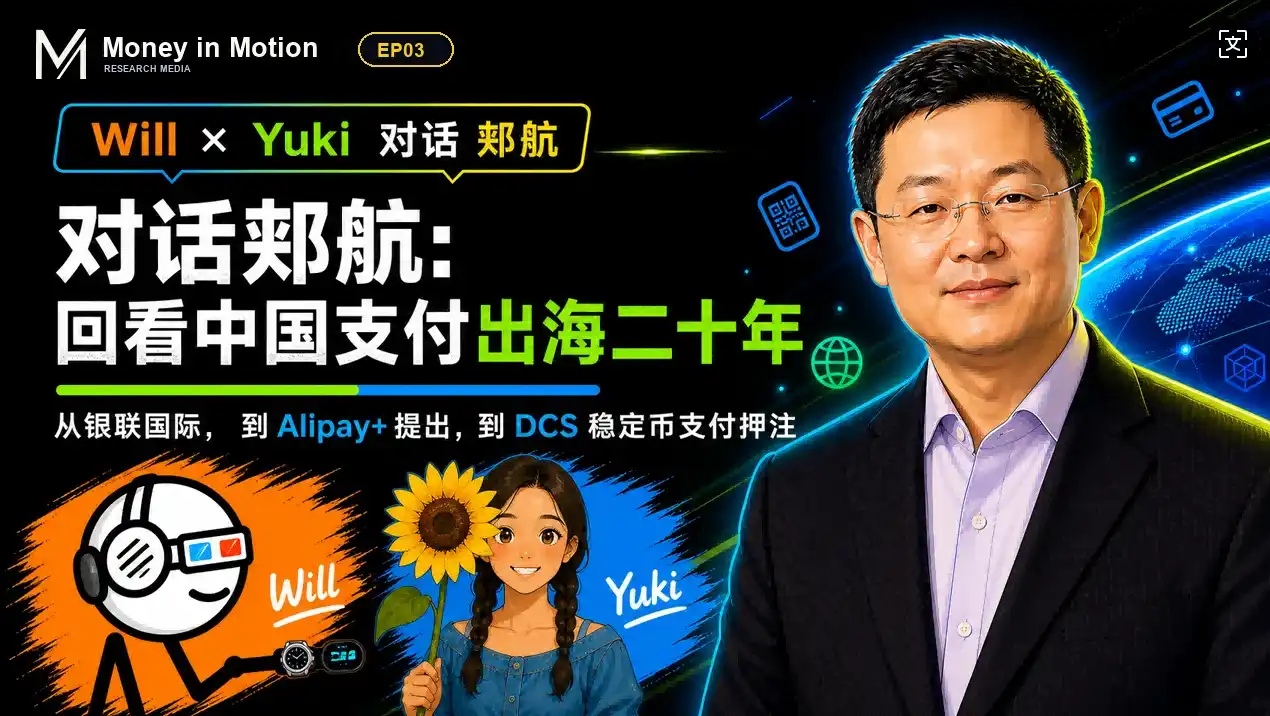
Dialogue with Jia Hang | Looking Back at Two Decades of Chinese Payment Going Global

**Summary: A Conversation with Jia Hang on Two Decades of China's Payment Globalization** Jia Hang, a veteran with over twenty years in payments, reflects on China's attempts to build a global payment network through three key phases: UnionPay (card networks), Alipay+ (digital wallets), and now, stablecoins. His journey began at UnionPay International, aiming to establish China's card network abroad. While successful in following Chinese tourists ("where Chinese go, UnionPay goes"), it struggled to achieve true global scale. The core lesson: card networks like Visa/Mastercard's unassailable advantage isn't just technical standards, but their deeply entrenched **governance and profit-sharing models** that create powerful network effects. Competing as the "same species" is nearly impossible. At Ant Group, he led Alipay+, a strategy to bypass card networks by interconnecting local e-wallets worldwide. While innovative, it faced a similar ceiling. Mobile QR payments and card swipes were essentially **the same species competing for the same pie**, lacking a disruptive value proposition for users or a sustainable new incentive model to replace the card networks' established flywheel. Today, at Singapore's DCS, Jia focuses on stablecoin-based payments. He argues stablecoins represent a fundamental shift. They are not competing with Visa for consumer payments but challenging the **traditional banking and account system for value movement**. Products like "U Cards" (stablecoin-linked payment cards) are transitional, leveraging existing card networks for acceptance while building new rails. The real potential lies in stablecoins enabling seamless, low-cost global value transfer, potentially reorganizing the financial infrastructure around **accounts rather than cards**. Jia believes stablecoin adoption for local retail payments, cross-border transactions, and as high-yield savings vehicles is becoming irreversible. This could gradually reduce reliance on traditional fiat channels, especially in regions with weak currencies or capital controls. The quest for the "next global payment network" continues, now centered on whether stablecoins can successfully bridge Web2 and Web3, establish new governance, and create compelling user value beyond mere cost reduction.

marsbit28m ago

Dialogue with Jia Hang | Looking Back at Two Decades of Chinese Payment Going Global

marsbit28m ago

Circle's Stock Price Plunges 76%, Hong Kong Dollar Stablecoin Set to Launch Within Two Weeks

Circle's stock price has plunged approximately 76% from its 2023 peak, reflecting a major market revaluation. Despite this, Circle President Heath Tarbert emphasized the company's focus on long-term execution and its dominant position with USDC's $73 billion circulation across 34 blockchains. The competitive landscape is intensifying. A new consortium-backed stablecoin, Open USD, is attempting to challenge incumbents by sharing reserve yields with partners. More significantly, Visa's new stablecoin platform, initially supporting Open USD while also being compatible with USDC, could erode Circle's network effects. In response, Circle is expanding into real-world payments through partnerships like the one with Japan's JCB. Separately, Tether (USDT) faces a two-year compliance window under new U.S. regulations, requiring it to adjust its reserve composition away from assets like Bitcoin and loans towards cash and U.S. Treasuries. Meanwhile, in Hong Kong, Standard Chartered-backed fintech firm Dian Dian is poised to launch a licensed HKD-pegged stablecoin (HKDAP), moving the industry into a phase where the real test is integrating licensed stablecoins into actual payment flows and corporate treasury systems. The sharp decline in Circle's stock underscores a broader shift: the stablecoin market is moving from a winner-takes-all dynamic to a multi-player competitive arena where execution, compliance, and real-world utility are becoming paramount.

marsbit28m ago

Circle's Stock Price Plunges 76%, Hong Kong Dollar Stablecoin Set to Launch Within Two Weeks

marsbit28m ago

Trading

Spot

Hot Articles

How to Buy ONE

Welcome to HTX.com! We've made purchasing Harmony (ONE) simple and convenient. Follow our step-by-step guide to embark on your crypto journey.Step 1: Create Your HTX AccountUse your email or phone number to sign up for a free account on HTX. Experience a hassle-free registration journey and unlock all features.Get My AccountStep 2: Go to Buy Crypto and Choose Your Payment MethodCredit/Debit Card: Use your Visa or Mastercard to buy Harmony (ONE) instantly.Balance: Use funds from your HTX account balance to trade seamlessly.Third Parties: We've added popular payment methods such as Google Pay and Apple Pay to enhance convenience.P2P: Trade directly with other users on HTX.Over-the-Counter (OTC): We offer tailor-made services and competitive exchange rates for traders.Step 3: Store Your Harmony (ONE)After purchasing your Harmony (ONE), store it in your HTX account. Alternatively, you can send it elsewhere via blockchain transfer or use it to trade other cryptocurrencies.Step 4: Trade Harmony (ONE)Easily trade Harmony (ONE) on HTX's spot market. Simply access your account, select your trading pair, execute your trades, and monitor in real-time. We offer a user-friendly experience for both beginners and seasoned traders.

4.4k Total ViewsPublished 2024.03.29Updated 2026.06.02

How to Buy ONE

Discussions

Welcome to the HTX Community. Here, you can stay informed about the latest platform developments and gain access to professional market insights. Users' opinions on the price of ONE (ONE) are presented below.

活动图片