Micron Q2 Earnings Preview: Citi Raises Price Target

marsbitPublished on 2026-06-23Last updated on 2026-06-23

Abstract

TL;DR: Ahead of Micron's Q2 FY26 earnings report on June 24, Citi raised its price target from $840 to $1,200, citing stronger-than-expected 2026 memory prices and high gross margins. The stock price had already neared $1,211, shifting focus to whether the aggressive earnings assumptions will hold. The $1,200 target is based on significantly higher FY27 EPS estimates ($114.73), driven by projections of DRAM ASPs rising 200% and NAND ASPs rising 186% in 2026. The bullish outlook hinges on the ongoing transition of spot price increases (DRAM up 52% YTD) to contract prices, with server demand being a key driver. Supply remains tight, with a projected 5% DRAM shortage in 2026, exacerbated by HBM production consuming capacity. Long-Term Agreements (LTAs) could provide stability but their specific terms are crucial. Risks include HBM yield/ramp challenges, potential industry overcapacity, and AI/data center capex fluctuations. With the stock near the target, future moves depend on the continuation of strong pricing, tight supply, and high margins.

TL;DR

Micron is scheduled to release its fiscal year 2026 third-quarter earnings on June 24, with the earnings call set for 4:30 PM ET on the same day. Ahead of the report, Citi has raised its price target for Micron from $840 to $1,200, maintaining a Buy rating, citing stronger-than-expected memory prices in 2026 and high gross margins.

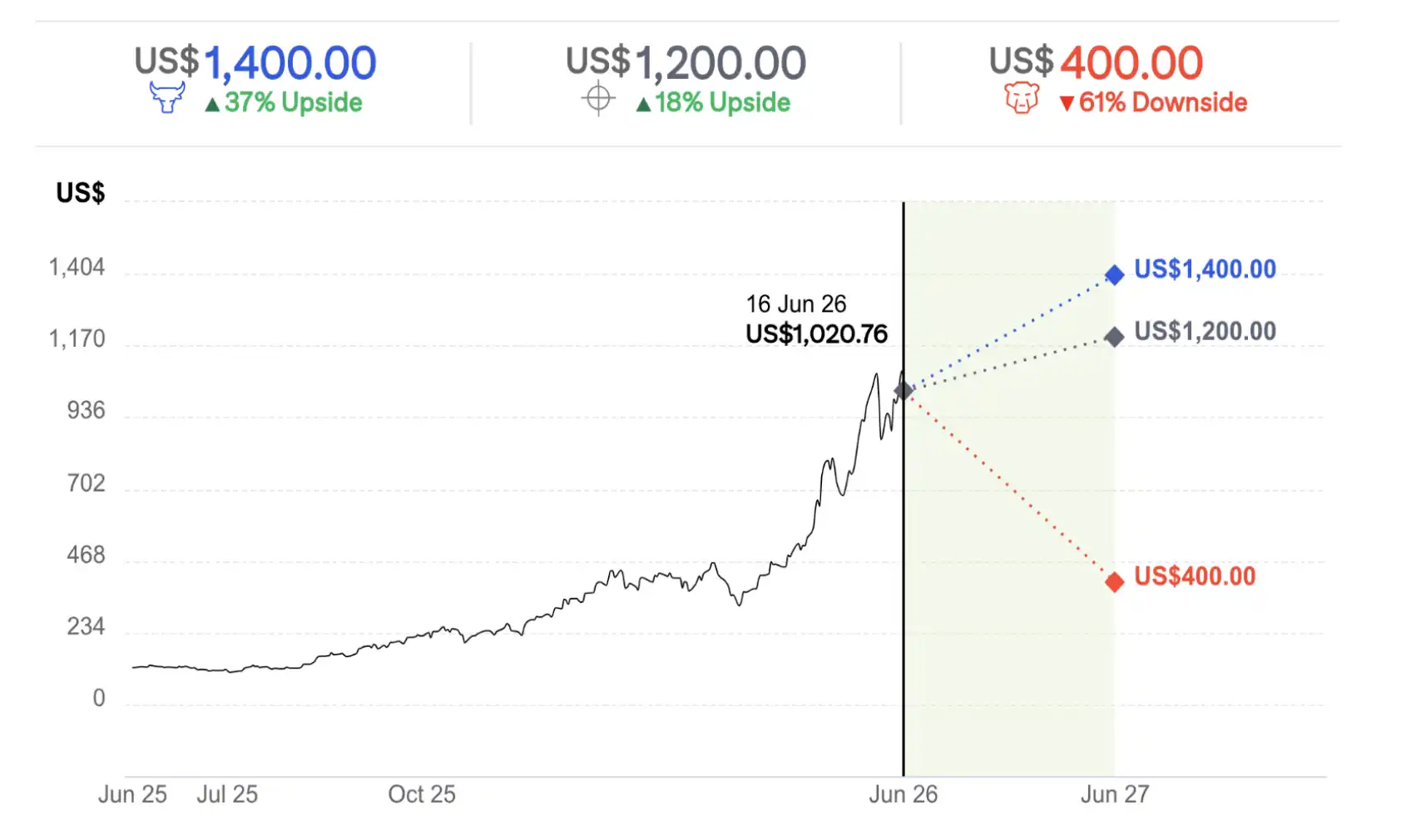
The highlight of this target hike is not the $1,200 figure itself. Based on the stock price of approximately $1,020.76 at the time of the report's release, this target implies an upside of about 18%. However, as of June 23, market data shows Micron's stock price hovering around $1,211, slightly above Citi's target. In other words, the stock has already approached the target price, and the market's focus now shifts to whether Citi's earnings assumptions can materialize.

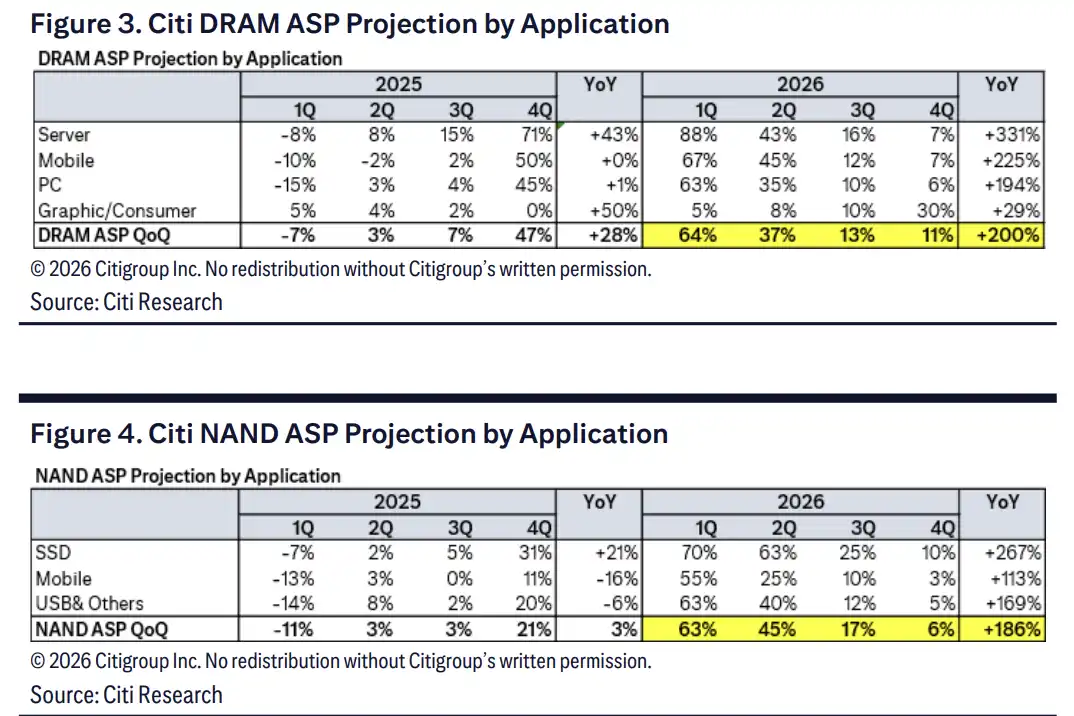
The most aggressive assumptions come from pricing. Public reports citing Citi's view indicate that DRAM average selling prices (ASP) are projected to rise by 200% in 2026, while NAND ASP is expected to increase by 186%. If this wave of price hikes continues to transmit from spot prices to contract prices, there remains room for further upward revisions to Micron's fiscal year 2027 earnings expectations.

Behind the $1,200 Target: Further Upside for FY27 Earnings

According to reports from TipRanks/The Fly, Citi has raised Micron's price target to $1,200 while maintaining a Buy rating. Yahoo Finance and Investing.com, citing related reports, noted that Citi has increased its FY2027 EPS estimate for Micron to $114.73.

Such revisions typically stem from two directions: higher pricing on the revenue side and sustained high gross margins. Memory industry profits are extremely sensitive to price. When DRAM and NAND prices enter an upward cycle, minor quarterly revenue changes can be magnified into larger full-year earnings expectations.

The assumptions in Citi's original report are even more aggressive. The report shows expectations for Micron's F3Q26 revenue at $35.6 billion and EPS at $19.98. F4Q26 revenue is forecast at $42.0 billion with EPS of $24.27. On an annual basis, FY26 revenue is estimated at $115.0 billion, while FY27 revenue is projected to rise further to $197.5 billion, with FY27 EPS revised up to $114.73.
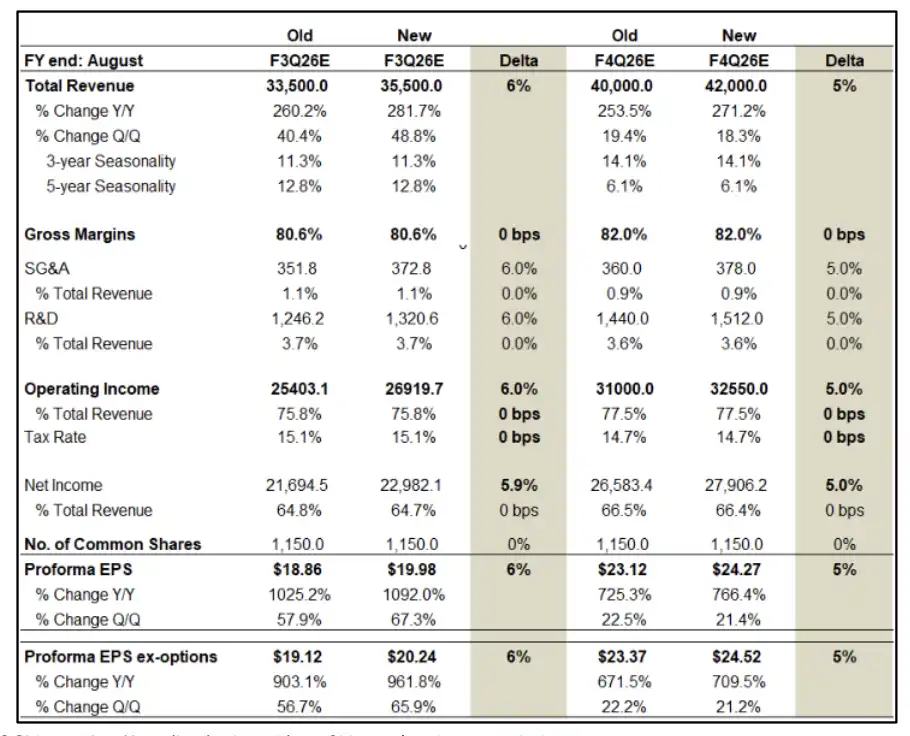
The $1,200 price target reflects high confidence in 2027 earnings rather than being a tactical trade around a single quarter's report. If FY2027 EPS approaches $115, Micron's current valuation may still find support. Conversely, if memory prices peak earlier, and with the stock already near the target price, the margin for error would significantly shrink.

Spot Prices Lead Contract Prices, Hikes Still Propagating to Customers

The direct driver for the upward revisions to Micron's earnings expectations is memory pricing.

Public reports citing Citi data note that DRAM spot prices have risen 52% cumulatively since the beginning of 2026 and are currently about 21% higher than contract prices. In the memory industry, spot prices typically react faster than contract prices. When spot prices are significantly higher than contract prices, contract prices may still be adjusted upward upon customer re-negotiations.

This is also the basis for the substantial upward revision of the 2026 ASP assumptions. Citi expects DRAM ASP to rise 200% for the full year 2026. NAND ASP is projected to increase by 186% for the year, with Q2, Q3, and Q4 expected to see sequential increases of 45%, 17%, and 6%, respectively.

The server segment is the most concentrated direction for price increases. Citi's original report assumes server DRAM ASP will rise 331% for the full year 2026, while NAND SSD will increase by 267%. This indicates that the price hikes are not solely due to PC and smartphone restocking; procurement from data centers, AI servers, and enterprise SSDs represents a stronger source of demand.
HBM Strains Capacity; Supply Discipline Determines Cycle Length

Whether prices can continue to rise depends largely on whether supply remains tight.

Citi's report assumes a global DRAM supply shortage of about 5% in 2026. For the memory industry, such a deficit is sufficient to drive significant price volatility, especially as High Bandwidth Memory (HBM) consumes wafer, equipment, and advanced packaging resources, further squeezing supply for conventional DRAM.

HBM also acts as an amplifier in this cycle. AI training and inference continue to drive demand for high-bandwidth memory, while HBM capacity ramp-up consumes more advanced production capacity. If HBM prices remain strong, Micron's product mix and gross margins may continue to benefit.

The risk lies in the supply side not remaining disciplined indefinitely. TipRanks, citing TrendForce data, notes that global DRAM bit supply is expected to grow by about 30% in 2026, with Micron's growth projected at 42%. If competitors accelerate capacity expansion in 2027, or if new capacity is released faster than AI and data center demand can absorb it, the current assumptions of shortage and high gross margins will be challenged.

Long-Term Agreements Can Smooth Cycles, But Terms Are Key

Beyond price increases, Long-Term Agreements (LTAs) are another part of Citi's optimistic scenario.

Historically, memory companies have been most heavily discounted by the market for their highly cyclical earnings. Profits rapidly expand during price hikes but decline once oversupply emerges, dragging down prices and margins. If customers are willing to lock in longer-term procurement arrangements, the volatility of Micron's revenue and profits over the next few years could be partially smoothed.

Citi's original report mentions that Dell has signed relevant LTAs and suggests such agreements may drive the adoption of complementary NAND solutions like KV cache offload, further opening up SSD and NAND demand. Expectations and reality still need to be separated here: LTAs can improve earnings visibility, but they do not yet constitute a fully validated new business model.

What truly impacts valuation are the detailed terms, including the volume covered, the design of the pricing mechanism, whether there are minimum purchase commitments, and whether customers can adjust orders in response to price changes. If LTAs are merely framework agreements without strong, binding purchase arrangements, their support for Micron's valuation would be significantly weaker.

Stock Price Nears Target; Bear Case Reminds of Cyclical Risks

Citi's base case target price is $1,200. The original report outlines a bull case target of $1,400 and a bear case target of $400. This range itself indicates that market divergence regarding Micron is not about the direction but rather about how long the cycle can last.
Risks are mainly concentrated in three areas.

First, HBM yield and capacity ramp. Slow release of high-end memory supply may intensify price hikes in the short term but could also affect Micron's deliverable volumes and customer qualification progress.

Second, industry capacity expansion. The memory industry has repeatedly seen cycles where high prices stimulate expansion, which in turn depresses prices. It's difficult to completely escape this pattern this time around.

Third, AI and data center capital expenditures. The current price forecasts imply continued expansion in AI server, inference demand, and enterprise SSD procurement. If cloud providers slow spending, or if storage demand growth falls short of expectations, the pace of ASP increases may decelerate.

For Micron's upcoming earnings report, the most crucial aspect is not just whether F3Q26 exceeds expectations, but also how management discusses supply and demand for 2026 and 2027, HBM pricing, LTA progress, and gross margin guidance. The $1,200 target price is built on a combination of continued memory price increases, tight supply, and sustained high margins. If any one of these links weakens, with the stock already near the target price, the market's patience for this uptrend cycle will be even shorter.

Related Questions

QWhat is Citigroup's new price target for Micron, and what is their rating?

ACitigroup has raised its price target for Micron from $840 to $1200 and maintains a 'Buy' rating.

QWhat are the key assumptions behind Citigroup's raised EPS forecast for Micron's FY2027?

AThe key assumptions are a stronger-than-expected 200% rise in DRAM average selling prices (ASP) and a 186% rise in NAND ASP for 2026, coupled with high gross margins.

QAccording to the article, what is a primary factor currently pushing up memory prices?

AA primary factor is tight supply, partly because High Bandwidth Memory (HBM) production for AI is consuming advanced wafer, equipment, and packaging capacity, thereby squeezing the supply of conventional DRAM.

QWhat potential risk could challenge the assumptions of continued price strength and high margins for Micron?

AA key risk is the industry's tendency to increase production capacity in response to high prices, which could later lead to oversupply and price declines, breaking the cycle of high margins.

QWhat does the article suggest is more important than Micron's upcoming quarterly earnings for the market's focus?

AThe market is more focused on whether Citigroup's aggressive profit assumptions for 2026 and 2027 will materialize, including management's commentary on future supply/demand, HBM pricing, Long-Term Agreement (LTA) progress, and gross margin guidance.

Related Reads

Conversation with Co-founder of Hyperdash: Why is Hyperliquid Still Severely Undervalued?

Interview Summary with Hanson Birringer, Co-founder of Hyperdash: Why Hyperliquid Remains Undervalued In an interview on *The Rollup*, Hanson Birringer, Co-founder and Chief Revenue Officer of Hyperdash—a trading data analytics platform for Hyperliquid—shared his investment thesis on the Hyperliquid ecosystem. He described Hyperliquid as a pure play on three key crypto super-trends: perpetual contracts, real-world assets (RWAs), and stablecoins. The platform is an open-source, decentralized, and high-performance financial system uniquely positioned to bridge traditional institutional capital with decentralized finance. Birringer highlighted Hyperliquid's leadership in perpetual DEX trading and its recent innovation of RWA perpetual contracts. He emphasized the significance of USDC becoming a core quoting asset, which, by allocating 90% of its backend yield from assets like US treasuries to a protocol buyback fund, creates substantial, programmatic buy pressure for the Hype token. He addressed regulatory challenges, noting that Hyperliquid's policy team is actively engaging with US regulators like the CFTC to establish clear rules for decentralized venues. Once achieved, regulated brokers could route orders directly to Hyperliquid's backend, tapping into its low-cost liquidity layer. Regarding revenue, Birringer was optimistic, citing the immense size of traditional financial markets. Even capturing a small fraction of global trading volume in products like RWA perpetuals could lead to exponential growth for the protocol. The recently launched Grayscale Hyperliquid ETF, seeded by their SPV (Hyper Holdings Global), provides a compliant on-ramp for institutional investors drawn to the clear "cash flow + token buyback" model. Finally, he discussed Hyperdash's acquisition of Imperator, enhancing its data and node infrastructure to serve both retail traders and traditional asset managers. His bullish case rests on Hyperliquid's potential to provide unprecedented global access to dollar-based capital markets. He struggled to articulate a bear case, seeing the long-term trends of internet adoption and financial inclusion as powerful tailwinds.

marsbit1h ago

Conversation with Co-founder of Hyperdash: Why is Hyperliquid Still Severely Undervalued?

marsbit1h ago

DeepSeek V4 'Full-Blooded Edition' Leaked, Could Be Released As Early As Tomorrow

The highly anticipated full release of DeepSeek V4 is imminent, expected to launch as early as tomorrow after nearly three months of waiting. A select group has already received access to the GA (General Availability) beta, which includes two versions: DeepSeek V4 Flash and DeepSeek V4 Pro. Early testers report that V4's overall performance is close to the level of Opus 4.8, with coding capabilities rivaling GPT-5.6 Sol. Its agent abilities are significantly enhanced, and 3D/SVG generation has improved notably. While it may not surpass the recently released Kimi K3 in performance, its expected price point is significantly lower. The official release will introduce a new "peak/off-peak" pricing model for its API. For example, deepseek-v4-pro will cost $0.87 per million output tokens during standard times and $1.74 during peak hours. The flash version is even more aggressive at $0.28/$0.56 per million tokens, with cached input tokens priced extremely low at $0.0028. This makes V4 a strong contender in terms of cost-effectiveness, potentially offering Opus-level capabilities at a fraction of the cost, continuing DeepSeek's reputation as a "price disruptor" in the AI market. Initial demos showcasing V4's capabilities have begun circulating, including generated 3D simulation games, HTML games blending elements of Minecraft and No Man's Sky, and classic games like a "Cut the Rope" clone. The final GA version is set to replace the older deepseek-chat and deepseek-reasoner models, which will be retired on July 24th.

marsbit1h ago

DeepSeek V4 'Full-Blooded Edition' Leaked, Could Be Released As Early As Tomorrow

marsbit1h ago

WEEX Labs Weekly Observation: The 'Power Restructuring' of AI Infrastructure and the 'Deep Dive Movement' into the Real Economy

WEEX Labs Weekly Review: AI Infrastructure's "Power Restructuring" and the "Deep Dive" into the Real Economy Mid-July 2026 marks a pivotal shift in the global AI industry. The allocation of computing power is transferring from cloud giants to compute resource owners, while the core value of AI is solidifying around its penetration into physical industry, moving beyond the race for model parameters. The era of fragmented model development is over, replaced by a capital-intensive, integrated chain driven by hard tech. Key developments this week include Meta's planned entry into the cloud computing market with "MetaCompute." This move by social media giants with massive GPU clusters challenges traditional cloud providers like AWS, integrating compute, models, and data into one-stop services, which will squeeze smaller rental providers and shift enterprise focus towards underlying model ecosystems. Chinese foundational models like DeepSeek-V4 and Tencent's Hy-3 are pushing towards "utility" status through open-source releases and extreme cost reductions via MoE architectures. This lowers entry barriers for enterprises, allowing them to focus resources on private deployment and deep business integration. Embodied intelligence, particularly humanoid robots, is transitioning from lab demos to real-world factory applications, driven by policies promoting large-scale, practical deployment in logistics and manufacturing. The value focus is shifting from spectacle to stable industrial data and real operational efficiency. Global governance, through forums like WAIC, is evolving from theoretical ethics to practical operational frameworks for "Sovereign AI," raising geopolitical compliance barriers and making auditability and data sovereignty core design requirements from the outset. WEEX Labs Insights: The current transformation shows AI's prosperity is deeply embedding into the fabric of global manufacturing. Strategic recommendations include: 1) leveraging open-source models for private, proprietary knowledge bases; 2) maintaining cloud provider diversity to avoid vendor lock-in from integrated model ecosystems; and 3) seeking opportunities in the "embodied infrastructure" supporting robots, such as data collection, industrial simulation, and factory AI adaptation services.

marsbit1h ago

WEEX Labs Weekly Observation: The 'Power Restructuring' of AI Infrastructure and the 'Deep Dive Movement' into the Real Economy

marsbit1h ago

Is WEEX TradFi Reliable? What You Should Know Before Your First Trade of U.S. Stock Tokens

In recent years, cryptocurrency users have expanded their focus beyond Bitcoin and Ethereum to include popular traditional financial (TradFi) assets like Nvidia, Apple, and Tesla stocks. This shift raises key questions: What do these TradFi assets represent on crypto trading platforms? How do they differ from traditional stock ownership? And how can users assess the reliability of platforms offering such products? TradFi products, such as those offered by WEEX TradFi (including NVDA, MSFT, AAPL, TSLA, and QQQ tokens), are blurring the lines between crypto and traditional markets. They allow users to trade based on the price movements of traditional assets within a familiar digital asset trading environment. However, it's crucial to understand that trading a "stock token" is not equivalent to owning the actual stock. Users are participating in price speculation, not gaining shareholder rights like dividends or voting. A key feature of these products is 7x24 trading, offering flexibility beyond traditional market hours. While convenient, this also introduces unique risks, such as potential liquidity gaps and volatility when underlying markets are closed. For users evaluating TradFi products, reliability hinges on transparency and risk management. Critical factors include understanding the product mechanism, how prices track the underlying assets, and the associated risks—especially when using leverage. Popular stocks and indices are still subject to company performance, macroeconomic shifts, and sector trends. Ultimately, TradFi represents a new gateway connecting crypto users to global markets. The future points toward integrated trading environments where the distinction between "crypto investor" and "traditional investor" fades. For newcomers, a platform's reliability stems not from promises, but from a clear understanding of the product, a comprehensive view of risks, and informed judgment of the platform's capabilities.

marsbit1h ago

Is WEEX TradFi Reliable? What You Should Know Before Your First Trade of U.S. Stock Tokens

marsbit1h ago

Trading

Spot
活动图片