Monday, 5 January 2025 Meme coins have climbed past a $51 billion total market value, based on data from CoinGecko, while a project that allows players to mine leading meme tokens inside a virtual game environment is preparing to close its presale within the next 72 hours.
PepeNode (PEPENODE), the first mine-to-earn initiative in the crypto space, has already secured over $2.5 million in funding and is gearing up to release an innovative game that recreates real crypto mining through an entertaining and highly engaging gameplay model. The timing appears ideal, as renewed appetite for risk assets has driven fresh interest across the market, including in high-risk projects, during the opening days of 2026.
Through PepeNode, users can mine and earn major meme coins such as Pepe (PEPE), Fartcoin (FARTCOIN), and potentially additional tokens. Beyond simple value extraction, the project emphasizes entertainment, with gameplay designed to keep users engaged while the PEPENODE token sits at the center of the ecosystem, enabling long-term value capture.
With the game launch drawing closer, the chance to buy PEPENODE at a price of $0.0012161 is rapidly disappearing. Once the token becomes tradable, prices at this level may not be seen again.
PEPE Drives Meme Coin Revival with 64% Surge
The meme coin sector has risen by 4.1% over the past 24 hours, supported by a wider market rally. As Bitcoin strengthened its reputation as a “safe haven” asset amid rising geopolitical tensions following the U.S. detention of Venezuelan President Nicolás Maduro BTC moved from around $93,000 during early Asian trading to nearly $93,500 by the start of the U.S. session. After a subdued fourth quarter in 2025, the crypto market now appears positioned for a robust rebound in 2026.
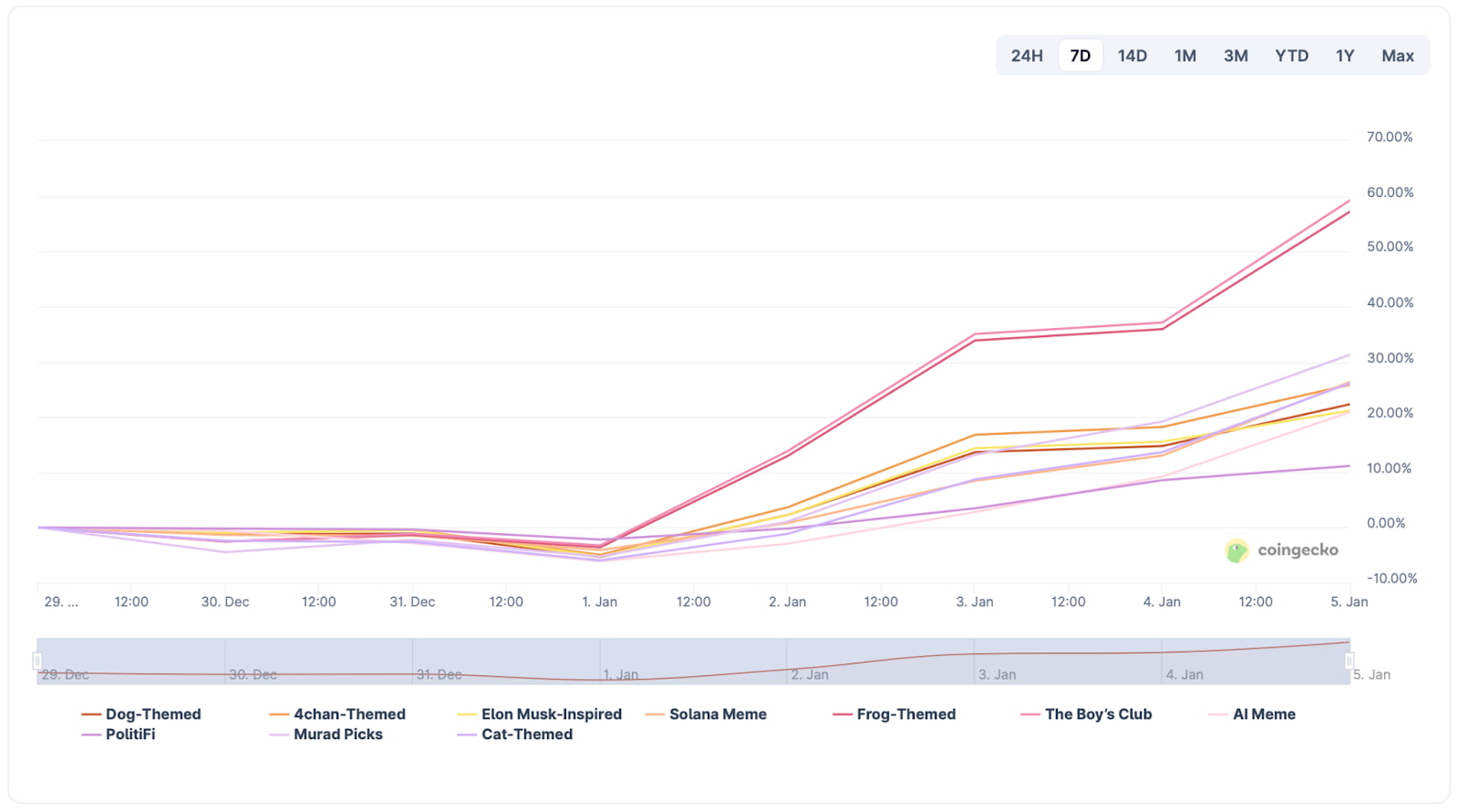
This shift in sentiment is especially clear within higher-risk segments of the market. Meme coin market capitalization has recently moved beyond the $51 billion mark, rebounding strongly from earlier lows near $35 billion. The recovery highlights a renewed willingness among investors to take on risk, particularly as the first week of the year is on track to deliver a fifth straight day of gains. While dog-themed tokens led the broader upswing with a combined rally of 22.31%, individual asset performance paints an even bolder picture.
Dogecoin (DOGE) and Shiba Inu (SHIB) recorded respectable gains of 18.1% and 18% respectively, but both were outpaced by PEPE, which surged an impressive 64% over the same period. As the dominant force within the “Boy’s Club” and frog-themed meme coin niche, PEPE continues to command the spotlight among major influencers and market participants.
Notably, the well-known X personality Roaring Kitty recently told his 237,000 followers that past market cycles tend to be driven by a single standout meme coin that sparks wider momentum and in his view, that coin is PEPE.
For those of you who haven't been around for multiple cycles
EVERY BULL RUN starts with a Memecoin
And here you have it, $PEPE pic.twitter.com/59hGhNhAkB
— RK (@RoaringKitty) January 2, 2026
Despite the strong rally, PEPE is still trading about 76% below its all-time high, leaving room for investors aiming to benefit from a potential full rebound. That said, participation is no longer confined to traditional spot purchases alone.
PepeNode connects speculation with entertainment by allowing players to earn PEPE through a virtual strategy-based game. Drawing on the engaging management style of Zoo Tycoon and the industrial depth of Factorio, the project gives users a new way to access a leading meme coin while delivering gameplay that appeals to crypto-native audiences and stands on its own as an enjoyable experience.
PepeNode: Powering the Next Phase of Meme Coin Mining
For newcomers, PepeNode is a virtual mining simulator that turns the technical challenges of crypto mining into an interactive, incentive-based experience. Rather than relying on the repetitive mechanics seen in older “clicker” titles, the game emphasizes strategic depth, where effective resource management directly influences the scale of token rewards players can earn.
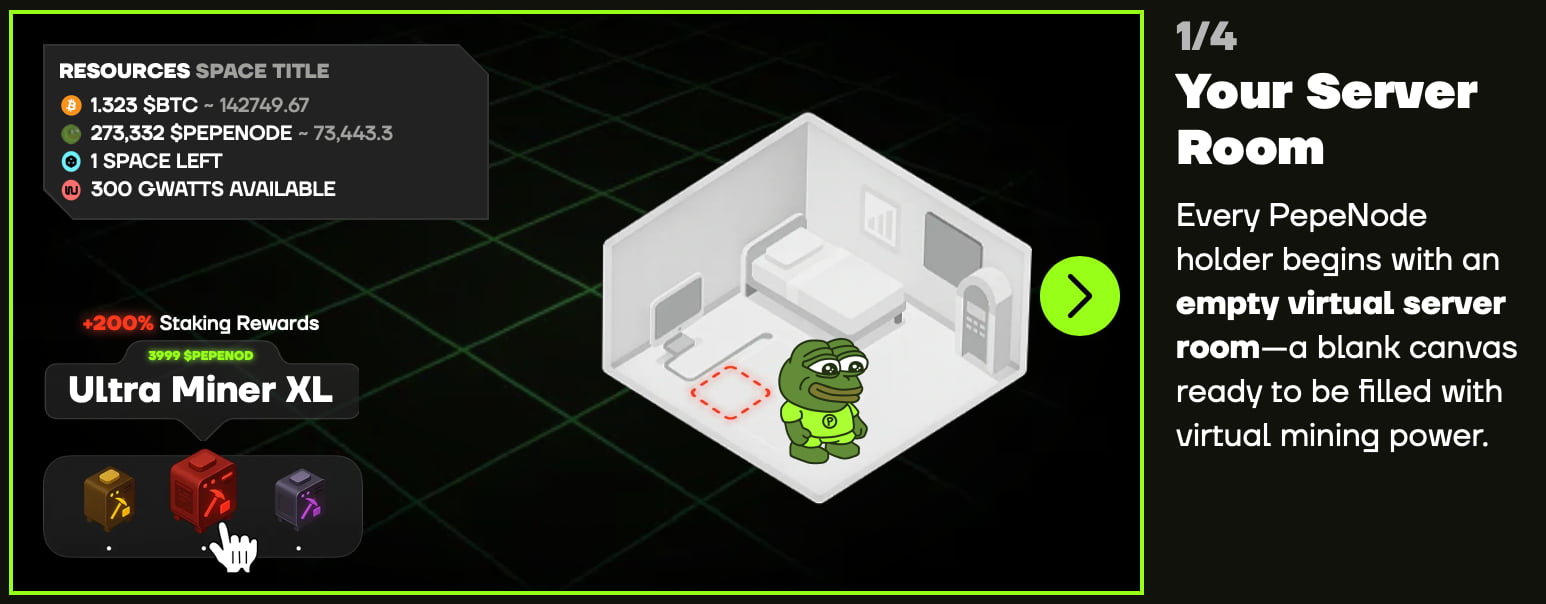
At launch, each player begins with an empty server room, providing a blank slate to build a mining operation from the ground up. Presale participants gain an early advantage by being able to immediately use their discounted PEPENODE tokens to buy nodes, expand infrastructure, and unlock essential upgrades. The gameplay closely reflects real-world mining operations, requiring players to balance energy usage, optimize cooling solutions, and allocate capital wisely to keep their rigs operating at maximum efficiency.
This strategy-driven design marks a clear break from the unsuccessful Play-to-Earn models of earlier cycles. Many of those games failed because they turned into tedious grinds, pushing players through repetitive actions purely to extract rewards. PepeNode takes a different path by targeting strategy enthusiasts and fans of industrial simulation games, putting real enjoyment and thoughtful gameplay ahead of monotonous labor.
Outside of gameplay, the project also tackles long-term sustainability through a carefully structured tokenomic model. To avoid the inflation issues that plagued earlier crypto games, PepeNode introduces a permanent burn mechanism: 70% of all tokens spent on in-game upgrades are removed from circulation forever. This substantial token sink is intended to create deflationary pressure over time, potentially supporting value growth as the player base expands.
Crucially, PepeNode is not built around the idea that cashing out is the sole objective. By offering high-tier rewards such as the ability to earn PEPE and FARTCOIN directly the game encourages players to keep their PEPENODE tokens within the ecosystem, reinvesting them to enhance mining efficiency and overall performance.
If PEPE is truly positioned to spearhead the 2026 bull run, mastering virtual mining through PepeNode may be one of the most effective ways to accumulate it.
Only 3 Days Left to Join the PepeNode Presale Here’s How
Participants can connect through their preferred wallet, including Best Wallet, which has received multiple reviews naming it among the leading crypto and Bitcoin wallets available. PepeNode is also featured on Best Wallet’s Upcoming Tokens discovery tool, allowing users to buy, monitor, and later claim their tokens once trading goes live.
For added reassurance, PepeNode’s smart contract has undergone an audit by Coinsult, providing early supporters with greater confidence in the project’s code security.
To stay informed about upcoming developments especially details surrounding the token generation event (TGE) users are encouraged to follow PepeNode on X and Telegram.
Visit PepeNode.