March's Top Meme Coin Already Booked? The Brainwashing Abstract Meme 'My Sword and Shield' Is Going Viral

比推Published on 2026-03-07Last updated on 2026-03-07

Abstract

A new Chinese meme coin called "My Sword and Shield" (also referred to by its English-derived origin phrase "What the dog doing?") has rapidly gained significant traction in March. Launched on Solana, its market capitalization surged from $1.8 million to a high of $6.6 million within a week, with a 264% increase in 24-hour trading volume reaching nearly $8 million at the time of writing. The meme originates from a popular internet sound effect often used in short videos when dogs exhibit funny or confusing behavior. Its Chinese misheard version, "我的刀盾" (wǒ de dāo dùn), became a viral sensation on platforms like Douyin and Bilibili, accumulating millions of views. Early investors saw substantial returns; for instance, one trader turned a $740 investment into nearly $8,000 in profits. The token has attracted over 5,100 holders, with a gradual shift toward more decentralized ownership. Capitalizing on this cultural momentum, the GENG platform has launched a token named "What the Dog Doing" (WTDD), providing another entry point for community engagement. The project exemplifies how strong cultural consensus and high social media engagement can drive value in the volatile meme coin market. Note: DYOR (Do Your Own Research) is advised as meme coins are highly speculative and risky.

If you can only pay attention to one meme coin in March, it must be "My Sword and Shield".

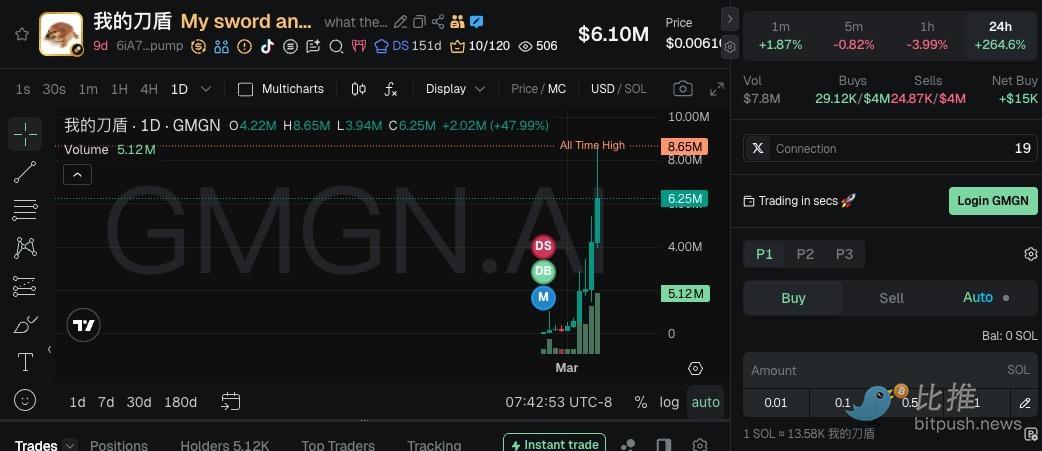
According to GMGN data, within a week of its launch, the Chinese meme coin "My Sword and Shield" (My sword and shield) saw its market cap soar from $1.8 million to a high of $6.6 million.

As of the time of writing, it has a 24-hour increase of 264%, with a 24h trading volume of nearly $8 million, making it one of the best-performing memes on Solana. (Contract address: 6iA73gWCKkLWKbVr8rgibV57MMRxzsaqS9cWpgKBpump)
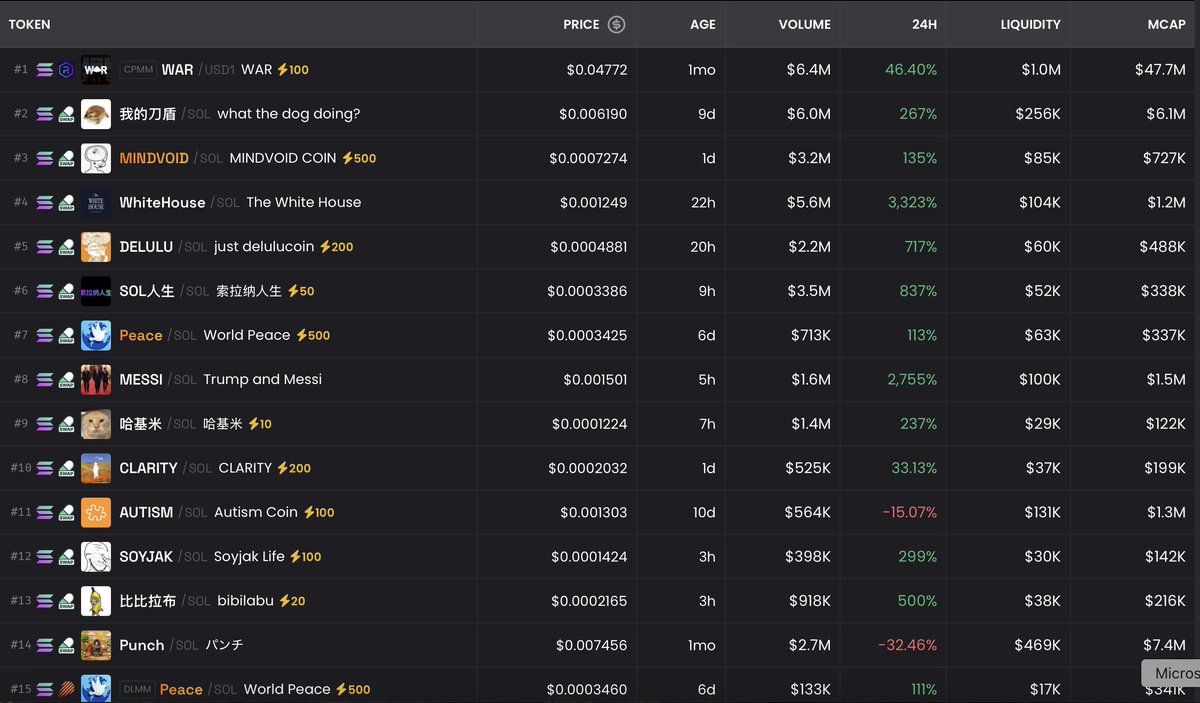
On-chain data shows that among the early large holders, a trader with the ID Cowboy bought $740 worth when the token's market cap was only $290,000, and is now sitting on a paper gain of 1900%. After partially selling, they netted a profit of $7,930. While you were just having fun watching "My Sword and Shield" videos on Douyin, some people have already turned it into real money.

What exactly is the "My Sword and Shield" meme?

The original phrase is actually in English: 「What the dog doing?」. Yes, it's that simple.
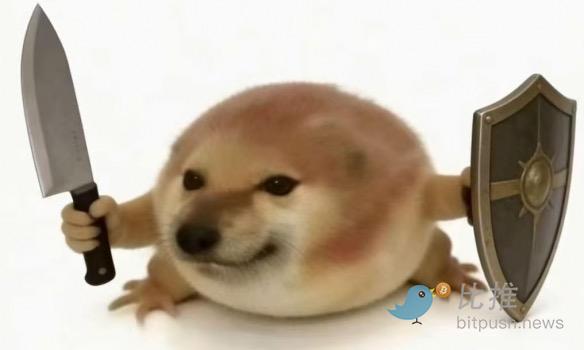
This voiceover, filled with surprise and a bit of teasing, can be traced back to funny videos from the 2010s to the early 2020s. Back then, whenever a dog did something confusing—staring at a wall, wagging its butt like dancing, or striking weird poses—this sound effect would冷不丁 (suddenly) pop up in the video edit.

This meme crossed over to the Chinese internet. Netizens on Douyin, Bilibili, and TikTok started creating misheard lyric (空耳) versions. Because of the fast speech and rough accent/audio quality, it sounded like they were shouting "我的刀盾" (wǒ de dāo dùn - my sword and shield). The humor derived from this phonetic misalignment恰好踩中了 (perfectly hit) the sweet spot for short video users: the more absurd, the more brainwashing.
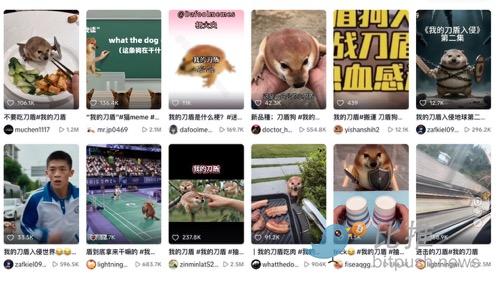
From Bilibili to Douyin, from "My Sword and Shield Invading Earth" to "New Breed of Sword and Shield Dog", related topics have garnered over ten million views.
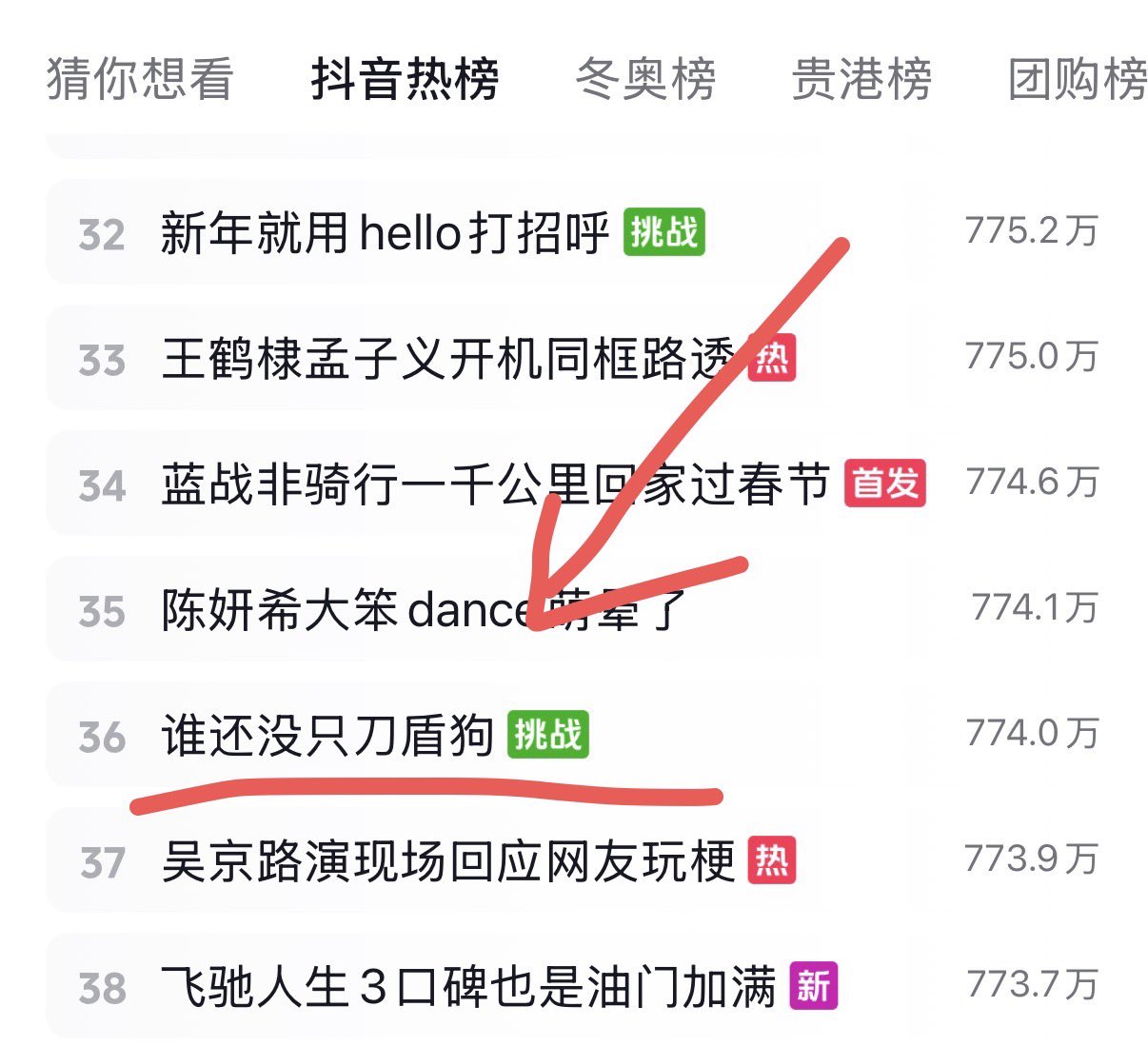
The netizens' creative adaptations are even more diverse: "My Sword and Shield Hydraulic Edition", "Even the Master Can't Control My Sword and Shield Anymore", "When My Little Brother Learned My Sword and Shield"... This is probably what the madness of a meme looks like.
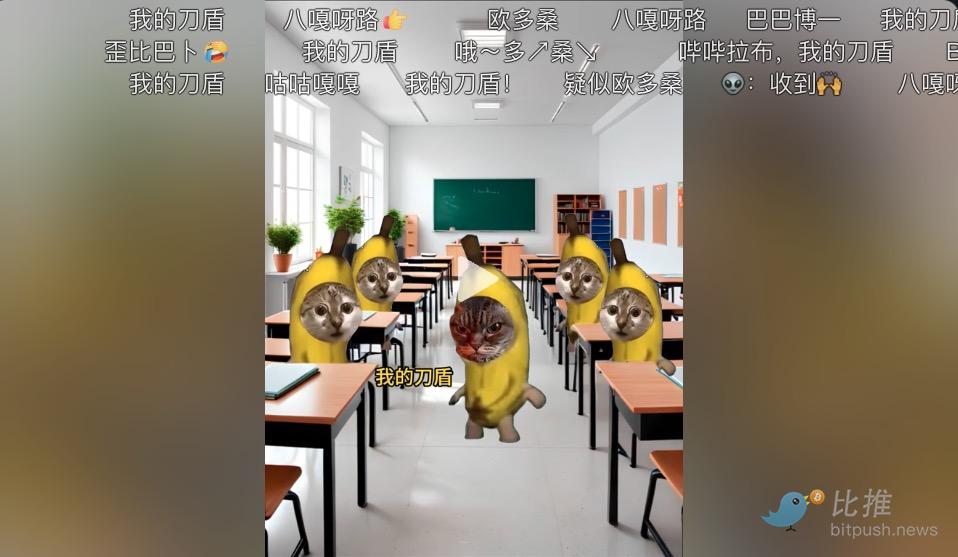
March's Top Meme Coin Already Booked? GENG Platform Launches Homonymous Token

Judging by the data, "My Sword and Shield" already has all the characteristics of a top meme coin: strong cultural consensus, high virality, early wealth creation effect, and continuously pouring liquidity. The low barrier to entry and high activity of the Solana ecosystem provide the perfect soil for such Chinese meme coins.
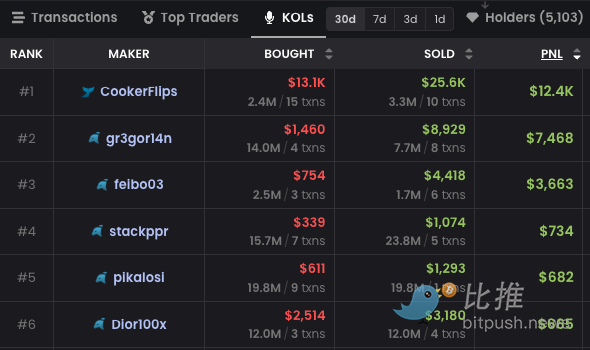
DexTools data shows that since its launch, the number of holders of this meme on SOL has grown from a few hundred initially to over 5,100, with relatively分散 (decentralized) distribution. Although some large holders still exist—the Top 10 control about 16%-26% of the supply, Top 20 about 25%—compared to the early concentration where the Top 70 once held 68%, the chips have gradually moved towards community distribution. On-chain monitoring shows that some "smart money" addresses also quietly entered early, adding fuel to this rally.

As the original热度 (heat/hype) continues to ferment, the GENG platform has now launched the homonymous asset "My Sword and Shield" (WTDD), providing a new entry point for the Chinese community users.

As an emerging community-driven issuance platform, GENG is committed to bringing culturally resonant internet memes into the on-chain ecosystem.

When "My Sword and Shield" moves from Douyin comment sections to on-chain, it carries not just a funny sound effect, but a generation's shared internet memory. In the world of meme coins, consensus is value, and cultural resonance is the deepest form of consensus.

If you are interested in abstract memes, you might want to explore "My Sword and Shield" on GENG .

Of course, the world of meme coins is always full of uncertainty. But at least this March, "My Sword and Shield" has made everyone remember its name with a 264% gain in 6 days.

GENG Official Website: https://geng.one/

"My Sword and Shield" Token Page: https://geng.one/launchpad/token/?mint=4KJbSkxpKHWXrh5LtcAzHjgHRh1hJzy9d6gnAuqwgeng

Contract Address: 4KJbSkxpKHWXrh5LtcAzHjgHRh1hJzy9d6gnAuqwgeng

Note: DYOR, Meme coins are highly volatile, please participate rationally.


Twitter:https://twitter.com/BitpushNewsCN

Bitpush TG Discussion Group:https://t.me/BitPushCommunity

Bitpush TG Subscription: https://t.me/bitpush

Original link:https://www.bitpush.news/articles/7617514

Related Questions

QWhat is the 'My sword and shield' meme coin and why is it gaining popularity?

AThe 'My sword and shield' meme coin is a cryptocurrency based on the Chinese internet meme derived from the English phrase 'What the dog doing?'. It gained popularity due to its absurd and humorous nature, high cultural resonance, and strong community consensus, leading to significant price increases and trading volume.

QWhat was the performance of the 'My sword and shield' meme coin in its first week?

AIn its first week, the market capitalization of 'My sword and shield' surged from $1.8 million to a high of $6.6 million, with a 264% increase in 24 hours and nearly $8 million in trading volume, making it one of the best-performing memecoins on Solana.

QHow did the 'What the dog doing?' meme evolve into 'My sword and shield' in Chinese culture?

AThe English phrase 'What the dog doing?' was adapted through misheard lyrics (空耳) on platforms like Douyin, Bilibili, and TikTok. The fast pronunciation and rough accent made it sound like '我的刀盾' (My sword and shield) in Chinese, creating a humorous and viral effect that resonated with users.

QWhat role did the GENG platform play in the 'My sword and shield' meme coin ecosystem?

AThe GENG platform launched the同名代币 'My sword and shield' (WTDD), providing an entry point for the Chinese community to explore the meme coin. GENG aims to bring culturally resonant internet memes into the blockchain ecosystem, leveraging community-driven发行.

QWhat precautions should investors take when considering participation in meme coins like 'My sword and shield'?

AInvestors should DYOR (Do Your Own Research) and participate rationally, as meme coins are highly volatile and unpredictable. The article emphasizes that while there may be significant gains, the market is filled with uncertainty and risks.

Related Reads

Jensen Huang's CMU Speech: In the AI Era, Don't Just Watch, Build

Jensen Huang, CEO of NVIDIA and a first-generation immigrant, delivered the commencement address to Carnegie Mellon University's class of 2026. He shared his personal journey from a humble background to founding NVIDIA, emphasizing resilience, learning from failure, and the responsibility that comes with leadership. Huang framed the present moment as the dawn of the AI revolution, a shift he believes is more profound than previous computing waves. He described AI as fundamentally resetting computing—moving from human-written software to machines that understand, reason, and use tools. This will create a new industry for generating intelligence and transform every sector. While acknowledging AI's potential to automate tasks and displace some jobs, Huang distinguished between the *tasks* of a job and its core *purpose*. He argued AI will augment human capability, not replace humans. The real risk, he stated, is not AI itself, but people being left behind by those who effectively use AI. He presented AI as a generational opportunity for massive infrastructure investment—in chip factories, data centers, energy grids, and advanced manufacturing—that could re-industrialize nations like the U.S. and bridge the digital divide by making computing and intelligent tools accessible to all. Huang called for a balanced approach: advancing AI safely and responsibly, establishing prudent policies, ensuring broad access, and encouraging universal participation. He urged the graduates not to fear the future but to engage with optimism and ambition, reminding them of CMU's motto, "My heart is in the work." His core message was clear: this is their moment to actively build and shape the AI-powered future, not merely observe it.

marsbit31m ago

Jensen Huang's CMU Speech: In the AI Era, Don't Just Watch, Build

marsbit31m ago

The Era Has Arrived Where Human Writers Must Prove They Are Not Machines

The article describes an era where AI-generated content is flooding the market, forcing human authors to prove they are not machines. It begins with the example of dozens of AI-written, error-ridden biographies of Henry Kissinger appearing on Amazon within hours of his death, a pattern repeated for other deceased celebrities and even living experts who find fraudulent books under their names. This spam content has exploded, with monthly new book releases on platforms like Amazon reaching 300,000 by late 2025. The issue spans genres, from suspiciously high proportions of AI-written teen romance and self-help books to dangerous, AI-generated foraging guides containing lethal advice. The platforms' automated review systems, designed to catch plagiarism and banned words, are ill-equipped to detect AI-generated text that avoids these pitfalls while being nonsensical or fraudulent. The problem has infiltrated traditional publishing. A major publisher, Hachette, had to recall a bestselling horror novel after AI detection tools suggested 78% of its content was machine-generated. An acclaimed European philosophy book was later revealed to be entirely written by AI under a fake author persona. In response, authors are fighting back. At the 2026 London Book Fair, 10,000 writers published a blank book titled "Don't Steal This Book" containing only their signatures—using emptiness as a protest weapon in an age of AI overproduction. Initiatives like the "Human Author Certification" program have emerged, ironically placing the burden on humans to prove their work is not machine-made. The article warns of a vicious cycle: AI-generated low-quality books pollute the data used to train future AI models, leading to "model collapse" and an ever-worsening flood of digital waste, eroding trust in publishing and devaluing human creativity.

marsbit56m ago

The Era Has Arrived Where Human Writers Must Prove They Are Not Machines

marsbit56m ago

Trading

Spot
Futures

Hot Articles

Discussions

Welcome to the HTX Community. Here, you can stay informed about the latest platform developments and gain access to professional market insights. Users' opinions on the price of MEME (MEME) are presented below.

活动图片