‘Lean Ethereum’ will not compromise security for speed, says Vitalik Buterin – Here’s how

ambcryptoPublished on 2026-03-19Last updated on 2026-03-19

Abstract

Vitalik Buterin has reaffirmed his commitment to a "lean Ethereum" roadmap, aiming to simplify the network's design without compromising security for speed. This long-term strategy intends to merge the currently separate execution and beacon clients into a unified system, enabling faster transaction settlement and allowing smartphones to function as network nodes. Buterin argues this approach will allow Ethereum to achieve speeds comparable to chains like Solana while maintaining Bitcoin-level security. The Ethereum Foundation recently released a guiding document centered on the CROPS philosophy (censorship-resistant, open source, private, secure) to preserve user freedom and ensure the network's survival even without the Foundation. Opinions on the plan are divided, with supporters seeing it as reinforcing Ethereum's leadership in decentralization, while critics worry about potential security risks. Meanwhile, ETH's price action remains heavily influenced by Bitcoin's momentum. A recent Bitcoin price drop dragged ETH down approximately 6% from nearly $2,400 to $2,200, with analysis indicating potential further declines to support levels near $2,153.

Ethereum founder Vitalik Buterin has doubled down on his calls for a simpler, more secure network.

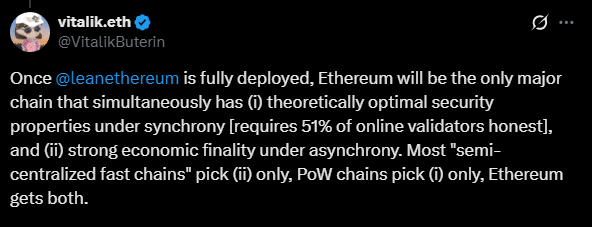
On Wednesday, the 18th of March, he reiterated that, through the ‘lean Ethereum’ plan, the chain will no longer be forced to trade between security and speed like other blockchains.

Most ‘semi-centralized fast chains’ pick (ii) only, PoW chains pick (i) only, Ethereum gets both.
Source: X/Buterin

The ‘lean Ethereum’ roadmap is an ambitious long-term strategy to simplify the network design, fast-track the settlement of transactions, and make it easier to run on simple devices like smartphones.

Eventually, Buterin wants smartphones to become the network’s new nodes.

This would mean merging the current, separately run execution and beacon clients that power the Ethereum network into a unified system. While critics had shown reservations about the vision and its inherent security risks, Buterin believes otherwise.

For him, that would be the only way to have a ‘faster’ chain like Solana while maintaining Bitcoin-like security.

But the plan goes beyond just a simplified system and advanced security.

Ethereum’s new ‘constitution’

Last week, the Ethereum Foundation unveiled a strategic document that it called ‘part manifesto, part constitution’ to guide its long-term vision and planning.

At the core of this roadmap is a new philosophy dubbed CROPS (censorship-resistant, open source, private, and secure) that will anchor all future plans and network upgrades.

The end goal is to ensure Ethereum preserves user freedom and can survive even if the Ethereum Foundation ceases to exist.

Like everything else, these updates have been met with divergent views. Supporters see it as a way to reinforce Ethereum as a leader in decentralized networks and a net positive for ETH. For critics, however, potential security risks and inconsistent roadmaps make it difficult to bet on ETH.

Only time will tell which side was right.

What’s next for ETH?

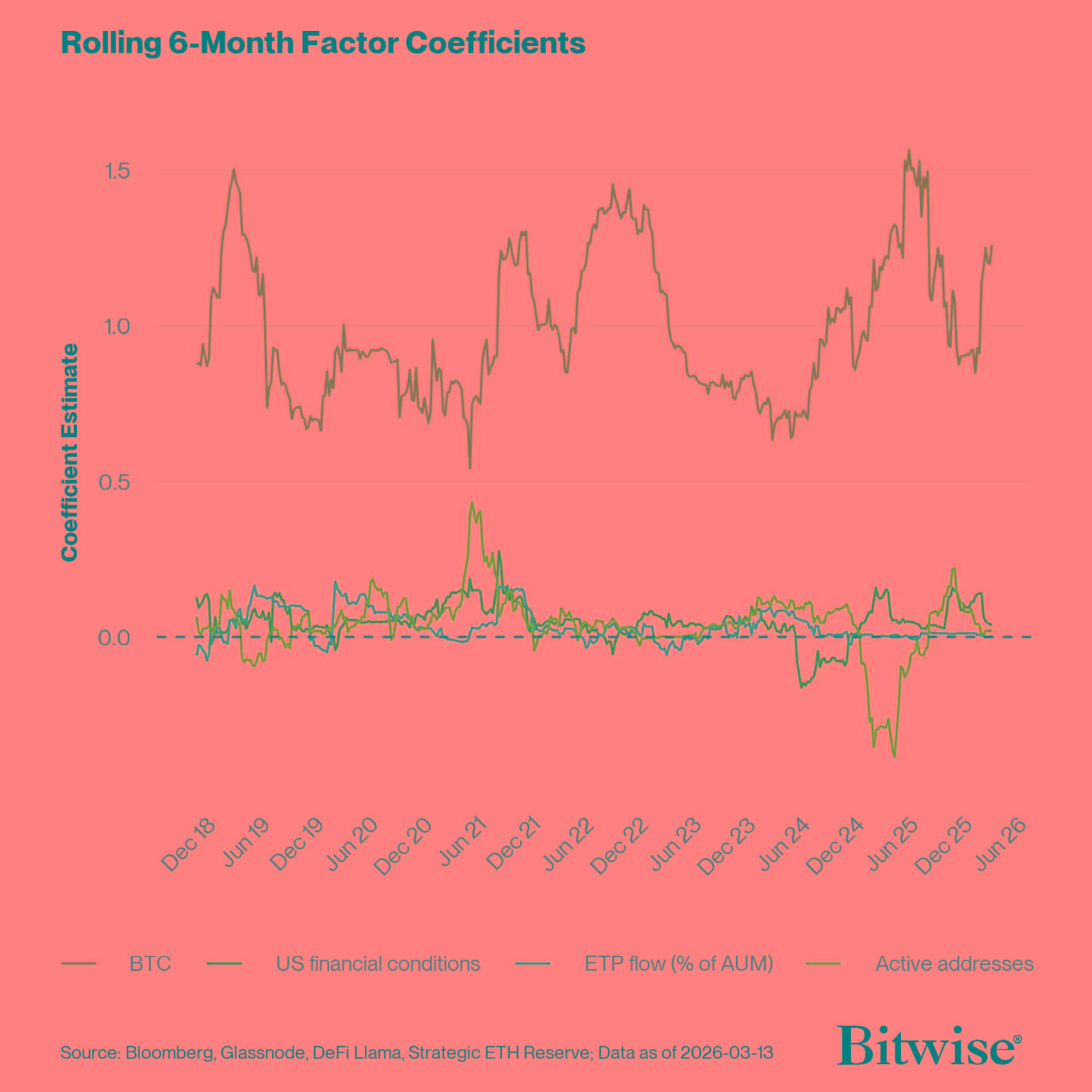
Meanwhile, Bitwise research analyst Max Shannon found that Bitcoin’s momentum drives ETH’s price moves far more than macro factors, treasury firms’ demand, or Spot ETH ETF flows.
Source: Bitwise

In fact, the recent 5% BTC price drop triggered by de-risking ahead of the Fed rate decision dragged ETH lower too.

With most of the leveraged liquidity below price action, the long squeeze could drag ETH to $2213 or $2154, with a larger pool at $2053. At the time of writing, the altcoin dropped by 6% from nearly $2.4k to $2.2k.
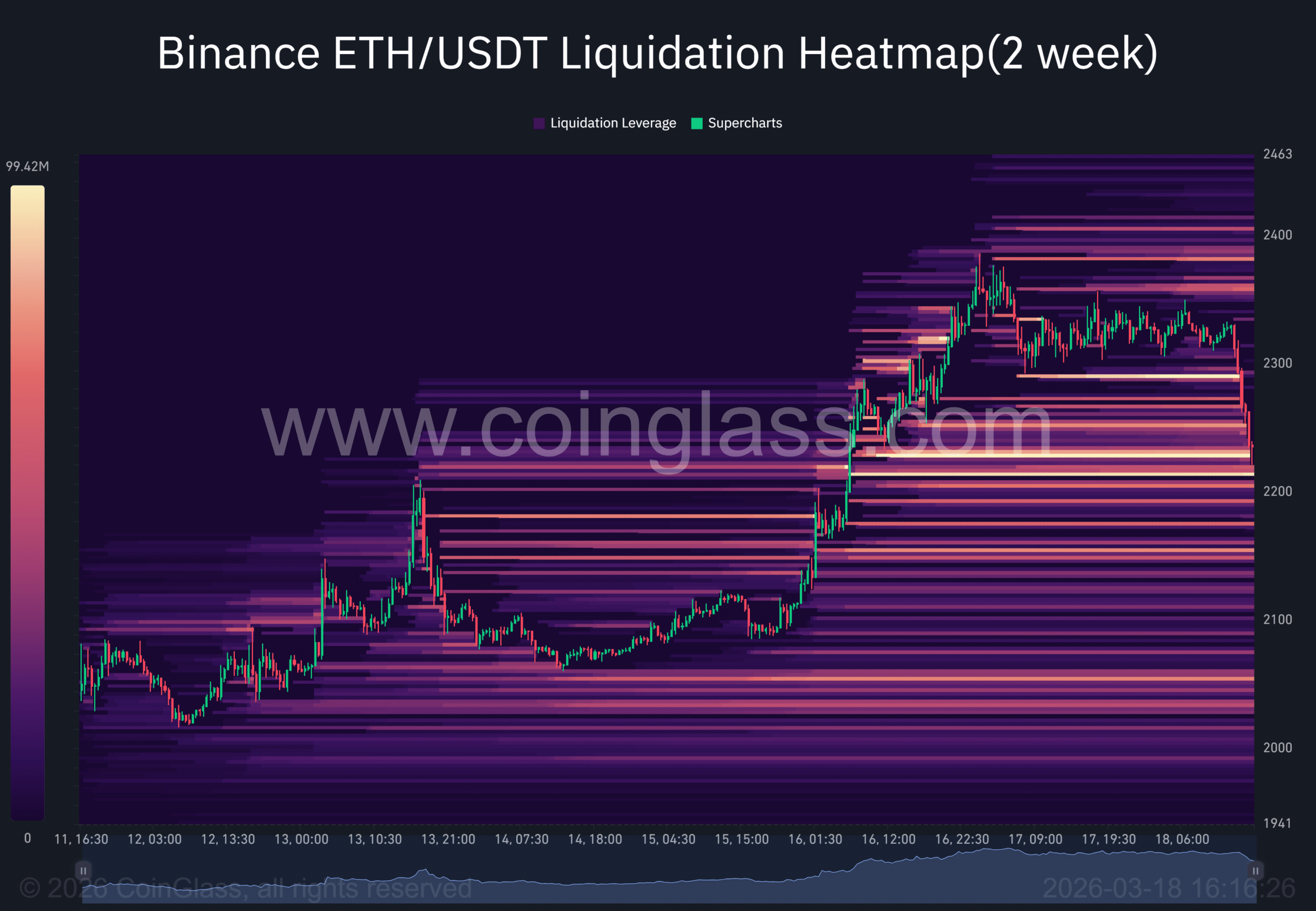
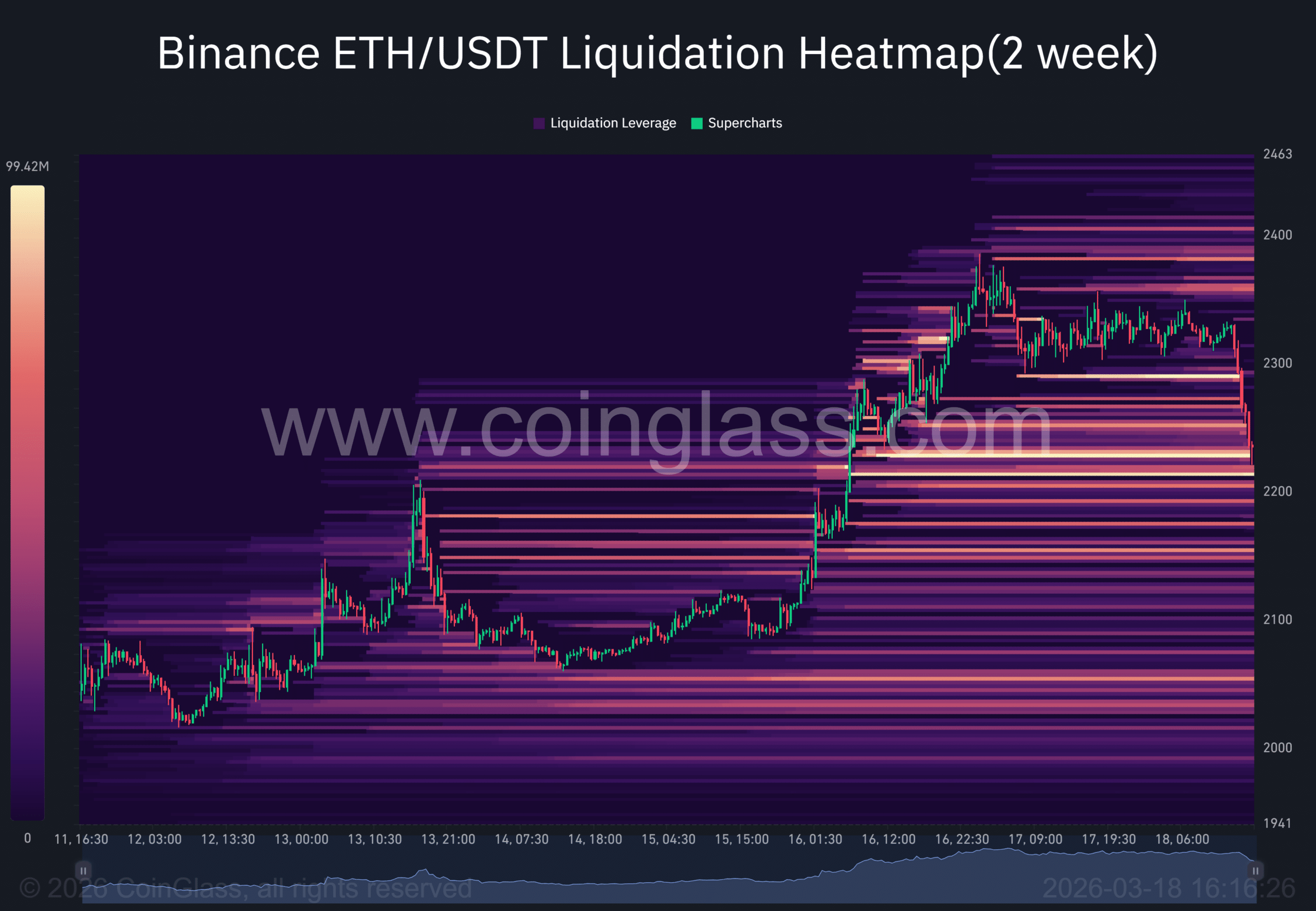
Source: CoinGlass

Final Summary

  • Buterin now believes that a simplified, lean Ethereum could help it reach Solana-like speed while still offering Bitcoin-like security.
  • After a recent recovery to nearly $2400, ETH gave back some of the gains as traders de-risked ahead of the Fed rate decision.


Trending Cryptos

Related Reads

In Jinjiang, Fujian, a Storage Super Unicorn Lies Quiet

In Fujian's Jinjiang, a city known for sportswear, lies a quiet semiconductor giant: Fujian Jinhua Integrated Circuit Co. (JHICC). Once a promising domestic DRAM manufacturer alongside Yangtze Memory and ChangXin Memory Technologies (CXMT), its journey was derailed in 2018 when the U.S. placed it on an Entity List and filed criminal charges for alleged trade secret theft. This halted production for years. A turning point came in February 2024 when a U.S. federal court found JHICC not guilty. However, it had lost crucial time. While CXMT soared to become a top-valued A-share company in 2024, JHICC, with an estimated valuation of 80 billion RMB, was just restarting. Its current output is primarily customized DDR4 chips, not the advanced DDR5/HBM demanded for AI, but it still benefits from the broader memory chip upcycle. JHICC's story is tied to Chen Zhengkun, a veteran engineer who left Micron to lead the venture. Founded in 2016 with state-backed funding, JHICC partnered with Taiwan's UMC to develop DRAM technology. Rapid progress was cut short by the U.S. actions, which Micron initiated, partly due to its heavy reliance on the Chinese market. Post-sanctions, Chen's team worked to rebuild the production line with reduced reliance on U.S. technology. According to its records, JHICC achieved small-scale production and revenue growth under immense pressure. It now focuses on the stable "niche" DRAM market (e.g., TVs, routers) with a monthly capacity of ~40,000 wafers, aiming for 60,000 by 2026. It holds over 1,000 patents but remains on the Entity List. For Jinjiang, investing in JHICC was a bold industrial leap. The local government provided unwavering financial and logistical support during the crisis, helping the company survive. JHICC has become the anchor for a growing local semiconductor cluster. Though its scale lags behind domestic peers, JHICC's persistence symbolizes a hard-won foothold in a global market long dominated by Samsung, SK Hynix, and Micron. Having missed one boom, it seeks a place in the new AI-driven memory supercycle.

marsbit2h ago

In Jinjiang, Fujian, a Storage Super Unicorn Lies Quiet

marsbit2h ago

Trading

Spot

Hot Articles

Discussions

Welcome to the HTX Community. Here, you can stay informed about the latest platform developments and gain access to professional market insights. Users' opinions on the price of ETH (ETH) are presented below.

活动图片














