Kraken Brings Solana DEX Trading Directly to Its Main App

bitcoinistPublished on 2026-06-21Last updated on 2026-06-21

Abstract

Kraken has integrated on-chain Solana decentralized exchange (DEX) trading directly into its main application. This allows eligible customers in the US and over 100 countries to trade more than 2,500 Solana-based tokens without leaving the Kraken app, eliminating the need for separate wallets or applications. The move aims to combine the convenience and security of a centralized platform with the deep liquidity and broad token access of decentralized finance on Solana. A key benefit is direct exposure to early-stage assets not typically available on traditional exchange order books. The integration was announced on June 20, 2026.

Kraken has integrated on-chain Solana decentralized exchange (DEX) trading directly into its main consumer application. This move allows eligible customers in the US and over 100 countries to trade more than 2,500 Solana-based tokens without leaving the Kraken app. The integration aims to bridge the convenience of centralized exchanges with the deep liquidity of decentralized finance.

Bridging CeFi and DeFi on Solana

  • Kraken users can now trade over 2,500 Solana tokens directly within the main app.
  • This feature removes the need for separate wallets, seed phrases, or switching between applications.
  • Users gain access to early-stage assets not yet listed on traditional exchange order books.

This development means users no longer need to manage separate decentralized wallets or juggle multiple applications to access the Solana ecosystem’s decentralized liquidity. By integrating on-chain DEX trading, Kraken is offering a streamlined experience for accessing a wide array of Solana tokens. This provides exposure to assets that might not yet be available on centralized exchange order books, a significant advantage for traders looking for early opportunities.

The integration effectively brings the decentralized liquidity pools of Solana DEXs into the familiar interface of a centralized exchange. This approach offers users the best of both worlds: the ease of use and security of a platform like Kraken, combined with the broad token access and decentralized market depth found on-chain. The ability to trade more than 2,500 Solana-based tokens directly is a substantial expansion of the trading options available within the app.

Accessing Early-Stage Assets

A key benefit for users is the direct exposure to early-stage assets. These tokens, often found only on decentralized exchanges, can represent nascent projects or smaller market opportunities that haven’t yet attracted listings on larger, centralized platforms. By bringing this capability in-house, Kraken is democratizing access to a wider spectrum of the crypto market.

Customers in the US and over 100 countries can now utilize this feature. The integration offers a direct pathway to discover and trade a vast number of Solana tokens, simplifying the process significantly. The official announcement was made on June 20, 2026.

This article was written by the News Desk and edited by Samuel Rae.

This article is based on official announcements published by Kraken. at Kraken Blog Announcement

Trending Cryptos

Related Questions

QWhat is the main news about Kraken and Solana?

AKraken has integrated on-chain Solana decentralized exchange (DEX) trading directly into its main consumer application, allowing eligible customers to trade thousands of Solana-based tokens within the app.

QWhat convenience does the new integration offer to Kraken users?

AThe integration removes the need for separate wallets, seed phrases, or switching between applications. Users can trade directly from the main Kraken app, offering a streamlined experience.

QHow many Solana-based tokens can users trade through this new feature?

AUsers can trade more than 2,500 Solana-based tokens directly within the Kraken app through this integration.

QWho is eligible to use Kraken's new Solana DEX trading feature and where was it announced?

AEligible customers in the US and over 100 countries can use the feature. It was officially announced on June 20, 2026, in a post on the Kraken Blog.

QWhat is a key benefit of accessing DEX trading through Kraken, as mentioned in the article?

AA key benefit is gaining direct exposure to early-stage assets and tokens that might not yet be available on traditional centralized exchange order books, offering access to nascent projects and new opportunities.

Related Reads

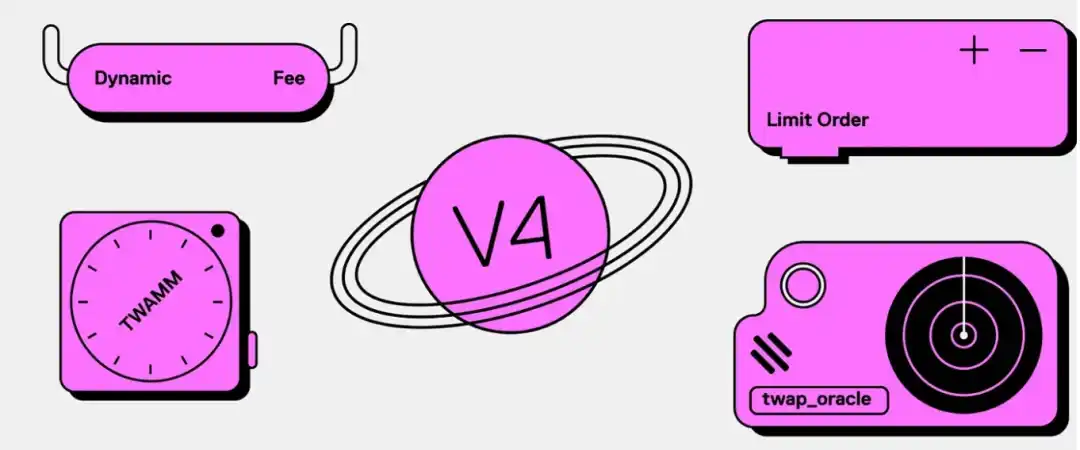
Uniswap v4 Hook Analysis: Architecture Design, Common Vulnerabilities, and Protection Practices

Uniswap v4's Hook mechanism is a major innovation, enabling custom logic injection into liquidity pool lifecycle events like swaps and liquidity provisioning. This transforms the AMM into programmable infrastructure, shifting the security model from protocol-level to pool-level, as each pool's safety now depends on its bound Hook contract. The core architecture revolves around the singleton PoolManager contract, which manages all pools via a flash accounting system. State changes are tracked in transient storage and must be settled by the end of a transaction. Hook contracts are permanently bound to pools via a PoolKey, with their permissions encoded directly into their address via specific low-order bits. This design introduces unique security considerations and challenges for future upgrades. Key vulnerabilities and best practices identified include: - **Access Control Gaps:** Early versions of the BaseHook abstract contract only protect `unlockCallback()`, leaving other lifecycle functions (`beforeSwap`, `afterSwap`, etc.) exposed unless explicitly secured by developers. - **Unrestricted Pool Binding:** The `initialize()` function does not validate if a Hook "consents" to a new pool. Hooks must implement their own whitelisting in `beforeInitialize` to prevent unauthorized pool creation. - **Async/Custom Curve Hooks:** These high-risk Hooks can completely replace Uniswap's swap logic. Their security depends entirely on their own implementation, as they operate outside the native protocol's pricing safeguards. - **Delta Accounting Risks:** The system ensures final balance (NonzeroDeltaCount == 0) but cannot guarantee the *correctness* of intermediate delta states, which attackers could manipulate. - **Token Confusion:** Protocols must implement semantic validation for tokens in user-created markets, not just interface checks, to prevent cross-market confusion attacks. The article emphasizes that Hook auditing requires a "sub-protocol" approach due to extended interaction chains, highlighting a significant shift in security methodology for the v4 ecosystem.

marsbit12m ago

Uniswap v4 Hook Analysis: Architecture Design, Common Vulnerabilities, and Protection Practices

marsbit12m ago

Chips, Open-Source Models, and $50 Trillion: Joe Tsai Reassesses Alibaba Once Again

Alibaba Executive Chairman Joe Tsai recently outlined the company's comprehensive AI strategy in a public discussion. He believes AI represents a massive opportunity, estimating its potential economic impact at up to $50 trillion, stemming from the automation of human intelligence and productivity. Tsai detailed Alibaba's four-layer investment approach across the AI stack: starting from the chip level, moving to cloud infrastructure (Alibaba Cloud), then the model layer with its open-source Qwen model, and finally applications within its vast digital ecosystem (e-commerce, logistics, etc.). The company avoids the energy layer due to China's efficient infrastructure. This broad strategy is designed to ensure Alibaba captures value regardless of where it ultimately concentrates in the AI value chain. He dismissed concerns about an AI investment bubble, pointing to the enormous $50 trillion opportunity. While acknowledging U.S. cloud giants' higher capital expenditure, he argued Chinese firms, including Alibaba (funded by its cash-generative e-commerce core), need to invest more in AI infrastructure. A key theme was technological sovereignty. Tsai positioned open-source models like Qwen as a solution for companies, especially in Europe, seeking independence from proprietary U.S. models and greater data privacy control. He contrasted this with the trend of U.S. giants keeping their models closed-source. Tsai highlighted Alibaba's collaborations with European manufacturers like Bosch and Siemens, using AI for design and quality control. He concluded with an optimistic vision of AI agents enhancing productivity, ultimately freeing up human time for leisure, family, and experiences like live entertainment.

marsbit27m ago

Chips, Open-Source Models, and $50 Trillion: Joe Tsai Reassesses Alibaba Once Again

marsbit27m ago

Trading

Spot
Futures

Hot Articles

Discussions

Welcome to the HTX Community. Here, you can stay informed about the latest platform developments and gain access to professional market insights. Users' opinions on the price of SOL (SOL) are presented below.

活动图片