Kelp DAO Vulnerability Triggers Exodus of Hundreds of Billions; Two Major DeFi Lending Pathologies Clash Head-On

marsbitPublished on 2026-05-29Last updated on 2026-05-29

Abstract

Title: Kelp DAO Exploit Triggers $15 Billion Exodus, Exposing a Clash Between Two DeFi Lending Models. In April 2026, a hacker exploited a LayerZero bridge vulnerability in the Kelp DAO project, minting $292 million in fake rsETH tokens. These were deposited into Aave as collateral to borrow real Ethereum, draining the protocol's liquidity. Within three and a half days, Aave saw $15 billion in deposits flee, forcing a costly $160 million bailout. The root cause was identified as Aave's governance, which had previously voted to set rsETH's loan-to-value ratio to a risky 93%, leaving minimal safety margin. This incident starkly contrasts with the experience of Morpho, the second-largest DeFi lending protocol. Some fake rsETH also flowed into Morpho, but the exposure was limited to $1 million across isolated, pre-configured markets, preventing systemic contagion. The event highlights a fundamental divergence in DeFi lending architectures. Aave employs a shared liquidity pool model, where all deposits back all approved collateral assets, governed by DAO vote. This creates systemic risk, as seen when even users who never interacted with rsETH faced frozen funds. Furthermore, Aave's governance, influenced by leveraged borrowers, prioritized their interests during the crisis, even lowering borrowing rates for frozen markets at the expense of safer depositors. Its supplemental insurance mechanism, Umbrella, also failed as providers withdrew capital when needed. Morpho operates on...

Author: Vaidik Mandloi

Compilation: Saoirse, Foresight News

The underlying principles of all lending protocols in DeFi are largely similar: users deposit stablecoins or Ethereum into a shared liquidity pool, and borrowers draw funds from it after pledging assets; decentralized autonomous organizations (DAOs) vote to decide which assets can serve as collateral and their corresponding loan-to-value (LTV) ratios. Aave has developed a deposit scale of $500 billion precisely by relying on this model. For most of DeFi's development, this has been the industry's sole operating model, and its rationality has never been truly questioned.

However, on April 18, 2026, a hacker exploited a vulnerability in the LayerZero cross-chain bridge of the Kelp DAO project to forge rsETH tokens worth $292 million. The hacker deposited these counterfeit tokens into Aave as collateral to borrow real Ethereum. Within hours, the utilization rates of Aave's major mainstream lending markets reached 100%, meaning all available funds within the protocol had been fully borrowed. Over the next three and a half days, the platform lost $15 billion in deposits. Ultimately, Aave had to collaborate with various ecosystem parties to conduct a rescue, raising $160 million to cover the losses.

Although this vulnerability originated from the Kelp DAO project, the root cause of such massive losses lies in Aave's governance mechanism. As early as January of this year, a community vote decided to raise the collateral factor for rsETH to 93%, leaving only a 7% safety margin for such assets. It was this single decision that brewed one of the largest bank runs in the history of DeFi lending.

On the same day, some of the forged rsETH tokens also flowed into Morpho, the second-largest DeFi lending protocol. However, the risk exposure was only $1 million and dispersed across two independent, small isolated markets, failing to trigger a chain-reaction crisis.

Upon conducting in-depth research into this incident, I discovered that behind this event lies far more than a simple security attack.

Core Differences Between the Two Models

To understand why Aave hemorrhaged billions while Morpho remained largely unscathed, we must first clarify the fund placement and operational logic of the two protocol types.

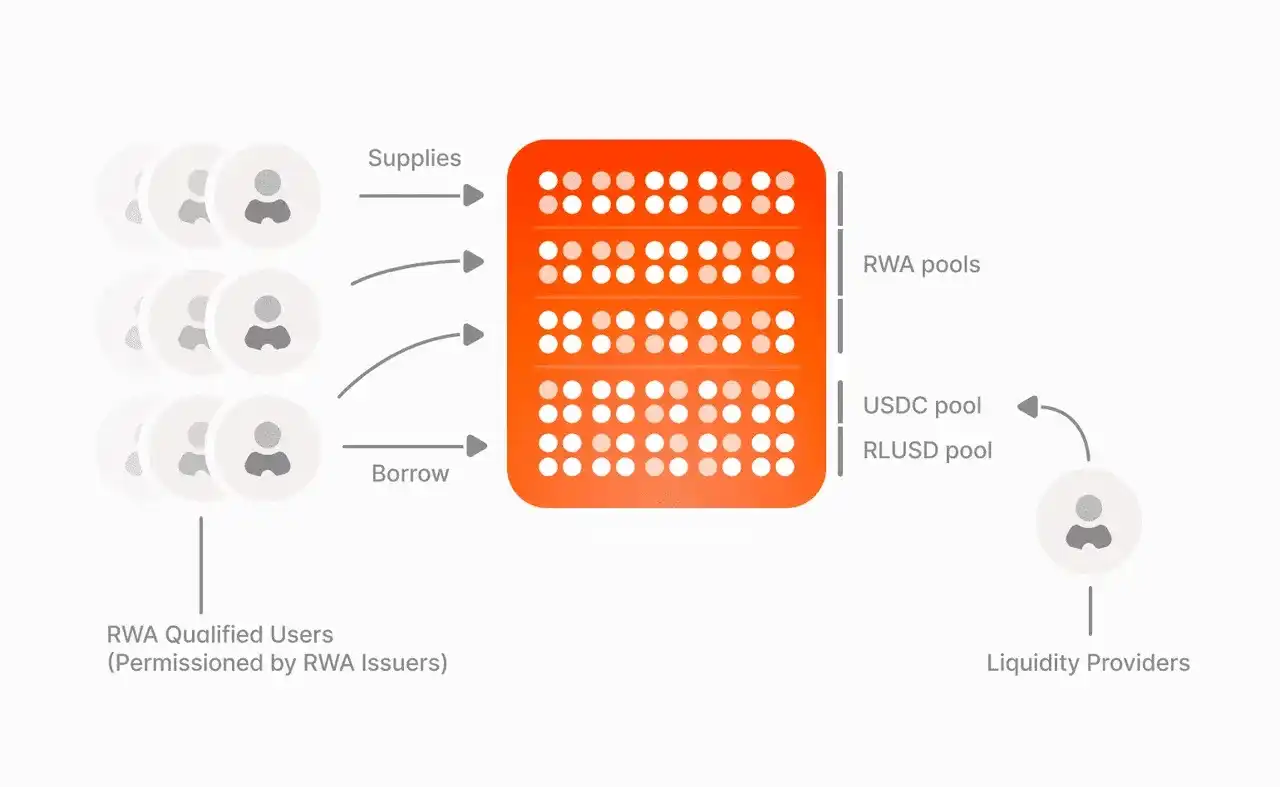
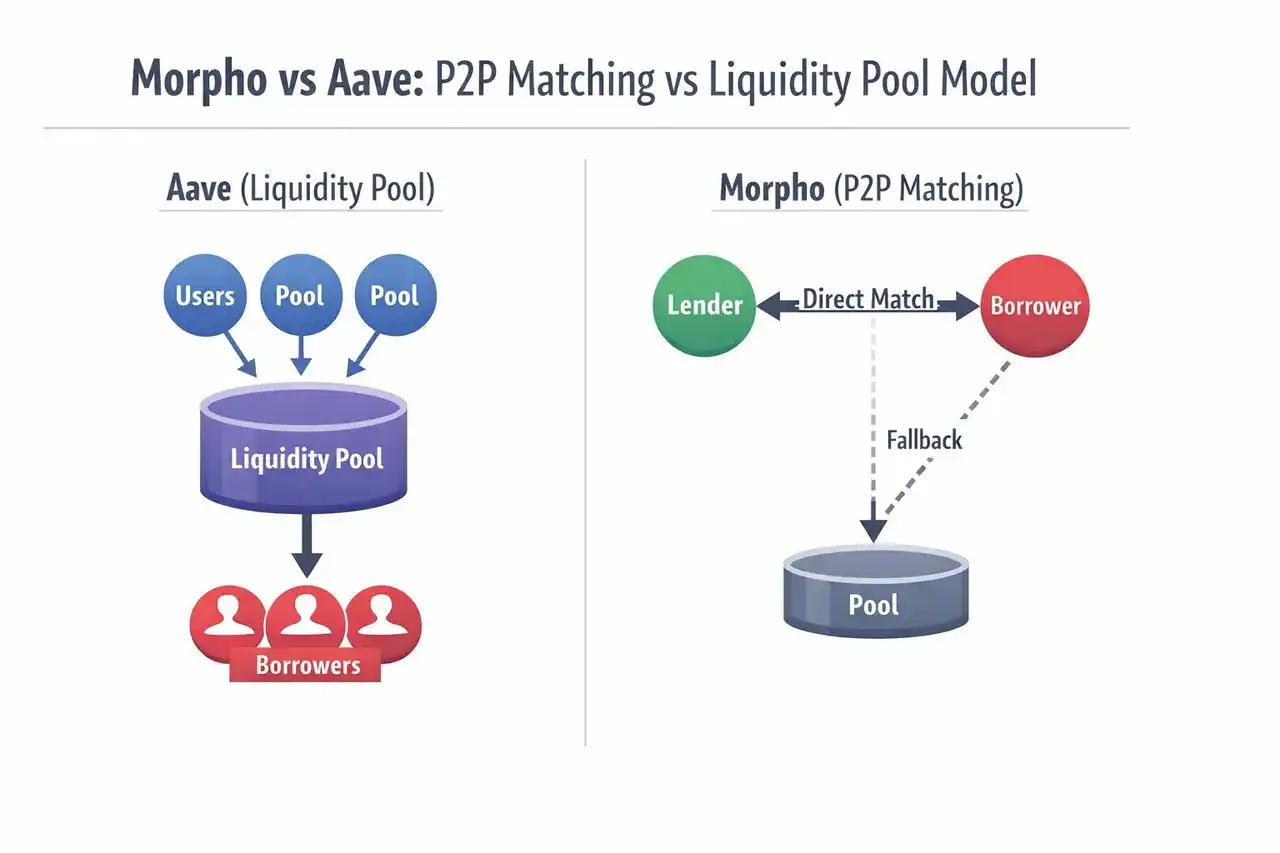
When you deposit USDC into Aave, the funds flow into a single master liquidity pool, supporting lending activities for all community-approved assets like Ethereum and staked tokens. Depositors cannot choose the type of collateral asset their funds correspond to; all related rules are set by DAO votes. Therefore, when rsETH faced collapse risk, even ordinary users who had only deposited USDC and never touched rsETH found their assets frozen—everyone's funds were in the same risk pool, suffering collective losses.
Source: BingX

More critically, while the market was halted and users couldn't withdraw, Aave's governance layer actually lowered the borrowing rates for the frozen Ethereum markets, aiming to protect borrowers who had leveraged rsETH. Since deposit rates are directly linked to borrowing rates, depositors with the lowest risk and principal security saw their deposit yields shrink further.

In traditional credit systems, lenders with the lowest risk enjoy priority in repayment. However, Aave completely inverted this rule. The reason is that borrowers engaged in rsETH leveraged trading are also the most active voting group in community governance. When risk erupts, high-risk participants holding governance power naturally prioritize protecting their own interests.

Aave launched an insurance mechanism called Umbrella in late 2025, attempting to address such bad debt risks. Users could stake Ethereum; if the protocol incurred bad debts, the staked assets would be used for compensation. However, after the Kelp DAO crisis erupted, 18,922 out of 23,507 staked aWETH positions entered an unstaking waiting period, with nearly 80% of the insurance pool's funds withdrawing collectively.

This mechanism ultimately failed completely. On-chain insurance relies on voluntary user participation, and capital providers inevitably choose to exit when real risk materializes—after all, their assets only face substantial loss when a crisis occurs. This leads to such insurance often existing during peaceful times but becoming ineffective precisely when protection is needed.

Morpho's operational model is entirely different. It abandons the unified shared liquidity pool. Anyone can create an independent, isolated lending market, pre-setting the loan asset, collateral asset, price oracle, and interest rate model. Once parameters are deployed, they cannot be modified. To adjust risk levels, one can only create a new market.
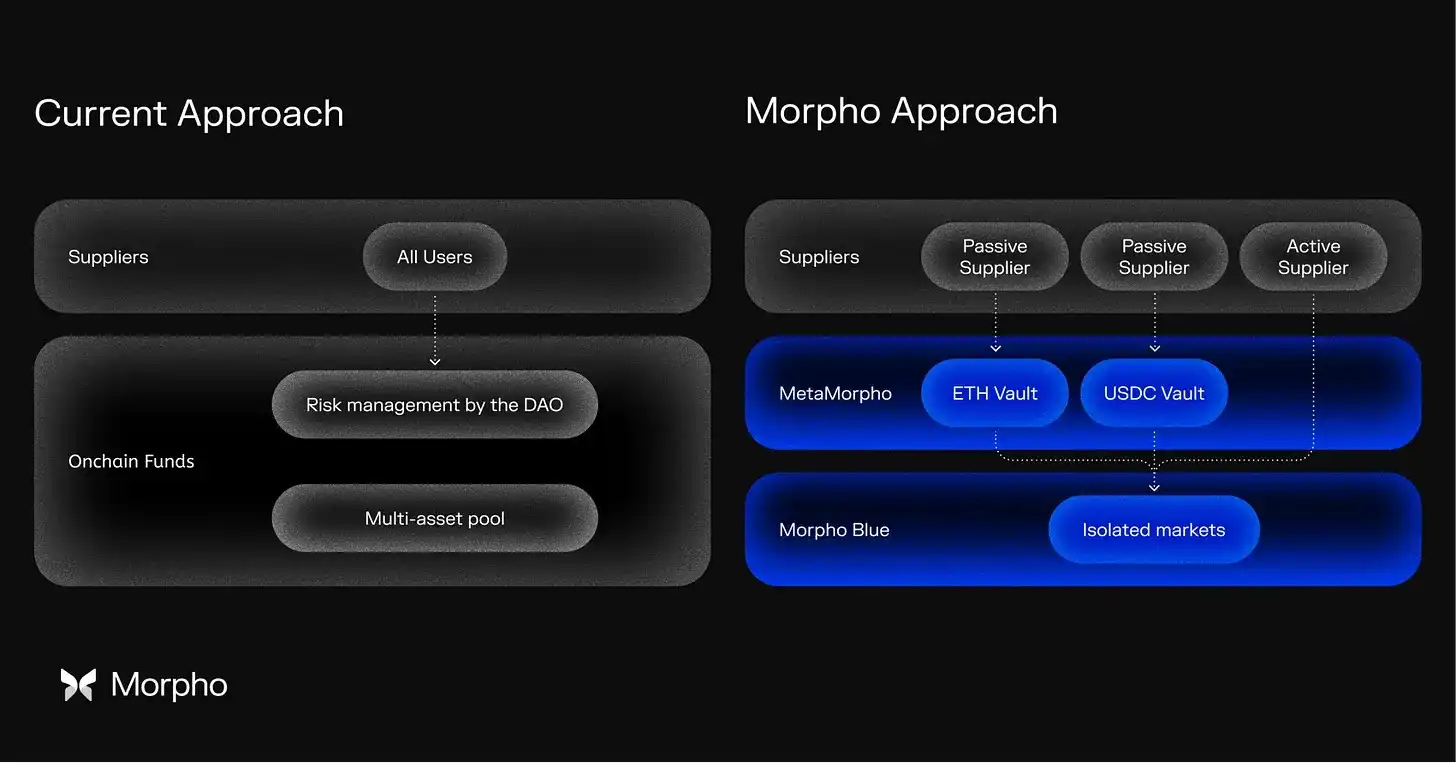
Differences in underlying architecture between the traditional DeFi lending model (represented by Aave) and Morpho's "Morphological" model.

Furthermore, Morpho introduces independent risk management institutions (Stewards), such as Gauntlet and Steakhouse Financial. These entities establish vaults, allocate funds to different markets based on their own analysis, and charge performance fees; if losses occur, they are confined within their own vaults. Gauntlet also provided risk advice for Aave, but in Aave's system, its professional opinions were often overruled by token holders seeking high yields through voting, a situation Morpho prevents at its root.

The Overlooked Hidden Cost

Aave and Morpho are currently the two most widely applied lending models in the crypto space: Aave uses the shared liquidity pool model where all deposits are aggregated, with risk rules set by community votes; Morpho advocates the isolated market model, where each lending pair is independent, with risks managed autonomously by professional institutions.

The Kelp DAO vulnerability exposed the flaws and weaknesses of the shared pool model. But even during stable periods without security incidents, this model harbors a long-overlooked hidden cost. Aave's three core markets on Ethereum (Ethereum, USDT, USDC) contribute 89% of the platform's lending volume. In these three markets, deposit rates are consistently 25% to 35% lower than borrowing rates. This spread essentially represents idle funds lying dormant in the liquidity pool; depositors cannot profit from them, yet borrowers still bear the full borrowing cost.

The interest rate mechanism adjusted based on utilization rates can push rates higher when risk increases but cannot activate idle funds when lending demand is low, leaving large amounts of assets stranded in the pool generating no yield. In these three markets alone, the annual value erosion due to idle funds amounts to approximately $52 million, close to a quarter of Aave's annualized revenue for one quarter. Even zeroing out the reserve ratio and canceling platform fees cannot solve the idle fund issue—it's an inherent shortcoming of the shared pool architecture.

Morpho's interest rate model aims to maintain a utilization rate of around 90%, significantly higher than Aave's 60% to 80% range. This model can sustain high utilization because deposits within the platform are not re-used as collateral for other loans, avoiding chain-liquidation risks at the source and thus eliminating the need to reserve large amounts of capital as a risk buffer. When lending demand is strong and funds are heavily borrowed, rates automatically increase, attracting more depositors; when lending demand is weak, rates decrease, stimulating borrowing. The entire system achieves dynamic balance without requiring community votes.
Source: Gate.com

Actual data confirms its advantage: even after deducting Steward fees, the yield offered to depositors by Morpho's top USDC vaults still exceeds that of Aave and Compound. Currently, Morpho's deposit-to-loan ratio is 41%, while Aave's is 39%, and the former's scale reaches tens of billions of dollars, meaning the yield advantage benefits all depositors on the platform day after day.

Institutional Choice: Which is More Trustworthy?

Surprisingly, all of Coinbase's crypto asset lending services are built on Morpho. The related loan scale has now surpassed $2 billion, and over 100 million platform users are indirectly enjoying the returns provided by Morpho.

Most users aren't even aware they are using DeFi services. Coinbase did not develop its own lending system nor choose another platform. The core reason is that Morpho's underlying architecture allows the platform to independently set risk parameters, select partner risk institutions, and maintain full control over the entire product experience.

Apollo Global Management, a global asset manager with over $1 trillion in assets under management and 30 years of experience in private credit, recently signed a four-year cooperation agreement, planning to acquire up to 90 million MORPHO tokens, accounting for 9% of the total token supply. The institution is connecting its tokenized fund assets to Morpho as collateral, with Gauntlet responsible for vault management and market stress testing.

Beyond that, Anchorage Digital, the first federally chartered native crypto bank in the US, has connected its institutional clients managing hundreds of billions to Morpho vaults; SG-FORGE, the compliant arm of French banking giant Société Générale, is the first licensed bank to implement DeFi lending business through Morpho.

These heavily regulated traditional financial institutions collectively chose Morpho, with a highly consistent core demand: the isolated market model allows them to meet their own compliance and risk control requirements without relying on DAO decisions. In contrast, all market rules in Aave inevitably involve community voting, completely incompatible with institutions' need for autonomous control.

Changes in the regulatory environment have further amplified this trend. The US "GENIUS Act" stipulates that stablecoin issuers cannot directly distribute investment returns, meaning stablecoin institutions require neutral underlying infrastructure to activate vast amounts of idle assets. US-related projections show that by 2028, the scale of stablecoin reserves invested in US Treasury bonds will surge from the current $120 billion to over $1 trillion. This massive pool of capital urgently needs a lending foundation that allows asset custodians to control their own risks, and Morpho is currently the most fitting choice.


Trending Cryptos

Related Questions

QWhat was the root cause of the massive $15 billion deposit outflow from Aave following the Kelp DAO exploit?

AThe root cause was Aave's governance mechanism. Earlier, the community had voted to increase the loan-to-value (LTV) ratio for rsETH to 93%, leaving a very thin safety margin of 7%. When fake rsETH tokens were deposited as collateral, it quickly drained the shared liquidity pool, causing the massive withdrawal.

QWhat is the fundamental difference in the operational models between Aave and Morpho as described in the article?

AAave uses a shared liquidity pool model where all deposits are pooled together to back all approved assets, with rules set by DAO governance. Morpho uses an isolated market model, where each lending market is separate with its own parameters set at creation, managed independently by professional risk stewards.

QWhy did Aave's Umbrella insurance mechanism fail during the crisis, according to the article?

AThe mechanism failed because it relies on voluntary participation. When the crisis hit, nearly 80% of the staked insurance funds (aWETH) entered the unstaking period and were withdrawn. Participants were incentivized to leave to avoid losses, rendering the insurance pool ineffective when it was needed most.

QWhat 'hidden cost' does the shared pool model like Aave's incur during normal market conditions?

AA significant hidden cost is idle capital due to low capital efficiency. In Aave's top three markets, the spread between deposit and borrow rates (25-35%) represents idle funds that earn no yield for depositors but whose cost is still borne by borrowers, leading to an estimated annual value drain of $52 million.

QWhy are regulated traditional financial institutions like Coinbase and Apollo Global Management choosing Morpho over Aave for their DeFi lending operations?

AThey choose Morpho because its isolated market model allows them to set their own risk parameters and choose their risk stewards, giving them full control and compliance. This is essential for meeting regulatory requirements, unlike Aave's model where all market rules are subject to community DAO votes.

Related Reads

7 Months After the Collapse of Huiwang, Southeast Asia's Escrow Platforms Undergo a Major Reshuffle

Following the collapse of Huione Pay—dubbed the "Alipay of Southeast Asia"—seven months ago, the region's underground financial guarantee platform sector is undergoing a significant reshuffle. This power vacuum has been swiftly filled by emerging platforms such as XinBi, Tiger/Navigator, JinBei (renamed JinBo), Dali/Tiancheng, and FullyLight. These platforms, operating largely via Telegram and offering services like escrow for illicit transactions, have absorbed the vast user base and markets left behind by Huione. While positioning themselves as "trust intermediaries," their primary clientele consists of networks involved in online scams, money laundering, illegal gambling, and even human trafficking. For instance, the Tiger/Navigator platform explicitly provides "escrow" services for kidnapping-for-ransom operations ("强押车交易"). Data underscores the immense scale: Huione alone processed over $103 billion in cryptocurrency payments and facilitated over $31 billion through its escrow market before its downfall, linking it to Cambodia's notorious Prince Group. Since its collapse, competitors have seen explosive growth. For example, the XinBi platform has accumulated over $1.6 billion in total USDT revenue, while platforms like NewPay, OkPay (under Dali), and FullyLight Wallet collectively processed over $4.8 billion in USDT in a single year. This ecosystem thrives in regions like Cambodia and Myanmar, where regulatory gaps allow these platforms to act as critical financial infrastructure for sprawling cybercrime industries, from scam compounds to online casinos. The article concludes that the moniker "Southeast Asian Alipay" is a misnomer, obscuring the platforms' fundamental role in enabling serious criminal enterprises rather than representing legitimate financial innovation.

Odaily星球日报7m ago

7 Months After the Collapse of Huiwang, Southeast Asia's Escrow Platforms Undergo a Major Reshuffle

Odaily星球日报7m ago

The Changing Landscape: What Are Crypto VCs Experiencing?

Title: The Shifting Landscape of Crypto Venture Capital The era of dedicated crypto venture capital funds is undergoing a significant transformation. Once essential for navigating the sector's complexity and high risk, these specialized funds are now facing an identity crisis as the market matures. This shift mirrors historical patterns in other specialized investment classes like cleantech and SPACs, where initial information advantages dissipate as technologies become mainstream and integrated into existing industry frameworks. The article argues that crypto is reaching a critical inflection point, transitioning from a "building phase" to an "integration phase." Major players like Stripe, BlackRock, and Visa now engage with crypto not for its novel mechanics but as a foundational financial infrastructure. Their needs—regulatory compliance, banking partnerships, distribution channels—align with traditional fintech, a domain easily understood by large, generalist funds like Sequoia and Founders Fund. This evolution creates a "barbell effect" within the VC landscape. On one end are massive, diversified platforms that can incorporate crypto as one vertical among many. On the other are small, nimble funds focused on niche, experimental projects. The middle ground—medium-sized dedicated crypto funds—is being squeezed out. Their typical fund size makes it impossible to generate sufficient returns solely from early-stage crypto bets, yet they cannot compete with giants for later-stage deals. Consequently, leading crypto-native firms like Paradigm and Framework Ventures are expanding into AI, robotics, and other sectors, driven partly by LP pressure for better returns amid a broader VC DPI crisis. Others, like Dragonfly and a16z, have narrowed their crypto focus predominantly to financial infrastructure like stablecoins, reframing the sector's core narrative. For crypto entrepreneurs, this consolidation presents challenges. While generalist funds offer larger checks and broader resources, crypto projects now compete fiercely with AI for attention and capital within these firms. Furthermore, the long-term, non-commercial foundational work that built the ecosystem—funded by dedicated crypto VCs—is less likely to attract generalist capital focused on direct returns. The conclusion is that "crypto investor" as a standalone category is becoming obsolete, akin to "internet investor." Crypto is becoming a baseline infrastructure layer. The future will see a barbell structure: large-scale growth financing handled by generalist funds, while pioneering, speculative projects are funded by small, specialized vehicles. The dedicated crypto funds of the 2017-2021 boom, which incubated core infrastructure, are giving way to this new, bifurcated reality.

Foresight News25m ago

The Changing Landscape: What Are Crypto VCs Experiencing?

Foresight News25m ago

As Consensus Accelerates, What Are Young Investors Betting On?

Title: As Consensus Forms Faster, What Are Young Investors Betting On? In the rapid evolution of tech investment, a new generation of young investors is navigating a landscape where AI, robotics, commercial aerospace, and quantum computing are advancing simultaneously. Traditional investment logic based on financial models is giving way to a need for deep technical understanding and the ability to act before industry consensus forms. An analysis of trends from the "WAIC FUTURE TECH" list of young investment leaders reveals key shifts in focus. The first major trend is the movement of AI from the digital screen into the physical world. Investment is shifting from large language models and chatbots towards embodied AI, robotics, AI hardware, and edge computing. While demonstrations generate excitement, the real challenge lies in achieving scalable, reliable, and cost-effective delivery in complex real-world environments like factories and logistics. Success depends not just on algorithms but on the integration of sensors, actuators, and control systems. Second, the competitive focus for large models is moving beyond raw capability toward building an "intelligence flywheel." The goal is to create self-reinforcing systems where user interaction generates data, improving the model, which in turn enhances the user experience and attracts more engagement. Companies that successfully embed AI into workflows to create these closed-loop systems can build lasting value that isn't easily erased by the next model upgrade. Third, facing a potential bottleneck in high-quality human-generated data, investors are looking at new underlying technologies. Reinforcement learning and self-play, as demonstrated by AlphaGo Zero, offer paths for AI to generate its own experience. Scientific foundation models, which aim to build general AI capabilities for fields like life sciences and materials discovery, represent a non-consensus direction that could unlock new frontiers of knowledge and data. Finally, in deep-tech areas like quantum computing, commercial aerospace, and space-based infrastructure, patient capital is essential. These fields have long, uncertain development and validation cycles involving complex engineering, supply chains, and regulations. Investment here requires a long-term view, focusing on foundational team capabilities and the eventual emergence of market demand, even if commercial returns are distant. Collectively, these trends illustrate how young investors are adapting to a new era. They are learning to make earlier, technically-informed judgments, balance hype with real-world viability, and provide the patient capital needed to build the deep-tech foundations of the future.

marsbit53m ago

As Consensus Accelerates, What Are Young Investors Betting On?

marsbit53m ago

Trading

Spot

Hot Articles

How to Buy DAO

Welcome to HTX.com! We've made purchasing DAO Maker (DAO) simple and convenient. Follow our step-by-step guide to embark on your crypto journey.Step 1: Create Your HTX AccountUse your email or phone number to sign up for a free account on HTX. Experience a hassle-free registration journey and unlock all features.Get My AccountStep 2: Go to Buy Crypto and Choose Your Payment MethodCredit/Debit Card: Use your Visa or Mastercard to buy DAO Maker (DAO) instantly.Balance: Use funds from your HTX account balance to trade seamlessly.Third Parties: We've added popular payment methods such as Google Pay and Apple Pay to enhance convenience.P2P: Trade directly with other users on HTX.Over-the-Counter (OTC): We offer tailor-made services and competitive exchange rates for traders.Step 3: Store Your DAO Maker (DAO)After purchasing your DAO Maker (DAO), store it in your HTX account. Alternatively, you can send it elsewhere via blockchain transfer or use it to trade other cryptocurrencies.Step 4: Trade DAO Maker (DAO)Easily trade DAO Maker (DAO) on HTX's spot market. Simply access your account, select your trading pair, execute your trades, and monitor in real-time. We offer a user-friendly experience for both beginners and seasoned traders.

2.7k Total ViewsPublished 2024.03.29Updated 2026.06.02

How to Buy DAO

Discussions

Welcome to the HTX Community. Here, you can stay informed about the latest platform developments and gain access to professional market insights. Users' opinions on the price of DAO (DAO) are presented below.

活动图片