Kazakhstan Miners Mined 7.2 Thousand Bitcoins. How the Industry is Developing

cryptonews.ruPublished on 2026-08-11Last updated on 2026-08-11

Abstract

Authorized mining pools in Kazakhstan mined approximately 7.2 thousand bitcoins between 2023 and May 2026, with the highest output (3.4k BTC) in 2024. Currently, 78 mining entities operate in the country, managing over 465,000 mining devices. From 2023 to 2025, the state budget received around 35 billion tenge in tax revenue from miners, largely from VAT on imported equipment. Astana accounted for 81.5% of digital mining services in 2025, benefiting from its status as a financial hub. New regulations effective August 1 offer "strategic miner" status with direct, capped energy supply in exchange for 10% of mined cryptocurrency. Additionally, Kazakhstan has legalized mining using associated petroleum gas at oil and gas fields to promote efficient energy use and regional investment.

In Kazakhstan, accredited mining pools mined about 7.2 thousand bitcoins in the period from 2023 to May 2026. This information was reported by the Ministry of Artificial Intelligence and Digital Development (MAIDD) of Kazakhstan, as reported by EnergyProm.

The largest volume of mined coins was in 2024 — 3.4 thousand bitcoins. Last year, 2.3 thousand bitcoins were mined, and in the first five months of 2026, 519.5 coins were mined.

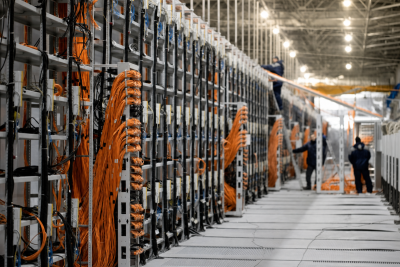
According to MAIDD data, 78 mining entities operate in Kazakhstan. Of these, 35 have their own data centers, and 43 companies place equipment on third-party sites. More than 465,000 mining devices have been entered into the special equipment register.

During the period from 2023 to 2025, the state budget of Kazakhstan received about 35 billion tenge (approximately 6.15 billion rubles at the current exchange rate) from miners in the form of tax payments. At the same time, a significant portion of the deductions was formed from the value-added tax paid on equipment imports.

81.5% of all services provided in the "Digital Mining Activity" category last year were in Astana. This is explained by the special status of the city, the functioning of the Astana International Financial Center, crypto exchanges, and various related services. Companies providing data center leasing are present in almost every region, but the largest shares of services in this category (totaling 70.2%) also fall on the largest cities — Astana and Almaty.

Since August 1, rules for conducting strategic digital mining have come into effect in Kazakhstan. The state offers existing crypto miners the status of strategic miners and stable supply directly from energy sources at capped tariffs in exchange for 10% of the mined cryptocurrency.

In early July, mining using associated gas was also legalized in Kazakhstan — cryptocurrency mining was permitted at oil and gas fields using electricity generated from APG. The rational use of energy resources by miners can stimulate regional investments and make energy consumption more efficient, according to the authorities.

end-content

Trending Cryptos

Related Questions

QAccording to the Ministry of Artificial Intelligence and Digital Development, how many bitcoins were mined in Kazakhstan from 2023 through May 2026?

AApproximately 7.2 thousand bitcoins were mined by accredited mining pools during that period.

QWhat is the annual breakdown of bitcoin production mentioned for Kazakhstan, and which year had the highest output?

AIn 2023, 2.3 thousand bitcoins were mined. In 2024, the highest output was recorded at 3.4 thousand bitcoins. From January to May 2026, 519.5 bitcoins were mined.

QHow many mining entities operate in Kazakhstan, and what are the two main categories based on infrastructure ownership?

AThere are 78 mining entities operating in Kazakhstan. Among them, 35 have their own data centers, while 43 companies place their equipment at third-party sites.

QWhat is the estimated revenue the Kazakh state budget received from miners from 2023 to 2025, and which tax contributed significantly?

AThe state budget received around 35 billion tenge (approximately 6.15 billion Russian rubles at the current rate). A significant portion of these payments came from the value-added tax paid on the import of mining equipment.

QWhat is the new 'strategic digital mining' framework introduced in Kazakhstan starting August 1st, and what are the key terms for miners?

AThe new rules offer existing crypto miners the status of 'strategic miners.' In exchange for a stable direct power supply from energy sources at capped rates, these miners are required to pay 10% of the cryptocurrency they mine to the state.

Related Reads

Fed Research: Crypto Investors Driven by Beliefs, Returns Change Their Decisions

A new working paper from the Federal Reserve Bank of Cleveland provides a novel explanation for cryptocurrency's divergence from traditional financial assets. It finds that American crypto investors are distinguished not by demographics or risk tolerance alone, but by their radically different beliefs about future returns. This divergence in expectations better explains who owns crypto than factors like age or income, a reversal of the pattern seen with stocks or bonds. The research, based on surveys of up to 25,000 US households, shows crypto owners expected an average 22% annual return, compared to just 7% for non-owners. A one-percentage-point increase in an individual's expected return was linked to a 0.8-point rise in ownership likelihood. A randomized experiment revealed that simply showing information about Bitcoin's past 12-month performance increased respondents' desired crypto portfolio share by about 47% and spurred subsequent purchases, primarily among those who previously felt uninformed. The study suggests this dynamic—where past gains attract new buyers, pushing prices higher and reinforcing bullish beliefs—could fuel speculative bubbles. It also indicates crypto wealth gains are treated more like "gambling winnings" than permanent income, boosting purchases of durable goods but not everyday spending. The broader conclusion is that crypto volatility stems partly from investor disagreement and learning, not just market fundamentals. With widespread misunderstanding and shifting expectations driven by performance data, price swings are likely to remain a defining feature of the asset class. Future retail demand may depend not just on Bitcoin's price, but on what information investors receive about its past performance.

cryptonews.ru1h ago

Fed Research: Crypto Investors Driven by Beliefs, Returns Change Their Decisions

cryptonews.ru1h ago

Trading

Spot

Hot Articles

What is $BITCOIN

DIGITAL GOLD ($BITCOIN): A Comprehensive Analysis Introduction to DIGITAL GOLD ($BITCOIN) DIGITAL GOLD ($BITCOIN) is a blockchain-based project operating on the Solana network, which aims to combine the characteristics of traditional precious metals with the innovation of decentralized technologies. While it shares a name with Bitcoin, often referred to as “digital gold” due to its perception as a store of value, DIGITAL GOLD is a separate token designed to create a unique ecosystem within the Web3 landscape. Its goal is to position itself as a viable alternative digital asset, although specifics regarding its applications and functionalities are still developing. What is DIGITAL GOLD ($BITCOIN)? DIGITAL GOLD ($BITCOIN) is a cryptocurrency token explicitly designed for use on the Solana blockchain. In contrast to Bitcoin, which provides a widely recognized value storage role, this token appears to focus on broader applications and characteristics. Notable aspects include: Blockchain Infrastructure: The token is built on the Solana blockchain, known for its capacity to handle high-speed and low-cost transactions. Supply Dynamics: DIGITAL GOLD has a maximum supply capped at 100 quadrillion tokens (100P $BITCOIN), although details regarding its circulating supply are currently undisclosed. Utility: While precise functionalities are not explicitly outlined, there are indications that the token could be utilized for various applications, potentially involving decentralized applications (dApps) or asset tokenization strategies. Who is the Creator of DIGITAL GOLD ($BITCOIN)? At present, the identity of the creators and development team behind DIGITAL GOLD ($BITCOIN) remains unknown. This situation is typical among many innovative projects within the blockchain space, particularly those aligning with decentralized finance and meme coin phenomena. While such anonymity may foster a community-driven culture, it intensifies concerns about governance and accountability. Who are the Investors of DIGITAL GOLD ($BITCOIN)? The available information indicates that DIGITAL GOLD ($BITCOIN) does not have any known institutional backers or prominent venture capital investments. The project seems to operate on a peer-to-peer model focused on community support and adoption rather than traditional funding routes. Its activity and liquidity are primarily situated on decentralized exchanges (DEXs), such as PumpSwap, rather than established centralized trading platforms, further highlighting its grassroots approach. How DIGITAL GOLD ($BITCOIN) Works The operational mechanics of DIGITAL GOLD ($BITCOIN) can be elaborated on based on its blockchain design and network attributes: Consensus Mechanism: By leveraging Solana’s unique proof-of-history (PoH) combined with a proof-of-stake (PoS) model, the project ensures efficient transaction validation contributing to the network's high performance. Tokenomics: While specific deflationary mechanisms have not been extensively detailed, the vast maximum token supply implies that it may cater to microtransactions or niche use cases that are still to be defined. Interoperability: There exists the potential for integration with Solana’s broader ecosystem, including various decentralized finance (DeFi) platforms. However, the details regarding specific integrations remain unspecified. Timeline of Key Events Here is a timeline that highlights significant milestones concerning DIGITAL GOLD ($BITCOIN): 2023: The initial deployment of the token occurs on the Solana blockchain, marked by its contract address. 2024: DIGITAL GOLD gains visibility as it becomes available for trading on decentralized exchanges like PumpSwap, allowing users to trade it against SOL. 2025: The project witnesses sporadic trading activity and potential interest in community-led engagements, although no noteworthy partnerships or technical advancements have been documented as of yet. Critical Analysis Strengths Scalability: The underlying Solana infrastructure supports high transaction volumes, which could enhance the utility of $BITCOIN in various transaction scenarios. Accessibility: The potential low trading price per token could attract retail investors, facilitating wider participation due to fractional ownership opportunities. Risks Lack of Transparency: The absence of publicly known backers, developers, or an audit process may yield skepticism regarding the project's sustainability and trustworthiness. Market Volatility: The trading activity is heavily reliant on speculative behavior, which can result in significant price volatility and uncertainty for investors. Conclusion DIGITAL GOLD ($BITCOIN) emerges as an intriguing yet ambiguous project within the rapidly evolving Solana ecosystem. While it attempts to leverage the “digital gold” narrative, its departure from Bitcoin's established role as a store of value underscores the need for a clearer differentiation of its intended utility and governance structure. Future acceptance and adoption will likely depend on addressing the current opacity and defining its operational and economic strategies more explicitly. Note: This report encompasses synthesised information available as of October 2023, and developments may have transpired beyond the research period.

2.1k Total ViewsPublished 2025.05.13Updated 2025.05.13

What is $BITCOIN

Discussions

Welcome to the HTX Community. Here, you can stay informed about the latest platform developments and gain access to professional market insights. Users' opinions on the price of BTC (BTC) are presented below.

活动图片