Kakao Pay Partners with Nasdaq-listed Siebert to Tokenize Korean Stocks for Wall Street

cryptonews.ruPublished on 2026-07-28Last updated on 2026-07-28

Abstract

Kakao Pay Securities and U.S. broker-dealer Siebert (Nasdaq: SIEB) announced a partnership, "K-Stock Global Gateway," to explore offering tokenized South Korean stocks to American investors. The primary goal is to overcome the time-zone barrier, as U.S. traders cannot currently trade Korean stocks during Seoul's market hours. Tokenized shares on a blockchain could enable trading outside traditional exchange hours. The partnership also aims to explore T+0 same-day settlement for faster access to proceeds. Launch of the service is targeted for the first half of 2027. Kakao Pay brings about 9 million existing Korean brokerage accounts to the venture. However, implementation remains contingent on receiving necessary regulatory approvals in both the U.S. and South Korea. Executives from both companies emphasized that tokenization is just one initial step in a broader partnership. They plan to develop more cross-border financial products and investment opportunities, combining Siebert's U.S. market access with Kakao Pay's technology and community reach.

The companies announced the partnership on Monday under the name K-Stock Global Gateway. It combines Siebert's brokerage infrastructure in the U.S. with Kakao Pay Securities' presence in South Korea, where the company serves approximately 9 million securities trading accounts.

Tokenization Aims to Overcome Time Barrier

The core issue the partnership aims to solve is time. The South Korean and U.S. markets are on opposite sides of the globe, so a trader in New York cannot buy or sell Korean stocks during the Korean trading session.

Siebert and Kakao Pay Securities plan to explore tokenizing South Korean stocks to circumvent this barrier. A tokenized share could be traded on a blockchain-based system outside the operating hours of the relevant stock exchange, giving U.S. investors access to Korean stocks even when markets in Seoul are closed.

The companies are also exploring the possibility of tokenized securities supporting T+0 settlement, meaning trades would settle on the same day rather than within the standard multi-day cycle. Faster settlement would allow investors to access sale proceeds sooner.

What Traders Need to Know

  • The service launch is scheduled for the first half of 2027.
  • Kakao Pay Securities brings approximately 9 million existing stock trading accounts to this agreement.
  • Tokenization is described as one of several products the partners plan to develop, not the end goal.
  • The implementation of the service depends on obtaining regulatory approvals in both the U.S. and South Korea.

Company Leadership Sees the Deal as a First Step

Siebert CEO John J. Gebbia stated that Kakao Pay Securities' choice of Siebert as its U.S. partner validates the effectiveness of the financial infrastructure Siebert has built. He said tokenization represents a significant first opportunity, but the partnership is designed for broader horizons, aiming to give investors in both markets access to products previously unavailable to them.

Kakao Pay Securities CEO Simon Shin said the goal is to create a global gateway for Korean stocks by combining his company's technology, content, and community reach with Siebert's access to the U.S. market.

A Range of Opportunities, Not a Single Product

Siebert and Kakao Pay Securities state that tokenization is just one component of a larger plan. Both companies intend to find additional ways to connect U.S. and Korean investors over time, including new financial products and cross-border investment opportunities.

The partnership also aims to combine brokerage access with market information and investor education. This would give U.S. investors a more comprehensive view of South Korean companies, which are less familiar to U.S. retail traders than domestic companies.

A Regulatory Alignment Process Ahead

Nothing in this announcement is final. Both Siebert and Kakao Pay Securities note that any project implementation remains subject to compliance with regulatory requirements and investor protection standards in both the U.S. and South Korea.

For now, the deal signals that a Nasdaq-listed U.S. brokerage firm sees tokenized real-world assets (RWAs) as a practical tool for solving a specific problem: the time zone difference between global markets. Whether this becomes a working product for U.S. investors depends on what regulators in both countries permit over the coming year.

end-content

Related Questions

QWhat is the main problem that the partnership between Kakao Pay Securities and Siebert aims to solve?

AThe main problem is the time zone difference between the South Korean and U.S. markets, which prevents traders in one region from buying or selling stocks from the other region during its local trading session.

QHow do the companies plan to use tokenization to address the time zone issue?

AThey plan to tokenize South Korean stocks, allowing them to be traded on a blockchain-based system outside of the Korean stock exchange's operating hours. This would give U.S. investors access to Korean stocks even when the Seoul markets are closed.

QWhat is the planned timeline for the launch of the service, and what is a key dependency for its implementation?

AThe service launch is planned for the first half of 2027. A key dependency for its implementation is obtaining the necessary regulatory approvals in both the United States and South Korea.

QAccording to the CEOs, is tokenization the ultimate goal of the partnership?

ANo, tokenization is not the ultimate goal. The CEOs describe it as an important first opportunity or one component of a broader plan. The partnership is designed for wider prospects to provide investors in both markets access to previously unavailable products.

QWhat potential settlement improvement does the partnership explore alongside tokenization?

AThe partnership explores the possibility of supporting T+0 settlements for the tokenized securities. This means trades would be settled on the same day, rather than the standard multi-day cycle, allowing investors faster access to sales proceeds.

Related Reads

The Turning Point of the AI Bull Market: Leverage Blow-ups, Overcapacity in Compute, Why This Macro Analyst is Fully Bearish

AI Bull Market Reaches Inflection Point: Analyst Turns Bearish Due to Leverage, Chinese Competition, and Overcapacity Fidenza Macro analyst Geo Chen explains his decision to sell all AI semiconductor and infrastructure holdings in June, offering a comprehensive bearish thesis. He argues the AI-driven bull market has peaked, citing several key factors. First, unsustainable buying pressure: a massive influx of "low-quality" capital from Korean retail investors using highly leveraged ETFs on stocks like SK Hynix created a parabolic, fragile rally. Recent liquidations have wiped out billions and impacted over a million accounts, removing a key market driver. Second, a competitive threat: the rapid rise of powerful, cost-effective open-source AI models from China, such as MoonShot AI's Kimi K3 and Alibaba's Qwen 3.8, is commoditizing intelligence. This undermines the pricing power and high-valuation financing prospects of closed-source leaders like OpenAI and Anthropic, potentially creating a "single point of failure" for the ecosystem. Third, an impending capacity glut: while AI compute and components are currently in shortage, Chen warns this is typical of a cycle top. Massive, committed capex from cloud providers will likely lead to a supply overhang within 1-2 years. Data shows token spending has already peaked and declined since June, while bond spreads for data center companies are widening, signaling rising credit risk. Chen also highlights broader macro headwinds: the protracted Iran conflict acts as a persistent stagflationary force, and the Federal Reserve under Chair Kevin Warsh is losing credibility in its inflation fight. Long-term Treasury yields breaking above 5.2% present a new challenge for equities. In summary, Chen believes the convergence of speculative excesses, competitive disruption, looming overcapacity, and adverse macroeconomic conditions marks a significant turning point for the AI investment theme.

marsbit16m ago

The Turning Point of the AI Bull Market: Leverage Blow-ups, Overcapacity in Compute, Why This Macro Analyst is Fully Bearish

marsbit16m ago

Saeed Al-Marri: How Tokenization Unlocks New Opportunities for Shipping Funds

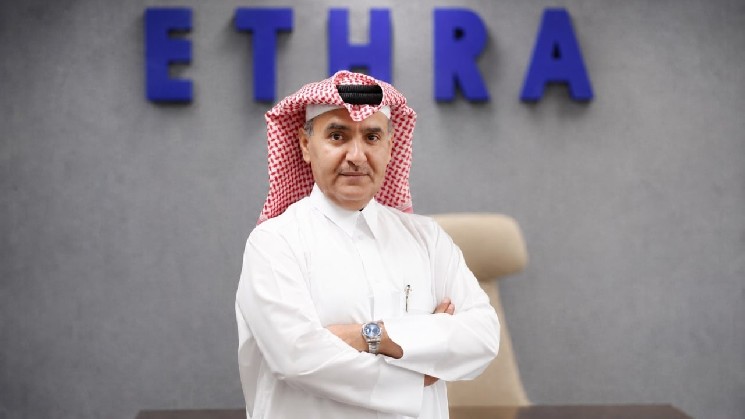
Said Al-Marri: How Tokenization Opens New Opportunities for Shipping Funds For centuries, commercial shipping has been a capital-intensive asset class limited to institutional funds and shipping dynasties. Said bin Saleh Al-Marri, CEO of Ethra Invest and Ethra Ship, aims to break down these barriers by combining Real World Asset (RWA) tokenization with conservative private equity principles. This bridges decentralized finance (DeFi) with the physical realities of global trade. Tokenization allows fractional ownership of ships on a blockchain, giving smaller investors access to previously inaccessible markets. However, Al-Marri warns it is not a regulatory loophole or a cure for asset illiquidity. The core physical risks are isolated in Special Purpose Vehicles (SPVs) for qualified investors. While tokenization enhances transparency and ownership record-keeping, Al-Marri stresses that a liquid secondary market depends on transparent asset valuation and must not interfere with ship operations managed by professionals. Regarding legal enforcement, smart contracts cannot physically seize a ship. Legal recourse still relies on traditional maritime courts, ship mortgages, and flag state laws, with blockchain records needing to mirror legal ownership in the SPV perfectly. Beyond ownership, the industry faces administrative hurdles like paper-based bills of lading. Al-Marri argues the bottleneck is legal and operational standardization, not technology. He advocates for a hybrid model combining digital trade documents and programmable settlements with support from regulated financial institutions, rather than a full crypto replacement for tools like Letters of Credit. A major challenge is decarbonizing the global fleet by 2050. Transitioning to green fuels requires massive upfront investment. Al-Marri emphasizes a conservative, holistic approach to underwriting these projects, evaluating technology, fuel availability, safety, and resale value. Investments must be justified under conservative forecasts, not just optimistic ones. By combining pragmatic risk management with digital infrastructure, leaders like Al-Marri show that the evolution of maritime finance is about mobilizing capital to build a modernized and sustainable global fleet, not just putting ships on a blockchain.

cryptonews.ru30m ago

Saeed Al-Marri: How Tokenization Unlocks New Opportunities for Shipping Funds

cryptonews.ru30m ago

Trading

Spot
活动图片