JustLend DAO's Second JST Buyback and Burn: Cumulative 10.96% of Total Supply Destroyed, Accelerating Entry into a New Era of Value Growth

marsbitPublished on 2026-01-16Last updated on 2026-01-16

Abstract

JustLend DAO has executed its second major JST token buyback and burn, permanently removing 525 million JST (5.3% of total supply) from circulation. This brings the cumulative burned amount to over 1.08 billion JST, representing 10.96% of the total supply, significantly accelerating JST’s deflationary trajectory. The burn was funded by $10.19 million from Q4 2025 net profits and $10.34 million from accumulated reserve earnings, demonstrating the protocol’s strong financial health and sustainable revenue model. Key drivers include JustLend’s TVL surpassing $7.08 billion, robust growth in sTRX staking (over 9.3 billion TRX staked), and widespread adoption of GasFree smart wallets, which have facilitated over $46 billion in transactions and saved users $36.25 million in fees. Additionally, USDD’s multi-chain ecosystem reached a milestone with TVL exceeding $1 billion, further supporting JST’s value accrual mechanism. This burn reinforces JST’s transition from a governance token to a yield-backed asset tied to ecosystem cash flow. Market response has been positive, with JST’s market cap breaking $400 million and trading volume rising 21.92% amid a 10.82% monthly price increase. The recurring burn mechanism establishes a deflationary model that enhances scarcity, governance weight per token, and long-term value alignment with holders, setting a new standard for sustainable tokenomics in DeFi.

JustLend DAO Launches Second Round of Buyback and Burn: 525 Million JST Permanently Destroyed, Deflation Engine Continues to Accelerate

525 Million JST Burn Executed! JustLend DAO's Deflation Mechanism Fulfilled Again

Summary: Profit returns and transparent burns form a closed loop for JST value growth, providing a new paradigm for the DeFi market driven by real yield for token value.

January 15, 2026 - The JST token has officially completed its second large-scale buyback and burn. This burn action not only demonstrates the project's firm commitment to its deflation mechanism but also, with the scale of 525,000,000 JST burned (5.3% of the total supply), showcases the strong profitability and financial health of the JUST ecosystem to the entire cryptocurrency market.

According to the official JustLend DAO announcement, the estimated value corresponding to this burn exceeds $21 million USD. Combined with the amount from the first JST burn, the cumulative number of JST tokens burned has reached 1,084,890,753, accounting for 10.96% of the total supply. This means that in less than three months, JST has achieved the permanent removal of over one-tenth of its total supply, a remarkable deflation speed.

From a broader perspective, this burn marks a fundamental evolution in JST's value narrative. It is transitioning from a governance token to an equity asset anchored to the growth of the ecosystem's cash flow. This process not only enhances the scarcity and value foundation of the JST token but also provides a clear, traceable, practical path for the decentralized finance sector—one driven by real yield for token value—demonstrating a transparent and sustainable new paradigm for deflation.

Strong JustLend DAO Ecosystem Performance Forms the Financial Cornerstone for Large-Scale Buybacks

Such a large-scale buyback and burn necessarily requires a solid financial foundation as support. The announcement clearly reveals the dual pillars of the funding source: $10,192,875 came from JustLend DAO's net profit in Q4 2025, while another $10,340,249 originated from the project's accumulated retained earnings reserve. These two figures are, in themselves, the most powerful proof of performance. They collectively point to one core fact: the JustLend DAO ecosystem not only possesses strong immediate profitability but also boasts a robust financial structure and sustainable cash flow, which is the solid foundation supporting its commitment to buybacks and its deflation strategy.

A deep dive into JustLend DAO's Q4 2025 performance reveals clear growth trajectories. First, as the flagship lending protocol of the JUST ecosystem, JustLend DAO benefits from the continuous improvement of the TRON infrastructure, with its Total Value Locked (TVL) breaking through the $7.08 billion mark in the fourth quarter, consistently ranking among the top three in the lending market, and the lending activity in its SBM market also climbed to a new cycle high.

It is worth noting that the source of the $10,340,249 in retained earnings, which forms a significant part of this buyback fund, can be traced back to the revenue generated from the reserve capital deposited into the SBM USDT market during the first JST buyback. The增值 process of this capital is itself the most direct proof of the SBM market's strong profitability. It demonstrates JustLend DAO's sophisticated financial operation model: strategically redeploying ecological profits for regenerative use within the protocol, allowing them to continue "self-generating blood," thereby providing an endogenous, sustainable source of funding for subsequent value returns.

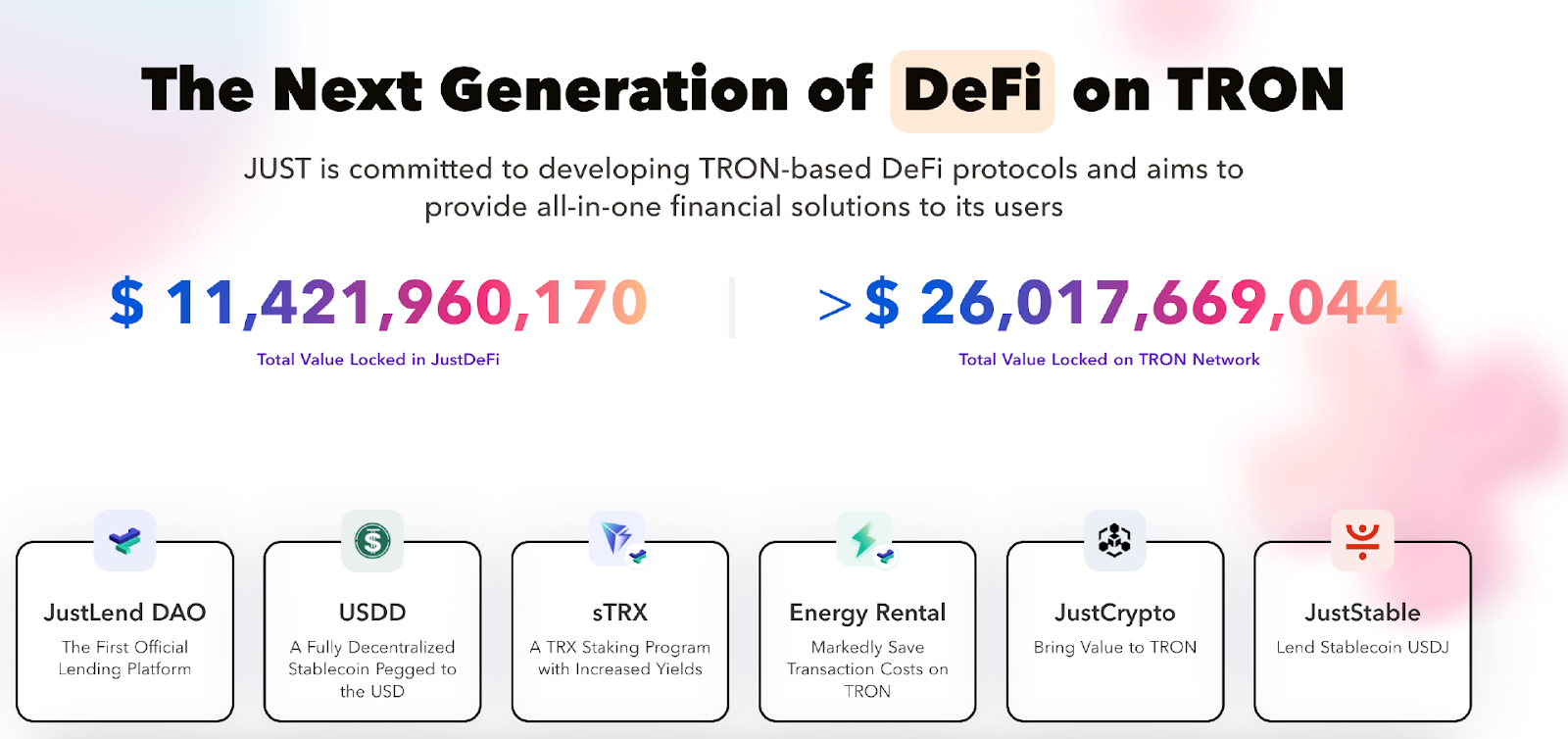
On this basis, JustLend DAO's revenue structure shows a trend of diversification. While the traditional lending market, its fundamental business, maintains steady growth, JustLend DAO has innovatively built a product matrix including sTRX (Staked TRX) and Energy Rental, greatly expanding the boundaries and depth of its value capture.

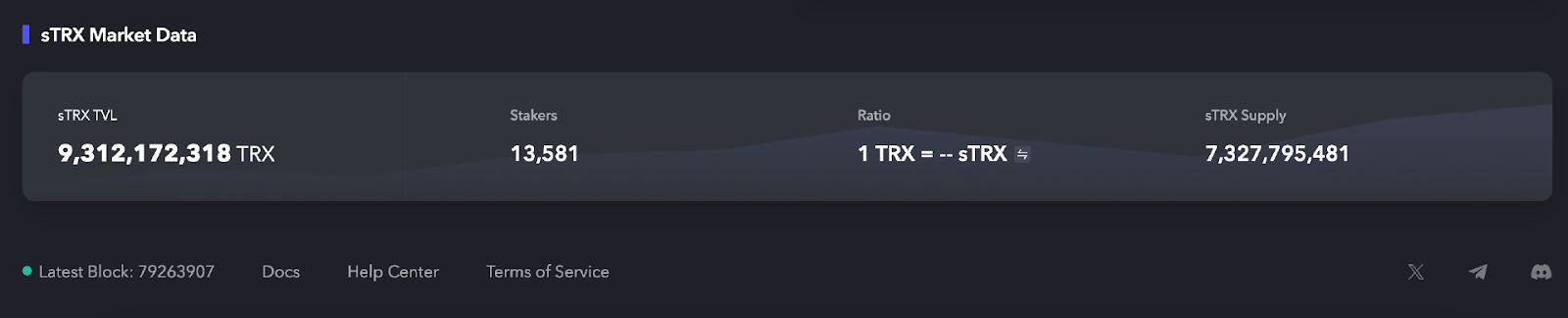
Among these, the sTRX service allows users to stake TRX to earn rewards while still flexibly participating in other DeFi activities. This innovative design significantly improves capital efficiency and user stickiness. As of January 15th, the platform's TRX staking volume has surpassed 9.3 billion tokens. This staggering figure not only reflects the community's high recognition of the sTRX product but also brings considerable and sustainable service revenue.
At the same time, the "Energy Rental" service, designed to reduce user on-chain operation costs, has also demonstrated strong market appeal through active rate optimization. Since September 2025, the base fee rate for this service was significantly reduced from 15% to a more competitive 8%. The fee optimization directly stimulated market demand and transaction frequency, thereby creating steady incremental revenue for the protocol through more active leasing business.

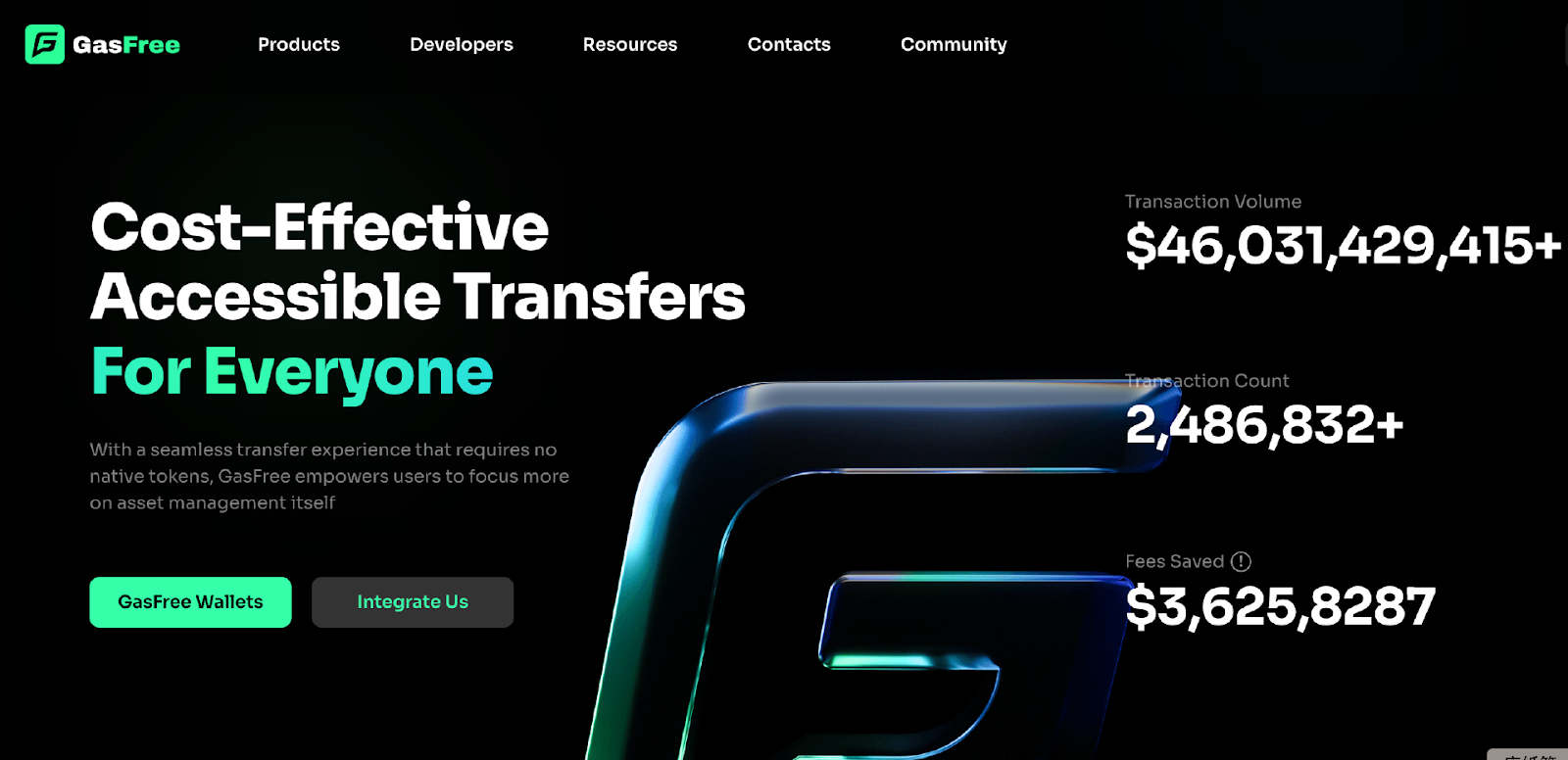
While the core product matrix continues to exert force, JustLend DAO, focusing on lowering the participation barrier for general users, innovatively launched the GasFree smart wallet in March 2025. This feature completely breaks the long-standing barrier for new users of having to pre-hold native tokens (TRX) to pay transaction fees. It allows users to deduct and pay the required network fees directly from the token assets they are transferring (e.g., USDT). This design not only achieves ultimate operational convenience but also fundamentally broadens the accessibility of blockchain finance.

To accelerate the adoption of this innovative feature, JustLend DAO simultaneously launched a highly attractive 90% transfer fee subsidy campaign. With this support, users using the GasFree function for USDT transfers only need to pay an extremely low fee of about 1 USDT. This combined strategy quickly ignited market demand. As of January 15th, the total transaction volume driven by the GasFree smart wallet has surpassed $46 billion. This staggering scale not only validates the market's strong desire for a frictionless transaction experience but also directly saved users a cumulative total of over $36.25 million in network fee costs. This innovation, by significantly reducing actual usage costs and cognitive barriers, has introduced massive incremental users and capital flow into the ecosystem, constituting another strong growth pole for the platform's network effects and revenue potential.
Meanwhile, another funding channel in the buyback and burn plan, the incremental revenue from the USDD multi-chain ecosystem (the portion exceeding $10 million), also constitutes a significant source. USDD, as the core decentralized stablecoin of the TRON ecosystem, has seen fruitful results from its multi-chain expansion strategy. It has been successfully deployed on mainstream public chains like Ethereum and BNB Chain, broadening its application scenarios and user base.

Its ecosystem value recently achieved a milestone breakthrough. On January 14th, USDD's TVL historically broke through the $1 billion mark. This means that in less than two months, USDD's TVL scale achieved an astonishing 100% growth, its expansion speed and market acceptance fully confirming the strong momentum and deep asset appeal of this stablecoin in the multi-chain ecosystem. The rapid growth of its TVL and the continued prosperity of its ecosystem significantly enhance the potential scale of this funding channel, providing an anticipated value source for JST's buyback and burn plans in subsequent quarters.

Through deep integration with various DeFi protocols, USDD not only consolidates its peg stability but also creates continuous value inflow for the entire ecosystem. The inclusion of USDD ecosystem's excess income in the JST buyback and burn plan builds a value closed loop of "stablecoin + lending protocol + governance token". In this model, the expansion and prosperity of USDD and JustLend DAO directly power JST's deflation, while the increase in JST's value in turn enhances the attractiveness and cohesion of the entire TRON DeFi ecosystem, creating a powerful internal synergy and value feedback effect.

Deepening Deflation Mechanism: Revolutionary Reshaping of JST's Value Foundation

In summary, the significance of this buyback and burn extends far beyond mere price support; it is triggering a series of profound structural changes. Most fundamentally, it completes the reshaping of JST's value support logic. JST is no longer merely a "utility token" for paying network fees or participating in governance votes; it has evolved into an "equity asset" directly anchored to the cash flow performance of JustLend DAO, USDD, and associated ecosystems.


Through the buyback and burn mechanism, the profit growth of the ecosystem is continuously injected into the value foundation of the JST token. This makes holding JST equivalent to holding an equity certificate that shares in the future profit growth of the ecosystem. On January 8th, CoinMarketCap data showed that JST market cap historically broke through the $400 million mark. This is not just a numerical leap but substantial market recognition of its new positioning. Along with the rising market cap came increased fund activity. On January 8th, its 24-hour trading volume significantly increased by 21.92%, reaching $31.49 million, and its price had also risen steadily by 10.82% over the past month, with a daily increase of 3.1%.

The synchronous expansion of trading volume and market cap at key junctures is not accidental market fluctuation but a clear "vote of confidence" from capital in response to the positive fundamentals of the JUST ecosystem, particularly the profitability and value return mechanism demonstrated by the buyback and burn.

Secondly, the JST buyback and burn also brings substantial增值 in governance power. As the total token supply is irreversibly reduced, the governance weight in the protocol represented by each remaining JST in the market will increase accordingly. This means long-term holders not only enjoy the economic benefits of value appreciation but also see their voice in key community decisions (such as parameter adjustments, new product launches, treasury fund usage, etc.) amplified simultaneously. This design deeply binds the interests of core community members to the long-term success of the protocol, greatly enhancing community stability and sense of participation.

From a broader industry perspective, JST's buyback and burn practice provides a clear, referable new paradigm for token economics in the DeFi field. Removing 10.96% of the total supply through two burns in a very short time not only demonstrates efficient execution but, more profoundly, deeply binds the protocol's financial success to the interests of token holders, thereby setting a benchmark for a virtuous cycle of "value creation - value return".

This model fundamentally shifts the old logic of token value relying on speculative narratives towards a sustainable path driven by the protocol's fundamental cash flow, providing a solid and credible case study for the industry on how to build economic models with substantial value support.

Looking ahead, with quarterly JST buyback and burn becoming the norm, a clear, predictable deflation path has been laid out. The scarcity of JST will be a certain narrative that strengthens over time. Each quarterly report disclosure and the subsequent burn will serve as a catalyst for reassessing its intrinsic value. This burn is not an endpoint but the beginning of a more magnificent chapter of value accumulation. A value revolution, supported by ecological profits and driven by product synergy, has already pressed the accelerator.


Trending Cryptos

Related Questions

QWhat was the total amount of JST tokens burned in the second round of JustLend DAO's buyback and burn, and what percentage of the total supply does this represent?

A525,000,000 JST tokens were burned in the second round, representing 5.3% of the total supply.

QWhat are the two main sources of funding for the JST buyback and burn initiative as detailed in the announcement?

AThe two main sources are $10,192,875 from JustLend DAO's net profit in Q4 2025 and $10,340,249 from the project's accumulated reserve earnings.

QWhat significant milestone did the Total Value Locked (TVL) of JustLend DAO achieve in the fourth quarter of 2025?

AJustLend DAO's Total Value Locked (TVL) surpassed $7.08 billion in Q4 2025.

QWhat is the name of the innovative, gas-free smart wallet feature launched by JustLend DAO, and what was the total transaction volume it facilitated by January 15th?

AThe feature is called the GasFree smart wallet, and it had facilitated a total transaction volume exceeding $46 billion by January 15th.

QWhat major milestone did the USDD ecosystem achieve on January 14th, and what does this signify for its growth?

AOn January 14th, the USDD ecosystem's TVL historically broke through the $1 billion mark, signifying a 100% growth in less than two months and demonstrating its rapid expansion and market adoption.

Related Reads

Who Decides the Rules of Bitcoin? BIP-110 Ignites Governance Debate

Bitcoin's governance is once again at the center of a heated debate, this time ignited by BIP-110, the "Reduced Data Temporary Softfork." This proposal aims to curb non-monetary data (like inscriptions and Runes) by introducing seven new consensus-layer restrictions over a year, such as limiting new output scripts to 34 bytes and restoring the OP_RETURN cap to 83 bytes. The controversy stems from BIP-110's fundamental shift: it moves the battle against "spam" from node relay and miner policies to the consensus layer, rendering currently valid transactions invalid. Supporters, arguing that default policy governance has failed (highlighted by Bitcoin Core v30's relaxation of OP_RETURN limits), see this as necessary to protect node resources and Bitcoin's monetary focus. Opponents, led by figures like Michael Saylor and Adam Back, warn it dangerously centralizes governance. Saylor listed 110 reasons against it, criticizing its low 55% miner activation threshold and potential for chain splits. Back emphasized Bitcoin's "permissionless" ethos, arguing no single group should impose value judgments via consensus rules. Further complicating matters, technical critiques suggest BIP-110 may be technically circumventable, and a "BlockSlop" vulnerability in its upgrade path poses a consensus risk. The debate has drawn in diverse stakeholders: miners (with pools like Ocean signaling support and Foundry polling clients), node operators (like Bitcoin Knots), and new players like corporate treasury holder MicroStrategy (Saylor), whose market influence adds a novel dimension. Ultimately, BIP-110 acts as a governance stress test, exposing the unresolved question: who decides Bitcoin's rules? It pits the authority of miners, node operators, developers, and capital holders against each other, with each side claiming to defend Bitcoin's core principles of neutrality and security.

marsbit4m ago

Who Decides the Rules of Bitcoin? BIP-110 Ignites Governance Debate

marsbit4m ago

Who Decides Bitcoin's Rules? BIP-110 Ignites Governance Debate

Title: Who Decides Bitcoin's Rules? BIP-110 Ignites Governance Debate A new technical proposal, BIP-110 (Reduced Data Temporary Softfork), has sparked a fundamental governance debate within the Bitcoin community. It aims to impose new consensus rules for one year to limit non-financial data (like inscriptions and Runes) on-chain, moving beyond simple node and miner policy filters to invalidate currently valid transactions. Supporters argue that default policies have failed due to workarounds, necessitating consensus-layer changes to protect Bitcoin's core monetary function from data spam. Critics, including Michael Saylor and Adam Back, contend this dangerously centralizes judgment, undermines permissionlessness, and sets a risky governance precedent. They advocate for market-based solutions like fees or Layer 2s instead. The debate exposes deeper tensions: miners are divided on activation; node operators assert their sovereignty; Bitcoin Core developers influence defaults without direct accountability; and large corporate holders like MicroStrategy now wield narrative influence. Technically, BIP-110 may not fully block data and carries a disclosed consensus bug risk. Ultimately, BIP-110 acts as a stress test, forcing the community to confront the unresolved question: who legitimately decides what Bitcoin is and how it evolves, amidst competing claims from miners, nodes, developers, and capital holders.

链捕手15m ago

Who Decides Bitcoin's Rules? BIP-110 Ignites Governance Debate

链捕手15m ago

Zcash's New Node Zakura Goes Live: Privacy Payments Can Reach 50,000 TPS, Aiming to Rival Visa and Mastercard

Zcash, a privacy-focused cryptocurrency, has launched a new full node software called Zakura version 1.0.0. Developed by Zcash co-founder Sean Bowe and Dev Ojha, with private ZEC donations, its goal is to enable Zcash to process over 50,000 transactions per second (TPS)—matching the scale of Visa and Mastercard—while maintaining full transaction privacy and verifiability. This addresses a key bottleneck, as Zcash currently handles only about 1 private transaction per second. Zakura is a fork of the Zcash Foundation's Zebra node. It features chain pruning and snapshots, reducing disk usage and allowing new nodes to sync in under two minutes. It also offers compatibility with the legacy `zcashd` client interface. The scalability challenge stems from the large data size of privacy proofs. Bowe's Tachyon project aims to use recursive proofs to reduce consensus-layer data needs from ~500 MB/s to ~100 MB/s. For wallet scalability, Valar Group is researching Private Information Retrieval (PIR) tech to allow wallets to fetch their data privately. Zakura supports fast block propagation and the upcoming "Ironwood" network upgrade (NU6.3), scheduled for activation around July 28th. Ironwood was created to contain a critical inflation bug discovered in the Orchard shielded pool in May 2024. The fix uses "turnstiles" to trap any counterfeit ZEC created during the vulnerability period within the shielded pool, preventing it from entering circulation and restoring supply integrity.

marsbit30m ago

Zcash's New Node Zakura Goes Live: Privacy Payments Can Reach 50,000 TPS, Aiming to Rival Visa and Mastercard

marsbit30m ago

Replicating the "DeepSeek Moment"? Wall Street Unanimously Says: Kimi K3 Instead Strengthens Computing Power Demand

Title: Wall Street Sees Kimi K3 as a Catalyst for Compute Demand, Not a "DeepSeek Moment 2.0" Summary: Following the release of Moonshot AI's powerful open-source model Kimi K3, initial market reaction mirrored the "DeepSeek moment" that sparked a sell-off in compute stocks earlier in 2025, fearing reduced demand for AI infrastructure. However, major Wall Street banks including UBS, Nomura, BofA, and Citi argue the opposite: K3 will accelerate, not weaken, demand for compute, memory, storage, and networking. Their analysis centers on K3's specifications—2.8 trillion parameters, 1M token context, and MoE architecture—which represent a "scale" story rather than a pure "efficiency" one like DeepSeek R1. These features increase pressure on inference, memory (especially KV cache), and storage. Analysts invoke Jevons Paradox: as high-quality models become more affordable (K3 is cheaper than top closed models but not the cheapest), usage and token volumes expand, ultimately increasing total compute consumption. The reports highlight that competition will force leading US AI labs (OpenAI, Anthropic, Google) to invest more in training and iteration to maintain their edge. Furthermore, the rise of capable open-source models like K3 is expanding the global AI developer ecosystem, with Chinese models now accounting for over 45% of developer traffic. Key beneficiaries identified across the AI infrastructure chain include memory/storage players (e.g., Micron, Samsung), compute leaders (Nvidia, TSMC), networking suppliers (due to "super-node" cluster needs for deploying K3), and cloud platforms (e.g., Alibaba) that host diverse model ecosystems. The consensus is that stronger open-source models are an entry point for the next wave of infrastructure demand diffusion, provided workload growth outpaces efficiency gains.

链捕手33m ago

Replicating the "DeepSeek Moment"? Wall Street Unanimously Says: Kimi K3 Instead Strengthens Computing Power Demand

链捕手33m ago

Trading

Spot

Hot Articles

How to Buy DAO

Welcome to HTX.com! We've made purchasing DAO Maker (DAO) simple and convenient. Follow our step-by-step guide to embark on your crypto journey.Step 1: Create Your HTX AccountUse your email or phone number to sign up for a free account on HTX. Experience a hassle-free registration journey and unlock all features.Get My AccountStep 2: Go to Buy Crypto and Choose Your Payment MethodCredit/Debit Card: Use your Visa or Mastercard to buy DAO Maker (DAO) instantly.Balance: Use funds from your HTX account balance to trade seamlessly.Third Parties: We've added popular payment methods such as Google Pay and Apple Pay to enhance convenience.P2P: Trade directly with other users on HTX.Over-the-Counter (OTC): We offer tailor-made services and competitive exchange rates for traders.Step 3: Store Your DAO Maker (DAO)After purchasing your DAO Maker (DAO), store it in your HTX account. Alternatively, you can send it elsewhere via blockchain transfer or use it to trade other cryptocurrencies.Step 4: Trade DAO Maker (DAO)Easily trade DAO Maker (DAO) on HTX's spot market. Simply access your account, select your trading pair, execute your trades, and monitor in real-time. We offer a user-friendly experience for both beginners and seasoned traders.

2.7k Total ViewsPublished 2024.03.29Updated 2026.06.02

How to Buy DAO

Discussions

Welcome to the HTX Community. Here, you can stay informed about the latest platform developments and gain access to professional market insights. Users' opinions on the price of DAO (DAO) are presented below.

活动图片