Japan PM Dumps ‘Sanae Token?’ Solana Memecoin Tanks 75%

bitcoinistPublished on 2026-03-03Last updated on 2026-03-03

Abstract

Japan's Prime Minister Sanae Takaichi denied any involvement with the Solana-based memecoin "Sanae Token," causing its value to plummet by 75%. The token, created by a Japanese entrepreneur, was launched during the peak of Solana's memecoin frenzy and was linked to a political project. Despite disclaimers, Takaichi's public statement led to a sharp sell-off, reducing its market cap from nearly $28 million to around $6 million. This incident highlights the extreme volatility and risks associated with celebrity or narrative-driven memecoins, which often experience rapid, significant losses after initial hype fades.

Sanae Token, a Solana based token, has crashed roughly 75% from its peak after Japan’s Prime Minister Sanae Takaichi’s denied her involvement with it.

Another Politician Under The Memecoin Fenzy

On a post made through the X social network on March 2, Japan’s Prime Minister Sanae Takaichi clarified that she has no affiliation with the so‐called “Sanae Token” and warned the public against assuming any official endorsement just because a coin uses her name or image: “I have absolutely no knowledge of this token, nor has my office been informed about what this token entails”, she stated, ending the post with the warning that she wants to make sure that the public is not misled, despite the Sanae Token website issuing a disclaimer explicitly stating that it is “not affiliated with or endorsed by Ms. Takaichi”.

Japanese outlets report that following Sanae’s statement on X, Sanae Token fell more than 50% within four hours, while Wu Blockchain positions the drop to around $6 million.

Not too long ago, another political leader, Argentina’s president Javier Milei, had his own fallout with another Solana based token, after he was accused of being part of a fraudulent scheme following his endorsement of LIBRA.

Sanae Token In The Solana Memecoin Context

Solana Token was announced on Feb 25 by Japanese entrepreneur Yuji Mizoguchi through NoBorder, a Youtube channel that focuses on political content. The project was launched at the peak of Solana’s memecoin frenzy with the objective to be an incentive for NoBorder’s “Japan is Back” project, aiming to “update democracy” with AI and Web3.

Built like many Solana narrative coins, it tried to tap into hype around Japan’s new prime minister and broader “political trade” memes. The name of the project comes from the slogan Takaichi’s inherited from the former PM, Shinzo Abe. NoBorder’s claim that the name “Sanae” is a symbol of a democratically elected leader rather than any formal government backing.

Takeaway For Traders

For traders, this signifies something way bigger than just another funny memecoin scandal. According to data from Bitcoinist and our sister website, on Solana, memecoins routinely swing 70–90% in a matter of hours, and many celebrity or narrative plays bleeding 94–99% from their peaks once the initial hype fades. In a market wired for 10x runs followed by near‐total retracements, the only real edge is treating these positions as short‐term, high‐risk trades: sizing small relative to your stack, planning exits on the way up, and never assuming that a catchy story or a famous name will be there to catch the fall.
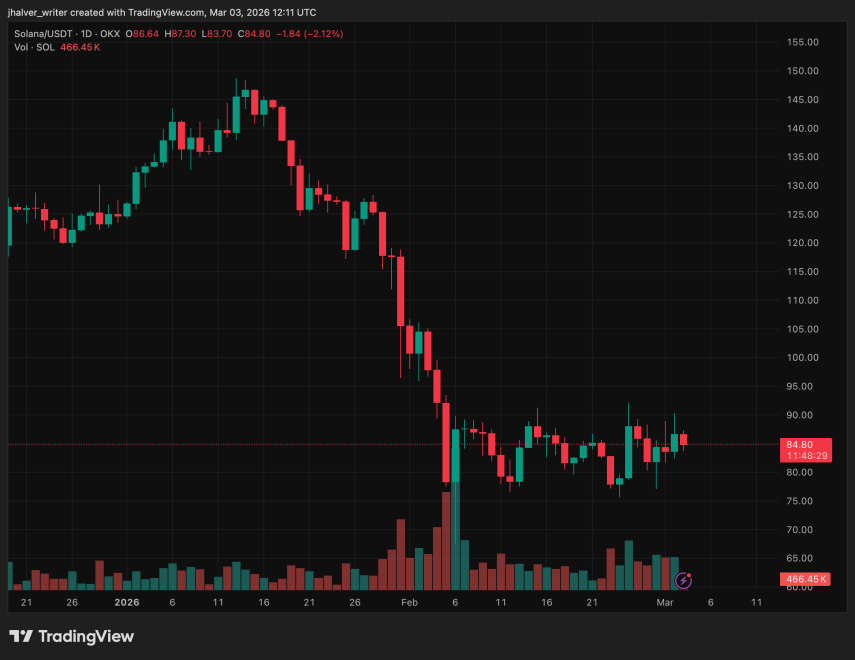
SOL's price trends to the downside on the daily chart. Source: SOLUSDT on Tradingview

Cover image from ChatGPT, SOLUSDT chart from Tradingview

Trending Cryptos

Related Questions

QWhat caused the Sanae Token to crash by approximately 75%?

AThe crash was triggered by Japan's Prime Minister Sanae Takaichi publicly denying any involvement or knowledge of the token and warning the public against assuming official endorsement.

QHow did the market cap of Sanae Token change after the Prime Minister's statement?

AAccording to Wu Blockchain, the market cap dropped from a brief peak of $27.72 million to around $6 million following the statement.

QWho announced the Sanae Token and what was its stated purpose?

AThe token was announced by Japanese entrepreneur Yuji Mizoguchi through the NoBorder YouTube channel. It was intended as an incentive for the 'Japan is Back' project, aiming to 'update democracy' with AI and Web3.

QWhat does the article suggest is the only real edge for traders in the Solana memecoin market?

AThe article suggests treating these positions as short-term, high-risk trades: sizing small relative to your stack, planning exits on the way up, and never assuming a catchy story or famous name will prevent a crash.

QWhich other political leader was mentioned as having a similar issue with a Solana-based memecoin?

AArgentina's president Javier Milei was mentioned, as he was accused of being part of a fraudulent scheme after endorsing a token called LIBRA.

Related Reads

Bitcoin Withdrawals Continue: 8 Years of Storage in a Coldcard Cold Wallet Ended in Zero

Coldcard Hardware Wallet Hacked: Losses Mount Due to Vulnerable Seed Generation A critical vulnerability in Coldcard hardware wallets has led to a continued wave of fund thefts. According to Galaxy Research, the total stolen has reached 1,367.05 BTC (approx. $88.6 million) from 4,585 addresses, a significant increase from the initial 594.5 BTC reported on July 30, 2026. Most of the stolen funds remain on the attackers' addresses. The issue is not with the current firmware, which Coinkite has updated, but with seed phrases generated on vulnerable devices between March 2021 and the release of fixed firmware versions. Due to a programmer error, devices switched from using a hardware random number generator to the software-based Yasmarang generator, which was initialized with publicly accessible data like the chip's serial number. This made the seed phrases predictable through offline brute-force attacks, meaning wallets remain at risk until funds are moved to a new wallet generated with the patched firmware. Affected devices include Mk2/Mk3 with firmware 4.0.1–4.1.9 (and up to 5.0.3), Mk4/Mk5 up to version 5.6.0, and Q models up to 1.5.0Q. The only exceptions are seeds created with a high-entropy method like at least 50 independent dice rolls or a strong unique BIP-39 passphrase. All other owners must generate a new seed on the fixed firmware and transfer their assets. A case highlighting the human impact involves a 39-year-old long-term investor who lost 2 BTC (approx. $130,000) in minutes. He had accumulated the Bitcoin over eight years through physical labor, viewing it as a financial lifeline and a retirement plan in a country suffering from hyperinflation. His story underscores that even conservative "buy and hold in cold storage" strategies can be compromised by such underlying technical flaws. From a technical perspective, this incident echoes historical failures where weak random number generators undermined cryptographic security, challenging the assumption that offline storage is automatically foolproof.

cryptonews.ru4h ago

Bitcoin Withdrawals Continue: 8 Years of Storage in a Coldcard Cold Wallet Ended in Zero

cryptonews.ru4h ago

Trading

Spot

Hot Articles

Discussions

Welcome to the HTX Community. Here, you can stay informed about the latest platform developments and gain access to professional market insights. Users' opinions on the price of SOL (SOL) are presented below.

活动图片















