Author: Wang Lijie
We are standing at multiple historical inflection points, witnessing the arrival of a new normal that is more intense and disruptive than we imagined. The three pillars that have supported global economic prosperity over the past forty years—demographic dividend, globalized division of labor, and inclusive technological progress—are simultaneously collapsing before our eyes. This is not alarmism but a reality we must confront. The next decade, from 2026 to 2035, will bring earth-shattering changes that will profoundly impact our wealth landscape and investment strategies.
"4B Movement" and "Birth Strike": Deep Cracks in the Social Fabric
Let's first examine a startling phenomenon: the cliff-like decline in global fertility rates. This is not merely a numerical change but a signal of profound transformation in the social structure.
Take South Korea as an example. In 2023, its total fertility rate plummeted to a staggering `0.72`. This means that, on average, each woman gives birth to only `0.72` children in her lifetime. This level of decline far exceeds normal fertility rate fluctuations and points directly to a shaking of the societal foundations. The situation in neighboring Japan is also concerning. Although its fertility rate is slightly higher than South Korea's, its projected number of births in 2025 is expected to fall below `670,000`, the lowest since records began in 1899, and the decline is happening much faster than the government's most pessimistic predictions.
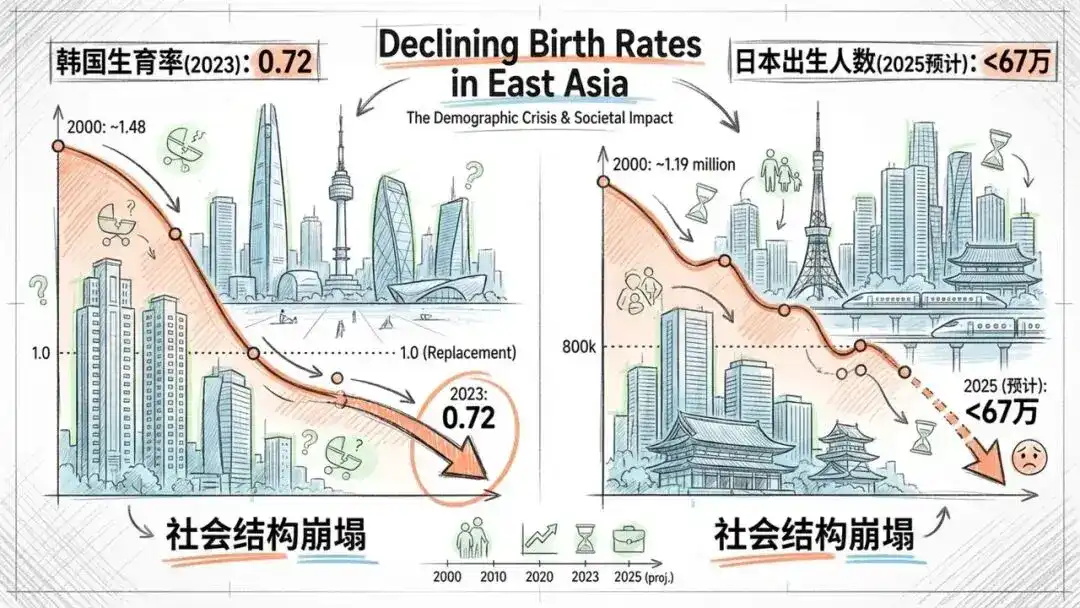
Behind this trend lies a complex interplay of socio-economic factors. In South Korea, young women have launched a significant "4B Movement"—meaning "No dating, no sex, no marriage, no children". This sounds like a plot from a science fiction novel, yet it is happening right now.
This "4B Movement" is essentially a "reproductive strike" against the patriarchal capitalist society. Under the multiple pressures of workplace gender discrimination, "widower-style parenting," and social stereotypes, South Korea's young women have chosen this form of rebellion. When they believe that upward mobility is impossible and even maintaining a decent life is difficult, "cutting off the lineage" becomes a rational, final act of defiance.
The consequences of this phenomenon are devastating. South Korea's aging rate is the fastest in the world, with projections indicating that people aged 65 and over will make up half the population by 2065. This not only means immense pressure on the pension system but will also deal a comprehensive blow to national finances, the healthcare system, and even defense manpower. In Japan, young people are generally in a state of "low desire"—not marrying, not having children, no longer believing that hard work leads to a good life, and instead pursuing low-cost personal entertainment. This is a form of "gentle despair," a Buddhist-like lying flat (acceptance) attitude towards life.
Economic Nihilism and Climate Anxiety: Reshaping the Life Outlook of the Younger Generation
You might think this is unique to East Asian countries. However, Western developed nations are also experiencing similar demographic trends, albeit for slightly different reasons.
Related Questions
QWhat is the '4B Movement' in South Korea and what are its underlying causes?
AThe '4B Movement' in South Korea is a social phenomenon where young women are choosing 'no dating, no sex, no marriage, and no children'. It is essentially a 'reproductive strike' against a patriarchal capitalist society. The underlying causes include workplace gender discrimination, the burden of 'widow-style parenting' (where fathers are absent from childcare responsibilities), and rigid social stereotypes. Faced with these pressures and the difficulty of achieving upward mobility or even a decent standard of living, many young women see forgoing family life as a rational form of protest.
QAccording to the article, why will the massive intergenerational wealth transfer benefit digital assets like cryptocurrency?
AThe article argues that an estimated $84 trillion will transfer from the Baby Boomer generation to Millennials and Gen Z. Unlike their parents, who invested in real estate and blue-chip stocks, the younger generation are 'digital natives' who distrust the traditional financial system due to experiences like the 2008 crisis and quantitative easing. They view assets like Bitcoin as a hedge against fiat currency devaluation and a form of 'silent protest'. With high-risk appetites and a desire for life-changing returns, they are more likely to channel this inherited wealth into digital assets, which offer liquidity, global access, and high growth potential, unlike the unaffordable traditional real estate market.
QWhat is the 'Technological Cantillon Effect' mentioned in the context of AI advancement?
AThe 'Technological Cantillon Effect' describes how the wealth generated by AI and robotics will not be distributed equally but will instead disproportionately to those who own the core means of production—the tech giants and early investors who control computing power, proprietary data, and algorithm models. Similar to how new money from a central bank benefits those closest to it first, the 'new wealth' from AI-driven productivity gains will first manifest as soaring profits and stock prices for these companies. This creates a 'capital-biased technological progress' where the return on capital far exceeds the return on labor, exacerbating social inequality as wages fail to keep up with the inflation of assets.
QHow are prediction markets like Polymarket and Kalshi changing financial strategies?
APrediction markets are transforming financial strategies by shifting focus from traditional 'value investing' to 'event博弈' (speculative gaming). They allow users to place bets on real-world events like election outcomes or Fed decisions. For institutions, they serve as precise hedging tools; for example, an investor worried about a candidate's impact on a sector can hedge by betting on that candidate's victory. These markets also act as powerful information discovery mechanisms, aggregating collective wisdom through real-money bets, often proving more accurate than polls. However, they also pose risks of 'financial nihilism', where capital flows into zero-sum gambling instead of productive enterprise, and 'reflexivity', where large bets could potentially manipulate real-world outcomes.
QWhat is the recommended 'Extreme Barbell Strategy' for asset allocation in the coming decade?
AThe recommended 'Extreme Barbell Strategy' involves a highly polarized allocation to navigate the anticipated volatility. On the offensive end, it advises going long on 'technological monopoly' and 'digital scarcity': investing in tech giants that control AI infrastructure (compute, data, models) and core digital assets like Bitcoin to capture the 'Technological Cantillon Effect' and generational wealth transfer. It also suggests looking for residual 'demographic dividends' in emerging markets like India. On the defensive end, it requires hedging against 'chaos' and 'event risk': using prediction markets for targeted hedging of geopolitical events, holding physical assets like prime real estate in supply-constrained cities as a safe haven for 'old wealth', and maintaining gold reserves to hedge against sovereign debt crises. The strategy explicitly advises avoiding labor-intensive service sectors and traditional consumer stocks reliant on population growth.
Related Reads



Trading
Hot Articles
What is USDC(WORMHOLE)
USD Coin (Wormhole): A Comprehensive Overview Introduction In the rapidly evolving world of cryptocurrencies, USD Coin (Wormhole), referred to as $USDC(Wormhole), stands out as a pioneering solution within the DeFi (Decentralized Finance) landscape. Operating on several blockchain platforms, including Solana, USD Coin (Wormhole) is more than just a digital representation of the United States dollar. It embodies the innovative spirit of modern finance, enabling seamless cross-chain transactions and enhanced interoperability among diverse blockchain ecosystems through the advanced Wormhole protocol. What is USD Coin (Wormhole)? USD Coin (Wormhole) is a tokenized version of the US dollar designed to facilitate frictionless transactions across different blockchain networks. Its primary aim is to bolster liquidity and enhance the functionality of the DeFi ecosystem. By leveraging the Wormhole protocol, which establishes a robust cross-chain communication network, users can effortlessly transfer USDC tokens across various platforms. This cross-chain capability marks a significant advancement in cryptocurrency use, promoting a more interconnected and efficient ecosystem where assets can flow freely between different blockchains. The value proposition of USD Coin (Wormhole) lies not only in its stability, being pegged to the US dollar, but also in its ability to bridge gaps between disparate blockchain environments. This innovative approach fosters a greater level of participation among users and developers, paving the way for new and exciting applications within decentralized finance. Who is the creator of USD Coin (Wormhole)? The origins of USD Coin (Wormhole) are intricately tied to the Wormhole network, which was developed by Jump Crypto. While specific individual creators are not prominently documented, Jump Crypto is notable for its involvement in advancing blockchain technology and supporting its applications in finance. By creating the Wormhole network, Jump Crypto has played a vital role in promoting cross-chain asset transfers, enhancing the efficiency and diversity of cryptocurrency usage. Who are the investors of USD Coin (Wormhole)? The success of USD Coin (Wormhole) is supported by investments from several notable funds and organizations within the cryptocurrency realm. Key investors include: Coinbase Ventures: A prominent venture capital arm backed by one of the leading cryptocurrency exchanges in the industry, Coinbase Ventures provides essential capital and strategic support to promising blockchain projects. Arrington XRP Capital: Specializing in digital assets, Arrington XRP Capital recognizes the potential of innovative projects like USD Coin (Wormhole) and has invested accordingly to back its development. Jump Trading: As the parent organization of Jump Crypto, Jump Trading brings not only investment but a wealth of expertise in trading technology and market dynamics to bolster the Wormhole project. How Does USD Coin (Wormhole) Work? The operational framework of USD Coin (Wormhole) is intricately designed to facilitate effective cross-chain transactions, maximizing security and efficiency. Here’s a simplified overview of how it functions: Asset Locking: When a user wishes to transfer USDC from one blockchain to another, they first lock their tokens on the source blockchain. This process ensures that the assets are secure and are set to be either burned or moved later. Token Minting: After the tokens are locked, an equivalent amount of USDC is minted on the destination blockchain. This provides the user with access to their funds on a new platform, reflecting the flexibility that the Wormhole protocol enables. Cross-Chain Transfer: The Wormhole protocol efficiently facilitates the entire transfer process. It ensures that once the USDC is minted on the destination chain, the equivalent tokens are burned on the source chain. The result is a seamless transfer of value between two distinct blockchain environments. This cross-chain methodology ensures that transactions remain secure and transparent, significantly enhancing liquidity within the different DeFi ecosystems. Timeline of USD Coin (Wormhole) Understanding the evolution of USD Coin (Wormhole) provides vital context for its significance in the cryptocurrency arena. Here’s a timeline highlighting important milestones in the project’s history: 2021: The Wormhole project is launched, establishing a framework for cross-chain asset transfers and setting the stage for the development of USD Coin (Wormhole). 2022: The Wormhole network experiences a significant challenge with a security breach that results in a $325 million theft. However, the incident is later addressed and refunded by Jump Crypto, showcasing the project’s commitment to security and transparency. 2023: USD Coin (Wormhole) integrates with Circle’s Cross-Chain Transfer Protocol (CCTP), enhancing its capabilities for cross-chain transfers and further solidifying its place within the DeFi ecosystem. 2024: Ongoing development and expansion of the Wormhole network continue, aimed at increasing the utility and reach of USD Coin (Wormhole) as well as enhancing its operational framework. Key Features The success of USD Coin (Wormhole) can be attributed to several key features that differentiate it from other cryptocurrency offerings: Cross-Chain Interoperability At the core of USD Coin (Wormhole) is its ability to facilitate seamless transfers across multiple blockchain networks. This interoperability serves as a cornerstone for decentralized finance, allowing various platforms to interact with each other, thereby accelerating the evolution of financial services. Security Wormhole employs a well-designed Guardian Network comprised of node validators that ensure secure cross-chain transactions. This collective oversight minimizes the risk of fraud and provides users with confidence that their assets are protected during cross-chain transfers. Liquidity Enhancement By enabling USDC to circulate freely across different blockchains, USD Coin (Wormhole) enhances liquidity in the DeFi ecosystem. This increased liquidity can foster more efficient trading, contribute to better pricing strategies, and improve the overall market dynamics encompassing various digital assets. Conclusion USD Coin (Wormhole) is a pivotal innovation in the blockchain space, reinforcing the capabilities of decentralized finance (DeFi) and establishing a more connected financial ecosystem. With its robust framework for cross-chain transactions, security features, and strong backing from reputable investors, USD Coin (Wormhole) is positioned to play a key role in the future of cryptocurrency. As the digital finance landscape continues to evolve, USD Coin (Wormhole) not only embraces the future of interconnectivity among blockchain networks but also reaffirms the power of tokenization and blockchain technology in transforming how we perceive and utilize value in a digital world. By navigating the complexities of cross-chain functionality, it demonstrates a sophisticated approach to enabling financial inclusivity and innovation in the world of cryptocurrencies.
1.2k Total ViewsPublished 2024.04.01Updated 2024.12.03

What is W$C
World$tateCoin ($W$C): A Comprehensive Exploration of the Emerging Cryptocurrency Project Introduction In the ever-evolving landscape of cryptocurrencies, World$tateCoin ($W$C) has emerged as a project that aims to harness the power of web3 technologies to create a distinctive digital ecosystem. As traditional models of online interaction undergo significant transformation, World$tateCoin seeks to establish itself in this budding third generation of the internet. This article will delve into the intricacies of World$tateCoin, providing an overview of the project, its objectives, and its potential impact on the web3 space. What is World$tateCoin ($W$C)? World$tateCoin ($W$C) is designed as a cryptocurrency that facilitates seamless transactions within a web3 environment. Aimed at creating a decentralized platform where users can interact with various web3 applications, $W$C intends to streamline user experience and enhance accessibility to digital services. While the project aspires to become an integral part of the web3 landscape, detailed insights into its specific objectives and use cases remain limited, raising questions regarding its potential role and utility in a rapidly advancing digital context. The essence of web3 revolves around decentralization and empowering users with greater control over their interactions online. World$tateCoin intends to align with these principles, although specific applications and functionalities of the currency are still under discussion within the community. Who is the Creator of World$tateCoin ($W$C)? In exploring the origins of World$tateCoin, information regarding its creator remains elusive. As of now, there is no publicly available data identifying the individuals or organizations behind the project. This obscurity may cast a shadow of uncertainty over the project’s credibility, but the commitment to innovation within the cryptocurrency framework could be a driving force for its adoption in the future. The lack of identifiable leadership may result in hurdles related to trust and transparency—elements that are crucial for establishing a strong community in the crypto space. Who are the Investors of World$tateCoin ($W$C)? Current research does not reveal any specific investors or backing organizations involved with World$tateCoin. It is not uncommon for emerging cryptocurrency projects to either attract discreet investments or operate in a minimalist financial structure during their initial phase. The ambiguity surrounding investment supports and funding methodologies could affect the project’s sustainability and growth prospects. When assessing new projects within the cryptocurrency domain, investors generally look for transparency regarding financial backing and support from established entities. The absence of this information might necessitate a cautious approach for potential users and stakeholders interested in the future of World$tateCoin. How Does World$tateCoin ($W$C) Work? The operational mechanics of World$tateCoin are grounded in the principles of decentralization, a hallmark of web3 technologies. By facilitating transactions directly between users without the intervention of intermediaries, $W$C is designed to enhance trust and efficiency. However, comprehensive documentation detailing the unique features and operational framework that distinguish World$tateCoin from other cryptocurrencies is markedly sparse. This lack of information complicates the understanding of how $W$C functions within the broader web3 ecosystem and what unique propositions it brings to users and developers alike. Nevertheless, the fundamental goal of allowing for decentralized transactions holds the promise of a more liberated financial landscape, should the project deliver on its aspirations of implementing robust mechanisms and user-friendly interfaces. Timeline of World$tateCoin ($W$C) Constructing a timeline that encapsulates the historical progression of World$tateCoin poses challenges due to an absence of significant documentation on key events and milestones. Nevertheless, an approximate sequence of hypothetical phases can be envisaged, constituting a path forward for the project: Initial Concept (Date Unknown): Conceptualization of the World$tateCoin framework in the broader context of web3 technologies. Development Phase (Date Unknown): Commencement of technical development and coding processes. Community Engagement (Date Unknown): Outreach to potential users and stakeholders to foster community interest in the project. Launch Target (Date Unknown): Announcing an expected launch date, contingent on the progress of development and testing phases. Due to the lack of substantiated dates and details surrounding these phases, stakeholders will need to remain vigilant and engaged with the project's communications for updates regarding its trajectory. Key Topics About World$tateCoin ($W$C) As the project unfolds, certain key subjects arise that embody the potential and aspirations of World$tateCoin: Decentralization: The core philosophy driving the project, aimed at fostering direct user interactions. Web3 Integration: The goal of mirroring web3 principles and enabling seamless user access to an array of digital services. Digital Currency: Positioned as a currency to facilitate internet-based transactions, World$tateCoin aims to inject additional liquidity into the web3 market. Challenge of Information Scarcity: The notable absence of detailed information regarding the project's foundations, creators, and operational methods, necessitating increased transparency from developers to build community trust. Conclusion World$tateCoin ($W$C) is positioned within an exciting yet uncertain terrain of cryptocurrency and web3 integration. While it aims to cultivate a decentralized environment, the limited availability of information regarding its creators, investors, and specific functionalities presents challenges for potential stakeholders and users. In the dynamic world of cryptocurrencies, transparency, engagement, and well-structured communication are vital for the success of projects such as World$tateCoin. As the landscape continues to evolve, stakeholders will be eager to see how the project can solidify its place within the web3 narrative and contribute to the ongoing transformation of the digital ecosystem.
1.0k Total ViewsPublished 2024.04.01Updated 2024.12.03
How to Buy W
Welcome to HTX.com! We've made purchasing Wormhole (W) simple and convenient. Follow our step-by-step guide to embark on your crypto journey.Step 1: Create Your HTX AccountUse your email or phone number to sign up for a free account on HTX. Experience a hassle-free registration journey and unlock all features.Get My AccountStep 2: Go to Buy Crypto and Choose Your Payment MethodCredit/Debit Card: Use your Visa or Mastercard to buy Wormhole (W) instantly.Balance: Use funds from your HTX account balance to trade seamlessly.Third Parties: We've added popular payment methods such as Google Pay and Apple Pay to enhance convenience.P2P: Trade directly with other users on HTX.Over-the-Counter (OTC): We offer tailor-made services and competitive exchange rates for traders.Step 3: Store Your Wormhole (W)After purchasing your Wormhole (W), store it in your HTX account. Alternatively, you can send it elsewhere via blockchain transfer or use it to trade other cryptocurrencies.Step 4: Trade Wormhole (W)Easily trade Wormhole (W) on HTX's spot market. Simply access your account, select your trading pair, execute your trades, and monitor in real-time. We offer a user-friendly experience for both beginners and seasoned traders.
5.4k Total ViewsPublished 2024.04.02Updated 2025.03.21

Discussions
