From Frenzy to Chill: Solana Falls Below $80, Meme Narrative Recedes

比推Published on 2026-02-13Last updated on 2026-02-13

Abstract

Foresight News reports that Solana (SOL) has experienced a significant downturn, falling below $80 and hitting a low of $67 in early February—its lowest point since December 2023. The token has declined for five consecutive months, with a peak drop of over 71% from its October 2025 high. Key NFT projects like Mad Lads also saw major devaluations. During the bull market, SOL rose dramatically from $8 to $295, fueled largely by meme coin mania on platforms like Pump.fun. Meme activity, including tokens like Dogwifhat and Bonk, drove high engagement, further amplified by Donald Trump’s token launch on Solana. However, the meme trend has since cooled, with trading volume on Pump.fun dropping to one-sixth of its peak. Attention and capital have partially shifted to BNB Chain, where meme platforms gained traction in late 2025. Solana also faces growing competition from other blockchains. Ethereum’s upgrades have improved its scalability and reduced fees, narrowing Solana’s speed advantage. Base chain has also grown, attracting users with AI-related tokens. Additionally, real-world asset (RWA) tokenization remains dominated by Ethereum, limiting Solana’s expansion in that sector. Despite earlier support from corporate digital asset treasuries (DATs)—which bought SOL as treasury assets—the overall bear market and declining confidence have outweighed buy-side pressure. Both Bitcoin and Ethereum have also seen significant price drops recently. Solana’s co-founder has openly sought ...

Author: Ma He, Foresight News

Original Title: Meme Recedes, Narrative Cools: Falling Below $80, Solana's Cycle Dividend Ends


Even one of the most successful public blockchains, Solana, has entered a winter moment.

During the market crash on February 5th, Solana's token SOL once fell to $67, hitting a new low since December 2023. As of now, SOL's latest quoted price is $80, with a 24-hour drop of 3.57%. Looking at the monthly chart, SOL has been declining for 5 consecutive months since the high in October 2025, with a maximum drop of over 71% during this period. The floor price of its ecosystem's most famous NFT representative, Mad Lads, once fell to 22 SOL, approximately $1,760, while at its peak, this NFT was once worth over $40,000.

Looking back during this bull market, SOL rose from a low of $8 all the way to $295, performing quite impressively among public blockchains. Coupled with the explosion of the Meme track, even US President Trump chose to launch his token first on the Solana network, during which countless wealth stories emerged.

However, as the market turns bearish, coin prices fall, TVL is halved, on-chain transaction volume plummets, and the growth flywheel stalls, Solana also faces its own various problems.

Meme Craze Ends

This cycle, the Meme craze began on Solana. From late 2024 to early 2025, Solana launched the "Meme Summer" through the Pump.fun platform, with the number of new tokens issued daily once breaking ten thousand, and the transaction volume peak exceeding $6 billion. Meme coins like Dogwifhat and Bonk saw their market capitalization soar, pushing Solana's overall activity to its peak. This reached its zenith when Trump issued TRUMP, creating a historic high of $295. However, as various frauds emerged and the wealth effect dissipated, starting from mid-2025, the Meme craze began to cool, with many projects having a graduation rate of less than 2%, and capital began to outflow.
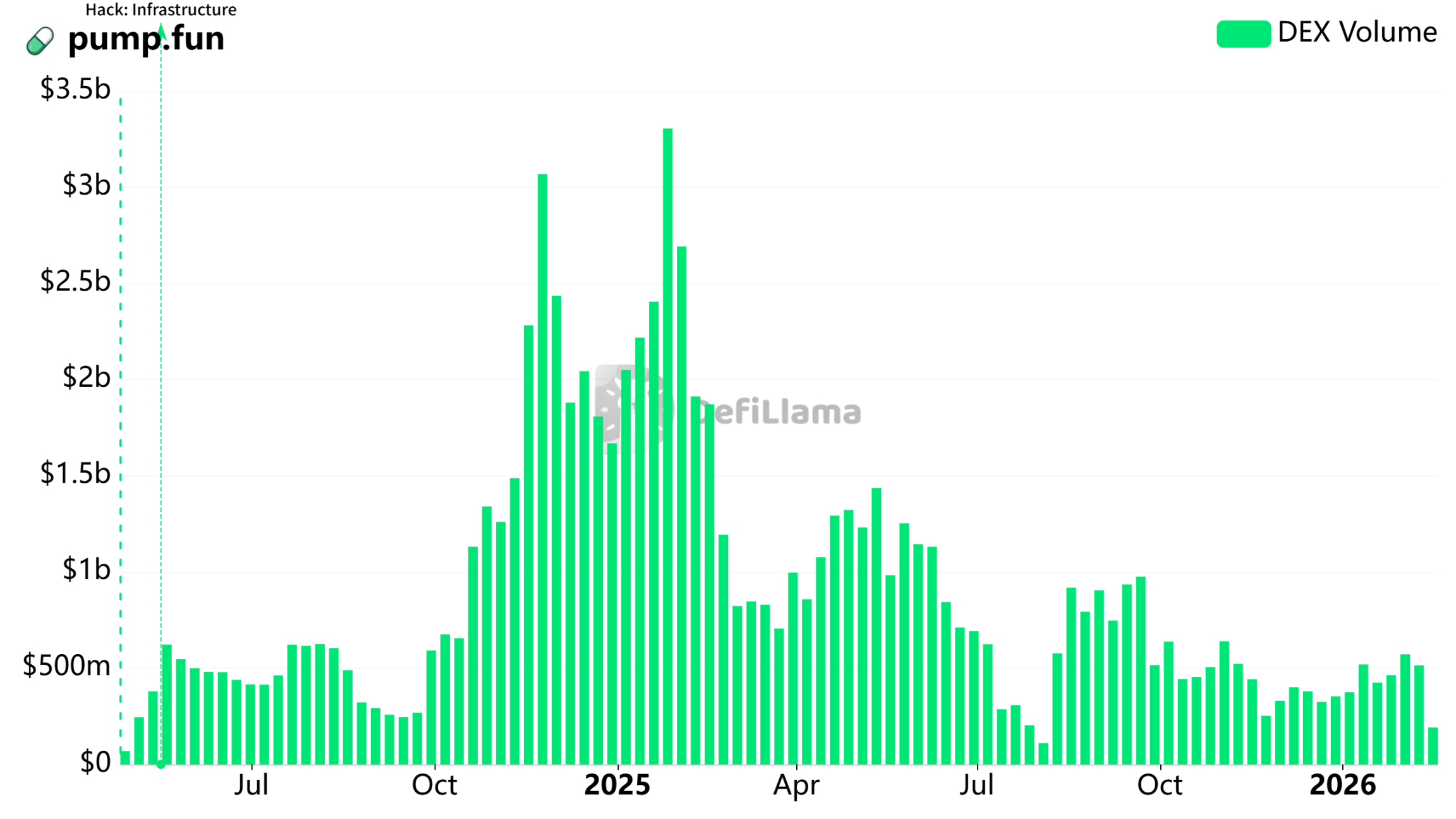
Defilama data shows that around the first few months of 2025, the transaction volume of the Meme platform pump.fun reached a historical high. The weekly transaction volume exceeded $3 billion twice, followed by a continuous decline. In early 2026, its transaction volume hovered around $500 million, one-sixth of its peak.

At the same time, some Meme traffic shifted to BNB Chain. BNB Chain rapidly rose through the Four.Meme platform. In the second half of 2025, Chinese-themed Memes like "Binance Life" and "I'm F*cking Coming" sparked FOMO sentiment. BNB Chain's Meme market capitalization grew from almost zero to hundreds of millions of dollars, with a 24-hour transaction volume reaching $460 million. In comparison, although Solana's Meme market capitalization still amounts to billions of dollars, growth has stagnated, with many projects falling over 95% from their peaks.

In October 2025, BNB Chain once replaced Solana on the trending Meme list, with obvious capital rotation: when BNB Chain Memes surged, Solana's capital contracted; after BNB Chain receded, capital partially flowed back, but the momentum had weakened. Furthermore, under the influence of influential figures CZ/He Yi, BNB Chain saw short-term growth stimulation, while Solana's Pump.fun, despite its first-mover advantage, weakened due to narrative exhaustion and a lack of incremental funds.

The end of the Meme wave means that the demand for its public chain token has also decreased simultaneously.

Public Chain Narrative Cools

Additionally, the overall cooling of the public chain narrative has further weakened Solana's ecosystem expansion plans. Between 2025-2026, the crypto market retreated from early high leverage and excessive narrative expansion. Many weak narratives, such as celebrity tokens and the Meme craze, quickly faded, shifting focus to areas with more practicality and institutional support. Solana's narrative as a "high-speed public chain" once attracted developers, but as the market entered the "deep water of value," investors tended to prefer mainstream assets like Bitcoin and Ethereum for their "digital gold" or "settlement layer" positioning, leading to a continued overall bear market and intensified capital outflow from Solana.

This narrative fatigue reflects that public chain competition has shifted from pure TPS competition to ecological maturity and regulatory adaptability. Solana's previous TPS and ecological advantages have been diluted. Whether in terms of Memes or airdrop incentives, Solana's appeal to new users has weakened.

Meanwhile, the significant speed improvement of the Ethereum mainnet has also weakened Solana's core advantage. Through the Fusaka upgrade in 2025, Ethereum increased data blob capacity from 3 to 6-9 and introduced the PeerDAS mechanism, significantly reducing transaction fees and increasing throughput. Transaction volume and active addresses subsequently rebounded.
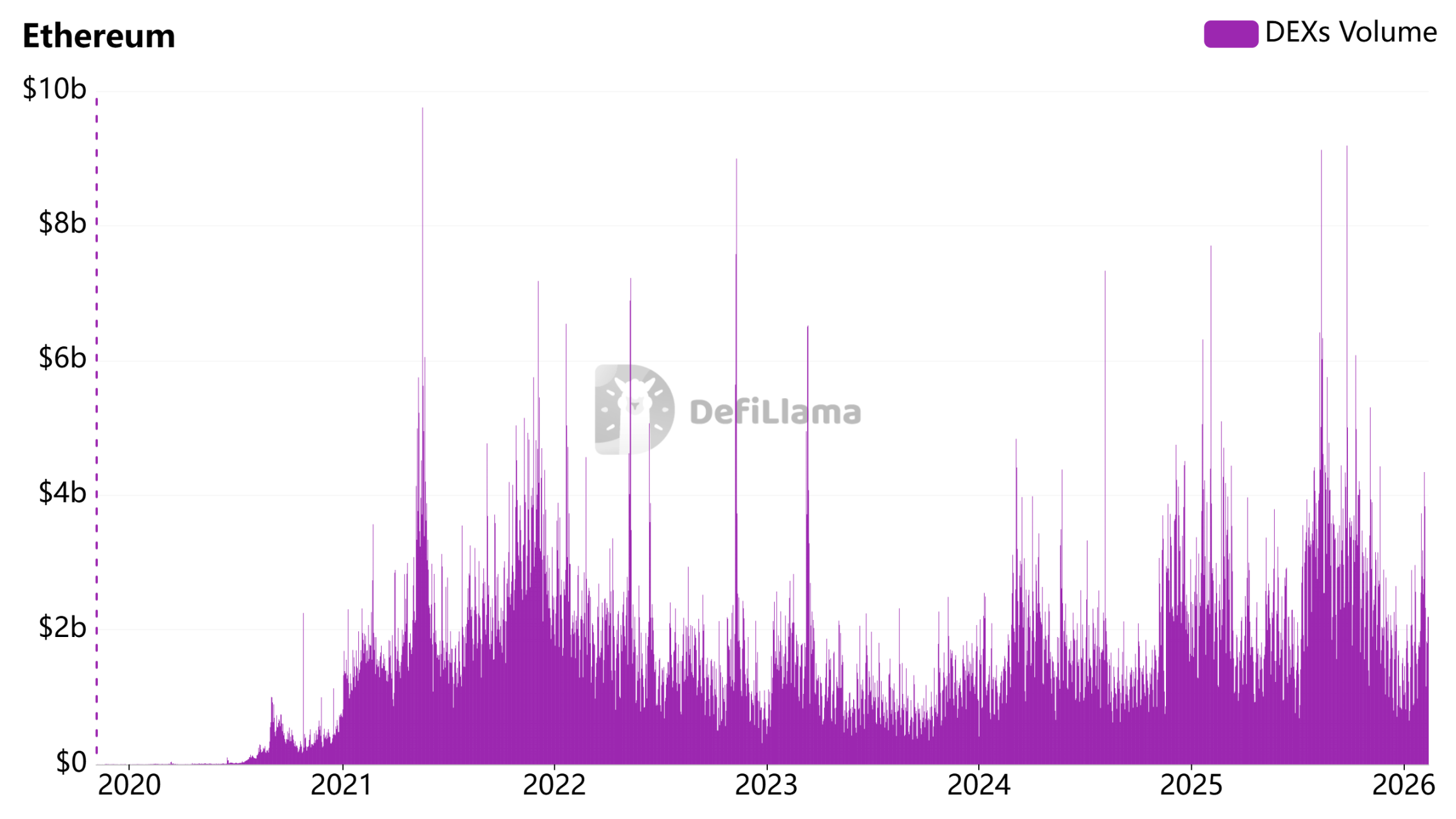
Data shows that DEX trading volume on Ethereum saw an overall upward trend in late 2025. Entering 2026, the Glamsterdam upgrade will achieve near-perfect parallel processing, further accelerating block verification and reducing fees, bringing the mainnet closer to an "operating system" level. These improvements bring Ethereum mainnet's TPS and cost close to Solana's levels, while retaining higher security and decentralization, reducing the necessity for users to switch to Solana.

Another rising competitor, Base, is also growing rapidly, particularly with AI tokens attracting many users. According to DefiLlama data, its TVL is still maintained at a high level of $4 billion.
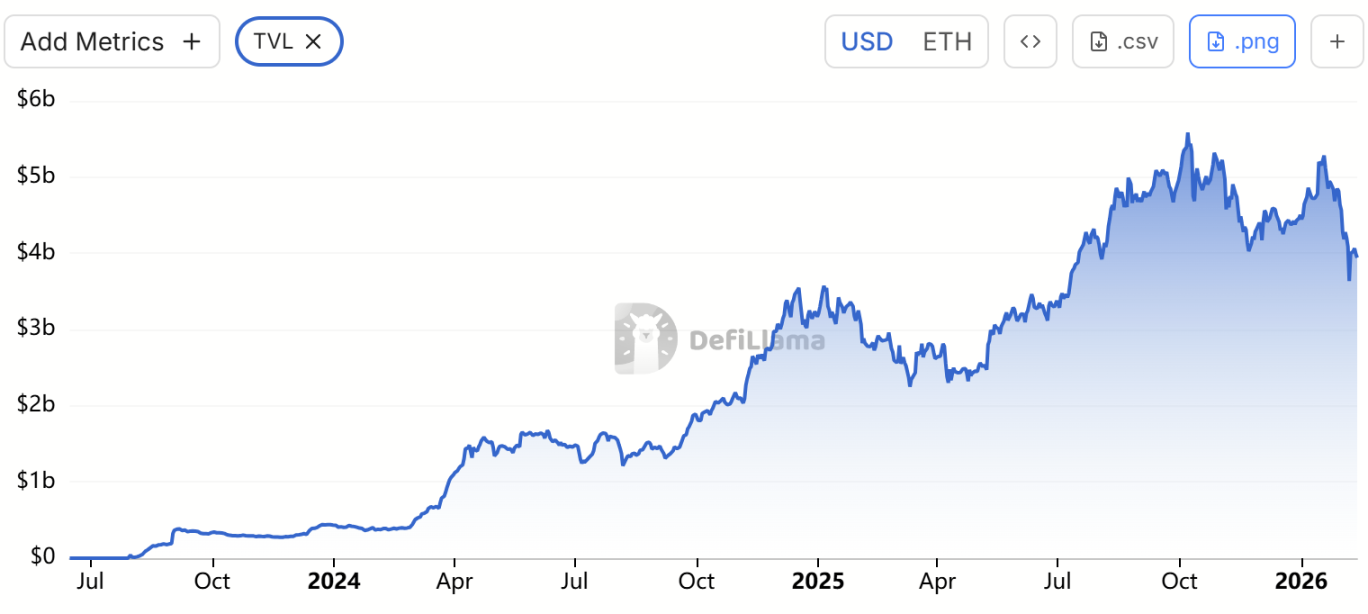
Under the tokenization boom, RWA occurs more on Ethereum, further marginalizing Solana's ecosystem. As of February 12, 2026, data from rwa.xyz shows that RWA assets on the Ethereum mainnet are $14.9 billion, while Solana is only $1.7 billion, still a significant gap. The tokenization trend of RWA emphasizes stability and compliance, with Ethereum's leading position making it difficult for Solana to get a share.

Digital Asset Treasury Buyers Fail to Offset Overall Bear Market Selling Pressure

From the perspective of Digital Asset Treasuries (DAT), in 2025, the DAT model was once all the rage. Many publicly traded companies such as Forward Industries, Upexi, and Sharps Technology purchased large amounts of SOL as treasury assets through private financing or debt issuance.
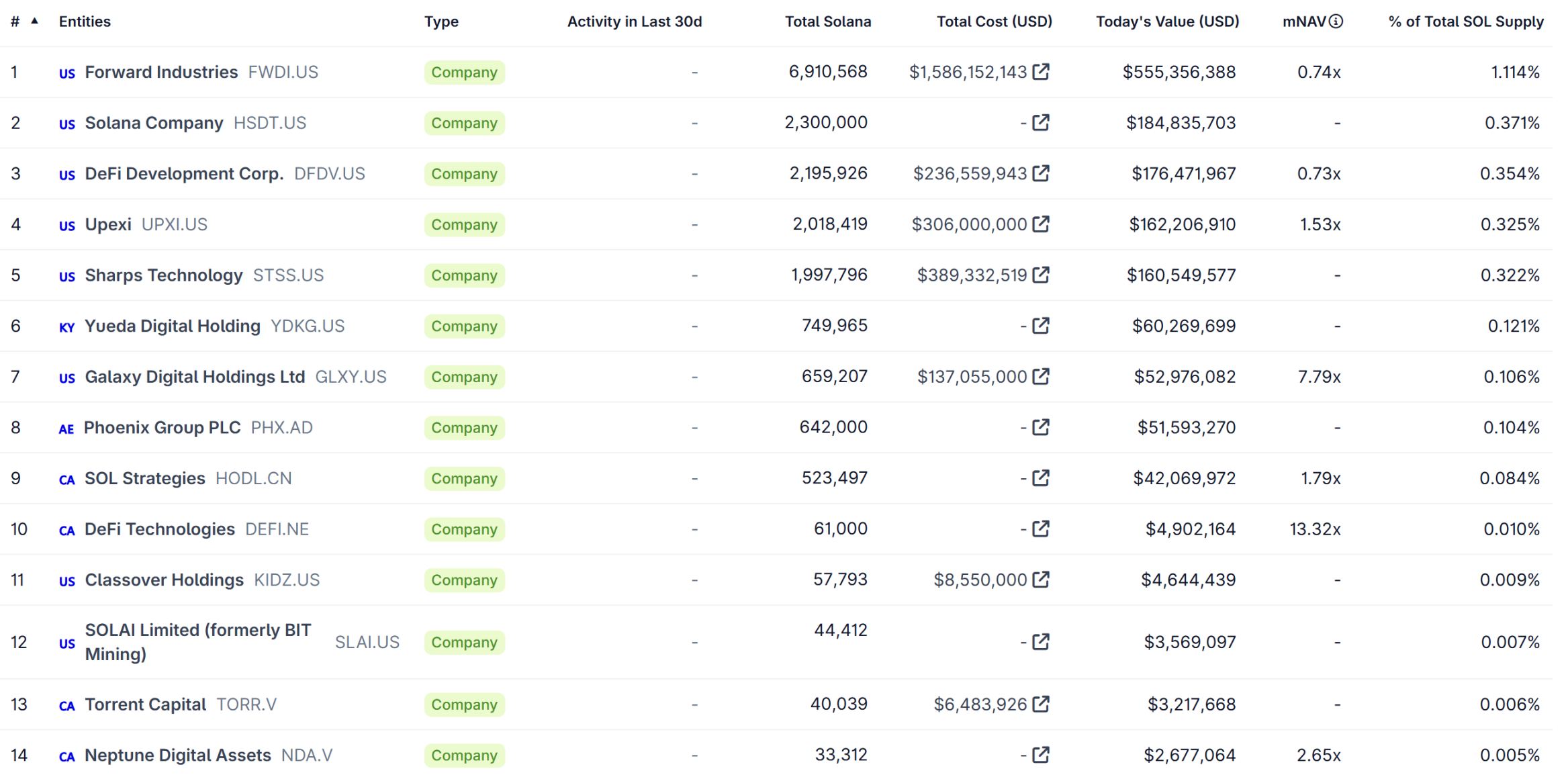
Entering 2026, as the SOL price fell from the 2025 peak of around $200 to about $80, the market capitalization of these DAT companies shrank significantly. For example, Forward Industries spent $1.58 billion to purchase SOL, now worth only $555 million, shaking some investors' confidence.

Furthermore, the DAT buying frenzy has weakened, with fewer new joiners. Although the early purchased locked SOL reduces circulating supply, it has failed to offset the overall market bearish pressure.

Bitcoin and Ethereum prices have also been hit hard in the bear market of recent months. BTC fell from $126,000 to the current $67,000, and ETH fell from $4,900 to the current $2,000.

In January 2026, Solana founder toly asked on X in Chinese: What do you think is Solana's biggest challenge now? The comments section received a variety of feedback and answers, including: no direct exchange, users have less perception of other product ecosystems besides Meme, etc.

Perhaps Solana will find its own solutions.


Twitter:https://twitter.com/BitpushNewsCN

Bitpush TG Discussion Group:https://t.me/BitPushCommunity

Bitpush TG Subscription: https://t.me/bitpush

Original link:https://www.bitpush.news/articles/7611730

Trending Cryptos

Related Questions

QWhat was the lowest price Solana (SOL) reached during the recent market crash, and what was its peak price during the bull run?

ADuring the market crash, Solana (SOL) fell to a low of $67, its lowest since December 2023. Its peak price during the bull run was $295.

QWhat was the primary driver of Solana's growth and activity during the recent bull cycle?

AThe primary driver was the Meme coin frenzy, which was largely facilitated by the Pump.fun platform on Solana, leading to massive daily token issuance and high trading volumes.

QWhich competing blockchain saw a rise in Meme coin activity, partially at the expense of Solana?

ABNB Chain saw a significant rise in Meme coin activity through its Four.Meme platform, attracting some of the Meme-related traffic and capital that was previously on Solana.

QHow did Ethereum's technical upgrades impact its competitive position against Solana?

AEthereum's Fusaka and upcoming Glamsterdam upgrades significantly increased its transaction throughput (TPS) and reduced fees, bringing its performance closer to Solana's while maintaining higher security and decentralization, thus reducing the incentive for users to switch to Solana.

QWhat is one major challenge for Solana's ecosystem mentioned in the article, beyond the decline of Meme coins?

AOne major challenge is the lack of user perception and engagement with products and ecosystems on Solana beyond Meme coins, as well as the overall cooling of the public chain narrative where investors are focusing more on established assets like Bitcoin and Ethereum.

Related Reads

In Jinjiang, Fujian, a Storage Super Unicorn Lies Quiet

In Fujian's Jinjiang, a city known for sportswear, lies a quiet semiconductor giant: Fujian Jinhua Integrated Circuit Co. (JHICC). Once a promising domestic DRAM manufacturer alongside Yangtze Memory and ChangXin Memory Technologies (CXMT), its journey was derailed in 2018 when the U.S. placed it on an Entity List and filed criminal charges for alleged trade secret theft. This halted production for years. A turning point came in February 2024 when a U.S. federal court found JHICC not guilty. However, it had lost crucial time. While CXMT soared to become a top-valued A-share company in 2024, JHICC, with an estimated valuation of 80 billion RMB, was just restarting. Its current output is primarily customized DDR4 chips, not the advanced DDR5/HBM demanded for AI, but it still benefits from the broader memory chip upcycle. JHICC's story is tied to Chen Zhengkun, a veteran engineer who left Micron to lead the venture. Founded in 2016 with state-backed funding, JHICC partnered with Taiwan's UMC to develop DRAM technology. Rapid progress was cut short by the U.S. actions, which Micron initiated, partly due to its heavy reliance on the Chinese market. Post-sanctions, Chen's team worked to rebuild the production line with reduced reliance on U.S. technology. According to its records, JHICC achieved small-scale production and revenue growth under immense pressure. It now focuses on the stable "niche" DRAM market (e.g., TVs, routers) with a monthly capacity of ~40,000 wafers, aiming for 60,000 by 2026. It holds over 1,000 patents but remains on the Entity List. For Jinjiang, investing in JHICC was a bold industrial leap. The local government provided unwavering financial and logistical support during the crisis, helping the company survive. JHICC has become the anchor for a growing local semiconductor cluster. Though its scale lags behind domestic peers, JHICC's persistence symbolizes a hard-won foothold in a global market long dominated by Samsung, SK Hynix, and Micron. Having missed one boom, it seeks a place in the new AI-driven memory supercycle.

marsbit33m ago

In Jinjiang, Fujian, a Storage Super Unicorn Lies Quiet

marsbit33m ago

Must-Watch Events Next Week|CLARITY Act Could Face Senate Vote; SpaceX, Circle to Report Earnings (8.3-8.9)

**Summary: Key Events and Developments to Watch (August 3-9)** The upcoming week is marked by significant financial disclosures, key legislative deadlines, and notable product updates. **Major Financial Events:** Several companies are scheduled to release their Q2 2026 earnings. American Bitcoin (ABTC) will report on August 3, followed by SpaceX and Hut 8 Mining Corp. on August 4, and Circle on August 5. Notably, a significant portion of SpaceX shares (up to 12% of total shares) will be unlocked on August 6 following their earnings release. **Key Legislative Deadline:** The U.S. Senate faces an August 7 deadline to secure 60 votes for the CLARITY Act, a bipartisan bill aiming to establish a federal regulatory framework for cryptocurrencies. The Senate may hold a full vote on the bill during the week. **Economic Data:** The U.S. July Non-Farm Payrolls report will be released on August 7, providing crucial labor market data. **Technology & Product Updates:** * **Shutdowns:** DeFi portfolio tracker Zapper and wallet app Ctrl Wallet will cease operations on August 3. * **Upgrades:** LayerZero will deprecate its v1 relayers on August 3. XRP Ledger's new version 3.3.0, featuring five new functions, is expected next week. * **AI:** Elon Musk announced that the advanced Grok 4.6 AI model is set for release around August 7. * **Bitcoin:** The BIP-110 forced signaling for a potential Bitcoin network change is scheduled to begin around August 8. **Other Notable Events:** Chinese robotics firm Unitree Tech has set its preliminary price inquiry for its IPO for August 5. South Korean exchange Upbit will delist AQT and AERGO tokens on August 3.

marsbit2h ago

Must-Watch Events Next Week|CLARITY Act Could Face Senate Vote; SpaceX, Circle to Report Earnings (8.3-8.9)

marsbit2h ago

Trading

Spot

Hot Articles

Discussions

Welcome to the HTX Community. Here, you can stay informed about the latest platform developments and gain access to professional market insights. Users' opinions on the price of MEME (MEME) are presented below.

活动图片