Founder of NFT Project Few and Far to Face U.S. Court on $10 Million Fraud Charges

cryptonews.ruPublished on 2026-08-05Last updated on 2026-08-05

Abstract

Taj Tarsha, founder of the NFT startup Few and Far, has been indicted by U.S. federal prosecutors in Manhattan on securities fraud and wire fraud charges. Authorities allege he misappropriated over $10 million from investors who purchased Simple Agreements for Future Tokens (SAFTs) for the FAR token. Instead of funding the promised NFT marketplace, Tarsha is accused of spending the money on online gambling, speculative crypto trades, a Miami apartment loan, personal bonuses, DJ equipment, and interior design. An internal review in June 2023 revealed missing funds, leading to his removal from the project's multi-signature wallet. The FAR token launched in May 2024 and crashed by over 99%, becoming essentially worthless. Tarsha, 34, was arrested on June 6, 2026, and released on $500,000 bail. He faces up to 20 years in prison for each charge.

Federal prosecutors in Manhattan have charged Taju Tarsha, founder of the $NFT startup Few and Far, with securities fraud and wire fraud.

Authorities allege he misappropriated over $10 million from investors, spending it on gambling, speculative cryptocurrency bets, and a Miami apartment instead of the promised marketplace.

What Happened to the $NFT Marketplace Few and Far?

The U.S. Attorney's Office for the Southern District of New York announced the charges related to an alleged fraud scheme dating back to February 2022.

Prosecutors claim that Taju Tarsha, founder of the $NFT startup Few and Far, began selling Simple Agreements for Future Tokens (SAFTs). Under these contracts, buyers paid upfront for the right to receive FAR tokens once the decentralized $NFT marketplace Few and Far was ready.

According to prosecutors, Tarsha sold 95 million FAR tokens to at least 67 investors, raising over $10 million that was supposed to fund the platform and tokens.

Instead, the funds were spent in online casinos, invested in risky cryptocurrency trades, and even used to pay down a loan related to a Miami apartment. Tarsha also funded his hobby of DJing and paid for some interior design work.

Tarsha also paid himself about $1 million in two bonuses, which he concealed from investors and one of his co-founders, as well as a salary that he allegedly admitted was unjustified given the company had no product and, by his own admission, "zero revenue."

He reportedly also confessed to his then-fiancée that misappropriating company assets was "unethical."

Few and Far had raised about $10.5 million in a funding round led by Pantera Capital. The company was founded a year earlier by Tarsha, Chris Gale, and Chris Hayes and was built on the NEAR protocol.

How Was Tarsha Caught?

An internal review in June 2023 revealed a shortfall in some funds, but Tarsha allegedly reassured investors, claiming the bonuses were tied to pre-set pre-sale targets for FAR and that every remaining dollar was still needed to complete the project.

However, by that time, he had already laid off nearly all staff, leaving only one contract worker performing work that only superficially resembled project development.

After Tarsha's colleagues discovered the missing funds, he was removed from the Few and Far multi-signature wallet.

When the FAR token finally launched in May 2024, it crashed. According to prosecutors, it became essentially worthless and stopped trading shortly after, with Inner City Press reporting that the token's price fell over 99% from its launch price.

The 34-year-old Tarsha was initially arrested on June 6, 2026, and released four days later on a $500,000 bail. The case is before U.S. District Judge Lewis A. Kaplan, and each charge against Tarsha carries a maximum sentence of 20 years in prison.

end-content
Trending Cryptos

Related Questions

QWhat are the specific criminal charges filed against Taj Tarsha, founder of Few and Far?

ATaj Tarsha has been charged by federal prosecutors in Manhattan with securities fraud and wire fraud.

QHow did Taj Tarsha allegedly misuse the more than $10 million raised from investors?

AAccording to authorities, he misappropriated the funds by spending them on online gambling, speculative cryptocurrency bets, paying down a loan on a Miami apartment, funding his DJ hobby, interior design work, and unauthorized bonus payments to himself.

QWhat financial instrument did Taj Tarsha use to raise funds from investors, and what was it supposed to grant them?

AHe sold Simple Agreements for Future Tokens (SAFTs), which were supposed to grant buyers the right to receive FAR tokens once the Few and Far NFT marketplace was ready.

QWhat happened to the FAR token when it was launched in May 2024?

AThe FAR token crashed upon launch, reportedly becoming virtually worthless and ceasing to trade shortly after, with its price falling more than 99% from its launch price.

QWhat was the outcome of Taj Tarsha's initial court appearance following his arrest?

AHe was arrested on June 6, 2026, released on a $500,000 bond four days later, and his case was assigned to U.S. District Judge Lewis A. Kaplan. Each charge carries a maximum sentence of 20 years in prison.

Related Reads

Wall Street Begins to Question Tech Giants' AI Narrative

Wall Street Questions the AI Narrative of Tech Giants Wall Street is shifting its focus from the hype surrounding artificial intelligence (AI) to a rigorous financial reality check. Following strong earnings reports from companies like Google and a massive $500 billion financing initiative from Nvidia for AI infrastructure, the market reaction has been mixed and skeptical. The core concern revolves around the massive capital expenditure (CapEx) required for AI development—building data centers and acquiring chips—and whether future cash flows can justify these upfront costs. Investors are now scrutinizing free cash flow (FCF), which measures the cash left after operational expenses and capital investments. A negative FCF, as seen recently with Alphabet (Google's parent company), signals heavy immediate spending, even if profits are growing. The divergent stock reactions highlight this new scrutiny. Microsoft's stock surged after its earnings, supported by strong operating cash flow, growing cloud revenue (Azure), and a large backlog of committed business. In contrast, Alphabet's stock fell despite profit growth because its capital spending caused FCF to turn negative for the first time. Similarly, Nvidia's announcement of a $500 billion financing platform, while potentially expanding its market, raised questions about whether AI build-out has become too expensive for tech companies to fund internally. Analysts are moving beyond simply asking if there is AI demand—which cloud revenue growth confirms—to deeper questions: the speed at which AI investments translate into revenue, profit, and ultimately, cash returns. The market is evaluating the "return on invested capital" (ROIC) over the long term, considering factors like rapid chip obsolescence, energy costs, and future competition. In summary, Wall Street's AI narrative is evolving from grand vision to a detailed financial and operational examination. The key question is no longer if AI is transformative, but whether companies can generate cash returns fast enough to outpace the immense costs of building it. Free cash flow has become a critical first filter in this reassessment.

marsbit42m ago

Wall Street Begins to Question Tech Giants' AI Narrative

marsbit42m ago

An Unexpected Player Enters the Lithography Machine Arena

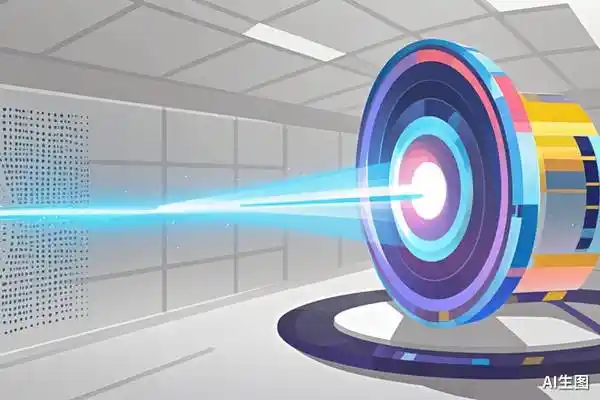
In the spring of 2026, Elon Musk unveiled the TeraFab chip manufacturing plan, aiming to meet the immense computing power needs of SpaceX and Tesla. He subsequently signaled a move into the photolithography machine market, with speculation centering on a Free Electron Laser (FEL) approach to challenge the dominance of traditional EUV technology. Currently, ASML, utilizing Laser-Produced Plasma (LPP) EUV光源, holds a near-monopoly. However, LPP faces bottlenecks in energy conversion efficiency, tin debris contamination, and a power ceiling. In contrast, FEL technology, pursued by companies like xLight (where former Intel CEO Pat Gelsinger serves as executive chairman), offers a different path. It generates EUV light by accelerating electrons, potentially providing higher power without plasma conversion and its associated contamination, targeting the sub-13.5nm "beyond-EUV" wavelength range. The photolithography landscape shows three main trajectories: ASML's incremental evolution (like High-NA EUV),光源革新 like FEL targeting ASML's core component, and non-EUV alternatives like Nanoimprint Lithography (NIL) or Electron Beam Lithography (EBL). While ASML remains the dominant player with strong financials and产能 expansion plans, new entrants are challenging the status quo. xLight claims its FEL could boost productivity by 50-100%. Other paths include Substrate's particle-accelerator-based X-ray lithography and Chinese research into LPP alternatives. Musk's TeraFab is a high-stakes bet that FEL can move from lab to fab, that "plug-and-play"光源 replacement can circumvent ASML's ecosystem, and that massive future compute demand justifies a new supply chain. His public endorsement of FEL signifies that the photolithography business is no longer ASML's game alone.

marsbit42m ago

An Unexpected Player Enters the Lithography Machine Arena

marsbit42m ago

Trading

Spot

Hot Articles

How to Buy NFT

Welcome to HTX.com! We've made purchasing AINFT (NFT) simple and convenient. Follow our step-by-step guide to embark on your crypto journey.Step 1: Create Your HTX AccountUse your email or phone number to sign up for a free account on HTX. Experience a hassle-free registration journey and unlock all features.Get My AccountStep 2: Go to Buy Crypto and Choose Your Payment MethodCredit/Debit Card: Use your Visa or Mastercard to buy AINFT (NFT) instantly.Balance: Use funds from your HTX account balance to trade seamlessly.Third Parties: We've added popular payment methods such as Google Pay and Apple Pay to enhance convenience.P2P: Trade directly with other users on HTX.Over-the-Counter (OTC): We offer tailor-made services and competitive exchange rates for traders.Step 3: Store Your AINFT (NFT)After purchasing your AINFT (NFT), store it in your HTX account. Alternatively, you can send it elsewhere via blockchain transfer or use it to trade other cryptocurrencies.Step 4: Trade AINFT (NFT)Easily trade AINFT (NFT) on HTX's spot market. Simply access your account, select your trading pair, execute your trades, and monitor in real-time. We offer a user-friendly experience for both beginners and seasoned traders.

8.0k Total ViewsPublished 2024.03.29Updated 2026.06.02

How to Buy NFT

What is Altura NFT?

Altura: Providing One-Stop NFT Solutions for Game Developers

56.4k Total ViewsPublished 2024.06.12Updated 2024.06.12

What is Altura NFT?

What is AINFT

EternaFi Agents and $AINFT: A Comprehensive Analysis of AI-Powered NFT Infrastructure in the Web3 Ecosystem The intersection of artificial intelligence (AI) and blockchain technology is rapidly evolving, establishing innovative platforms that redefine ownership models and economic participation. EternaFi Agents, along with its native token $AINFT, exemplifies a groundbreaking approach to the tokenization of AI infrastructures through the means of non-fungible tokens (NFTs). Launched in July 2025 by the development team at Nova Club, EternaFi merges the advancements of AI with the decentralized financial mechanisms of blockchain, presenting a unique investment opportunity for participants within the web3 ecosystem. This article aims to provide an in-depth assessment of EternaFi Agents, covering its core components, functionality, and significance within the crypto landscape. Introduction and Project Overview EternaFi Agents stands as a salient example of how blockchain technology can democratize access to advanced AI capabilities. The project endeavors to reshape the paradigm of AI ownership by diversifying economic participation, making sophisticated AI systems accessible to a larger pool of stakeholders. At its core, the project tokenizes a proprietary large language model (LLM) developed by Nova Club, allowing NFT holders to gain fractional exposure to the model's economic performance. By utilizing NFTs representing stakes in the LLM, EternaFi Agents fosters a model wherein stakeholders not only participate in AI service consumption but also enjoy sharing in the economic rewards generated by the platform. This transformative approach enables the development of sustainable revenue models for AI services, all the while promoting broad community engagement and facilitating transparent governance. What is EternaFi Agents? EternaFi Agents represents an AI-NFT infrastructure project that aims to blend the capabilities of AI with blockchain technology in a coherent ecosystem. The essential feature of this project is the creation of NFTs that serve as financial instruments, representing fractions of ownership in Nova Club's proprietary AI infrastructure. Each NFT symbolizes direct exposure to the economic performance of the underlying AI system, providing a lucrative opportunity for investors. The project operates on the Base blockchain, known for its scalability and efficiency, thus ensuring manageable transaction costs while facilitating a seamless operational experience. One of the notable features includes a revenue-sharing mechanism, wherein NFT holders can receive portions of subscription income generated by the AI services provided on the platform. This innovative approach establishes a connection between the success of the AI services and the economic dividends distributed among the holders, thus ensuring an alignment of interests across the community. Who is the Creator of EternaFi Agents? The creative force behind EternaFi Agents is Nova Club, a development team based in Singapore proficient in the amalgamation of AI and blockchain technology. Their prior experience in AI development and cryptocurrency analysis gives credence to the project, contributing a breadth of expertise to the creation of EternaFi Agents. Nova Club’s mission centers on democratizing access to cutting-edge AI technologies while building sustainable economic models that benefit users alongside developers. Their commitment to transparency, community governance, and innovation is reflected in the design and implementation of the EternaFi platform, aiming to establish a unique ecosystem that fosters positive engagement and long-term value creation. Who are the Investors of EternaFi Agents? The specific details concerning investors or investment organizations backing EternaFi Agents are not publicly available. However, EternaFi has adopted an inclusive approach to funding its development through the sale of NFTs to the public, allowing a wide array of participants to invest in the ecosystem. The project’s architecture ensures that core infrastructure is funded responsibly while allowing community members to partake in the ownership and economic returns generated from the AI services. This model emphasizes community engagement by aligning the interests of investors and project developers, creating a collaborative environment where long-term participation is incentivized. How Does EternaFi Agents Work? EternaFi Agents operates through a multifaceted ecosystem where NFTs serve as a primary means of ownership representation within the project. Each NFT holder is entitled to a share of the monthly subscription income produced by the underlying AI-powered platform, thereby positioning NFT ownership as a lucrative investment vehicle. Revenue Generation Mechanism The primary source of revenue generation for the EternaFi platform stems from subscription fees related to the AI services provided. Users can access various tiered services, ranging from basic market analysis tools to comprehensive AI-assisted trading solutions. These services are monetized and form the basis for the revenue-sharing framework, which distributes profits to NFT holders through automated smart contracts. An innovative feature of the EternaFi ecosystem is the revenue-sharing mechanism that operates transparently, ensuring that rewards are allocated based on verifiable metrics from the AI platform's operations. This creates a direct link between the performance of AI services and the returns available to community investors, establishing a sustainable economic model. Staking and Vesting Mechanisms Participants within EternaFi can engage in staking their NFTs to unlock additional economic benefits. The vesting schedule is designed to promote long-term commitment among participants, rewarding those who exhibit ongoing support for the project. This ensures a robust alignment of interests and fosters a sense of community engagement essential for achieving the project's long-term goals. Transparent Governance EternaFi Agents embraces decentralized governance, allowing NFT holders to play an active role in decision-making regarding the platform's development and future directions. The governing structure includes community voting mechanisms, providing NFT holders with the opportunity to influence significant decisions and contributing to a collaborative approach to project growth. Timeline of EternaFi Agents The development trajectory of EternaFi Agents showcases a systematic approach toward building a sustainable AI infrastructure while meeting the needs of community participants. Below is a timeline of important milestones in the project’s history: July 2025: Launch of EternaFi Agents, including the public sale of NFTs and deployment of the $AINFT token on the Base blockchain. Q4 2025: Establishment of market infrastructure including liquidity pools and launch of staking dashboards for NFT holders. 2026: Initiation of community engagement programs, expanding AI capabilities, and integration with cross-chain technologies. Q4 2026: Implementation of the dividend distribution system, allowing NFT holders to reap economic benefits from their investments. These milestones signify the focus on establishing a functional and participative ecosystem while ensuring continuous evolution to meet market demands. Technological Infrastructure and Blockchain Integration EternaFi Agents is anchored in an advanced technological framework combining AI systems with blockchain capabilities. Operating on the Base blockchain, the project leverages the advantages of scalability and low transaction costs. The underlying smart contract architecture governs the NFT ownership, revenue sharing, and community management features, ensuring efficiency and transparency. AI System Development The proprietary large language model underpinning EternaFi Agents has been independently developed and designed to cater to revenue-generating applications without reliance on proprietary external frameworks. This endeavor reflects a commitment to creating a versatile and adaptable AI infrastructure capable of delivering meaningful services to users, thus generating economic value for investors. Security Measures The robustness of EternaFi’s security infrastructure is paramount. Regular audits and stringent security measures ensure the integrity of the AI systems and blockchain mechanisms, safeguarding against potential vulnerabilities while fostering confidence among participants. Conclusion EternaFi Agents signifies a landmark innovation within the realm of artificial intelligence and blockchain technology, opening avenues for community ownership and economic participation in advanced AI capabilities. The project’s comprehensive strategy to tokenize AI infrastructure via NFTs establishes a precedent for future decentralized ecosystems. By harmonizing technical sophistication with user-centric economic models, EternaFi not only fosters engagement but also generates a sustainable revenue-sharing framework for community participants. The significance of EternaFi extends well beyond its operational success as it exemplifies how blockchain can democratize cutting-edge AI technologies, paving the way for future ventures in this intersectional space. The evolution of EternaFi Agents may herald a new era of AI development characterized by participant-driven governance, sustainable economic models, and transparent verification, ultimately contributing to the broader democratization of AI and technology accessibility across industries.

5.3k Total ViewsPublished 2025.08.14Updated 2025.08.14

What is AINFT

Discussions

Welcome to the HTX Community. Here, you can stay informed about the latest platform developments and gain access to professional market insights. Users' opinions on the price of NFT (NFT) are presented below.

活动图片