Ethereum – Why $69B remains locked in DeFi despite weak ETH prices

ambcryptoPublished on 2025-12-24Last updated on 2025-12-24

Abstract

Despite weak ETH prices and technical pressure trading below key resistance levels, Ethereum's foundation remains strong with over $69 billion locked in its DeFi ecosystem—representing 68.2% of the global DeFi TVL. This dominance extends beyond DeFi, as Ethereum also supports over $191 billion in stablecoins and half of the tokenized euro market, reinforcing its role as the preferred settlement layer for institutions due to its security and reliability. Institutional players are actively increasing their exposure, with significant purchases such as Bitmine's acquisition of 68,000 ETH (worth over $200 million) in 24 hours and Fasanara Capital using DeFi protocols to leverage further buying. Concurrently, ETH exchange supply has hit multi-month lows, reducing sell-side pressure. This combination of strong fundamental usage, institutional accumulation, and declining available supply could soon trigger a supply-driven rebound in price.

Ethereum’s [ETH] price looks shaky, but its foundation remains strong.

Behind the short-term pressure, the network is dominating DeFi. ETH is leaving exchanges, so the available supply is decreasing.

What makes this moment stand out, however, is who is stepping in. Institutional players are increasing exposure, even during times of caution.

Price and investor behavior are moving apart. However, that gap may close soon.

Ethereum is hard to ignore

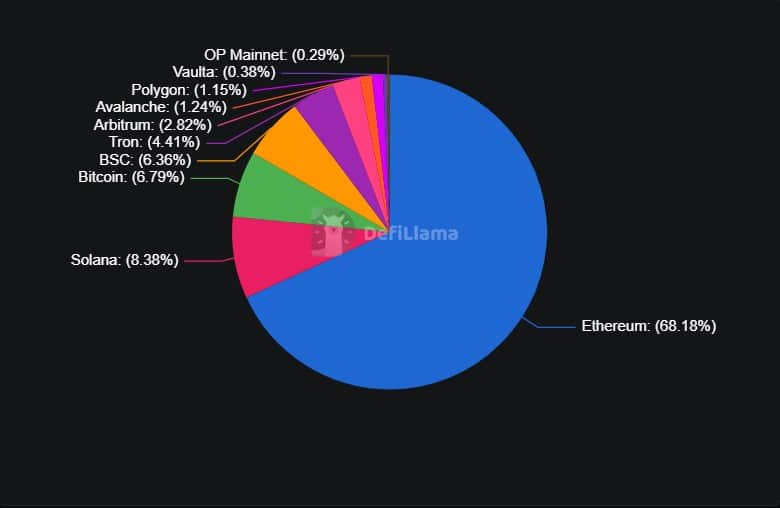
The network now holds nearly 68.2% of global DeFi TVL, with over $69 billion deployed on its smart contracts.

That is more capital than Solana [SOL], Tron [TRX], BNB Smart Chain [BNB], Bitcoin [BTC], Avalanche [AVAX], and every other chain combined.

Source: DeFiLlama

The network’s edge goes beyond DeFi alone. It also hosts more than $191 billion in stablecoins and controls half of the tokenized euro market.

For institutions, this matters because stablecoins are issued where security and reliability are strongest, and Ethereum remains the preferred settlement layer.

Big hands are in!

Source: X

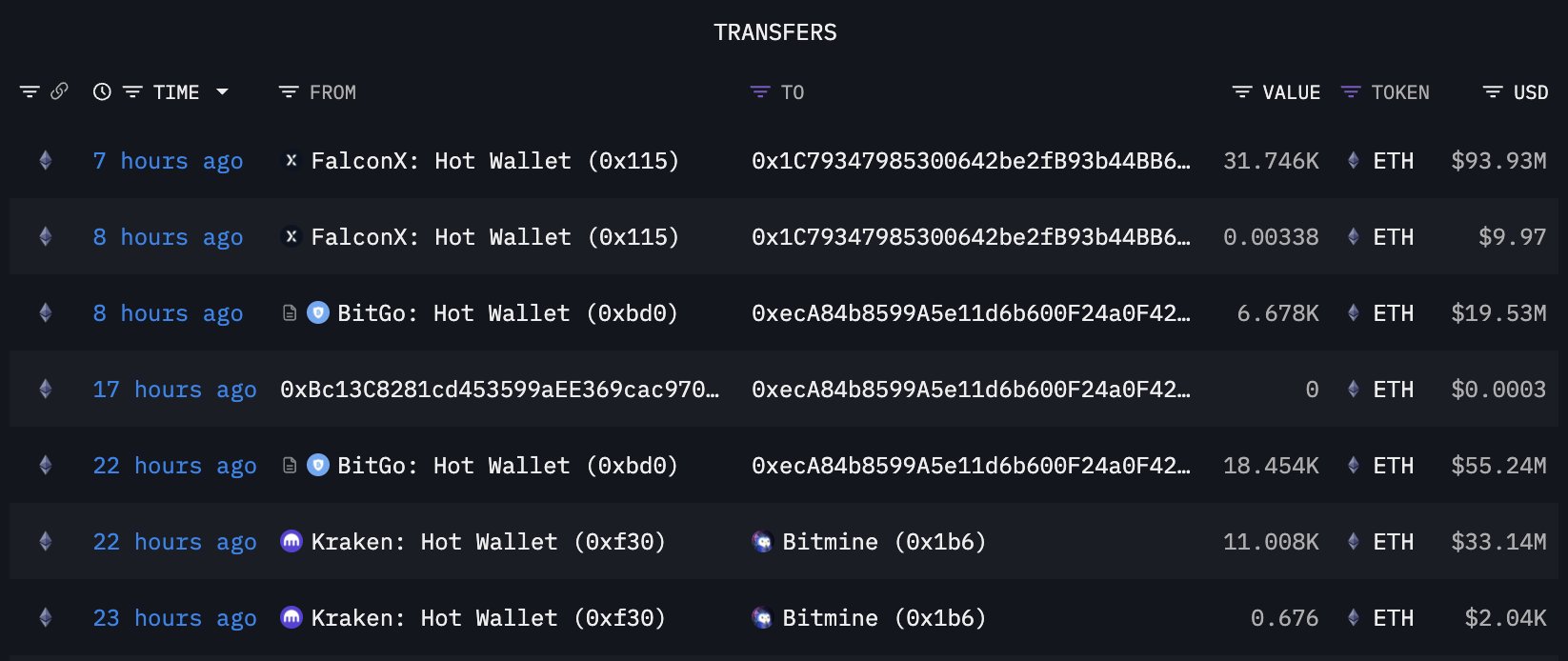
That dominance is translating into real buying, with institutions moving fast to increase exposure. In the past 24 hours alone, Tom Lee’s Bitmine purchased nearly 68,000 ETH, worth over $200 million.

Source: X

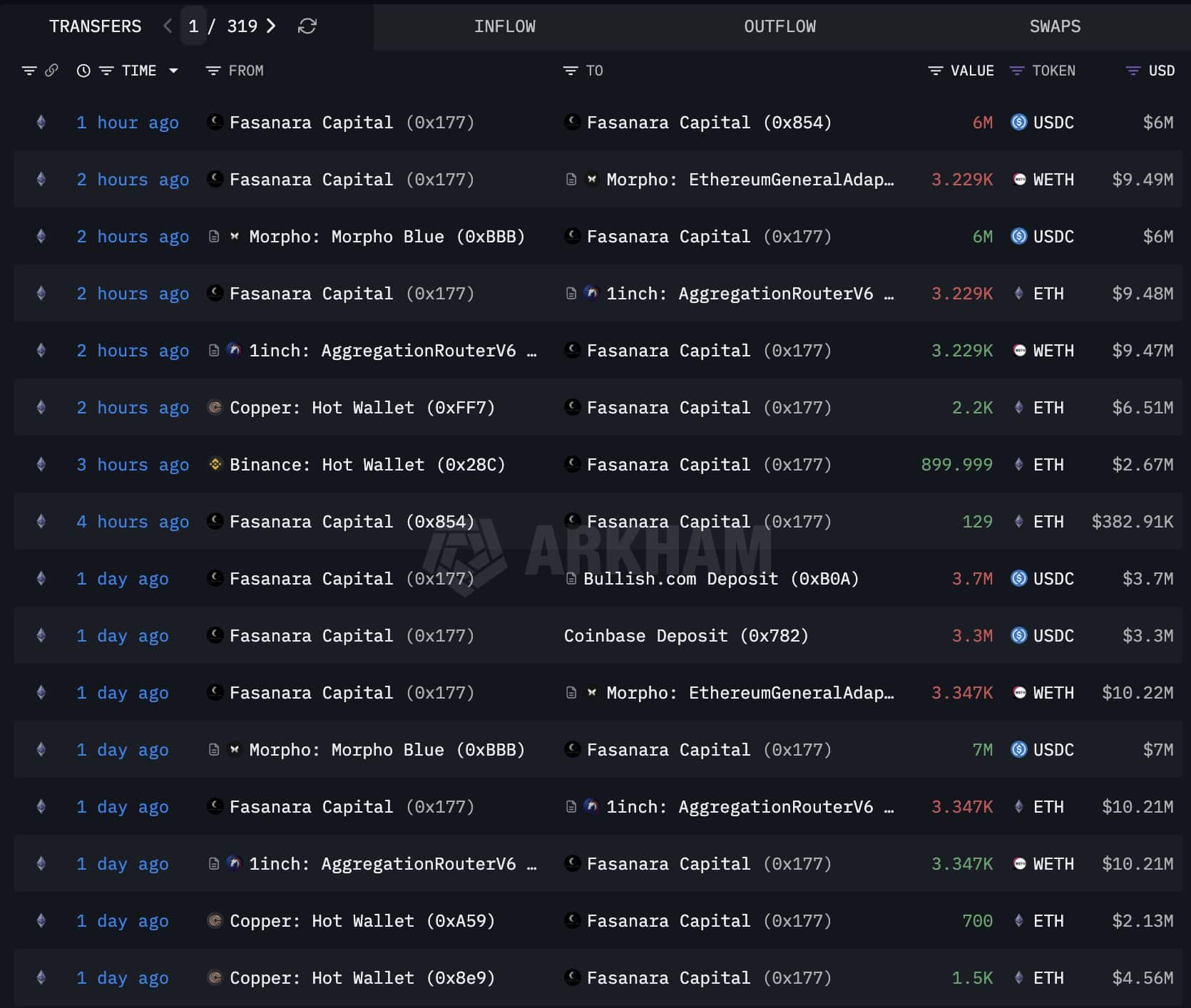
Fasanara Capital followed a similar path, buying ETH, depositing it into DeFi protocols, and borrowing against it to buy even more. This is active positioning.

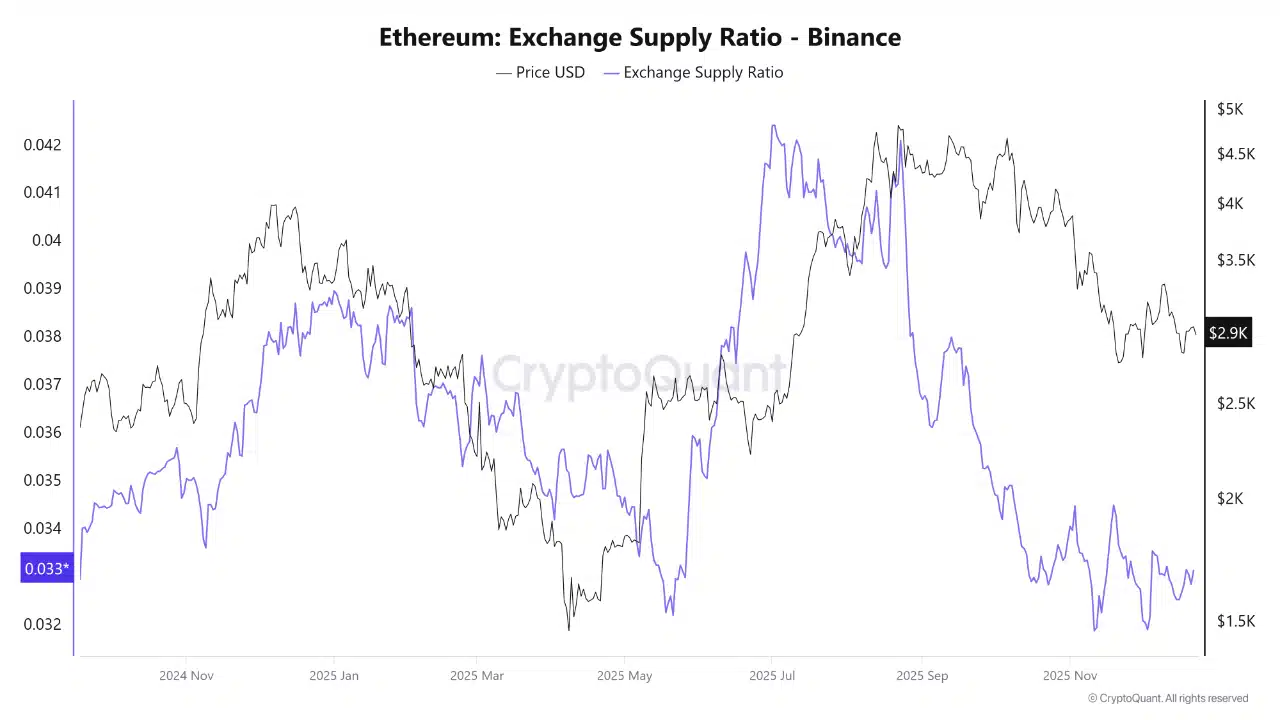
A supply shock is taking shape

Source: CryptoQuant

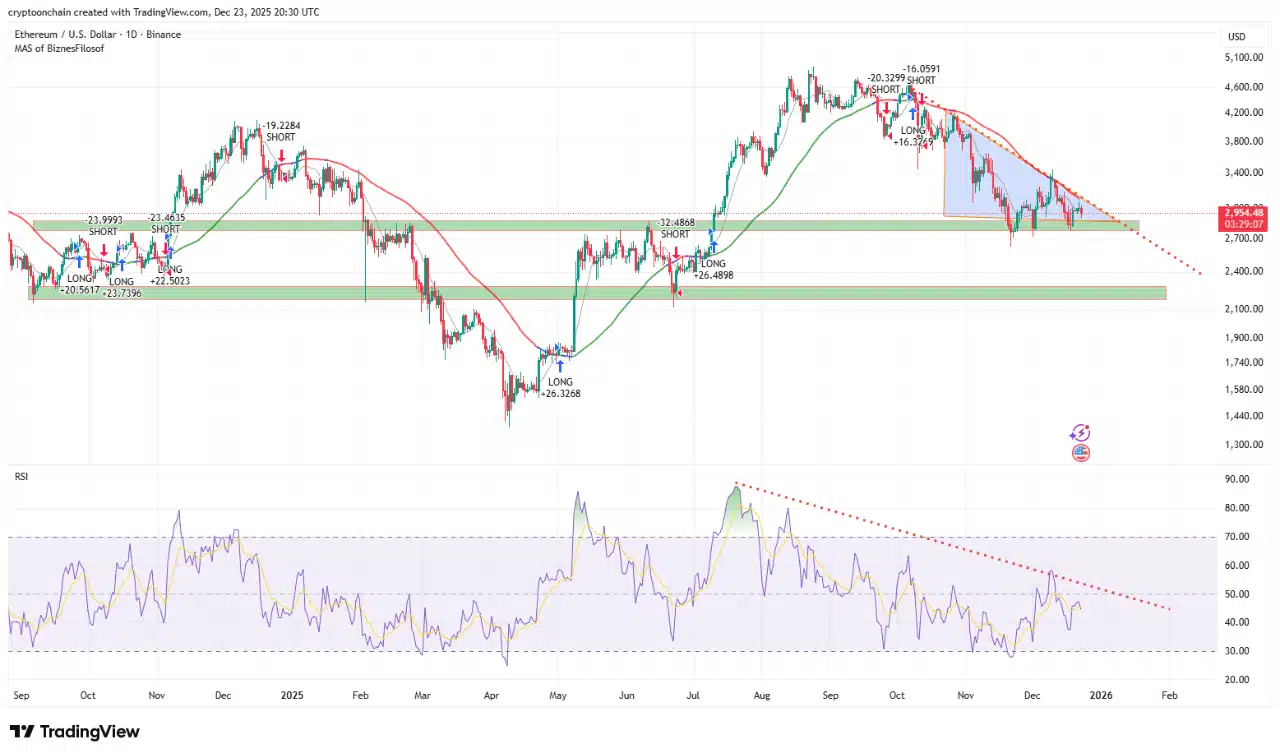
All this buying is happening at a delicate moment for ETH’s price. Ethereum is trading under technical pressure, stuck below key resistance levels with support near $2,800. On its own, it looks fragile, too.

Source: CryptoQuant

But, Ethereum’s exchange supply ratio on Binance has fallen to 0.032, the lowest since September 2024. Simply put, less ETH is sitting on exchanges ready to be sold.

With this clash, if buyers continue to defend support, a tight supply could quickly flip the narrative.


Final Thoughts

  • Ethereum controls 68%+ of DeFi TVL. Institutions buy even while price struggles.
  • Falling exchange supply and $200M+ ETH buys could cause a supply-driven rebound
Next: Why ‘fear’ right now doesn’t mean ‘buy the dip’
Share
  • Share
  • Tweet

Related Questions

QWhat percentage of global DeFi TVL does Ethereum currently hold, and how much capital is deployed on its smart contracts?

AEthereum currently holds 68.2% of global DeFi TVL, with over $69 billion deployed on its smart contracts.

QWhy are institutional players increasing their exposure to Ethereum despite its current price weakness?

AInstitutions are increasing exposure because Ethereum remains the dominant DeFi platform with strong security and reliability, serving as the preferred settlement layer for stablecoins and tokenized assets.

QHow much ETH did Tom Lee's Bitmine purchase in the past 24 hours, and what was its approximate value?

ATom Lee's Bitmine purchased nearly 68,000 ETH in the past 24 hours, worth over $200 million.

QWhat is significant about Ethereum's exchange supply ratio on Binance falling to 0.032?

AEthereum's exchange supply ratio on Binance falling to 0.032 (the lowest since September 2024) indicates less ETH is available on exchanges for selling, potentially creating a supply shock.

QWhat strategy did Fasanara Capital use to increase their Ethereum exposure?

AFasanara Capital bought ETH, deposited it into DeFi protocols, and borrowed against it to purchase even more ETH, demonstrating active positioning.

Related Reads

Only a 50% Chance of Passing This Year, Can the CLARITY Bill Succeed Before the Midterm Elections?

The CLARITY Act, which passed the House in July 2025 with strong bipartisan support (294-134), faces a critical juncture in the Senate. The Senate Banking Committee is expected to hold a markup soon, but key issues remain unresolved, including stablecoin yield provisions, DeFi regulations, and securing full Republican committee support. Other contentious points involve the Blockchain Regulatory Certainty Act (BRCA), ethics amendments for government officials, and SEC-related matters. The legislative calendar is tight, with limited time before the midterm elections. If the committee markup is delayed beyond mid-May, the chances of passage in 2026 drop significantly. Senator Cynthia Lummis has warned that failure this year could delay comprehensive crypto market structure legislation until 2030 or later. Galaxy estimates the probability of the CLARITY Act becoming law in 2026 is only about 50%. The bill provides crucial regulatory clarity by defining jurisdictional boundaries between the SEC and CFTC, establishing a path for decentralization, and bringing digital commodity intermediaries under federal regulation. Its passage is seen as vital before potential power shifts in the next Congress, which could bring less favorable leadership to key committees. The timeline is compressed, and the bill must compete for floor time with other priorities like Iran authorization and DHS appropriations. Key hurdles include finalizing the stablecoin yield compromise text, addressing law enforcement concerns about BRCA, and navigating political dynamics around SEC nominations. The outcome of the Banking Committee markup and the level of bipartisan support will be critical indicators of its future success.

marsbit2m ago

Only a 50% Chance of Passing This Year, Can the CLARITY Bill Succeed Before the Midterm Elections?

marsbit2m ago

Only a 50% Chance of Passing This Year, Can the CLARITY Bill Succeed Before the Midterm Elections?

The CLARITY Act, which passed the U.S. House in July 2025 with strong bipartisan support (294-134), faces a critical juncture in the Senate. The Senate Banking Committee is expected to hold a markup soon, but key issues remain unresolved, including stablecoin yield provisions, DeFi regulations, and securing full Republican committee support. Additional challenges involve the Blockchain Regulatory Certainty Act (BRCA), ethics amendments for government officials, and SEC-related concerns. Galaxy estimates only a 50% chance of the bill becoming law in 2026. The tight legislative calendar, competing priorities like Iran military authorization and DHS appropriations, and the impending midterm elections create significant time pressure. If the bill is not passed before the new Congress convenes in 2027, comprehensive crypto market structure legislation could be delayed until 2030 or later, especially if leadership changes result in less favorable committee chairs. The act provides crucial regulatory clarity by defining the jurisdictional boundaries between the SEC and CFTC, establishing a path for decentralized networks to be classified as non-securities, and bringing digital commodity intermediaries under federal regulation. The outcome of ongoing Senate negotiations, particularly the release of revised text on stablecoin yields, will be a key indicator of its future prospects.

Odaily星球日报12m ago

Only a 50% Chance of Passing This Year, Can the CLARITY Bill Succeed Before the Midterm Elections?

Odaily星球日报12m ago

Four-Dimensional Resonance: Hong Kong Web3 Carnival Sub-Forum Co-Creates Blueprint for Global Financial New Infrastructure

The "Four-Dimensional Resonance: 2026 Global Financial New Infrastructure" forum, a core event of the Hong Kong Web3 Festival, was successfully held at the Hong Kong Convention and Exhibition Centre. Co-hosted by Web3Labs and DeShang Singularity Tech, with joint support from Bitroot, Injective, Microsoft, and Z Oracle, the event gathered policymakers, industry leaders, and investors to explore the integration and innovation of global financial infrastructure, focusing on RWA, AI, DeFi, and compliant payments. Policy speakers, including Hong Kong Legislative Council Member Mr. Wu Jiezhuang, South Korean National Assembly Member Mr. Min Byung-duk, and ACED Chairman Mr. Yun Seok-hun, emphasized the importance of cross-border regulatory collaboration and an open policy environment for fintech innovation. Web3Labs CEO Caspar and DeShang Singularity Tech CEO Chang Shuai highlighted Hong Kong’s role as a financial innovation center and the approaching "singularity moment" for global financial infrastructure. Technical insights were shared by MagnetX, Bitroot, Microsoft, and Injective on topics including AI Agent economies, the evolution of public blockchains, and AI’s transformative role in finance. Key partnerships and initiatives were launched: - GWDC 2026 Korea collaboration between Hong Kong and South Korea. - A strategic agreement between Web3Labs and Microsoft. - The launch of a public anti-fraud alliance by Z Oracle and partners. - The "Injective Rising Star" program to support AI and Web3 projects. Panel discussions delved into AI-driven smart payments, compliant cross-border transactions, and the fusion of RWA and DeFi. Participants agreed that integrating RWA with DeFi is crucial for the next stage of financial infrastructure, enabling a shift from physical to digital finance. The forum underscored Hong Kong’s pivotal role in advancing a globalized and sustainable Asian fintech ecosystem.

marsbit20m ago

Four-Dimensional Resonance: Hong Kong Web3 Carnival Sub-Forum Co-Creates Blueprint for Global Financial New Infrastructure

marsbit20m ago

Trading

Spot
Futures

Hot Articles

Discussions

Welcome to the HTX Community. Here, you can stay informed about the latest platform developments and gain access to professional market insights. Users' opinions on the price of ETH (ETH) are presented below.

活动图片