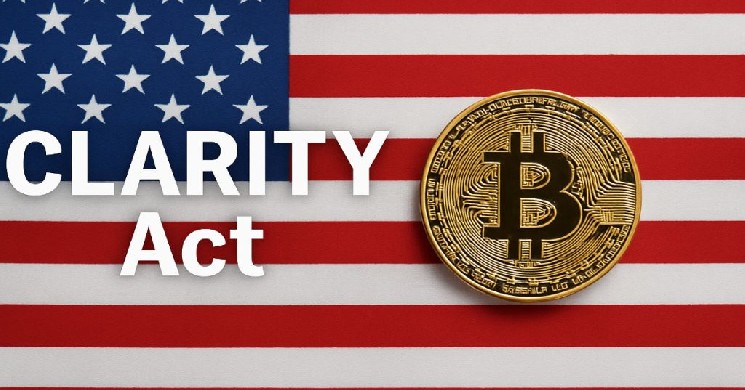
Original Author / galaxy
Compiled by / Odaily Planet Daily Golem(@web 3_golem)

As the agenda of the 119th Congress draws to a close, cryptocurrency market structure legislation is also nearing its final stages.
The CLARITY Act received strong bipartisan support in the House of Representatives in July 2025 (294 votes in favor, 134 against) and has been the focus of intensive negotiations in the Senate since January this year. The Senate Committee on Banking, Housing, and Urban Affairs is expected to announce a markup hearing this week, most likely in the last week of April.
Committee Chairman Tim Scott (R) stated that three key issues remain unresolved: stablecoin yield provisions, DeFi provisions, and ensuring the support of all Republican members on the committee. Additionally, several other issues are pending, including the treatment of non-custodial software developers under the Blockchain Regulatory Certainty Act, ethics provisions related to government officials holding cryptocurrencies, and issues related to the SEC, which could complicate the future legislative path.
After passing the Senate Banking Committee's markup, the bill still needs to secure 60 votes for passage in the full Senate, be reconciled with the version from the Agriculture Committee and the bill passed by the House, and finally be signed into law by the President. Each step takes time, and the legislative calendar is rapidly shrinking: the CLARITY Act must compete for limited Senate floor time with the Iran military authorization debate, the unresolved Homeland Security appropriations impasse, and a backlog of nomination cases.
On Monday, Punchbowl reported that key Senate Banking Committee negotiator, Republican Senator Thom Tillis of North Carolina, called for postponing the committee's markup until May. If the markup is delayed until after mid-May, the likelihood of the bill passing in 2026 will decrease significantly. Wyoming Republican Senator Cynthia Lummis warned that if it fails to pass this year, market structure legislation could be delayed until 2030 or even later.
Galaxy believes the probability of the CLARITY Act being signed into law in 2026 is approximately 50%, or possibly lower. This uncertainty does not stem from any single issue but from the numerous pending issues that must be resolved sequentially under severe time constraints.

Treasury Secretary Scott Besant (left) called for a markup of the CLARITY Act. Senate Banking Committee Chairman Thom Tillis said three major issues remain.
Review of CLARITY Act Progress
The "Digital Asset Market Transparency Act of 2025" (CLARITY Act) passed the U.S. House of Representatives on July 17, 2025, with a vote of 294 in favor and 134 against. All 216 voting Republican members voted in favor, with none opposed and 4 abstaining. Among Democrats, 78 members crossed party lines to vote in favor, while 134 voted against.
The bill was introduced by House Financial Services Committee Chairman French Hill (R-AR) on May 29, 2025, and passed in a joint markup session of the Financial Services Committee (47-6) and the Agriculture Committee (32-19) on June 10.
The House's overwhelming vote reflected a general consensus on the urgent need for a federal regulatory framework for digital assets: the bill clearly delineates the jurisdictional boundaries between the U.S. Securities and Exchange Commission (SEC) and the Commodity Futures Trading Commission (CFTC); and establishes a "mature Blockchain Test" to determine whether certain cryptocurrencies are securities. The bill creates a path for token networks to be considered non-securities assets upon achieving sufficient decentralization; and for the first time brings digital commodity intermediaries under federal registration and anti-money laundering obligations. The Senate Banking Committee released its discussion draft in July, and the bill was introduced in the Senate on September 18 and referred to the Banking Committee.
In the Senate, consideration of the CLARITY Act has been proceeding in parallel. The Agriculture Committee released its discussion draft in November and marked up the Digital Commodity Intermediaries Act, which primarily focuses on the CFTC's regulatory authority over digital commodity markets (including spot markets), on January 29.
Additionally, on January 12, the Senate Banking Committee, chaired by Tim Scott with Elizabeth Warren as Ranking Member, released a 278-page substitute amendment (ANS) to serve as the base negotiating text for the committee's work. This text goes far beyond the House-passed bill, covering nine titles addressing securities innovation, illicit finance, decentralized finance, banking, software developer protection (Blockchain Regulatory Certainty Act, BRCA), customer property protection in bankruptcy, and other matters.
The bill was initially expected to be brought to the full Senate floor for a vote in mid-January but was delayed due to disagreements over stablecoin yield restrictions. A second attempt at a vote was also canceled. Before the CLARITY Act can be brought to a full Senate vote, the Banking and Agriculture Committee versions must first be reconciled, and the combined bill must then be reconciled with the House version, all before it can be sent to the President for signature.
Since January, the main obstacle to the bill's advancement has been the dispute between banks and crypto companies over stablecoin rewards. (The GENIUS Act, signed into law last year, prohibited stablecoin issuers from directly sharing yields with holders but allowed exchanges to pay rewards to users holding stablecoins on their platforms; banks want to prohibit such incentives.) On March 20, Senators Thom Tillis (R-NC) and Angela Alsobrooks (D-MD) announced that a deal in principle had been reached, brokered by the White House. The agreement would prohibit rewards given solely for holding stablecoins but allow well-defined rewards linked to activities like payments, transfers, or platform usage.
Patrick Witt, Executive Director of the President's Digital Asset Advisory Council, has been the White House's lead on crypto legislation since David Sacks' departure in March. He called the compromise durable and confirmed that previous sticking points had been resolved behind the scenes. Crypto industry representatives reviewed the text on March 23 and found its wording overly restrictive; Coinbase initially opposed it but reversed its position on April 10 after Treasury Secretary Scott Besant publicly called for the bill's passage and the exchange's CEO Brian Armstrong expressed support.
On April 8, the White House Council of Economic Advisers (CEA) released a 21-page analysis concluding that a full ban on crypto yields would increase bank loans by only $2.1 billion, or 0.02% of outstanding loans, while consumer costs would increase by $800 million. This report undermined the banking industry's core argument that unrestricted stablecoin yields pose a structural threat to deposits. As of publication, Chairman Scott has not announced a markup date.
He told Fox Business on April 14 that three issues remain unresolved: stablecoin yield provisions, DeFi provisions, and securing the votes of all Republican committee members. Senator Tillis, responsible for releasing the revised yield text, said last week it was unlikely to be released this week and called for a postponement of the markup until May on Monday. A markup cannot be scheduled until the text is released and the committee's required 48-hour notice period expires.
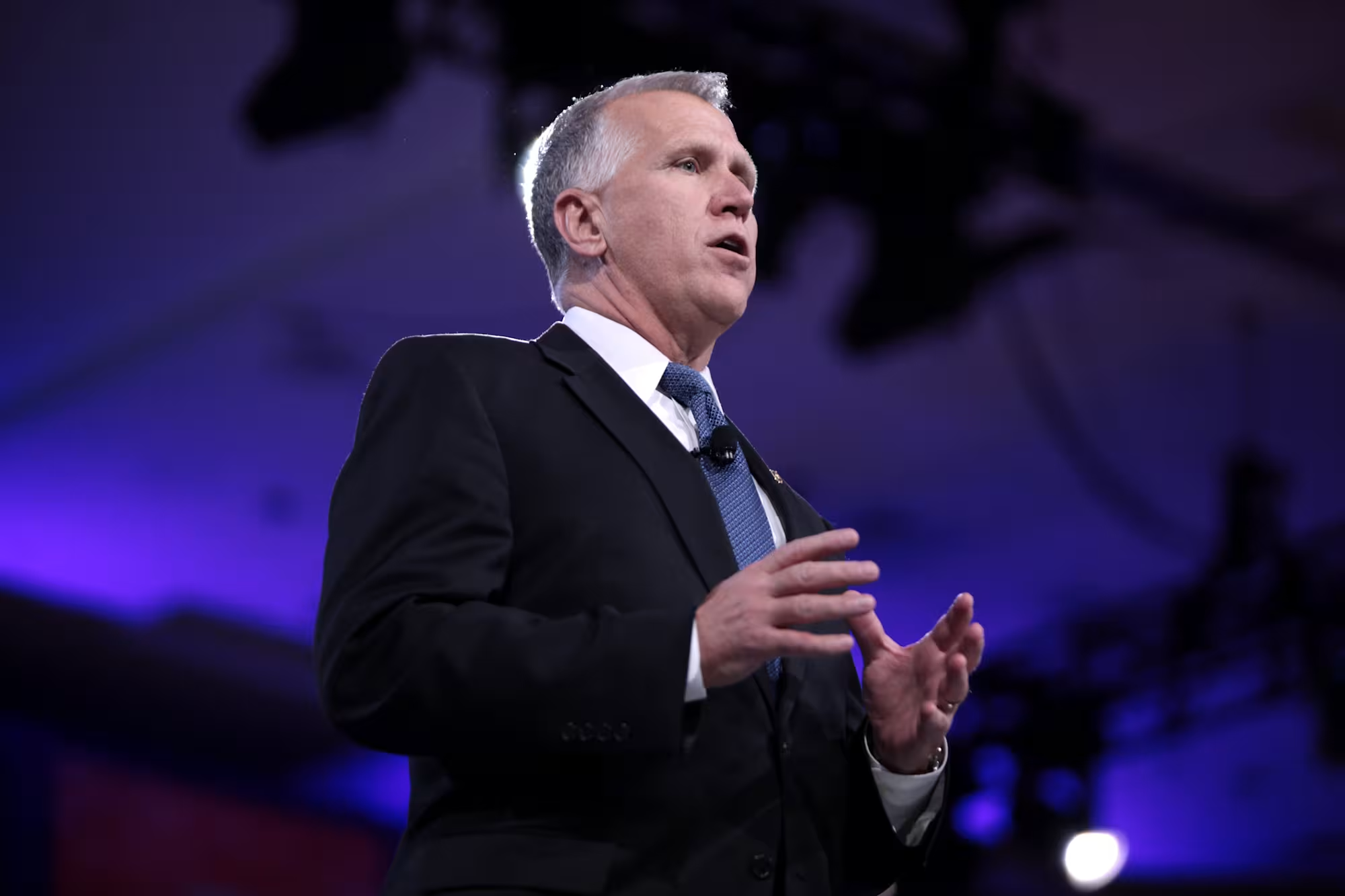
U.S. Senator Thom Tillis is a key negotiator on the Senate Banking Committee
The Importance of Passing the CLARITY Act Before the Midterms
The CLARITY Act provides a crucial and enduring legislative foundation for the digital asset industry: it classifies different types of digital assets and their regulatory treatment; clarifies the jurisdiction of market regulators; protects non-custodial developers; grants new powers to the Treasury to combat illicit finance; and more.
The bill provides the necessary legal and regulatory certainty to continue the integration of crypto markets with traditional capital markets, creates conditions for the modernization of U.S. capital markets, and for the first time provides clear and substantial safeguards, disclosures, and investor protections. It resolves many of the outstanding questions that have hindered institutional capital and infrastructure from entering the market or have driven it overseas.
Overall, the CLARITY Act is a strong bill, both technically and policy-wise.
Given the balance of power in the House and Senate (Republicans hold only slim majorities), Galaxy believes it is crucial for the CLARITY Act to pass and be signed into law before the November midterm elections. While the bill has significant Democratic support (78 House Democrats voted for the CLARITY Act in 2025), a potential shift in the balance of power in the 120th Congress (convening January 2027) would significantly reduce the likelihood of this legislation passing after November 2026.
A Democratic majority in both chambers would mean new committee chairs, new agenda priorities, and potentially a very different attitude towards crypto legislation. More specifically, the current version of the CLARITY Act would be highly unlikely to pass a Senate Banking Committee chaired by current ranking member Elizabeth Warren or Sherrod Brown.
Sherrod Brown chaired the Senate Banking Committee in the 118th Congress but was defeated by Bernie Moreno in 2024. Sherrod Brown is currently running in a special election in Ohio in November, facing Republican candidate Jon Husted, who was appointed by Governor Mike DeWine after JD Vance resigned to become Vice President. The winner of this election will serve only until 2028, highlighting how unstable the Senate's power structure is about to become.
Brown's prior tenure could give him priority over Warren for the Senate Banking chairmanship, though this is not certain; both senators have historically been hostile to the digital asset industry's priorities.
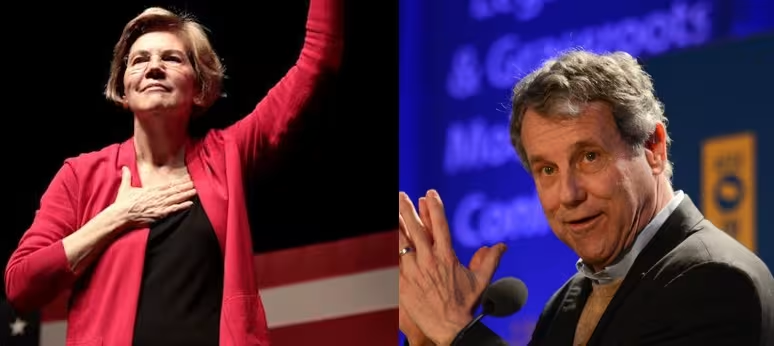
If Elizabeth Warren or Sherrod Brown were to chair the Senate Banking Committee in the future, the current version of the CLARITY Act would be almost impossible to pass.
The current bipartisan coalition was formed under specific conditions: a crypto-friendly White House, a Republican Banking Committee chairman, the successful passage of the GENIUS Act (demonstrating the feasibility of bipartisanship), and an aggressive industry lobbying and spending effort that elected crypto-friendly lawmakers in 2024 and turned previous skeptics into supporters. These conditions may not hold in the future.
Senator Lummis has publicly warned that if the CLARITY Act fails to pass this year, comprehensive market structure legislation could be delayed until 2030 or later, as a new Congress would need to restart the legislative process from scratch, with new committee compositions and potentially very different political motivations.
Even if Republicans retain their majority, political appetite for complex, multi-stakeholder financial regulation could wane during the lame-duck session (Odaily Note: refers to the period after the congressional election but before the new Congress officially takes office, when the previous Congress continues to meet) or the initial months of the new Congress, as leadership's attention turns to forming committees, confirming nominees, and setting a new legislative agenda. Therefore, the current window is extremely favorable and may not reappear soon.
Even without the CLARITY Act, the crypto-friendly regulatory environment might only last through President Trump's term. Regulators have shown a willingness to advance the industry through administrative relief, interpretive guidance, and formal rulemaking. These developments have prompted major banks, brokerages, and exchanges to take concrete steps to build blockchain infrastructure and offer digital asset services. The degree of integration achieved by traditional capital market participants over the next two and a half years might be sufficient to prevent a major reversal of the industry's fortunes even under a future hostile administration.
However, the key is the time horizon and permanence. The regulatory progress to date, including joint interpretive statements from the SEC and CFTC, SEC no-action letters, and OCC guidance on bank crypto activities, exists outside of statute and could therefore be reversed by a future administration without congressional approval.
While the crypto industry might not be in crisis without the CLARITY Act in 2026, its longevity could be shortened. In the long run, a comprehensive market structure bill is essential for governing the digital asset industry for decades to come.
Outstanding Issues in Ongoing Senate Negotiations
While the "stablecoin rewards" issue has dominated headlines and is widely perceived as the (perhaps only) major obstacle holding up the bill, several other key issues are simmering beneath the surface. Here are the main sticking points:
Stablecoin Rewards
We are waiting for Senator Tillis to publicly release the compromise text he negotiated with Maryland Democratic Senator Alsobrooks on this matter.
According to Galaxy's understanding, the text still prohibits rewards given "solely for holding" stablecoins but allows well-defined rewards linked to activities like payments, transfers, or platform usage. If true, this is largely similar to the deal Coinbase explicitly rejected in January.
However, we need to see the specific text, which senators have kept closely held. The White House Council of Economic Advisers (CEA) report released on April 8 concluded that a full ban on yield-bearing crypto would increase bank loans by only $2.1 billion (0.02% of outstanding loans), while consumer costs would increase by about $800 million, significantly undermining the banking industry's argument about deposit flight.
The American Bankers Association almost immediately pushed back, arguing the CEA analyzed the wrong question by only studying the impact of the current ~$300 billion stablecoin market and not modeling a future scenario where yield-bearing stablecoins grow large enough to compete substantively with banks' $18 trillion deposit base. The framing of the arguments differs significantly, and the scope of the analysis will likely determine the final outcome.
Coinbase CEO's reversal of the exchange's opposition to the bill on April 10 seemed to clear the biggest previous hurdle from the industry. The text of the deal may not be substantively different from what Coinbase rejected in January, but the political calculus has changed: Besant's public pressure, the CEA report, and Coinbase's pending application for a national bank charter (which could subject it to a federal regulatory path regardless of the bill's outcome) may all have influenced Coinbase's change of heart.
However, the underlying commercial tension between exchanges and banks over stablecoin yields remains.
Blockchain Regulatory Certainty Act (BRCA)
The BRCA, as Section 604 of the Senate Banking Committee's ANS, explicitly states that software developers and infrastructure providers who do not hold or control user funds are not money transmitters under the Bank Secrecy Act.
The crypto industry views this provision as a red line and essential for ensuring open-source development remains in the United States. It is opposed by law enforcement and faces strong bipartisan opposition in the Senate Judiciary Committee. In January, Judiciary Committee Chairman Chuck Grassley (R-IA) and Ranking Member Dick Durbin (D-IL) sent a joint letter to Banking Committee Chairman Scott and Ranking Member Warren objecting to the inclusion of the BRCA in federal law.
They argued that the Banking Committee was modifying Title 18 of the U.S. Code (specifically 18 U.S.C. § 1960, which prohibits unlicensed money transmitting) without consulting the committee responsible for federal criminal law. They warned the provision would create "blind spots" for state and local law enforcement agencies that rely on FinCEN registration information to track funds, often in investigations into potential money laundering, terrorist financing, and drug and human trafficking.
Furthermore, former Nevada Attorney General and Banking Committee member Catherine Cortez Masto (D-NV) has been pushing for changes to the provision to address law enforcement concerns. The National Sheriffs' Association and the National District Attorneys Association have also weighed in, warning that provisions in the bill related to decentralized finance (DeFi) could limit prosecutors' ability to pursue financial crime cases.
The crypto industry's rebuttal is that the BRCA does not modify anti-money laundering statutes under 18 U.S.C. §§ 1956 and 1957; does not restrict prosecutions for fraud or sanctions evasion; and merely codifies FinCEN guidance and recent DOJ-stated positions that truly decentralized, non-custodial software does not constitute money transmission.
Finding a way to satisfy Chuck Grassley and Catherine Cortez Masto without significantly watering down the provision is one of the trickiest negotiations in the bill.
Ethics Amendment
Democrats have been keen to include provisions in the bill prohibiting senior government officials, elected officials, and their family members from holding crypto assets or profiting from them while in office. This issue directly targets the Trump family's involvement in various crypto projects and has been a Democratic priority throughout the negotiations.
The issue was not included in the Senate Banking Committee's January ANS, but multiple Democratic senators have indicated they will push for an ethics amendment during the committee markup or on the Senate floor. While unlikely to be a barrier in committee markup, it could become a focal point during floor debate, as any senator can offer amendments, and Democratic votes are needed to reach 60.
SEC Exemptive Authority
Section 505 of the Senate Banking Committee's ANS deals with the tokenization of securities and other real-world assets. Some market participants and former regulators believe this provision overly restricts the SEC's ability to use its exemptive and no-action relief tools to foster innovation in digital asset markets.
In short, many worry the provision would render the SEC's "innovation exemption" process unusable or even illegal by imposing rigid statutory requirements that constrain the Commission's long-held discretionary authority under statutes like Securities Act Section 28 and Exchange Act Section 36.
Lawyers and compliance professionals working on tokenization projects, as well as some Democrats, have expressed this concern, viewing the provision as an overcorrection to the SEC's current perceived progressiveness on crypto. (Under Chairman Atkins' leadership, the SEC has been actively using no-action exemptions and staff guidance to facilitate digital asset activity, and Section 505 could limit the flexibility the Commission is currently exercising.)
SEC Quorum
The SEC currently has five commissioners, three appointed by Republicans: Chairman Paul Atkins, Commissioner Hester Peirce, and Commissioner Mark Uyeda. Following long-standing tradition, no more than three of the five commissioners may be from the same party, and the two vacant seats are expected to be filled by Democrats.
Senate Minority Leader Chuck Schumer and President Trump have not agreed on a slate of candidates. If the CLARITY Act passes, Democrats could view these vacancies as leverage and a form of insurance: confirming two Democratic commissioners would restore the Commission's bipartisan nature and give Democrats a voice in the rulemaking that would follow the CLARITY Act's enactment.
Some Senate Democrats have at least informally suggested that progress on SEC nominations could pave the way for the CLARITY Act's passage in the Senate. This is less a text issue and more a matter of political sequencing, but it is crucial for vote count, as the CLARITY Act needs 60 votes to pass and therefore requires strong Democratic support.
Not all these issues are seen as deal-breakers or key votes for a final agreement, but collectively they pose a significant risk to the negotiation timeline. Any single one could consume days or even weeks of negotiation time, which the Senate does not have.
Timeline and Probability
It was widely expected that the Senate Banking Committee would announce this week plans for a markup hearing in the last week of April (next week). However, key committee negotiator on the stablecoin yield issue, Republican Senator Thom Tillis of North Carolina, said Monday the committee should wait until May to schedule the markup.
The procedural path from now to a presidential signature involves five steps:
- Senate Banking Committee markup and vote to advance the bill;
- Passage by the full Senate with 60 votes;
- Reconciliation of the Banking Committee's bill with the Agriculture Committee's version (the Digital Commodity Intermediaries Act, which passed committee markup on January 29);
- Reconciliation of the combined Senate bill with the CLARITY Act passed by the House in July 2025;
- Presidential signature of the final bill.
Each step takes time, and the legislative calendar is increasingly tight. Bill text will be released shortly before the markup is scheduled, and once a markup time is set, the committee must debate and vote on amendments before advancing the bill. A full Senate vote requires not only 60 votes to invoke cloture but also time for debate and amendment votes, which could take a week or more.
The Senate has a limited and competitive schedule between now and the August recess. The Senate is in session through late April, then recesses until May 11, is back in session May 11-22, works for three weeks each in June and July with a two-week recess around July 4 (the U.S. Semiquincentennial), returns the first week of August, and then recesses for five weeks starting August 10 (August recess).
During this time, the CLARITY Act must compete for floor time with several major items: the ongoing Iran military authorization debate, which has consumed significant floor time and could escalate unpredictably; the unresolved Homeland Security appropriations impasse (the only FY2026 appropriations bill not yet passed); and a steady stream of judicial and executive nominations.
Senator Bernie Moreno has publicly stated the bill must reach the Senate floor by May to avoid being overtaken by the midterm election calendar. Tennessee Republican Senator Bill Hagerty expressed confidence the bill could pass the Banking Committee markup in April and reach the Senate floor before the end of the month.
However, Chairman Scott's comments on April 14 suggest this timeline has slipped. Chairman Scott holds the keys, and as of this writing, it is the penultimate week of April. Each week of delay compresses the window available for all the steps needed to get a final bill to the President's desk. That said, a markup in early May would not necessarily doom its ultimate passage, especially if the committee vote shows strong bipartisan support indicating viability on the floor.
Galaxy's base case is a Banking Committee markup in early or mid-May, followed by an attempt at a floor vote sometime in May or June. If the markup slips past mid-May, the probability of passage in 2026 drops precipitously: the remaining legislative calendar is unlikely to accommodate the full five-step process described above, especially given the tight parliamentary schedule. A July floor vote is theoretically possible but would demand extraordinary political will and coordination given the proximity to the August recess and the midterm election season.

Senator Cynthia Lummis warned that if the CLARITY Act fails to pass this year, comprehensive market structure legislation could be delayed until 2030 or later.
Therefore, the probability of the CLARITY Act being signed into law in 2026 is approximately 50%, or possibly lower, with Polymarket currently pricing the passage probability at 50%. The uncertainty stems not from any single issue but from the sheer number of outstanding issues that must be resolved sequentially under severe time pressure.
The stablecoin yield issue will likely be resolved in the coming weeks, but the BRCA, ethics amendments, SEC exemptive authority, SEC quorum politics, DeFi provisions, and the basic challenge of securing 60 Senate votes for a novel and complex financial regulatory bill all remain variables. Any one could cause a delay of days or even weeks, and time is a luxury the process does not have.
Key near-term catalysts to watch include:
- The release of Tillis' revised stablecoin yield text, which will signal an imminent Senate Banking Committee markup;
- An announcement of a markup date by Chairman Scott;
- The committee vote tally and level of support;
- Whether Majority Leader John Thune schedules floor time before the July 4 recess.
If the CLARITY Act passes the Banking Committee markup with strong, bipartisan support, it will be a strong signal that the subsequent steps can be completed successfully. If the bill passes on a party-line or near-party-line vote, the difficulty of securing 60 votes on the floor increases dramatically, and the prospects for passage in 2026 dim significantly.