Did SBI Holdings Really Buy $10 Billion Worth Of XRP? CEO Reveals The Real Figure

bitcoinistPublished on 2026-02-16Last updated on 2026-02-16

Abstract

Speculation that SBI Holdings acquired $10 billion worth of XRP was refuted by CEO Yoshitaka Kitao. The claim, which originated from social media, misrepresented the company’s actual exposure. Instead of holding XRP directly, SBI maintains indirect exposure through a 9% equity stake in Ripple Labs, valued at an estimated $4.5 billion based on Ripple’s $50+ billion valuation. This strategic partnership supports Ripple’s expansion in Asia and involvement in institutional payment initiatives, without the volatility risks of direct token ownership.

Speculation around institutional XRP accumulation intensified after claims surfaced that SBI Holdings had acquired $10 billion worth of the digital asset. The narrative gained traction quickly, feeding bullish sentiment and reinforcing assumptions about deep corporate exposure to XRP. However, a direct clarification from the company’s leadership has now reframed the conversation, replacing viral figures with verifiable financial reality.

Where The $10 Billion XRP Claim Originated

The controversy began with social media commentary on X (formerly Twitter) by @Strivex_, linking SBI Holdings’ expanding crypto footprint—particularly its Singapore activity—to a presumed multi-billion-dollar XRP treasury. The claim suggested the Japanese financial giant was holding approximately $10 billion in the token on its balance sheet. This interpretation positioned SBI not just as a strategic partner within Ripple’s ecosystem but as one of the largest direct corporate holders of the asset.

CEO Yoshitaka Kitao moved swiftly to dismantle that narrative. Responding publicly, he clarified that the circulating figure misrepresented the firm’s exposure structure. SBI does not custody $10 billion worth of XRP tokens, nor does it maintain a treasury position of that scale in the cryptocurrency itself. Kitao emphasized that such a holding would introduce significant volatility risk, an exposure profile inconsistent with SBl’s balance-sheet management strategy.

Instead, the company’s financial linkage to XRP is indirect, operating through corporate ownership rather than token accumulation. This distinction is critical because equity exposure and digital asset custody carry fundamentally different risk, liquidity, and accounting implications. By correcting the misunderstanding, Kitao repositioned SBI’s involvement as strategic and institutional.

Indirect Exposure, Direct Influence

SBI Holdings’ actual stake sits in Ripple Labs, where it owns roughly 9% equity. This shareholding provides economic participation in Ripple’s enterprise growth, technology deployment, and institutional payment expansion – without requiring direct XRP token holdings. Based on private market estimates that place Ripple’s valuation above $50 billion, SBI’s stake translates to an implied value of approximately $4.5 billion. While substantial, this figure is less than half the viral $10 billion claim and reflects ownership in corporate infrastructure rather than cryptocurrency reserves.

Kitao has described this Ripple stake as a “hidden asset” within SBl’s broader valuation framework. The characterization signals that the market may not fully price in the upside tied to Ripple’s expansion, particularly as blockchain settlement and cross-border payment rails scale globally.

The partnership itself is longstanding, dating back to 2016, and extends beyond passive investment. SBI has actively supported Ripple’s institutional penetration across Asia. Its recent acquisition of a majority stake in Singapore-based exchange Coinhako illustrates this operational alignment, establishing a digital asset corridor between Japan and Southeast Asia. Further collaboration includes participation in Ripple’s $1 billion treasury initiative alongside Evernorth Holdings, designed to accelerate institutional XRP utilization.

Through these initiatives, SBI maintains exposure to XRP’s real-world deployment across liquidity provisioning, settlement infrastructure, and payment corridors – even without holding the token directly.

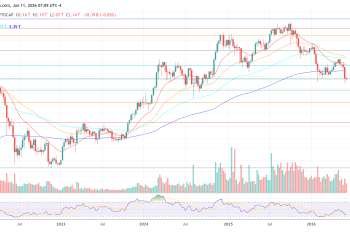
XRP trading at $1.46 on the 1D chart | Source: XRPUSDT on Tradingview.com

Trending Cryptos

Related Questions

QWhat was the initial claim about SBI Holdings' XRP holdings that sparked speculation?

AThe initial claim was that SBI Holdings had acquired $10 billion worth of XRP tokens, suggesting it was one of the largest direct corporate holders of the asset.

QHow did SBI Holdings' CEO, Yoshitaka Kitao, clarify the company's actual exposure to XRP?

ACEO Yoshitaka Kitao clarified that SBI does not hold $10 billion in XRP tokens. He stated the company's exposure is indirect through its equity stake in Ripple Labs, not direct token ownership, to avoid significant volatility risk.

QWhat is the nature of SBI Holdings' financial link to XRP, according to the CEO's clarification?

ASBI Holdings' financial link to XRP is indirect, operating through its corporate ownership of approximately 9% equity in Ripple Labs, rather than through direct accumulation of the XRP cryptocurrency.

QWhat is the estimated value of SBI's stake in Ripple Labs, and how does it compare to the viral $10 billion claim?

ABased on Ripple's estimated valuation above $50 billion, SBI's 9% stake is worth approximately $4.5 billion. This is less than half the viral $10 billion claim and represents corporate equity, not direct cryptocurrency holdings.

QHow has SBI Holdings actively supported Ripple's expansion beyond its financial investment?

ASBI has actively supported Ripple's institutional penetration across Asia, including acquiring a majority stake in Singapore exchange Coinhako to establish a digital asset corridor and participating in Ripple's $1 billion treasury initiative to accelerate XRP utilization.

Related Reads

Annual Salary of Millions Competing for Electricians, Meta Rushes to Open Its Own Technical School

The AI boom is facing an unexpected bottleneck: a severe shortage of skilled construction workers and electricians. As tech giants like Meta, OpenAI, and Alphabet race to build massive data centers—such as OpenAI's $16 billion "Stargate" project—they are hitting a critical labor wall. The U.S. needs an estimated 130,000 more electricians, 240,000 construction workers, and 150,000 supervisors by 2030 for AI infrastructure alone, but tens of thousands of electrician jobs go unfilled each year. While AI companies offer high premiums, with electricians earning up to $280,000 annually, worker scarcity still causes massive losses—delays on a single project can cost $14.2 million per month. The complexity of building AI data centers, which require immense power (equivalent to powering hundreds of thousands of homes), sophisticated electrical systems, and advanced liquid cooling solutions, demands highly skilled technicians who are in short supply. To combat this, companies are investing heavily in training. Meta has committed $115 million to a free training school offering tuition, housing, and stipends, targeting 5,000 new workers. OpenAI is partnering with unions to secure skilled labor. These efforts are paying off, with a significant rise in Gen Z interest in trade schools over college. However, the power demands are staggering. AI data centers are driving a rapid surge in electricity consumption, projected to account for up to 12% of U.S. power use by 2028 and raising costs for consumers. Furthermore, the construction boom is project-based, leading to a potential future glut of trained workers once building peaks, which could depress wages industry-wide. The race for AI supremacy now depends as much on skilled hands as on advanced chips.

marsbit1h ago

Annual Salary of Millions Competing for Electricians, Meta Rushes to Open Its Own Technical School

marsbit1h ago

OpenAI No Longer Sells Its Most Expensive Model for Profit

OpenAI is shifting its business strategy away from promoting its most expensive, flagship models for every task. Recent price cuts—80% for GPT-5.6 Luna and 20% for Terra—signal a deeper change: the company now actively advises users that many tasks don't require the most powerful model. Instead, OpenAI recommends a tiered approach: use the high-end GPT-5.6 Sol for complex planning and analysis, then delegate execution to cheaper models like Luna. This mirrors moves by Anthropic, which recently launched Claude Opus 5 at half the price of its top model, Fable 5. Both companies are de-emphasizing flagship models as primary revenue drivers, using them instead for brand prestige and technological showcases. The industry is entering a "mass-market" phase, similar to automotive, where high-volume, cost-effective models handle daily operations and drive scale. OpenAI's price reductions are partly enabled by AI models themselves optimizing underlying code and infrastructure, creating a self-reinforcing cycle of efficiency gains and cost reduction. Competition is shifting from "who is smartest" to "who offers the best value." The goal is no longer selling individual models but fostering widespread API adoption and ecosystem lock-in. By making AI calls cheap and ubiquitous, companies like OpenAI aim to become the indispensable, utility-like infrastructure powering automated workflows—the "water and electricity" of software, quietly embedded everywhere.

marsbit1h ago

OpenAI No Longer Sells Its Most Expensive Model for Profit

marsbit1h ago

Trading

Spot

Hot Articles

What is XRP 2.0

XRP 2.0: A New Frontier in the Cryptocurrency Landscape Introduction to XRP 2.0 In the ever-evolving realm of cryptocurrency, new projects continuously emerge, vying for attention and adoption. One such promising initiative is XRP 2.0, a novel cryptocurrency project designed to leverage advanced blockchain technology and robust encryption methodologies. While the name draws parallels with Ripple’s XRP, it’s crucial to note that XRP 2.0 operates independently, focusing on enhancing transaction security, privacy, and scalability. As the digital financial landscape increasingly embraces decentralized solutions, XRP 2.0 aims to contribute meaningfully to web3 and the overall expansion of crypto projects. What is XRP 2.0? At its core, XRP 2.0 is a cryptocurrency project that aims to create a secure and decentralized digital currency ecosystem. Its foundational technology integrates sophisticated blockchain principles with cutting-edge encryption techniques. The overarching goal of XRP 2.0 is to establish itself as a reliable and efficient platform enabling swift transaction execution while prioritizing enhanced privacy protections for its users. The project is promoted as a solution to many limitations faced by existing cryptocurrencies, proposing a system that can handle a higher volume of transactions with improved speed and privacy. This versatility positions XRP 2.0 as a significant contender in a marketplace riddled with various digital currencies. Who is the Creator of XRP 2.0? The identity of the creator behind XRP 2.0 has been flagged as ‘Wilbur.’ However, comprehensive details regarding Wilbur or their associated entity remain elusive. The anonymity of many cryptocurrency creators is not an uncommon phenomenon in the industry, often designed to maintain a degree of privacy and security. Who are the Investors of XRP 2.0? As of now, specific information related to the investment foundations or organizations supporting XRP 2.0 is not publicly available. In the cryptocurrency sector, the backing by reputed investors can significantly influence a project's credibility and success, yet the transparency regarding the financial supporters of XRP 2.0 has not been established. How Does XRP 2.0 Work? XRP 2.0 stands out by employing a combination of blockchain technology and advanced encryption algorithms that ensures secure and decentralized transactions. Its innovative structure includes unique features designed to foster user engagement and broaden functionalities beyond conventional cryptocurrency transactions. Among these features, XRP 2.0 incorporates AI-powered capabilities, such as text-to-image and text-to-speech functionalities. These additions are designed to enhance the interactive experience for users, promoting broader applicability across various sectors. By bridging technological advancements with user-centered design, XRP 2.0 aims to capture the attention of a diverse range of individuals and enterprises looking to integrate cryptocurrency solutions into their operational frameworks. Timeline of XRP 2.0 Understanding XRP 2.0 requires examining the milestones that have defined its journey thus far: July 23, 2023: XRP 2.0 is introduced as a novel cryptocurrency project, aiming to revolutionize secure and decentralized transaction capabilities in the blockchain domain. September 8, 2023: The launching of another project, XRP20, occurs, marking the emergence of an ERC-20 token on the Ethereum blockchain that remains unrelated to XRP 2.0. November 13, 2023: The XRP Ledger undergoes a significant update with the release of rippled server software version 2.0.0. It is essential to note that this development is disconnected from the XRP 2.0 cryptocurrency project. Key Points About XRP 2.0 To distill the essence of XRP 2.0, several critical factors emerge: Unique Features: The inclusion of features like AI-powered text-to-image and text-to-speech further diversifies the potential applications of XRP 2.0. Blockchain Technology: The framework utilizes advanced blockchain mechanisms and encryption protocols, ensuring a secure and decentralized environment for transactions. Scalability and Privacy: XRP 2.0 prioritizes enhanced privacy protections in transaction processes and the scalability necessary to accommodate a growing user base. No Affiliation with Ripple: Importantly, despite its name, XRP 2.0 does not have any allegiance or collaboration with Ripple’s XRP, distinguishing its operational framework and objectives within the cryptocurrency ecosystem. Conclusion XRP 2.0 represents an ambitious venture into the cryptocurrency sphere, aiming to offer a combination of security, privacy, and efficiency in digital transactions. By integrating sophisticated technologies and user-friendly features, the project sets out to broaden the horizons of what cryptocurrency can achieve in today's digital economy. While the anonymity of its creator and lack of disclosed investors might raise questions for some, XRP 2.0's focus on advanced functionalities and decentralisation enhances its appeal amidst an increasingly crowded crypto market. As the cryptocurrency landscape continues to evolve, XRP 2.0 may yet emerge as a pivotal player in the expansion of secure and scalable blockchain solutions.

1.3k Total ViewsPublished 2024.04.01Updated 2024.12.03

What is XRP 2.0

Discussions

Welcome to the HTX Community. Here, you can stay informed about the latest platform developments and gain access to professional market insights. Users' opinions on the price of XRP (XRP) are presented below.

活动图片