DEXE dumps 15% as seller dominance surges – Warning sign?

ambcryptoPublished on 2026-04-09Last updated on 2026-04-09

Abstract

DEXE experienced a sharp decline of 15.27%, dropping to $7.6, despite a broader crypto market rebound. The altcoin lost the $8 support level, falling as low as $7.3, and moved below the Parabolic SAR, indicating strong bearish pressure. The drop was driven by increased profit-taking, a surge in seller dominance, and a significant rise in trading volume dominated by selling activity. Open Interest declined slightly while Derivatives Volume spiked, suggesting aggressive position closures. Futures net flow turned negative, reflecting strong bearish sentiment. A recovery above $7.9 could lead to a rebound toward $9.2, but failure may result in a further decline toward $7 or even $5.1.

DEXE fell sharply even as the broader crypto market rebounded on easing global tensions and ceasefire talks.

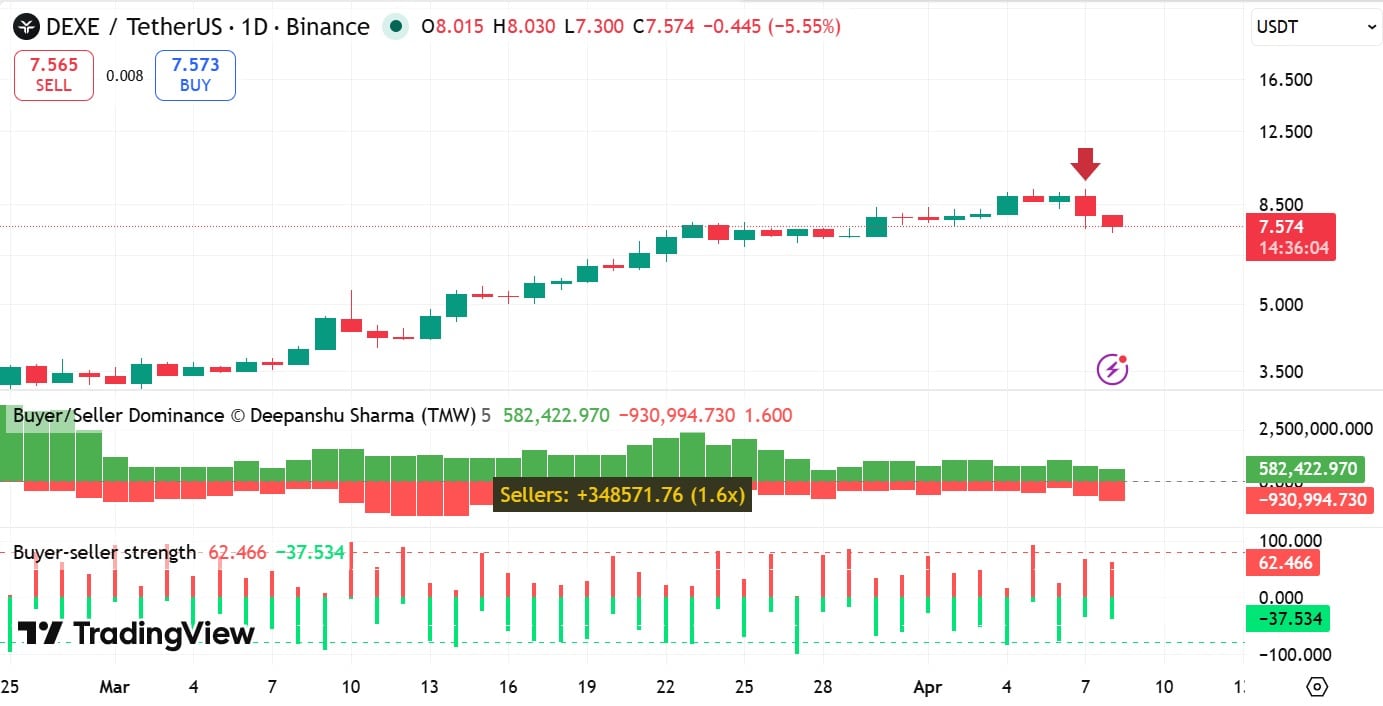
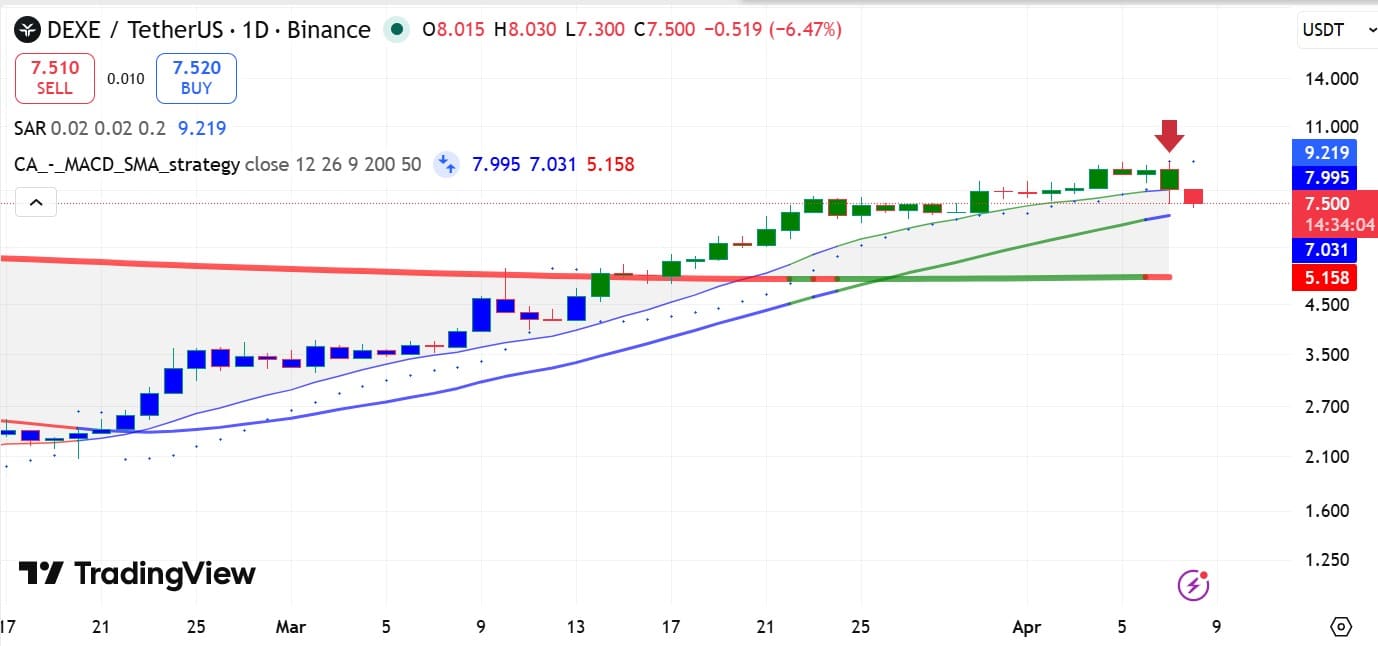
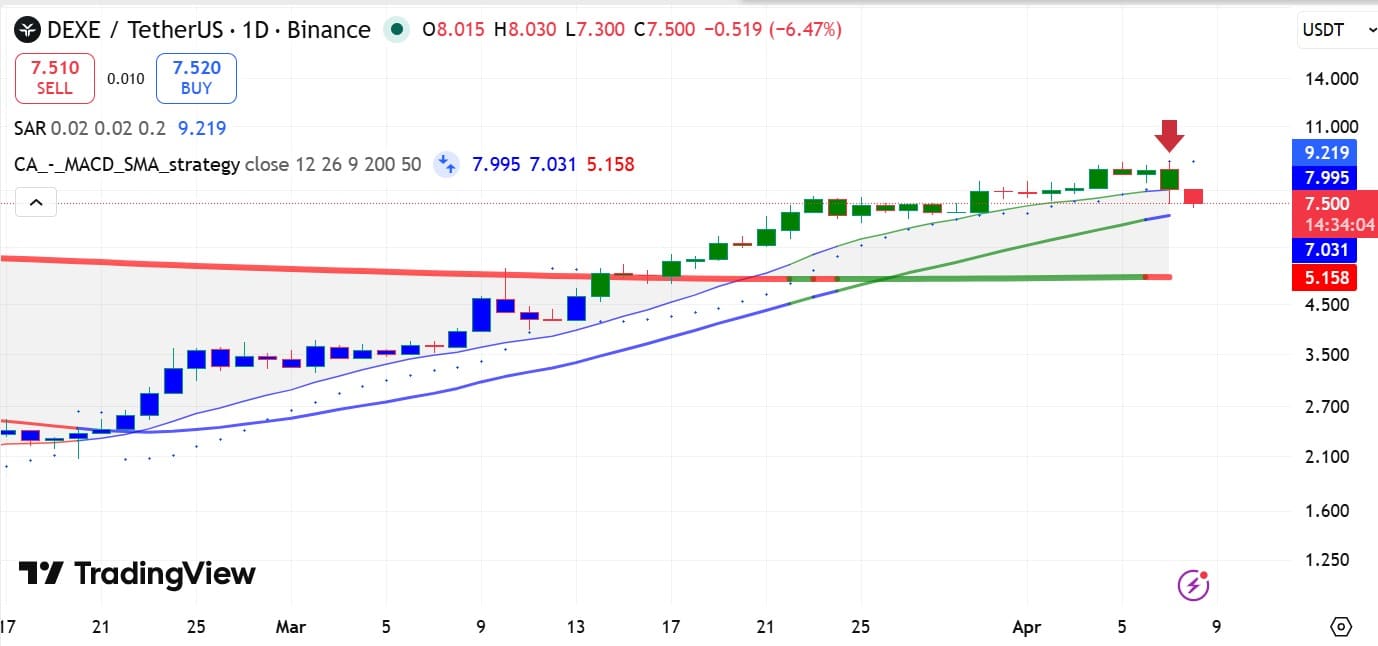
The altcoin dropped from $9.2 to $7.3 after losing the $8 support level. At press time, Dexe [DEXE] traded at $7.6, down 15.27% daily. The weekly loss stood near 8%.

The drop pushed the altcoin below its Parabolic SAR, signaling strong downside pressure.

Why did DEXE turn bearish?

DEXE erased its weekly gains as traders exited positions and sentiment flipped bearish.

The token had traded in an uptrend through March and the past week. That move attracted profit-taking near recent highs.
Source: TradingView

Seller Dominance rose to 930k, while Buyer Dominance dropped to 582k.

At the same time, Sellers’ Strength climbed to 62 as Buyers’ Strength fell to 37. This shift confirmed rising sell-side pressure.

That move aligned with a 109% surge in trading volume, largely driven by selling activity. Sustained selling pressure typically weakens price structure.

Are DEXE traders exiting derivatives positions?

As the market started to cool and retraced, investors withdrew capital from futures markets to reduce exposure.

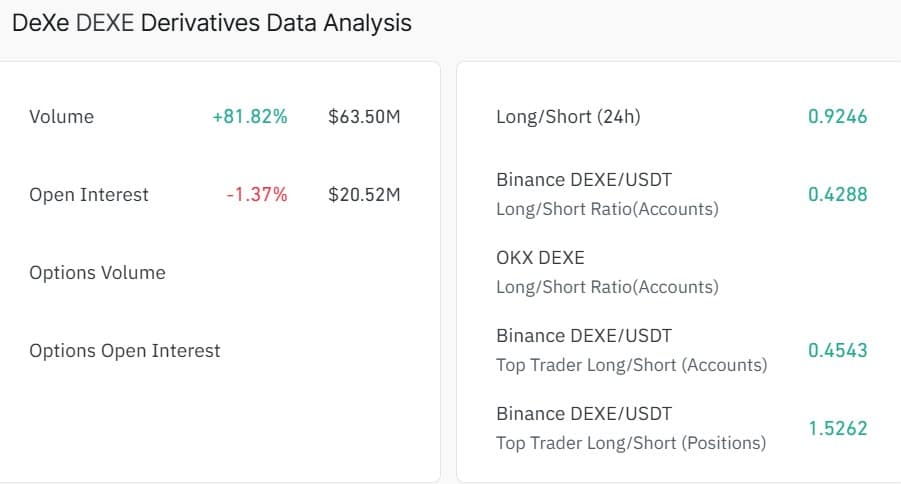
According to CoinGlass data, Open Interest [OI] dropped 1.37% to $20 million while Derivatives Volume rose 80%. The mismatch suggested increased selling activity in the derivatives market and a reduction in positions.
Source: CoinGlass

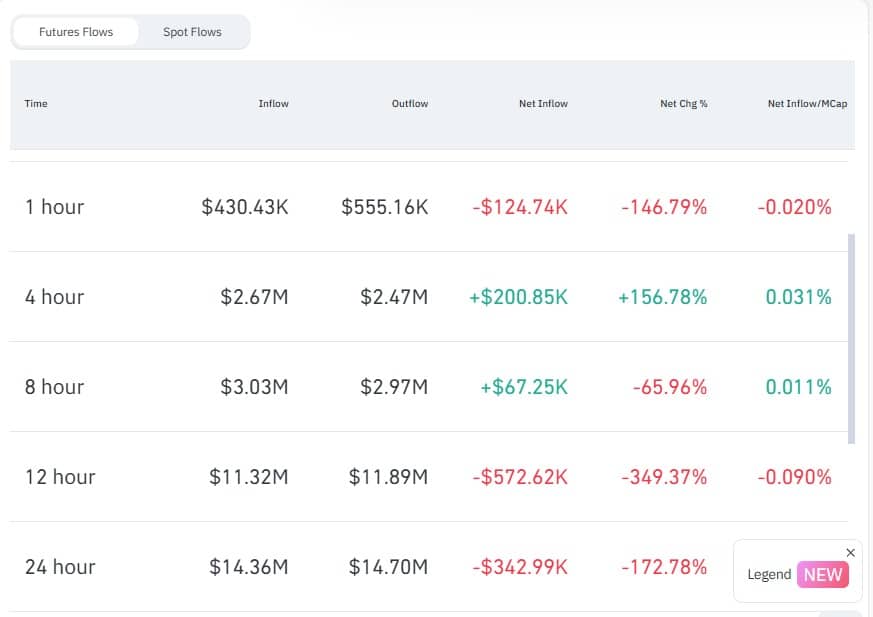
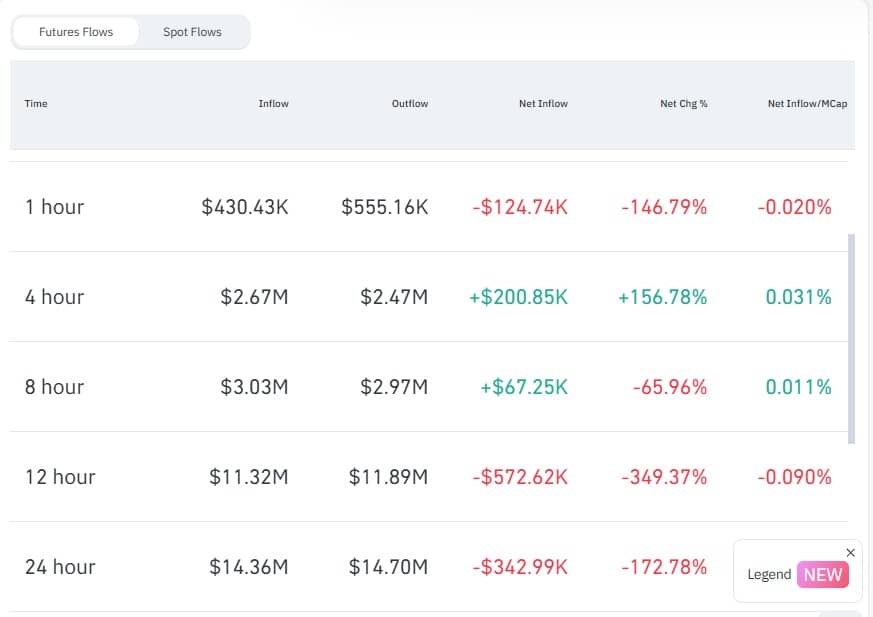
At the same time, Futures outflows increased, rising to $14.7 million, while inflows dropped to $14.36 million. As a result, the futures net flow declined by 172% to -$342k, indicating aggressive selling activity.

This suggested that most traders in the futures market reduced exposure and closed their positions. In most cases, when traders close their positions aggressively during a downtrend, it shows strong bearish sentiment.
Source: CoinGlass

What comes next for DEXE?

Momentum indicators reflected a weakening structure after the recent drop.

The MACD and SMA showed price pulling back toward short-term Moving Averages. This pointed to slowing momentum after the rally.
Source: TradingView

Even so, DEXE remained within a broader uptrend despite the pullback.

A daily close above $7.9 could support a recovery toward $9.2. Failure to reclaim that level may lead to a retest of $7. If selling continues, $5.1 remains the next downside level.


Final Summary

  • DEXE lost the $8 support and dropped sharply, confirming a clear shift in the short-term trend.
  • A move above $7.9 could support recovery, while failure increases the risk of revisiting $7 and lower levels.


Related Questions

QWhat was the daily percentage drop in DEXE's price as mentioned in the article?

ADEXE dropped 15.27% daily.

QWhat key support level did DEXE lose that contributed to its sharp decline?

ADEXE lost the $8 support level.

QAccording to the article, what does the surge in Seller Dominance and drop in Buyer Dominance indicate?

AThe surge in Seller Dominance to 930k and drop in Buyer Dominance to 582k indicates rising sell-side pressure and a bearish sentiment.

QWhat does the decline in Open Interest (OI) alongside a rise in Derivatives Volume suggest about market activity?

AThe decline in Open Interest by 1.37% to $20 million while Derivatives Volume rose 80% suggests increased selling activity in the derivatives market and a reduction in positions.

QWhat are the potential price targets for DEXE if it fails to reclaim the $7.9 level?

AIf DEXE fails to reclaim the $7.9 level, it may retest $7, and if selling continues, the next downside level is $5.1.

Related Reads

UBS: The Crowdedness of A-Share Tech Stocks Is Far From Reaching Historical Peaks

UBS: A-share tech stocks still far from peak crowding levels A-shares' technology sector has seen a strong rebound, with trading activity hitting record highs, raising concerns about market crowding. However, UBS Securities argues that a key indicator of institutional positioning suggests the current crowding level remains well below historical peaks. While the large-cap tech sector's share of total A-share trading volume and market capitalization have reached historical highs, the overweight ratio of domestic mutual funds in this sector stood at 9.9% in Q1 2026. This is down from 11.6% in Q3 2025 and significantly lower than the historical peak of 14.1% in Q4 2015. It also pales in comparison to the historical peak overweight of 18.7% for the consumer sector. UBS notes that typical cycles from a low to a peak in fund overweighting last about three years, and the current outperformance of the tech/growth style has lasted less than two years since the policy pivot in September 2024. UBS expects A-share earnings recovery to accelerate, providing fundamental support. It forecasts 2026 A-share profit growth to rise to 11% from 3.9% in 2025. Non-financial A-share profits grew 11.8% YoY in Q1 2026, with gross and net profit margins at their highest since 2023. Persistent fund inflows, the expansion of thematic ETFs, and a recovery in private fund issuance are supporting market liquidity. In tactical allocation, UBS favors growth and cyclical styles under its "slow bull" base case, with overweight ratings on six sectors: Electronics (benefiting from semiconductor inventory recovery and AI innovation), Communications (driven by AI computing demand), Machinery (aided by domestic capex recovery), Non-ferrous Metals (due to rising copper/aluminum prices), Chemicals (supported by anti-involution policies), and Electrical Equipment (driven by policy support and AI data center power demand).

marsbit1h ago

UBS: The Crowdedness of A-Share Tech Stocks Is Far From Reaching Historical Peaks

marsbit1h ago

Trading

Spot
Futures

Hot Articles

How to Buy DEXE

Welcome to HTX.com! We've made purchasing DeXe (DEXE) simple and convenient. Follow our step-by-step guide to embark on your crypto journey.Step 1: Create Your HTX AccountUse your email or phone number to sign up for a free account on HTX. Experience a hassle-free registration journey and unlock all features.Get My AccountStep 2: Go to Buy Crypto and Choose Your Payment MethodCredit/Debit Card: Use your Visa or Mastercard to buy DeXe (DEXE) instantly.Balance: Use funds from your HTX account balance to trade seamlessly.Third Parties: We've added popular payment methods such as Google Pay and Apple Pay to enhance convenience.P2P: Trade directly with other users on HTX.Over-the-Counter (OTC): We offer tailor-made services and competitive exchange rates for traders.Step 3: Store Your DeXe (DEXE)After purchasing your DeXe (DEXE), store it in your HTX account. Alternatively, you can send it elsewhere via blockchain transfer or use it to trade other cryptocurrencies.Step 4: Trade DeXe (DEXE)Easily trade DeXe (DEXE) on HTX's spot market. Simply access your account, select your trading pair, execute your trades, and monitor in real-time. We offer a user-friendly experience for both beginners and seasoned traders.

3.6k Total ViewsPublished 2024.03.29Updated 2026.06.02

How to Buy DEXE

Discussions

Welcome to the HTX Community. Here, you can stay informed about the latest platform developments and gain access to professional market insights. Users' opinions on the price of DEXE (DEXE) are presented below.

活动图片












