December 19: BTC, ETH, SOL, RTX, ZKP Market Analysis

金色财经Published on 2025-12-19Last updated on 2025-12-19

Abstract

On December 19, analysis of BTC, ETH, SOL, RTX, and ZKP market trends was provided. BTC experienced volatility following favorable CPI data, briefly rising above $89,000 before dropping to around $84,000, resulting in $450 million in liquidations. A whale deposited 5,152 BTC ($445 million) into Binance. The 4-hour chart suggests a potential falling wedge pattern, indicating a possible reversal if it breaks above the $89,000–$90,000 resistance. ETH showed a strong rebound, possibly due to large-scale accumulation after recent negative news. It remains in a downtrend channel but may break out soon. Key resistance levels are $3,030 and $3,150, with support at $2,860, $2,750, and $2,650. SOL has been underperforming, falling below $120. It failed multiple times to break the $145 resistance. A rebound above $123 could target $132–$135. RTX has a total supply of 100 million tokens with an initial circulation of 16.66%. Pre-market price is $1.30. The project having mixed factors—moderate trading volume and unclear advantages. ZKP has a total supply of 1 billion tokens, with an initial circulation of 20.16% priced at $0.175. Significant airdrop supply may cause selling pressure. A Binance contract listing is anticipated. The overall outlook suggests potential recovery after recent declines, with specific entry and exit levels provided for each asset.

Last night's CPI data was favorable for risk assets. After the data was released, Bitcoin briefly surged above 89,000 but quickly dropped to around 84,000. The futures market saw liquidations as high as $450 million.

BTC OG whales deposited 5,152 BTC (approximately $445 million) into Binance. Currently, there are no signs of a halt in the decline or stabilization from the market perspective. However, after the Bank of Japan's interest rate hike was implemented, market panic sentiment is expected to improve.

BTC

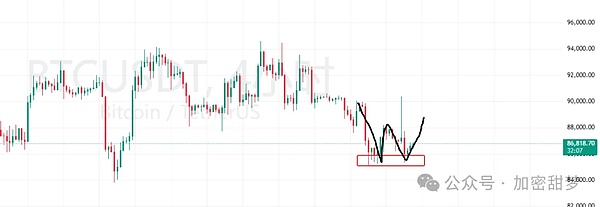
From the 4-hour chart, this decline appears to be a falling wedge pattern, likely the final leg of the drop. It's uncertain whether this pattern will fully form, as the overall trend remains bearish. However, considering the short-term rebound potential, I'm temporarily holding off on short positions and will keep my long positions for now.

Watch the 89,000-90,000 range. If it breaks and stabilizes above this level with strong upward momentum, it's highly likely to confirm the falling wedge pattern, indicating a potential trend reversal.

The current rebound isn't over yet. Keep an eye on the upper resistance line for further analysis.
ETH

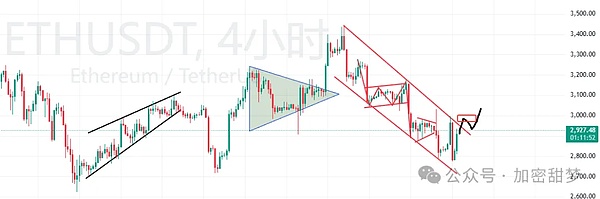
ETH's rebound has been quite strong, possibly due to the resolution of negative news, prompting large funds to start buying in batches. This led to a rapid price rebound. Although it's still within a descending channel, the 4-hour chart shows consecutive golden crosses at low levels, suggesting a likely breakout in the short term.

Key resistance levels to watch are 3030 and 3150. Consider shorting around these levels.

Support levels are at 2860, 2750, and 2650. For medium-term short, target 2500.
SOL

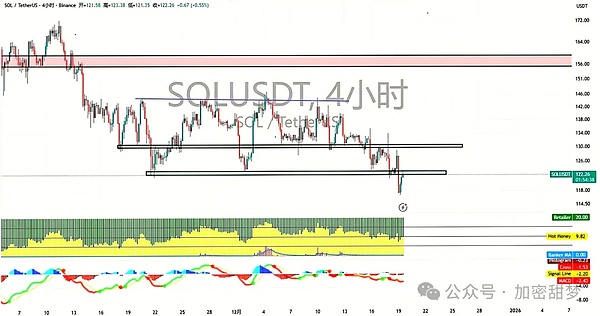
Recently, SOL has been relatively sluggish. Last night, it broke below the 120 mark. During this phase, SOL's performance has been quite weak, failing to break above the 145 resistance three times. The support at 122 was directly broken, indicating selling pressure for some time. If it stabilizes above 123, consider buying long with targets at 132-135.
RTX

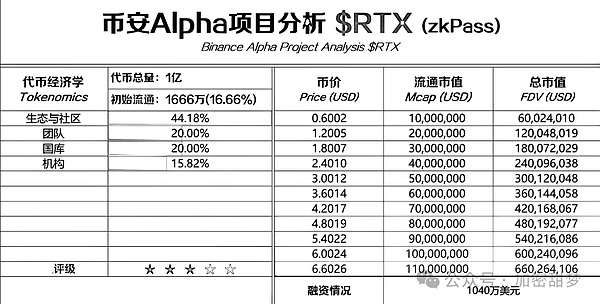
Total supply: 100 million. Initial circulation: 16.66%. Pre-market price: 1.3. Pool price: 1.2.

Pros: 1. Second Aster USD1 trading pair. 2. Community anti-sybil measures, though not as high as 1.33%.

Cons: 1. On-chain TVL is 44 million. 2. The fundraising timing is questionable, with no clear justification for the November fundraising. TVL performance hasn't been strong enough to support the token launch.

The project seems average, with mediocre trading volume and no significant advantages. The pre-market valuation is neither high nor low. Keep an eye on it after launch.
ZKP

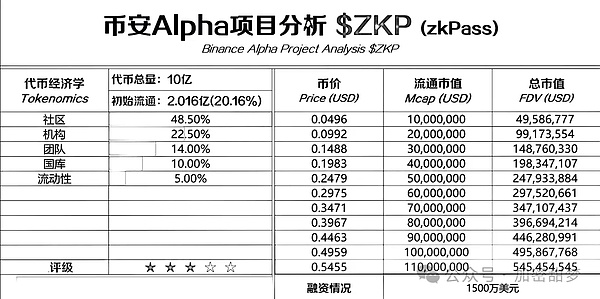
Total token supply: 1 billion. Initial circulation: 201.6 million (20.16%). Pre-market and pool price: 0.175U. Corresponding circulating market cap: $35 million. FDV: $175 million.

Kaito presale: 2%, with half unlocked at TGE. Claims open on the Ethereum network at 20:00. Aspecta key presale: 0.2% of tokens available for exchange within 2 hours of TGE. Additional community airdrops, Kaito sybil airdrops, and Binance BOOSTER 10 million tokens mean there are quite a few scattered tokens outside.

However, the project team hasn't clarified the airdrop quantity, which is quite sneaky. Price maintenance and Binance contract listings shouldn't be an issue. After various airdrops are sold off, consider whether to take a position for a contract listing.
If you find our content helpful, share our public account with your friends! Welcome to follow and stay updated with the latest crypto news! After every crash comes vast opportunities. If you're unsure about future market strategies, follow Tianmeng and contact: RFGH8689


Related Questions

QWhat was the market reaction to the CPI data release according to the article?

AThe CPI data was favorable for risk assets, causing Bitcoin to rise above $89,000 initially, but it was quickly sold off, dropping to around $84,000, with $450 million in contracts liquidated.

QWhat pattern is BTC疑似 forming on the 4-hour chart, and what would confirm it?

ABTC is疑似 forming a falling wedge pattern on the 4-hour chart. It would be confirmed if the price breaks and stabilizes above the $89,000-$90,000 range with strong upward momentum, indicating a potential trend reversal.

QWhat are the key resistance and support levels mentioned for ETH?

AThe key resistance levels for ETH are $3,030 and $3,150, where shorting is suggested. Support levels are $2,860, $2,750, and $2,650, with a bearish target of $2,500 for a波段空 (swing short).

QWhy does the article describe SOL's recent performance as '拉胯' (underwhelming)?

ASOL's performance is described as underwhelming because it failed to break above the $145 resistance three times and recently fell below the $120 support level, indicating sustained selling pressure.

QWhat are the initial circulating supply and FDV (fully diluted valuation) for ZKP?

AZKP has an initial circulating supply of 201.6 million tokens (20.16% of total supply) and an FDV of $175 million based on a pre-listing and pool price of $0.175 per token.

Related Reads

In-Depth Report on the On-Chain Lending Market: When Off-Chain Credit Meets On-Chain Liquidation

The on-chain lending market has evolved from a peripheral DeFi niche into core financial infrastructure. As of early 2026, total value locked (TVL) in on-chain lending protocols has reached $64.3 billion, accounting for 53.54% of total DeFi TVL, making it the largest and most mature vertical within decentralized finance. Aave dominates the sector with approximately $32.9 billion in TVL, commanding nearly half of the market—a leadership position that is unlikely to be challenged in the foreseeable future. However, the path of on-chain lending forward is not without risk. Liquidation cascades, credit defaults, and cross-chain vulnerabilities remain systemic threats hanging over the industry. At the same time, a deeper structural transformation is underway: on-chain lending is shifting from a “leverage tool for crypto-native users” to a “compliant gateway for institutional capital”. The scale of RWA (Real World Asset) lending has surpassed $18.5 billion, with U.S. Treasuries and government securities increasingly serving as core collateral. Institutional capital inflows are reshaping both the user base and risk appetite of the sector. This report systematically analyzes the evolution of on-chain lending definitions, competitive dynamics, core risks, and future trends, providing a comprehensive industry outlook for investors and trade practitioners. Key findings suggest that the “one dominant player with several strong challengers” structure will persist in the short term, while fixed-rate lending, compliant collateral, and institutional credit underwriting will define the next phase of competition. For investors focused on DeFi infrastructure, three key opportunity tracks stand out, namely, the Aave ecosystem (Morpho, Spark), RWA lending protocols (Ondo, Maple) and fixed-rate innovation (Notional, Pendle).

HTX Learn34m ago

In-Depth Report on the On-Chain Lending Market: When Off-Chain Credit Meets On-Chain Liquidation

HTX Learn34m ago

Fu Peng's First Public Speech in 2026: What Exactly Are Crypto Assets? Why Did I Join the Crypto Asset Industry?

Fu Peng, a renowned macroeconomist and now Chief Economist at New火 Group, delivered his first public speech of 2026 at the Hong Kong Web3 Festival. He explained his perspective on crypto assets and why he joined the industry, framing it within the context of macroeconomic trends and financial evolution. Fu emphasized that crypto assets are transitioning from an early, belief-driven phase to a mature, institutionally integrated asset class. He drew parallels to the 1970s-80s, when technological advances (like computing) revolutionized traditional finance, leading to the rise of FICC (Fixed Income, Currencies, and Commodities). Similarly, current advancements in AI, data, and blockchain are reshaping finance, with crypto assets becoming part of a new "FICC + C" (C for Crypto) framework. He noted that institutional capital, including traditional hedge funds, avoided early crypto due to its speculative nature but are now engaging as regulatory clarity emerges (e.g., stablecoin laws, CFTC classifying crypto as a commodity). Fu predicted that 2025-2026 marks a turning point where crypto becomes a standardized, financially viable asset for diversified portfolios, akin to commodities or derivatives in traditional finance. Fu defined Bitcoin not as "digital gold" in a simplistic sense but as a value-preserving, financially tradable asset. He highlighted that crypto's future lies in regulated, institutional adoption, moving away from retail-dominated trading. His entry into crypto signals this maturation, where traditional finance integrates crypto into mainstream asset management.

marsbit1h ago

Fu Peng's First Public Speech in 2026: What Exactly Are Crypto Assets? Why Did I Join the Crypto Asset Industry?

marsbit1h ago

Justin Sun Sues Trump Family: What $75 Million Bought Was Only a Blacklist

Justin Sun, founder of Tron, has filed a lawsuit in federal court against World Liberty Financial (WLF), alleging he was made the "primary target of a fraudulent scheme" after investing $75 million. Sun claims the investment secured him an advisor title and WLFI tokens, which were later frozen by WLF, causing "hundreds of millions in losses." The dispute began in late 2024 when Sun's investment helped revive WLF's struggling token sale, which ultimately raised $550 million. Shortly after, the SEC dropped its lawsuit against Sun following Donald Trump's inauguration. However, relations soured when Sun refused WLF's demands for additional funding. In August 2025, WLF added a "blacklist" function to its smart contract, allowing it to unilaterally freeze tokens. Sun's holdings, worth approximately $107 million, were frozen, and he was threatened with token destruction. The lawsuit highlights WLF's structure, which directs 75% of token sale profits to the Trump family, who had earned $1 billion by December 2025. WLF's CEO is Zach Witkoff, son of U.S. Middle East envoy Steve Witkoff. The project faces scrutiny for opaque operations, including a controversial loan arrangement on the Dolomite platform, co-founded by a WLF advisor. Despite Sun's history with the SEC, the case underscores centralization risks within DeFi, as WLF controls governance and holds powers to freeze assets arbitrarily. Sun's tokens remain frozen as legal proceedings begin.

marsbit1h ago

Justin Sun Sues Trump Family: What $75 Million Bought Was Only a Blacklist

marsbit1h ago

Trading

Spot
Futures

Hot Articles

What is $BITCOIN

DIGITAL GOLD ($BITCOIN): A Comprehensive Analysis Introduction to DIGITAL GOLD ($BITCOIN) DIGITAL GOLD ($BITCOIN) is a blockchain-based project operating on the Solana network, which aims to combine the characteristics of traditional precious metals with the innovation of decentralized technologies. While it shares a name with Bitcoin, often referred to as “digital gold” due to its perception as a store of value, DIGITAL GOLD is a separate token designed to create a unique ecosystem within the Web3 landscape. Its goal is to position itself as a viable alternative digital asset, although specifics regarding its applications and functionalities are still developing. What is DIGITAL GOLD ($BITCOIN)? DIGITAL GOLD ($BITCOIN) is a cryptocurrency token explicitly designed for use on the Solana blockchain. In contrast to Bitcoin, which provides a widely recognized value storage role, this token appears to focus on broader applications and characteristics. Notable aspects include: Blockchain Infrastructure: The token is built on the Solana blockchain, known for its capacity to handle high-speed and low-cost transactions. Supply Dynamics: DIGITAL GOLD has a maximum supply capped at 100 quadrillion tokens (100P $BITCOIN), although details regarding its circulating supply are currently undisclosed. Utility: While precise functionalities are not explicitly outlined, there are indications that the token could be utilized for various applications, potentially involving decentralized applications (dApps) or asset tokenization strategies. Who is the Creator of DIGITAL GOLD ($BITCOIN)? At present, the identity of the creators and development team behind DIGITAL GOLD ($BITCOIN) remains unknown. This situation is typical among many innovative projects within the blockchain space, particularly those aligning with decentralized finance and meme coin phenomena. While such anonymity may foster a community-driven culture, it intensifies concerns about governance and accountability. Who are the Investors of DIGITAL GOLD ($BITCOIN)? The available information indicates that DIGITAL GOLD ($BITCOIN) does not have any known institutional backers or prominent venture capital investments. The project seems to operate on a peer-to-peer model focused on community support and adoption rather than traditional funding routes. Its activity and liquidity are primarily situated on decentralized exchanges (DEXs), such as PumpSwap, rather than established centralized trading platforms, further highlighting its grassroots approach. How DIGITAL GOLD ($BITCOIN) Works The operational mechanics of DIGITAL GOLD ($BITCOIN) can be elaborated on based on its blockchain design and network attributes: Consensus Mechanism: By leveraging Solana’s unique proof-of-history (PoH) combined with a proof-of-stake (PoS) model, the project ensures efficient transaction validation contributing to the network's high performance. Tokenomics: While specific deflationary mechanisms have not been extensively detailed, the vast maximum token supply implies that it may cater to microtransactions or niche use cases that are still to be defined. Interoperability: There exists the potential for integration with Solana’s broader ecosystem, including various decentralized finance (DeFi) platforms. However, the details regarding specific integrations remain unspecified. Timeline of Key Events Here is a timeline that highlights significant milestones concerning DIGITAL GOLD ($BITCOIN): 2023: The initial deployment of the token occurs on the Solana blockchain, marked by its contract address. 2024: DIGITAL GOLD gains visibility as it becomes available for trading on decentralized exchanges like PumpSwap, allowing users to trade it against SOL. 2025: The project witnesses sporadic trading activity and potential interest in community-led engagements, although no noteworthy partnerships or technical advancements have been documented as of yet. Critical Analysis Strengths Scalability: The underlying Solana infrastructure supports high transaction volumes, which could enhance the utility of $BITCOIN in various transaction scenarios. Accessibility: The potential low trading price per token could attract retail investors, facilitating wider participation due to fractional ownership opportunities. Risks Lack of Transparency: The absence of publicly known backers, developers, or an audit process may yield skepticism regarding the project's sustainability and trustworthiness. Market Volatility: The trading activity is heavily reliant on speculative behavior, which can result in significant price volatility and uncertainty for investors. Conclusion DIGITAL GOLD ($BITCOIN) emerges as an intriguing yet ambiguous project within the rapidly evolving Solana ecosystem. While it attempts to leverage the “digital gold” narrative, its departure from Bitcoin's established role as a store of value underscores the need for a clearer differentiation of its intended utility and governance structure. Future acceptance and adoption will likely depend on addressing the current opacity and defining its operational and economic strategies more explicitly. Note: This report encompasses synthesised information available as of October 2023, and developments may have transpired beyond the research period.

363 Total ViewsPublished 2025.05.13Updated 2025.05.13

What is $BITCOIN

Discussions

Welcome to the HTX Community. Here, you can stay informed about the latest platform developments and gain access to professional market insights. Users' opinions on the price of BTC (BTC) are presented below.

活动图片