Data Inflation, Is ETH's Fundamental Still There?

比推Published on 2026-03-06Last updated on 2026-03-06

Abstract

The report by Culper Research argues that Ethereum's fundamentals have been severely damaged following the December 2025 Fusaka upgrade. The upgrade increased the gas limit, causing a 90% drop in gas fees—far more than the 10-30% predicted—and led to a surplus of cheap block space. This has enabled a surge in "address poisoning" or "dusting" attacks, which now account for 95% of new wallet creation and over 22.5% of all ETH transactions. The authors claim these attacks artificially inflate on-chain activity metrics, such as active addresses and transaction volume, which are mistakenly cited by bulls like Tom Lee as evidence of organic growth. Additionally, the report states that lower transaction fees have reduced validator earnings, weakening staking incentives and undermining Ethereum’s token economics. It highlights that Vitalik Buterin has been selling significant amounts of ETH, suggesting insider awareness of these issues. The authors also note competitive threats from Solana, which is gaining developer momentum and institutional adoption. Culper Research concludes that Ethereum’s economic model is broken and maintains a bearish outlook on ETH.

Author: Culper Research(@CulperResearch)

Compiled by: Deep Tide TechFlow

Original title: Culper Research: Why We Are Firmly Shorting ETH


Deep Tide Introduction: Culper Research is a well-known short-selling institution on Wall Street that has accurately targeted several high-profile companies. This report directly addresses the core issue: the Fusaka upgrade in December 2025 brought a large amount of cheap block space, but real organic demand has not kept up—the "prosperous" on-chain data is actually fabricated by address poisoning attacks. Vitalik himself is selling a large amount of ETH, while Tom Lee, Ethereum's most staunch bull advocate, is still defending it with incorrect data. This article is not a prediction; it is a short-selling thesis with data and verification, worth reading carefully for every ETH holder.

We are shorting Ethereum and ETH-linked securities, including BMNR.

We believe that the Fusaka upgrade in December 2025 has severely damaged Ethereum's token economic model. Vitalik himself knows this and is continuously selling; while Tom Lee, ETH's most steadfast bull, is pouring good money into a bad bet.

$ETH will continue to fall.

Tom Lee's Defense: Active Addresses and Transaction Volume Are Rising

Tom Lee's $BMNR defends ETH, claiming that "ETH is not entering a death spiral because utility is rising." He cites the surge in ETH active addresses and transaction volume after Fusaka as evidence of "strengthening fundamentals" and institutional adoption.

Lee's logic is wrong.
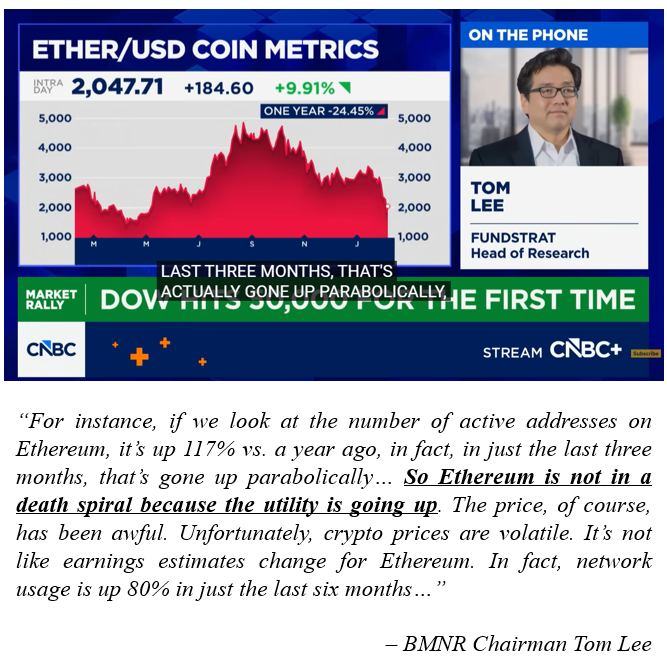
By his own logic, if ETH's on-chain activity does not reflect real utility value growth, then ETH is heading toward a death spiral.

Our research shows that this is exactly what is happening.

The full report and disclosure information are now available at culperresearch.com.

The Truth About On-Chain Data: 95% of New Wallets Are Poisoning Attacks

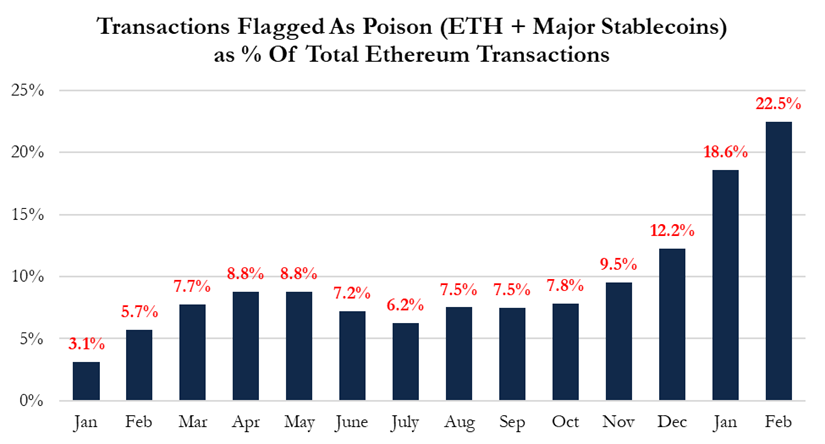
Our comprehensive analysis of on-chain data from January 2025 to February 2026 shows: The "institutional adoption" data cited by Tom Lee is actually explained by large-scale low-value address poisoning/wallet dusting attacks triggered by the block space surplus brought by Fusaka.
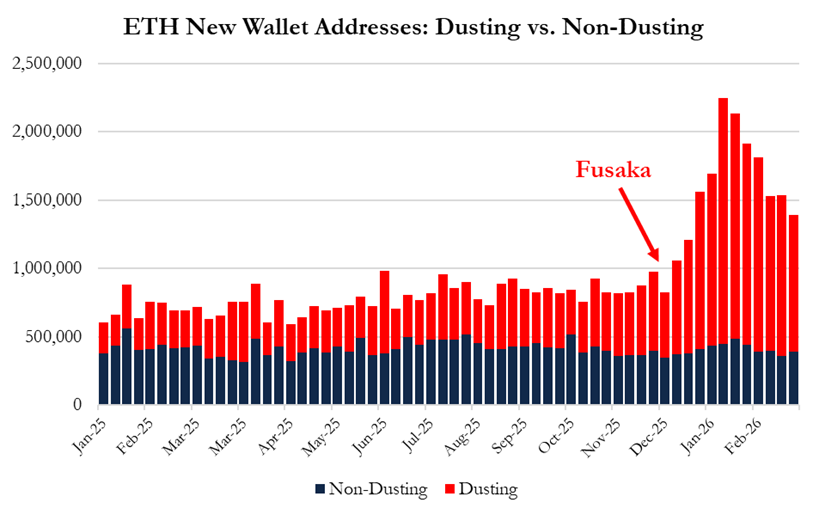
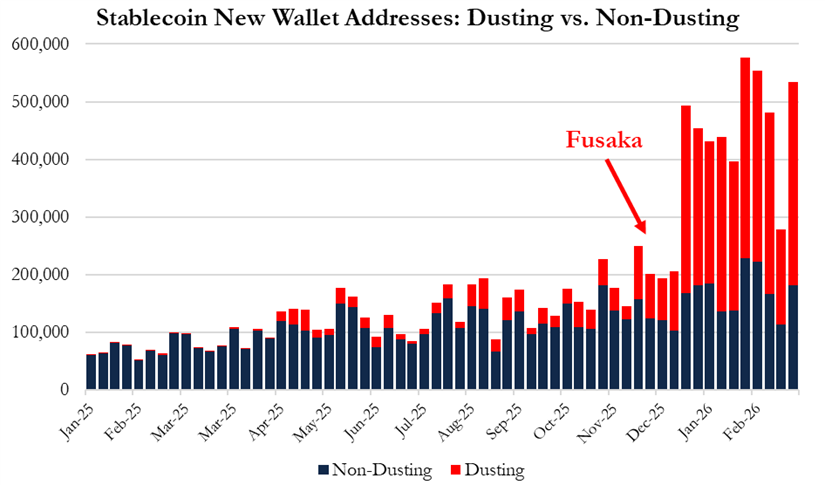
Specific data after Fusaka:

  • 95% of new wallet growth is explained by newly created "poisoned" wallets

  • Address poisoning attacks have increased by more than 3 times

  • Poisoning attacks explain more than 50% of ETH transaction volume growth

  • Poisoning attacks now account for 22.5% of all ETH transactions
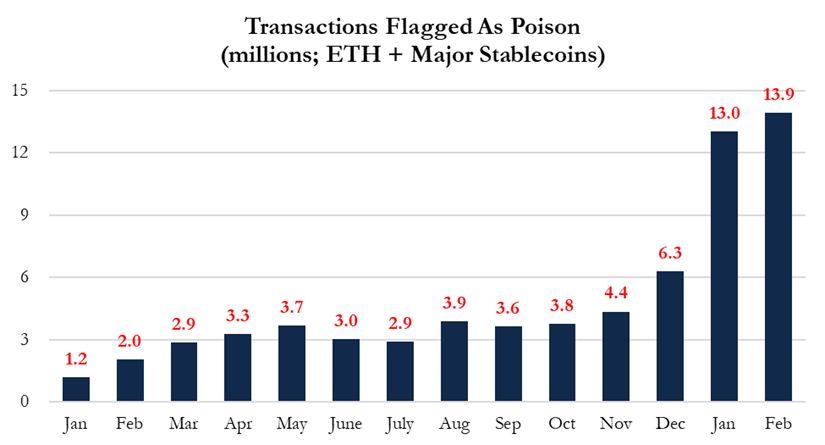
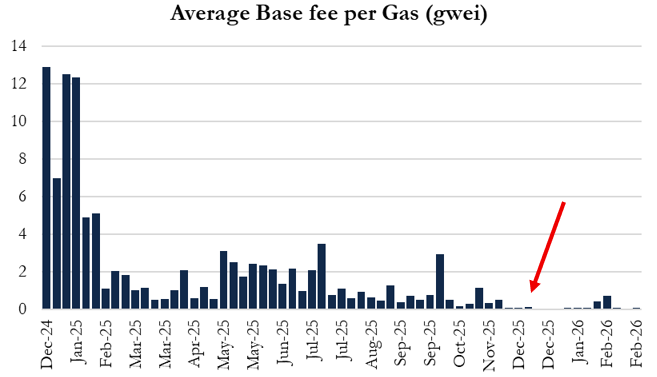
Fusaka Upgrade: Gas Fees Collapsed by 90%, 3-9 Times Worse Than Expected

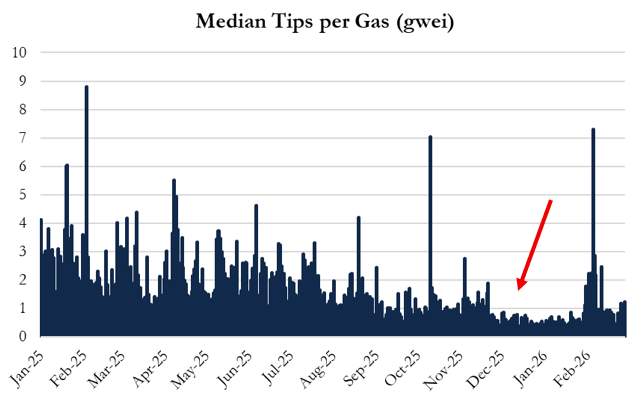
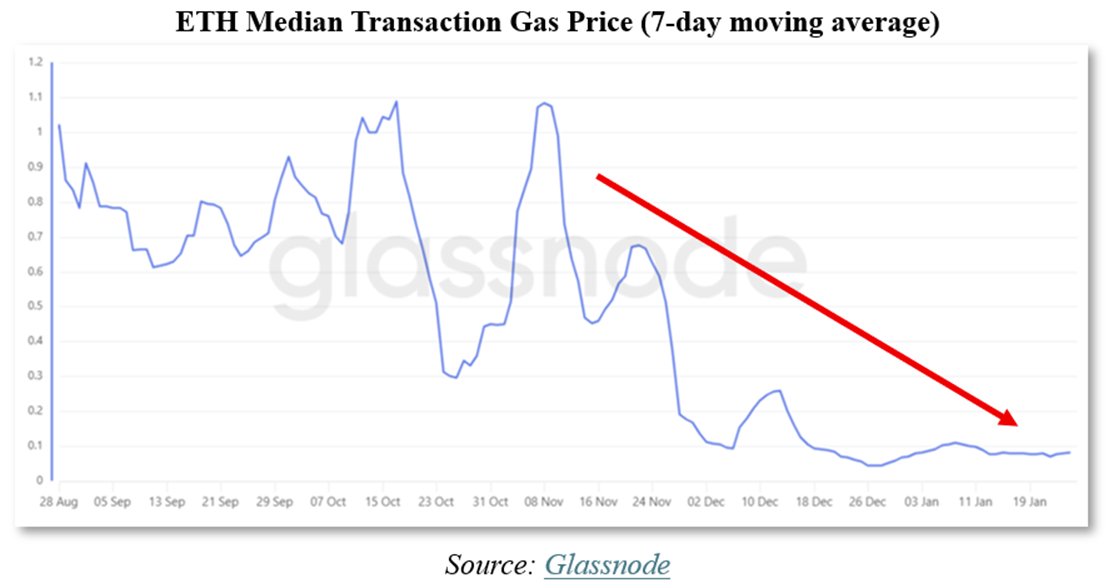
Fusaka increased the gas limit from 45 million to 60 million, aiming to scale Ethereum L1. Vitalik and PTG estimated that gas fees would drop by 10-30%.

Reality: Gas fees dropped by about 90%.

Vitalik and the validators severely underestimated L1 demand elasticity, with an error of 3-9 times—using outdated mathematical models from before EIP-1559 and before L2s emerged.

Vitalik Is Selling Like Crazy

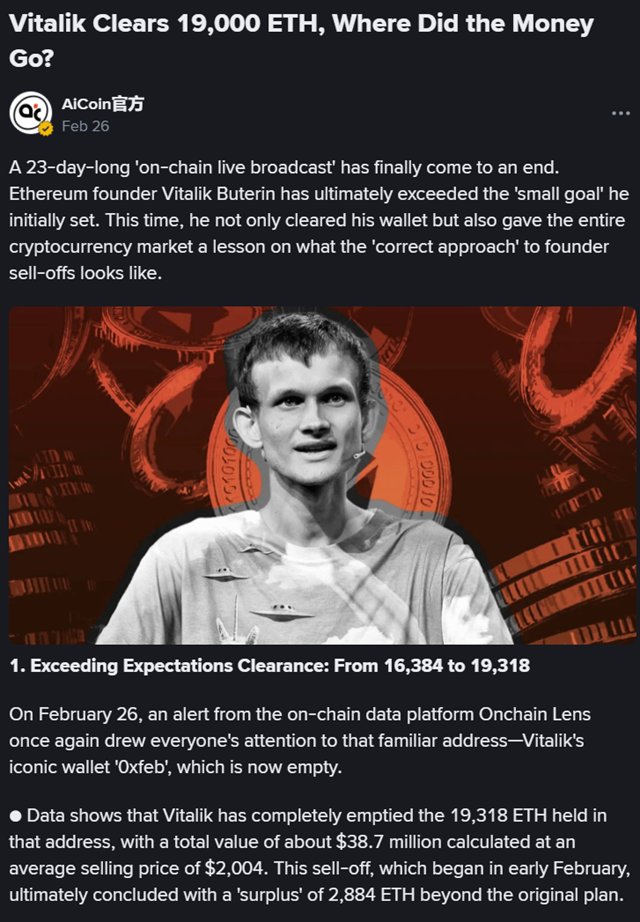
This is why we believe Vitalik is selling ETH heavily. On January 30, he announced he would sell 16,384 ETH to fund the Ethereum Foundation's "austerity period." Since then, he has sold over 19,300 ETH and is still continuing.

He knows what Tom Lee does not: ETH's token economic model has collapsed.
We Personally Verified the Address Poisoning Attack

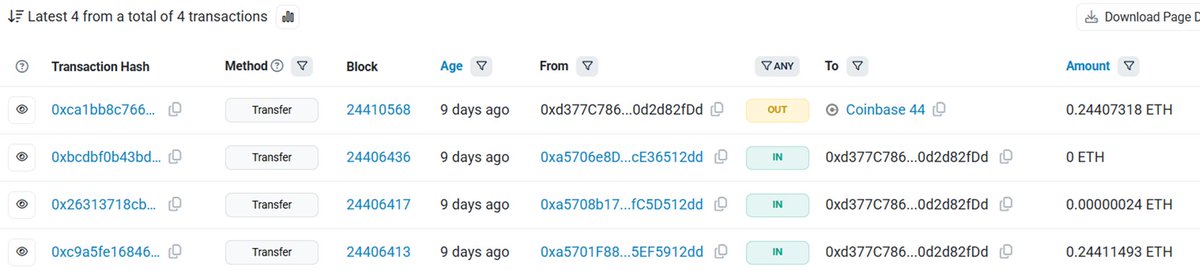
We documented the ETH address poisoning process firsthand: We created two new wallets, initiated a transfer between them, and were targeted by a poisoning attack within 5 minutes.

We encourage readers to verify this themselves.

Losses from poisoning attacks have grown at a rate more than 8 times faster than before Fusaka.
The Validator Flywheel Is Reversing

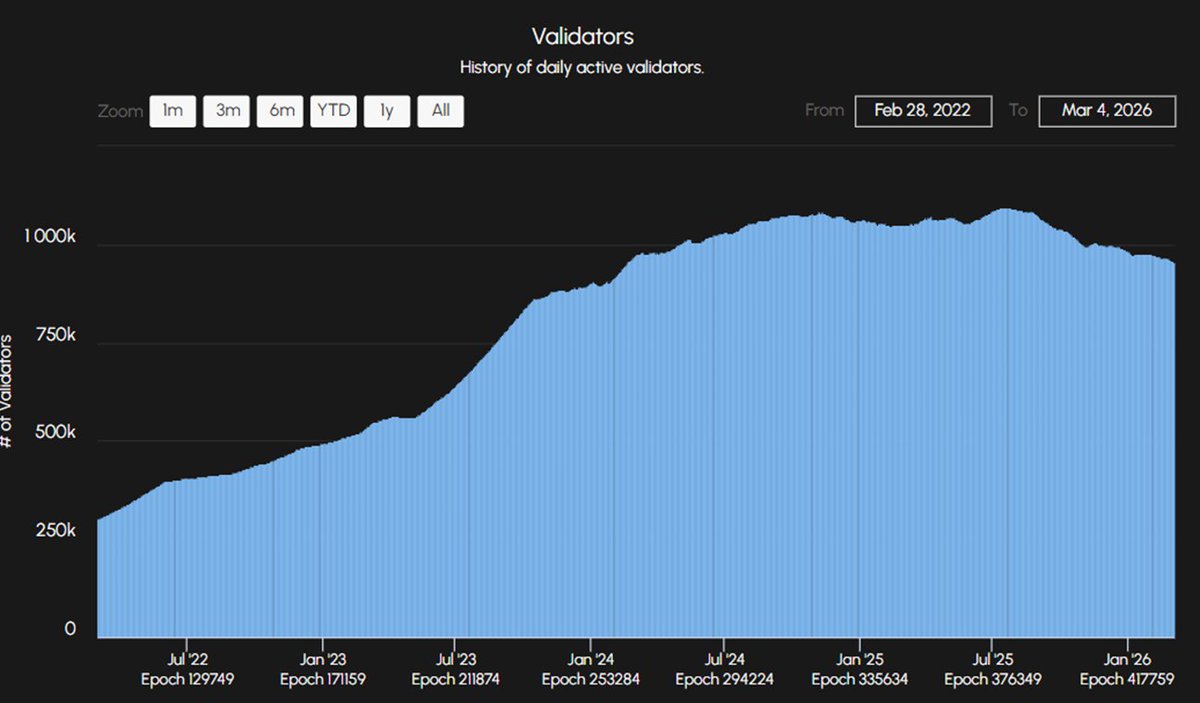
Additionally, the gas limit increase has severely hit ETH validators, who now see a 40-50% drop in tips per unit of gas. Lower returns reduce staking demand and high-value activity, thereby weakening the foundation for institutional adoption.

The flywheel is now spinning in reverse.
Ethereum Is Losing to Solana and Its Own L2s

Meanwhile, ETH continues to cede share:

  • Solana developers grew by 29% in 2025, while Ethereum only 6%; talent is draining away

  • Visa and Citigroup chose Solana to build DeFi applications

  • Solana DEX trading volume is now more than double that of Ethereum

Conclusion: The Next Nokia

During the internet bubble era, Netscape and Nokia dominated the market for over a decade, but ultimately, Google and Apple reaped the rewards.

We view ETH in the same light.

We believe the token economic model has collapsed, Tom Lee is in over his head, and $ETH will continue to decline.


Twitter:https://twitter.com/BitpushNewsCN

Bitpush TG Discussion Group:https://t.me/BitPushCommunity

Bitpush TG Subscription: https://t.me/bitpush

Original link:https://www.bitpush.news/articles/7617441

Related Questions

QWhat is the main argument of Culper Research's report on Ethereum?

ACulper Research argues that Ethereum's tokenomics have been severely damaged by the Fusaka upgrade, which the increased block space led to a 90% drop in gas fees, but real organic demand did not keep up. They claim that the apparent surge in active addresses and transactions is largely due to address poisoning attacks, not genuine adoption, and that this has broken Ethereum's economic model.

QHow does Culper Research explain the increase in Ethereum's active addresses and transaction volume post-Fusaka?

ACulper Research attributes the increase in active addresses and transaction volume to address poisoning (wallet dusting) attacks, which account for 95% of new wallet growth and over 50% of the transaction volume increase. They argue that these attacks exploit the cheap block space created by Fusaka, creating artificial activity rather than reflecting real utility or adoption.

QWhat evidence does Culper Research provide to support their claim that Vitalik Buterin is selling ETH?

ACulper Research states that Vitalik Buterin announced on January 30 that he would sell 16,384 ETH to fund the Ethereum Foundation during a 'tightening period,' and has since sold over 19,300 ETH. They interpret this as evidence that he is aware of the broken tokenomics and is divesting accordingly.

QHow did the Fusaka upgrade affect gas fees and validator incentives according to the report?

AThe Fusaka upgrade increased the gas limit from 45 million to 60 million, intended to scale Ethereum L1. However, gas fees dropped by approximately 90%, far more than the estimated 10-30% decline. This reduction in fees decreased validator tips by 40-50%, undermining validator rewards and potentially reducing staking demand and high-value activity.

QWhat competitive threats to Ethereum does Culper Research highlight in their report?

ACulper Research highlights that Ethereum is losing market share to Solana and its own L2 solutions. They note that Solana developer growth was 29% in 2025 compared to Ethereum's 6%, that Visa and Citigroup are building DeFi applications on Solana, and that Solana DEX trading volume is now more than double that of Ethereum.

Related Reads

Within Strategy's Framework, STRC's Dividend Yield Remains at 12% as Share Price Stays Below Par Value

Michael Saylor, Executive Chairman of Strategy (MSTR), confirmed that the dividend rate for its STRC perpetual preferred shares will remain at 12.00% through August 2026. The rate has increased from 9% at its July 2025 launch to the current high via a "ratchet" mechanism, which permanently raises the rate by 0.5% whenever the share price falls below $95. This mechanism is intended to push the price back toward its $100 par value and support Strategy's "at-the-market" (ATM) program for issuing new shares to fund Bitcoin purchases. However, the mechanism has not worked as intended. STRC shares closed at $89.46 on July 31, remaining about 10-11% below par value despite the record-high dividend. Competition from rival Strive's higher-yielding SATA securities has pressured demand. The persistent discount has forced Strategy to suspend new STRC issuances via its ATM program, limiting this funding channel for Bitcoin acquisitions. STRC's struggles reflect Bitcoin's own volatility, as the preferred shares historically move in tandem. Analysts have warned the ratchet structure carries long-term, one-way risk. A law firm is investigating Strategy's ability to maintain dividend payments if Bitcoin's price stays low. Retail investors own roughly 83% of outstanding STRC shares, a group seen as prone to panic selling during downturns. In response, Strategy has established financial reserves, including a liquidity cushion covering about 26 months of dividend/interest obligations, and a $2 billion share buyback program alongside a Bitcoin monetization framework, though the company emphasized it is not obligated to sell any Bitcoin.

cryptonews.ru9m ago

Within Strategy's Framework, STRC's Dividend Yield Remains at 12% as Share Price Stays Below Par Value

cryptonews.ru9m ago

Analyst: Bitcoin's Price Will Drop to $60k in August, Then Rebound to $70k

Financial analyst Andrey Poroshin has provided a new forecast for Bitcoin's price dynamics in August. Poroshin, an analyst at the Bitbanker exchange, expects the cryptocurrency market to experience a downturn this month, with prices retesting the $60,000 level due to a lack of supportive macroeconomic catalysts. He noted that the recent US Federal Reserve decision to hold interest rates did not significantly impact the market, while inflation remains above the 2% target. Poroshin stated that Bitcoin is ending July under pressure from moderate volatility and a lack of new macroeconomic stimuli, leading to continued market caution. According to his base scenario, Bitcoin will drop to a range of $60,000 to $62,000 before recovering to $70,000. He pointed out that even $70,000 remains below the cost of mining in the US, which has prompted some miners to shift towards AI data center operations. Poroshin cited the winding down of BitMEX's operations as a potential catalyst for a price rebound, suggesting the exit of weaker players often coincides with market reversals and reduced short-term selling pressure. He believes Bitcoin is currently less susceptible to geopolitical shocks, such as the Iran-US conflict, and does not expect significant market changes in August related to the pending CLARITY Act. Looking ahead, Poroshin forecasts that September will bring more active price fluctuations driven by potential Fed rate decisions and possible discussions or approval of the CLARITY Act.

cryptonews.ru10m ago

Analyst: Bitcoin's Price Will Drop to $60k in August, Then Rebound to $70k

cryptonews.ru10m ago

Trading

Spot
活动图片