Culper Research: Why We Are Firmly Shorting ETH?

marsbitPublished on 2026-03-09Last updated on 2026-03-09

Abstract

Culper Research, a Wall Street short-selling firm, presents a case for shorting Ethereum (ETH) and related securities. Their report argues that the Fusaka upgrade in December 2025 severely damaged Ethereum's tokenomics by increasing the gas limit, which caused a 90% collapse in transaction fees—far worse than the 10-30% drop predicted. This created a surplus of cheap block space, enabling a massive increase in "address poisoning" or "wallet dusting" attacks. The analysis claims that 95% of new wallet growth and over 50% of the increased transaction volume are inorganic, stemming from these spam attacks rather than genuine adoption. The report further states that Vitalik Buterin is aware of these issues and has been selling significant amounts of ETH. It also criticizes prominent bull Tom Lee for using flawed on-chain activity data as evidence of strength. Additionally, lower validator earnings are reducing staking incentives, and Ethereum is losing developer mindshare and market share to competitors like Solana, which is attracting major institutional partnerships. Culper concludes that Ethereum's economic model is broken and its value will continue to decline.

Author: Culper Research(@CulperResearch)

Compiled by: Deep Tide TechFlow

Deep Tide Introduction: Culper Research is a well-known short-selling institution on Wall Street, having accurately targeted several prominent companies. This report directly addresses the core issues of Ethereum: the Fusaka upgrade in December 2025 brought a large amount of cheap block space, but real organic demand has not kept up—the "prosperous" on-chain data is actually fabricated by address poisoning attacks. Vitalik himself has been selling a significant amount of ETH, while Tom Lee, Ethereum's most staunch bull advocate, continues to defend it with incorrect data. This article is not a prediction; it is a well-researched short thesis with data and verification, worth reading carefully for every ETH holder.

We are shorting Ethereum and ETH-linked securities, including BMNR.

We believe that the Fusaka upgrade in December 2025 has severely damaged Ethereum's token economic model. Vitalik himself knows this and is continuously selling; meanwhile, Tom Lee, ETH's most steadfast bull, is pouring good money into a bad bet.

$ETH will continue to decline.

Tom Lee's Defense: Active Addresses and Transaction Volume Are Rising

Tom Lee's $BMNR defends ETH, claiming that "ETH is not entering a death spiral because utility is increasing." He cites the surge in ETH active addresses and transaction volume after Fusaka as evidence of "strengthening fundamentals" and institutional adoption.

Lee's logic is wrong.
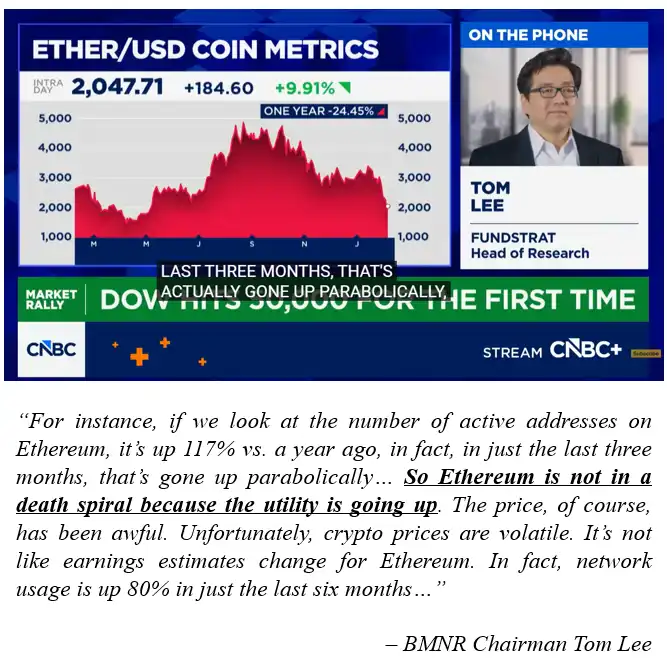
By his own logic, if ETH's on-chain activity does not reflect real utility growth, then ETH is heading toward a death spiral.

Our research shows that this is exactly what is happening.

The full report and disclosure information are now available at culperresearch.com.

The Truth About On-Chain Data: 95% of New Wallets Are Poisoning Attacks

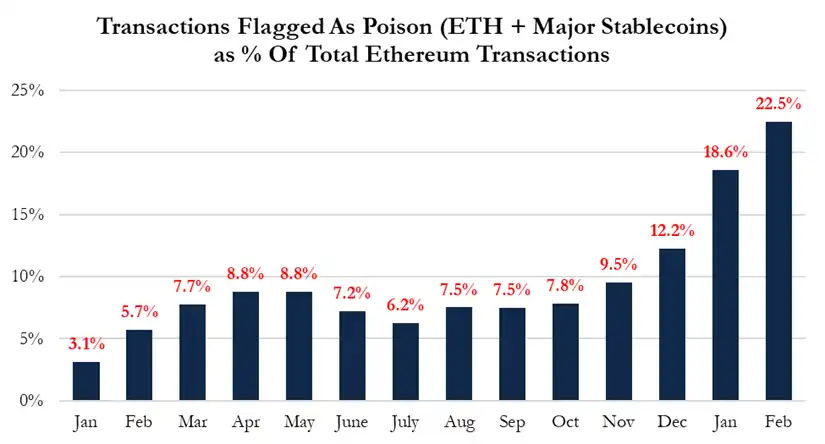
Our comprehensive analysis of on-chain data from January 2025 to February 2026 shows: the "institutional adoption" data cited by Tom Lee is actually explained by large-scale low-value address poisoning/wallet dusting attacks triggered by the block space surplus brought by Fusaka.
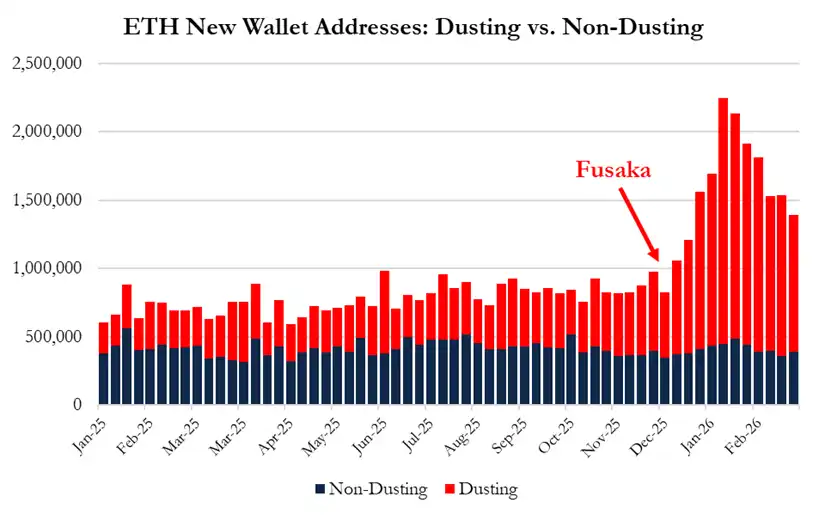
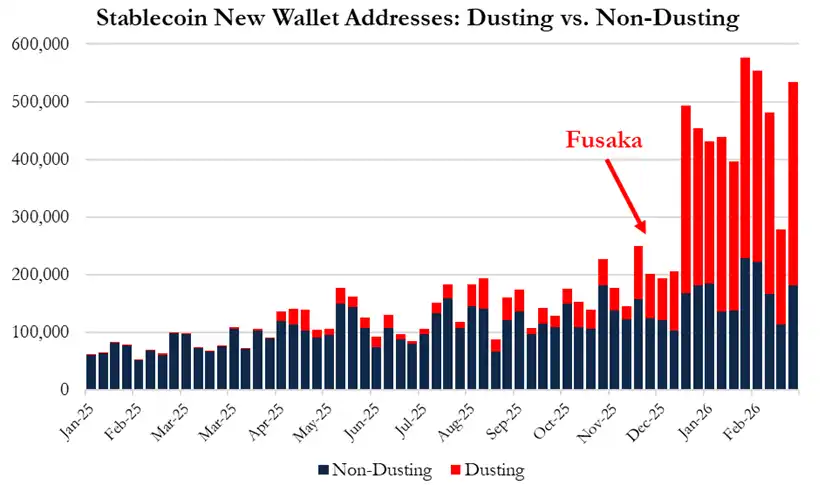
Specific data after Fusaka:

  • 95% of new wallet growth is explained by newly created "poisoned" wallets
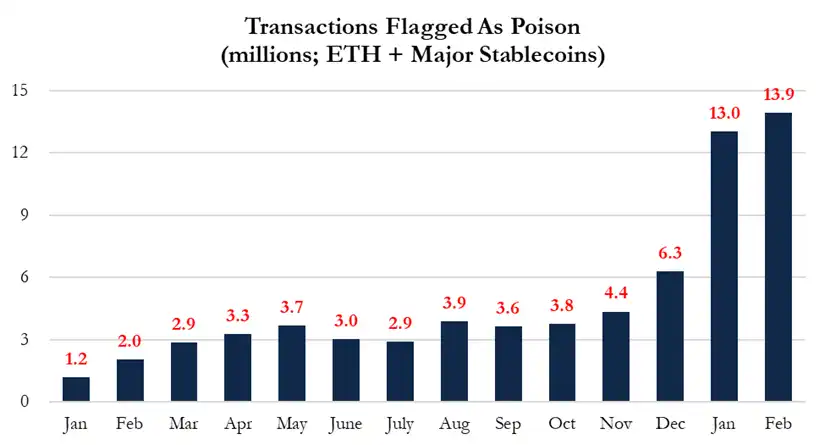
  • Address poisoning attacks have increased more than 3 times
  • Poisoning attacks explain over 50% of ETH transaction volume growth
  • Poisoning attacks now account for 22.5% of all ETH transactions
Fusaka Upgrade: Gas Fees Collapsed by 90%, 3-9 Times Worse Than Expected

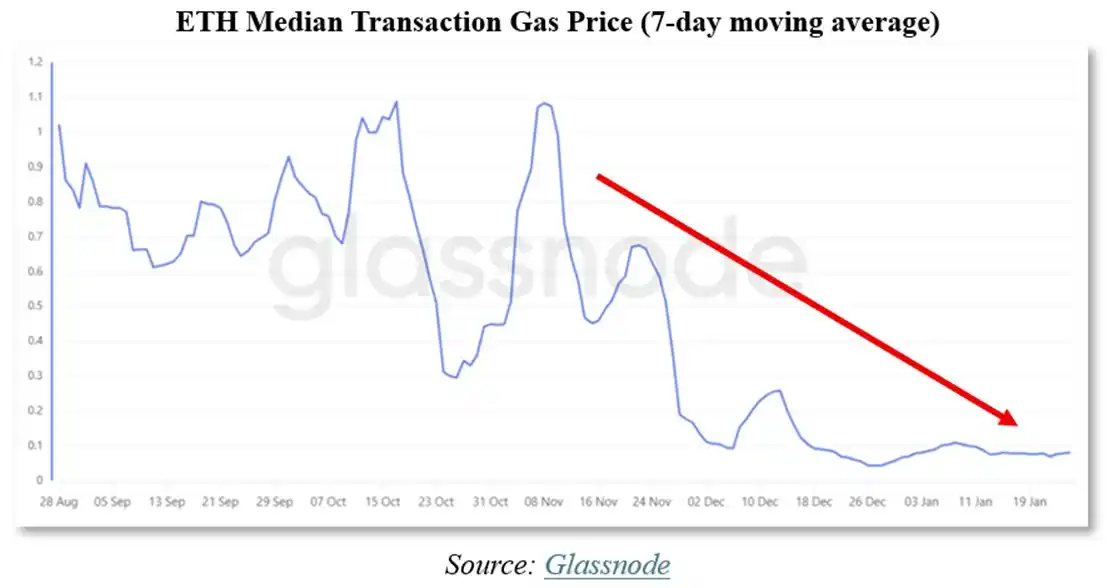
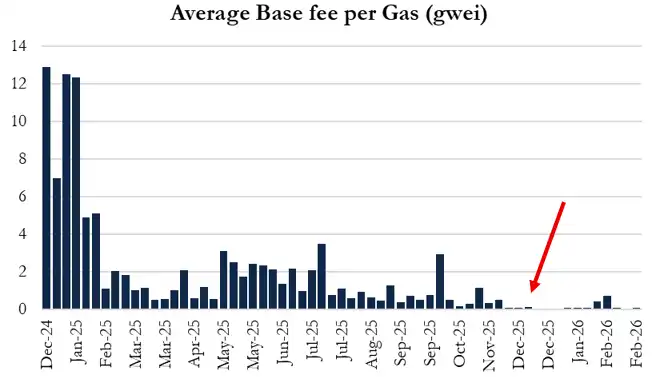
Fusaka increased the gas limit from 45 million to 60 million, aiming to scale Ethereum L1. Vitalik and PTG estimated that gas fees would drop by 10-30%.

The reality is: gas fees dropped by approximately 90%.

Vitalik and the validators severely underestimated L1 demand elasticity, with an error of 3-9 times—using outdated mathematical models from before EIP-1559 and before L2s emerged.

Vitalik Is Selling Like Crazy

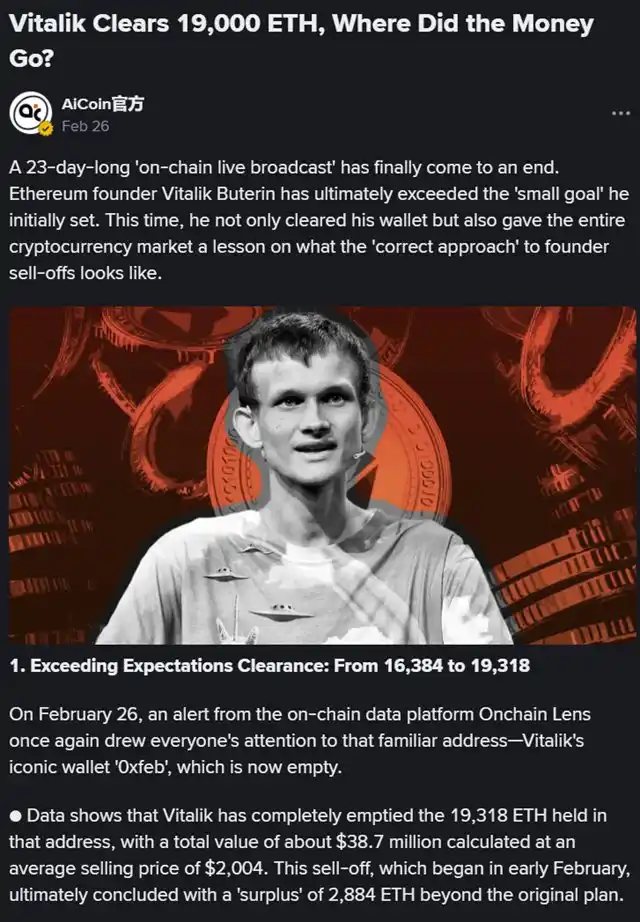
This is why we believe Vitalik is selling ETH heavily. On January 30, he announced he would sell 16,384 ETH to fund the Ethereum Foundation's "austerity period." Since then, he has sold over 19,300 ETH and is still continuing.

He knows what Tom Lee does not: ETH's token economic model has broken.
We Personally Verified the Address Poisoning Attack

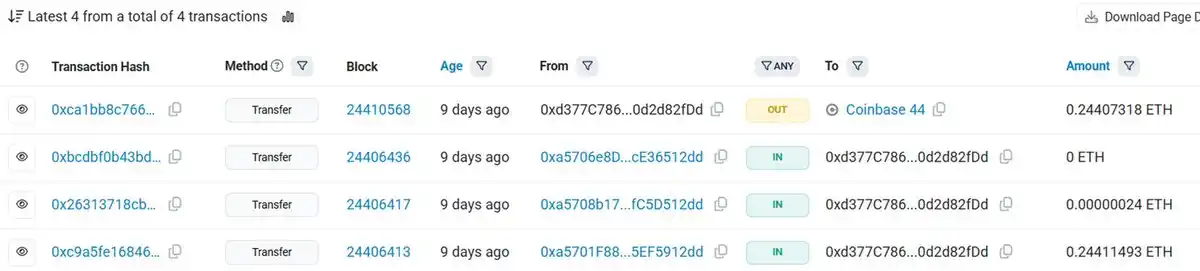
We documented the ETH address poisoning process firsthand: we created two new wallets, initiated a transfer between them, and were targeted by a poisoning attack within 5 minutes.

We encourage readers to verify this themselves.

Losses from poisoning attacks have grown at a rate more than 8 times faster than before Fusaka.
The Validator Flywheel Is Reversing

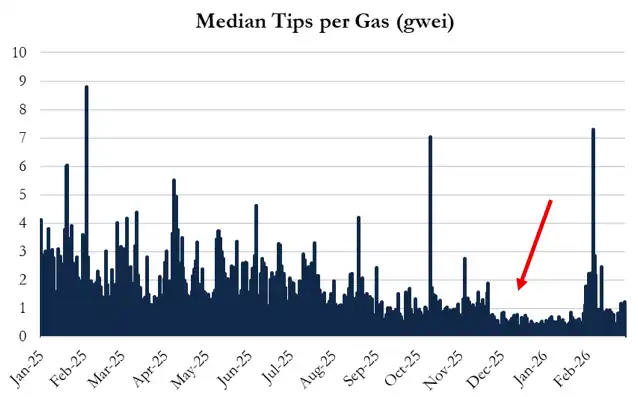
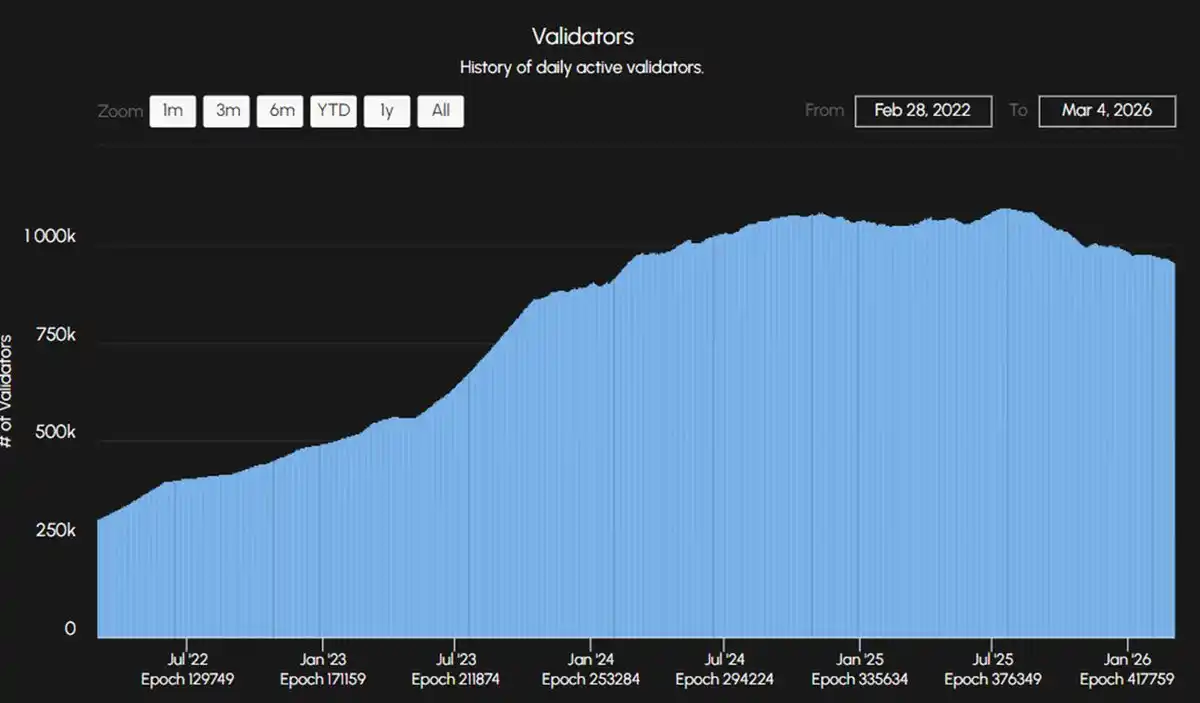
Additionally, the gas limit increase has severely impacted ETH validators, who now see a 40-50% drop in tips per unit of gas. Lower returns reduce staking demand and high-value activity, thereby weakening the foundation for institutional adoption.

The flywheel is now reversing.
Ethereum Is Losing to Solana and Its Own L2s

Meanwhile, ETH continues to lose market share:

  • Solana developers grew by 29% in 2025, while Ethereum only grew by 6%; talent is draining away
  • Visa and Citigroup chose Solana to build DeFi applications
  • Solana DEX trading volume is now more than double that of Ethereum

Conclusion: The Next Nokia

During the internet bubble era, Netscape and Nokia dominated the market for over a decade, but ultimately, Google and Apple reaped the rewards.

We view ETH in the same light.

We believe the token economic model has broken, Tom Lee is in over his head, and $ETH will continue to decline.


Trending Cryptos

Related Questions

QWhat is the main argument presented by Culper Research for shorting ETH?

ACulper Research argues that the Fusaka upgrade in December 2025 severely damaged Ethereum's tokenomics by creating an oversupply of cheap block space, which led to a surge in artificial 'address poisoning' attacks rather than genuine organic demand. They claim this has caused a breakdown in ETH's economic model, leading to a downward price spiral.

QAccording to the report, what percentage of new wallet growth is attributed to 'poisoned' wallets post-Fusaka?

AAccording to the report, 95% of new wallet growth is explained by newly created 'poisoned' wallets following the Fusaka upgrade.

QHow did the actual gas fee reduction after Fusaka compare to the initial estimates by Vitalik and the Ethereum team?

AVitalik and the Ethereum team initially estimated that gas fees would decrease by 10-30% after the Fusaka upgrade. However, the actual reduction was about 90%, which was 3 to 9 times more severe than their projections.

QWhat evidence does the report provide to suggest that Vitalik Buterin is selling his ETH holdings?

AThe report states that on January 30th, Vitalik announced he would sell 16,384 ETH to fund the Ethereum Foundation during a 'period of austerity.' Since then, he has sold over 19,300 ETH and continues to sell, indicating his awareness of the broken tokenomics.

QWhat is 'address poisoning' or 'wallet dusting' as described in the article, and what impact does it have on Ethereum's metrics?

AAddress poisoning or wallet dusting is a type of attack where spammers send tiny, worthless amounts of ETH to a large number of wallets to create artificial on-chain activity. According to the report, this attack accounts for 95% of new wallet growth, over 50% of transaction volume growth, and 22.5% of all ETH transactions post-Fusaka, artificially inflating metrics like active addresses and transaction counts.

Related Reads

Misjudged A-Shares: Resilience, Expectations, and Confidence

China's A-share market recently faced selling pressure, especially in tech sectors, initially triggered by a global tech sell-off that began in South Korea. However, the article argues this is a case of "mistaken injury" and highlights the market's underlying resilience. This resilience stems from three main pillars: **1) Tech Sector Fundamentals:** Unlike Korea's market dominated by a few memory chip stocks, China's tech sector is diversified across computing, communications, electronics, and semiconductors, supported by dual narratives of global AI supply chains and domestic substitution. Core areas like optical modules and fiber optics continue to show strong earnings growth. **2) "National Team" Support:** State-backed institutions and large corporations have made significant market purchases and announced buybacks, providing liquidity and signaling confidence. This is seen as a stabilizing policy signal, often associated with market bottoms. **3) Broader Market Pillars:** Other major sectors are showing endogenous recovery momentum. Consumer stocks benefit from stabilizing CPI and signs of sector recovery (e.g., liquor price hikes). Cyclical sectors like aluminum have high earnings, potential price increases due to tight supply, and low valuations. The financial sector offers stable dividends and low valuations. The conclusion is that the sell-off was driven by external contagion, not a collapse in fundamentals. With strong policy support and recovering momentum across key sectors, the A-share market possesses the toughness to regain stability.

marsbit29m ago

Misjudged A-Shares: Resilience, Expectations, and Confidence

marsbit29m ago

The Clarity Act's Journey Through Congress: The Thorny Path of Bipartisan Compromise in the U.S.

The U.S. Congress is struggling to advance the crypto market structure bill known as the Clarity Act, with bipartisan compromise proving difficult. Key hurdles include unresolved disputes over "yield" products and, more critically, the inclusion of strong ethics provisions for elected officials—a non-negotiable demand for many Democrats. While a compromise on yield was reached in May, securing only limited Democratic support in committee, the separate Senate Agriculture Committee version later passed with no Democratic votes due to the ethics impasse. As Republicans push for a full Senate vote in July, demands for ethics rules have expanded, and other contentious issues like developer protections and concerns from law enforcement and large banks further complicate negotiations. Despite consensus on the need for legislation, the path forward is unclear. Recent discussions between senators and White House officials aim to find acceptable ethics language. Some lawmakers question whether a compromise text can garner enough bipartisan support, with one Democrat stating the current proposal lacks the strong ethics provisions required for their vote. Potential short-term goals for the crypto community include symbolic Senate action before the August recess, a longer-term aim for passage by 2026, or establishing a detailed framework that addresses ethics and other compromises. The process remains arduous, relying on the traditional, vote-by-vote effort to build bipartisan support.

marsbit49m ago

The Clarity Act's Journey Through Congress: The Thorny Path of Bipartisan Compromise in the U.S.

marsbit49m ago

Are Kalshi and Polymarket Founders at Odds? This Business Rivalry Is More Brutal Than You Think

"The Rivalry Between Kalshi and Polymarket Founders Turns Bitter and Litigious" The intense feud between Tarek Mansour, CEO of Kalshi, and Shayne Coplan, founder of Polymarket, has escalated far beyond typical business competition into personal animosity and regulatory battles. Both lead billion-dollar prediction market platforms, but their approaches differ sharply. Kalshi positions itself as the compliant operator, securing U.S. regulatory approval before launching. In contrast, Polymarket initially operated offshore, allowing U.S. users to access its platform via VPN, which drew regulatory scrutiny. The conflict reached a peak in November 2024 when FBI agents raided Coplan's New York apartment. While Coplan publicly blamed political motives, his team privately suspected Kalshi was involved. According to sources, Kalshi's lawyers had previously reported Polymarket's operations to federal prosecutors, highlighting its accessibility to U.S. users despite a ban. This incident fueled mutual accusations and underhanded tactics, including social media smear campaigns and attempts to sabotage each other's major business deals. Their rivalry also played out in Washington, influencing regulatory debates. Kalshi actively lobbied against Polymarket's practices, framing them as illegal and unethical. Polymarket, after facing a CFTC fine and investigation, later acquired a licensed U.S. firm to launch a domestic app, regaining a foothold. Despite the hostility, both companies have seen massive growth, with combined trading volumes soaring. However, increased regulatory scrutiny, particularly around insider trading on Polymarket's platform, continues to pose challenges. The founders' deep-seated mutual disdain ensures their battle for market dominance remains as much a personal vendetta as a commercial one.

marsbit57m ago

Are Kalshi and Polymarket Founders at Odds? This Business Rivalry Is More Brutal Than You Think

marsbit57m ago

Trading

Spot

Hot Articles

Discussions

Welcome to the HTX Community. Here, you can stay informed about the latest platform developments and gain access to professional market insights. Users' opinions on the price of ETH (ETH) are presented below.

活动图片