Charles Hoskinson Says Midnight Will Expand Cardano DeFi by 10x

TheNewsCryptoPublished on 2025-12-23Last updated on 2025-12-23

Abstract

Charles Hoskinson, founder of Cardano, asserts that the upcoming Midnight privacy sidechain will expand Cardano's DeFi ecosystem by ten times. He addressed concerns that Midnight might weaken Cardano's core infrastructure, explaining that while upgrades like Leios and Hydra offer marginal improvements, they are insufficient to attract users from established ecosystems like Ethereum and Solana. Midnight's key innovation is its programmable privacy features, which provide a fundamentally new value proposition without requiring users to abandon other chains. This could significantly boost Cardano's DeFi activity, which currently has a TVL of $178 million—far behind its competitors. A tenfold increase would bring it to nearly $1.8 billion. Hoskinson also highlighted ongoing discussions with Ripple to bring the RLUSD stablecoin to Cardano and mentioned a forthcoming privacy stablecoin partnership as additional growth catalysts.

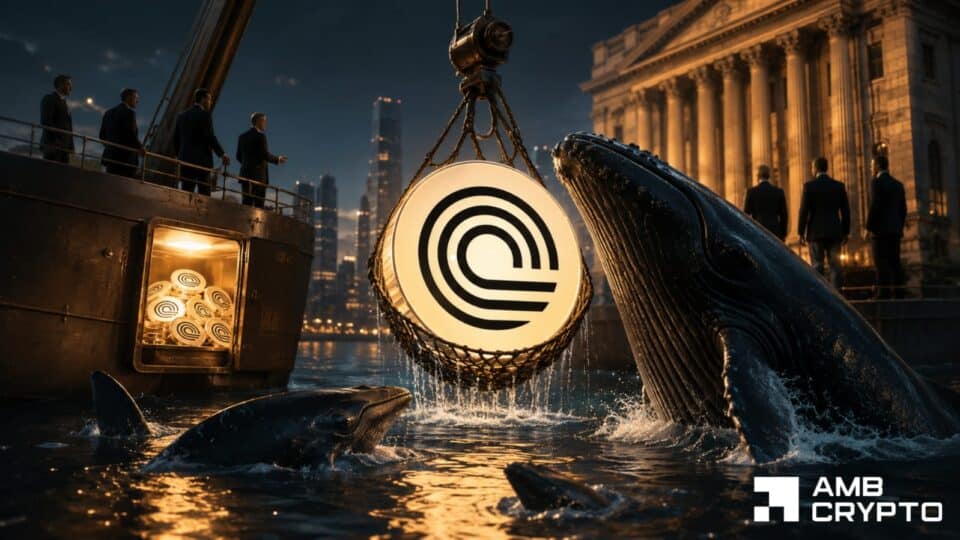
Cardano founder Charles Hoskinson stated that Midnight will strengthen the network and expand its DeFi ecosystem by ten times current levels. The founder addressed concerns during a recent livestream that Midnight could weaken Cardano’s core blockchain infrastructure.

Hoskinson argued that simply improving Cardano’s speed, cost structure and scalability will not drive mass adoption. Competing with networks like Ethereum and Solana requires more than incremental technical enhancements, according to the founder.

He emphasized that major upgrades including Leios and Hydra may deliver only marginal user incentives such as reduced transaction fees and throughput improvements.

Privacy Features Create New Value Proposition

These features alone remain insufficient to convince users to migrate from established ecosystems like Ethereum and Solana to Cardano. Hoskinson stated that users only switch platforms when offered something fundamentally different. Midnight addresses this requirement through its privacy-focused architecture.

The privacy sidechain offers programmable privacy capabilities largely absent from mainstream DeFi today. Rather than requiring users to abandon existing ecosystems entirely, Midnight allows continued interaction with those platforms while accessing privacy-preserving features that Ethereum and Solana do not provide natively.

This privacy functionality could establish a new value proposition for Cardano DeFi, potentially boosting activity by up to tenfold. While Cardano has achieved progress in security and decentralization, the network still lags in DeFi activity metrics.

Data from DeFiLlama shows Cardano’s total value locked at $178.98 million. This trails Ethereum’s approximately $70.09 billion and Solana’s $8.57 billion by considerable margins. A tenfold increase would bring Cardano’s TVL to roughly $1.78 billion, still below current Solana and Ethereum levels but marking substantial growth.

Hoskinson expects Cardano’s DeFi activity to accelerate next year, coinciding with Midnight’s mainnet launch. Beyond the privacy sidechain, the founder believes introducing a Tier-1 stablecoin to ADA could further drive DeFi expansion.

He confirmed ongoing discussions with Ripple about bringing RLUSD stablecoin to the ADA ecosystem. The Midnight Foundation recently disclosed that it is finalizing a partnership to launch a privacy stablecoin on its platform, creating another potential catalyst for DeFi growth.


TagsCardano

Related Questions

QWhat did Charles Hoskinson claim Midnight will do for Cardano's DeFi ecosystem?

ACharles Hoskinson claimed that Midnight will expand Cardano's DeFi ecosystem by ten times current levels.

QAccording to Hoskinson, why are improvements like Leios and Hydra insufficient for mass adoption?

AHe stated that improvements like Leios and Hydra may only deliver marginal user incentives such as reduced transaction fees and throughput improvements, which are not enough to convince users to migrate from established ecosystems like Ethereum and Solana.

QWhat unique value proposition does Midnight offer to users from other ecosystems?

AMidnight offers programmable privacy capabilities that allow users to continue interacting with platforms like Ethereum and Solana while accessing privacy-preserving features those networks do not provide natively.

QHow much would Cardano's Total Value Locked (TVL) increase if it grew tenfold from its current level?

AA tenfold increase from Cardano's current TVL of $178.98 million would bring it to roughly $1.78 billion.

QWhat additional development did Hoskinson mention could further drive DeFi expansion on Cardano?

AHoskinson mentioned that introducing a Tier-1 stablecoin to ADA, specifically through ongoing discussions with Ripple about bringing RLUSD stablecoin to the ADA ecosystem, could further drive DeFi expansion.

Related Reads

Interpreting Investment Opportunities in the Age of Great Navigation, Invesco Great Wall Fund Releases '2026 Report on Chinese Enterprises Going Global'

Invesco Great Wall Fund has released its "2026 China Corporate Globalization Report," titled "The 'Great Navigation Era' of Chinese Enterprises." The report analyzes the new trends and investment opportunities as Chinese companies expand globally, moving from simple product exports to comprehensive overseas operations involving services, branding, and local production. Driven by factors like trade friction, the pursuit of higher profit margins abroad, and policy support, globalization is becoming essential for Chinese companies. The report outlines an evolution: from early product export ("Globalization 1.0") to the current "Globalization 2.0," characterized by overseas capacity, capital goods investment, consumer brand expansion, and service exports. Chinese firms' competitive advantages are highlighted, including a vast engineer talent pool, low-cost and robust infrastructure, and complete industrial clusters. Specific sectors with significant出海 potential are identified: * **Capital Goods** (e.g., engineering machinery, power equipment): Benefiting from global demand, especially in Belt & Road markets and the AI-driven power grid upgrade cycle. * **Consumer Brands**: Transitioning from cost to brand advantage, leveraging供应链 efficiency. * **Technology & Innovation**: Including AI applications, optical modules within global tech supply chains, and new energy vehicles focusing on local production. * **Pharmaceuticals**: Chinese biotech firms are becoming preferred partners for global pharma, with potential for breakthrough drugs in areas like oncology and weight loss. The report concludes that corporate globalization represents a sustained, core theme for China's capital markets, though companies must navigate challenges like geopolitics and localization.

marsbit10m ago

Interpreting Investment Opportunities in the Age of Great Navigation, Invesco Great Wall Fund Releases '2026 Report on Chinese Enterprises Going Global'

marsbit10m ago

GitHub, Transfixed by AI

On the night of February 9th, GitHub suffered a major outage caused by a simple configuration change—reducing a cache refresh interval from 12 to 2 hours—that triggered a cascade of failures. This was not an isolated event, but part of a broader pattern. In early 2026, GitHub experienced at least 8 major incidents, failing to meet its promised 99.9% availability. These outages stemmed from structural issues: explosive growth in load, tight service coupling, and insufficient protection against abnormal traffic. This unprecedented load is driven by AI Agents. In 2025, GitHub handled ~1 billion commits. By 2026, weekly commits reached 275 million, projecting to ~14 billion for the year—a 14x increase. AI tools like Claude Code now contribute 4.5% of all public repository commits, with weekly submissions surging 25x in just three months. AI-generated pull requests jumped from 4 million to 17 million per month in half a year. Unlike human developers, AI Agents work continuously, generating commits at a scale that overwhelms infrastructure designed for human rhythms. The surge also shattered GitHub's business model. Copilot's flat-rate pricing, based on assisting human developers, became unsustainable as Agentic AI sessions consumed resources worth hundreds of dollars for a few dollars in fees. In response, GitHub imposed usage limits and, by June 1st, shifted to a pay-per-use "AI Credits" system. Facing this new reality, GitHub realized a 10x scaling plan was insufficient. It announced a need to *redesign* its architecture for 30x current scale—decoupling services, adding fault isolation, and improving change management to prevent cascading failures. Other platforms like Stripe and AWS are facing similar challenges with AI Agents. Fundamentally, GitHub is transitioning from a human collaboration platform to an "exhaust pipe" for automated AI workflows. Its detailed post-mortem reports aim to maintain trust during this turbulent rebuild. The February outage was not just a technical glitch, but a signal of the software industry's entry into a new, AI-driven era.

marsbit50m ago

GitHub, Transfixed by AI

marsbit50m ago

Both Suffer Massive Losses Exceeding $90 Billion, Which Is in Greater Peril: Strategy or Bitmine?

Facing massive paper losses exceeding $90 billion each amidst a sharp market downturn, "Digital Asset Treasury" (DAT) giants Strategy and Bitmine find themselves in a precarious position, but with different underlying risks. Strategy, heavily invested in Bitcoin (BTC), faces significant financial strain. Its strategy relies heavily on debt, including convertible notes and preferred stock (STRC) requiring substantial dividend payments. With its cash reserves dwindling and BTC offering no staking yield for cash flow, Strategy's high leverage makes it vulnerable. A continued price decline could force asset sales to meet obligations, potentially creating a negative feedback loop. Its market value has already fallen sharply. In contrast, Bitmine, an Ethereum (ETH) holder, appears on firmer financial ground. It primarily funds its purchases through equity offerings (like ATM programs), avoiding debt pressure. It also generates income by staking a large portion of its ETH holdings. While not immune to market drops and shareholder dilution concerns, Bitmine maintains more flexibility, recently announcing a new preferred share offering to raise further capital. The core divergence lies in their financing: Bitmine uses equity (investor money), while Strategy uses debt (borrowed money). Consequently, Bitmine currently faces less immediate liquidity pressure than Strategy, which must navigate the dual challenge of servicing debt/dividends and a declining core asset (BTC) price.

marsbit57m ago

Both Suffer Massive Losses Exceeding $90 Billion, Which Is in Greater Peril: Strategy or Bitmine?

marsbit57m ago

Trading

Spot
Futures

Hot Articles

Discussions

Welcome to the HTX Community. Here, you can stay informed about the latest platform developments and gain access to professional market insights. Users' opinions on the price of ADA (ADA) are presented below.

活动图片