Cardano And $67.5 Million In Bitcoin, What Happened With 1,090 BTC?

bitcoinistPublished on 2026-06-10Last updated on 2026-06-10

Abstract

Litigation expert Thomas Braziel has raised questions about the Cardano Foundation regarding 1,090 BTC (worth approx. $67.5M) it allegedly received. Records show these funds were allocated to the Foundation's legal predecessor, the Isle of Man Foundation, which was dissolved in 2025. This occurred around Cardano's ICO, where about 108,000 BTC was raised. Braziel notes the Isle of Man Foundation involved Cardano founder Charles Hoskinson, who later served as an "Enforcer" in the structure. He questions governance and potential conflicts, as the ICO's terms referenced a "Foundation" before the Swiss Cardano Foundation existed. Most BTC and ADA from the ICO went to affiliated for-profit development entities. The expert is not alleging wrongdoing but seeks answers on independent reviews, conflict disclosures, protections for ICO participants, and the specific whereabouts of the 1,090 BTC. Cardano's ADA price was around $0.16 at the time of reporting.

Litigation expert Thomas Braziel has questioned the Cardano Foundation on the 1,090 BTC it allegedly received after its predecessor, the Isle of Man foundation, was dissolved. This is said to have occurred around the Cardano ICO, with 108,000 BTC said to have been raised around the ICO event.

Expert Questions Cardano Foundation Over 1,090 BTC

In an X post, Braziel revealed filings related to the Cardano Foundation’s earliest structure, in which it appeared to operate as the Isle of Man Foundation. The expert noted that the Isle of Man Foundation was ultimately dissolved in December 2025, while records show that almost 1,090 BTC were allocated to the Foundation. He therefore urged the Foundation to provide an explanation of what happened to the Bitcoin.

Braziel revealed that the records show that the original Isle of Man Foundation involved Cardano founder Charles Hoskinson, Jeremy Wood, Ken Kodama, and a corporate service provider. Later filings are said to show Hoskinson serving as the Foundation’s “Enforcer.” The Enforcer is said to be one of those with key oversight positions within the structure.

Braziel noted that this matters because the Cardano ICO was already underway before the Swiss Cardano Foundation was established. He further remarked that the Attain Terms of Service and risk disclosures repeatedly reference the “Foundation” as the issuer or sponsoring entity. Meanwhile, at the time, the only Cardano Foundation that existed was the Isle of Man Foundation.

The litigation expert reiterated that this wasn’t speculation, as the Swiss Cardano Foundation’s own historical materials reference an earlier Isle of Man predecessor Foundation. It also showed that the Foundation received the Bitcoin in question.

Expert Raises Governance Questions

Braziel noted that the governance questions become even more significant when viewed alongside the broader allocation structure. He said that, based on publicly available figures, around 108,000 BTC was raised, while the majority of the ADA supply and Bitcoin proceeds were allocated to affiliated for-profit development entities.

The expert remarked that the question is not whether development companies should be compensated but rather who negotiated those arrangements on behalf of ICO participants and the Isle of Man Foundation. He questioned how fairness was evaluated and documented when the same individuals managed the Foundation while also controlling the entities that received the most economic benefits.

Braziel stated that he wasn’t alleging any wrongdoing but just wanted answers on whether independent reviews were performed, if conflicts were disclosed, and what protections were offered to the ICO participants. He also questioned what happened to the 1,090 BTC that the Foundation received.

At the time of writing, the Cardano price is trading at around $0.16, down over 4% in the last 24 hours, according to data from CoinMarketCap.

ADA trading at $0.16 on the 1D chart | Source: ADAUSDT on Tradingview.com

Trending Cryptos

Related Questions

QAccording to the article, what is the main concern raised by litigation expert Thomas Braziel regarding the Cardano Foundation?

AThomas Braziel is questioning what happened to the 1,090 BTC that the Cardano Foundation's predecessor, the Isle of Man Foundation, allegedly received upon its dissolution, and is seeking an explanation for these funds.

QWhat was the original structure of the Cardano Foundation as mentioned in the article, and who was involved?

AThe original structure was the Isle of Man Foundation, which involved Cardano founder Charles Hoskinson, Jeremy Wood, Ken Kodama, and a corporate service provider. Later filings showed Hoskinson serving as the Foundation's 'Enforcer,' a key oversight role.

QWhy does Braziel emphasize that the Isle of Man Foundation was the only existing 'Foundation' during the Cardano ICO?

AHe emphasizes this because the terms of service and risk disclosures for the ICO repeatedly referenced the 'Foundation' as the issuer, but the Swiss Cardano Foundation was not established yet. Therefore, the Isle of Man Foundation was the entity issuing or sponsoring the ICO at that time.

QWhat governance question does the expert raise concerning the allocation of funds from the ICO?

AHe questions who negotiated the allocation arrangements on behalf of the ICO participants and the Isle of Man Foundation, and how fairness was evaluated when the same individuals managed the Foundation while also controlling the for-profit development entities that received the majority of the BTC proceeds and ADA supply.

QWhat specific information is Braziel seeking, aside from the fate of the 1,090 BTC?

AHe is seeking answers on whether independent reviews were performed regarding fund allocations, if conflicts of interest were disclosed, and what protections were offered to the ICO participants. He states he is not alleging wrongdoing but wants these questions answered.

Related Reads

Tidal Investment: We Remain Bullish on the AI Industry Chain, But the Reasons Have Changed

Tidal Investment remains optimistic about the AI industry chain, but the rationale has shifted. The market narrative has changed. While recent large-scale IPOs (e.g., SpaceX) and major fundraising plans by tech giants like Alphabet and Meta have caused some nervousness, this isn't a sign of an AI peak. The focus has moved from the initial question of AI's viability to the sustainability of massive investment cycles. The key players—primarily the major cloud providers—are not slowing down; their capital expenditure (Capex) guidance for 2026 has been increased across the board (e.g., Alphabet to $180B, Amazon to $200B). This investment cycle is proving resilient and difficult to stop. Unlike traditional hardware cycles, current AI Capex is distributed across multiple physical layers—computing, memory, networking, and critically, power infrastructure. Bottlenecks are shifting from chips to elements like electricity, transformers, and cooling systems, which have much longer lead times and cannot be easily pre-built like fiber optics during the dot-com bubble. Supply chain data (e.g., Eaton's 240% YoY data center orders) confirms this broad-based, project-driven expansion. Market concerns are acknowledged but viewed differently. First, while Capex growth currently outpaces revenue growth, raising ROI questions, this mirrors the early scaling phase of cloud computing itself. A change in view would require concrete signals like downward Capex revisions or missed AI product targets, which haven't materialized by mid-2026. Second, comparisons to the 2000 dot-com bust are flawed. That crash was driven by a massive, parallel oversupply of cheap capacity (fiber). The current cycle faces *supply constraints* in critical, capital-intensive physical infrastructure that cannot be overbuilt as easily. In conclusion, the wave of fundraising reflects the next, more complex act of the AI story. Physical bottlenecks and sustained high Capex plans suggest this is not the finale but an ongoing, capital-intensive build-out phase. The script has changed, but the play is far from over.

marsbit51m ago

Tidal Investment: We Remain Bullish on the AI Industry Chain, But the Reasons Have Changed

marsbit51m ago

Tidal Investment: We Remain Bullish on the AI Industry Chain, But for Different Reasons Now

Tidal Investments remains optimistic about the AI industry chain, but the rationale has shifted. The market is concerned about massive concurrent fundraising by tech giants like SpaceX, OpenAI, Alphabet, and Meta, fearing an AI peak. However, the authors argue this signals the next act of AI development, not its end. Capital expenditure (Capex) from major cloud providers (Alphabet, Amazon, Meta, Microsoft, Oracle) continues to surge aggressively into 2026. This investment cycle is more resilient than past hardware cycles due to its scale and complexity. Bottlenecks have shifted from chips to critical physical infrastructure like power grids, transformers, cooling, and data center construction—areas with long lead times and limited capacity for rapid expansion. Supply chain data (e.g., Eaton's orders) confirms substantial, tangible progress. Key market concerns are addressed: 1. **ROI vs. Capex Growth**: While Capex growth outpaces revenue, the authors note cloud giants have historically overcome similar phases through scale. The cycle will only be in danger if Capex guidance is cut, orders are canceled, or AI product demand falters—none of which are currently observed. 2. **Comparison to the 2000 Dot-com Bubble**: Unlike the telecom bubble, where cheap, oversupplied fiber crashed prices, AI infrastructure (especially power) is constrained, customized, and subject to lengthy approvals, making a similar supply glut and crash unlikely. In conclusion, the wave of fundraising reflects the immense, ongoing capital needs for AI's next phase, constrained by slow-moving physical bottlenecks. The AI cycle is not over; the script has simply changed.

链捕手57m ago

Tidal Investment: We Remain Bullish on the AI Industry Chain, But for Different Reasons Now

链捕手57m ago

Grayscale: These 15 Profitable Crypto Protocols Are Severely Undervalued

Grayscale Research identifies 15 top-revenue crypto protocols trading at significant valuation discounts, with many at single-digit or even 1x revenue multiples. Protocols like Pump.fun, PancakeSwap, and Meteora have market capitalizations roughly equal to their annual revenue. The report argues these financially-focused protocols (DEXs, lending, staking) are fundamentally undervalued and could benefit from the potential passage of the CLARITY Act, expected as soon as next month. This legislation aims to clarify digital asset regulation, potentially reducing institutional barriers and driving on-chain activity. The analysis breaks down the protocols into three groups: the "1x Club" (market cap ≈ revenue), mid-tier protocols with 3-9x multiples (e.g., Aave, Lido, Jupiter), and high-multiple protocols like Hyperliquid (15x) and Uniswap (37x), where valuation reflects future potential rather than current cash flows. Grayscale applies a traditional DCF model to Aave, suggesting a one-year price target of ~$175, representing ~130% upside from current levels. The report notes a risk-off macro environment since the Iran conflict has further compressed valuations, creating a potential entry window. The conclusion highlights that while the valuation data presents an intriguing opportunity, the investment thesis is contingent on the CLARITY Act's passage and subsequent institutional capital flows. Investors are cautioned to consider Grayscale's inherent conflict of interest as a crypto asset manager with products tied to these assets.

marsbit1h ago

Grayscale: These 15 Profitable Crypto Protocols Are Severely Undervalued

marsbit1h ago

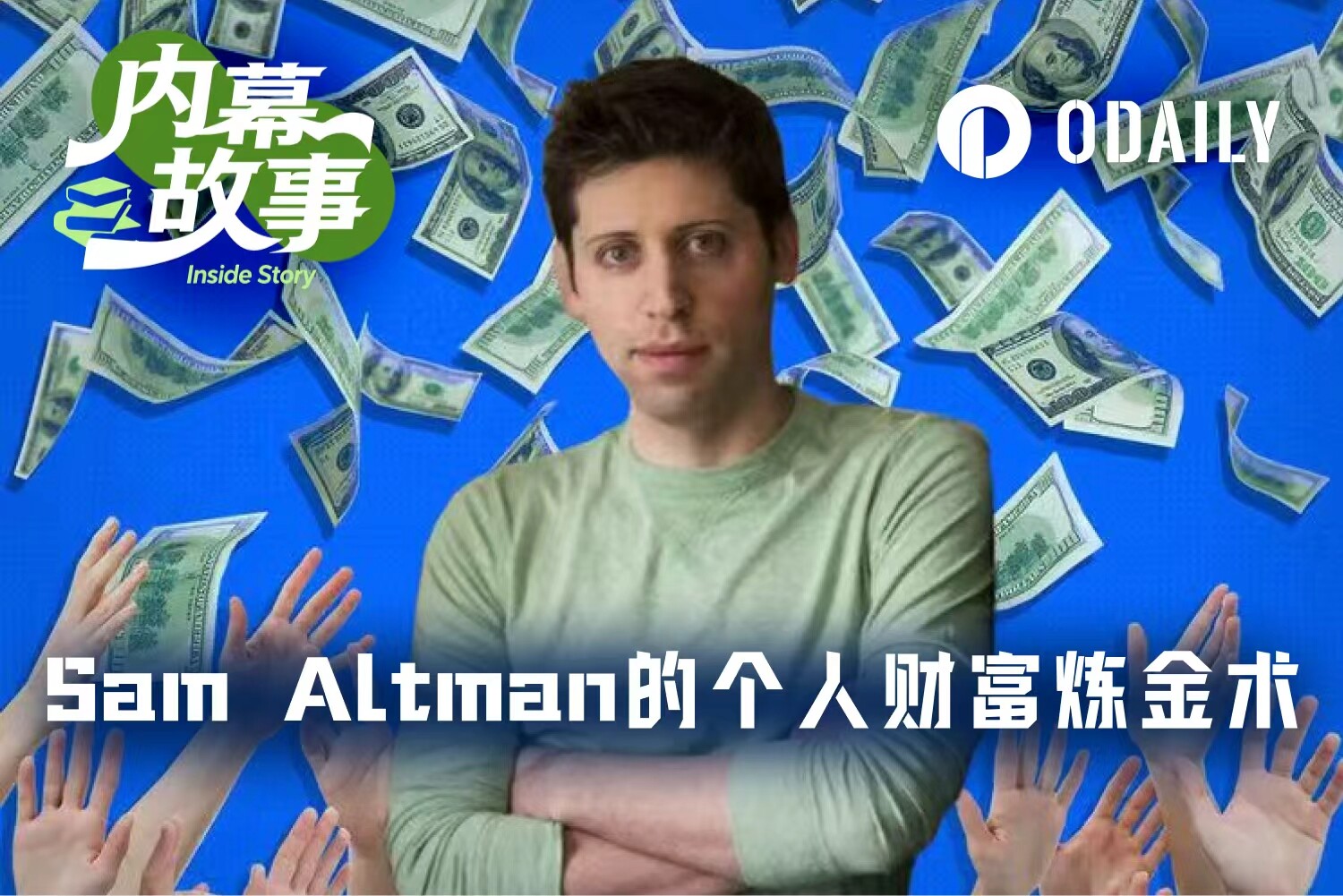
Sam Altman's Personal Alchemy of Wealth: Investing in 400 Companies, Over 10 Deeply Tied to OpenAI

The article investigates Sam Altman's personal wealth strategy, centered around his investments in approximately 400 companies while serving as OpenAI's CEO. Despite not holding direct equity in OpenAI, Altman has built a vast portfolio, with at least 10 of his investments having commercial ties or ongoing negotiations with OpenAI. This creates a complex network of potential conflicts of interest, drawing scrutiny from U.S. congressional committees and state attorneys general. Key investments highlighted include the anti-aging startup Retro Biosciences (valued at $258 million for his stake as of late last year) and the chipmaker Cerebras, whose value soared following an OpenAI procurement deal. His most significant financial gain is linked to the nuclear fusion company Helion, where a recent funding round reportedly increased his stake's value to at least $4.1 billion. The article details a decade-long relationship between Altman, Helion, and OpenAI, including a controversial non-binding power purchase agreement and Altman's efforts to secure investments from OpenAI and its backer SoftBank for Helion. Other points include internal investigations at Tools for Humanity (developer of Worldcoin) and OpenAI's massive contracts with tech giants like Nvidia. According to Forbes, Altman's net worth is around $3.4 billion, ranking him 1251st globally—a rise of over 1400 places since 2024. OpenAI's board states that Altman's external dealings are transparent and potential conflicts are carefully managed.

Odaily星球日报1h ago

Sam Altman's Personal Alchemy of Wealth: Investing in 400 Companies, Over 10 Deeply Tied to OpenAI

Odaily星球日报1h ago

Trading

Spot
Futures

Hot Articles

What is $BITCOIN

DIGITAL GOLD ($BITCOIN): A Comprehensive Analysis Introduction to DIGITAL GOLD ($BITCOIN) DIGITAL GOLD ($BITCOIN) is a blockchain-based project operating on the Solana network, which aims to combine the characteristics of traditional precious metals with the innovation of decentralized technologies. While it shares a name with Bitcoin, often referred to as “digital gold” due to its perception as a store of value, DIGITAL GOLD is a separate token designed to create a unique ecosystem within the Web3 landscape. Its goal is to position itself as a viable alternative digital asset, although specifics regarding its applications and functionalities are still developing. What is DIGITAL GOLD ($BITCOIN)? DIGITAL GOLD ($BITCOIN) is a cryptocurrency token explicitly designed for use on the Solana blockchain. In contrast to Bitcoin, which provides a widely recognized value storage role, this token appears to focus on broader applications and characteristics. Notable aspects include: Blockchain Infrastructure: The token is built on the Solana blockchain, known for its capacity to handle high-speed and low-cost transactions. Supply Dynamics: DIGITAL GOLD has a maximum supply capped at 100 quadrillion tokens (100P $BITCOIN), although details regarding its circulating supply are currently undisclosed. Utility: While precise functionalities are not explicitly outlined, there are indications that the token could be utilized for various applications, potentially involving decentralized applications (dApps) or asset tokenization strategies. Who is the Creator of DIGITAL GOLD ($BITCOIN)? At present, the identity of the creators and development team behind DIGITAL GOLD ($BITCOIN) remains unknown. This situation is typical among many innovative projects within the blockchain space, particularly those aligning with decentralized finance and meme coin phenomena. While such anonymity may foster a community-driven culture, it intensifies concerns about governance and accountability. Who are the Investors of DIGITAL GOLD ($BITCOIN)? The available information indicates that DIGITAL GOLD ($BITCOIN) does not have any known institutional backers or prominent venture capital investments. The project seems to operate on a peer-to-peer model focused on community support and adoption rather than traditional funding routes. Its activity and liquidity are primarily situated on decentralized exchanges (DEXs), such as PumpSwap, rather than established centralized trading platforms, further highlighting its grassroots approach. How DIGITAL GOLD ($BITCOIN) Works The operational mechanics of DIGITAL GOLD ($BITCOIN) can be elaborated on based on its blockchain design and network attributes: Consensus Mechanism: By leveraging Solana’s unique proof-of-history (PoH) combined with a proof-of-stake (PoS) model, the project ensures efficient transaction validation contributing to the network's high performance. Tokenomics: While specific deflationary mechanisms have not been extensively detailed, the vast maximum token supply implies that it may cater to microtransactions or niche use cases that are still to be defined. Interoperability: There exists the potential for integration with Solana’s broader ecosystem, including various decentralized finance (DeFi) platforms. However, the details regarding specific integrations remain unspecified. Timeline of Key Events Here is a timeline that highlights significant milestones concerning DIGITAL GOLD ($BITCOIN): 2023: The initial deployment of the token occurs on the Solana blockchain, marked by its contract address. 2024: DIGITAL GOLD gains visibility as it becomes available for trading on decentralized exchanges like PumpSwap, allowing users to trade it against SOL. 2025: The project witnesses sporadic trading activity and potential interest in community-led engagements, although no noteworthy partnerships or technical advancements have been documented as of yet. Critical Analysis Strengths Scalability: The underlying Solana infrastructure supports high transaction volumes, which could enhance the utility of $BITCOIN in various transaction scenarios. Accessibility: The potential low trading price per token could attract retail investors, facilitating wider participation due to fractional ownership opportunities. Risks Lack of Transparency: The absence of publicly known backers, developers, or an audit process may yield skepticism regarding the project's sustainability and trustworthiness. Market Volatility: The trading activity is heavily reliant on speculative behavior, which can result in significant price volatility and uncertainty for investors. Conclusion DIGITAL GOLD ($BITCOIN) emerges as an intriguing yet ambiguous project within the rapidly evolving Solana ecosystem. While it attempts to leverage the “digital gold” narrative, its departure from Bitcoin's established role as a store of value underscores the need for a clearer differentiation of its intended utility and governance structure. Future acceptance and adoption will likely depend on addressing the current opacity and defining its operational and economic strategies more explicitly. Note: This report encompasses synthesised information available as of October 2023, and developments may have transpired beyond the research period.

450 Total ViewsPublished 2025.05.13Updated 2025.05.13

What is $BITCOIN

Discussions

Welcome to the HTX Community. Here, you can stay informed about the latest platform developments and gain access to professional market insights. Users' opinions on the price of BTC (BTC) are presented below.

活动图片