Can Solana’s 755% payment surge trigger a SOL supercycle?

ambcryptoPublished on 2026-03-06Last updated on 2026-03-06

Abstract

Solana's Total Payment Volume (TPV) surged 755% year-over-year, positioning it as a key player in the Web3 payments expansion. This growth reflects increasing adoption of its high-speed infrastructure for real-world transactions. Institutional confidence is strengthening, evidenced by significant ETF inflows, a growing validator network, and a 69% rise in staking revenue. These factors suggest Solana may be entering an institutional-driven supercycle, with investors focusing on its fundamental utility rather than short-term price action.

The payments market is emerging as a key driver of Web3 expansion.

The logic is simple: As users demand faster transactions, infrastructure capable of delivering high-speed settlement has become essential. In response, decentralized Layer-1 networks are increasingly building systems designed to meet these demands.

Within this context, a report published by Messari highlights how Solana [SOL] is strategically leveraging its blockchain to capture a growing share of this market. This is reflected in Solana’s Total Payment Volume (TPV).

As the chart shows, Solana’s TPV has surged 755% year over year, outperforming both competing networks and traditional fintech players. Put simply, this spike suggests that Solana’s infrastructure is increasingly being utilized for payment-related activity.

As a result, the L1 gains a structural edge in the ongoing Web3 expansion.

As previously noted by AMBCrypto, payment rails are emerging as a primary gateway to Web3 adoption. Viewed through this lens, Solana’s growing share points to more than just improved on-chain performance.

Instead, it signals strengthening positioning in a key adoption sector. This naturally raises a broader question: Are institutions beginning to recognize this shift, looking beyond Solana’s speculative price action and focusing more on its underlying fundamentals?

Institutions bet big on Solana’s growing Web3 narrative

Institutional positioning during risk-off conditions is rarely random.

Against this backdrop, Solana ETFs recording a weekly inflow of 567,245 SOL carry added significance. Despite SOL still struggling to reclaim the $100 level, the sustained inflows point to growing institutional confidence.

Supporting this trend is SOL Strategies. The firm reported that its validator network expanded to 33,568 wallets in February, while staking revenue climbed 69%, prompting a nearly 21% surge in its shares on the 4th of March.

Taken together, strong ETF inflows, rising staking revenue, and a growing validator network collectively reinforce the narrative of strengthening institutional confidence in Solana’s long-term fundamentals.

Notably, when viewed alongside Messari’s report, the pattern becomes clearer. As Solana gains traction in the payments segment, institutions appear to be positioning accordingly, treating the network’s expanding role in Web3 adoption as a strategic long-term opportunity.

If this trend holds, SOL may be entering an institutional-driven supercycle.


Final Summary

  • Solana is leading Web3 payments with TPV up 755%, highlighting growing real-world usage and giving the network a structural edge.
  • Institutional confidence is rising as strong ETF inflows, validator growth, and staking revenue signal a potential institutional-driven SOL supercycle.


Trending Cryptos

Related Questions

QWhat key metric from Messari's report highlights Solana's growth in the payments market?

ASolana's Total Payment Volume (TPV), which surged 755% year over year.

QHow do Solana's ETF inflows reflect institutional sentiment according to the article?

AWeekly inflows of 567,245 SOL indicate growing institutional confidence, despite SOL's price struggling to reclaim $100.

QWhat three factors are cited as reinforcing institutional confidence in Solana's long-term fundamentals?

AStrong ETF inflows, rising staking revenue, and a growing validator network.

QWhy are payment rails considered important for Web3 adoption as mentioned in the article?

AThey are emerging as a primary gateway to Web3 adoption by enabling faster transactions and high-speed settlement.

QWhat potential outcome for SOL is suggested if the current trend of institutional positioning continues?

ASOL may be entering an institutional-driven supercycle.

Related Reads

Once-Popular Web3 Enters Wave of Layoffs

The once-hot Web3 industry is experiencing a severe wave of layoffs. While many companies attribute job cuts to AI-driven restructuring, the primary reason is often financial pressure. The Web3 sector, at the intersection of tech and finance, has been hit particularly hard. Employees at major cryptocurrency exchanges report sudden, impersonal layoffs—often with system access revoked overnight—and minimal or no severance. Common tactics include setting impossible performance targets or terminating employees for minor policy violations. The working atmosphere has become toxic, marked by intense monitoring, excessive meetings, and management obsessed with control and internal politics rather than product innovation. The industry's core business model is collapsing. Exchange revenue from trading fees and listing charges has plummeted due to a decline in quality projects and retail investor exodus. Events like the massive forced liquidation on October 10th further shattered confidence. Competition from on-chain derivatives platforms and prediction markets is intensifying the downturn. As layoffs continue, displaced workers struggle to find new opportunities. Many transition to the AI sector, but face significant bias from traditional finance and even some AI firms, which view crypto industry experience with suspicion. The current downturn appears more structural than cyclical, driven by unsustainable practices, internal strife, and a failure to innovate, raising questions about the industry's future trajectory.

marsbit47m ago

Once-Popular Web3 Enters Wave of Layoffs

marsbit47m ago

Sales Drop 26% But Prices Rise? Xiaomi's Dilemma

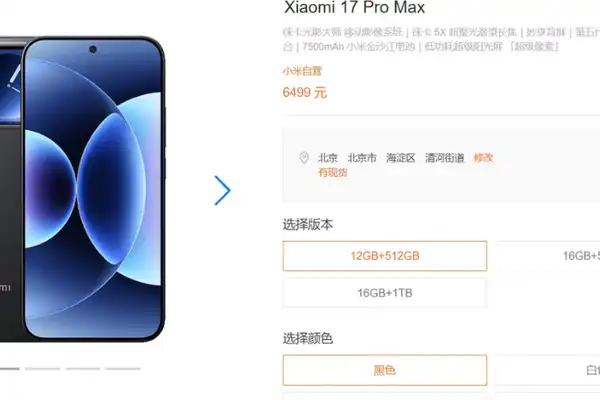
Xiaomi, facing a significant 26.3% year-on-year decline in global smartphone shipments in Q2 2026, has implemented its third price hike of the year. On August 2nd, prices were raised for nine models, including the flagship Mi 17 series (up 400-500 yuan) and Redmi K90/Turbo 5 series (up 300 yuan). This move completes a pattern where cost pressure, originating from surging memory chip prices, has climbed from entry-level to mid-range and now flagship products. The primary driver is a severe supply squeeze on consumer-grade DRAM and NAND flash memory, as major manufacturers like Samsung shift advanced capacity to more profitable HBM for AI applications. According to Xiaomi President Lu Weibing, memory prices for the same configuration have skyrocketed nearly fourfold since Q1 2025, adding roughly 1500 yuan to the cost of a mainstream 12GB+512GB phone. IDC estimates consumer memory costs have risen nearly 300% year-on-year. While the price increases hurt demand and contributed to the sales slump, Xiaomi's strategy of reducing entry-level models and upgrading its product mix also played a role. Domestically, its market share in China fell to 12% (5th place), while leaders Huawei and Apple saw shipments grow over 24%. To mitigate future risks, Xiaomi is accelerating its in-house "Surge" chip development and optimizing memory configurations across its lineup. Xiaomi is not alone; major brands like OPPO, vivo, and Apple have already raised prices in 2026, with industry insiders predicting another round of increases (200-800 yuan) in the second half. A full-scale industry-wide涨价 cycle is underway, forcing both manufacturers and consumers to recalibrate their strategies and purchasing decisions amid sustained cost pressures.

marsbit58m ago

Sales Drop 26% But Prices Rise? Xiaomi's Dilemma

marsbit58m ago

Trading

Spot

Hot Articles

Discussions

Welcome to the HTX Community. Here, you can stay informed about the latest platform developments and gain access to professional market insights. Users' opinions on the price of SOL (SOL) are presented below.

活动图片