Bitcoin Miners Are Waving the White Flag, But Their Stocks Are Soaring

marsbitPublished on 2026-08-03Last updated on 2026-08-03

Abstract

Bitcoin miners are capitulating as evidenced by a sustained drop in network hash rate and a record-steep 19.9% decline in mining difficulty, signaling the shuttering of unprofitable machines. However, in a significant divergence from historical patterns, the stocks of publicly traded mining companies have soared, with one major player gaining over 430% in the past year, even as BTC's price fell roughly 46%. This surge is largely attributed to these companies pivoting toward the more lucrative AI narrative. Simultaneously, miners face a structural squeeze. Daily block reward revenue in BTC terms has hit a new all-time low following the latest halving, with current dollar-denominated daily revenue around $30 million compared to a longer-term average of ~$40 million. Fee revenue remains negligible, covering less than one block's subsidy over a 28-day average and accounting for only about ten minutes of the network's daily security budget. This capitulation cycle is unique: miner stress and crypto price weakness have decoupled due to alternative revenue streams (AI), while the long-term reliance on increasing bitcoin prices to offset shrinking subsidies continues, with fee income still far from filling the impending gap.

Author: Matt Crosby

Compiled by: Plain Blockchain

Bitcoin's total network hash rate has been declining for several consecutive months, and the mining difficulty has just recorded one of the steepest drops on record. Typically, the story isn't complicated: Miners start shutting down their machines because it's no longer economically viable. The exception this time is that the stocks of listed mining companies are experiencing one of their strongest performances in recent years, while BTC itself has been hit hard. In every previous cycle of miner capitulation, miner pressure and price pressure often occurred simultaneously; now the two are diverging, and the market seems not to have fully priced in what this divergence means for the long-term hash rate.

If you're in a hurry, here are the key points:

  • The total network hash rate is emitting one of the longest-lasting miner capitulation signals in Bitcoin's history.

  • Mining difficulty has fallen 19.9% from its peak, the third deepest pullback since the adoption of specialized mining hardware.

  • Despite miners selling thousands of bitcoins, mining company stocks have significantly outperformed BTC over the past year.

  • Block reward income denominated in BTC has just hit a record low for a single day.

  • The average daily transaction fee income over the past 28 days can't even cover the subsidy for one block.

Miner Capitulation Is Indeed Happening

In Bitcoin's history, there are only a handful of hash rate drawdowns that lasted longer than this one. Mining Difficulty is also declining in sync, which precisely shows the protocol mechanism functioning as designed: every 2,016 blocks, roughly every two weeks, the network resets its target difficulty to ensure that block production averages close to ten minutes. With fewer machines participating in the hash computation, the target difficulty naturally decreases. Today, mining difficulty has retreated 19.9% from its peak; since ASICs replaced GPUs as the mainstream mining hardware, only two pullbacks have been deeper.
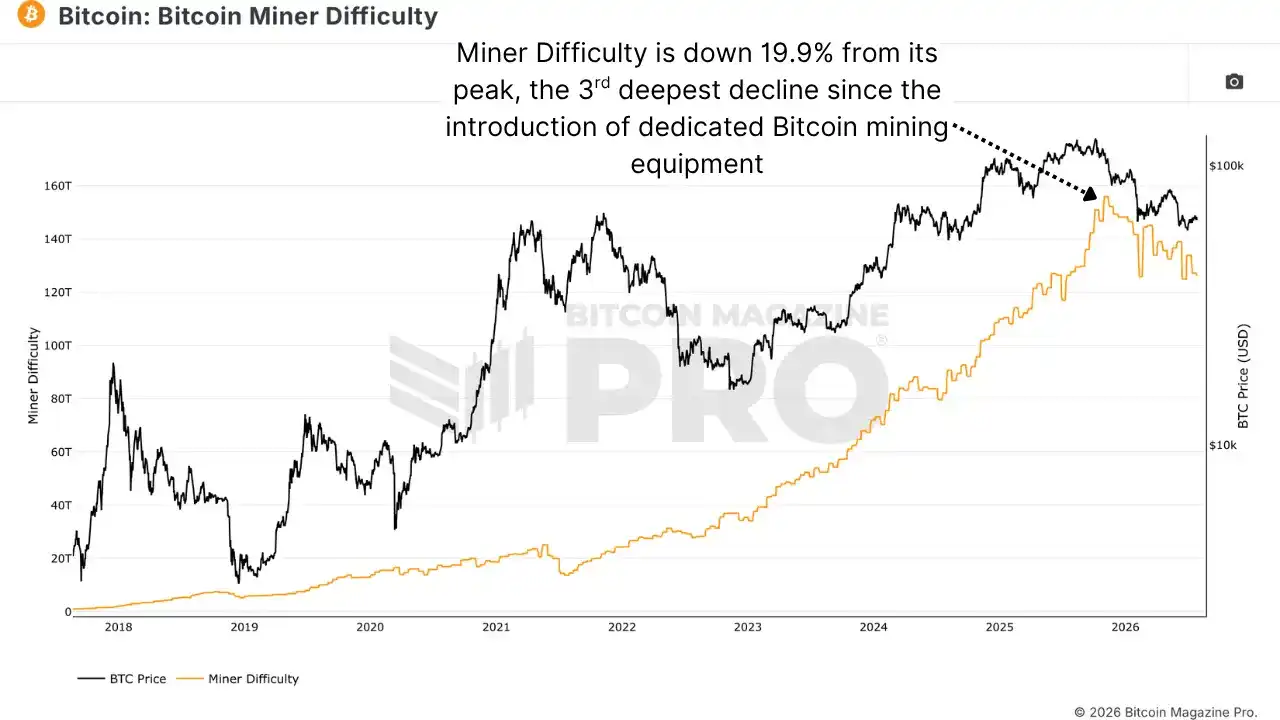
Figure 1: Mining difficulty has retreated 19.9% from its historical peak.

The only two comparable cycles in duration are also similar in length. The deeper one occurred after China's comprehensive crackdown on Bitcoin mining, which was almost the easiest type of event to understand: policy directly forced miners offline, causing a sudden collapse in hash rate, and any observer could deduce the next step—these machines would seek cheaper electricity and reconnect to the network elsewhere.
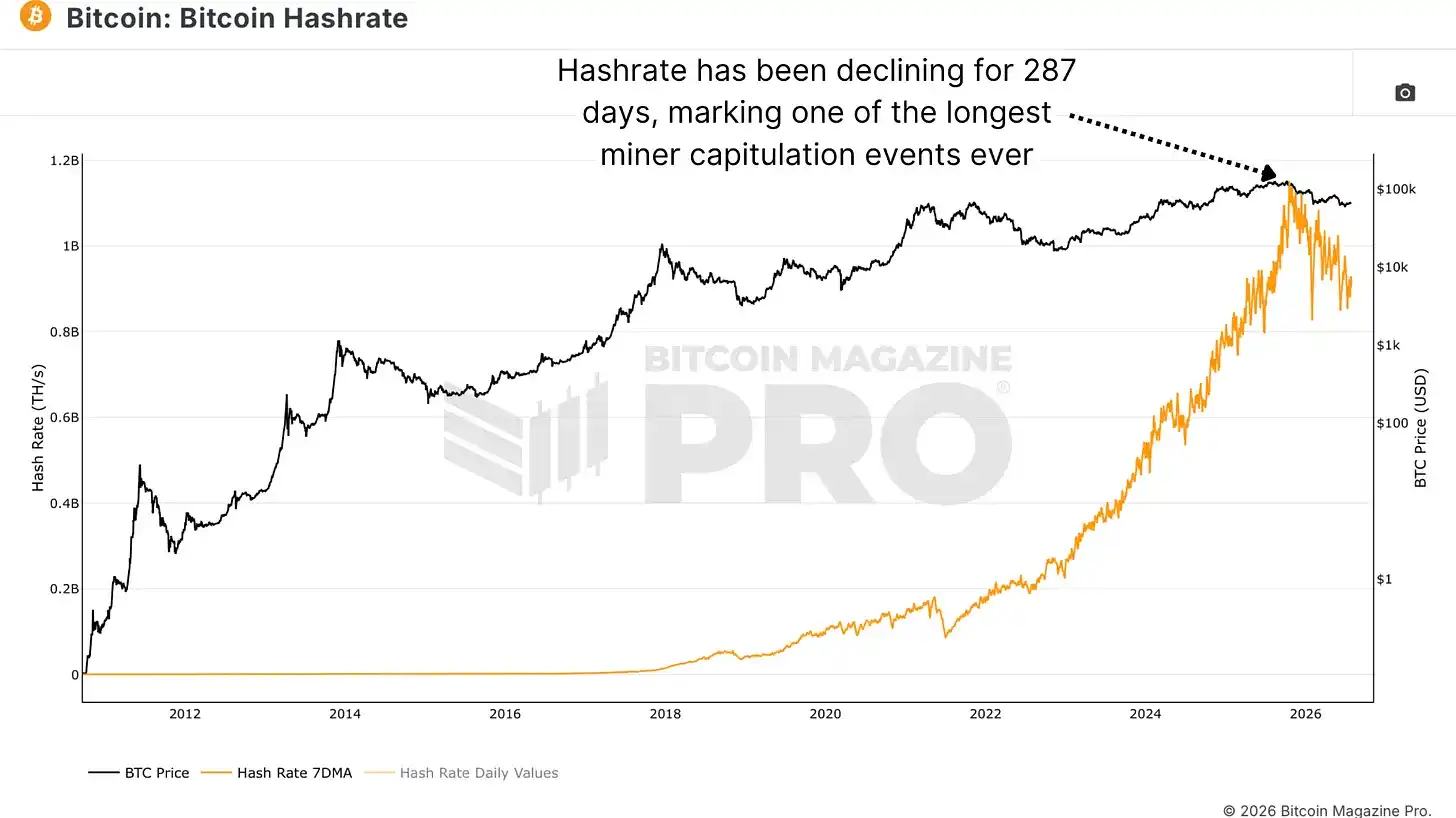
Figure 2: Bitcoin's total network hash rate has been declining for 287 consecutive days.

Why Mining Stocks Are Rising Instead

Over the past year, BTC has declined approximately 46%. Yet, the largest Listed Miners have risen sharply during the same period, with the best performer gaining over 430%. This is not how this group of assets typically behaves. Historically, mining company equity has often been seen as "leveraged Bitcoin," meaning it tends to fall harder during downturns and rise more sharply during upswings. Therefore, such a massive divergence as this is very rare.
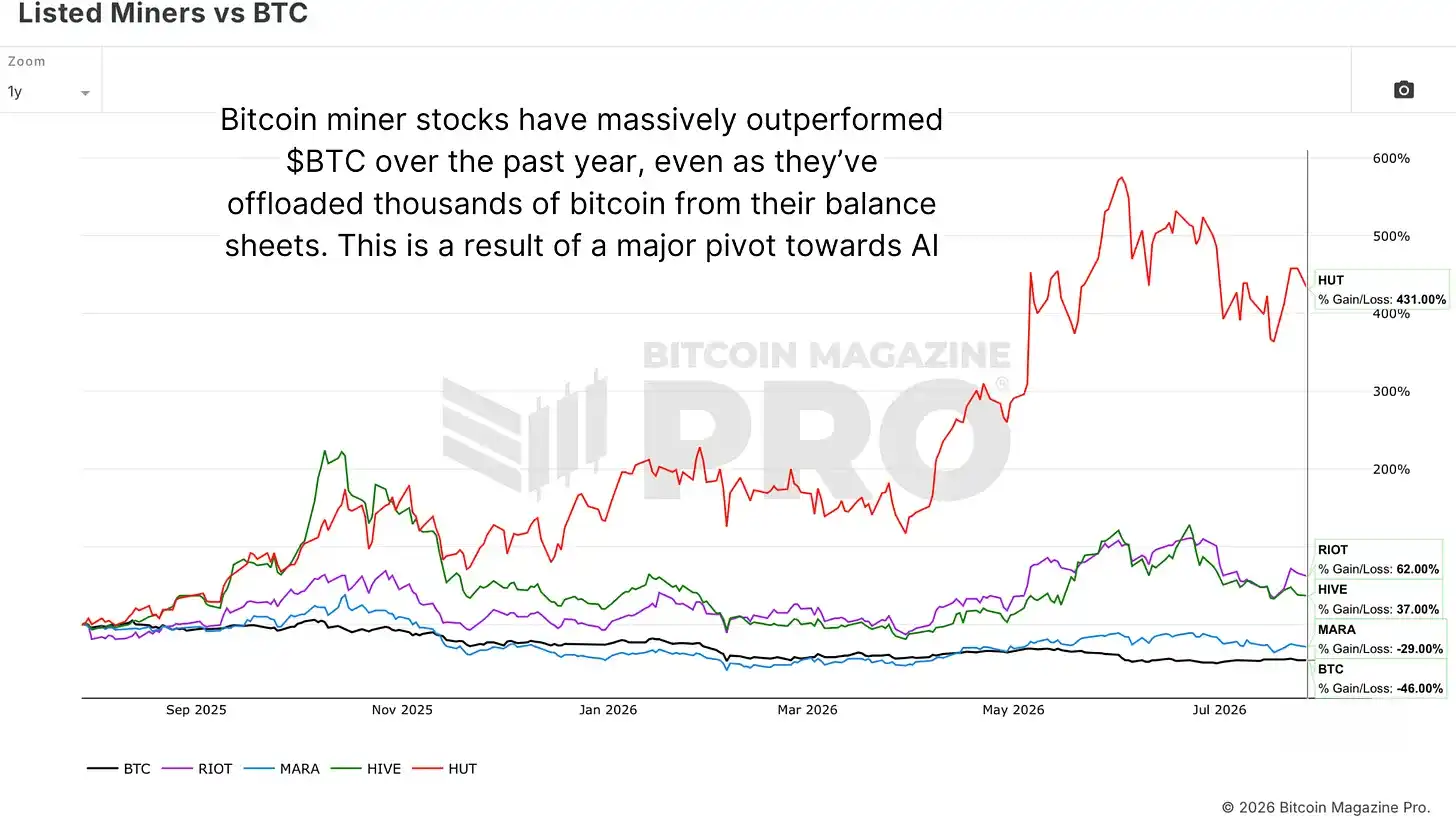
Figure 3: Performance of listed miners relative to BTC over the past year.

What's really driving all this is the AI narrative. For years, Bitcoin and the largest AI ETFs have moved in tandem, with their correlation even reaching 0.8 to 0.9 during some periods. But now that relationship has reversed: AI continues to rise, while Bitcoin weakens.

The Block Subsidy Is Thinning

Miners recently recorded a new historical low for daily Block Reward income denominated in BTC. Part of the reason is the hash rate decline—before the difficulty adjustment catches up, block production becomes slower than ten minutes; but the main reason is simply the protocol operating by its predefined rules. The block subsidy halves every four years and will continue to do so until no new coins can be issued.
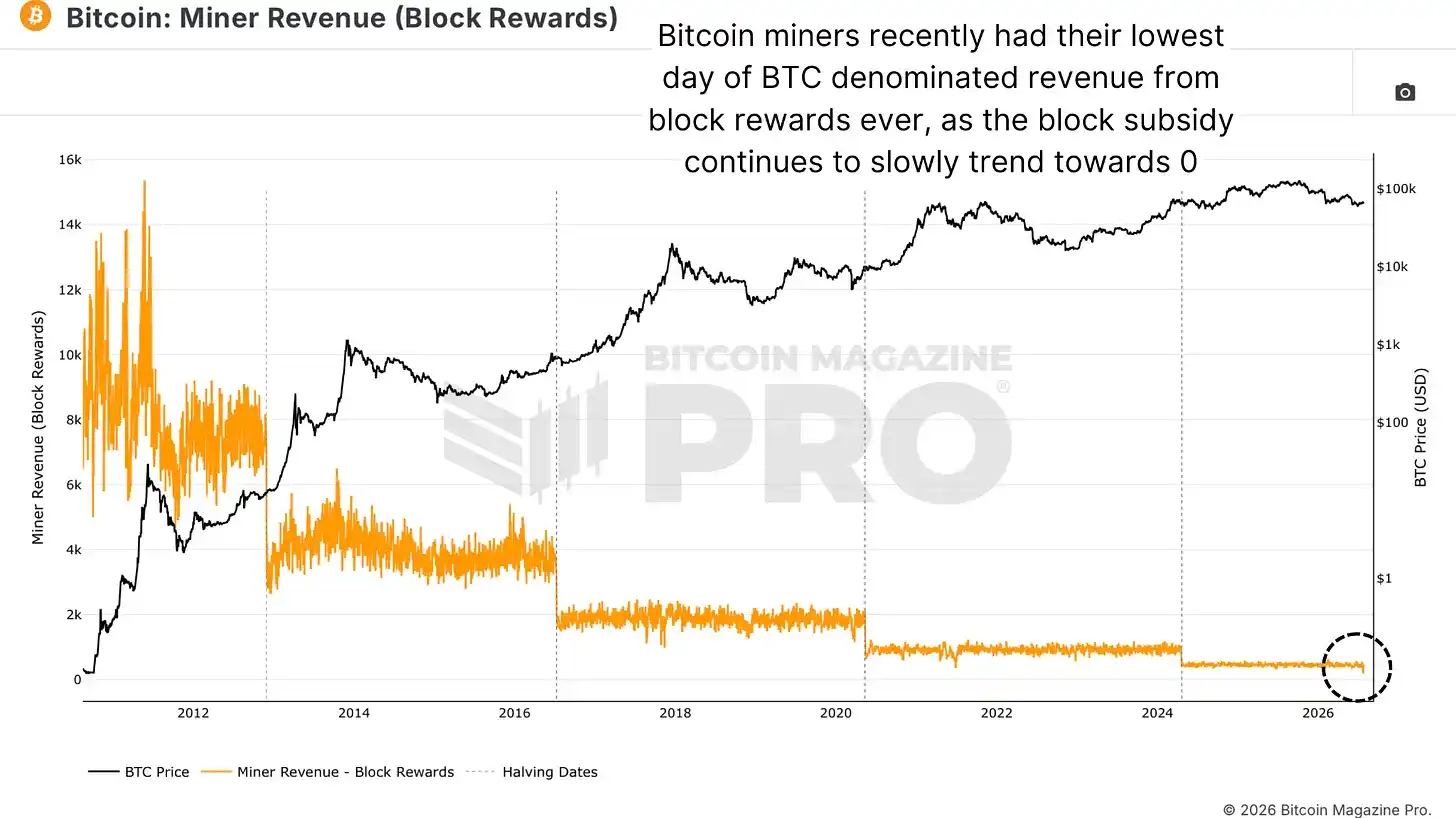
Figure 4: Miners' block reward income denominated in BTC has dropped to a new historical low.

Since the first halving, the same rebuttal has been raised every cycle: The price will compensate. That is, even though fewer coins are produced per block, as long as each coin becomes more valuable, dollar-denominated revenue can still be sustained. So far, this logic has held true. The Puell Multiple, which gauges mining revenue health, is currently around 0.75, meaning current miner revenue is about three-quarters of its average over the past year. In translation, this roughly equates to current daily revenue of about $30 million, compared to a longer-term average closer to $40 million.

Who Will Fill the Gap

The other answer has always been transaction fees, and that was the case from the beginning. One day, the block subsidy will reach zero; at that point, the network security budget must be borne independently by transaction fees, otherwise, as the subsidy disappears, so will the security budget.
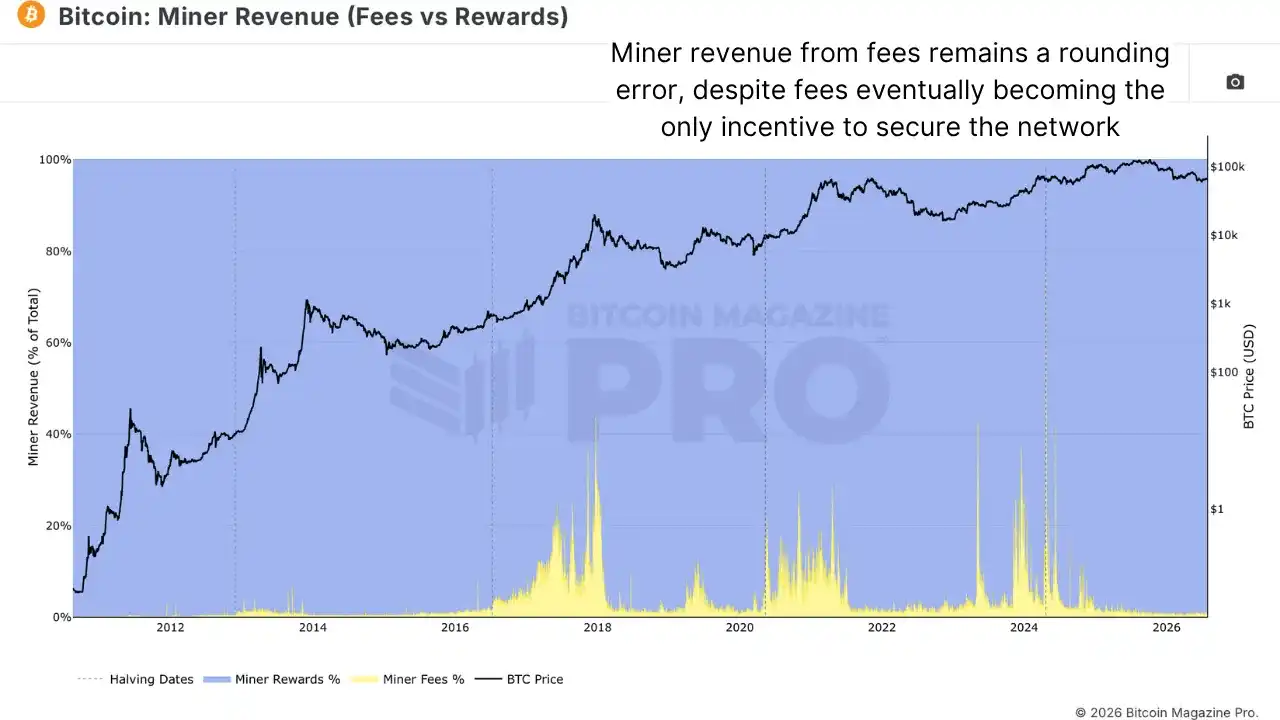
Figure 5: The proportion of miner fee income relative to total miner income.

But reality is still very far from that point. Miners currently earn about $30 million per day, with transaction fees contributing only about $200,000. In other words, the average transaction fee income over the past 28 days can't even cover the subsidy for one block, and the Bitcoin network produces approximately 144 blocks per day. No matter what the future transaction fee market ultimately evolves into, at least for now, the security budget it covers is only sufficient for about ten minutes of network operation.

What This Means

Bitcoin today is certainly far from facing a security risk, and this article is not directly judging the price. However, the shape of this capitulation is clearly different from previous cycles. Miners have simply found a more profitable use for their hardware than mining, and this shift is happening alongside a falling coin price, a thinning block subsidy, and stagnant transaction fee income.

In a bear market, no one wants to hear another pessimistic narrative, and I know this article largely reads that way. On the other hand, the problems that truly need solving are often only seriously confronted during bear markets. In the long run, miner incentive mechanisms will either be consciously designed and patched, or they will continue to rely on higher coin prices to temporarily mask the issues.


Trending Cryptos

Related Questions

QAccording to the article, what is the primary signal indicating that a significant miner capitulation is currently underway in Bitcoin?

AThe primary signal is a sustained decline in Bitcoin's network hash rate and a significant drop in miner difficulty. Hash rate has been falling for 287 days, and miner difficulty has retreated by 19.9% from its peak, which is one of the steepest declines since the advent of ASIC miners.

QWhy have the stocks of major listed Bitcoin mining companies performed strongly over the past year despite the price of BTC falling?

AThe strong performance of listed mining company stocks is largely driven by the AI narrative. These companies are increasingly viewed as having valuable computational infrastructure that can be repurposed or leveraged for AI-related workloads, creating a market valuation disconnect from their core Bitcoin mining profitability.

QWhat record-low metric did Bitcoin miners recently hit in terms of their block reward income?

AMiners recently recorded a new all-time low for daily block reward income denominated in BTC. This is due to a combination of the recent hash rate decline and the pre-programmed, periodic 'halving' events that reduce the block subsidy.

QHow does the current average daily fee income for miners compare to the subsidy of a single Bitcoin block?

AThe average daily fee income for miners over the past 28 days is not even enough to cover the subsidy for a single Bitcoin block. The network produces roughly 144 blocks per day, highlighting the current minimal contribution of transaction fees to overall miner revenue.

QHow does the current miner capitulation cycle differ from historical ones, according to the article's conclusion?

AThe current capitulation cycle is different because it is occurring alongside a divergence where miner stocks are rising while BTC price falls, largely due to the AI narrative. Furthermore, miners are finding more profitable uses for their hardware outside of Bitcoin mining, all while block subsidies are shrinking and fee revenue remains negligible.

Related Reads

1.65 Billion Yuan: Sichuan Power Semiconductor Company Sells Itself

Sichuan-based power semiconductor company Jingyi Semiconductor is being acquired by its customer, Jiangsu-listed power semiconductor firm Suzhou Kaiweite Semiconductor Co., Ltd. ("Kaiweite"), for 1.65 billion yuan. Following the transaction, Jingyi Semiconductor will become a wholly-owned subsidiary of Kaiweite. Kaiweite will pay for the acquisition partly with new shares (approximately 901 million yuan worth) and partly in cash (approximately 749 million yuan). The deal is considered a major asset restructuring as Jingyi Semiconductor's assets and revenue in 2025 were 176.34% and 137.38% of Kaiweite's, respectively. Financially, Kaiweite has reported losses for 2024 and 2025. In contrast, Jingyi Semiconductor has remained profitable. The acquisition is expected to significantly improve Kaiweite's profitability. Jingyi Semiconductor's controlling shareholder and chairman, Yi Kun, along with employee持股 platforms, will hold a 13.28% stake in Kaiweite post-transaction. Founded in 2015 and listed on Shanghai's STAR Market in 2023, Kaiweite is a national-level "Little Giant" specializing in intelligent power semiconductor devices and power integrated chips. Established in 2019, Jingyi Semiconductor is a fabless power semiconductor company and a national-level专精特新重点"Little Giant." Its products, including Intelligent Power Modules (IPM), are supplied to major domestic appliance makers like Midea, Xiaomi, Gree, TCL, and Hisense-Hitachi. The company holds a leading 53.5% market share in China's IPM半桥 module segment for white goods. The strategic acquisition aims to repair Kaiweite's profitability and expand its power semiconductor product portfolio through integration in technology, products, and customer channels.

marsbit7m ago

1.65 Billion Yuan: Sichuan Power Semiconductor Company Sells Itself

marsbit7m ago

Launch Event Turned into a Make-up Ceremony? Why Hasn't Pools.trade Produced a High-Market-Cap Meme Coin Yet?

The article discusses the launch of Pools.trade, Uniswap's new token launch platform on Robinhood Chain, designed as a Meme coin launchpad. Despite generating high initial trading volumes (over $1.5 billion before the official frontend launch), the platform has yet to produce a high-market-cap Meme coin. The piece highlights two primary reasons for this. First, it outlines Pools.trade's features: it offers Instant and Crowd Launch modes, locks liquidity permanently in Uniswap v4 pools, and charges a low 0.25% transaction fee (compared to 1% on competitors like Pons and Flap), with most fees reinvested into liquidity. Second, it identifies a key problem: a lack of perceived fairness. The two most notable coins on the platform, FRONG (a "frog mascot" coin) and POOLS (a platform namesake), were both minted days before Uniswap's official countdown began. This "pre-minting" or "insider" controversy has dampened community FOMO (Fear Of Missing Out) and trust, causing their market caps to fall from peaks of $18 million and $4 million, respectively. The article argues that fairness is foundational for Meme coin success, and its absence has hindered viral growth. In conclusion, while Pools.trade benefits from Uniswap's existing user base and Robinhood Chain's popularity, its current lack of a fair-launch, high-engagement narrative has prevented a breakout hit. However, the author suggests that with its inherent traffic, such a success might not be far off.

Odaily星球日报57m ago

Launch Event Turned into a Make-up Ceremony? Why Hasn't Pools.trade Produced a High-Market-Cap Meme Coin Yet?

Odaily星球日报57m ago

Trading

Spot

Hot Articles

What is $BITCOIN

DIGITAL GOLD ($BITCOIN): A Comprehensive Analysis Introduction to DIGITAL GOLD ($BITCOIN) DIGITAL GOLD ($BITCOIN) is a blockchain-based project operating on the Solana network, which aims to combine the characteristics of traditional precious metals with the innovation of decentralized technologies. While it shares a name with Bitcoin, often referred to as “digital gold” due to its perception as a store of value, DIGITAL GOLD is a separate token designed to create a unique ecosystem within the Web3 landscape. Its goal is to position itself as a viable alternative digital asset, although specifics regarding its applications and functionalities are still developing. What is DIGITAL GOLD ($BITCOIN)? DIGITAL GOLD ($BITCOIN) is a cryptocurrency token explicitly designed for use on the Solana blockchain. In contrast to Bitcoin, which provides a widely recognized value storage role, this token appears to focus on broader applications and characteristics. Notable aspects include: Blockchain Infrastructure: The token is built on the Solana blockchain, known for its capacity to handle high-speed and low-cost transactions. Supply Dynamics: DIGITAL GOLD has a maximum supply capped at 100 quadrillion tokens (100P $BITCOIN), although details regarding its circulating supply are currently undisclosed. Utility: While precise functionalities are not explicitly outlined, there are indications that the token could be utilized for various applications, potentially involving decentralized applications (dApps) or asset tokenization strategies. Who is the Creator of DIGITAL GOLD ($BITCOIN)? At present, the identity of the creators and development team behind DIGITAL GOLD ($BITCOIN) remains unknown. This situation is typical among many innovative projects within the blockchain space, particularly those aligning with decentralized finance and meme coin phenomena. While such anonymity may foster a community-driven culture, it intensifies concerns about governance and accountability. Who are the Investors of DIGITAL GOLD ($BITCOIN)? The available information indicates that DIGITAL GOLD ($BITCOIN) does not have any known institutional backers or prominent venture capital investments. The project seems to operate on a peer-to-peer model focused on community support and adoption rather than traditional funding routes. Its activity and liquidity are primarily situated on decentralized exchanges (DEXs), such as PumpSwap, rather than established centralized trading platforms, further highlighting its grassroots approach. How DIGITAL GOLD ($BITCOIN) Works The operational mechanics of DIGITAL GOLD ($BITCOIN) can be elaborated on based on its blockchain design and network attributes: Consensus Mechanism: By leveraging Solana’s unique proof-of-history (PoH) combined with a proof-of-stake (PoS) model, the project ensures efficient transaction validation contributing to the network's high performance. Tokenomics: While specific deflationary mechanisms have not been extensively detailed, the vast maximum token supply implies that it may cater to microtransactions or niche use cases that are still to be defined. Interoperability: There exists the potential for integration with Solana’s broader ecosystem, including various decentralized finance (DeFi) platforms. However, the details regarding specific integrations remain unspecified. Timeline of Key Events Here is a timeline that highlights significant milestones concerning DIGITAL GOLD ($BITCOIN): 2023: The initial deployment of the token occurs on the Solana blockchain, marked by its contract address. 2024: DIGITAL GOLD gains visibility as it becomes available for trading on decentralized exchanges like PumpSwap, allowing users to trade it against SOL. 2025: The project witnesses sporadic trading activity and potential interest in community-led engagements, although no noteworthy partnerships or technical advancements have been documented as of yet. Critical Analysis Strengths Scalability: The underlying Solana infrastructure supports high transaction volumes, which could enhance the utility of $BITCOIN in various transaction scenarios. Accessibility: The potential low trading price per token could attract retail investors, facilitating wider participation due to fractional ownership opportunities. Risks Lack of Transparency: The absence of publicly known backers, developers, or an audit process may yield skepticism regarding the project's sustainability and trustworthiness. Market Volatility: The trading activity is heavily reliant on speculative behavior, which can result in significant price volatility and uncertainty for investors. Conclusion DIGITAL GOLD ($BITCOIN) emerges as an intriguing yet ambiguous project within the rapidly evolving Solana ecosystem. While it attempts to leverage the “digital gold” narrative, its departure from Bitcoin's established role as a store of value underscores the need for a clearer differentiation of its intended utility and governance structure. Future acceptance and adoption will likely depend on addressing the current opacity and defining its operational and economic strategies more explicitly. Note: This report encompasses synthesised information available as of October 2023, and developments may have transpired beyond the research period.

1.6k Total ViewsPublished 2025.05.13Updated 2025.05.13

What is $BITCOIN

Discussions

Welcome to the HTX Community. Here, you can stay informed about the latest platform developments and gain access to professional market insights. Users' opinions on the price of BTC (BTC) are presented below.

活动图片