Bitcoin Holders Pull Coins Off Exchanges, Data Points To Steady Buying

bitcoinistPublished on 2026-03-25Last updated on 2026-03-25

Abstract

Bitcoin is experiencing a pattern of higher highs and higher lows, suggesting a potential shift in market direction. Throughout March, data from CryptoQuant shows consistent outflows from exchanges, indicating investors are accumulating and withdrawing BTC rather than selling. This behavior points to long-term confidence and accumulation, but not enough to break Bitcoin out of its months-long tight trading range. Analysts note that while unrealized losses have eased slightly, market sentiment remains fragile. Bitcoin was trading around $71,215 at the time of publication.

Bitcoin has been making higher highs and higher lows at least twice this month — a pattern that technical traders watch closely as a sign that selling pressure may be fading and a new direction could be forming.

Exchange Outflows Dominate March

For most of March, more Bitcoin has been leaving crypto exchanges than entering them. The exception was a brief spike in inflows just before Bitcoin touched a six-week high of $76,000 on March 17, according to data from CryptoQuant.

Since then, the outflow trend resumed. When coins are withdrawn from exchanges, it typically signals that holders are not planning to sell. Deposits, by contrast, suggest the opposite — investors moving assets onto platforms where they can quickly convert them to cash or stablecoins.

CryptoQuant analyst Darkfost said the data tells a clear story. “This persistent outflow suggests genuine accumulation by investors, who continue to buy and withdraw their BTC from exchange platforms,” he wrote.

He added that Bitcoin is still working through what he described as a liquidation phase, but the steady outflow has continued regardless.

Accumulation Without A Clear Trend

The buying is real, analysts say, but it has not been strong enough to push Bitcoin out of the tight range it has been trading in for months. Darkfost described the demand as an indication of ongoing accumulation rather than a signal that a major move is imminent.

BTCUSD now trading at $71,336. Chart: TradingView

The range-bound price action, he suggested, is partly a result of this dynamic — investors steadily absorbing supply without enough force to break the market in either direction.

Nick Ruck, director of LVRG Research, said the outflows point to long-term holders building positions rather than short-term traders chasing price. Removing Bitcoin from centralized platforms, he said, shows that holders are not interested in selling to protect against price swings.

That behavior, based on his read of the data, reflects growing confidence in Bitcoin’s underlying fundamentals despite uncertain market conditions.
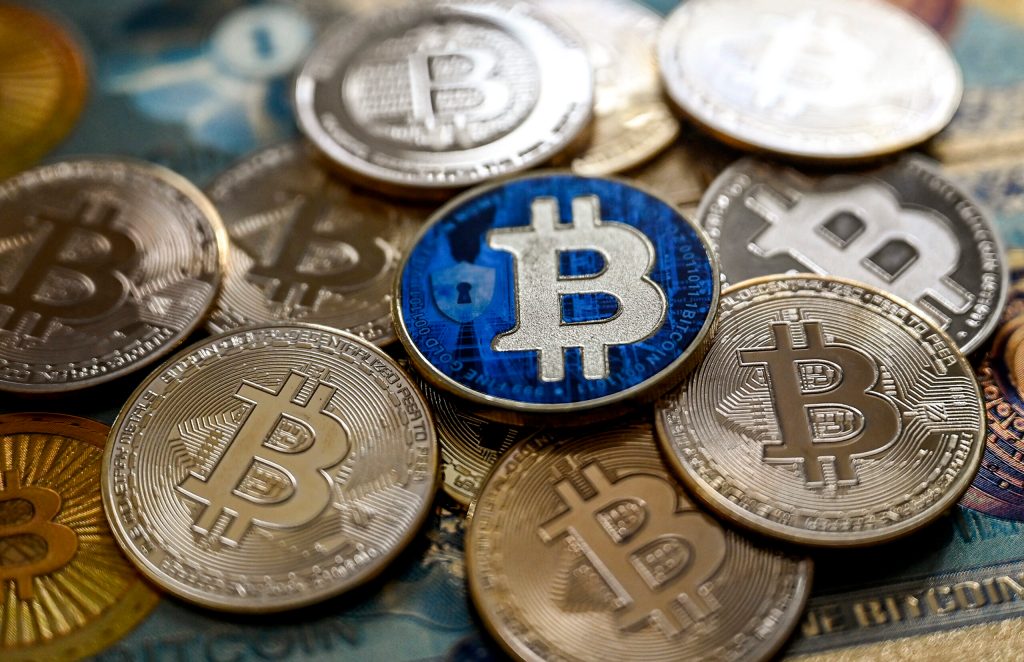
Photo by Ozan Kose /AFP via Getty Images

Sentiment Still Fragile Despite Stabilization Signs

On-chain data firm Glassnode noted in its weekly summary that unrealized losses across the market have eased slightly. The firm called it a modest improvement but stopped short of declaring a recovery, warning that overall sentiment remains strained. Stabilization, its analysts said, is tentative at best.

Bitcoin was trading around $71,215 at the time of publication, up roughly 0.20% on the day.

Featured image from Pexels, chart from TradingView

Related Questions

QWhat does the persistent outflow of Bitcoin from exchanges typically signal according to the article?

AThe persistent outflow of Bitcoin from exchanges typically signals that holders are not planning to sell and are instead engaging in genuine long-term accumulation.

QAccording to CryptoQuant analyst Darkfost, what does the data suggest about investor behavior?

ACryptoQuant analyst Darkfost stated that the data suggests 'genuine accumulation by investors, who continue to buy and withdraw their BTC from exchange platforms'.

QWhy has the Bitcoin price remained range-bound despite the steady buying, as suggested in the article?

AThe price has remained range-bound because investors are steadily absorbing supply without applying enough force to break the market in either direction, indicating accumulation rather than an imminent major price move.

QHow did Nick Ruck from LVRG Research interpret the meaning of investors moving Bitcoin off exchanges?

ANick Ruck interpreted this behavior as long-term holders building positions, showing they are not interested in selling to protect against price swings and reflecting growing confidence in Bitcoin's fundamentals.

QWhat was Glassnode's assessment of market sentiment and unrealized losses in its weekly summary?

AGlassnode noted that unrealized losses had eased slightly, calling it a modest improvement, but warned that overall sentiment remains strained and any stabilization is tentative at best.

Related Reads

Michael Saylor's Latest Article: Bitcoin Must Find Balance Between Uniqueness and Universal Value

Michael Saylor outlines four key Bitcoin ideologies shaping its future: * **Bitcoin Maximalists** see Bitcoin as the dominant digital monetary network and a breakthrough in economic empowerment, emphasizing its superior property rights and role as a sound money solution. * **Bitcoin Capitalists** focus on integration, believing Bitcoin must embed into the global economy—through institutions, capital markets, and financial products—to reach its full potential as digital capital. * **Bitcoin Technologists** advocate for continuous protocol improvements in scalability, privacy, and security to adapt to evolving needs and threats, while acknowledging the high bar for change. * **Bitcoin Fundamentalists** guard Bitcoin's core principles of self-custody, decentralization, and censorship resistance, warning against dilution from institutions or risky modifications. Saylor argues that a healthy Bitcoin ecosystem requires a balance of these perspectives. Bitcoin's path forward involves disciplined expansion: preserving its immutable core (Fundamentalist insight), recognizing its dominant status (Maximalist view), integrating with the global economy (Capitalist drive), and enabling careful innovation, primarily in higher layers (Technologist role). The challenge is to maintain Bitcoin's unique properties while making it useful for the world, ensuring it remains Bitcoin as it grows.

Foresight News14m ago

Michael Saylor's Latest Article: Bitcoin Must Find Balance Between Uniqueness and Universal Value

Foresight News14m ago

Reddit Weekly Hot Stock Watch: RKLB/LUNR/ASTS Plunge Collectively, Is the Space Sector Still Worth Considering?

Reddit's stock communities witnessed a concentrated surge in discussion around space stocks last week, with SPCE, RKLB, LUNR, and ASTS leading the chatter. This often signals an underlying catalyst for investor attention. However, despite being grouped as "space plays," these companies have vastly different fundamentals and recent performances. While SPCE (Virgin Galactic) saw a 22% single-day surge—potentially fueled by short covering and fallout from Blue Origin's rocket test anomaly—the other three stocks declined sharply. RKLB dropped 15%, LUNR fell 13%, and ASTS was down 7%. This divergence highlights they are not a monolithic sector. The downturn for RKLB, LUNR, and ASTS stemmed from multiple headwinds converging: Blue Origin's New Glenn rocket explosion (directly impacting ASTS's launch plans), anticipation of SpaceX's massive IPO drawing funds away from these "alternative" public space stocks, and insider selling at RKLB after significant rallies. A closer look reveals key differences: RKLB stands out with substantial, growing revenue ($113.9M in Q1) and a $2.2B backlog, though its high valuation (~80x Forward P/S) prices in success for its upcoming Neutron rocket. LUNR's reported revenue growth is largely acquisition-driven, with its core moon landing business facing a crucial test with the upcoming IM-3 mission. ASTS has a large potential market in space-based cellular connectivity but faces significant execution risk, especially after the Blue Origin launch setback. SPCE, despite high discussion volume, has minimal revenue and its recent spike appears driven more by sentiment than fundamentals. The analysis suggests it's premature to call a "buying opportunity" for the sector broadly. RKLB is considered the most fundamentally sound but may be more attractive at a lower price point ($96-$102). For the others, investors are advised to wait for specific catalysts: LUNR's IM-3 mission outcome, clarity on ASTS's revised launch timeline, and for SPCE, to avoid the speculative frenzy. The long-term space thesis remains, but short-term valuations have run ahead of fundamentals for most names.

marsbit29m ago

Reddit Weekly Hot Stock Watch: RKLB/LUNR/ASTS Plunge Collectively, Is the Space Sector Still Worth Considering?

marsbit29m ago

Why Does Crypto Always Build 'Casinos', But Rarely Creates 'Indispensable Products'?

The article explores why cryptocurrency has primarily fostered speculation rather than essential, "sticky" consumer products. It introduces the concept of "sofalarity"—the point where a platform's convenience becomes so ingrained that leaving feels unthinkable. While Big Tech creates this lock-in through ecosystem control and data harvesting, crypto lacks equivalent everyday utility. Its appeal hinges on the variable rewards of price volatility, akin to gambling, which drives engagement but not dependency. The author argues crypto's core promise—fixing opaque backend systems like correspondent banking—solves problems most people never see or feel, failing to deliver a tangible "aha moment" of improved daily life. This need for explanation hinders mass adoption. Meanwhile, platforms like Google and Meta monetize vast behavioral data, a treasure trove crypto's transparent ledgers (recording only financial transactions) cannot match for predictive insight. The piece further questions whether crypto's potential lies in consumer super-apps or, more plausibly, in becoming enterprise-grade infrastructure—modern settlement rails. It concludes with a critical look at Real-World Asset (RWA) tokenization, suggesting it may merely digitize and accelerate corporate extraction (e.g., in housing or healthcare) rather than democratize access, as the technology itself is a neutral tool. True disruption, the author implies, requires building sovereign systems outside exploitative platforms.

marsbit30m ago

Why Does Crypto Always Build 'Casinos', But Rarely Creates 'Indispensable Products'?

marsbit30m ago

Trading

Spot
Futures

Hot Articles

What is $BITCOIN

DIGITAL GOLD ($BITCOIN): A Comprehensive Analysis Introduction to DIGITAL GOLD ($BITCOIN) DIGITAL GOLD ($BITCOIN) is a blockchain-based project operating on the Solana network, which aims to combine the characteristics of traditional precious metals with the innovation of decentralized technologies. While it shares a name with Bitcoin, often referred to as “digital gold” due to its perception as a store of value, DIGITAL GOLD is a separate token designed to create a unique ecosystem within the Web3 landscape. Its goal is to position itself as a viable alternative digital asset, although specifics regarding its applications and functionalities are still developing. What is DIGITAL GOLD ($BITCOIN)? DIGITAL GOLD ($BITCOIN) is a cryptocurrency token explicitly designed for use on the Solana blockchain. In contrast to Bitcoin, which provides a widely recognized value storage role, this token appears to focus on broader applications and characteristics. Notable aspects include: Blockchain Infrastructure: The token is built on the Solana blockchain, known for its capacity to handle high-speed and low-cost transactions. Supply Dynamics: DIGITAL GOLD has a maximum supply capped at 100 quadrillion tokens (100P $BITCOIN), although details regarding its circulating supply are currently undisclosed. Utility: While precise functionalities are not explicitly outlined, there are indications that the token could be utilized for various applications, potentially involving decentralized applications (dApps) or asset tokenization strategies. Who is the Creator of DIGITAL GOLD ($BITCOIN)? At present, the identity of the creators and development team behind DIGITAL GOLD ($BITCOIN) remains unknown. This situation is typical among many innovative projects within the blockchain space, particularly those aligning with decentralized finance and meme coin phenomena. While such anonymity may foster a community-driven culture, it intensifies concerns about governance and accountability. Who are the Investors of DIGITAL GOLD ($BITCOIN)? The available information indicates that DIGITAL GOLD ($BITCOIN) does not have any known institutional backers or prominent venture capital investments. The project seems to operate on a peer-to-peer model focused on community support and adoption rather than traditional funding routes. Its activity and liquidity are primarily situated on decentralized exchanges (DEXs), such as PumpSwap, rather than established centralized trading platforms, further highlighting its grassroots approach. How DIGITAL GOLD ($BITCOIN) Works The operational mechanics of DIGITAL GOLD ($BITCOIN) can be elaborated on based on its blockchain design and network attributes: Consensus Mechanism: By leveraging Solana’s unique proof-of-history (PoH) combined with a proof-of-stake (PoS) model, the project ensures efficient transaction validation contributing to the network's high performance. Tokenomics: While specific deflationary mechanisms have not been extensively detailed, the vast maximum token supply implies that it may cater to microtransactions or niche use cases that are still to be defined. Interoperability: There exists the potential for integration with Solana’s broader ecosystem, including various decentralized finance (DeFi) platforms. However, the details regarding specific integrations remain unspecified. Timeline of Key Events Here is a timeline that highlights significant milestones concerning DIGITAL GOLD ($BITCOIN): 2023: The initial deployment of the token occurs on the Solana blockchain, marked by its contract address. 2024: DIGITAL GOLD gains visibility as it becomes available for trading on decentralized exchanges like PumpSwap, allowing users to trade it against SOL. 2025: The project witnesses sporadic trading activity and potential interest in community-led engagements, although no noteworthy partnerships or technical advancements have been documented as of yet. Critical Analysis Strengths Scalability: The underlying Solana infrastructure supports high transaction volumes, which could enhance the utility of $BITCOIN in various transaction scenarios. Accessibility: The potential low trading price per token could attract retail investors, facilitating wider participation due to fractional ownership opportunities. Risks Lack of Transparency: The absence of publicly known backers, developers, or an audit process may yield skepticism regarding the project's sustainability and trustworthiness. Market Volatility: The trading activity is heavily reliant on speculative behavior, which can result in significant price volatility and uncertainty for investors. Conclusion DIGITAL GOLD ($BITCOIN) emerges as an intriguing yet ambiguous project within the rapidly evolving Solana ecosystem. While it attempts to leverage the “digital gold” narrative, its departure from Bitcoin's established role as a store of value underscores the need for a clearer differentiation of its intended utility and governance structure. Future acceptance and adoption will likely depend on addressing the current opacity and defining its operational and economic strategies more explicitly. Note: This report encompasses synthesised information available as of October 2023, and developments may have transpired beyond the research period.

363 Total ViewsPublished 2025.05.13Updated 2025.05.13

What is $BITCOIN

Discussions

Welcome to the HTX Community. Here, you can stay informed about the latest platform developments and gain access to professional market insights. Users' opinions on the price of BTC (BTC) are presented below.

活动图片