Analyzing Bitcoin’s price rebound: Could it trigger BTC’s $80K rally?

AmbcryptoPublished on 2026-03-25Last updated on 2026-04-24

Abstract

Could it trigger BTC’s $80K rally?

The volatility in the aftermath of the announcement of the U.S.-Iran peace talks that never happened saw Bitcoin [BTC] rally 3.85% in five minutes on the 23rd of March. Bitcoin shot higher from $68,574 to $71,216 and reached a local high of $71,817 during Monday’s New York trading session.

The move broke past the “No-trade zone” that crypto analyst Ali Martinez pointed out in a post on X. There were 1.72 million Bitcoin transacted between $65.6k and $70.6k, making it a hotly contested zone.

Bitcoin was once again trading within this area. However, the Bitcoin buying opportunity highlighted last weekend is still viable based on realized price metrics.

Decoding BTC’s defense of the $68k zone

Crypto analyst Axel Adler Jr argued that the defense of the $68k level could see a rally to $80k commence. The reasoning revolved around the realized price.
Source: Axel Adler Jr

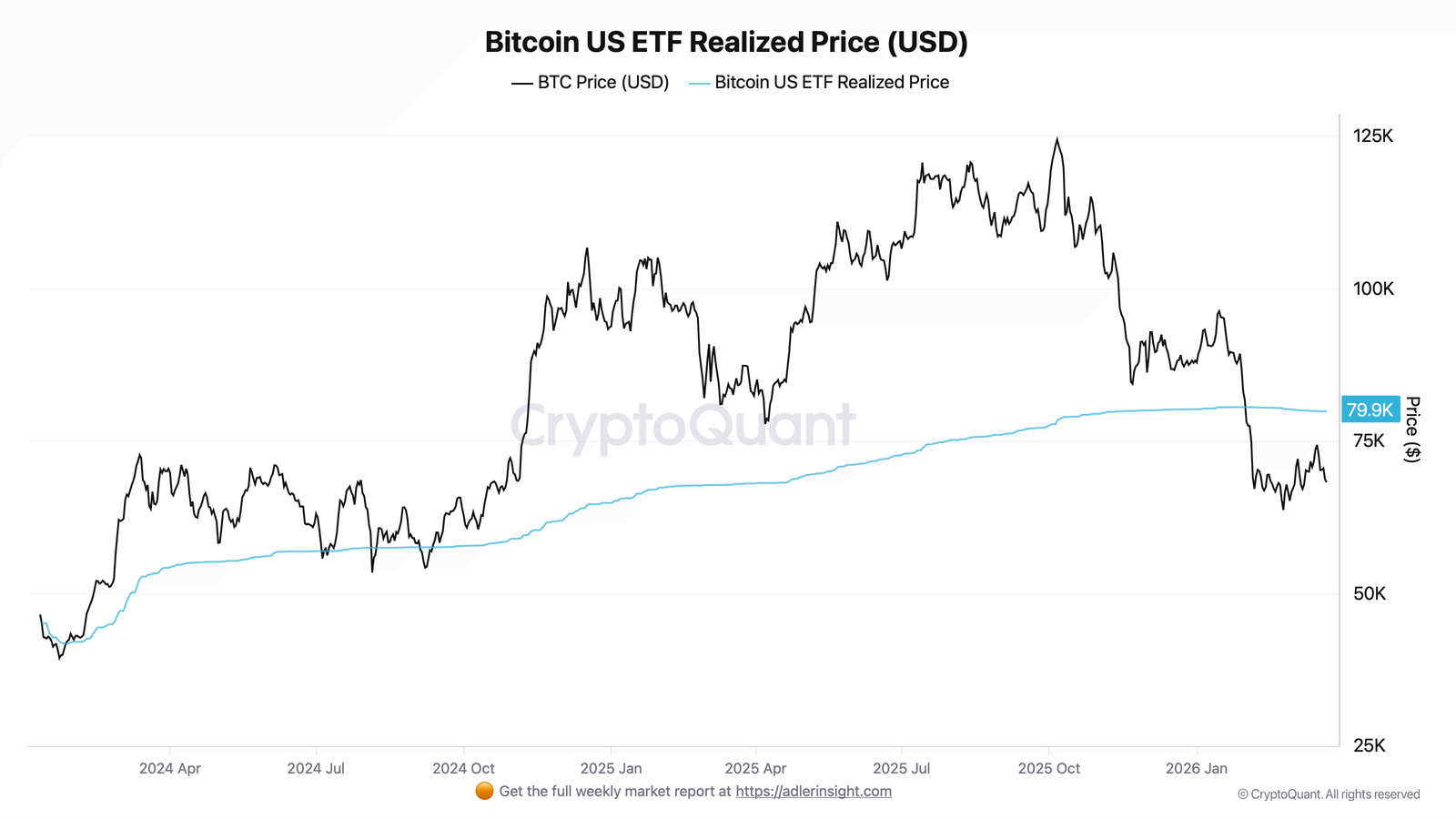
The ETF realized price was at $79.9k, while the Bitcoin spot price was at $70.7k. This was a discount of around 11.5%. At the same time, the capital flows into the ETFs in the past month only brought the realized price down from $80.5k to $79.9k. In other words, the new capital inflows over the past month were too weak to meaningfully shift the aggregate cost basis lower.

As such, the $79.9k area will be a stern resistance in case of a Bitcoin rally, unless ETF capital inflows increase dramatically.
Source: Axel Adler Jr

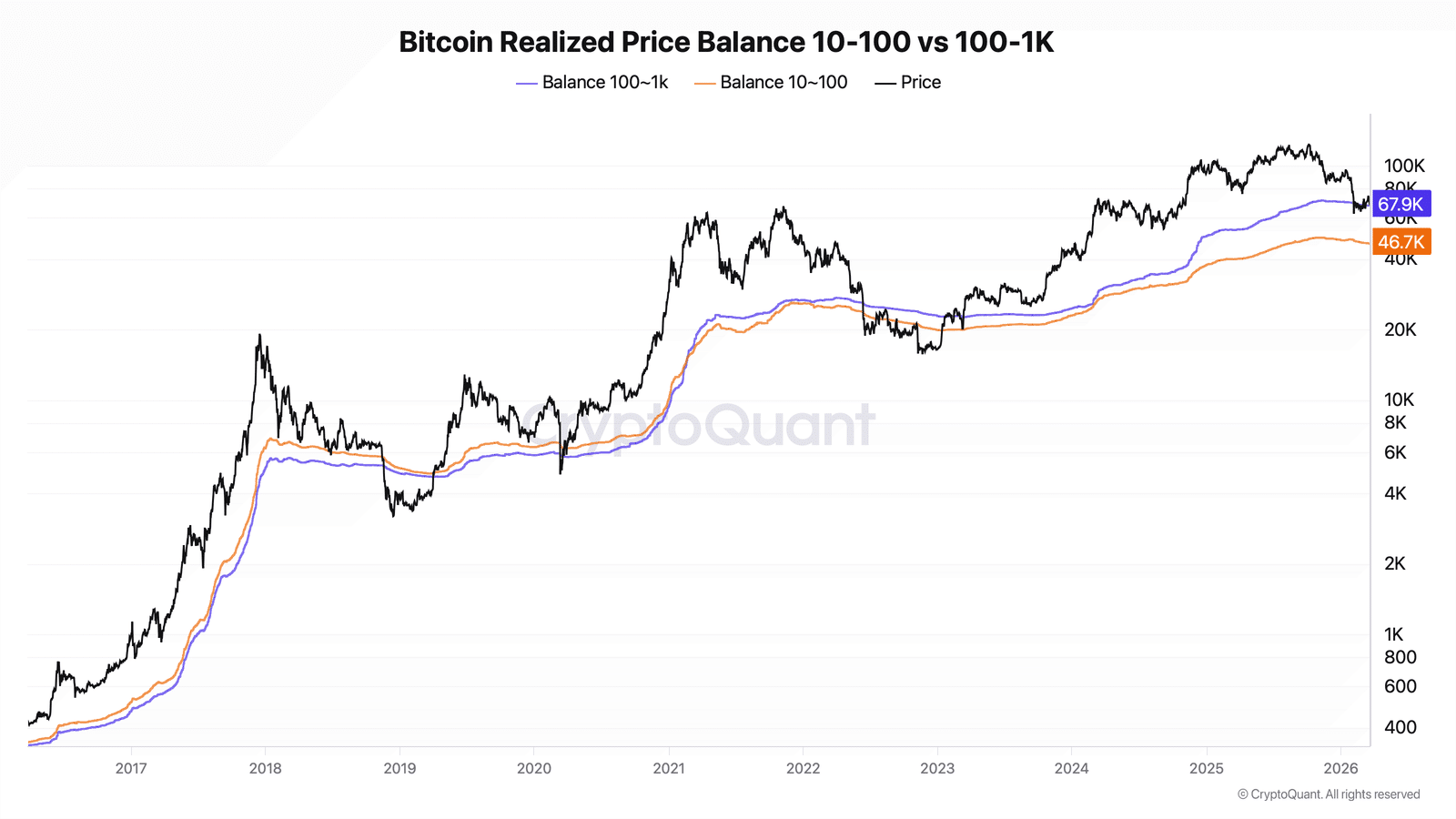
The cost basis of the cohort of Bitcoin holders with 100-1k BTC was at $67.9k. The trading session on the 23rd of March saw the leading crypto briefly drop to $67.4k before rebounding back above $70k.

The defense of the 100-1k holder cohort’s realized price underlined the resilience of the holders. A move below this price level can lead to more nervousness from the largest holders, which could add to the pressure on Bitcoin.
Source: CryptoQuant

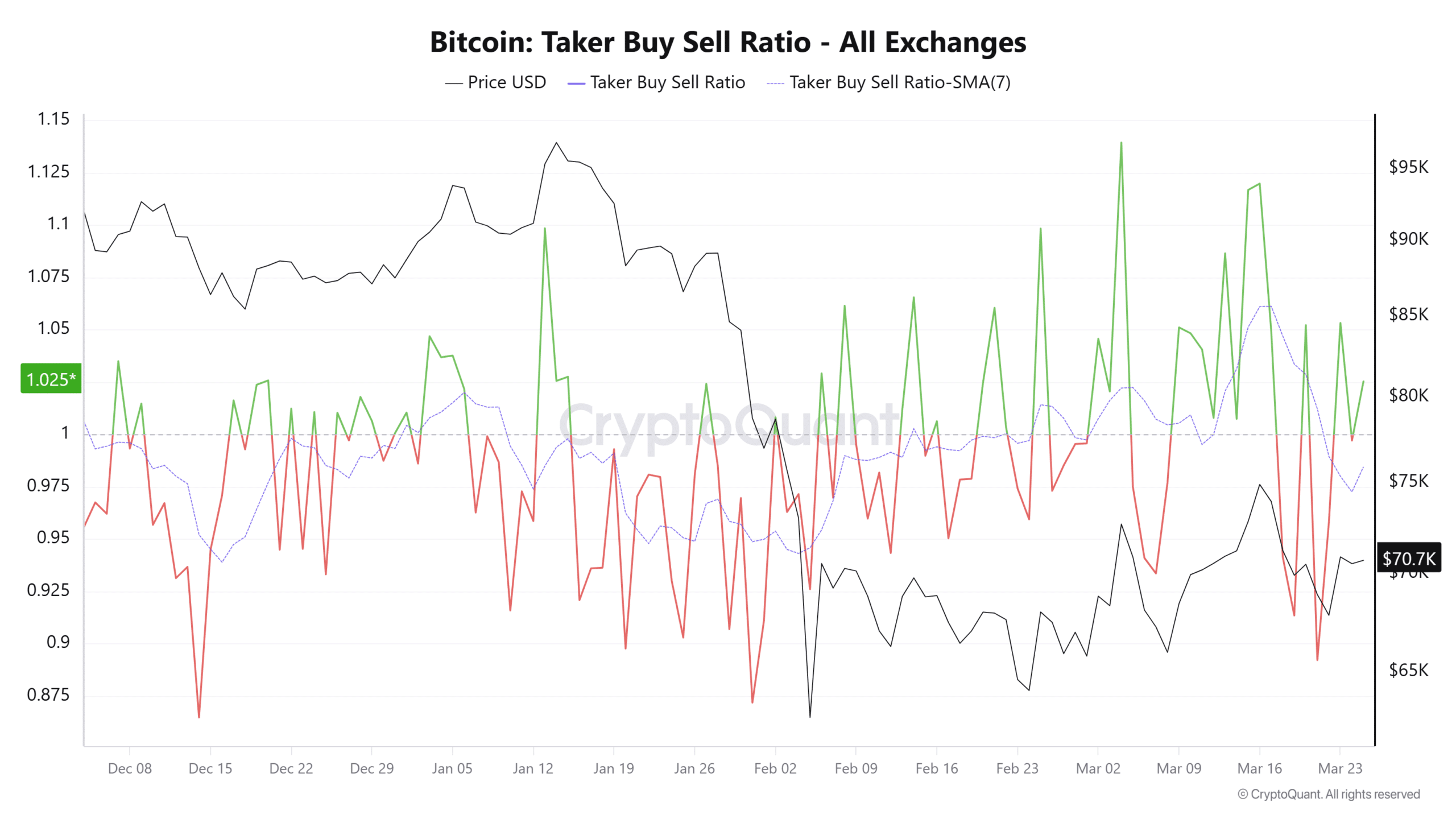
The Bitcoin bulls’ position seemed tenuous on the 23rd of March, when the Taker Buy-Sell ratio briefly fell below 1. It has climbed to 1.025 at the time of writing, although the 7-day moving average was below 1.

Over the past month, the 7SMA has been greater than 1 to show sustained BTC taker buying, driving prices higher. An increase in the taker ratio could be another favorable sign for the short-term bulls.

Final Summary

  • The Bitcoin ETF and large holder cohort realized prices shed light on where the next BTC price trend could be headed.
  • The uptick in the taker buy/sell ratio after Monday’s volatility was another point in favor of the short-term bulls.


Related Questions

QWhat was the immediate price impact on Bitcoin following the U.S.-Iran peace talks announcement on March 23rd?

ABitcoin rallied 3.85% in five minutes, rising from $68,574 to $71,216, and reached a local high of $71,817.

QAccording to Axel Adler Jr, what key price level's defense could trigger a rally to $80k, and what metric supports this?

AThe defense of the $68k level could trigger a rally to $80k, supported by the realized price metric, with the ETF realized price at $79.9k.

QWhat is the significance of the 'No-trade zone' between $65.6k and $70.6k mentioned by analyst Ali Martinez?

AIt is a hotly contested zone where 1.72 million Bitcoin were transacted, making it a critical area for price movement and resistance.

QHow did the Taker Buy-Sell ratio behave on March 23rd, and what does it indicate for Bitcoin bulls?

AThe Taker Buy-Sell ratio briefly fell below 1 but climbed to 1.025 later, indicating initial bearish pressure followed by a recovery favoring short-term bulls.

QWhat is the cost basis for the Bitcoin holder cohort with 100-1k BTC, and why is it important?

AThe cost basis is $67.9k, and its defense underscores holder resilience; a break below could increase nervousness among large holders and add selling pressure.

Related Reads

Aave Is Surrendering the Throne of DeFi Lending Due to Its Own Stupidity

Aave, a leading DeFi lending protocol, is facing a severe crisis and losing its dominant market position due to its poor handling of a recent security incident. The crisis began when Kelp DAO suffered a hack resulting in a loss of $292 million in rsETH. In the aftermath, approximately $17.2 billion in funds flowed out of Aave as user panic escalated. The article criticizes Aave's crisis management as "extremely foolish." Instead of promptly offering reassurance or committing to cover the potential bad debt—estimated between $123.7 million and $230.1 million, which Aave could have afforded—the protocol initially deflected blame, emphasizing that its code was not at fault. This delay and lack of a clear guarantee led to widespread user anxiety, triggering a bank run-like scenario where users withdrew funds or borrowed aggressively from other pools, causing liquidity shortages. Meanwhile, Aave’s competitor Spark—a fork of Aave’s own code—has benefited significantly. Having removed support for rsETH months earlier, Spark avoided any losses from the incident and has since seen its TVL grow by nearly $2 billion, attracting major deposits such as over $1.24 billion from Justin Sun. Spark has actively capitalized on the situation, publicly criticizing Aave’s security reputation. Although Aave’s founder Stani eventually announced a relief plan named "DeFi United" with several partners and a personal donation, the damage to user trust and capital outflows may be irreversible. The article concludes that Aave is losing its throne in DeFi lending to aggressive competitors like Spark, Morpho, and Jupiter Lend.

Odaily星球日报1h ago

Aave Is Surrendering the Throne of DeFi Lending Due to Its Own Stupidity

Odaily星球日报1h ago

Trading

Spot
Futures

Hot Articles

What is $BITCOIN

DIGITAL GOLD ($BITCOIN): A Comprehensive Analysis Introduction to DIGITAL GOLD ($BITCOIN) DIGITAL GOLD ($BITCOIN) is a blockchain-based project operating on the Solana network, which aims to combine the characteristics of traditional precious metals with the innovation of decentralized technologies. While it shares a name with Bitcoin, often referred to as “digital gold” due to its perception as a store of value, DIGITAL GOLD is a separate token designed to create a unique ecosystem within the Web3 landscape. Its goal is to position itself as a viable alternative digital asset, although specifics regarding its applications and functionalities are still developing. What is DIGITAL GOLD ($BITCOIN)? DIGITAL GOLD ($BITCOIN) is a cryptocurrency token explicitly designed for use on the Solana blockchain. In contrast to Bitcoin, which provides a widely recognized value storage role, this token appears to focus on broader applications and characteristics. Notable aspects include: Blockchain Infrastructure: The token is built on the Solana blockchain, known for its capacity to handle high-speed and low-cost transactions. Supply Dynamics: DIGITAL GOLD has a maximum supply capped at 100 quadrillion tokens (100P $BITCOIN), although details regarding its circulating supply are currently undisclosed. Utility: While precise functionalities are not explicitly outlined, there are indications that the token could be utilized for various applications, potentially involving decentralized applications (dApps) or asset tokenization strategies. Who is the Creator of DIGITAL GOLD ($BITCOIN)? At present, the identity of the creators and development team behind DIGITAL GOLD ($BITCOIN) remains unknown. This situation is typical among many innovative projects within the blockchain space, particularly those aligning with decentralized finance and meme coin phenomena. While such anonymity may foster a community-driven culture, it intensifies concerns about governance and accountability. Who are the Investors of DIGITAL GOLD ($BITCOIN)? The available information indicates that DIGITAL GOLD ($BITCOIN) does not have any known institutional backers or prominent venture capital investments. The project seems to operate on a peer-to-peer model focused on community support and adoption rather than traditional funding routes. Its activity and liquidity are primarily situated on decentralized exchanges (DEXs), such as PumpSwap, rather than established centralized trading platforms, further highlighting its grassroots approach. How DIGITAL GOLD ($BITCOIN) Works The operational mechanics of DIGITAL GOLD ($BITCOIN) can be elaborated on based on its blockchain design and network attributes: Consensus Mechanism: By leveraging Solana’s unique proof-of-history (PoH) combined with a proof-of-stake (PoS) model, the project ensures efficient transaction validation contributing to the network's high performance. Tokenomics: While specific deflationary mechanisms have not been extensively detailed, the vast maximum token supply implies that it may cater to microtransactions or niche use cases that are still to be defined. Interoperability: There exists the potential for integration with Solana’s broader ecosystem, including various decentralized finance (DeFi) platforms. However, the details regarding specific integrations remain unspecified. Timeline of Key Events Here is a timeline that highlights significant milestones concerning DIGITAL GOLD ($BITCOIN): 2023: The initial deployment of the token occurs on the Solana blockchain, marked by its contract address. 2024: DIGITAL GOLD gains visibility as it becomes available for trading on decentralized exchanges like PumpSwap, allowing users to trade it against SOL. 2025: The project witnesses sporadic trading activity and potential interest in community-led engagements, although no noteworthy partnerships or technical advancements have been documented as of yet. Critical Analysis Strengths Scalability: The underlying Solana infrastructure supports high transaction volumes, which could enhance the utility of $BITCOIN in various transaction scenarios. Accessibility: The potential low trading price per token could attract retail investors, facilitating wider participation due to fractional ownership opportunities. Risks Lack of Transparency: The absence of publicly known backers, developers, or an audit process may yield skepticism regarding the project's sustainability and trustworthiness. Market Volatility: The trading activity is heavily reliant on speculative behavior, which can result in significant price volatility and uncertainty for investors. Conclusion DIGITAL GOLD ($BITCOIN) emerges as an intriguing yet ambiguous project within the rapidly evolving Solana ecosystem. While it attempts to leverage the “digital gold” narrative, its departure from Bitcoin's established role as a store of value underscores the need for a clearer differentiation of its intended utility and governance structure. Future acceptance and adoption will likely depend on addressing the current opacity and defining its operational and economic strategies more explicitly. Note: This report encompasses synthesised information available as of October 2023, and developments may have transpired beyond the research period.

363 Total ViewsPublished 2025.05.13Updated 2025.05.13

What is $BITCOIN

Discussions

Welcome to the HTX Community. Here, you can stay informed about the latest platform developments and gain access to professional market insights. Users' opinions on the price of BTC (BTC) are presented below.

活动图片













