Amid Geopolitical Storms, Tokenized Gold and 24/7 On-Chain Markets Rise

marsbitPublished on 2026-03-11Last updated on 2026-03-11

Abstract

Amid escalating geopolitical tensions, tokenized gold products like PAXG and XAUT saw significant usage spikes as investors sought gold exposure through on-chain and exchange channels. Bitcoin demonstrated resilience, rising approximately 7% after an initial dip following the U.S.-Israel strike on Iran. Hyperliquid’s HIP-3 perpetual futures emerged as a 24/7 macro risk barometer, with commodities and stock-based contracts gaining substantial trading volume and open interest. During the incident, traditional markets were closed, but on-chain platforms enabled continuous trading. Tokenized gold volumes exceeded $1 billion, while Hyperliquid’s oil futures, such as CL-USDC, repriced rapidly in response to supply shock concerns, with prices briefly surging to $109. The platform’s non-crypto perpetuals now represent a growing share of its activity, highlighting the shift toward round-the-clock on-chain trading of macro assets. Though still nascent and facing liquidity and regulatory constraints, these infrastructures signal a future where core global markets operate continuously on-chain.

TL;DR

· Against the backdrop of escalating geopolitical tensions, Bitcoin has shown resilience, rising approximately 7% since the sudden shock on February 28.

· Usage of tokenized gold products like PAXG and XAUT has increased significantly, with investors allocating gold exposure through on-chain and exchange channels.

· Hyperliquid's HIP-3 perpetual futures have become a 24/7 macro risk barometer, with precious metals, energy, and stock perpetuals accounting for a significant share of total trading volume and open interest.

· Crude oil futures on Hyperliquid underwent rapid price revaluation in response to supply shocks, demonstrating how on-chain channels can lead price discovery when traditional markets are closed.

On February 28, news of a joint U.S. and Israeli strike on Iran spread globally. That day happened to be a Saturday, with traditional stock and commodity markets all closed, leaving investors unable to react to this major geopolitical shock, a conflict that has now entered its second week.

However, from tokenized gold to oil perpetual futures, traditional macro assets and digital assets continued to trade in real-time on the blockchain. At a time when macro assets are in focus, on-chain markets are the only trading venues open 24/7.

In this article, we will analyze the on-chain activity of tokenized gold products like PAXG and XAUT, as well as commodity and stock perpetual futures contracts based on HIP-3 on Hyperliquid, to understand how the 24/7 market absorbs and reflects geopolitical pressure.

Market Reaction Under Geopolitical Pressure

Following the news of the US-Iran conflict, the price of gold quickly approached its historical high, while Bitcoin fell. This is a typical initial shock response: gold as a safe-haven asset, Bitcoin as a risk asset.

As the conflict evolved from a sudden surprise to a known risk, gold retreated slightly, while Bitcoin stabilized and rebounded, reclaiming $70,000 in a high-volatility environment, showing relative strength.
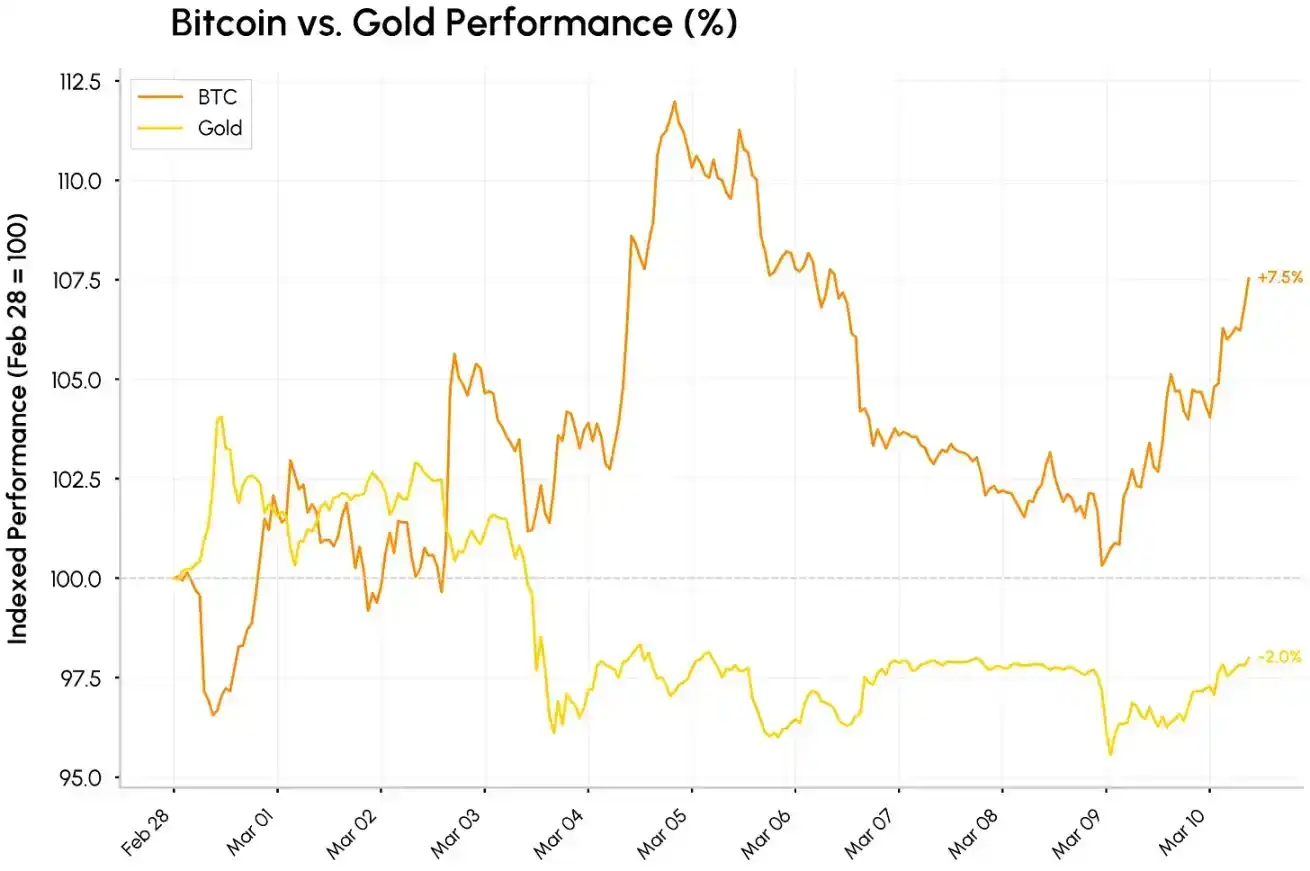
From March 2 to 4, Bitcoin spot ETFs continued to see net inflows, which also supported the Bitcoin price. This indicates that the market sentiment is not simply risk-off, but a more complex dynamic: Bitcoin's strength may reflect oversold recovery, technical positioning, and investors' willingness to hold high Beta assets even when geopolitical risks are high.

Tokenized Gold

While spot and futures gold markets were closed, PAXG and XAUT continued to trade throughout the weekend, becoming channels for investors to gain real-time gold exposure on-chain.

Paxos Gold (PAXG) and Tether Gold (XAUT) are tokenized gold products, with each token corresponding to one troy ounce of gold, issued and settled as ERC-20 tokens on Ethereum. Together they account for the majority share of the tokenized gold market ($6.1 billion), allowing investors to enter and exit gold exposure without waiting for traditional markets to open.
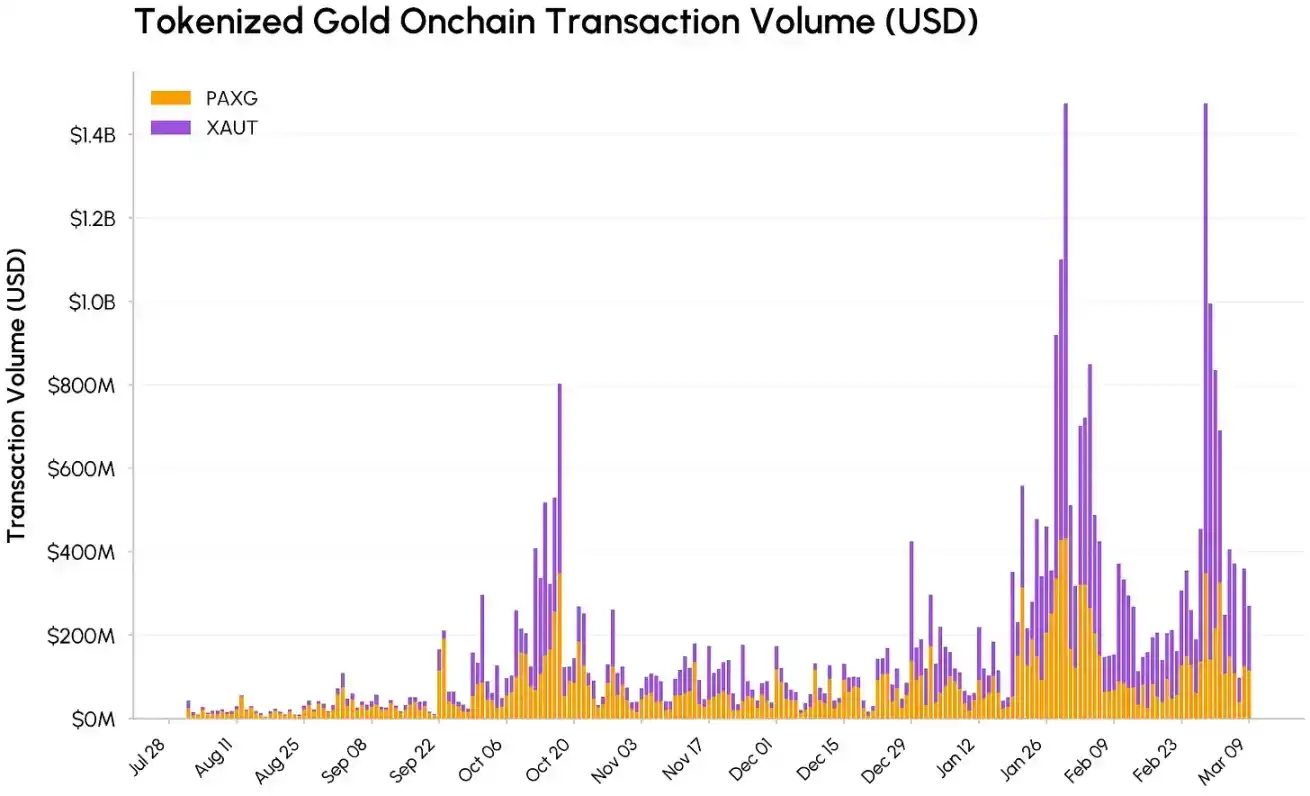
In 2026, geopolitical and macro risks have intensified: the arrest of Venezuelan President Maduro, tariff uncertainties, escalating Middle East conflicts, etc., have driven a significant surge in gold demand.

In early February, the total spot trading volume for tokenized gold on major centralized exchanges exceeded $1.8 billion; when tensions escalated between Iran, Israel, and the US, trading volume again surpassed $1 billion. On-chain trading volume on Ethereum also twice exceeded $1.4 billion, with Tether's XAUT accounting for the majority of the activity.

The number of active addresses and transactions grew simultaneously, indicating rising demand for on-chain gold, used for hedging, wealth preservation, DeFi collateral, and DEX liquidity trading pairs.

HIP-3 Perpetual Futures on Hyperliquid

Similarly, on-chain perpetual futures on Hyperliquid have also become a key trading channel. This is thanks to Hyperliquid's HIP-3 markets: the protocol allows anyone to permissionlessly create perpetual futures for any asset (by staking 500,000 HYPE) and provides reliable price feeds, including crude oil, gold, silver, stock indices, etc., operating 24/7/365 with no expiration dates.

The largest deployers include Trade [XYZ] (offering US stock and commodity perps) and Ventuals (offering pre-IPO equity and alternative assets, like Anthropic, SpaceX).
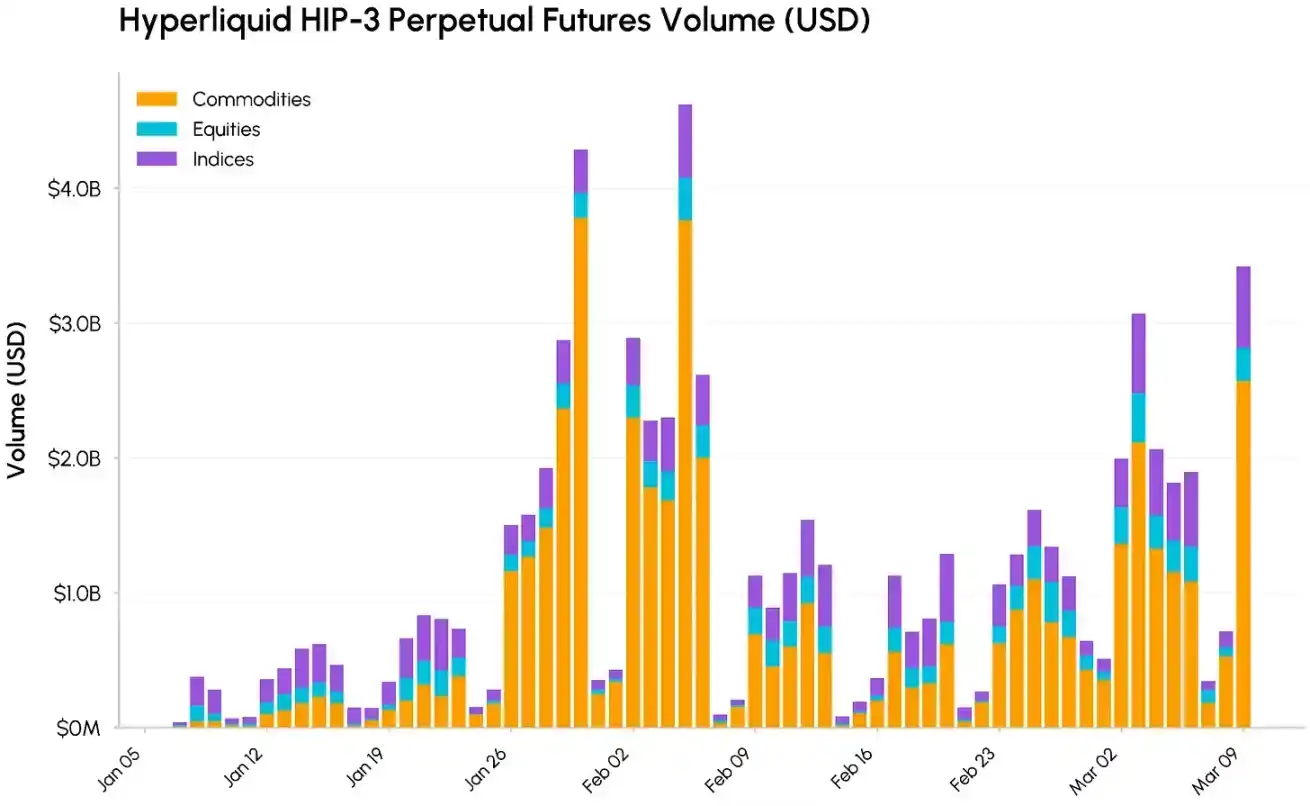
Total trading volume for HIP-3 markets has surpassed $95 billion, and open interest recently hit a new all-time high of $1.2 billion, accounting for about 20% of Hyperliquid's total open interest. Non-crypto assets like crude oil, gold, silver, and stocks hold a significant share. Precious metals and energy perpetuals recently contributed billions in daily trading volume, and their share of open interest continues to rise.

This growth marks the platform's evolution from a niche DeFi venue to a 24/7 trading platform for traditional markets, generating increasing protocol fee revenue from non-crypto markets.

The Commodity Boom

Within HIP-3, by cumulative trading volume in 2026, the largest markets are increasingly concentrated in commodities. Silver and gold perpetual contracts lead by a wide margin among all Real World Asset (RWA) contracts, followed by crude oil (CL-USDC). As Middle East conflict raised concerns about supply disruptions, the ranking of crude oil contracts has continued to climb.
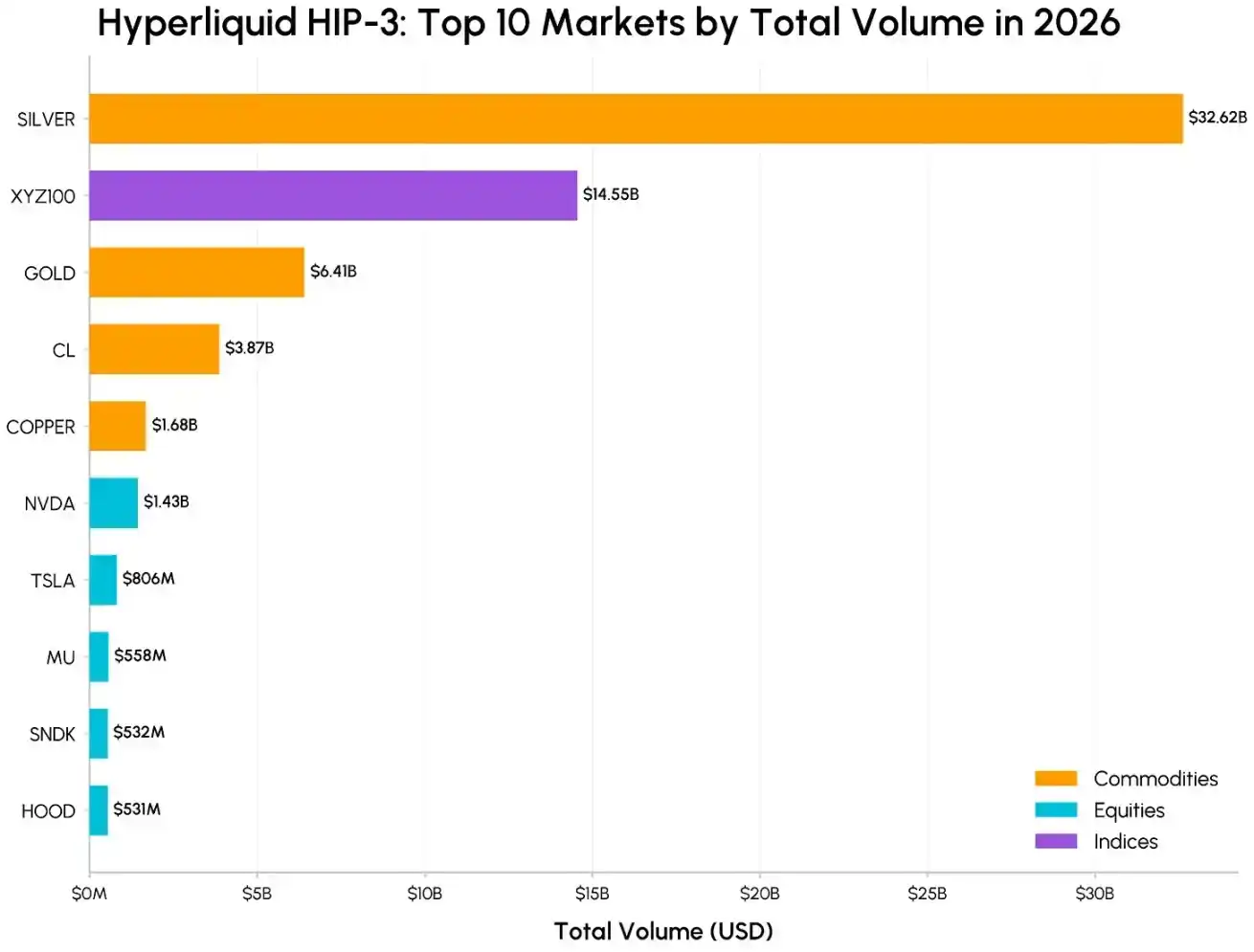
The average trade sizes in these markets remain small compared to institutional futures, but are considerable for a primarily retail-oriented on-chain platform:

· Gold Perp ~$2,700

· Silver Perp ~$3,400

· Crude Oil CL ~$2,800

· XYZ100 (Nasdaq 100) ~$1,100

How is Crude Oil Priced When Traditional Markets Are Closed?

Hyperliquid lists multiple perpetual futures linked to crude oil, including WTI Crude (CL), Brent Crude (BRENTOIL), US Oil Index (USOIL), etc., tracking different benchmark oil prices. These contracts trade 24/7 on an on-chain order book, using stablecoins (USDC/USDH) as margin and settlement assets.

Each crude variety is an independent market with its own liquidity, funding rate, and index source, so even though they all reference oil, slight price discrepancies can occur.
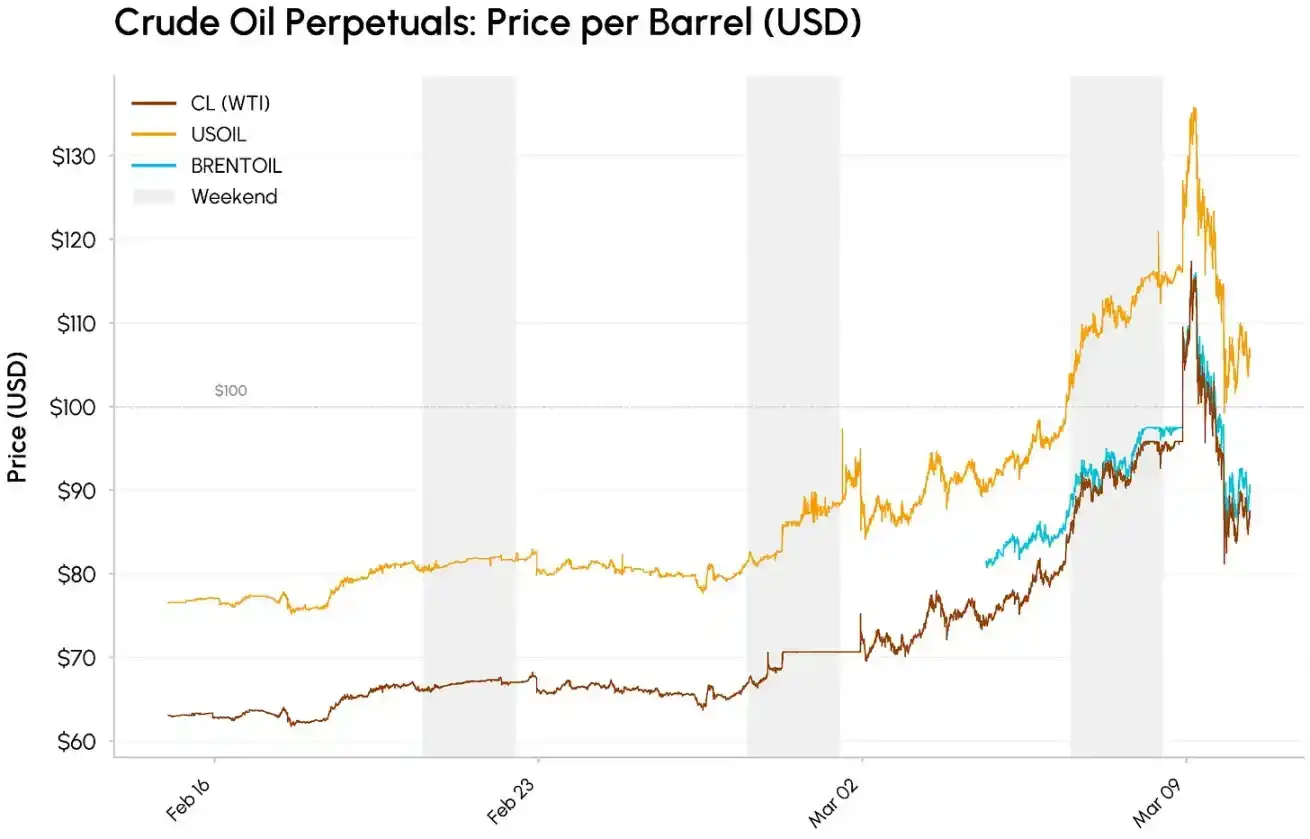
When the US-Israeli strike hit Iranian facilities, disrupting supply routes and raising concerns about the Strait of Hormuz, traditional futures were closed, while on-chain crude oil perpetual contracts revalued prices within minutes.

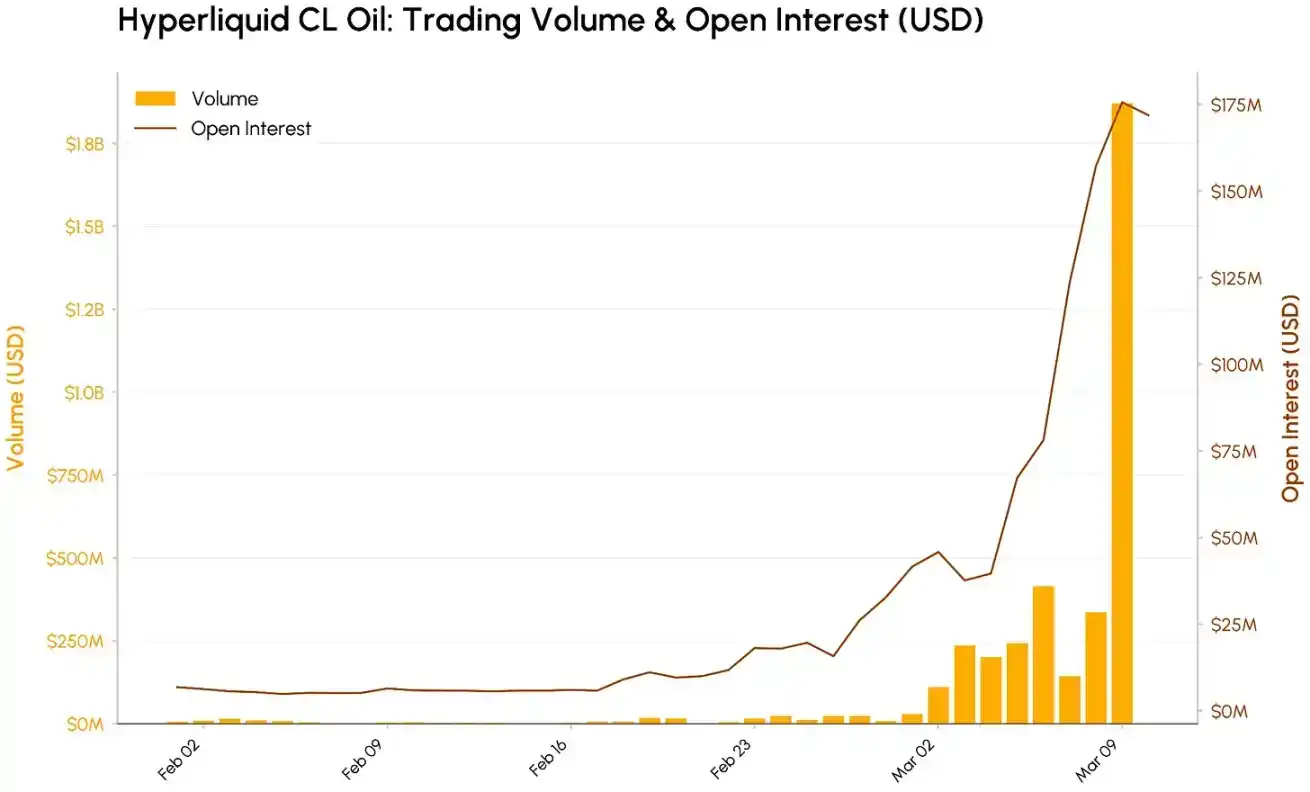
From the 1-minute candlestick chart, we can see that Hyperliquid's CL-USDC contract reflected oil prices in real-time over the weekend, spiking to $109 at one point, until traditional markets reopened. During the same period, open interest and trading volume in this market climbed to approximately $175 million and $1.9 billion respectively, making it the second-largest market by volume on the platform, surpassing Ethereum perpetuals. Traders used it to express their views on the supply shock.
Equity Exposure

Although funds primarily flowed into commodities during this period, HIP-3 also offers perpetual contracts linked to stock indices and individual stocks, allowing traders to go long or short on equities 24/7.

Trading volume in these markets remains lower than for crude oil and precious metals, but they complete HIP-3's positioning:

· Gold & Crude Oil for direct macro hedging

· Equity contracts for risk-on/risk-off allocation independent of crypto price movements

Including Kraken, several exchanges are also moving in a similar direction, offering tokenized stocks and perpetual futures based on these tokens to enable 24-hour equity exposure.

Conclusion

The recent geopolitical conflict provided a glimpse, albeit limited, into the practical application of 24/7 on-chain finance, and it was quite instructive. During periods when traditional markets were closed, crypto infrastructure supported trading in tokenized gold and perpetual futures, proving that blockchain, even in its early stages, relatively small in scale, and constrained by liquidity and regulatory uncertainty, can function as 24/7 market infrastructure.

Platforms like Hyperliquid and various tokenized asset products indicate that this infrastructure is expanding from pure crypto exposure to areas like precious metals, energy, and stocks, pointing towards a future where a core feature of global markets will be the on-chain, 24/7 trading of macro assets.


Trending Cryptos

Related Questions

QHow did Bitcoin and gold react differently to the initial geopolitical shock of the US-Israel strike on Iran?

AInitially, gold prices surged towards all-time highs as a safe-haven asset, while Bitcoin's price dropped, behaving as a risk-on asset. However, as the conflict evolved from a surprise to a known risk, gold prices slightly retreated, and Bitcoin stabilized and rebounded, reclaiming the $70,000 level and showing relative strength in a high-volatility environment.

QWhat are PAXG and XAUT, and what role did they play during the market closure?

APAXG (Paxos Gold) and XAUT (Tether Gold) are tokenized gold products where each token represents one ounce of physical gold, issued as ERC-20 tokens on Ethereum. They provided investors with a channel to gain real-time exposure to gold on-chain while traditional spot and futures markets were closed over the weekend following the geopolitical shock.

QWhat is the significance of Hyperliquid's HIP-3 market in this context?

AHyperliquid's HIP-3 market is a permissionless protocol that allows anyone to create perpetual futures for any asset by staking 500,000 HYPE. It provided a 24/7 trading venue for assets like crude oil, gold, silver, and stock indices, acting as a key channel for price discovery and risk management when traditional markets were unavailable, as demonstrated by the rapid price revaluation of oil contracts after the news of the strike.

QHow did the chain-based crude oil perpetual futures on Hyperliquid respond to the supply shock news?

AThe chain-based crude oil perpetual futures on Hyperliquid, such as the CL-USDC contract, revalued prices within minutes of the news about the US-Israel strike on Iranian facilities. The price spiked to $109 during the weekend when traditional markets were closed, with open interest and trading volume surging to approximately $175 million and $1.9 billion, respectively, making it the second-largest market on the platform at the time.

QWhat broader trend does the activity on these on-chain platforms suggest for the future of global markets?

AThe activity suggests a trend where on-chain infrastructure is evolving from offering purely crypto-native exposures to encompassing traditional macro assets like precious metals, energy, and equities. It points towards a future where a core feature of global markets will be the 24/7 on-chain trading of macro assets, even though the current scale is still relatively small and faces liquidity and regulatory constraints.

Related Reads

Soaring 20% Then Dropping 5%: When Will the Bottom of the Korean Stock Market Be?

"South Korean stocks face a turbulent period as the KOSPI index, after a 20% surge, fell 5% to 6257 points. The market is grappling with severe issues: over 500,000 leveraged retail accounts have been liquidated, and more than 24 trillion won has flowed from stocks into bank deposits for safety. This reflects a significant loss of market liquidity and shaken investor confidence. In response, Korean financial regulators are taking action. They have tripled the minimum保证金 (margin) requirement for single-stock leveraged ETF trades to 30 million won and are considering granting themselves "emergency intervention" powers. These could include capping leverage ratios and setting investment limits on these ETFs, seen by many as amplifying market volatility. Initial results show a 75% drop in these products' trading volume post-regulation. The market downturn has political repercussions, pushing President Yoon Suk-yeol's approval rating to a new low. Meanwhile, foreign investors made a record net purchase of 7.18 trillion won during a recent rebound, while domestic retail investors sold off massively. Morgan Stanley has upgraded South Korean stocks to "overweight," citing the ongoing "leverage unwinding" and potential for a 36% upside, with giants like Samsung Electronics and SK Hynix providing valuation support. However, analysts caution that the market's structure remains vulnerable to foreign capital flows, and the current low may not be the bottom."

marsbit9m ago

Soaring 20% Then Dropping 5%: When Will the Bottom of the Korean Stock Market Be?

marsbit9m ago

Goldman Sachs Stakes a Clear Position: This Is the Largest Capital Demand Cycle in Human History, and the Fed Is Just an Observer

Goldman Sachs argues that the world is entering the most capital-intensive investment cycle in history, driven by concurrent massive demands from AI infrastructure, reindustrialization, defense reinvestment, power grid rebuilding, supply chain realignment, and sovereign debt financing. This structural competition for capital is pushing its cost higher, fundamentally altering investment paradigms. Goldman's Mark Wilson states that the Federal Reserve is merely a "passenger, not the driver" in this shift, with rising yields rooted in these real economy demands rather than just monetary policy. While major indices appeared calm in July, underlying market movements were historic, featuring extreme stock dispersion and a severe momentum factor crash, leading to significant de-risking by fund managers. Wilson cautions against expecting a quick reversal in August, citing ongoing digestion of higher rates, disrupted risk models, and typically muted market performance ahead of US midterm elections. Corporate fundamentals remain robust with strong earnings, though growth rates are peaking in the US while accelerating in Europe. Notably, hyperscale cloud companies like Amazon and Microsoft are announcing staggering capital expenditure projections for 2027-2028, justified by explosive AI-related revenue growth and high returns. Amazon revealed its AI revenue run-rate exceeds $25 billion, growing triple-digits annually, and expressed confidence that AWS could become a trillion-dollar revenue business. The report concludes that a transitional period is underway, marked by a growing tension between aggressively investing private tech giants and increasingly capital-constrained sovereign governments. The AI super-cycle continues, with August likely being a consolidation phase.

marsbit14m ago

Goldman Sachs Stakes a Clear Position: This Is the Largest Capital Demand Cycle in Human History, and the Fed Is Just an Observer

marsbit14m ago

Outflow of Stablecoins from South Korea Continues for 18 Consecutive Months, Exceeding $360 Million in June

In June 2026, South Korea experienced a net outflow of stablecoins to overseas crypto exchanges, amounting to 560.3 billion won ($367 million). This represents approximately 78% of the net value of foreign stocks purchased by Korean investors in the same period. According to the Financial Supervisory Service (FSS), this marks the 18th consecutive month of net outflows, a trend ongoing since January 2025. The FSS reported that 2.76 trillion won ($1.8+ billion) in stablecoins were withdrawn from the country's five major exchanges to foreign platforms in June, while 2.2 trillion won ($1.4 billion) flowed back in. The second quarter of 2026 saw a significant net outflow of 1.69 trillion won (~$1.1 billion), surpassing net sales of foreign stocks in the same period. Analysts cite access to unavailable domestic financial instruments as a primary driver. Foreign platforms offer crypto derivatives, spot and futures products tied to major Korean stocks like Samsung and Hyundai, along with RWA tokenization, DeFi, staking, and leveraged products. Lawmaker Lee Jong-wook warned that the stablecoin outflows constitute capital flight, exposing investors to risks on unregulated foreign platforms. He called for accelerated regulatory reform and enhanced investor protection measures. The government is reportedly working on a digital assets law to foster the blockchain sector.

cryptonews.ru19m ago

Outflow of Stablecoins from South Korea Continues for 18 Consecutive Months, Exceeding $360 Million in June

cryptonews.ru19m ago

Trading

Spot

Hot Articles

What is $BITCOIN

DIGITAL GOLD ($BITCOIN): A Comprehensive Analysis Introduction to DIGITAL GOLD ($BITCOIN) DIGITAL GOLD ($BITCOIN) is a blockchain-based project operating on the Solana network, which aims to combine the characteristics of traditional precious metals with the innovation of decentralized technologies. While it shares a name with Bitcoin, often referred to as “digital gold” due to its perception as a store of value, DIGITAL GOLD is a separate token designed to create a unique ecosystem within the Web3 landscape. Its goal is to position itself as a viable alternative digital asset, although specifics regarding its applications and functionalities are still developing. What is DIGITAL GOLD ($BITCOIN)? DIGITAL GOLD ($BITCOIN) is a cryptocurrency token explicitly designed for use on the Solana blockchain. In contrast to Bitcoin, which provides a widely recognized value storage role, this token appears to focus on broader applications and characteristics. Notable aspects include: Blockchain Infrastructure: The token is built on the Solana blockchain, known for its capacity to handle high-speed and low-cost transactions. Supply Dynamics: DIGITAL GOLD has a maximum supply capped at 100 quadrillion tokens (100P $BITCOIN), although details regarding its circulating supply are currently undisclosed. Utility: While precise functionalities are not explicitly outlined, there are indications that the token could be utilized for various applications, potentially involving decentralized applications (dApps) or asset tokenization strategies. Who is the Creator of DIGITAL GOLD ($BITCOIN)? At present, the identity of the creators and development team behind DIGITAL GOLD ($BITCOIN) remains unknown. This situation is typical among many innovative projects within the blockchain space, particularly those aligning with decentralized finance and meme coin phenomena. While such anonymity may foster a community-driven culture, it intensifies concerns about governance and accountability. Who are the Investors of DIGITAL GOLD ($BITCOIN)? The available information indicates that DIGITAL GOLD ($BITCOIN) does not have any known institutional backers or prominent venture capital investments. The project seems to operate on a peer-to-peer model focused on community support and adoption rather than traditional funding routes. Its activity and liquidity are primarily situated on decentralized exchanges (DEXs), such as PumpSwap, rather than established centralized trading platforms, further highlighting its grassroots approach. How DIGITAL GOLD ($BITCOIN) Works The operational mechanics of DIGITAL GOLD ($BITCOIN) can be elaborated on based on its blockchain design and network attributes: Consensus Mechanism: By leveraging Solana’s unique proof-of-history (PoH) combined with a proof-of-stake (PoS) model, the project ensures efficient transaction validation contributing to the network's high performance. Tokenomics: While specific deflationary mechanisms have not been extensively detailed, the vast maximum token supply implies that it may cater to microtransactions or niche use cases that are still to be defined. Interoperability: There exists the potential for integration with Solana’s broader ecosystem, including various decentralized finance (DeFi) platforms. However, the details regarding specific integrations remain unspecified. Timeline of Key Events Here is a timeline that highlights significant milestones concerning DIGITAL GOLD ($BITCOIN): 2023: The initial deployment of the token occurs on the Solana blockchain, marked by its contract address. 2024: DIGITAL GOLD gains visibility as it becomes available for trading on decentralized exchanges like PumpSwap, allowing users to trade it against SOL. 2025: The project witnesses sporadic trading activity and potential interest in community-led engagements, although no noteworthy partnerships or technical advancements have been documented as of yet. Critical Analysis Strengths Scalability: The underlying Solana infrastructure supports high transaction volumes, which could enhance the utility of $BITCOIN in various transaction scenarios. Accessibility: The potential low trading price per token could attract retail investors, facilitating wider participation due to fractional ownership opportunities. Risks Lack of Transparency: The absence of publicly known backers, developers, or an audit process may yield skepticism regarding the project's sustainability and trustworthiness. Market Volatility: The trading activity is heavily reliant on speculative behavior, which can result in significant price volatility and uncertainty for investors. Conclusion DIGITAL GOLD ($BITCOIN) emerges as an intriguing yet ambiguous project within the rapidly evolving Solana ecosystem. While it attempts to leverage the “digital gold” narrative, its departure from Bitcoin's established role as a store of value underscores the need for a clearer differentiation of its intended utility and governance structure. Future acceptance and adoption will likely depend on addressing the current opacity and defining its operational and economic strategies more explicitly. Note: This report encompasses synthesised information available as of October 2023, and developments may have transpired beyond the research period.

1.4k Total ViewsPublished 2025.05.13Updated 2025.05.13

What is $BITCOIN

Discussions

Welcome to the HTX Community. Here, you can stay informed about the latest platform developments and gain access to professional market insights. Users' opinions on the price of BTC (BTC) are presented below.

活动图片