Aave V4 crosses $250M – But ONE liquidity challenge still remains

ambcryptoPublished on 2026-07-06Last updated on 2026-07-06

Abstract

Aave V4 has surpassed $250 million in deposits, marking significant early adoption of its upgraded lending infrastructure. This growth is driven by enhanced capital efficiency, risk parameters, and lending options. However, a portion of these deposits came from users migrating from V3, meaning not all represent new capital entering the ecosystem. For sustained growth, Aave must continue attracting net new liquidity. While V4 deposit numbers are strong, the broader Total Value Locked (TVL) tells a more nuanced story. After a market downturn, overall TVL has recovered to 7.4 million ETH but remains below its all-time high, with withdrawals still limiting net liquidity growth. A positive sign is the substantial increase in cbETH deposits, which rose from around $18-$20 million in May to approximately $70 million by early July. This indicates growing demand for liquid staking collateral and strengthens Aave's lending capacity. Aave's future position as a dominant DeFi liquidity provider hinges on its ability to secure consistent, net-positive capital inflows beyond internal migrations.

Aave [AAVE] V4 has reached an important adoption milestone, highlighting continued demand despite a challenging DeFi environment. The protocol has now surpassed $250 million in deposits, reflecting strong early traction for its upgraded lending infrastructure.

This growth was driven by improvements in capital efficiency, enhanced risk parameters, and expanded lending options to attract additional liquidity. As well as growing the amount of deposits, it is also essential that the quality of these deposits remain high.
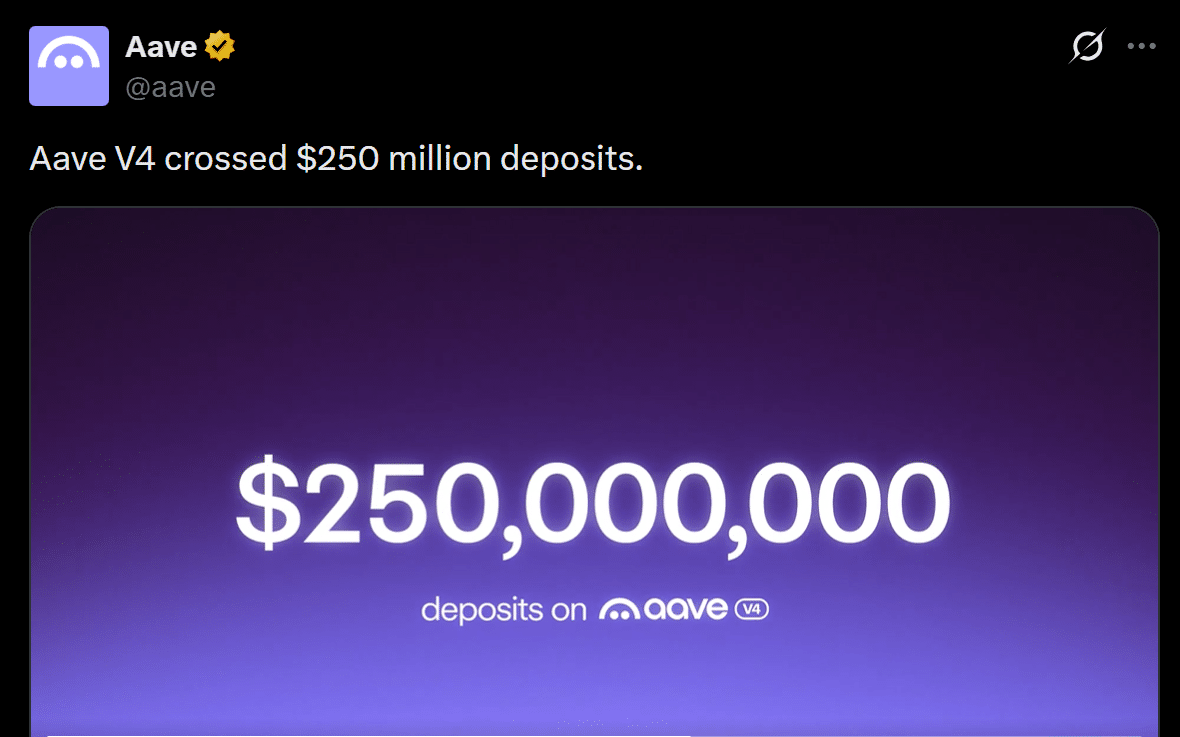
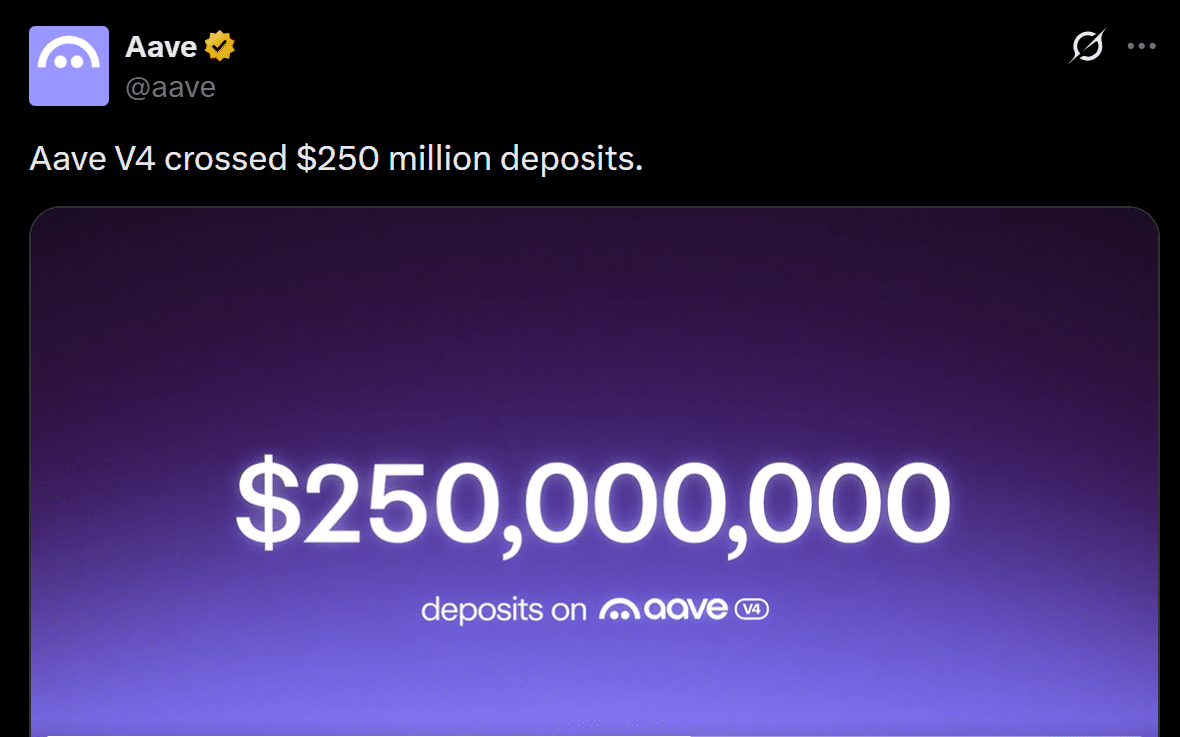
Source: Aave on X

Some portion of the deposits to V4 were due to users moving their previous positions from V3. Yet, they did not all represent new capital entering the Aave ecosystem.

Despite this, there have been positive signs indicating that new deposits continue to flow into the platform. This is in addition to the migrated assets. For Aave to be able to sustain further growth, they need to continue to draw new capital into the platform.

Should V4 continue to outperform V3 in terms of true net additions of liquidity, then Aave can solidify its position as the dominant liquidity provider within DeFi.

Broader liquidity tells a different story

Although Aave V4 continues to see record-breaking deposit numbers, the overall trend in liquidity is much more nuanced. The TVL previously reached an all-time high of about 13.4 million ETH. However, it fell dramatically due to the recent downturn in markets.

TVL has since bounced back to about 7.4 million ETH. Still far from the previous highs, this indicates that significant amounts of capital have been slow to recover even with improvements in investor sentiment.
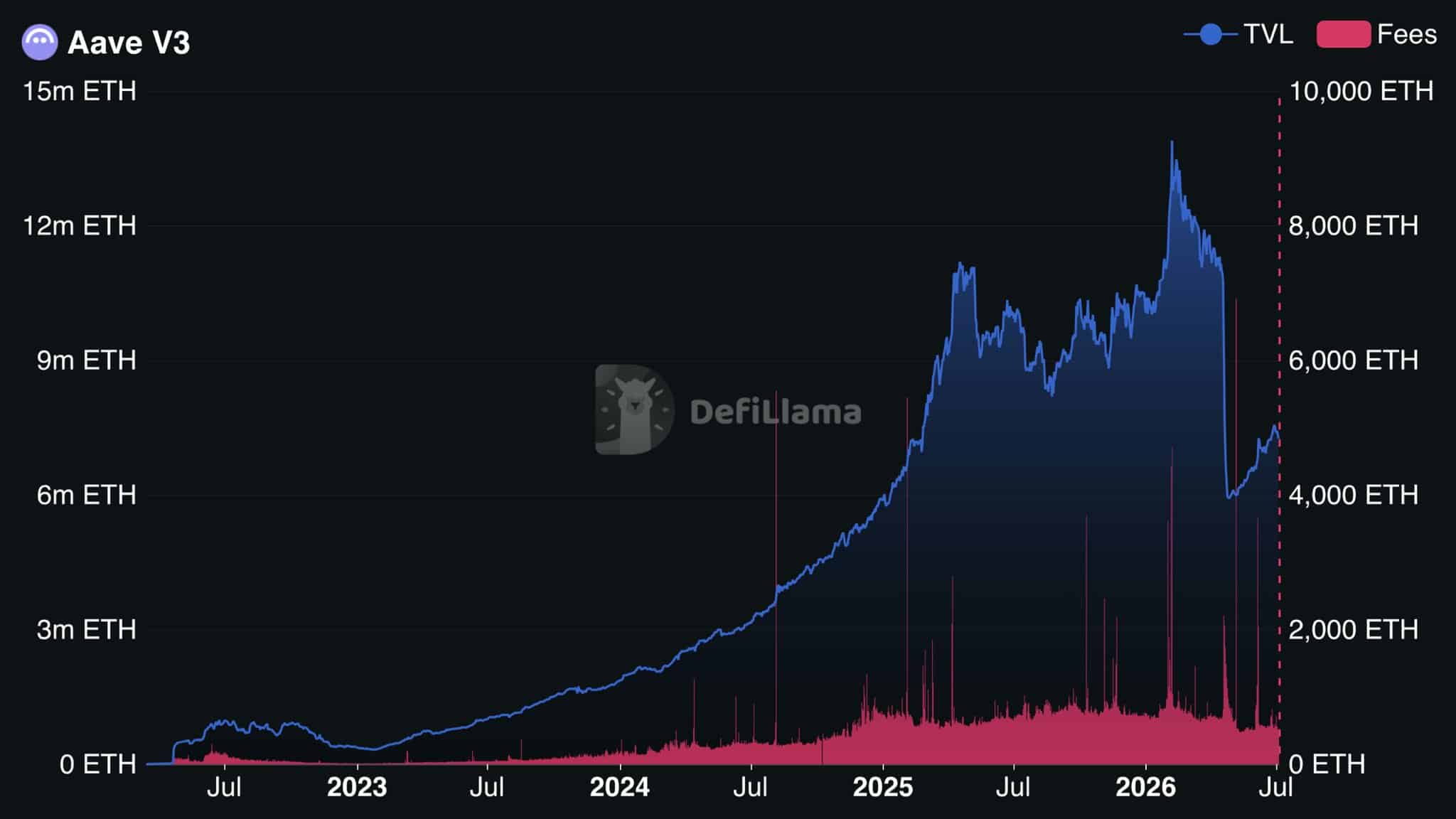
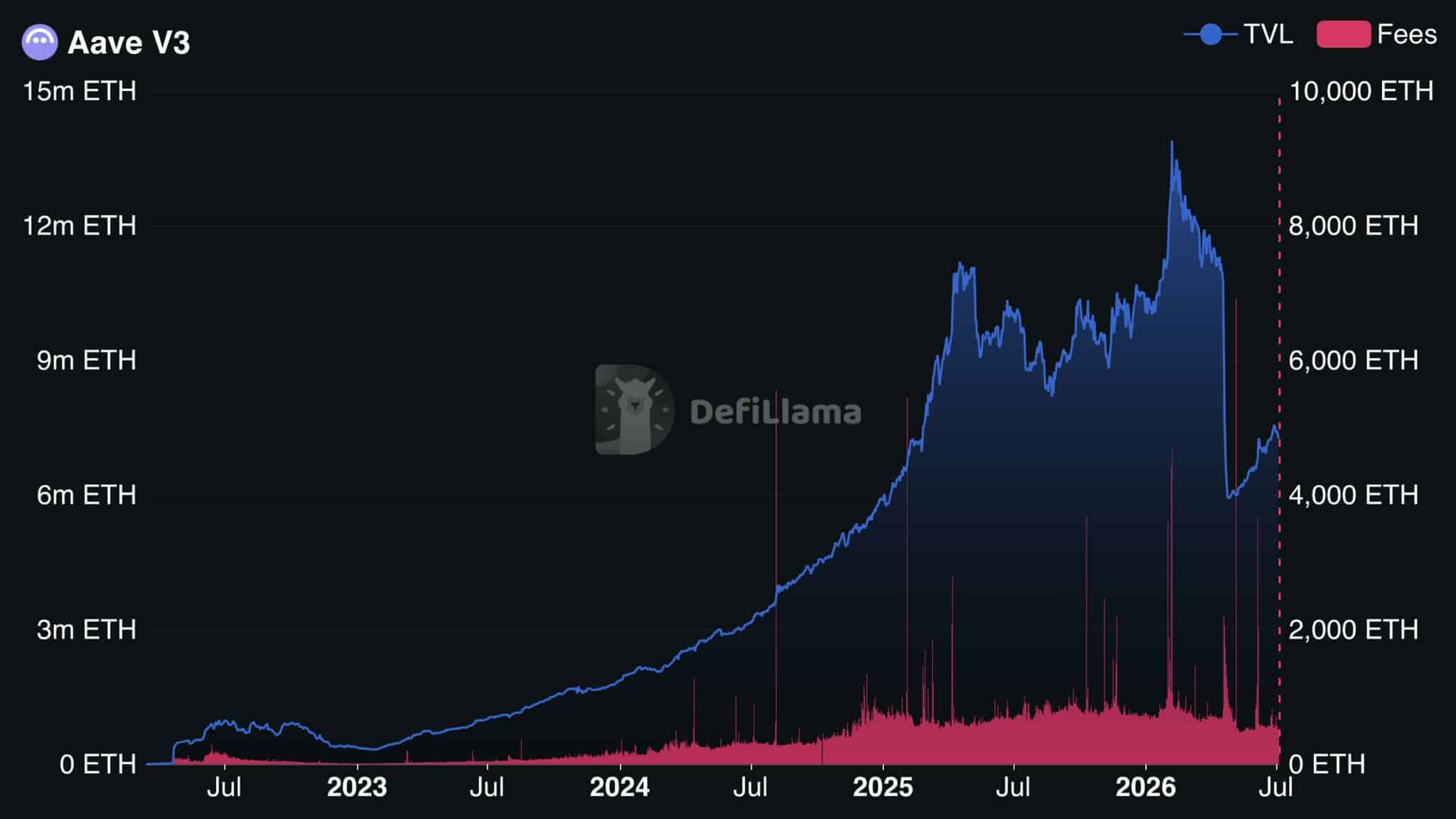
Source: DeFiLlama

That said, withdrawals are still outpacing some portion of the influx of new capital into V4, which is limiting how much liquidity grows as a whole.

While V4 has seen continuous updates to its protocols and has seen a recovery in TVL. Still, these indicators suggest a resilient position by V4 for future growth but do not show that V4 is structurally weak.

Moreover, cbETH deposits across Aave have increased lately. Deposits held near $18-$20 million through May before increasing to early July levels of approximately $70 million.
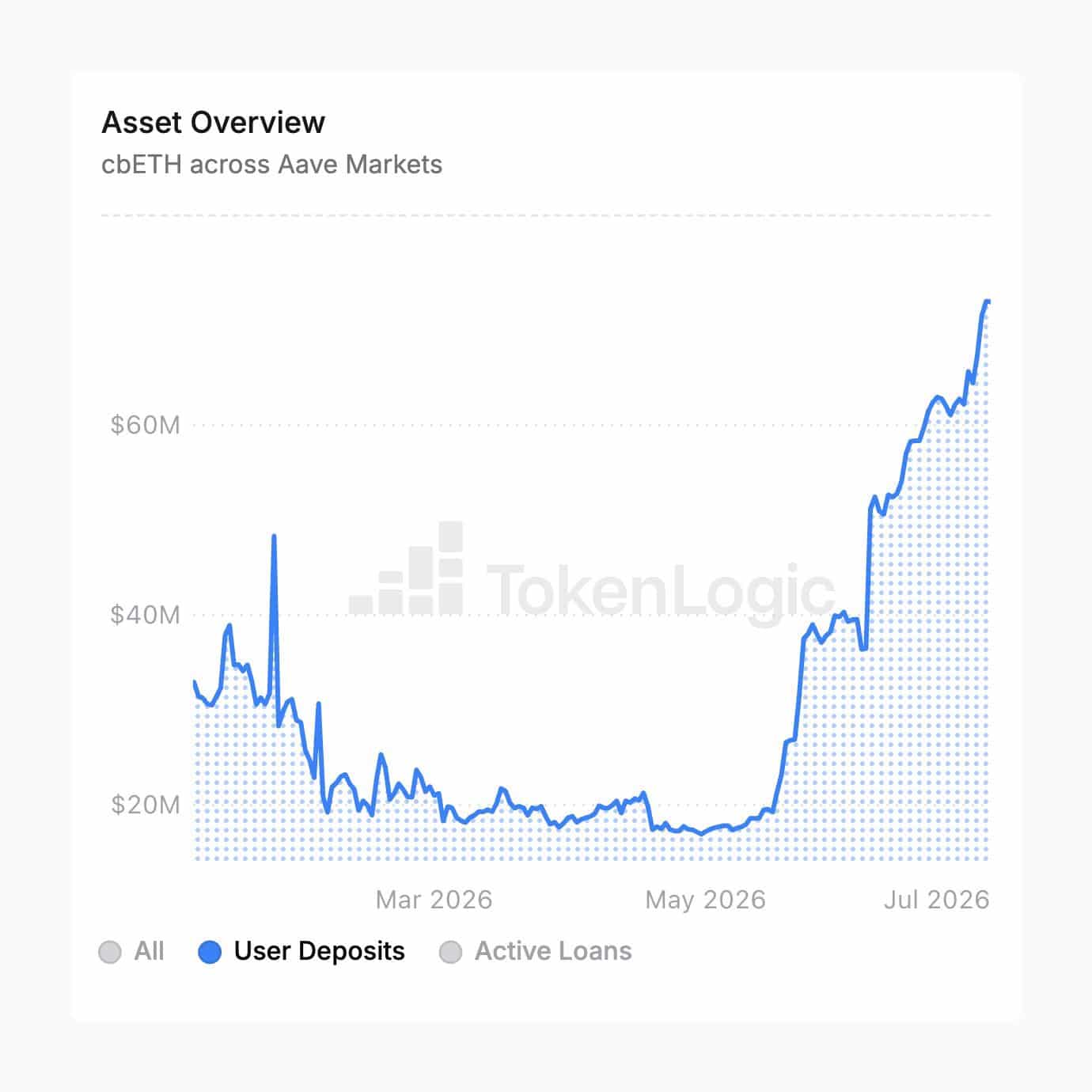
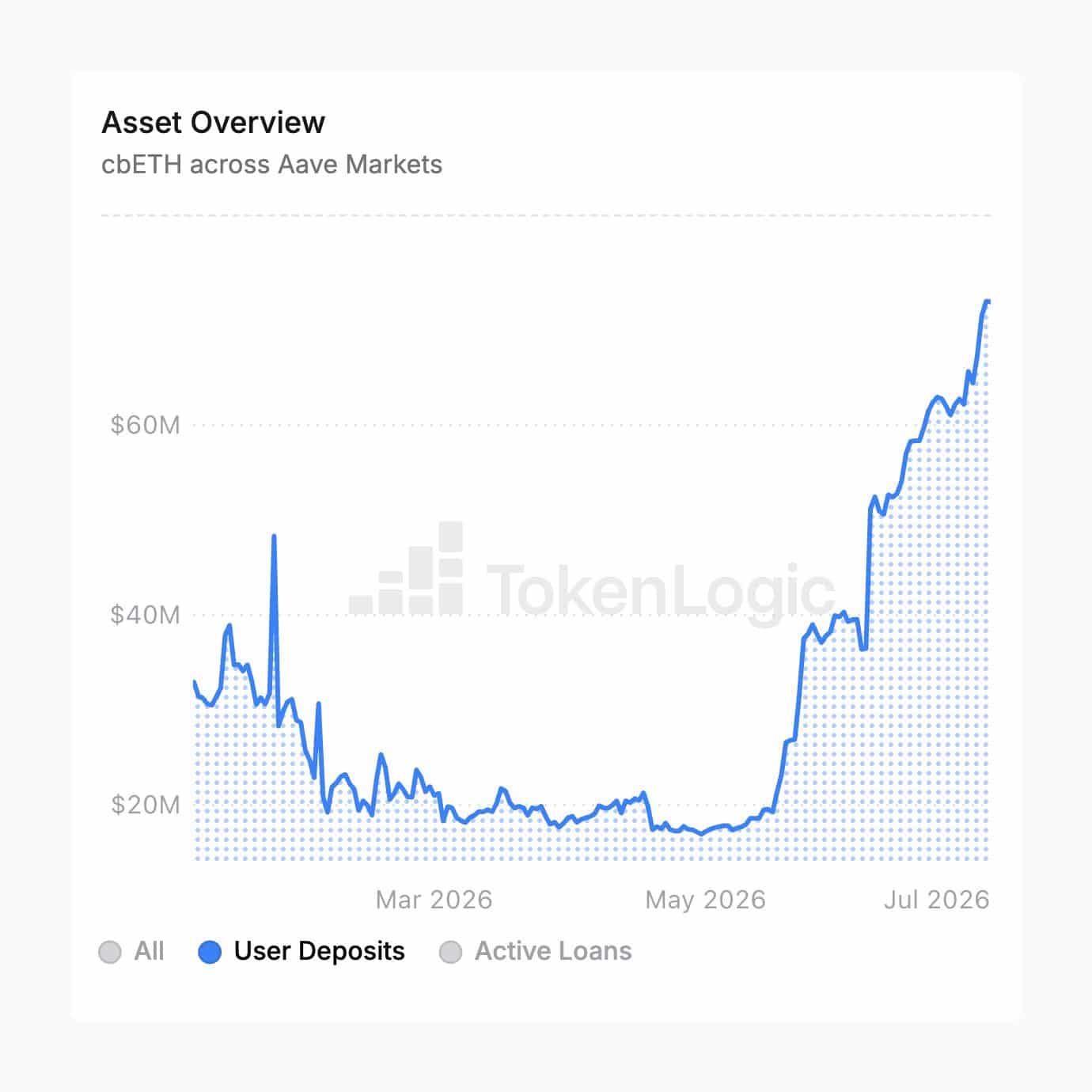
Source: TokenLogic

This rapid increase indicates a strengthening demand for liquid staking collateral; additionally, it reinforces the liquidity and lending capacity of Aave.

Whether Aave can expand once again as a larger ecosystem will be determined by the ability to continue seeing net positive flows to the platform over time, excluding internal migration.


Final Summary

  • Aave V4 growth depended on sustained net new liquidity, not internal capital migration.
  • Aave’s liquidity was strengthening as cbETH deposits continued to rise across the protocol.

Trending Cryptos

Related Questions

QWhat is the key challenge that Aave V4 still faces despite surpassing $250M in deposits?

AThe key challenge is attracting sustained net new liquidity, not just internal capital migration from V3, to ensure continued growth.

QHow has the overall Total Value Locked (TVL) in Aave changed recently?

AAave's overall TVL reached an all-time high of about 13.4M ETH but fell dramatically due to market conditions. It has since recovered to about 7.4M ETH, still far from the previous peak.

QWhat recent trend in a specific asset's deposits indicates strengthening demand on Aave?

AThere has been a rapid increase in cbETH (Coinbase Wrapped Staked ETH) deposits, rising from ~$18-20M in May to approximately $70M by early July.

QWhat are the main factors that drove the growth of Aave V4 deposits?

AGrowth was driven by improvements in capital efficiency, enhanced risk parameters, expanded lending options, and some migration of user positions from V3.

QWhat does the article suggest is necessary for Aave to solidify its position as the dominant DeFi liquidity provider?

AAave V4 needs to continue outperforming V3 in terms of true net additions of liquidity, meaning it must consistently attract new capital from outside its ecosystem.

Related Reads

In Jinjiang, Fujian, a Storage Super Unicorn Lies Quiet

In Fujian's Jinjiang, a city known for sportswear, lies a quiet semiconductor giant: Fujian Jinhua Integrated Circuit Co. (JHICC). Once a promising domestic DRAM manufacturer alongside Yangtze Memory and ChangXin Memory Technologies (CXMT), its journey was derailed in 2018 when the U.S. placed it on an Entity List and filed criminal charges for alleged trade secret theft. This halted production for years. A turning point came in February 2024 when a U.S. federal court found JHICC not guilty. However, it had lost crucial time. While CXMT soared to become a top-valued A-share company in 2024, JHICC, with an estimated valuation of 80 billion RMB, was just restarting. Its current output is primarily customized DDR4 chips, not the advanced DDR5/HBM demanded for AI, but it still benefits from the broader memory chip upcycle. JHICC's story is tied to Chen Zhengkun, a veteran engineer who left Micron to lead the venture. Founded in 2016 with state-backed funding, JHICC partnered with Taiwan's UMC to develop DRAM technology. Rapid progress was cut short by the U.S. actions, which Micron initiated, partly due to its heavy reliance on the Chinese market. Post-sanctions, Chen's team worked to rebuild the production line with reduced reliance on U.S. technology. According to its records, JHICC achieved small-scale production and revenue growth under immense pressure. It now focuses on the stable "niche" DRAM market (e.g., TVs, routers) with a monthly capacity of ~40,000 wafers, aiming for 60,000 by 2026. It holds over 1,000 patents but remains on the Entity List. For Jinjiang, investing in JHICC was a bold industrial leap. The local government provided unwavering financial and logistical support during the crisis, helping the company survive. JHICC has become the anchor for a growing local semiconductor cluster. Though its scale lags behind domestic peers, JHICC's persistence symbolizes a hard-won foothold in a global market long dominated by Samsung, SK Hynix, and Micron. Having missed one boom, it seeks a place in the new AI-driven memory supercycle.

marsbit1h ago

In Jinjiang, Fujian, a Storage Super Unicorn Lies Quiet

marsbit1h ago

Trading

Spot

Hot Articles

How to Buy ONE

Welcome to HTX.com! We've made purchasing Harmony (ONE) simple and convenient. Follow our step-by-step guide to embark on your crypto journey.Step 1: Create Your HTX AccountUse your email or phone number to sign up for a free account on HTX. Experience a hassle-free registration journey and unlock all features.Get My AccountStep 2: Go to Buy Crypto and Choose Your Payment MethodCredit/Debit Card: Use your Visa or Mastercard to buy Harmony (ONE) instantly.Balance: Use funds from your HTX account balance to trade seamlessly.Third Parties: We've added popular payment methods such as Google Pay and Apple Pay to enhance convenience.P2P: Trade directly with other users on HTX.Over-the-Counter (OTC): We offer tailor-made services and competitive exchange rates for traders.Step 3: Store Your Harmony (ONE)After purchasing your Harmony (ONE), store it in your HTX account. Alternatively, you can send it elsewhere via blockchain transfer or use it to trade other cryptocurrencies.Step 4: Trade Harmony (ONE)Easily trade Harmony (ONE) on HTX's spot market. Simply access your account, select your trading pair, execute your trades, and monitor in real-time. We offer a user-friendly experience for both beginners and seasoned traders.

4.7k Total ViewsPublished 2024.03.29Updated 2026.06.02

How to Buy ONE

Discussions

Welcome to the HTX Community. Here, you can stay informed about the latest platform developments and gain access to professional market insights. Users' opinions on the price of ONE (ONE) are presented below.

活动图片