A16z – 2026 might be the year when blockchain becomes ‘just the plumbing’

ambcryptoPublished on 2026-01-02Last updated on 2026-01-02

Abstract

A16z's 2026 outlook predicts blockchain will become invisible "plumbing" that powers the modern digital world, rather than a consumer-facing technology. This shift will be driven by three key trends. First, the rise of an AI agent economy will require blockchain-based identity systems (KYA - Know Your Agent) for autonomous agents to transact securely. Second, finance will evolve from simple asset tokenization to full on-chain origination of synthetic and programmable credit products, making the internet itself the bank. Finally, privacy, enabled by Zero-Knowledge Proofs, will become the critical competitive advantage for institutional adoption, as public transparency becomes a liability. Ultimately, crypto's success will be measured by its seamless integration into a faster, more private, and autonomous internet.

For years, the promise of blockchain has been just around the corner. However, according to a16z crypto’s latest outlook for 2026, the corner has finally been turned.

We are moving into an era where the most successful crypto applications won’t feel like crypto at all. They will simply be the plumbing that makes the modern world work. That’s what the report says.

Here are the three foundational shifts that will define the landscape in 2026.

Rise of the agentic economy

Topping the list is the birth of the AI Agent economy.

As autonomous agents begin to handle our grocery shopping, SaaS subscriptions, and professional workflows, they face a wall – They lack identity and bank accounts.

According to A16z’s latest prediction, we can expect the emergence of KYAs (Know Your Agents).

Just as humans have credit scores and passports, agents will use cryptographically signed credentials to transact. This would allow a merchant to know that an agent is authorized by a specific principal and operates within defined legal and financial constraints.

Without blockchain-based identity, the AI revolution hits a dead end. With it, agents would become full-scale economic actors.

From tokenization to origination

While 2024 and 2025 were about “tokenizing” existing Real-World Assets (RWAs) like T-bills, 2026 will be about on-chain origination.

The report suggested that narrow banking, simply holding safe, liquid assets on a chain, is just the starting point. The real breakthrough occurs when credit infrastructure moves on-chain.

We will see the rise of synthetic financial products and programmable credit that offer lower operational costs and greater composability than traditional finance.

In this world, the internet becomes the bank, providing wealth management and sophisticated investment tools to anyone with a smartphone.

Privacy as the ultimate competitive moat

Finally, for a decade, the transparency of blockchains was touted as a feature. By 2026, it will become a bug for institutional adoption.

According to A16z, privacy will be the most important moat in crypto.

As global finance migrates to the blockchain, institutions cannot afford to have their strategies and sensitive data exposed on public ledgers. This creates a privacy lock-in effect. Bridging tokens between chains is easy, but bridging secrets is hard.

The networks that successfully implement Zero-Knowledge Proofs (ZKPs) and Secrets-as-a-Service will likely win the majority of the market share. Especially since users will be reluctant to leave a secure, private environment.

What’s more?

By 2026, crypto’s success will be measured by its invisibility.

Whether it’s stablecoins settling $46 trillion in volume (surpassing Visa), or prediction markets becoming the primary way we price the future, the crypto part of the equation is receding into the background. What remains is a faster, more private, and more autonomous internet.

This is interesting. Especially since a recent report by AMBCrypto found that crypto underperformed this year as gold and equities rallied, with Bitcoin [BTC] dropping by nearly 20%. Despite broader risk assets holding up.

Even so, some analysts believe money is already circling back to crypto. On the contrary, historical midterm-year patterns suggest 2026 could still be a stress point.

With LTHs steady, capital hesitant, and price unmoved, Bitcoin’s next move depends on a structural shift rather than sentiment alone.


Final Thoughts

  • Technology is shifting from consumer-facing hype to invisible, indispensable plumbing for digital life.
  • Most successful crypto platforms will be frictionless, silent, and embedded deep inside everyday applications.


Related Questions

QAccording to a16z's outlook, what will define the most successful crypto applications by 2026?

AThe most successful crypto applications won't feel like crypto at all and will simply be the invisible plumbing that makes the modern world work.

QWhat is the 'KYA' concept mentioned in the report and what problem does it solve?

AKYA stands for 'Know Your Agents.' It solves the problem of AI agents lacking identity and bank accounts by providing them with cryptographically signed credentials to transact, allowing them to become full-scale economic actors.

QWhat key shift is predicted for on-chain finance in 2026, moving beyond the trends of 2024-2025?

AThe shift will be from 'tokenizing' existing Real-World Assets (RWAs) to 'on-chain origination,' which involves moving credit infrastructure on-chain to create synthetic financial products and programmable credit.

QWhy does the a16z report suggest that blockchain transparency will become a 'bug' rather than a feature by 2026?

AFor institutional adoption, the transparency of public blockchains becomes a problem because institutions cannot afford to have their strategies and sensitive financial data exposed on public ledgers, creating a need for privacy solutions.

QWhat technologies does the report identify as crucial for winning market share in the future crypto landscape?

AThe networks that successfully implement Zero-Knowledge Proofs (ZKPs) and Secrets-as-a-Service will likely win the majority of the market share by providing a secure, private environment that users are reluctant to leave.

Related Reads

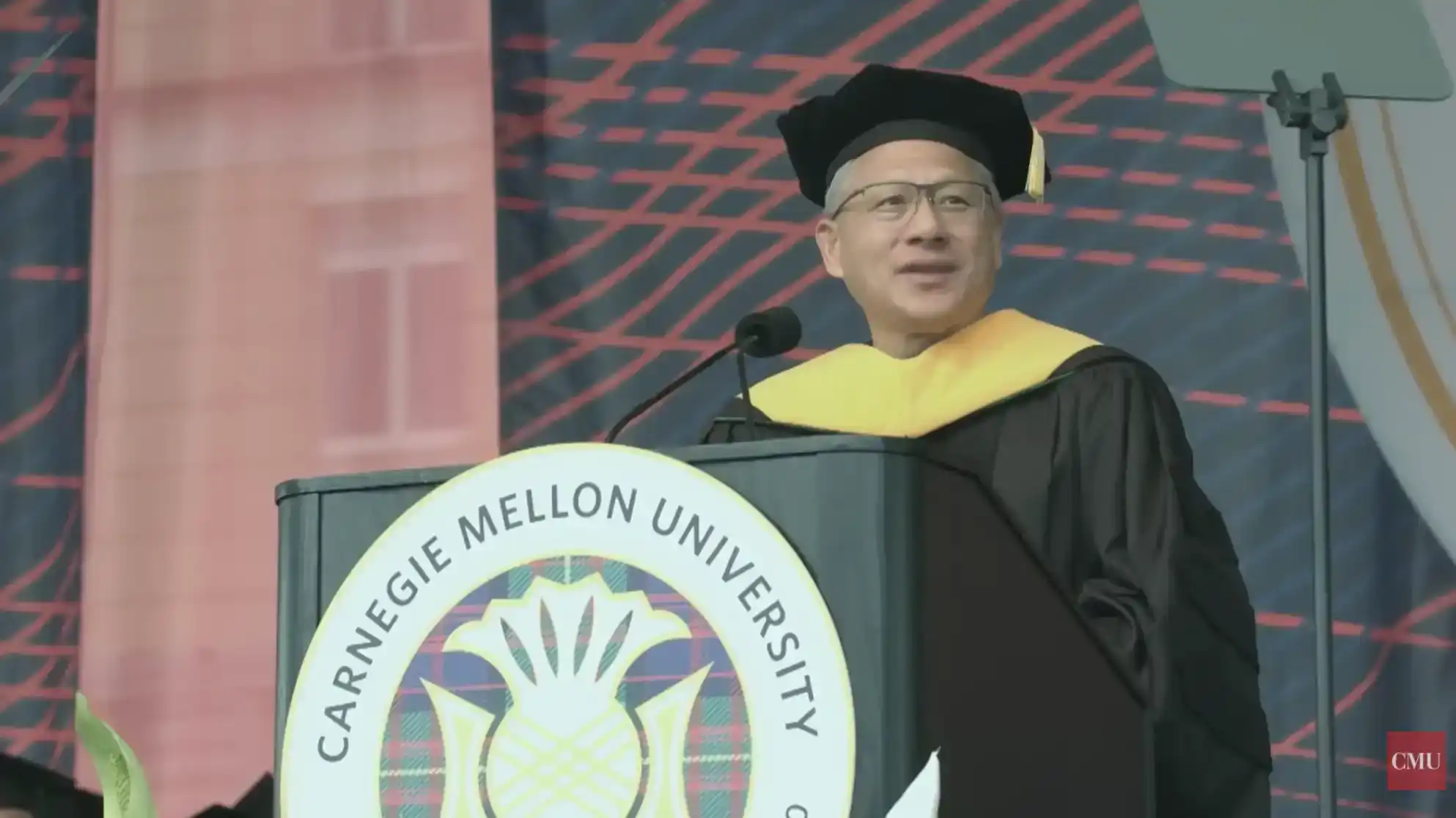
Jensen Huang's CMU Speech: In the AI Era, Don't Just Watch, Build

Jensen Huang, CEO of NVIDIA and a first-generation immigrant, delivered the commencement address to Carnegie Mellon University's class of 2026. He shared his personal journey from a humble background to founding NVIDIA, emphasizing resilience, learning from failure, and the responsibility that comes with leadership. Huang framed the present moment as the dawn of the AI revolution, a shift he believes is more profound than previous computing waves. He described AI as fundamentally resetting computing—moving from human-written software to machines that understand, reason, and use tools. This will create a new industry for generating intelligence and transform every sector. While acknowledging AI's potential to automate tasks and displace some jobs, Huang distinguished between the *tasks* of a job and its core *purpose*. He argued AI will augment human capability, not replace humans. The real risk, he stated, is not AI itself, but people being left behind by those who effectively use AI. He presented AI as a generational opportunity for massive infrastructure investment—in chip factories, data centers, energy grids, and advanced manufacturing—that could re-industrialize nations like the U.S. and bridge the digital divide by making computing and intelligent tools accessible to all. Huang called for a balanced approach: advancing AI safely and responsibly, establishing prudent policies, ensuring broad access, and encouraging universal participation. He urged the graduates not to fear the future but to engage with optimism and ambition, reminding them of CMU's motto, "My heart is in the work." His core message was clear: this is their moment to actively build and shape the AI-powered future, not merely observe it.

marsbit33m ago

Jensen Huang's CMU Speech: In the AI Era, Don't Just Watch, Build

marsbit33m ago

The Era Has Arrived Where Human Writers Must Prove They Are Not Machines

The article describes an era where AI-generated content is flooding the market, forcing human authors to prove they are not machines. It begins with the example of dozens of AI-written, error-ridden biographies of Henry Kissinger appearing on Amazon within hours of his death, a pattern repeated for other deceased celebrities and even living experts who find fraudulent books under their names. This spam content has exploded, with monthly new book releases on platforms like Amazon reaching 300,000 by late 2025. The issue spans genres, from suspiciously high proportions of AI-written teen romance and self-help books to dangerous, AI-generated foraging guides containing lethal advice. The platforms' automated review systems, designed to catch plagiarism and banned words, are ill-equipped to detect AI-generated text that avoids these pitfalls while being nonsensical or fraudulent. The problem has infiltrated traditional publishing. A major publisher, Hachette, had to recall a bestselling horror novel after AI detection tools suggested 78% of its content was machine-generated. An acclaimed European philosophy book was later revealed to be entirely written by AI under a fake author persona. In response, authors are fighting back. At the 2026 London Book Fair, 10,000 writers published a blank book titled "Don't Steal This Book" containing only their signatures—using emptiness as a protest weapon in an age of AI overproduction. Initiatives like the "Human Author Certification" program have emerged, ironically placing the burden on humans to prove their work is not machine-made. The article warns of a vicious cycle: AI-generated low-quality books pollute the data used to train future AI models, leading to "model collapse" and an ever-worsening flood of digital waste, eroding trust in publishing and devaluing human creativity.

marsbit58m ago

The Era Has Arrived Where Human Writers Must Prove They Are Not Machines

marsbit58m ago

Trading

Spot
Futures
活动图片