A Company Once on the Brink of Bankruptcy Just Surpassed Bitcoin in Market Cap

链捕手Published on 2026-06-22Last updated on 2026-06-22

Abstract

On June 22nd, driven by rising stock prices, SK Hynix’s market capitalization reached $1.35 trillion, surpassing Bitcoin's total market cap of approximately $1.29 trillion. This temporarily made it South Korea's highest-valued company. The core driver of this surge is HBM (High Bandwidth Memory), for which SK Hynix is the primary supplier to NVIDIA, holding over 60% market share. AI's demand for high memory bandwidth has translated into immense profitability, with SK Hynix reporting a 72% operating profit margin in Q1. The company's success follows a 13-year bet on HBM technology, beginning in 2009. It nearly failed after the 2001 dot-com bubble, was acquired by SK Group in 2012, and was subsequently recapitalized to continue its long-term HBM development. The article contrasts this with the Crypto AI narrative. Capital currently favors AI infrastructure players like SK Hynix due to "real orders, physical barriers, and quantifiable profit margins." In comparison, Crypto AI projects, promising decentralized compute and data markets, remain largely conceptual with limited tangible progress. Examples include Bittensor, whose core mechanisms are still under development, and Bitcoin miners transitioning to AI, who face significant funding gaps and execution challenges. The piece cites analysis suggesting the AI sector has absorbed nearly all new market liquidity since 2022, leaving little for crypto. It concludes that the current AI infrastructure红利 is captured by entities wit...

Author: Zhou, ChainCatcher

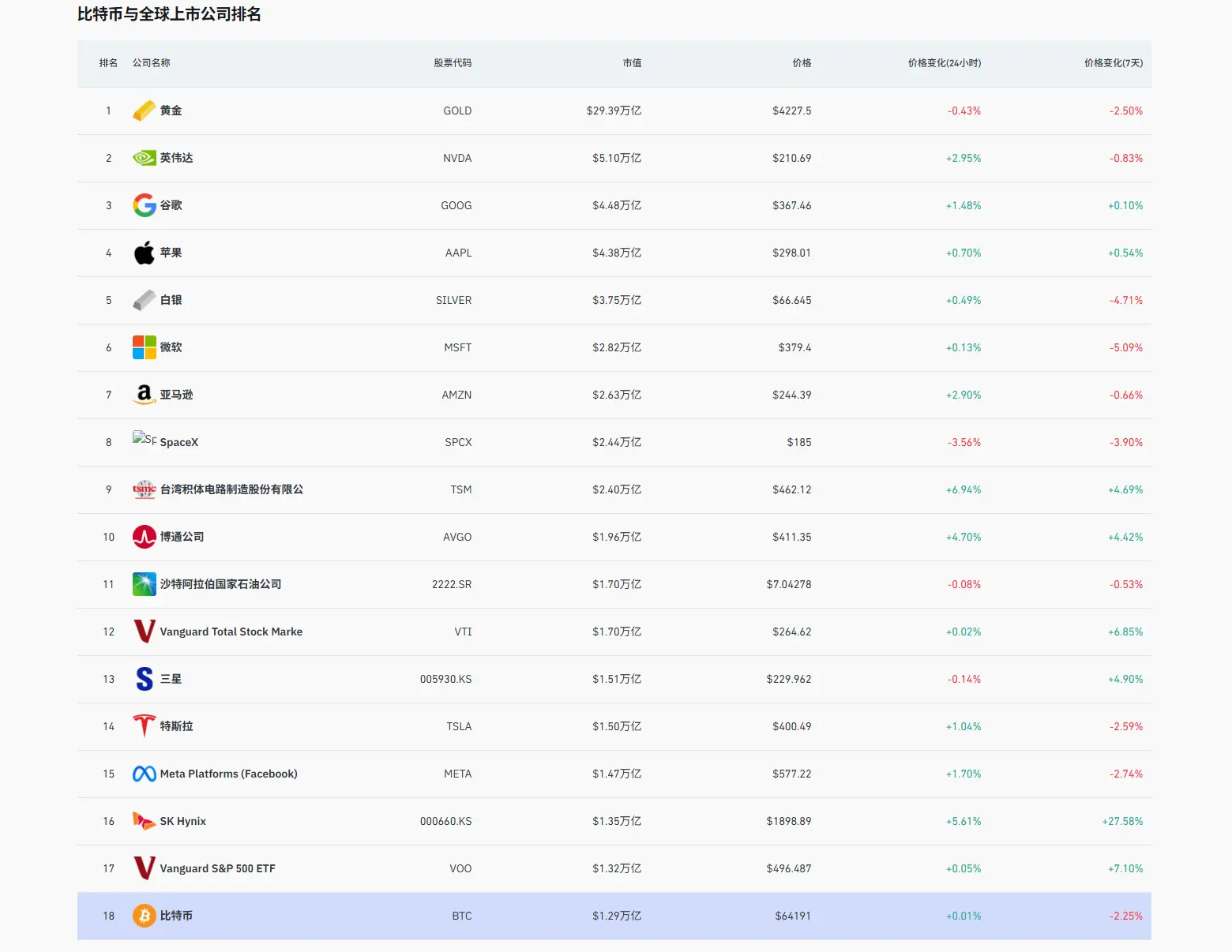
On June 22, a rise in SK hynix's stock price propelled its market capitalization to 1.35 trillion US dollars, surpassing Bitcoin's total market cap of approximately 1.29 trillion US dollars. It temporarily overtook Samsung Electronics during intraday trading to become the highest-valued company in South Korea.

According to Coinglass data, in the global asset rankings, SK hynix has risen to 16th place, while Bitcoin has slipped to 18th.
HBM, and a 13-Year Bet

The core driver behind SK hynix's recent surge is HBM (High Bandwidth Memory). AI training and inference have extremely high demands on memory bandwidth, and SK hynix is the primary HBM supplier for NVIDIA, holding a market share of over 60%.

Earnings report data shows that SK hynix's Q1 revenue was 52.58 trillion KRW, with an operating profit of 37.61 trillion KRW, resulting in a profit margin of 72%. Analysts currently have a consensus for SK hynix's Q2 operating profit in the range of 62 to 65 trillion KRW, with optimistic predictions from some brokerages already revised upward to over 68 trillion KRW.

In early April this year, most market expectations for Q2 were still around 50 trillion KRW. Subsequently, with the continued strength of memory prices, brokerages have generally made significant upward revisions. Management stated during the earnings call that the structural memory shortage driven by artificial intelligence will persist for at least several years and plans to significantly increase capital expenditure to expand advanced capacity.

Reportedly, SK hynix began betting on HBM technology back in 2009, a time when market attention on this complex and initially low-demand technology was virtually non-existent. From the first generation of HBM to HBM3E, this all-or-nothing gamble lasted nearly 13 years, only reaching its crowning moment with the emergence of ChatGPT.
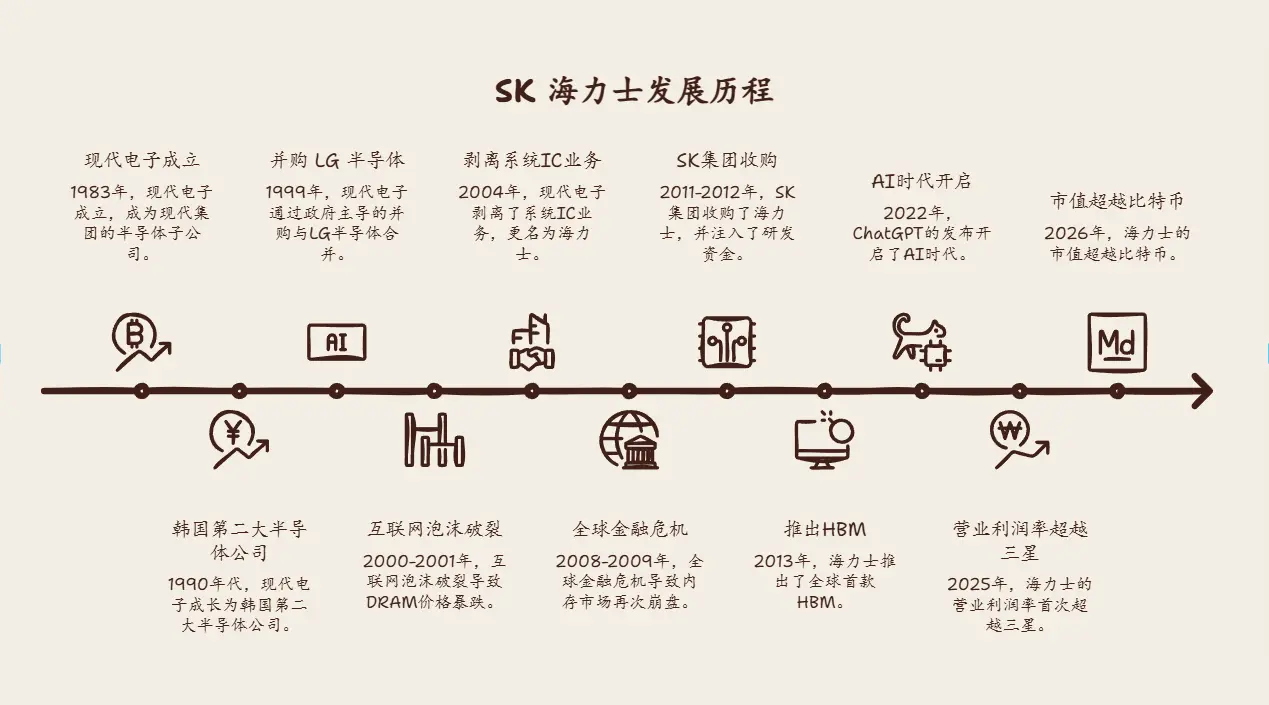
Image source: AI Generated

SK hynix's journey to this point was not without a crucial external intervention. After the dot-com bubble burst in 2001, Hynix was mired in a debt crisis, its stock price once falling to junk levels. It even negotiated a sale with Micron Technology, which ultimately failed. For the following decade, the company remained under creditor control.

In 2012, SK Group Chairman Chey Tae-won, overriding opposition from the board, used its investment holding subsidiary SK Square to acquire it for approximately 3 billion US dollars. It was renamed SK hynix and infused with substantial R&D funding. It was this investment that allowed the company to continue developing the then-niche HBM technology. Currently, SK Square holds about a 20% stake in SK hynix, making it the largest single shareholder.

It is worth noting that SK Square itself once attempted to enter the crypto market. In 2021, it acquired a 35% stake in the Korean cryptocurrency exchange Korbit for about 90 billion KRW and planned to issue its own token, SK Coin. According to public reports, following the sharp market downturn after the Terra/LUNA crash in 2022, the SK Coin issuance plan was shelved, with no substantial progress since.

Reuters, citing informed sources, reported that SK hynix plans to list on the Nasdaq as early as August this year. This move would lower transaction barriers for US institutional and passive funds, potentially attracting further capital inflows. NVIDIA CEO Jensen Huang recently stated that NVIDIA's collaboration with SK hynix could bring South Korea commercial opportunities worth hundreds of billions of dollars in the future.

Why Capital is Buying: The Mirror of Crypto AI

In this wave of AI, the market is more willing to pay a premium for segments with actual orders and visible supply bottlenecks. Assets directly involved in the AI supply side—computing power, memory, and electricity—have received priority allocation due to their quantifiable revenue and verifiable barriers.

HBM production capacity is highly concentrated in the hands of just three players: SK hynix, Samsung, and Micron, with expansion cycles lasting 2 to 3 years. This scarcity at the physical level is not constructed by narratives; it is locked in by capacity cycles and technological barriers. The valuation logic of the memory industry is also shifting from "cyclical stocks" to "growth stocks."

SK hynix's market cap surpassing Bitcoin is a public statement by the capital markets about two types of scarcity. Given that such high barriers have already formed at the physical layer, the situation of Crypto AI is also worth re-examining.

The Crypto AI sector has been telling a story for the past two years: decentralized computing power will reshape AI infrastructure, and open networks will surpass closed corporate data centers. The potential of this direction is real, but standing before the market cap figure of SK hynix today, there are some realities worth confronting directly.

The IC3 report, a joint publication by Cornell University and 12 other universities, points out that the integration of Crypto and AI remains in its early stages, with the hype surrounding this intersection having already overshadowed actual progress. Decentralized computing, data markets, and governance largely remain at the conceptual stage.

At the project level, taking Bittensor, one of the most representative projects in the Crypto AI sector, as an example, its token TAO has fallen 20% over the past three months. Bittensor co-founder const posted on X, stating that the project's economic incentive layer is still dominated by the core team. They choose to prioritize rapid iteration at the cost of maintaining centralization, estimating it will take another year and a half to complete the core mechanism construction. In other words, their underlying mechanisms are still being patched.

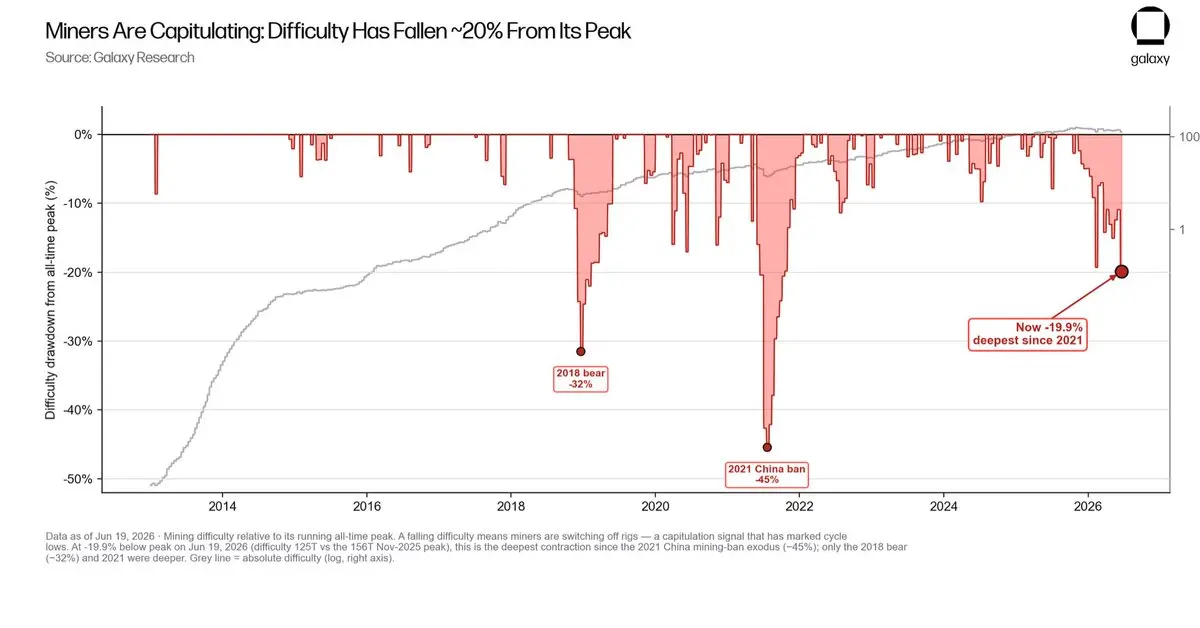
Crypto mining companies, which are closer to the hardware layer, are also in a tough spot. According to Galaxy Research data, Bitcoin miners are entering a "capitulation period." The current network mining difficulty has fallen more than 20% from its historical high, marking the largest decline since China's crackdown on Bitcoin mining in 2021, with some miners continuously exiting the network or shutting down equipment.
In pursuit of transformation, mining companies like Core Scientific, TeraWulf, and Hut 8 have announced entries into the AI and high-performance computing fields. However, according to a VanEck report, this transformation faces a short-term funding gap of approximately 50 billion US dollars, with long-term capital needs around 2.21 trillion US dollars. Furthermore, the industry has currently delivered only about 25% of the leased AI capacity—companies missing construction milestones are already facing investor downgrades.

The IC3 report by Cornell University and others mentions that the integration of Crypto and AI remains in its early stages, with hype overshadowing progress. Decentralized computing, data markets, and governance largely remain conceptual.

In terms of capital, Arthur Hayes pointed out in his recent article "Reality Test" that since ChatGPT's release in 2022, the AI industry has issued approximately 1.5 trillion US dollars in debt, roughly equivalent to the increase in the US M2 money supply during the same period—AI has almost absorbed all the new liquidity, leaving Bitcoin no opportunity. Hayes argues this is not a logic of "funds flowing back to crypto if AI falls." The upcoming massive IPOs of Anthropic and OpenAI will further syphon market funds. Once the AI bubble bursts, bank credit contraction will simultaneously tighten liquidity, and Bitcoin will be sold off along with AI.

Since the second half of last year, many traders previously active in the crypto market have shifted their attention to US and South Korean stocks, chasing the AI hardware trend. The logic behind capital flowing into AI infrastructure is simple and brutal: real orders, physical barriers, quantifiable profit margins.

This certainty is the fundamental reason why capital is willing to pay a high premium today, and it is precisely this kind of certainty that the AI narrative in the crypto market lacks.

In other words, the dividends of AI infrastructure are currently more inclined to be captured by entities with technological barriers and real supply capabilities. Crypto networks need to more clearly define their position in this value chain during this process.


Trending Cryptos

Related Questions

QWhat is the main reason for SK Hynix's recent surge in market capitalization surpassing Bitcoin's?

AThe main driver is its dominance in the production of HBM (High Bandwidth Memory), a critical component for AI training and inference. SK Hynix is the primary supplier to NVIDIA, holding over 60% market share.

QHow did SK Group's investment in 2012 impact the future of SK Hynix?

ASK Group's acquisition of Hynix in 2012 for about $3 billion, renaming it SK Hynix, provided crucial capital that allowed the company to continue investing in the then-niche HBM technology, which became central to the AI boom.

QWhat challenge does the article highlight for the Crypto AI sector when compared to traditional AI infrastructure companies like SK Hynix?

AThe article highlights that Crypto AI projects lack the 'determinism' or certainty that capital seeks—such as verifiable physical barriers, real orders, and quantifiable profits—which traditional AI hardware suppliers like SK Hynix possess.

QAccording to the article, what is the current state of the transition for many Bitcoin mining companies into AI?

AMany mining companies are announcing transitions into AI and high-performance computing, but they face a significant short-term funding gap (estimated at around $500 billion) and have only delivered about 25% of their leased AI capacity, with some facing investor downgrades.

QWhat argument does Arthur Hayes make about the relationship between AI funding and the cryptocurrency market?

AArthur Hayes argues that since ChatGPT's launch, the AI sector has absorbed nearly all new liquidity (issuing about $1.5 trillion in debt), leaving little for Bitcoin. He contends that if the AI bubble bursts, a resulting credit contraction would lead to Bitcoin being sold off alongside AI assets, not benefiting from a capital inflow.

Related Reads

Senior Trader's Confession: How to Trade Market's False Expectations?

Veteran trader's case study: trading the market's "wrong expectations". This trade centered on a textbook "expectation error" after a weak CPI report. While the market initially priced in broad monetary easing (sending Nasdaq to 30,060), the crucial 30-year real yield hit a 20-year high. This signaled a fractured transmission mechanism: short-term rates eased, but long-term funding costs (vital for tech valuations) refused to fall. The trader executed five short positions on the Nasdaq (NQ) as it fell from 30,060 to 28,768. The core methodology: don't just trade the data, but analyze the market's implied causal chain and identify where it breaks. In this case, the chain was: Weak CPI → Policy Easing → Lower Long-Term Funding Costs → NQ Valuation Expansion. The break occurred between policy easing and long-term rates. The "veto variable" – long-term real yields – refused to confirm the bullish narrative. Trades were structured around "fast variables" (price) temporarily repairing while "slow variables" (funding conditions) remained broken. The article outlines a repeatable framework: 1) Map the market's implied causal chain. 2) Identify the veto variable. 3) Observe if it rejects the narrative. 4) Enter when price still follows the old script. 5) Choose the cleanest asset expression (e.g., short NQ, not broad S&P). 6) Define both invalidation and fulfillment exit conditions. The key insight: Alpha often comes not from an information edge, but from a "reaction function edge" – recognizing when the market is applying an outdated causal logic to new data. The critical question: What causal chain is the market's first reaction relying on, and is that chain still valid today?

marsbit21m ago

Senior Trader's Confession: How to Trade Market's False Expectations?

marsbit21m ago

Opinion: The Hedging Relationship Between U.S. Treasuries and Stocks Has Broken Down, and BTC, as a Risk Asset, Is Under Dual Pressure

For the past 20 years, U.S. investors relied on a free insurance policy: when stocks fell, bonds rose, cushioning portfolio losses. This reliable inverse correlation underpinned entire financial strategies. However, this mechanism broke down around 2020 and has not recovered. Currently, the two-month rolling correlation between the S&P 500 and 10-year Treasury yields is at -0.69, its lowest level since 1996, indicating stocks and bonds are moving in sync to an unprecedented degree, eliminating the traditional portfolio shock absorber. The失效 of this hedge is not simply due to lost confidence in U.S. debt. The key driver is the shift from growth-dominated to inflation-dominated market narratives. When growth fears prevail, stocks and bonds move inversely. Since 2022, persistent inflation volatility has been the dominant factor, causing both asset classes to suffer simultaneously from higher inflation expectations. Investors now seek safety without duration risk, favoring cash, dollars, and short-term Treasuries while selling long-duration bonds. Record U.S. deficits, rising net interest payments, and waning foreign demand (e.g., from Japan) are pressuring long-term yields, with the 30-year yield surpassing 5%. This environment places Bitcoin, as a risk asset on the far end of the risk curve, under dual pressure. Higher risk-free rates increase the opportunity cost of holding non-yielding assets like Bitcoin, while falling equities reduce overall risk appetite. Bitcoin's performance has become highly sensitive to macro conditions such as real yields, dollar strength, and financial conditions. While its long-term thesis as a fixed-supply asset outside the sovereign credit system is strengthened by these fiscal trends, the same conditions hurt it in the short term. The return of bonds as a effective hedge requires inflation volatility to subside, growth risks to retake dominance, and the Fed to have room to ease policy. Until then, Bitcoin trades in a market where the deepest asset class no longer absorbs shocks, removing the safety floor for all risk assets, especially those that pay nothing to wait.

marsbit21m ago

Opinion: The Hedging Relationship Between U.S. Treasuries and Stocks Has Broken Down, and BTC, as a Risk Asset, Is Under Dual Pressure

marsbit21m ago

Funding Weekly | Crypto.com Secures $400M Investment, CeFi and Stablecoin Sectors Continue to Attract Capital

Crypto Weekly Investment Recap: Funds Converge on CeFi, Stablecoins, and AI Last week's crypto and AI investment landscape saw significant capital concentration, with a few large deals dominating. **Crypto/Web3 Highlights (July 13-19):** Total investment exceeded **$812 million** across 17 deals. Key trends: * **Centralized Finance (CeFi) & Stablecoins** remained a major magnet, led by **Crypto.com**'s massive **$400 million** raise from Citadel Securities, valuing the exchange at $20B. * **Infrastructure & Tools** saw 7 deals, including **Cyclops** ($20M for stablecoin payments) and **ADI Chain** ($50M for stablecoin settlement infrastructure). * **DeFi** had 2 deals, such as AI-native DEX **Quote Trade** ($4M). * Other notable raises: API broker **Alpaca** ($135M), cross-border platform **Flex** ($70M), treasury firm **ORANGE JUICE** ($40M), and prediction market **Pascal** ($9M). * **Acquisitions:** Keyrock bought BlockFills' trading unit, SBI Holdings acquired Singapore exchange Coinhako, and MoonPay bought startup Glide. **AI & Robotics Highlights:** Investment momentum in AI remained very strong. * Nvidia-backed AI cloud service **Fireworks** raised a massive **$1.5 billion** at a $17.5B valuation. * In robotics, **Walden Robotics** (spun out from Toyota) secured **$300 million**, and Chinese humanoid firm ****逐际动力** **(Climax Dynamics) raised nearly **$200 million** in a Pre-IPO round. * Other significant AI raises included Indian programming platform **Emergent** ($130M) and drone company **Brinc** ($125M), backed by Sam Altman. Overall, the trend shows capital flowing heavily into established crypto financial services, stablecoin infrastructure, and large-scale AI/robotics commercialization.

marsbit1h ago

Funding Weekly | Crypto.com Secures $400M Investment, CeFi and Stablecoin Sectors Continue to Attract Capital

marsbit1h ago

The Gentlest Bear Market? BTC Bears Exit, ARK and Bitwise Collectively Bullish

**Title: The Mildest Bear Market? BTC Shorts Exit, ARK and Bitwise Collectively Bullish** Bitcoin continues to consolidate around $75,000 while Ethereum struggles near $1,900. Market data shows $116 million in liquidations over 24 hours, with $62.7 million from short positions, and the Fear & Greed Index remains at 35 (Fear). According to Polymarket, there's a 33% probability BTC falls below $50,000 this year. ARK Invest's Q2 2026 Bitcoin report notes technical weakness but identifies potential bottoming signals, including a record high in long-term holder supply, suggesting selling exhaustion. Bitwise's Juan Leon calls this the "structurally mildest bear market" on record, with a ~50% drawdown from highs, less severe than past cycles. He highlights institutional accumulation and a shift in investor dialogue from survival to entry points. Technical analysis from Bit suggests a potential C-wave low may have formed, with an ideal bottoming range between $50,000-$55,000. However, glassnode's CryptoVizArt warns that failure to break $66,000 could signal a local top, as new buyer accumulation is concentrated there. Analyst Darkfost identifies a critical support band between $59,000-$70,000, where 50% of BTC's circulating supply has changed hands. Notably, trader Doctor Profit announced closing all crypto short positions—including BTC shorts from $115k-$125k and over 100 altcoin shorts—for significant profit. He has begun a phased accumulation of Bitcoin spot starting at $64,000, reversing his previous $40k-$50k target, citing structural positives like regulatory clarity and institutional adoption. He argues the anticipated September/October bottom may arrive earlier than the herd expects.

Foresight News2h ago

The Gentlest Bear Market? BTC Bears Exit, ARK and Bitwise Collectively Bullish

Foresight News2h ago

Trading

Spot

Hot Articles

What is $BITCOIN

DIGITAL GOLD ($BITCOIN): A Comprehensive Analysis Introduction to DIGITAL GOLD ($BITCOIN) DIGITAL GOLD ($BITCOIN) is a blockchain-based project operating on the Solana network, which aims to combine the characteristics of traditional precious metals with the innovation of decentralized technologies. While it shares a name with Bitcoin, often referred to as “digital gold” due to its perception as a store of value, DIGITAL GOLD is a separate token designed to create a unique ecosystem within the Web3 landscape. Its goal is to position itself as a viable alternative digital asset, although specifics regarding its applications and functionalities are still developing. What is DIGITAL GOLD ($BITCOIN)? DIGITAL GOLD ($BITCOIN) is a cryptocurrency token explicitly designed for use on the Solana blockchain. In contrast to Bitcoin, which provides a widely recognized value storage role, this token appears to focus on broader applications and characteristics. Notable aspects include: Blockchain Infrastructure: The token is built on the Solana blockchain, known for its capacity to handle high-speed and low-cost transactions. Supply Dynamics: DIGITAL GOLD has a maximum supply capped at 100 quadrillion tokens (100P $BITCOIN), although details regarding its circulating supply are currently undisclosed. Utility: While precise functionalities are not explicitly outlined, there are indications that the token could be utilized for various applications, potentially involving decentralized applications (dApps) or asset tokenization strategies. Who is the Creator of DIGITAL GOLD ($BITCOIN)? At present, the identity of the creators and development team behind DIGITAL GOLD ($BITCOIN) remains unknown. This situation is typical among many innovative projects within the blockchain space, particularly those aligning with decentralized finance and meme coin phenomena. While such anonymity may foster a community-driven culture, it intensifies concerns about governance and accountability. Who are the Investors of DIGITAL GOLD ($BITCOIN)? The available information indicates that DIGITAL GOLD ($BITCOIN) does not have any known institutional backers or prominent venture capital investments. The project seems to operate on a peer-to-peer model focused on community support and adoption rather than traditional funding routes. Its activity and liquidity are primarily situated on decentralized exchanges (DEXs), such as PumpSwap, rather than established centralized trading platforms, further highlighting its grassroots approach. How DIGITAL GOLD ($BITCOIN) Works The operational mechanics of DIGITAL GOLD ($BITCOIN) can be elaborated on based on its blockchain design and network attributes: Consensus Mechanism: By leveraging Solana’s unique proof-of-history (PoH) combined with a proof-of-stake (PoS) model, the project ensures efficient transaction validation contributing to the network's high performance. Tokenomics: While specific deflationary mechanisms have not been extensively detailed, the vast maximum token supply implies that it may cater to microtransactions or niche use cases that are still to be defined. Interoperability: There exists the potential for integration with Solana’s broader ecosystem, including various decentralized finance (DeFi) platforms. However, the details regarding specific integrations remain unspecified. Timeline of Key Events Here is a timeline that highlights significant milestones concerning DIGITAL GOLD ($BITCOIN): 2023: The initial deployment of the token occurs on the Solana blockchain, marked by its contract address. 2024: DIGITAL GOLD gains visibility as it becomes available for trading on decentralized exchanges like PumpSwap, allowing users to trade it against SOL. 2025: The project witnesses sporadic trading activity and potential interest in community-led engagements, although no noteworthy partnerships or technical advancements have been documented as of yet. Critical Analysis Strengths Scalability: The underlying Solana infrastructure supports high transaction volumes, which could enhance the utility of $BITCOIN in various transaction scenarios. Accessibility: The potential low trading price per token could attract retail investors, facilitating wider participation due to fractional ownership opportunities. Risks Lack of Transparency: The absence of publicly known backers, developers, or an audit process may yield skepticism regarding the project's sustainability and trustworthiness. Market Volatility: The trading activity is heavily reliant on speculative behavior, which can result in significant price volatility and uncertainty for investors. Conclusion DIGITAL GOLD ($BITCOIN) emerges as an intriguing yet ambiguous project within the rapidly evolving Solana ecosystem. While it attempts to leverage the “digital gold” narrative, its departure from Bitcoin's established role as a store of value underscores the need for a clearer differentiation of its intended utility and governance structure. Future acceptance and adoption will likely depend on addressing the current opacity and defining its operational and economic strategies more explicitly. Note: This report encompasses synthesised information available as of October 2023, and developments may have transpired beyond the research period.

939 Total ViewsPublished 2025.05.13Updated 2025.05.13

What is $BITCOIN

Discussions

Welcome to the HTX Community. Here, you can stay informed about the latest platform developments and gain access to professional market insights. Users' opinions on the price of BTC (BTC) are presented below.

活动图片