How dramatic!
A dusty old list from 26 years ago was recently unearthed by netizens, and the post instantly went viral.

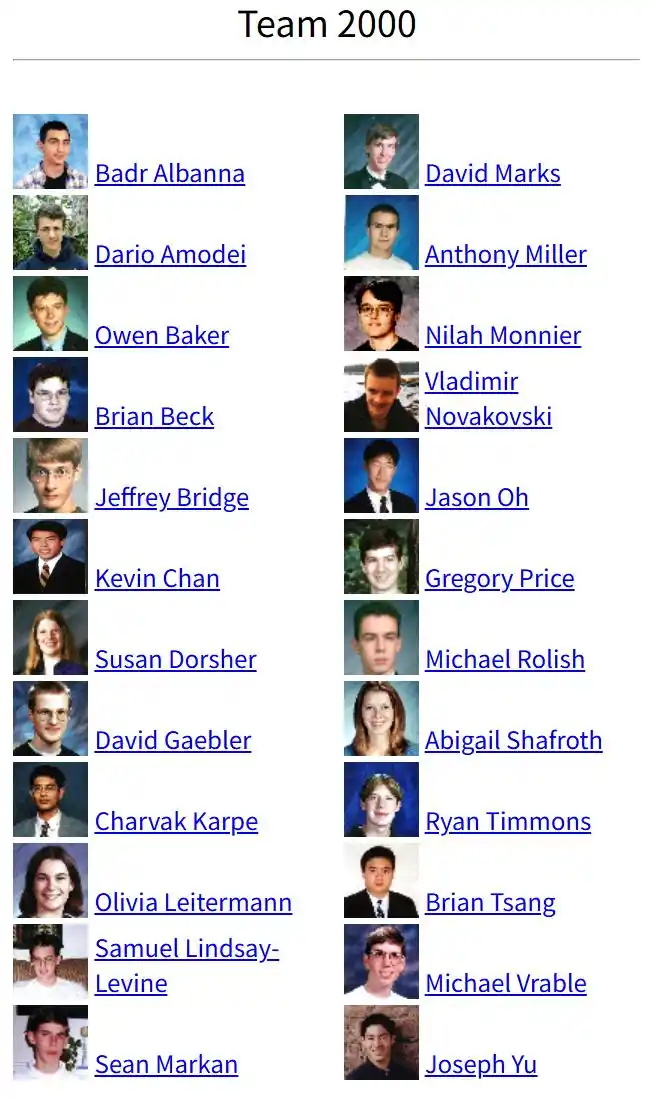
The list comes from the 24-member training camp for the 2000 US Physics Olympiad, and a name lies there prominently: Dario Amodei.
Yes, that's the Amodei who leads Anthropic, valued at $965 billion, with a personal fortune of $15.5 billion.

And that's not all, as you scroll down the list:
Lighter founder Vladimir Novakovski, Duolingo AI research engineer Badr Albanna, UC Berkeley computational biology professor Nilah Monnier Ioannidis are all on it.
A high school physics competition from 26 years ago managed to assemble half of Silicon Valley's talent map.
A Five-Hour Exam Sifted Through 19 Geniuses
The story took place at the University of Maryland in May 2000.
The American Association of Physics Teachers (AAPT) still preserves this training camp archive: 24 names on a static webpage with a distinct turn-of-the-millennium aesthetic.
How difficult was it to get a seat in that room?
According to the process AAPT published at the time, roughly 1,100 qualified students typically took the first round of exams each year. The top 200 advanced to the next round, from which 24 were selected for the training camp.
The final selection was a five-hour exam.
The 24 students had to solve three physics problems under near-competition conditions to vie for the 5 spots on the US team for the International Physics Olympiad.
The final list was announced: Anthony Miller, Jason Oh, Gregory Price, Michael Vrable, Joseph Yu.
The five winners later flew to Leicester, UK, to compete in the 31st International Physics Olympiad (IPhO).
Facing 300 contestants from 62 countries and regions, these five high schoolers delivered impressive results.
Gregory Price scored 35.2 points to win a silver medal, the highest score for the US team, ranking 16th overall; the other four contestants all won bronze medals.
The US team ranked 7th overall, with all 5 team members medaling.
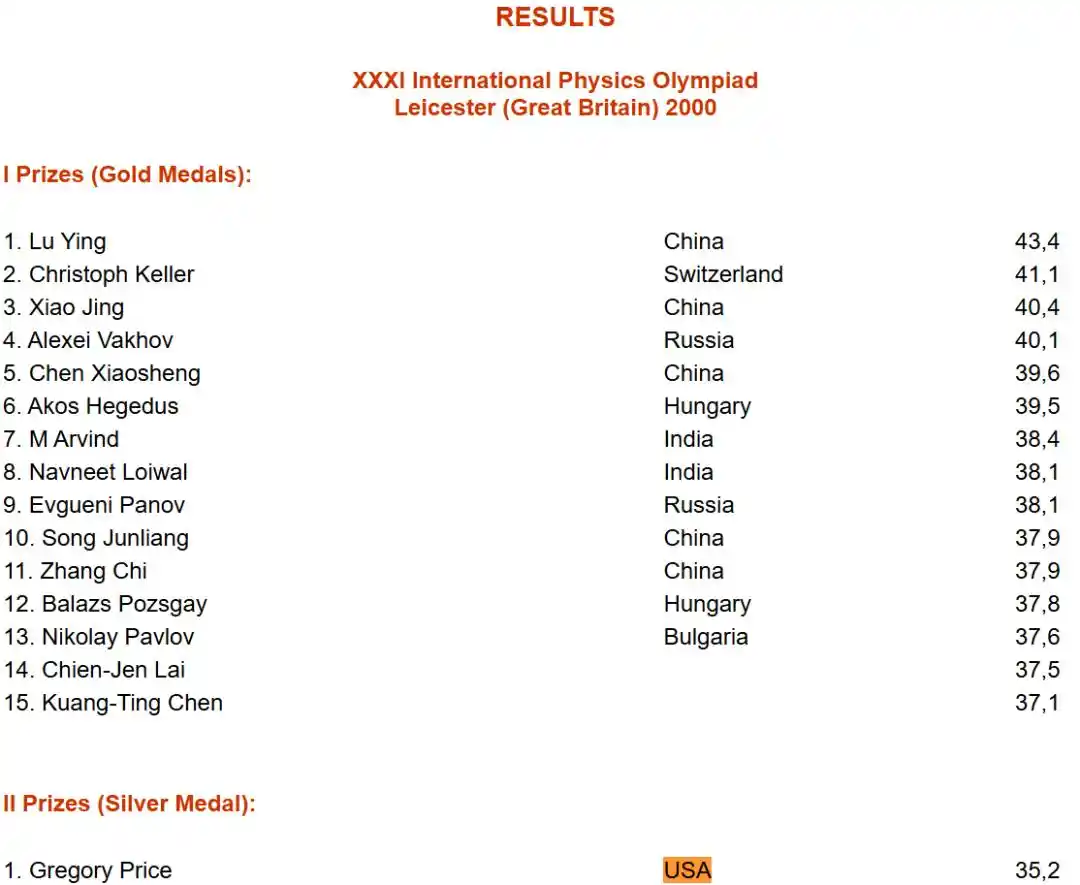
By the way, China dominated the rankings that year: Lu Ying scored 43.4 points to take the global individual top spot, and the team also placed first overall.
The Teen Who Fell Short Later Created Claude
Although he didn't make the top five, Dario didn't leave physics.
On the contrary, he pursued a PhD in physics at Princeton University, researching statistical mechanical models and neural circuits.
In 2014, he left academia to join Baidu's AI lab in Silicon Valley, working on the Deep Speech 2 system, before moving to Google Brain.
In 2016, he joined OpenAI, rising to Vice President of Research, helping lead the development of GPT-2 and GPT-3. He was also a co-author of the early paper on the Reinforcement Learning from Human Feedback (RLHF) method for aligning AI with human preferences.
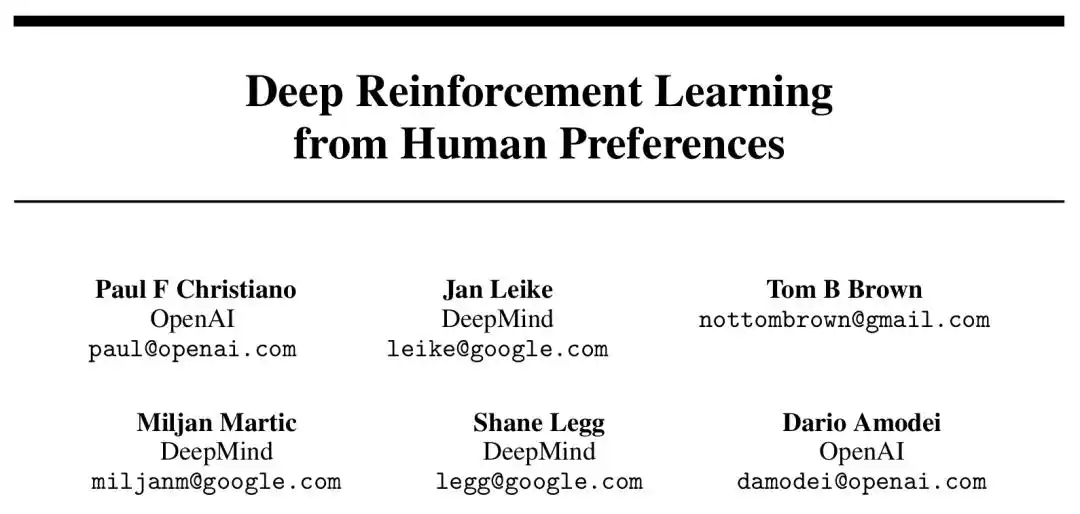
Paper address: https://arxiv.org/abs/1706.03741
In 2021, Dario co-founded Anthropic with six other founders, serving as CEO.
What happened next is well-known—they created Claude.

One List, Half of Silicon Valley
If Dario's comeback took 26 years, Vladimir Novakovski needed only one.
After falling short, he made a comeback in 2001, successfully made the US team, and won a silver medal at that year's International Physics Olympiad.
His later story was even more meteoric.
He went to Harvard and graduated early, then was personally recruited by Citadel founder Ken Griffin to work in quantitative trading.
After leaving Citadel, he served as head of machine learning at Quora, then as VP of Engineering at fintech company Addepar. In 2017, he co-founded the AI social platform Lunchclub, later renamed Lighter.
In 2025, Lighter raised $68 million in funding led by Founders Fund and Ribbit Capital, with a current valuation of about $1.5 billion.
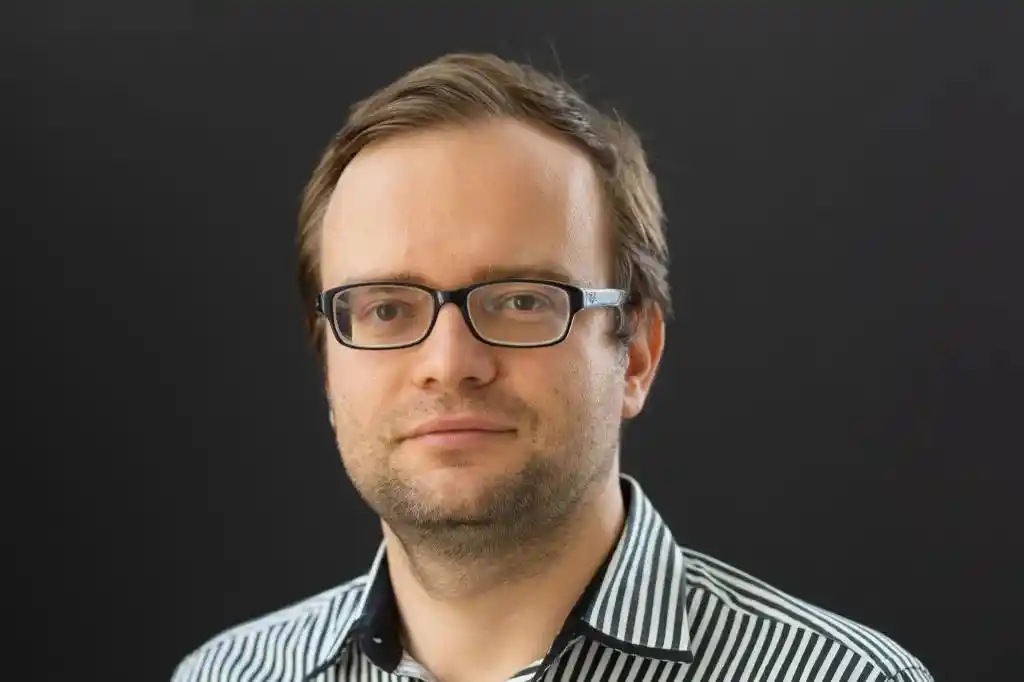
Badr Albanna on the same list took two major career turns.
He earned a PhD in physics from UC Berkeley, later became a professor at institutions like Fordham University, modeling the auditory cortex of the brain using statistical mechanics and information theory.
Later, he joined Duolingo as an AI research engineer, applying multi-armed bandits and causal models to personalized notifications and commercialization systems.
The "Time to practice English" notification you might receive daily could be powered by his models.
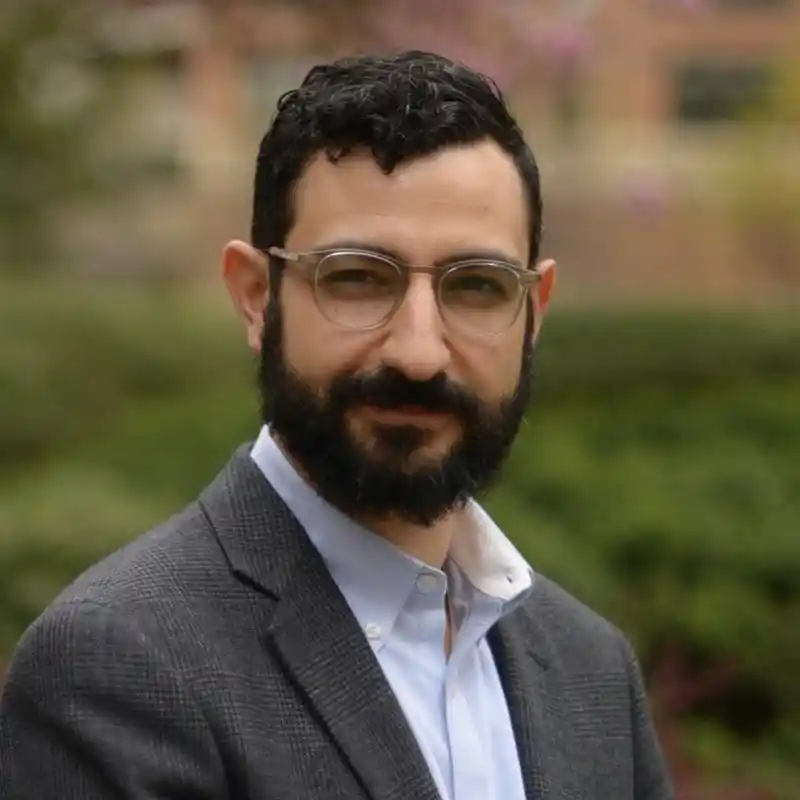
Nilah Monnier brought her physics training into computational biology.
She earned a PhD in biophysics at Harvard, conducted her research work at MIT—analyzing the motion of particles inside cells using hidden Markov models and Bayesian inference. During her postdoctoral phase at Stanford, and now teaches at UC Berkeley.
REVEL, a tool she helped develop, is already being used to predict the pathogenicity of missense variants.
The Top Five Also Had Meteoric Careers
The final team of five didn't stop at their medals either.
Silver medalist Gregory Price was only a sophomore at Thomas Jefferson High School for Science and Technology in Virginia that year and hadn't even formally taken a physics class.
He earned that silver medal with mathematical talent and an old college physics textbook.
And his competition season wasn't over: the same year, he also represented the US at the International Olympiad in Informatics (IOI), winning another bronze medal, ranking 91st among 278 contestants.
He also casually won first place in the junior category of the nation's largest math competition.
Excelling in physics, math, and computer science—this setup goes beyond just being a 'specialized genius.'
Bronze medalist Jason Oh took an even more unexpected path.
After the Olympiad, he first studied physics and math at Caltech, transferred to Harvard after two years, and graduated with highest honors in physics and mathematics.
Then, he turned to Harvard Law School.
Today, Jason Oh is a professor at UCLA School of Law, the Lowell Milken Chair, researching tax policy and public finance.
Another bronze medalist, Michael Vrable, went from Harvey Mudd College to a PhD in Computer Science at UC San Diego, focusing on cloud storage backup, with the Cumulus backup system as his representative work.
After earning his PhD in 2011, he joined Google to work on security research.
There is less public information about the later careers of the other two bronze medalists, but their credentials from back then are testament enough to their caliber.
Anthony Miller interned at the Princeton Plasma Physics Lab during his freshman year summer, working on gas analysis systems for a new reactor; Joseph Yu was the president of both his school's math and science clubs.
The Invisible Talent Exchange for Top Labs
By now, it's clear that the true output of this training camp was the trust forged years ago, ready to be reconnected at any time.
For example, Robinhood co-founder Vlad Tenev is an old acquaintance Novakovski met through the Olympiad circles. Over twenty years later, Tenev's Robinhood became one of the investors in Lighter's funding round.
The camaraderie built solving problems together as teenagers thus turned into real money written into the equity structure table.
Scott Wu, who co-founded Lunchclub with Vladimir, is a multiple-gold-medal winner at the International Olympiad in Informatics and now leads Cognition, the company behind the AI programmer Devin.
More crucially, this pipeline is far from limited to the 2000 cohort.
The "Notable Alumni" section on the USAPhO Wikipedia page spans nearly two decades, from Chris Hirata in 1996 (who won an IPhO gold medal at age 13 and later became a renowned astrophysicist) all the way to 2014.
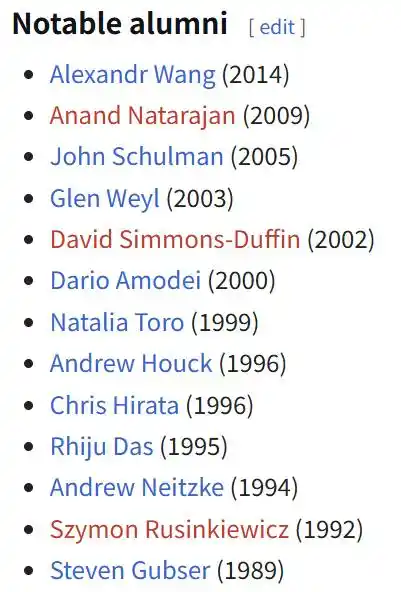
One of the youngest listed is Alexandr Wang (2014), placed next to Dario Amodei (2000) —
Founder of Scale AI, whose shares Meta later bought for $14.3 billion, and who was personally invited to lead the Superintelligence Lab.
Twenty-six years ago, that five-hour exam selected the five individuals who were the fastest and most accurate at solving problems that day.
The AI era has now brought to light all 24 names again.
References:
https://x.com/Phoenixyin13/status/2085297714519052730
https://www.aapt.org/olympiad2000/team2000.html
This article is from WeChat public account "新智元", author: ASI启示录