The 'Stock Call King' Serenity: 3840% Annual Return, Beating Institutions to the Punch

Odaily星球日报Published on 2026-05-26Last updated on 2026-05-26

Abstract

This article profiles the mysterious stock trader and analyst known as Serenity, who has gained significant influence on social media platform X as a "stock call king." Serenity claims extraordinary annual returns of 3840% for the current year and 2256% over the past two years, primarily by focusing on overlooked companies within the AI and semiconductor supply chains. Operating anonymously, Serenity describes himself as a former Reddit WallStreetBets trader, an AI/semiconductor supply chain analyst, and a former AI research scientist. His core investment strategy, termed the "Chokepoint" theory, involves identifying small, critical bottleneck companies in the AI infrastructure ecosystem—such as those in photonics, substrates, and materials—that are essential yet undervalued. He argues these "invisible champions" become crucial as demand for AI hardware surges, creating significant investment opportunities before large institutions take notice. A frequently cited example is stock AXTI, which he has recommended for over two years and claims has yielded over 10,000% returns. The article notes that while Serenity's free, public posts on X have garnered a large following, his identity and exact portfolio size remain unverified, leading to some skepticism. Critics question if his reported returns are fabricated or if he might be manipulating prices of low-market-cap stocks. Serenity counters that he shares research freely to democratize information, allowing retail investors to ...

Original | Odaily Planet Daily (@OdailyChina)

Author | Golem (@web3_golem)
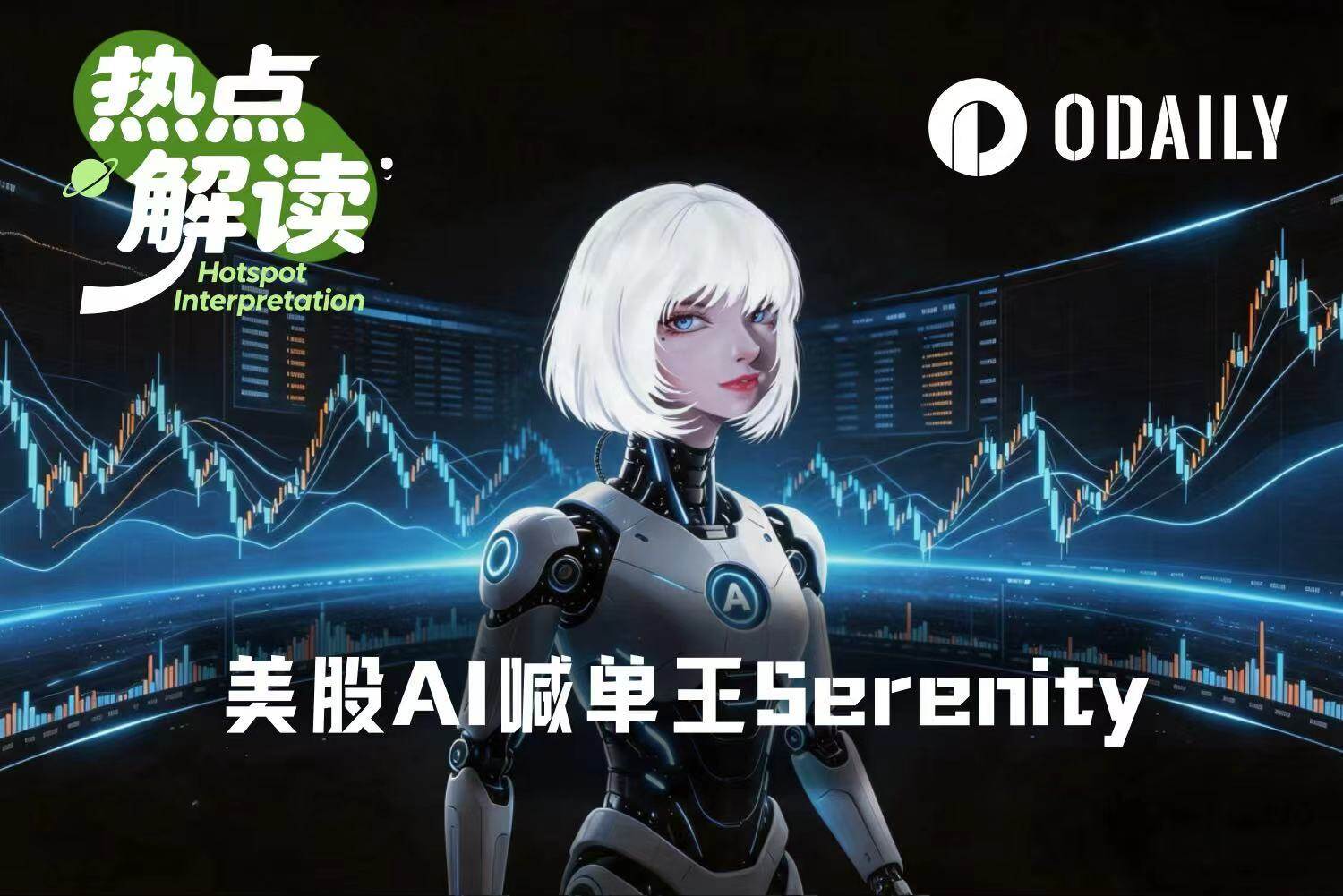
As an investor focused on US stocks in AI and semiconductors, if you haven't heard of Serenity, chances are you're still on the sidelines when it comes to investment research.

Why is that? Because he is currently the hottest "stock call king" on the entire internet. From retail investors to Wall Street, almost everyone is reading his reports and copying his trades. Some people even package his publicly available, free insights into courses to sell within communities.

On May 24th, Serenity announced his investment performance for this year on platform X: a year-to-date return of 3840.39%. Just the day before, he had also shared his investment return over the past two years, which was a staggering 2256.99%.
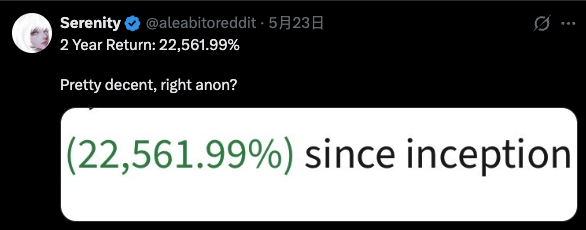
Serenity, "Far Ahead of the Pack"

Serenity only joined X in July 2025, and by May this year, his follower count had grown to 358k, with over 32k subscriptions—just under 15k less than Elon Musk's subscription count. Yet, to this day, no one knows Serenity's true identity. People's understanding of his background comes solely from his self-written bio:

  • Former famous Reddit WSB trader who switched to X(Odaily Note: WallStreetBets is the largest US retail trading community. Serenity was banned for recommending a stock with the ticker AXTI in 2022. This stock has risen over 700% year-to-date);
  • AI & semiconductor supply chain analyst, former RISC-V Foundation member, former AI research scientist;
  • Now primarily trades "those overlooked bottlenecks."

As can be seen from the bio, Serenity's persona is that of an AI expert. He has also claimed to have turned down an offer from Nvidia's AI team back in 2018. In a post, Serenity stated that his investments are also based on a thorough understanding and research of the AI and semiconductor industries. His typical investment research process is: first conduct initial paper research, then translate these ideas into actual plans and trades, followed by subsequent due diligence on the Alpha, and finally, celebrate when the stocks rise.

As shown in the image below, this is a list of Serenity's main stock holdings compiled by community user @kaikaibtc, primarily focused on sectors within the AI industry chain such as optical modules, silicon photonics, storage, CPO (Co-Packaged Optics), and substrates. None of these 21 stocks has a profit lower than 100%. Among them, AXTI, a stock Serenity has mentioned most frequently and "called" for over two years, has even yielded profits exceeding 10,000%. He has publicly stated that AXTI is his most legendary trade.
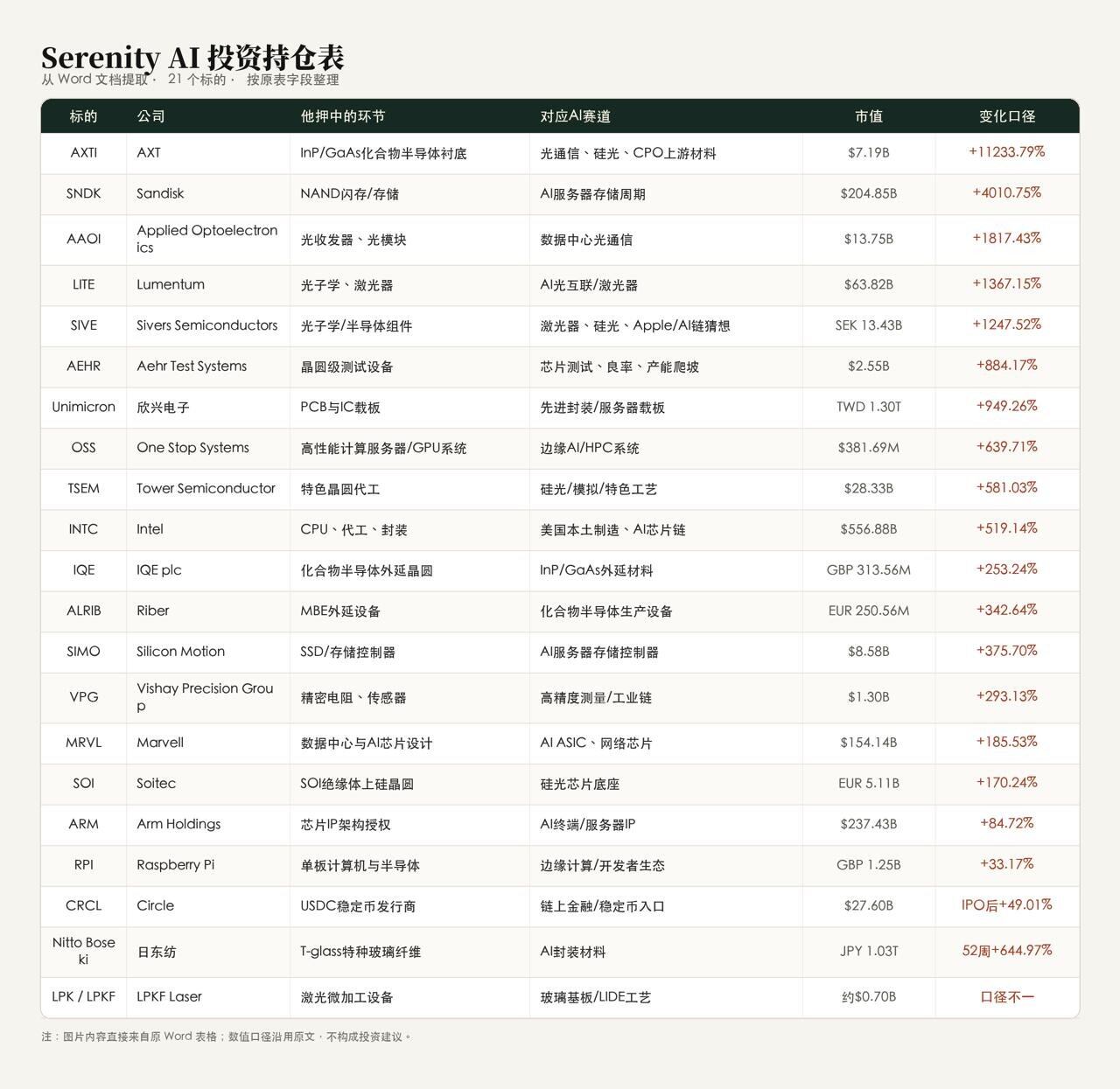
However, what's perhaps even more remarkable than these astonishing profits is that Serenity identified these targets before not only retail investors took notice, but even before institutions entered the market.

When Serenity posted about recommending a particular stock in the past, he was mostly met with skepticism. Only months or even a year later, when investors saw the exaggerated performance of the stock, would they belatedly realize he was right. Stocks like RPI, AXTI, SIVE, and others are vivid examples. When such cases repeatedly occurred, the Serenity account naturally became a must-read for retail investors, Wall Street, and even Silicon Valley investors.

Why is Serenity always ahead of the market and able to unearth those undervalued stocks? The secret lies in his self-constructed investment theory: the Supply Chain Bottleneck (Chokepoint) theory.

The Bottleneck (Chokepoint) Investment Method

Chokepoint is the highest-frequency word appearing in Serenity's posts and is also his core investment logic.

AI is undoubtedly the world's dominant narrative today, but the AI industry suffers from a clear supply-demand imbalance. On one hand, internet giants are spending lavishly on an "arms race" for AI infrastructure; on the other, the supply side is clearly insufficient, with even Nvidia's orders entering a "rationing system." Therefore, capital has also realized that the current stage of AI development has little to do with downstream applications but everything to do with the upstream supply chain. Whoever occupies a critical position in the AI supply chain, whoever is irreplaceable, deserves to be repriced.

Thus, over the past few months, the market's hype around the AI industry has deconstructed the supply chain step by step, starting from the initial GPU computing power. The second layer includes storage, data centers, and optical modules, further down to power, materials, networking equipment, etc. This layered deconstruction of the AI supply chain to find the key "chokepoint" companies in each segment is essentially Serenity's bottleneck investment method, except he acted far ahead of most retail investors and institutions.

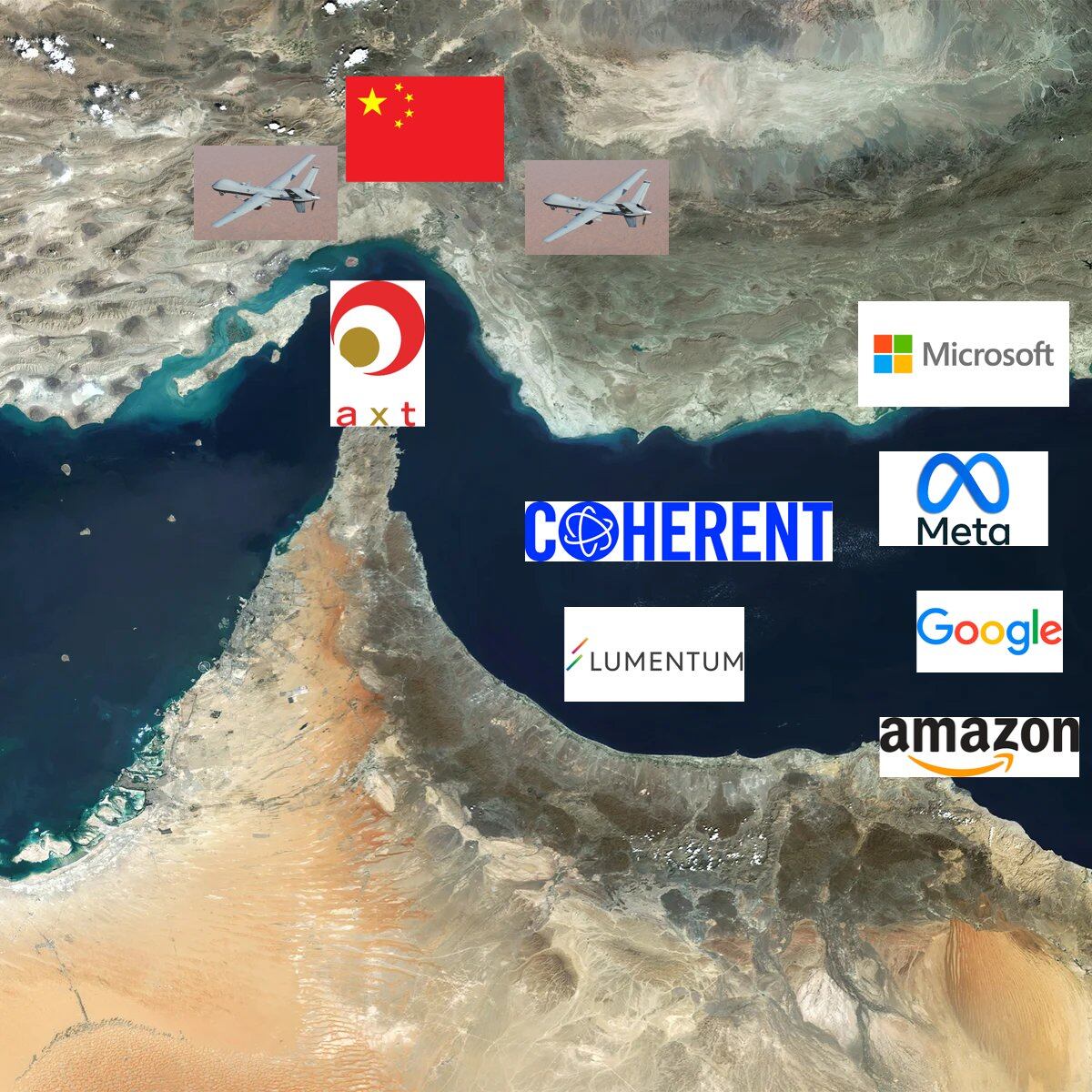
On March 31st, Serenity used an analogy while calling AXTI to vividly explain what a bottleneck point is. He used the Strait of Hormuz as a comparison. Over 20% of the world's crude oil supply passes through the Strait of Hormuz, making it a critical chokepoint in global energy trade. AXTI's relationship to AI optical module companies is similar to the Strait of Hormuz's relationship to global energy trade.
The essence of Serenity's ability to achieve excess returns still comes from market information asymmetry, using sharp thinking and foresight to seek out the "hidden champions" on the AI industry chain that are not fully priced. These companies are not as glamorous as giants like Nvidia, Micron, or SK Hynix, but they are small-scale monopolies whose shortage or shutdown could cause earthquakes in the trillion-dollar downstream AI industry.

For example, when Serenity called IQE in February-March this year, he repeatedly stated that both IQE and Landmark are major photonic chip epitaxial wafer foundries, but IQE's total capacity is much larger than Landmark's. At that time, Landmark's market cap was about $3.8 billion, while IQE's was only $135 million.

It's worth mentioning that Serenity is not superhuman either, knowing every aspect of the AI industry chain in detail. He often mentions using AI to assist in AI supply chain research, including deconstructing industry chains, digging up suppliers, and debating viewpoints with AI.

True Legend or "Photoshop Master"?

In the investment field, deifying any individual is extremely dangerous. Serenity's success rate is not 100%. Stocks he recommended earlier this year, such as CPSH and INFQ, also experienced significant pullbacks in February and March. Rather than copying his portfolio outright, retail investors and traders should learn his research framework and mindset, thereby forming their own system and ultimately finding their own Alpha.

Serenity is also a highly idealistic and mysterious figure. None of his publicly available personal information has third-party verification, and no one even knows if he is male or female. The only private information he has revealed is that he lives an international digital nomad life, currently in Japan learning Japanese. He also lived in Mainland China for a short period in the past, so he knows some Chinese, and frequently travels to countries like South Korea, the UK, Singapore, and Canada, claiming to have visited at least 28 countries.

Because Serenity only shares return rates and not actual portfolio positions, some have questioned whether his profits might be fabricated. Serenity's response to this is: "The reason for not disclosing specific amounts is that the amount is not important." He just wants to prove that users can also find purely valuable information from free posts, and that market return rates expressed as percentages are most suitable for validating a thesis. He also stated that he deeply despises traditional KOLs who flaunt money, luxury watches, cars, and private jets.

Opposing paywalls or paid communities is also a distinct characteristic of Serenity. Serenity publishes most of his core market research entirely on X, accessible for free by anyone, with no barriers, no paid communities. His account subscription costs only $1/month, and the content is merely an Excel spreadsheet. Even without subscribing, it does not affect understanding his core viewpoints in the slightest.

In this world where "all hustle and bustle is for profit," Serenity's behavior—which appears not to seek fame or fortune, generously sharing his market views—seems unnaturally altruistic. Therefore, some speculate that Serenity is merely using his influence to manipulate the prices of these low-market-cap stocks, building positions at low levels, pumping them up, and then selling high, leaving only a tiny "ant-sized" position in his account to fool followers, especially since he only ever reveals return rates, not real profits.

This has a flavor of "measuring the gentleman's heart with a小人's (villain's) mind." Of course, Serenity has his own gentlemanly explanation.

He believes the stock market is a positive-sum game. His goal is to share critical information before institutions "buy in," allowing retail investors to also get on the right path and reap profits. Especially when he sees they don't have to pay over $2000 to join any paid community to see the "wealth code," he feels proud, claiming he is changing the old model. For instance, he said if he didn't tell the IQE story, an institution like AVGO would simply quietly acquire IQE outright, and retail investors wouldn't get any profit at all.

Which version is the truth? Is Serenity someone who truly sees through the AI supply chain, or a top-tier player harvesting traders under the guise of the "bottleneck narrative"? We currently do not know. Whether Serenity will ultimately become a legend or a bubble, we can only leave that for time to answer.

Related Questions

QWhat is Serenity's reported annual investment return for the current year, according to the article?

AAccording to the article, Serenity's reported investment return for the year is 3840.39%.

QWhat is Serenity's primary investment strategy or theory, as described in the article?

ASerenity's primary investment strategy is the 'Chokepoint' or 'Supply Chain Bottleneck' investment theory. It involves identifying critical, undervalued companies in the AI supply chain that hold monopolistic or bottleneck positions, similar to strategic points like the Strait of Hormuz for oil trade.

QWhich stock is mentioned as Serenity's most legendary trade, with a profit exceeding 10,000%?

AThe stock mentioned as Serenity's most legendary trade, with a profit exceeding 10,000%, is AXTI.

QWhat are the main points of skepticism or criticism mentioned about Serenity's claims in the article?

AThe main points of skepticism are: 1) Serenity only shows percentage returns and not actual portfolio values or real-time trades, leading some to question if the returns are fabricated. 2) There is speculation that he might be using his influence to manipulate the price of low-market-cap stocks by buying low, promoting them, and selling high, leaving only a small 'ant position' for show.

QHow does the article describe Serenity's approach to sharing his investment research with the public?

AThe article describes Serenity's approach as highly transparent and anti-paywall. He shares his core research and ideas for free on platform X (formerly Twitter). His paid subscription is only $1 per month and provides just an Excel spreadsheet, with the free content being sufficient to understand his key investment theses. He opposes traditional paid communities and aims to give retail investors information before large institutions act.

Related Reads

Metrics Ventures Market Watch: The Brewing Storm

In the past month, the market has been actively trading contrasting expectations, balancing global supply chain disruptions fueling re-inflation against both actual and anticipated (Walsh) interest rate hikes. This volatility has impacted commodities and most equities, though tech has temporarily benefited from concentrated short-term liquidity. Fundamentally, as previously analyzed regarding the Strait of Hormuz situation, the US faces deep-seated balance sheet issues beyond what any single Fed chair can resolve. Hypotheses around a figure like Walsh could only materialize if AI fundamentally reshapes production relations. Until then, most non-AI-leading nations (effectively all except the US and China) risk fiscal and monetary policy collapse, rendering the identity of the Fed chair ultimately irrelevant. For crypto assets, there is currently no clear role in these dominant narratives. The market remains strongly capped by the 200-day moving average. While trends may shift from "anything but AI" to "anything but mines," this phase is dominated by the silicon vs. carbon (AI vs. traditional) dichotomy, leaving little room for crypto—though its time will come. **Market Overview & Commentary** The crypto market lacks significant catalysts beyond hype, plagued by low volume and scarce innovation, with clear technical resistance. Currently, crypto struggles for attention as global focus lies elsewhere. Assets like gold, oil, and grains are more direct hedges against supply-chain-driven inflation/stagflation. Bitcoin needs more time for capitulation and consolidation; this reset is expected to last until at least Q4 2026. Looking ahead, three factors will likely drive future market volatility: 1. Whether Walsh repeats the patterns of predecessors like Bassant or Musk, shifting stance into a new policy cycle. 2. The market underestimates the severity of global supply chain damage and the prolonged time needed for repair, which will eventually lead to recognition of acute resource shortages and price swings. 3. AI non-beneficiary, high-inflation nations (e.g., UK, Japan) will face severe fiscal and monetary crises. Rapid AI-driven displacement could trigger a collapse of existing credit and welfare systems. Ultimately, the market may realize that an AI bubble burst could spark contagious sovereign credit crises. The monetary and fiscal responses to such a scenario could serve as the ultimate catalyst for Bitcoin's next major bull run.

marsbit10m ago

Metrics Ventures Market Watch: The Brewing Storm

marsbit10m ago

Insiders Betting on Musk Are Reaping 'Historic Returns'

The largest IPO in history is imminent as SpaceX, led by Elon Musk, is set to price its offering on June 12. At a targeted valuation near $2 trillion, this event will mint new billionaires from Musk's inner circle of long-time allies, rewarding their loyalty with unprecedented returns. Key beneficiaries include Antonio Gracias, Musk's close friend and confidant, who holds a 7.3% stake potentially worth over $140 billion, making him the second-largest individual shareholder. Gwynne Shotwell, President and COO since 2002, holds shares valued at roughly $2 billion. Bret Johnsen, the CFO, holds stock worth approximately $1.4 billion. Luke Nosek, a PayPal co-founder and early investor, stands to gain about $5.3 billion. The IPO filing also reveals complex and controversial financial arrangements. SpaceX has guaranteed nearly $20 billion in payments from xAI's subsidiary to Gracias's Valor Equity Partners for AI hardware leases—deals auditors flagged as "failed sale-leaseback" transactions, forcing SpaceX to record them as debt. Despite rapid revenue growth, SpaceX is not profitable, posting a $49 billion loss in 2025 and a $4.3 billion loss in Q1 2026. Capital expenditures are soaring, with over 60% directed toward AI. Public investors will inherit these losses, significant debts, and a governance structure heavily controlled by insiders, including a provision granting Musk up to a billion additional shares if one million people live on Mars.

链捕手12m ago

Insiders Betting on Musk Are Reaping 'Historic Returns'

链捕手12m ago

Ethereum Reduced to a Chinese Concept Stock

The article titled "Ethereum Becomes a Chinese Concept Stock" presents a critical analysis of Ethereum's perceived decline in market confidence and its structural parallels to Chinese companies listed on US stock exchanges. It begins by noting significant sell-offs by early investors like Wanxiang and key figures like Bankless's Hoffman in 2026, despite Ethereum's strong fundamental activity. The piece questions the erosion of trust in Vitalik Buterin and the Ethereum Foundation (EF), arguing that while other ecosystems have faced founder controversies, Ethereum's issues stem from its internal governance model. The author draws a direct comparison to "China concept stocks," which are Chinese businesses operating globally but reliant on foreign capital and listings. Similarly, Ethereum, funded early by Chinese capital like Wanxiang, developed a strong institutional framework from its IXO to its PoS transition. The core problem, according to the article, is a leadership vacuum regarding price and direction. Vitalik's move to make the EF smaller and less active is framed as a mistake. While he advocates for ETH as a "commodity," the ecosystem lacks a clear entity to steward its price stability, creating tension within the PoS system, as seen with Lido's challenges. The narrative suggests that excessive abstraction and a hands-off approach from the EF have left the community adrift, contrasting with more proactive foundations like Solana's. The article then examines emerging technical narratives for Ethereum: privacy (ZK-proofs), AI integration, and a refocus on Layer-1. However, it observes a shift from Ethereum leading as a "world computer" to merely adapting to trends like AI, where crypto-native projects are finding success independently of Ethereum. The piece posits that Ethereum's unique value in an increasingly fragmented world may be as a permissionless, global financial testing ground—a neutral platform amid geopolitical tensions. In conclusion, it asserts that Ethereum's fate mirrors that of China concept stocks: an asset born from one region (conceptually "A"), funded by another ("B"), and dependent on "B" for exit liquidity. While Ethereum's "golden age" may be over, and selling pressure from early backers will continue, it remains positioned as a critical linkage point in a divided global landscape, standing at a new, albeit uncertain, starting point.

marsbit36m ago

Ethereum Reduced to a Chinese Concept Stock

marsbit36m ago

AI Agents Fundamentally Transform Web3 Gaming: From the Rugpull Bakery Bot Controversy to the New Agent Paradigm in 2026

AI Agents Are Redefining Web3 Gaming: From the Rugpull Bakery Bot Controversy to the 2026 Agentic Paradigm The recent controversy in Rugpull Bakery, a competitive baking game on Abstract chain, highlighted a pivotal shift. Player complaints about unfair bot automation in Season 2 led developers to not ban them, but instead formally integrate AI agents as core gameplay in Season 3, providing official guides (skill.md, agent.json). This move signals Web3 gaming's transition into the "Agentic Gaming" era, where AI agents are sovereign entities with independent strategy and economic rights, moving beyond simple automation. By 2026, AI agent integration has evolved into three core models reshaping the ecosystem: 1. **Autonomous Competitors & Economic Entities:** Agents act as independent players. Examples include TEN Protocol's poker-playing agents, AI Arena's trainable NFT fighters, Satoshi Strike Force's "Digital Athletes" trained on player data, and Somnia's "Agentic L1" blockchain providing native infrastructure for millions of autonomous agents. 2. **Modular Infrastructure & Programmable Environments:** Games like EVE Frontier enable "server-side modding," allowing AI agents to program game world logic directly into structures like smart storage, turrets, and stargates via Smart Assemblies. Coupled with standards like ERC-8183, which enables autonomous job creation and payment between agents, in-game infrastructure gains a "commercial soul." 3. **Hybrid Companions & Dynamic Adaptive Worlds:** This model focuses on human-AI collaboration. In Parallel Colony, players guide highly autonomous AI Avatars with unique personalities and goals. Illuvium plans to use AI to transform NPCs into dynamic, context-aware entities that create personalized, emergent narratives. The conclusion is clear: blocking automation is futile. The future lies in leveraging blockchain's transparency and programmability to empower AI agents as first-class citizens. Web3 gaming is shifting from inefficient human labor to efficient algorithmic interplay and emergent intelligence, creating a "post-human" digital frontier where players become commanders and symbiotic partners in a new socioeconomic experiment.

marsbit36m ago

AI Agents Fundamentally Transform Web3 Gaming: From the Rugpull Bakery Bot Controversy to the New Agent Paradigm in 2026

marsbit36m ago

Trading

Spot
Futures
活动图片