Nockchain Aims to Let Miners Earn Two Incomes, But Its First Major Client Is a Company Founded by Its Own Creator

marsbitPublished on 2026-08-14Last updated on 2026-08-14

Abstract

The Logos upgrade on Nockchain, launching at block 126,000, introduces a novel "useful Proof-of-Work" model. It adds a secondary AI inference mining puzzle (integer matrix multiplication) alongside the existing ZK-PoW, aiming to let miners earn both customer payments for computing services and blockchain rewards with the same computational power. This experiment seeks to tie the chain's security budget to growing AI demand. However, its first major paying client is National Compute, a company founded by Nockchain's creator, who also authored the upgrade proposal and conducted its initial audit, raising questions about independence and demand. While the upgrade follows a more rigorous public process after the project's recent restructuring, its success hinges on whether actual paid inference demand materializes to validate the "security-as-revenue" model, beyond the founder's affiliated company. The NOCK token's market performance remains modest ahead of the launch.

Authors: Luke Leasure & Nick Carpinito

Compiled by: Deep Chao TechFlow

Deep Chao Guide: Nockchain's Logos upgrade embeds AI inference directly into Proof of Work, attempting to allow the same computing power to earn customer payments while also capturing blockchain rewards. This is a bold experiment for miner revenue and public chain security budgets. However, the first paying client comes from a company built by the founder, and audit independence is questionable. Whether the flywheel can truly spin remains to be proven. Post-upgrade tomorrow, the actual inference demand and token performance deserve close attention from crypto investors.

GM, Happy Thursday! After Wednesday's CPI increased 0.1% month-over-month, equities continued to outperform cryptocurrencies, a trend that persists, while ETF flows show mild optimism. Let's delve into tomorrow's launch of Nockchain's Logos upgrade and the next evolution of Useful Proof of Work.

Wednesday's CPI rose 0.1% MoM, matching the median forecast and rebounding from the previous month's 0.4% decline. A 0.1% change in housing prices contributed to roughly two-thirds of the monthly increase, while energy prices fell another 1.5%, dragged down primarily by a 2.9% drop in gasoline prices. Overall, this report likely won't alter the Fed's rate path. Equities outperformed crypto on the day, with the Nasdaq up 0.56% and the S&P 500 up 0.23%, while crypto-related stocks performed even better, rising 2.19%.

BTC underperformed, down 0.25%, and most of the crypto indices we track fared worse. Equities outperforming tokens remains an ongoing theme. The Perps sector was the biggest winner, up 3% driven by HYPE strength, while the Decentralized Exchange sector was the biggest loser, down 4.7% due to UNI weakness, offering little signal on sector rotation direction.

BTC ETF flows show a slight change in trajectory. Phases of mild accumulation are interrupted by single-day outflows, echoing weakness in BTC's daily price action. Since early July, net inflows have been positive, indicating a mild return of optimism for these products and a clear shift from the significant outflows seen in May and June. If this trend continues, the re-accumulation by these products should provide a floor for BTC.

Computing Power Earning Two Incomes

Making Proof of Work do something useful isn't a new idea. Bitcoin miners burn hash power without any other output. Inference service providers sell GPU time to customers. Tomorrow, at block height 126,000, with the launch of Nockchain's Logos upgrade, this separation will end.

Logos adds a second mining puzzle alongside the original ZK Proof of Work: integer matrix multiplication, a core operation for AI inference, with its own independent difficulty target. Upon activation, the network allocates 30% of block production to the AI puzzle and 70% to ZK-PoW. Miners perform matrix multiplication, and if the result meets the target, that miner wins the block. When this computation is also running for a paying inference client, the same computing power becomes a lottery ticket to win block rewards.
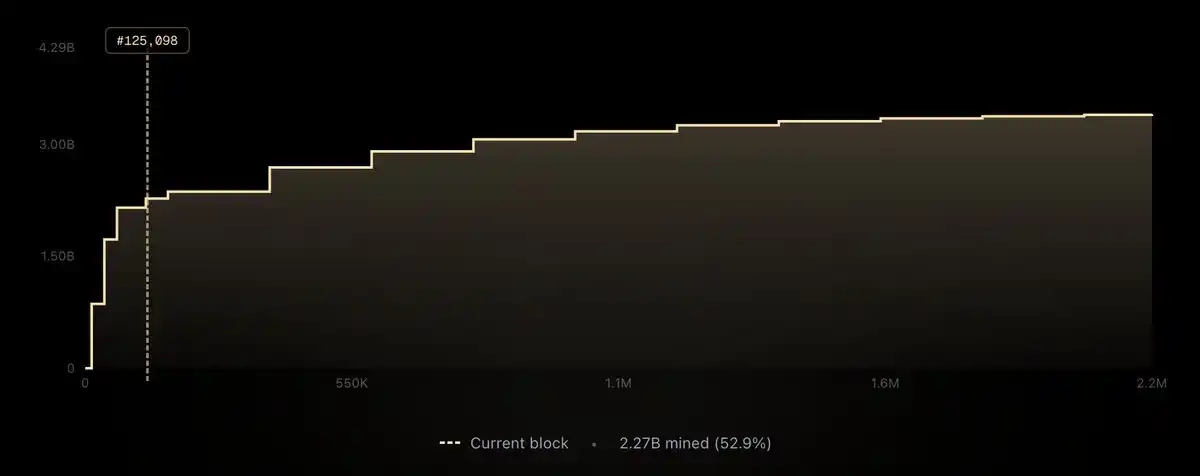
Nockchain's founder describes this as a security budget that scales with AI economic growth: as inference demand rises, more GPUs point at the chain, and the cost to attack it climbs. But this claim relies on demand that hasn't materialized at scale yet. Nockchain needs paying inference clients to spin the flywheel, and its founder has separately founded a company, National Compute, to provide the first batch of clients. This company authored the Logos proposal and conducted an internal audit, meaning the protocol's biggest upgrade yet and its first anchor client come from the same person.
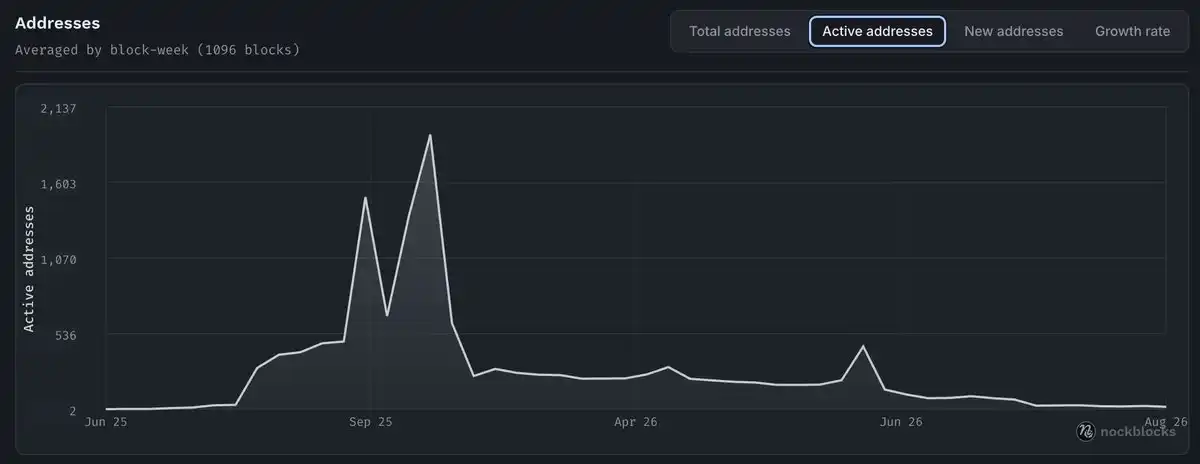
This launch comes just weeks after Zorp's shutdown. Zorp, the research firm that developed Nockchain, has transferred trademarks and code repositories to Nock Community Co., a non-stock corporation managing 20% of the protocol's treasury. Logos is the first upgrade to follow the newly promised process: public testnet, third-party cryptographic audit, a bug bounty of up to 1 million NOCK, and an announced activation height. The dual-puzzle code ran on a public testnet for 20 days before merging to mainnet.

Two things deserve a skeptical eye. The activation height has changed more than once: from block 114,300 in late July to 122,000 post-testnet, to 126,000 this Friday, so this date carries the uncertainty typical of any re-targeted launch. The security argument rests on a puzzle with no track record. Nockchain patched a trace reuse mining exploit via the Zoe upgrade at block 119,400 in early August, a reminder the proving mechanism is early-stage, though the fix didn't change the ZK scheme or touch anything beyond block reward capture. The AI puzzle itself has reliability questions, which is why there's an audit and bounty.
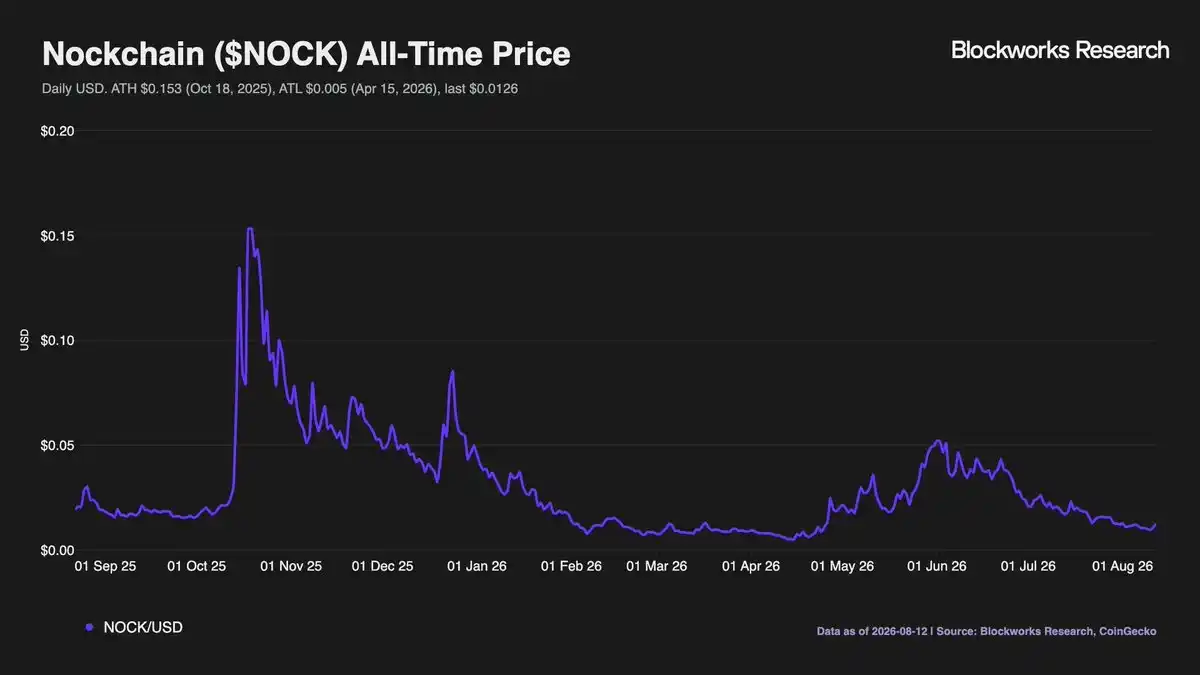
NOCK trades around $0.009, with a market cap of about $22 million and a fully diluted valuation nearing $41 million—a fraction of the attention it attracted during its fair launch last spring. For holders, Friday's mechanism is less important than whether National Compute can route enough paid inference through its compute clusters to turn the "security as revenue" narrative into cash flow. Nockchain has delivered the harder engineering part; the market it needs is not yet built.

Related Questions

QWhat is the main goal of Nockchain's Logos upgrade?

AThe main goal of Nockchain's Logos upgrade is to embed AI inference directly into the proof-of-work mechanism, aiming to allow miners to earn two forms of revenue: client fees for performing AI computations and blockchain rewards for securing the network.

QWho is the first major paying client for the new AI inference service on Nockchain?

AThe first major paying client for Nockchain's new AI inference service is National Compute, a company founded by the Nockchain founder himself.

QHow does the Logos upgrade split the block reward between different mining puzzles?

AAfter the Logos upgrade, the network allocates 30% of the block reward to the new AI inference puzzle (integer matrix multiplication) and 70% to the original ZK proof-of-work puzzle.

QWhat are some of the concerns or criticisms raised about the Logos upgrade and Nockchain's approach?

AConcerns include the lack of an established market for the paid AI inference service, the close relationship between the protocol's first major client (National Compute) and its founder, the repeated changes to the upgrade's activation block height, and the unproven security of the new AI puzzle.

QWhat is the core narrative that Nockchain needs to prove with the Logos upgrade?

ANockchain needs to prove the 'security-as-revenue' narrative by demonstrating that National Compute, or other clients, can drive sufficient paid AI inference demand. This would turn the theoretical model of increasing security budget with AI economic growth into actual, sustainable network revenue and security.

Related Reads

New ChatGPT Feature: AI Begins Monitoring Users

OpenAI has launched "Computer History," a new feature for its ChatGPT desktop app on macOS, designed to track user activity across applications and websites. This allows the AI model to use this data to provide more accurate and personalized responses in subsequent conversations. The feature, released on August 13th, is available to Pro, Business, and Enterprise subscribers. However, its rollout in the European Economic Area, the UK, and Switzerland is delayed as OpenAI works to align the tool with local data processing regulations. Computer History operates in the background, logging user activity into a temporary timeline. Users can review, manage, or delete this history via the app's interface or macOS menu bar. The feature is opt-in and requires explicit user activation in the settings. This release replaces and expands upon an earlier experimental project called Chronicle. OpenAI states the new version is more computationally efficient and offers improved privacy controls. The launch coincides with other AI advancements from the company, including a high-speed GPT-5.6 model. The article notes potential technical risks associated with the predecessor, Chronicle, such as prompt injection vulnerabilities and unencrypted local data storage. It also highlights the competitive landscape, where similar memory features are being developed by rivals like Anthropic's Claude and Google's Gemini. The delayed European rollout underscores the ongoing challenge of balancing deep personalization with stringent data protection laws.

cryptonews.ru49m ago

New ChatGPT Feature: AI Begins Monitoring Users

cryptonews.ru49m ago

GPT-5 Also Has Tip-of-the-Tongue Moments, Google Tested 4.5 Million Times: The Keys Are Lost

Google researchers have discovered that advanced AI models like GPT-5 and Gemini 3 experience a phenomenon akin to the human "tip-of-the-tongue" state, where they possess knowledge but fail to retrieve it. Their study, "Empty Shelves or Lost Keys?" (ICML 2026), introduces the "Knowledge Portrait" framework to analyze factual knowledge in models, distinguishing between failure to encode a fact versus failure to recall it. Testing on 13 models across 2.15 million queries from the WikiProfile benchmark revealed that state-of-the-art models successfully encode 95-98% of facts into their parameters. However, when asked directly, they fail to recall 26-34% of these known facts. Enabling chain-of-thought ("thinking") reasoning reduces this recall failure to 11-12%, recovering 40-65% of the previously unrecalled but encoded facts. The research identifies two key bottlenecks: recalling obscure ("long-tail") facts and answering reversed queries (e.g., "Who is Tom Cruise's mother?" vs. "Whose son is Tom Cruise?"). While scaling model size effectively reduces encoding failures, it does little to improve recall rates. In larger models, recall failure becomes the dominant source of factual errors, accounting for over 70% of mistakes in GPT-5.2. The findings suggest that for top models, the primary challenge is no longer storing knowledge but accessing it efficiently. Future accuracy gains may depend more on improved inference-time methods and "meta-cognitive" abilities, enabling models to recognize when they need to engage in deeper reasoning to retrieve information they already know.

marsbit1h ago

GPT-5 Also Has Tip-of-the-Tongue Moments, Google Tested 4.5 Million Times: The Keys Are Lost

marsbit1h ago

Trading

Spot
活动图片