Author: Ma He, Foresight News
On July 23, the U.S. Securities and Exchange Commission (SEC) announced it will host a public roundtable on September 17 at its Washington, D.C. headquarters, focusing on preparations for moving towards 24-hour trading in the U.S. stock market. The meeting will discuss infrastructure supporting overnight trading, operations and resilience under a 24-hour market, as well as opportunities and challenges associated with expanding trading hours.
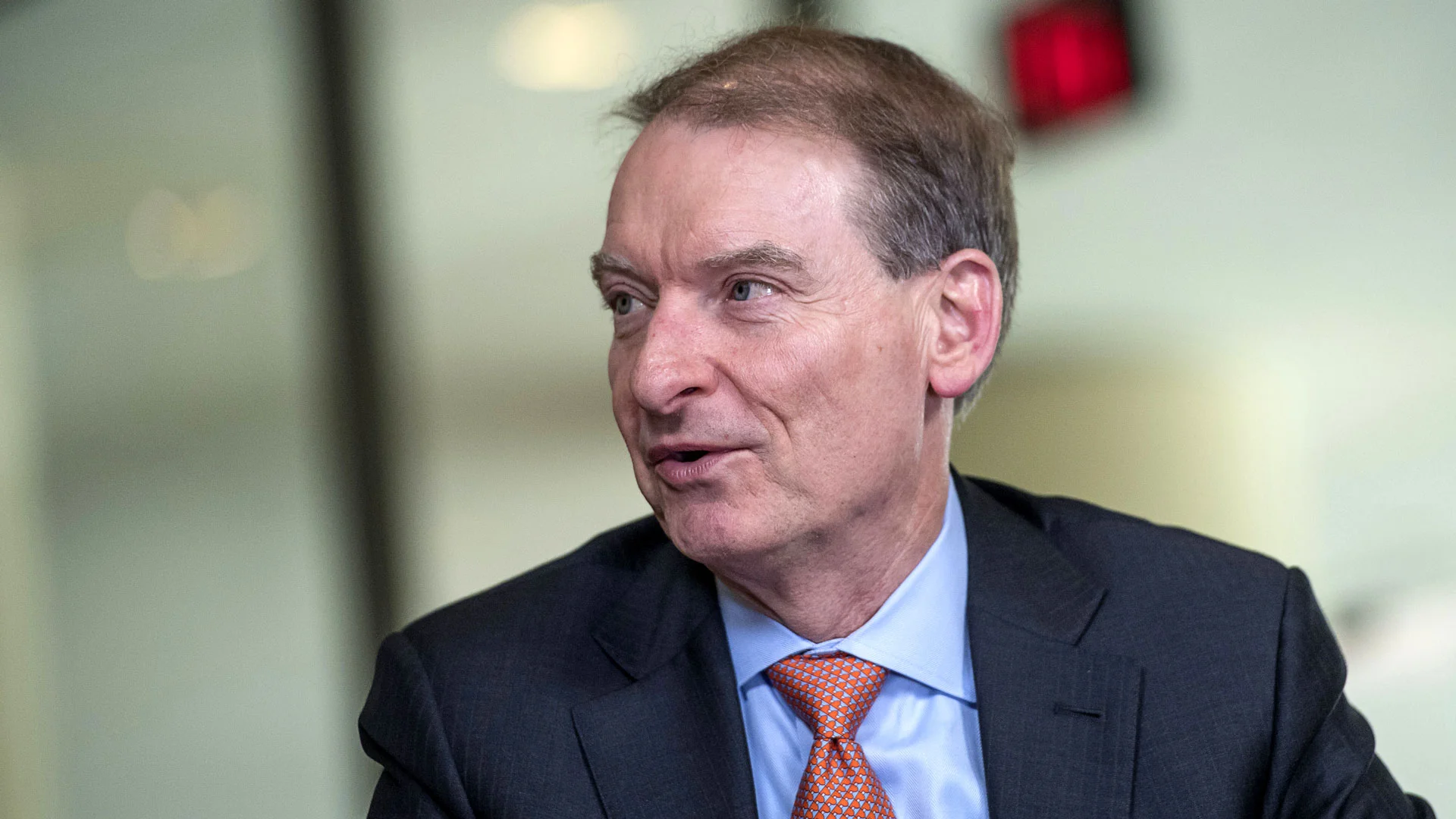
SEC Chairman Paul S. Atkins stated in the announcement: "We are stepping into a new day—and a new night—for the U.S. stock market. As overnight trading expands, I look forward to aligning the U.S. stock market with those markets that have already achieved continuous trading, while also anticipating striking a balance between all-day trading and crucial investor and customer protection."
This roundtable may represent a critical juncture in the substantive transition of U.S. stocks from traditional trading hours to a near-continuous (23x5) model. For the crypto industry, especially the RWA (Real World Asset) tokenization sector, this change both compresses some of its differentiation narratives and opens up deeper avenues for integration.
U.S. Stock Trading Embraces Change
Since 1985, the regular trading hours for major exchanges like the New York Stock Exchange and Nasdaq have been fixed at 9:30 AM to 4:00 PM Eastern Time, Monday through Friday. This arrangement has persisted for over forty years.
While the long-standing maintenance of regular trading hours for U.S. stocks is conducive to centralized price discovery and lower operational costs, in today's era of highly electronic global capital flows, this setup is outdated. Investors in Asia and Europe who wish to trade U.S. stocks during their local daytime often have to rely on futures or the illiquid pre-market and after-hours sessions, an experience far less smooth than trading crypto assets. Simultaneously, retail investors, accustomed to placing orders anytime via mobile apps, are growing increasingly impatient with the "waiting period" after major news announcements when they cannot trade immediately.
Outside regular hours, limited extended trading windows exist. Pre-market trading typically runs from early morning until 9:30 AM; after-hours trading extends from 4:00 PM to around 8:00 PM. These extended sessions are provided by various exchanges, alternative trading systems (ATS), and brokerage platforms, but liquidity is significantly lower than during regular hours, with wider spreads and less efficient price discovery. Regulatory bodies like FINRA have repeatedly warned investors of higher volatility and execution risks during extended hours.
In recent years, some brokers and ATS have further extended trading into overnight hours. For instance, platforms like Interactive Brokers offer overnight trading from Sunday 8:00 PM to approximately 3:50 AM Friday (with brief maintenance windows in between), covering select S&P 500, Nasdaq 100 components, and ETFs. However, according to public market observations, genuine overnight trading volume has long constituted a tiny fraction of the total market, making it difficult to establish deep price discovery.
Overall, U.S. stocks remain characterized by a core of "concentrated trading on weekday days," with markets completely closed on weekends and most holidays. This stands in stark contrast to the crypto asset market's 7x24, year-round operational model, a contrast often emphasized as a point of differentiation in RWA tokenization narratives.
23/5 Trading?
Since 2024, several exchanges and market infrastructure institutions have accelerated efforts towards near-continuous trading.
24X National Exchange is the first SEC-approved national securities exchange authorized to conduct 23-hour trading (23x5), planning to formally launch a complete 23/5 night session in the second half of 2026. NYSE Arca plans to extend trading hours to approximately 22 hours, also targeting the end of 2026. Nasdaq has publicly proposed a "Global Trading Hours" plan, intending to add a night session from 9:00 PM to 4:00 AM the next day, combined with existing hours to create a nearly 23-hour trading day, also targeting the second half of 2026, contingent on regulatory approval and alignment of industry infrastructure. Cboe is also advancing its 23x5 plans for platforms like EDGX.
Progress at the infrastructure level is even more crucial. DTCC's National Securities Clearing Corporation (NSCC) launched its 24x5 clearing service on June 28, 2026, covering trading activities from Sunday 8:00 PM to Friday 8:00 PM, providing immediate central counterparty guarantees for overnight trades and significantly reducing counterparty risk.
These developments suggest that by late 2026 to early 2027, U.S. stocks may achieve near-continuous trading on weekdays within the regulatory framework. True 7x24 trading (including weekends) still faces higher barriers, but the direction towards "money never sleeps" has moved from discussion to implementation. The September 17 roundtable is precisely the SEC's initiative to publicly align exchanges, market makers, clearing agencies, brokers, and investor representatives on core issues such as operational resilience, liquidity management, and investor protection before formally scaling up these changes.
Crypto RWA Platforms
The shift of U.S. stocks towards near-continuous trading directly impacts one of the most commonly used selling points by RWA tokenization platforms in the past—"traditional markets only trade during the day, but on-chain you can trade 7x24."
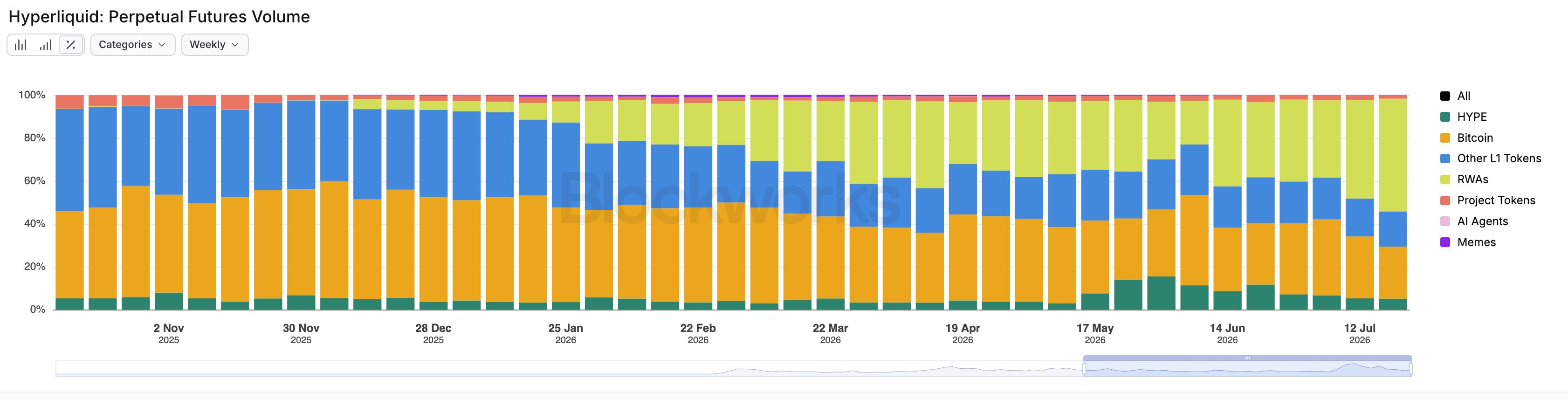
The current RWA market has reached a certain scale, especially in perpetual futures trading volume. According to the latest data from Blockworks, last week, RWA trading volume on the Hyperliquid platform surpassed crypto asset trading volume for the first time, accounting for 54% of the platform's total trading volume. Among these, single-stock trading has become the fastest-growing category. Since June, individual stock trading volume has exceeded that of indices and commodities, now constituting about 61% of Hyperliquid's total RWA trading volume, indicating that on-chain financial markets are expanding from pure crypto asset trading towards traditional assets.
Once U.S. stock trading hours are extended, the mere appeal of "being able to trade real stocks during Asian hours or at night" will be diluted. Institutions and cross-border investors will be able to execute near-continuous trades more directly on regulated traditional exchanges and ATS, without having to rely entirely on tokenized channels. For many large funds, the traditional path remains more attractive in terms of compliance costs, custody, and settlement certainty.
However, the impact is not entirely negative.
True 7x24 trading and instant atomic settlement remain on-chain advantages. Even if U.S. stocks achieve 23x5, gaps on weekends and holidays will persist, and clearing and settlement will still rely on the DTCC system, making it difficult to completely eliminate T+0 and T+1 frictions. RWA tokens can achieve near-instant ownership transfer and settlement on public blockchains and naturally support programmable logic, including automated dividends, collateralization, and composability.
The regulatory environment is evolving simultaneously. Under the leadership of Paul Atkins, the SEC has explicitly included "facilitating on-chain trading of tokenized securities" in its 2026 regulatory agenda and is advancing a token classification framework. Tokenized securities are still defined as securities subject to federal securities laws, but innovative exemptions and related rule adjustments are under discussion. DTCC is also progressing with tokenized settlement pilots. The experience accumulated in managing overnight liquidity, price protection, and system resilience during the extension of U.S. stock trading hours actually provides a reference for regulated RWA secondary markets.
Some crypto platforms have already explored collaborations, such as integrating tokenized U.S. stocks with traditional account systems and global liquidity. On July 10 this year, Backpack launched the world's first 7x24 real U.S. stock trading market for international investors, allowing users to buy, sell, and hold real U.S. stocks around the clock, not synthetic derivatives.
Ondo's tokenized stocks are backed 1:1 by underlying securities and are linked to traditional market liquidity through minting and redemption mechanisms. Users can trade these tokens directly on crypto exchanges, while non-U.S. users gain more convenient exposure to U.S. stocks.
For RWA platforms, the true moat is shifting from "trading time differentiation" to "settlement finality, cross-border accessibility, DeFi composability, and interoperability with traditional infrastructure." The tokenization of private credit, real estate, alternative assets, and other non-public market assets will be less impacted by changes in U.S. stock trading hours and may even benefit from the overall increased acceptance of tokenization.
Risks also need to be acknowledged. Liquidity during overnight hours will inevitably be thin initially, making prices more susceptible to moves. If RWA platforms open trading during low-liquidity windows, they must simultaneously strengthen risk controls, circuit breakers, and market-making mechanisms; otherwise, they risk amplifying volatility and damaging industry credibility. The regulatory pressure on purely permissionless, synthetic products may also increase further as traditional markets extend trading hours, thereby enhancing the value of compliant issuance and ATS/exchange pathways.