Metrics Ventures Market Watch: The Brewing Storm

marsbitPublished on 2026-05-26Last updated on 2026-05-26

Abstract

In the past month, the market has been actively trading contrasting expectations, balancing global supply chain disruptions fueling re-inflation against both actual and anticipated (Walsh) interest rate hikes. This volatility has impacted commodities and most equities, though tech has temporarily benefited from concentrated short-term liquidity. Fundamentally, as previously analyzed regarding the Strait of Hormuz situation, the US faces deep-seated balance sheet issues beyond what any single Fed chair can resolve. Hypotheses around a figure like Walsh could only materialize if AI fundamentally reshapes production relations. Until then, most non-AI-leading nations (effectively all except the US and China) risk fiscal and monetary policy collapse, rendering the identity of the Fed chair ultimately irrelevant. For crypto assets, there is currently no clear role in these dominant narratives. The market remains strongly capped by the 200-day moving average. While trends may shift from "anything but AI" to "anything but mines," this phase is dominated by the silicon vs. carbon (AI vs. traditional) dichotomy, leaving little room for crypto—though its time will come. **Market Overview & Commentary** The crypto market lacks significant catalysts beyond hype, plagued by low volume and scarce innovation, with clear technical resistance. Currently, crypto struggles for attention as global focus lies elsewhere. Assets like gold, oil, and grains are more direct hedges against supply-cha...

1/ Over the past month, the market has been fervently trading expectations, on the one hand betting on re-inflation from damaged global supply chains, and on the other hand trading rate hikes, whether based on factual developments or on expectations surrounding Vice Chair for Supervision nominee Wash. These two forces are like fire and ice, causing commodities and most equity assets to fluctuate constantly. However, technology, which is actually impacted by both, still benefits from the concentration of short-term liquidity.

2/ On a factual level, as we previously analyzed regarding the Strait of Hormuz situation, the chronic issues with the US's bloated balance sheet have exceeded the scope of what any single Federal Reserve Chair can resolve. All of Wash's hypothetical scenarios could only become reality when AI fundamentally alters social production relations. Until that day arrives, the majority of non-AI-leading nations worldwide (almost all except China and the US) will be the first to fall into a collapse of fiscal and monetary policies. By then, who sits as the Fed Chair will no longer be of great importance.

3/ From a trading perspective, crypto assets currently see little possibility within all the narratives mentioned above. We also observe that the 200-day moving average continues to strongly suppress the price trends of these assets. Even if the "anything but AI" sentiment spreads to "anything but mines," it's unlikely to change this situation. In this current phase of silicon-based versus carbon-based competition, there is no stage for crypto, but there certainly will be in the future. Rest assured.

Review and Commentary on Overall Market Conditions and Trends

Aside from hype, there isn't much noteworthy to discuss in the crypto market. The lackluster trading volume and scarcity of innovation are old news, and technical resistance is very evident. In fact, crypto assets could potentially be good tools for hedging against global liquidity risks. At this moment, it's difficult for any major market focus to directly link to crypto. Meanwhile, inflation/stagflation caused by supply chain damage clearly has more definitive large-capacity investment targets like gold and other metals, petrochemicals, and food. Looking at token distribution, Bitcoin also needs more time to consolidate and absorb selling pressure. The development of this variable is crucial. We expect this correction to persist until at least Q4 2026.

Looking ahead, we believe three events will successively become the dominant drivers of future market volatility:

1. In the short term, the market will highly focus on whether Wash will repeat the missteps of Besant or Musk, turning his stance into the next "333" plan.

2. The market is significantly underestimating the severity of substantial damage to a large number of global supply chains and the time needed for future repair. In the medium term, the market will eventually realize that local resource shortages and price volatility will far exceed initial expectations, similar to the situation during the pandemic.

3. Nations like the UK and Japan, which represent "AI non-beneficiaries + inflation first to fall," will successively face severe fiscal and monetary policy crises. We should hope that AI substitution does not occur too rapidly; otherwise, the existing credit system and national welfare fiscal systems could collapse swiftly.

One day, the market may understand that the bursting of the AI bubble could trigger a contagious credit crisis for some sovereign nations. The monetary and fiscal responses at that time might be the ultimate ignition for Bitcoin's final major bull run.


Related Questions

QAccording to the article, what are the two opposing forces causing volatility in commodity and equity markets over the past month?

AThe article states that markets have been trading on two opposing expectations: the re-inflation due to damaged global supply chains, and interest rate hikes, whether they are actual hikes or expectations stemming from Warsh. These two forces, likened to ice and fire, are causing significant volatility.

QWhat does the article suggest is the primary narrative or factor benefiting from current short-term liquidity concentration, despite the broader market volatility?

AThe article indicates that technology, specifically AI-related sectors, is benefiting from the concentration of short-term liquidity, even as it is simultaneously impacted by the opposing forces of supply-chain-driven re-inflation and interest rate hike expectations.

QWhat condition does the article claim must be met for all of Warsh's monetary policy assumptions to hold true, and what are the predicted consequences for most non-AI leading nations before that point?

AThe article claims that all of Warsh's assumptions can only hold true when AI fundamentally changes societal production relations. Before that day arrives, the majority of non-AI leading nations (almost all except China and the US) are predicted to fall into a collapse of fiscal and monetary policies.

QWhat is the article's main assessment of the current state of the cryptocurrency market in relation to broader global economic narratives?

AThe article's main assessment is that cryptocurrency assets currently see little possibility within the dominant global economic narratives. It notes low trading volume, a lack of innovation, clear technical resistance (like the 200-day moving average), and that market attention is focused elsewhere, such as on commodities like gold, oil, and grain as inflation hedges.

QWhat does the article identify as the potential catalyst for a future major bull run in Bitcoin?

AThe article suggests that a future contagion of sovereign credit crises, potentially triggered by an AI bubble burst, and the subsequent monetary and fiscal policy responses from governments could serve as the ultimate ignition for Bitcoin's next major bull run.

Related Reads

To Those Ordinary People Who Haven't Invested in AI: You Think You're Late, You're Just Lacking Your Own Worldview

**Summary:** The article argues that ordinary investors feeling FOMO over missing the AI investment boom lack not timing, but their own independent worldview. Most people chase "what to buy" based on others' opinions (FOMO, envy) rather than fundamental analysis. This leads to costly mistakes: not knowing when to exit winning trades or cut losses on losing ones. The core solution is to develop a personal, long-term (5-10 year) worldview about societal shifts and technological bottlenecks. For most, building this from scratch (Path A) is too demanding. A practical alternative (Path B) is to follow the **capital expenditures (capex)** and strategic investments of visionary leaders, as their money reveals true conviction more reliably than their words. Five key figures to track for different AI perspectives are highlighted: Jensen Huang (NVIDIA, infrastructure), Elon Musk (Tesla/SpaceX/xAI, capex signals), Sam Altman (OpenAI, commercialization, but beware hype), Dario Amodei (Anthropic, technical/safety focus), and Liang Wenfeng (DeepSeek, efficiency/anti-consensus view). The article details how to read capex signals from hyperscalers' financial reports, NVIDIA's revenue breakdown, and strategic investments. It maps the complete AI产业链 (supply chain) from raw materials/energy to models/applications, explaining value flow and inter-dependencies (e.g., how a model release triggers demand across chips, memory, and optics). Finally, it provides an action plan: secure personal finances first, allocate a limited portfolio percentage (max 25%) to the theme, prefer broad ETFs (like QQQ), use dollar-cost averaging over 6-12 months, and write down strict investment rules beforehand to combat emotional errors during market volatility. The conclusion is that a stable, personally-held worldview enables disciplined, long-term investment far more than chasing short-term trends.

marsbit28m ago

To Those Ordinary People Who Haven't Invested in AI: You Think You're Late, You're Just Lacking Your Own Worldview

marsbit28m ago

Microsoft Halts Vibe Coding: "Burning Tokens" Is Now More Expensive Than Employees

Microsoft has halted the widespread internal use of Claude Code, withdrawing licenses from most employees by the end of its fiscal year, June 30, 2026. This reversal comes just six months after actively promoting the AI coding tool to boost productivity via "vibe coding"—where developers describe intent in natural language and let the LLM generate code. The core issue isn't the tool's effectiveness; internal reports suggest employees preferred Claude Code over Microsoft's own Copilot CLI. The problem is financial: the "copilot mode" adds a variable, consumption-based token cost on top of existing employee salaries without a proportional revenue increase. As usage grew, the token bills became unsustainable, leading to what sources describe as a cost-structure failure. Similar overruns have been reported at other firms like Uber. The article contrasts this with the approach of AI-native startups, exemplified by Y Combinator's philosophy. Here, high token consumption is strategic—it replaces, rather than supplements, human labor. Startups operate with tiny teams where AI agents handle work previously done by many, making the high token bill financially viable as it offsets much larger personnel costs. The conclusion is that "vibe coding" isn't dead, but its economics fail within traditional corporate structures that treat AI as a productivity add-on for existing staff. Success requires a foundational shift to an AI-native organization, where processes are built to be "legible to AI," and the company's core knowledge and assets reside in documented, AI-accessible systems rather than solely in employees' minds. The future divide will be between companies that merely add AI tools and those that redesign their organizations around them.

marsbit48m ago

Microsoft Halts Vibe Coding: "Burning Tokens" Is Now More Expensive Than Employees

marsbit48m ago

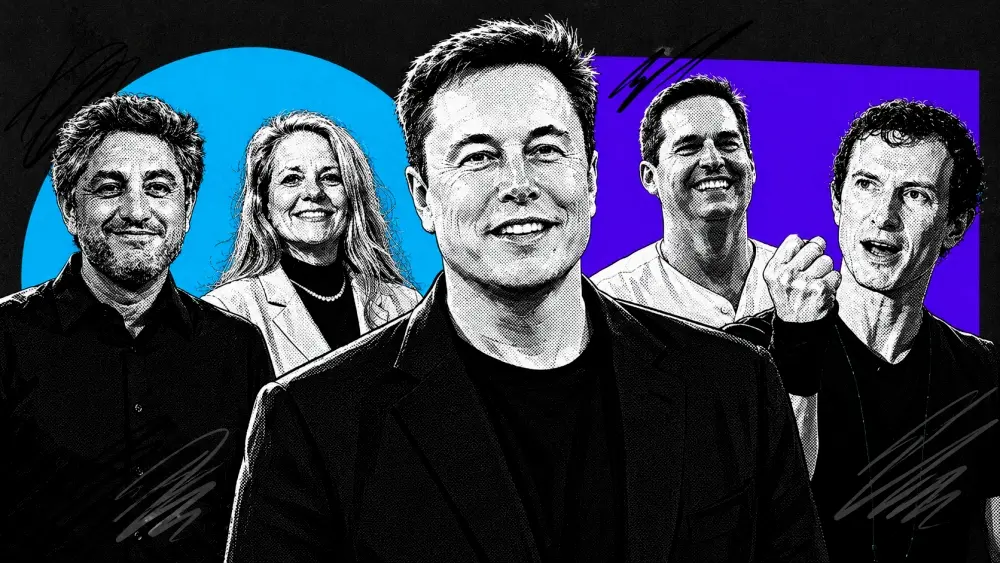
Insiders Betting on Musk Are Reaping 'Historic Returns'

The largest IPO in history is imminent as SpaceX, led by Elon Musk, is set to price its offering on June 12. At a targeted valuation near $2 trillion, this event will mint new billionaires from Musk's inner circle of long-time allies, rewarding their loyalty with unprecedented returns. Key beneficiaries include Antonio Gracias, Musk's close friend and confidant, who holds a 7.3% stake potentially worth over $140 billion, making him the second-largest individual shareholder. Gwynne Shotwell, President and COO since 2002, holds shares valued at roughly $2 billion. Bret Johnsen, the CFO, holds stock worth approximately $1.4 billion. Luke Nosek, a PayPal co-founder and early investor, stands to gain about $5.3 billion. The IPO filing also reveals complex and controversial financial arrangements. SpaceX has guaranteed nearly $20 billion in payments from xAI's subsidiary to Gracias's Valor Equity Partners for AI hardware leases—deals auditors flagged as "failed sale-leaseback" transactions, forcing SpaceX to record them as debt. Despite rapid revenue growth, SpaceX is not profitable, posting a $49 billion loss in 2025 and a $4.3 billion loss in Q1 2026. Capital expenditures are soaring, with over 60% directed toward AI. Public investors will inherit these losses, significant debts, and a governance structure heavily controlled by insiders, including a provision granting Musk up to a billion additional shares if one million people live on Mars.

链捕手1h ago

Insiders Betting on Musk Are Reaping 'Historic Returns'

链捕手1h ago

Trading

Spot
Futures

Hot Articles

How to Buy T

Welcome to HTX.com! We've made purchasing Threshold Network Token (T) simple and convenient. Follow our step-by-step guide to embark on your crypto journey.Step 1: Create Your HTX AccountUse your email or phone number to sign up for a free account on HTX. Experience a hassle-free registration journey and unlock all features.Get My AccountStep 2: Go to Buy Crypto and Choose Your Payment MethodCredit/Debit Card: Use your Visa or Mastercard to buy Threshold Network Token (T) instantly.Balance: Use funds from your HTX account balance to trade seamlessly.Third Parties: We've added popular payment methods such as Google Pay and Apple Pay to enhance convenience.P2P: Trade directly with other users on HTX.Over-the-Counter (OTC): We offer tailor-made services and competitive exchange rates for traders.Step 3: Store Your Threshold Network Token (T)After purchasing your Threshold Network Token (T), store it in your HTX account. Alternatively, you can send it elsewhere via blockchain transfer or use it to trade other cryptocurrencies.Step 4: Trade Threshold Network Token (T)Easily trade Threshold Network Token (T) on HTX's spot market. Simply access your account, select your trading pair, execute your trades, and monitor in real-time. We offer a user-friendly experience for both beginners and seasoned traders.

11.7k Total ViewsPublished 2024.03.29Updated 2025.03.21

How to Buy T

Discussions

Welcome to the HTX Community. Here, you can stay informed about the latest platform developments and gain access to professional market insights. Users' opinions on the price of T (T) are presented below.

活动图片