Bitcoin ETFs in the US extended their capital inflow streak to seven consecutive trading days — on Tuesday, August 25th, the funds attracted $314.37 million in net investments. Thanks to this streak, the August inflow reached $3.03 billion, leaving the funds just $390 million shy of October 2025's result — with four trading sessions remaining until the end of the month.
August is already becoming the strongest month for Bitcoin ETFs since October of last year. Simultaneously, the funds have more than halved the net outflow deficit since the start of the year — to $2.26 billion. The total net assets of the funds reached $99.05 billion, and the cumulative net inflow since launch has risen to $54.36 billion.
Bitcoin Retreats from $80,000
At the time of publication, Bitcoin was trading above $79,000. On August 25th, the asset briefly surpassed the $80,000 level but failed to hold its position.
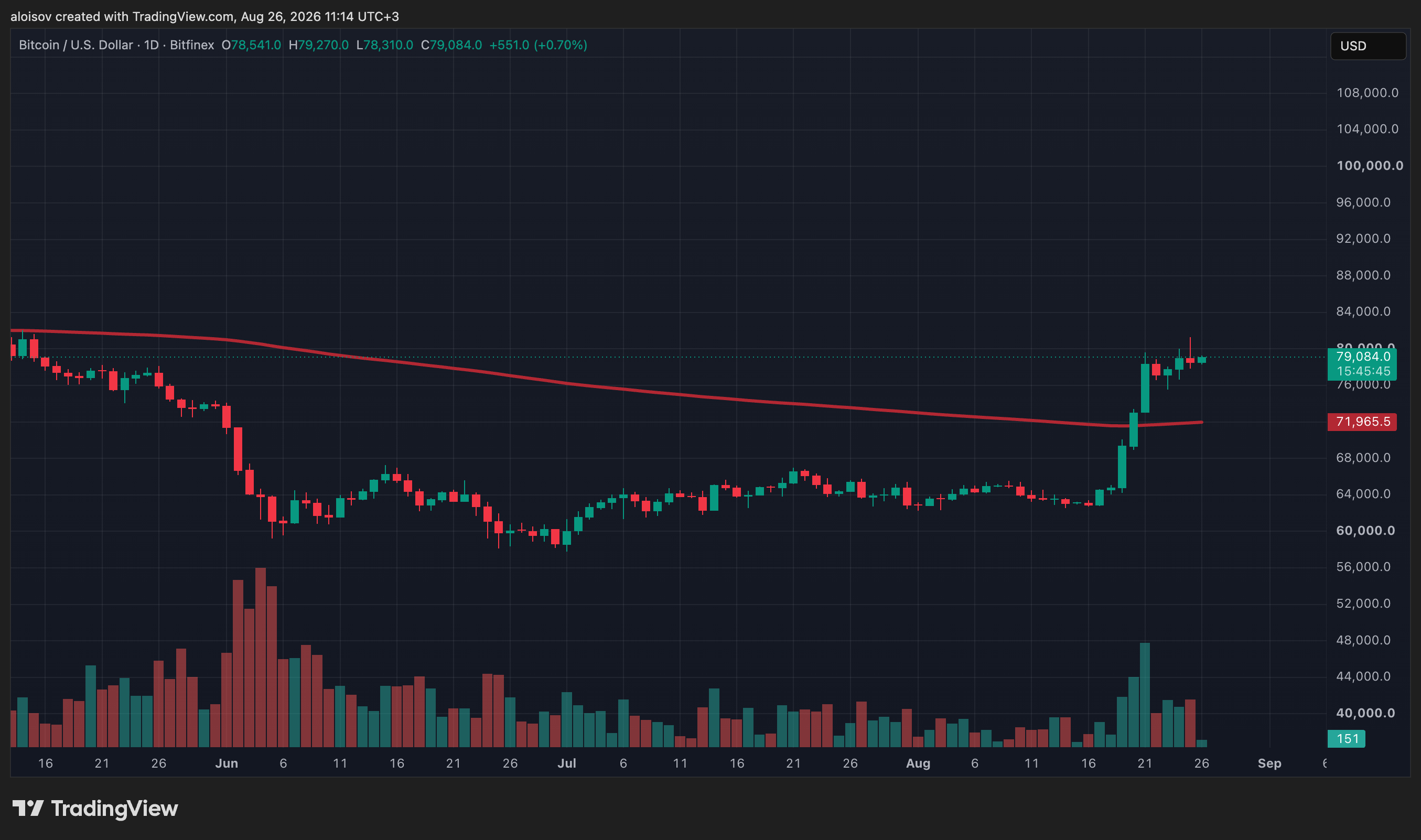
Market participant sentiment cooled slightly: the Fear and Greed index dropped from 74 to 65 points, remaining in the "Greed" zone.
Ethereum ETFs Mirror Bitcoin's Dynamics
Spot Ethereum ETFs in the US also extended their inflow streak to seven trading days. On Tuesday, the funds added $179.8 million, bringing the total inflow during this period to approximately $1 billion.
Bitcoin ETF inflow on Tuesday — $314.37 million
Inflow since the start of August — $3.03 billion
Bitcoin ETF net assets — $99.05 billion
Ethereum ETF inflow on Tuesday — $179.8 million
The synchronous increase in interest in Bitcoin and Ethereum ETFs indicates that institutional demand is recovering in August across both directions. If the current dynamics persist until the end of the month, August could set a new record for capital inflow in the last ten months.
AI Opinion
From the perspective of machine data analysis, the seven-day inflow streak into Bitcoin ETFs is forming against the backdrop of the approaching Fed meeting on September 15-16, the outcome of which markets do not yet assess unambiguously — traders on Kalshi are pricing in about a 67% probability of the current rate being maintained. The Fed rate traditionally determines the strength of the dollar and investor risk appetite, meaning the current capital inflow could face a test even before the end of September.
end-content