6,000 Investors Lost Everything On A 1,001x Solana Meme Coin — South Korea Just Made Its Move

bitcoinistPublished on 2026-05-27Last updated on 2026-05-27

Abstract

South Korean prosecutors have indicted five individuals for a landmark Solana-based meme coin rug pull, marking the first-ever criminal prosecution of a decentralized exchange (DEX) scam under the country's Virtual Asset User Protection Act. The group launched the CATFI token on pump.fun, artificially inflated its value through fake social media promotions and circular trading under the influencer alias "EtherFather," and then abandoned the project. The scam caused the token's price to surge 1,001 times, attracting about 6,000 investors and resulting in approximately $650,000 in confirmed losses for 256 victims. This precedent-setting case extends South Korea's crypto fraud enforcement framework to DEX transactions and influencer-driven manipulation for the first time.

South Korean prosecutors have indicted five individuals in the country’s first-ever criminal prosecution of a decentralized exchange rug pull — and the first case in which fraudulent trading charges under South Korea’s Virtual Asset User Protection Act have been applied, setting a landmark legal precedent for how the country’s crypto enforcement framework handles DEX-based market manipulation on Solana and other blockchains.

The Seoul Southern District Prosecutors’ Office Virtual Asset Crime Joint Investigation Unit announced on May 27 that it had arrested and indicted two suspects on market manipulation charges, indicted a third without arrest, and separately indicted two additional suspects for obstructing justice by helping the ringleader evade capture — five defendants in total across two separate charging tracks, per Digital Asset’s May 27 reporting of the prosecutor’s statement.
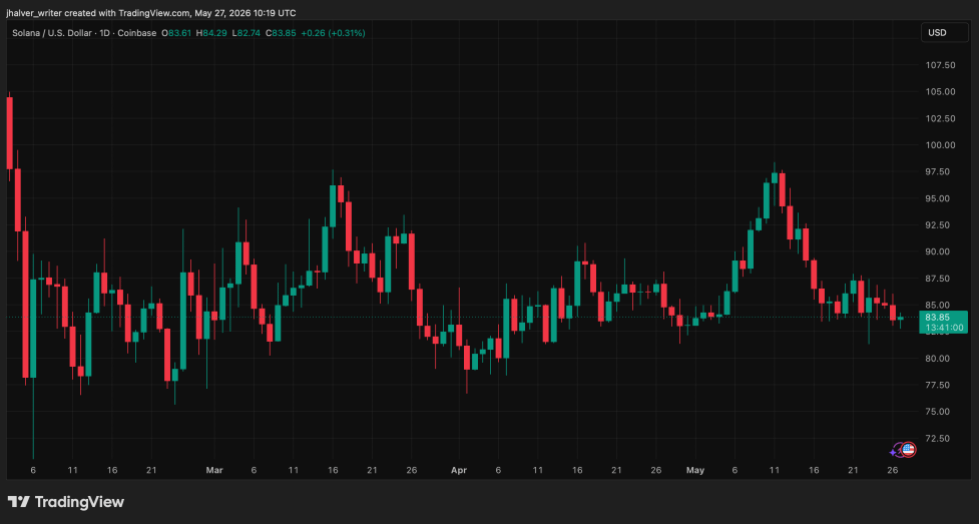
SOL's price moving sideways on the daily chart. Source: SOLUSD on Tradingview

How The Solana Scheme Worked

The operation centered on CATFI — a Solana-based meme coin launched on pump.fun, the widely used Solana token issuance platform that gained significant traction during the early 2025 meme coin frenzy. The group spent several million Korean won to launch the token and list it on a decentralized exchange, per the prosecution’s account.

The ringleader, identified only by his surname Park, operated under the influencer alias “EtherFather” on social media — presenting himself as an independent third party with no financial interest in the project while actively recommending CATFI purchases to his followers. Simultaneously, the group operated the project’s official social media accounts, artificially inflating follower counts and publishing false promotional announcements to drive retail buying interest, per the prosecutor’s statement as reported by Digital Asset.

To conceal their control over the token’s supply, the group distributed holdings across multiple wallets and conducted circular trading — a technique designed to create the appearance of organic market activity while masking the fact that the issuing parties controlled the token’s liquidity. Once retail investors had entered, the group executed the rug pull — abandoning the project and exiting with approximately 400 million Korean won in illicit proceeds from an initial outlay of roughly 10 million won, per the filing.

The Scale Of The Damage

CATFI’s price surged 1,001 times in the 26 hours following its launch, attracting approximately 6,000 investors. Of those, 256 suffered confirmed financial losses totaling approximately 900 million Korean won — roughly $650,000 at current exchange rates — per the prosecution’s figures cited in the Digital Asset report.

Why The Precedent Matters

Two firsts define this case’s significance. It is the first prosecution under the Virtual Asset User Protection Act using fraudulent trading charges — specifically the act’s prohibition on “use of fraudulent means, plans, or schemes” and “false statements on material matters” in connection with digital asset transactions, per the prosecution’s legal framing.

The prior landmark case under the same law applied market manipulation charges relating to centralized exchange activity. This case extends that framework to decentralized exchange transactions for the first time — a meaningful expansion of regulatory reach into a space prosecutors have historically struggled to address.

This development marks a critical juncture for the nascent sector’s regulatory trajectory in South Korea. A successful rug pull prosecution targeting DEX activity on Solana, influencer-driven manipulation, and coordinated wallet obfuscation simultaneously signals that Korean enforcement agencies are developing both the technical capability and the legal framework to pursue crypto fraud beyond the centralized exchange perimeter.

Cover image from Grok, SOLUSD chart from Tradingview

Related Questions

QWhat is the landmark legal significance of the CATFI rug pull case in South Korea?

AIt is the first criminal prosecution of a decentralized exchange rug pull in South Korea and the first case to apply fraudulent trading charges under the Virtual Asset User Protection Act to DEX-based market manipulation, setting a key precedent.

QWhat meme coin was at the center of the scheme, and on which platform was it launched?

AThe scheme centered on the CATFI meme coin, which was launched on the Solana token issuance platform pump.fun.

QHow did the perpetrators conceal their control over the CATFI token and manipulate the market?

AThey distributed holdings across multiple wallets, conducted circular trading to simulate organic activity, used the alias 'EtherFather' to falsely promote the coin as a disinterested party, and inflated social media follower counts with false announcements to drive retail buying.

QWhat was the financial scale of the damage caused to investors in the CATFI scheme?

AApproximately 6,000 investors were attracted, with 256 confirmed to have suffered losses totaling about 900 million Korean won (roughly $650,000). The perpetrators made about 400 million won in illicit proceeds from an initial 10 million won outlay.

QWho was indicted in the case, and what were the general charges?

AFive individuals were indicted. Two were arrested and indicted for market manipulation, a third was indicted without arrest for the same, and two others were separately indicted for obstructing justice by helping the ringleader evade capture.

Related Reads

Will the Next Crypto Bull Run Start with On-Chain Trading of SpaceX?

This article presents a scenario-based forecast for the crypto industry from 2026 to 2029, arguing that the next major cycle will be driven not by technological narratives but by legal access to real-world assets. The author predicts that by mid-2026, pre-IPO perpetual contracts for top private companies like SpaceX, OpenAI, and Anthropic on platforms like Hyperliquid will become the primary gateway for accessing quality assets, as most crypto-native tokens fail to capture real value. The much-hyped AI x Crypto intersection largely fails except for prediction markets, which thrive on betting on AI model supremacy. By 2027, public blockchain foundations are forced to choose between catering to retail speculation or building compliant infrastructure for institutions, with many opting for the latter. Growth in stablecoins and tokenized private credit/equity hits a "triple ceiling" due to regulatory and political uncertainty rather than market demand. The pivotal shift is forecast for 2028. A major liquidation event in pre-IPO perpetuals exposes the structural flaw of synthetic markets lacking a real underlying asset anchor. In response, regulatory changes finally allow the public solicitation of private securities resales to verified accredited investors. This creates a legitimate secondary market for real company equity, which then becomes the core asset class of the new bull market, relegating synthetic perps to a niche role. By 2029, the industry becomes "boring" but foundational. Tokens without claims on real cash flows or assets cease trading. Stablecoin growth is steady but politically capped. Crypto infrastructure fades from view as it gets absorbed into traditional finance backends. The article's central thesis is that the key bottleneck for crypto's next phase is legal and regulatory channels for real asset ownership, not technology.

marsbit35m ago

Will the Next Crypto Bull Run Start with On-Chain Trading of SpaceX?

marsbit35m ago

The Value Distribution of Stablecoins

**Summary: The Value Distribution of Stablecoins** The article argues that stablecoins are evolving from mere trading tools into broader channels for dollar access. It divides the stablecoin ecosystem into four layers to analyze how value is distributed: 1. **Issuance Layer:** Mints stablecoins, holds reserve assets, and captures the spread between reserve yield and user costs (e.g., Tether, Circle). This layer currently earns the largest profit margin. 2. **Infrastructure Layer:** Connects stablecoins to the traditional financial system, handling fiat on/off-ramps, banking integration, compliance (KYC/AML), and asset management (e.g., Bridge, BVNK). This is the "unglamorous" but critical work, building the essential bridges between crypto and real-world finance. 3. **Acquiring/Distribution Layer:** Integrates stablecoins into merchant systems, manages payment flows, and provides enterprise financial software (e.g., Stripe, Coinbase). They act as the access point for businesses. 4. **Application Layer:** The end-users and businesses that ultimately use stablecoins for payments, settlements, or as a store of value. They benefit from convenience but have little pricing power. The core thesis is that while the issuance layer currently dominates profits, the often-overlooked **infrastructure layer holds significant long-term potential**. The real challenge and barrier to mass adoption is not the on-chain transfer of stablecoins (which is simple), but the complex "last mile" integration into existing business workflows, banking systems, and regulatory frameworks across different countries. Companies in this layer are currently in a "land grab" phase, investing heavily to build networks, secure bank partnerships, and establish compliance pathways. While their position is currently pressured by the profitable issuers above and distribution platforms below, the article suggests that if stablecoins become a default financial rail for businesses, the infrastructure providers who have done the hard work of integration will ultimately gain strong pricing power and become entrenched, essential players.

marsbit7h ago

The Value Distribution of Stablecoins

marsbit7h ago

The Value Distribution of Stablecoins

The Value Distribution of Stablecoins The article argues that stablecoins are evolving from a mere trading tool into a broad "dollar channel." It analyzes the industry's value chain through four layers: 1. **Issuance Layer (e.g., Tether, Circle):** The top layer that mints stablecoins, holds reserve assets, and captures the thickest interest rate spread. 2. **Infrastructure Layer (e.g., Bridge, BVNK):** Connects stablecoins to the traditional financial system, handling critical but complex "dirty work" like fiat on/off-ramps, banking integration, compliance (KYC/AML), and cross-border settlement. 3. **Acquiring/Distribution Layer (e.g., Stripe, Coinbase):** Embeds stablecoins into merchant systems, manages payment flows, and integrates with enterprise software. 4. **Application Layer:** End-users and businesses that ultimately use stablecoins for payments, settlement, or storing value. The author posits that while the issuance layer currently captures the most profit, the most overlooked and potentially critical layer is infrastructure. The core challenge for stablecoin adoption isn't the on-chain transfer (which is simple), but bridging the gap between blockchain and the real-world financial system. This involves solving practical problems for businesses: fiat conversion, reconciliation, tax handling, and user onboarding. Infrastructure companies are currently in a difficult "land-grab" phase—building networks, securing banking relationships, and achieving compliance country-by-country. They face pressure from both the profitable issuance layer above and distribution platforms below. However, the author suggests this layer is building a crucial moat. Once stablecoins become a default business rail, the infrastructure players who have done the hard work of integration may gain significant, durable value and pricing power.

链捕手7h ago

The Value Distribution of Stablecoins

链捕手7h ago

Trading

Spot
Futures

Hot Articles

Discussions

Welcome to the HTX Community. Here, you can stay informed about the latest platform developments and gain access to professional market insights. Users' opinions on the price of MEME (MEME) are presented below.

活动图片