$500 mln USDC added to Solana: What it means for liquidity

ambcryptoPublished on 2026-03-24Last updated on 2026-03-24

Abstract

Circle minted $500 million USDC on the Solana blockchain, boosting liquidity as crypto markets rebounded. This increased Solana's USDC supply by 0.14%, pushing it above $8 billion and accounting for over 10% of all USDC. The injection contributed to a 4% sector-wide price increase. Analysis shows Circle has been bridging around $400 million daily, driving revenue and the price of its stock, CRCL. Both CRCL and Solana (SOL) saw positive price movements, with a high correlation coefficient of 0.73. SOL aims to break out of a trading channel, targeting $100, supported by the added liquidity.

Liquidity is key in any asset class across all the finance sectors.

In crypto, stablecoins are the main drivers of liquidity, and USDC plays a massive role. In the past 24 hours, Circle minted $500 million USDC on the Solana blockchain as traders accelerated buying of crypto coins and crypto stocks.

The protocol continues to expand the supply of USDC as the markets rebound following a pause in the Israel-Iran war amid remarks from President Trump.

Analyzing impact of liquidity

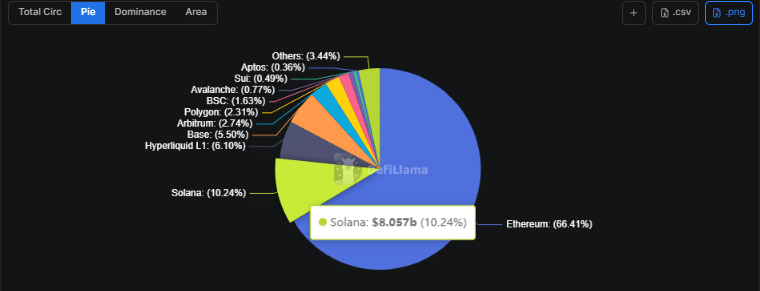
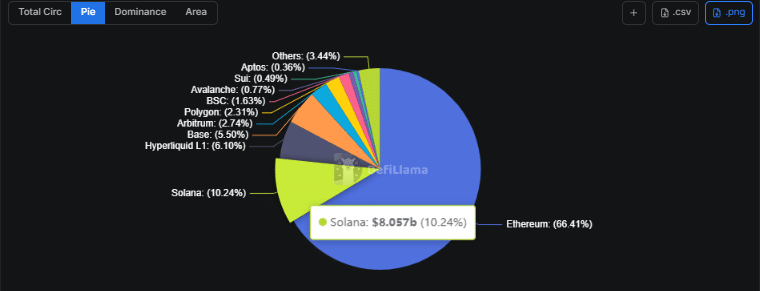
After Circle added $500 million to the market, the total supply of USDC stablecoin on the Solana blockchain rose by 0.14%. As per DefiLlama, USDC on Solana surpassed the $8 billion mark, which was about 10.24% of the total across all blockchains.

Most of the supply remains on Ethereum [ETH] at about 66.41%. The total circulating supply of USDC was about $78.65 billion, with another $1.284 billion still unreleased.

The minting means liquidity addition, which has impacted the markets positively. In fact, the crypto sector jumped by 4% as buying pressure increased.

Source: DefiLlama

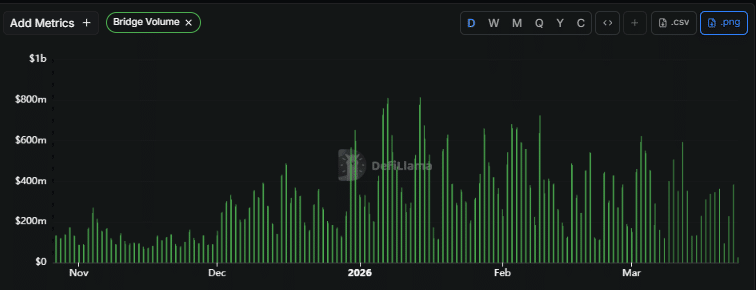
More analysis indicated that the Circle protocol had been seeing high bridge volume since the start of 2026. This spike was a result of the weakness seen in February and the better part of January, as traders were bridging assets to the stablecoin.

Circle was bridging an average of about $400 million per day. These figures explained why the firm was recording high revenue, which in turn drove the price of the CRCL stock.

Source: DefiLlama

With that in mind, the most impacted assets were Solana and CRCL. Will their prices continue rising as liquidity grows?

CRCL stock and Solana’s prices are recovering

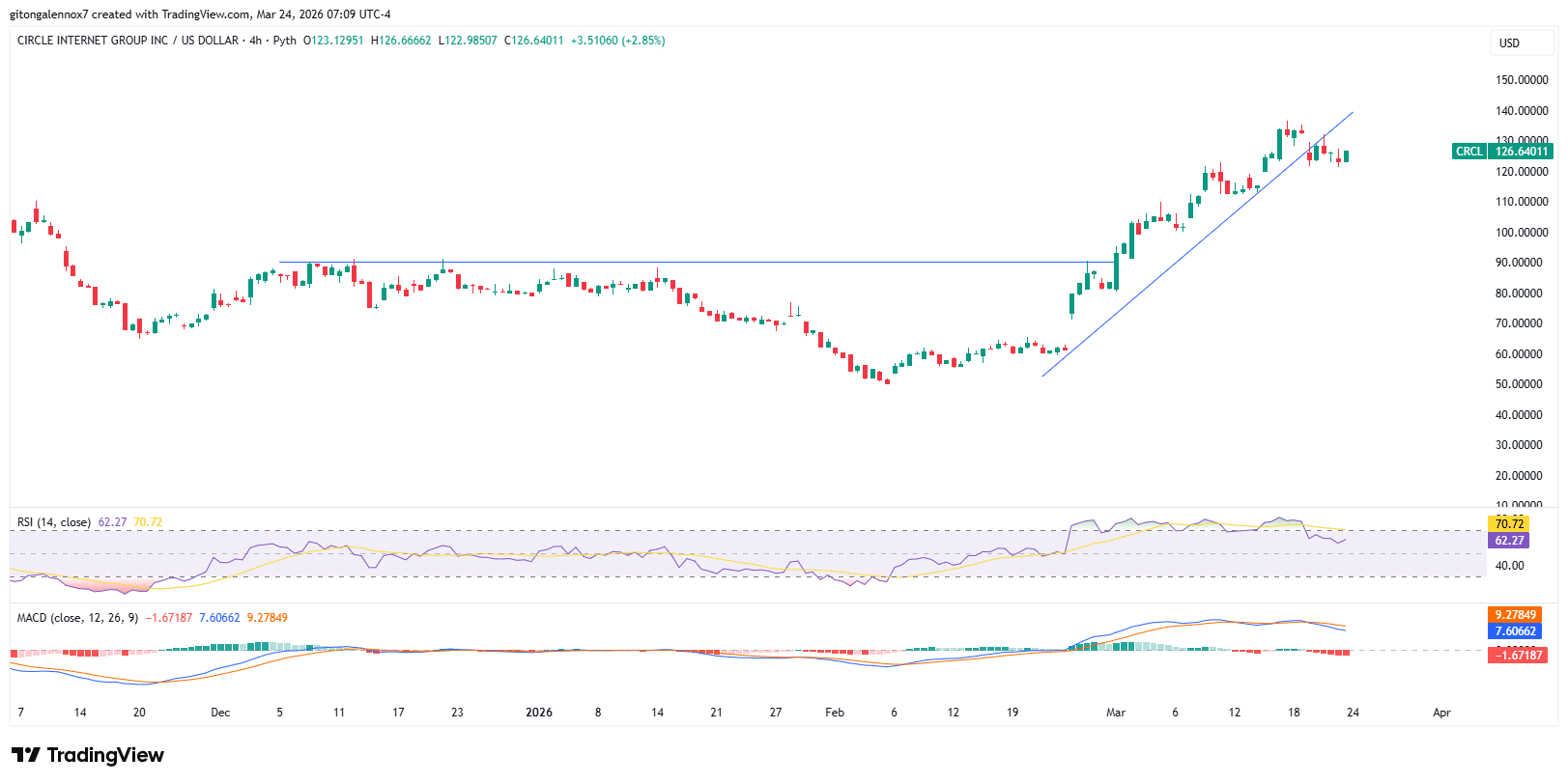
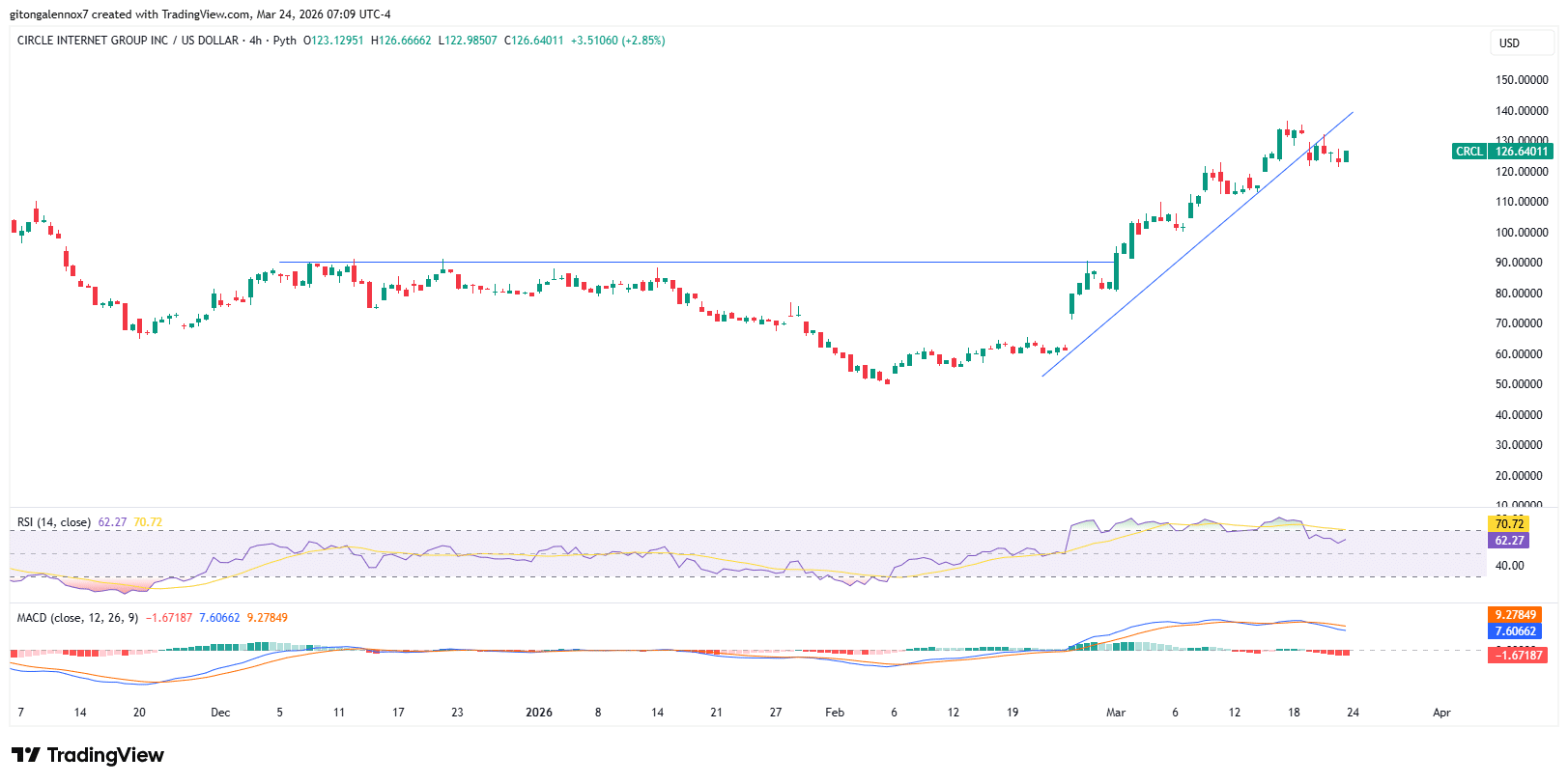
The price action of CRCL printed a bullish candle upon minting of the USDC. However, it remained below the rising trendline, which has supported the price since the second half of February.

The RSI at 62 is slightly above the neutral level, suggesting mid-buying activity. The MACD invalidates this view, as it shows bears are stronger in momentum.

Source: CRCL/USD on TradingView

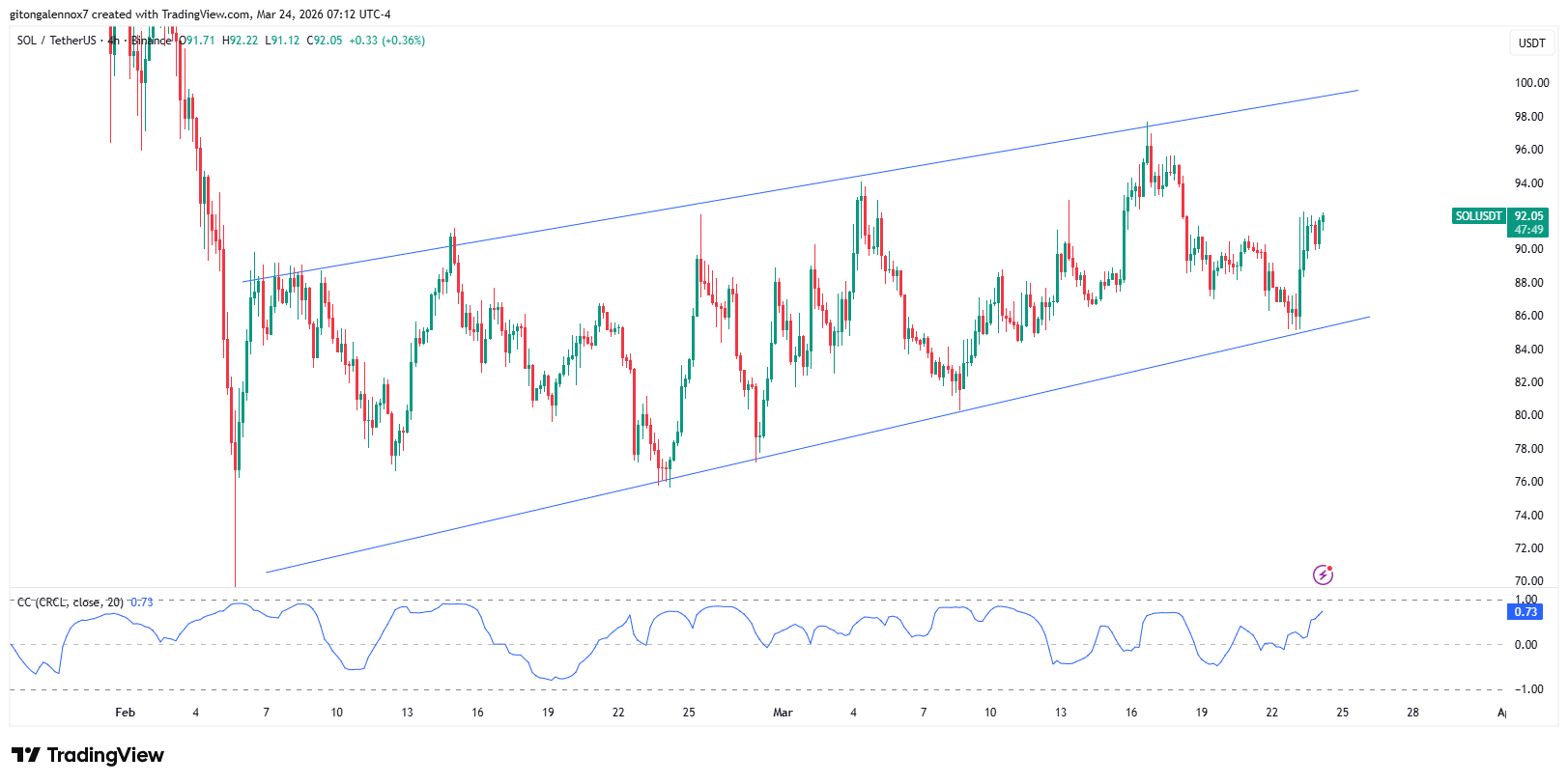
While the stock recovers from the lost support, Solana [SOL] price is attempting to break above the mid-level of the channel. The liquidity injection could play a hand in breaking out of this pattern.

SOL’s price has traded inside this channel since February, with the target now at $100 or higher. But the breakout was dependent on staying above $90, which had already been retested.

Source: SOL/USDT on TradingView

The correlation coefficient of Solana and CRCL stock was at 0.73. This meant that their movements were largely in sync, though SOL appeared stronger.


Final Summary

  • Circle mints $500M USDC on Solana, injecting liquidity into the markets.
  • CRCL stock and Solana move in sync as prices rebound amid liquidity injection.

Trending Cryptos

Related Questions

QWhat was the amount of USDC minted by Circle on the Solana blockchain and what was its impact on the total supply?

ACircle minted $500 million USDC on the Solana blockchain, which increased the total supply of USDC on Solana by 0.14%.

QAccording to the article, what is the primary driver of liquidity in the crypto sector?

AStablecoins are the main drivers of liquidity in the crypto sector, with USDC playing a massive role.

QWhich two assets were mentioned as being the most impacted by the liquidity injection, and what was their correlation coefficient?

AThe most impacted assets were Solana (SOL) and CRCL stock. Their correlation coefficient was 0.73, meaning their price movements were largely in sync.

QWhat was the average daily bridge volume for Circle at the time of the article, and what was the result of this high activity?

ACircle was bridging an average of about $400 million per day. This high bridge volume resulted in high revenue for the firm, which in turn drove the price of the CRCL stock.

QWhat key price level does Solana (SOL) need to stay above to potentially break out of its trading channel and reach a target of $100 or higher?

ASolana's price needs to stay above the $90 level to break out of its trading channel and potentially reach a target of $100 or higher.

Related Reads

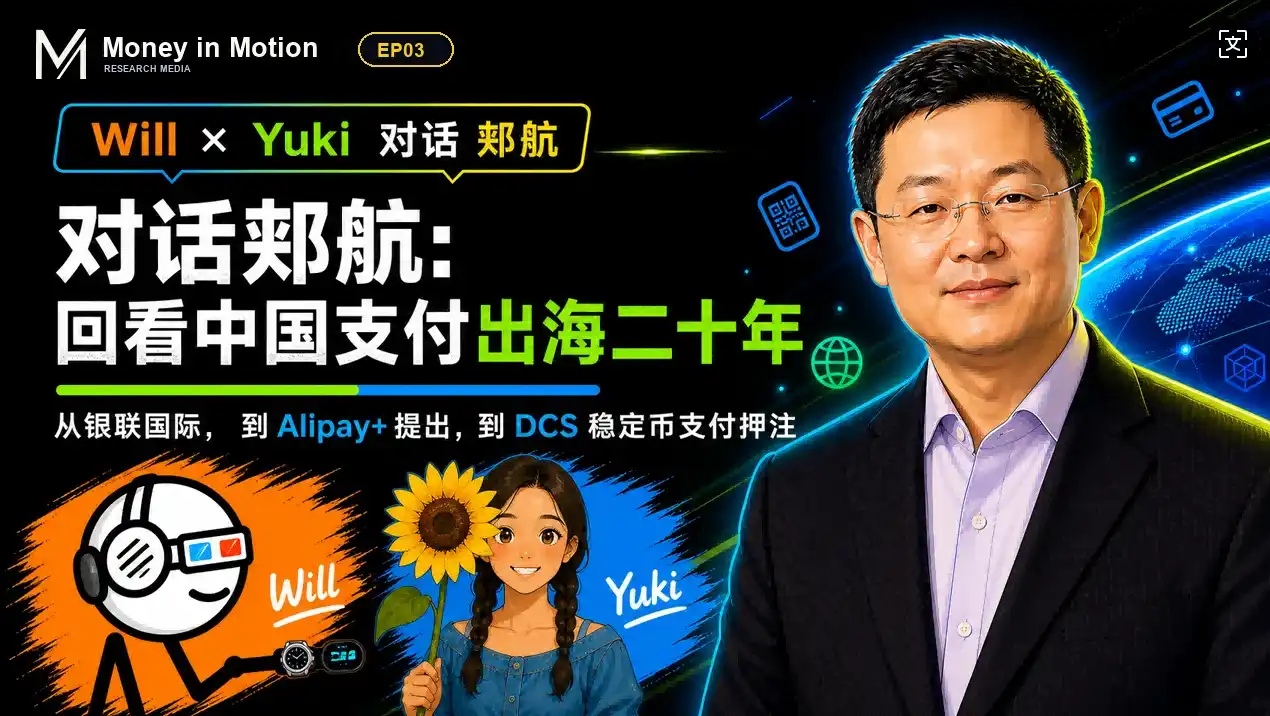
Dialogue with Jia Hang | Looking Back at Two Decades of Chinese Payment Going Global

**Summary: A Conversation with Jia Hang on Two Decades of China's Payment Globalization** Jia Hang, a veteran with over twenty years in payments, reflects on China's attempts to build a global payment network through three key phases: UnionPay (card networks), Alipay+ (digital wallets), and now, stablecoins. His journey began at UnionPay International, aiming to establish China's card network abroad. While successful in following Chinese tourists ("where Chinese go, UnionPay goes"), it struggled to achieve true global scale. The core lesson: card networks like Visa/Mastercard's unassailable advantage isn't just technical standards, but their deeply entrenched **governance and profit-sharing models** that create powerful network effects. Competing as the "same species" is nearly impossible. At Ant Group, he led Alipay+, a strategy to bypass card networks by interconnecting local e-wallets worldwide. While innovative, it faced a similar ceiling. Mobile QR payments and card swipes were essentially **the same species competing for the same pie**, lacking a disruptive value proposition for users or a sustainable new incentive model to replace the card networks' established flywheel. Today, at Singapore's DCS, Jia focuses on stablecoin-based payments. He argues stablecoins represent a fundamental shift. They are not competing with Visa for consumer payments but challenging the **traditional banking and account system for value movement**. Products like "U Cards" (stablecoin-linked payment cards) are transitional, leveraging existing card networks for acceptance while building new rails. The real potential lies in stablecoins enabling seamless, low-cost global value transfer, potentially reorganizing the financial infrastructure around **accounts rather than cards**. Jia believes stablecoin adoption for local retail payments, cross-border transactions, and as high-yield savings vehicles is becoming irreversible. This could gradually reduce reliance on traditional fiat channels, especially in regions with weak currencies or capital controls. The quest for the "next global payment network" continues, now centered on whether stablecoins can successfully bridge Web2 and Web3, establish new governance, and create compelling user value beyond mere cost reduction.

marsbit4m ago

Dialogue with Jia Hang | Looking Back at Two Decades of Chinese Payment Going Global

marsbit4m ago

Circle's Stock Price Plunges 76%, Hong Kong Dollar Stablecoin Set to Launch Within Two Weeks

Circle's stock price has plunged approximately 76% from its 2023 peak, reflecting a major market revaluation. Despite this, Circle President Heath Tarbert emphasized the company's focus on long-term execution and its dominant position with USDC's $73 billion circulation across 34 blockchains. The competitive landscape is intensifying. A new consortium-backed stablecoin, Open USD, is attempting to challenge incumbents by sharing reserve yields with partners. More significantly, Visa's new stablecoin platform, initially supporting Open USD while also being compatible with USDC, could erode Circle's network effects. In response, Circle is expanding into real-world payments through partnerships like the one with Japan's JCB. Separately, Tether (USDT) faces a two-year compliance window under new U.S. regulations, requiring it to adjust its reserve composition away from assets like Bitcoin and loans towards cash and U.S. Treasuries. Meanwhile, in Hong Kong, Standard Chartered-backed fintech firm Dian Dian is poised to launch a licensed HKD-pegged stablecoin (HKDAP), moving the industry into a phase where the real test is integrating licensed stablecoins into actual payment flows and corporate treasury systems. The sharp decline in Circle's stock underscores a broader shift: the stablecoin market is moving from a winner-takes-all dynamic to a multi-player competitive arena where execution, compliance, and real-world utility are becoming paramount.

marsbit5m ago

Circle's Stock Price Plunges 76%, Hong Kong Dollar Stablecoin Set to Launch Within Two Weeks

marsbit5m ago

Amidst Capital's Encirclement, Decentralization is the Sole Defense for Public Blockchains

In a landscape dominated by power and profit motives, the author argues that decentralization is not merely one desirable feature among many in blockchain design—it is the singular, non-negotiable defense against corporate and capital capture. The article adopts a Machiavellian, realist perspective on human institutions, positing that businesses will inevitably attempt to co-opt any valuable network to protect their profits and dominance. While external attacks like 51% forks are often discussed, the greater existential risk is internal capture—the gradual erosion of a protocol’s neutrality by vested interests, as seen historically with platforms like Visa and Google. The piece critiques permissioned chains, highly centralized “permissionless” layer-1s, and layer-2s without sufficient decentralization (e.g., single sequencers) as inherently vulnerable. These compromised systems, promoted by established financial players, are framed as delaying tactics to stifle truly open networks that threaten existing high-fee, inefficient business models. Real-world examples, such as closed enterprise consortiums that exclude competitors, illustrate how such systems cement oligopolies rather than foster innovation. The author concludes that while decentralized protocols like Ethereum are imperfect and costly to operate, they represent the only viable long-term equilibrium. In a market where value naturally flows to the most secure and neutral settlement layer, only maximally decentralized public blockchains can resist being subsumed by capital and powerful incumbents.

Foresight News15m ago

Amidst Capital's Encirclement, Decentralization is the Sole Defense for Public Blockchains

Foresight News15m ago

Who Decides the Rules of Bitcoin? BIP-110 Ignites Governance Debate

Bitcoin's governance is once again at the center of a heated debate, this time ignited by BIP-110, the "Reduced Data Temporary Softfork." This proposal aims to curb non-monetary data (like inscriptions and Runes) by introducing seven new consensus-layer restrictions over a year, such as limiting new output scripts to 34 bytes and restoring the OP_RETURN cap to 83 bytes. The controversy stems from BIP-110's fundamental shift: it moves the battle against "spam" from node relay and miner policies to the consensus layer, rendering currently valid transactions invalid. Supporters, arguing that default policy governance has failed (highlighted by Bitcoin Core v30's relaxation of OP_RETURN limits), see this as necessary to protect node resources and Bitcoin's monetary focus. Opponents, led by figures like Michael Saylor and Adam Back, warn it dangerously centralizes governance. Saylor listed 110 reasons against it, criticizing its low 55% miner activation threshold and potential for chain splits. Back emphasized Bitcoin's "permissionless" ethos, arguing no single group should impose value judgments via consensus rules. Further complicating matters, technical critiques suggest BIP-110 may be technically circumventable, and a "BlockSlop" vulnerability in its upgrade path poses a consensus risk. The debate has drawn in diverse stakeholders: miners (with pools like Ocean signaling support and Foundry polling clients), node operators (like Bitcoin Knots), and new players like corporate treasury holder MicroStrategy (Saylor), whose market influence adds a novel dimension. Ultimately, BIP-110 acts as a governance stress test, exposing the unresolved question: who decides Bitcoin's rules? It pits the authority of miners, node operators, developers, and capital holders against each other, with each side claiming to defend Bitcoin's core principles of neutrality and security.

marsbit32m ago

Who Decides the Rules of Bitcoin? BIP-110 Ignites Governance Debate

marsbit32m ago

Who Decides Bitcoin's Rules? BIP-110 Ignites Governance Debate

Title: Who Decides Bitcoin's Rules? BIP-110 Ignites Governance Debate A new technical proposal, BIP-110 (Reduced Data Temporary Softfork), has sparked a fundamental governance debate within the Bitcoin community. It aims to impose new consensus rules for one year to limit non-financial data (like inscriptions and Runes) on-chain, moving beyond simple node and miner policy filters to invalidate currently valid transactions. Supporters argue that default policies have failed due to workarounds, necessitating consensus-layer changes to protect Bitcoin's core monetary function from data spam. Critics, including Michael Saylor and Adam Back, contend this dangerously centralizes judgment, undermines permissionlessness, and sets a risky governance precedent. They advocate for market-based solutions like fees or Layer 2s instead. The debate exposes deeper tensions: miners are divided on activation; node operators assert their sovereignty; Bitcoin Core developers influence defaults without direct accountability; and large corporate holders like MicroStrategy now wield narrative influence. Technically, BIP-110 may not fully block data and carries a disclosed consensus bug risk. Ultimately, BIP-110 acts as a stress test, forcing the community to confront the unresolved question: who legitimately decides what Bitcoin is and how it evolves, amidst competing claims from miners, nodes, developers, and capital holders.

链捕手44m ago

Who Decides Bitcoin's Rules? BIP-110 Ignites Governance Debate

链捕手44m ago

Trading

Spot

Hot Articles

How to Buy MLN

Welcome to HTX.com! We've made purchasing Melon (MLN) simple and convenient. Follow our step-by-step guide to embark on your crypto journey.Step 1: Create Your HTX AccountUse your email or phone number to sign up for a free account on HTX. Experience a hassle-free registration journey and unlock all features.Get My AccountStep 2: Go to Buy Crypto and Choose Your Payment MethodCredit/Debit Card: Use your Visa or Mastercard to buy Melon (MLN) instantly.Balance: Use funds from your HTX account balance to trade seamlessly.Third Parties: We've added popular payment methods such as Google Pay and Apple Pay to enhance convenience.P2P: Trade directly with other users on HTX.Over-the-Counter (OTC): We offer tailor-made services and competitive exchange rates for traders.Step 3: Store Your Melon (MLN)After purchasing your Melon (MLN), store it in your HTX account. Alternatively, you can send it elsewhere via blockchain transfer or use it to trade other cryptocurrencies.Step 4: Trade Melon (MLN)Easily trade Melon (MLN) on HTX's spot market. Simply access your account, select your trading pair, execute your trades, and monitor in real-time. We offer a user-friendly experience for both beginners and seasoned traders.

3.8k Total ViewsPublished 2024.03.29Updated 2026.06.02

How to Buy MLN

What is $MELON

Understanding cocomELON, $$melon: A Deep Dive into a Unique Crypto Project Introduction to cocomELON, $$melon In the rapidly evolving landscape of digital currencies and blockchain technology, innovative projects continue to emerge, each attempting to carve their niche within the decentralized ecosystem. One such project is cocomELON, $$melon, which seeks to integrate the engaging aspects of gaming with the lucrative opportunities that cryptocurrency presents. This article aims to explore the intricate details surrounding cocomELON, $$melon, its overarching vision, its creators, backers, unique operations, and timeline of important events within its development. What is cocomELON, $$melon? cocomELON, $$melon is a crypto project that seeks to create a playful and community-driven ecosystem centered around the entertainment aspect of digital assets. While the term 'cocomELON' may evoke imagery of childhood entertainment, in this context, it serves as a representation of a creative and engaging approach to cryptocurrency. The project aims to amalgamate the thrill of gaming with decentralized finance (DeFi), allowing users not just to invest but to actively participate in a platform that incentivizes creativity and user interaction. Users can expect a blend of gamified elements, including non-fungible tokens (NFTs), staking mechanisms, and collaborative community experiences—all designed to enhance user engagement while capitalizing on the expansive potential of web3 technology. Who is the creator of cocomELON, $$melon? The creator of cocomELON, $$melon remains unspecified within the available information. This anonymity can often be a notable feature in the crypto space, aligning with the ethos of decentralization and community-led projects. Despite the lack of visibility regarding the founder, the strategic vision and integration of user participation suggest a team of experienced professionals in both the tech and entertainment sectors is likely driving the initiative. Who are the investors of cocomELON, $$melon? As with many innovative crypto projects, detailed information about the investors backing cocomELON, $$melon is not publicly disclosed. However, the project's potential and outline suggest an interest from a mix of angel investors, venture capitalists, and possibly, strategic partnerships within the tech industry—particularly those involved in web3 attractions, gaming, and digital content creation. Inviting investment from relevant sectors underscores the project's commitment to developing a robust and engaging platform that addresses modern entertainment and financial needs. This ecosystem could be appealing to those looking to diversify their investment portfolios into emerging art and creative technologies. How does cocomELON, $$melon work? The operational model of cocomELON, $$melon is innovative and engaging, designed to attract and retain users within the crypto ecosystem. Here are some factors that contribute to its uniqueness: Gamification of Crypto: By integrating gaming elements into the cryptocurrency experience, cocomELON, $$melon makes the process of investing more accessible and enjoyable for users. Features such as quizzes, rewards for participation, and interactive tasks could make users feel integral to the project's success. Community-driven Development: Emphasizing a community-centric approach encourages user feedback and growth alongside the project. The ecosystem likely promotes social sharing and incentivizes collaborative initiatives, thereby ensuring a continuous flow of creative input from users. NFT Utilization: As a significant trend in digital creativity, NFTs are expected to play a pivotal role within the cocomELON, $$melon ecosystem. Users may be able to create, buy, and sell unique digital assets, providing them with a sense of ownership and expression within the community. Evolving Content: The project is positioned to adapt its offerings based on user engagement and trends, ensuring its longevity and relevance in the fast-paced digital space. Regular updates and varied content will keep users returning for fresh experiences. Timeline of cocomELON, $$melon Understanding the historical context of cocomELON, $$melon helps illustrate its development and evolution within the crypto landscape. Here are some key milestones in its journey: 2021: The conceptualization of cocomELON, $$melon takes place, introducing the blend of gaming and cryptocurrency. 2022: Community engagement strategies are developed, driving initial interest and user base formation. 2023: Pre-launch of the platform occurs with a series of marketing efforts aimed at raising awareness and gathering a community of supporters. 2024: Full launch of the cocomELON, $$melon platform, enabling users to engage with its features, participate in content creation, and commence transactions. Key Points About cocomELON, $$melon Community Engagement: The backbone of cocomELON, $$melon lies in its community-driven initiatives, fostering a strong sense of belonging and collective growth. Diversified Offerings: Incorporating gaming elements along with financial activities, the project strives to cater to a broad audience beyond just traditional investors. Adaptability: The capacity to evolve based on user interaction ensures cocomELON, $$melon remains relevant and attractive within the fast-paced landscape of cryptocurrency. User Empowerment: By promoting user-generated content and collaboration, cocomELON, $$melon aims to empower its community, transforming passive observers into active participants. In conclusion, cocomELON, $$melon presents an innovative approach within the cryptocurrency industry, merging entertainment with investment opportunities. Its focus on community engagement, adaptability, and gamified elements uniquely positions it in a crowded market, offering both existing and new crypto enthusiasts an entertaining way to engage with digital assets. As it continues its development, cocomELON, $$melon looks set to push boundaries, leveraging the creativity and collaboration of its user base, which remains at the heart of its mission.

592 Total ViewsPublished 2024.05.02Updated 2024.12.03
What is $MELON

What is MELON

Melon Dog: A New Contender in the Web3 and DeFi Landscape Introduction In the ever-evolving landscape of cryptocurrency, innovative projects continue to emerge, each with its unique vision and community-driven goals. Among them is Melon Dog ($MELON), a cryptocurrency token that operates within the web3 space and decentralized finance (DeFi) ecosystem. This project distinguishes itself by fostering a playful atmosphere while striving to build a robust community around its offerings. In this article, we explore what Melon Dog is, the factors contributing to its uniqueness, and the vision it encapsulates. What is Melon Dog ($MELON)? Melon Dog is a cryptocurrency token that prioritizes community engagement and aims to deliver a distinctive experience in the DeFi sector. The driving force behind this project is the desire to create a sense of belonging and participation among its users. Melon Dog’s approach involves not only engaging the community with various activities but also involving them in roadmap releases that guide the project's development. The core philosophy of Melon Dog hinges on the cultivation of a “cult-like” community. This strategy aims to harness the passions and interests of its members, ultimately leading to a robust and interactive ecosystem. As the DeFi space continues to develop, Melon Dog distinctly positions itself at the intersection of community-driven initiatives and innovative tokenomics. Who is the Creator of Melon Dog ($MELON)? As intriguing as the project may be, information regarding its creator remains obscured. The team behind Melon Dog has chosen to keep its identity private, which is a notable characteristic of many cryptocurrency projects in recent years. This anonymity adds a layer of mystery, although it also raises questions about accountability and transparency. While the absence of publicly available details about the project’s origins may deter certain investors, others find value in the decentralized ethos of crypto projects that embrace anonymity. In this context, Melon Dog’s creator could very well be a collective of individuals committed to the project’s mission rather than a single identifiable figure. Who are the Investors of Melon Dog ($MELON)? Currently, there is no discernible information about specific investment organizations or foundations that have financed Melon Dog. This lack of detailed investment backing underscores an important consideration: the project appears to thrive on community contribution and organic growth rather than relying on significant venture capital investments. The development of Melon Dog reflects a growing trend within the crypto industry, where community involvement often takes precedence over traditional financial backing. This model invites participation from enthusiastic users who, through their involvement, shape the project’s direction. How Does Melon Dog ($MELON) Work? Melon Dog operates by leveraging principles inherent in the DeFi and web3 spaces, dedicating itself to creating a community-oriented project. The token's functionality stems from its promise to engage users through diverse activities, such as roadmap releases and community-driven events. One of the project's unique aspects is its emphasis on interaction; users are invited not merely to invest but to actively participate in the project’s journey. This approach seeks to empower community members, giving them a sense of ownership and partnership in achieving shared goals. Moreover, the infrastructure that supports Melon Dog is inherently decentralized, which aligns with the fundamental beliefs of both the DeFi and web3 landscapes. By fostering a space where users can partake in governance and propose initiatives, the project not only promotes transparency but also encourages innovation and evolution based on collective community feedback. Timeline of Melon Dog ($MELON) Understanding the key milestones in the development of Melon Dog provides insight into its progress and community engagement efforts. Below is a timeline of important events that have marked the project’s history thus far: November 13, 2024: Melon Dog announces a new strategic roadmap aimed at expanding its community. This announcement signals a significant advancement in the project and emphasizes its commitment to fostering user engagement. While this timeline showcases a singular significant event, it reflects the project’s aspirations moving forward. Future updates and roadmap expansions will undoubtedly contribute to its evolving narrative. Key Points About Melon Dog ($MELON) Community Focus Melon Dog places a strong emphasis on building an active and engaged community. Its design and ongoing initiatives are constructed to cultivate a sense of belonging among users. Operational Framework Situated within DeFi and web3, Melon Dog stands out as a project that invites participation, enabling users to contribute to shaping its future. Roadmap Releases Regularly scheduled roadmap releases serve as touchpoints for community involvement, ensuring that the user base is informed and can actively contribute to upcoming developments. Cult-like Community The project identifies itself as a fun and cult-driven initiative, actively promoting loyalty and commitment amongst its users. Important Considerations The ongoing success of Melon Dog is intricately linked to community engagement and participation. The anonymity of its creators and absence of external funding may raise questions, but these elements also reflect a broader trend towards decentralized models within the crypto industry. Conclusion Melon Dog ($MELON) presents an intriguing case within the realms of DeFi and web3, driven by its community-centric philosophy. While details surrounding its creators and investors remain elusive, the project’s emphasis on user participation and community engagement is noteworthy. As the crypto landscape continues to evolve, Melon Dog’s unique approach may pave the way for innovative community-driven projects that thrive on collective effort and shared enthusiasm. In this playful yet purposeful venture, Melon Dog stands as a testament to the transformative power of community in the crypto ecosystem, showcasing how a united group of advocates can foster a thriving digital environment. As new developments unfold, it will be fascinating to observe how Melon Dog continues to engage its cult-like community and expand its initiatives in the ever-changing world of cryptocurrency.

2.3k Total ViewsPublished 2024.11.11Updated 2024.12.03

What is MELON

Discussions

Welcome to the HTX Community. Here, you can stay informed about the latest platform developments and gain access to professional market insights. Users' opinions on the price of MLN (MLN) are presented below.

活动图片