5 Bottles of Water Equal a Day's Wage, No Creases Allowed on US Dollars: What's Causing Myanmar's Financial Anomalies?

比推Published on 2026-02-26Last updated on 2026-02-26

Abstract

The article "War-Torn Myanmar: The Dignity of the Dollar, Trapped Youth, and the Underground Financial Market" details the severe economic and social conditions in Myanmar based on a two-week field study in 2026. Key observations include a massive black market exchange rate disparity (official 1:300 vs. black market 1:550 for USD to Myanmar Kyat), extreme wage gaps (e.g., servers earning as little as ¥300 monthly vs. ¥8000 in Shanghai), and rampant inflation where prices have surged 5x in a decade while wages only doubled. Basic goods like water are unaffordable for many; five bottles cost a day's wage. The financial system is fragile, with USD notes requiring perfect condition for acceptance, while the local currency is treated with far less care. Child labor is widespread, with children as young as nine working long hours for meager pay. Young adults are effectively trapped, as the government restricts passport issuance for those aged 18-60, making legal emigration nearly impossible. Illegal routes, such as human trafficking or dangerous border crossings, are often the only alternatives. The report concludes that ordinary citizens, burdened by survival and the constant threat of conscription, have no capacity to pursue happiness, encapsulating a life of relentless hardship.

Author: Joe Zhou, Foresight News

Original Title: Myanmar Under War: The Dignity of the US Dollar, Trapped Youth, and the Underground Financial Market


During the 2026 Spring Festival holiday, I traveled to Myanmar for a two-week field research trip.

Passing through Yangon, Bagan, and Mandalay, I attempted to uncover the true economic, financial, and social survival conditions of this country under the shadow of war. As the first record halfway through the journey, this article will showcase the real Myanmar I witnessed.

Just in the first week in Yangon, the overwhelming density of information far exceeded my imagination:

A 9-year-old child who dropped out of school to work as a waiter, middle-aged men who could be forcibly conscripted at any moment, young people unable to obtain passports to leave the country, and foreigners who come here to "buy wives" taking advantage of the economic disparity...

In Yangon, under warlord control, bars and KTVs still maintain the illusion of a vibrant nightlife; while in many other cities across Myanmar, once the 7 p.m. curfew hits, the streets instantly fall silent, as if becoming a dead city, devoid of any human presence.

This is a vast, folded system. War and corruption grow in the cracks, and soaring prices are pushing ordinary people's lives to the edge.

The Folded Myanmar

To understand this撕裂 (tear/rift), one must first see the three layers of "folding" present in this country.

There are two Myanmars: one is the Myanmar under the internet filter, the other is the Myanmar in reality; one is the Myanmar whitewashed in official data sheets, the other is the Myanmar struggling in the black market.

The first fold is the profound exchange rate裂痕 (crack/fissure). Upon landing in Myanmar, I exchanged 2500 Chinese Yuan for 1.38 million Myanmar Kyat at a Chinese restaurant. The official rate boasts 1:300, while the real trading price on the black market has plummeted to 1:550.
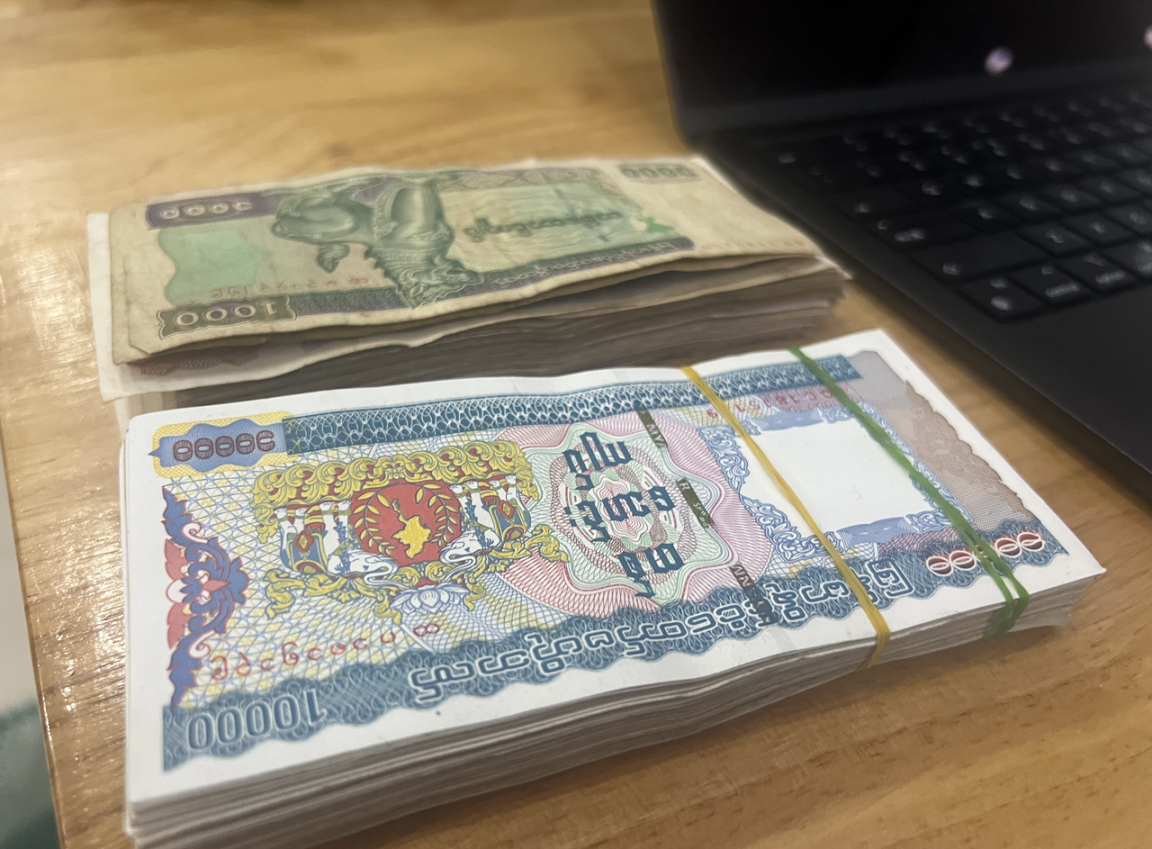
1.38 million Myanmar Kyat exchanged by the author

The national exchange rate is nominal, the black market rate reflects the people's reality.

The second fold is the cliff-like disparity in wages. A waiter doing the same job earns around 18,000 Chinese Yuan per month in Hong Kong, 8,000 in Shanghai, while in Bagan, Myanmar, this number plummets to a suffocating 300 Yuan.

Even within Myanmar, the urban-rural gap remains huge. An overseas Chinese long settled in a town told me that a waiter's monthly salary in a big city can reach 500 to 800 Yuan—this implies that even the highest-paid low-wage earners in Myanmar receive only about one-tenth of what their counterparts in Shanghai earn.

The third fold is the demonized internet labels versus the simple and honest reality. On the Chinese internet, Myanmar is simplistically and crudely reduced to synonyms for "kidney harvesting" and telecom fraud. But when you actually walk the streets of Yangon, Bagan, and Mandalay, you find that most people here still maintain extreme simplicity and peacefulness. Northern Myanmar is indeed dangerous, filled with war and grey industries, but essentially, those crimes have nothing to do with the vast majority of ordinary Myanmar people—in this grand geopolitical and interest meat grinder, they are equally the most helpless victims.

The "Dignity" of the US Dollar

This underlying economic裂痕 (crack/fissure) and sense of insecurity is most absurdly manifested in the currency.

Myanmar's underground financial market operates on an iron rule: US dollars must not be folded; any bill with marks or damage is rejected.

The economic常识 (common sense) that "a trampled $10 bill still has value" completely失效 (fails/loses effect) here. Even the slightest crease can cause the bill to be mercilessly refused by vendors. Every Myanmar person I've seen handling US dollars acts like a merchant examining an expensive antique with a magnifying glass; they hold their breath, carefully scrutinizing every inch of the bill's edges, every hidden line.

In stark contrast is the treatment of the local currency—the Myanmar Kyat can be crumpled into a ball, stuffed into a pocket, even thrown into water for a wash, taken out and still spent; but the US dollar must remain perfectly crisp. In the local subconscious, a damaged US dollar is equivalent to gold of inferior quality, subject to a 10% to 20% discount penalty.

This近乎病态的 (almost pathological) "fastidiousness" is precisely a concrete manifestation of the extreme fragility of this country's financial system. Long-term sanctions and complete financial isolation have driven the official and black-market exchange rates to an extreme撕裂 (tear/rift). In this country that has lost all sense of security, the dignity of a green piece of paper is infinitely elevated; the respect it commands甚至远远超越 (even far surpasses) that of a sweating, struggling living person.

5 Bottles of Water Equal an Adult's Daily Wage

The collapse of monetary信用 (credit/trust) directly translates into runaway inflation. With the war持续多年 (lasting many years), Myanmar's prices have become disordered.

In the memory of local Kosla, over the past decade, the price of most goods in Myanmar has soared about 5 times, while people's wages have only艰难地爬升了 (painfully climbed) 2 times. The specific numbers are冰冷 (chillingly cold): In 2019, a JJ bus ticket (JJ Express is one of Myanmar's most famous long-distance bus companies) cost only 11,000 Kyat; by 2026, the ticket price had risen to 50,000 Kyat; a bottle of mineral water, sold almost exclusively to foreigners, increased from 200 Kyat then to 800-1000 Kyat now.

Prices have quadrupled or quintupled, but labor has become increasingly cheap. In Bagan, ten years ago, the daily wage for an ordinary adult waiter was 2500 Kyat; now it is 5000 Kyat (less than 10 Chinese Yuan). Kosla confirmed this is almost the universal daily wage for most restaurant waiters in Bagan. A service industry老板 (boss/owner) in Yangon, Veraswami, also revealed a残酷的底线 (cruel baseline) to me: the monthly salary of an ordinary Myanmar person is typically only 200 to 300 Chinese Yuan.
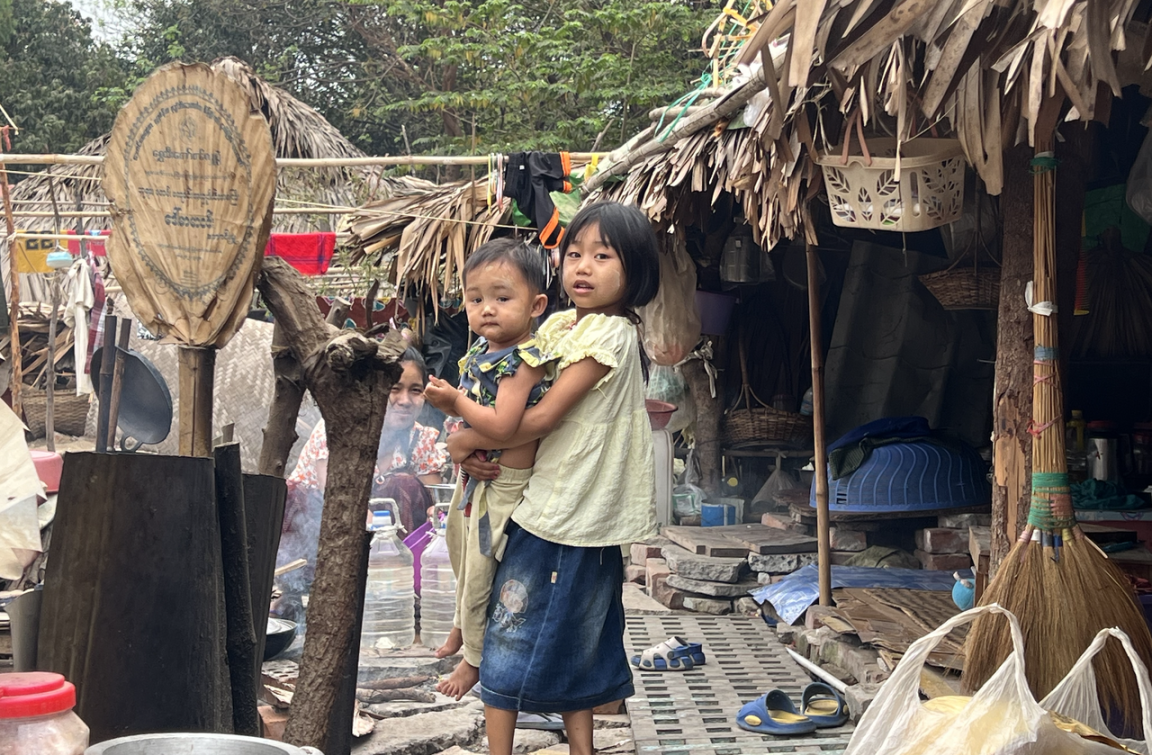
Only heavy manual labor and working in big cities can buy a little more breathing room. Near the famous pagoda in Mandalay, a construction worker laboring under the scorching sun told me his daily wage is 30,000 Kyat (less than 60 Chinese Yuan).

The income of ordinary people is firmly pinned in place. In Myanmar, locals generally cannot afford to drink bottled water. Because just 5 bottles of the most ordinary mineral water can instantly drain the entire day's wages earned through hard work by an adult.

Myanmar Children, Already Reduced to the "Working Class"

When the meager wages of adults are squeezed dry by inflation, the heavy pressure of survival inevitably falls on the next generation.

In Bagan, Kosla calmly recalled his childhood to me. To survive, he started working in a restaurant at the age of 9. Toiling from 8 a.m. to 5 p.m., he earned a daily wage of 500 Kyat. It wasn't until he was 16 that this wage艰难地爬升到了 (painfully climbed to) 2500 Kyat.

This is not just Kosla's personal时代眼泪 (tears of the times), but the至今触目惊心的 (still shocking today)底色 (underlying tone/reality) of this country.

Traveling from Yangon and Bagan to the largest northern city, Mandalay, "prematurely matured childhoods" are the most common sight on the streets.

In the middle of Yangon's traffic-congested roads, boys under 15 hold their four or five-year-old brothers, begging by knocking on car windows amidst exhaust fumes and danger;

In Bagan, children under 10 do odd jobs in restaurant kitchens, underage waiters熟练地 (skillfully) serve dishes and water, and beside those ancient pagodas, groups of teenagers can only earn meager change by taking photos for tourists; outside temples in Mandalay, children around 10 years old are busy helping their parents with incense and offerings.

Time seems to stand still here. More than a decade has passed, whether in remote villages or core cities, the situation seems unchanged. In this country, childhood is a luxury. Young children are thrown early into the cruel game of survival, still the heaviest and unsolvable daily reality of Myanmar.

Myanmar Youth, A Generation Unable to Redeem Themselves

And when these prematurely matured children grow up, what awaits them is another inescapable cage. For ordinary Myanmar youth, leaving is an exorbitantly expensive redemption.
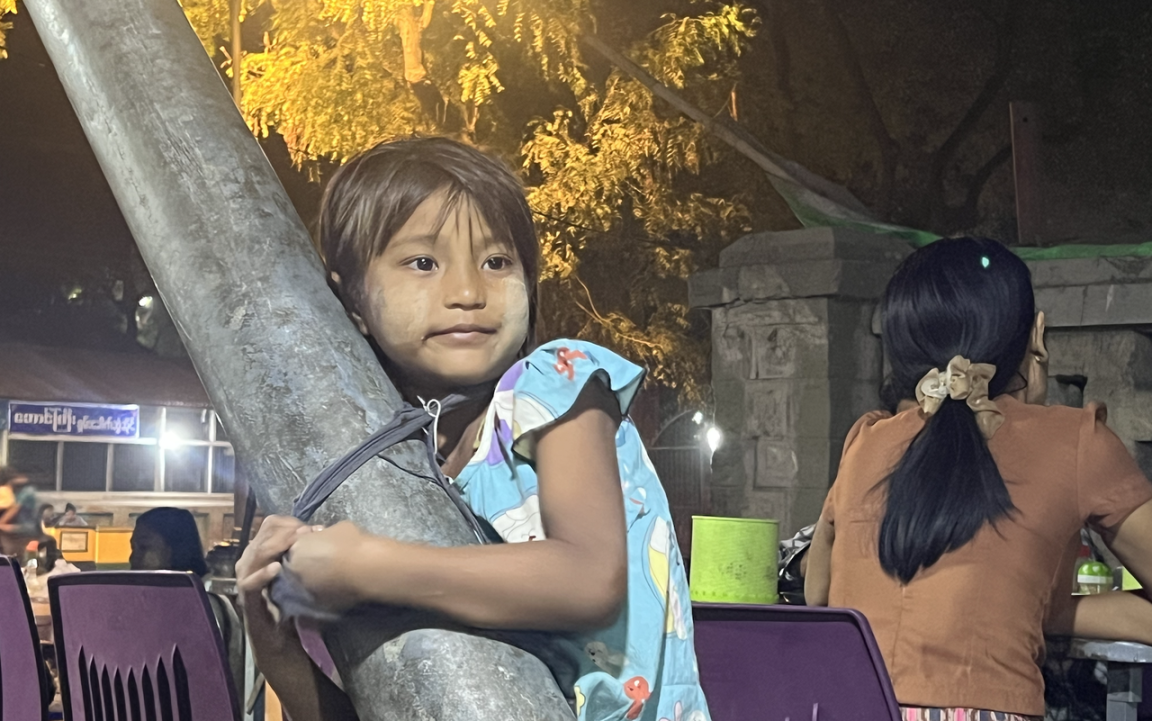
First are the economic shackles. Meager wages are like stagnant water; merely coping with soaring living costs exhausts all their strength, making "saving money to go abroad" a distant, unattainable luxury.

And the iron fist of power directly severs the legal escape route for this generation. "If you are over 80 years old, you can leave Myanmar freely; but if you are between 18 and 60 years old, the country will absolutely not let you go." A老板 (boss/owner) in Yangon, Veraswami, told me this cruel unwritten rule. The government strictly controls youth出境 (exiting the country), making passports meaningless.

When normal channels are completely blocked,畸形 (deformed/malformed) "ways out" begin to滋生 (breed/grow) in the shadows.

"Now many people specifically come to Myanmar to 'buy wives'." Boss Veraswami shared a recent incident he handled with a bitter smile: To help the Myanmar wife of a foreign man leave the country smoothly, he疏通 (greased the wheels), paid various facilitation fees totaling 3000 Chinese Yuan. For a foreigner, 3000 Yuan might be just an ordinary plane ticket; but for the底层 (bottom/underclass) Myanmar people, it is the entire life's earnings of an ordinary person working diligently for 15 months without eating or drinking.

Even risking their lives to work illegally, the reality is equally绝望 (hopeless). A Myanmar monk无奈地 (helplessly) told me that many young people try to偷渡 (sneak across the border) to Thailand by water. But as border hostilities spread, Thailand not only does not welcome Myanmar refugees but has also begun strictly investigating and cracking down on the employment of Myanmar illegal workers.

Can't leave, can't stay. The national border here is no longer a dotted line on the map, but an abyss cast from absolute power and extreme poverty.

Final Words

The镜头定格 (lens focuses) on a little boy quietly looking out the train window.
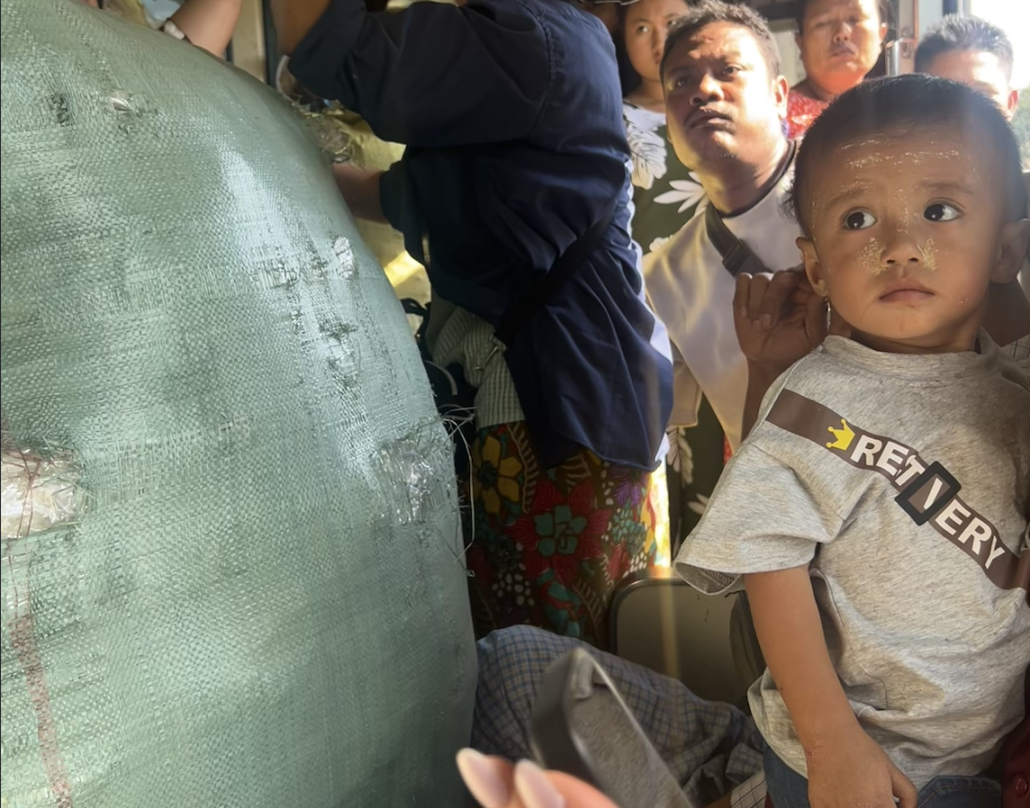
A Myanmar boy on the train

He is an缩影 (epitome) of the millions of ordinary boys in Myanmar. Time will irreversibly push him forward, making him grow into a youth, then a man, eventually, inevitably becoming someone like my guide, Kosla.

I once asked this ordinary Myanmar man: "Are you happy?" Kosla didn't answer immediately. When I追问 (pressed) a second time, he only避重就轻 (evaded the important point) saying: "We are busy with making a living every day, we simply have no time to think about happiness."

Until much later, on the dusty roadside, he answered this question for the third time, and most completely:

"I might die tomorrow. They could grab me to become a soldier at any time, to go fight on the other side of the river. After 7 p.m., if a man is on the street in Bagan, he will likely be thrown in jail, then sent to the battlefield for no reason. I've been working since I was 9 years old, but the speed of wage increases can never catch up with inflation."

"A lifetime. No happiness." He said.


Twitter:https://twitter.com/BitpushNewsCN

Bitpush TG Discussion Group:https://t.me/BitPushCommunity

Bitpush TG Subscription: https://t.me/bitpush

Original article link:https://www.bitpush.news/articles/7614847

Related Questions

QWhat are the three main 'folds' or divisions that characterize the economic and social situation in Myanmar as described in the article?

AThe three main 'folds' are: 1) The deep chasm between the official exchange rate and the black market exchange rate. 2) The extreme wage disparity between Myanmar and other countries, as well as within the country itself. 3) The contrast between the demonized online perception of Myanmar (as a place for scams and organ harvesting) and the reality of a mostly simple and peaceful populace who are victims of the conflict.

QWhy is the physical condition of US dollar bills so important in Myanmar's underground financial market?

AUS dollar bills must be in perfect, crisp condition with no folds, creases, or marks. Even a slight imperfection can lead to the bill being rejected or severely discounted by 10-20%. This 'pathological fastidiousness' is a manifestation of the country's extremely fragile financial system. The dignity and perceived value of the physical US currency are disproportionately high due to a complete loss of financial security and the extreme disparity between official and black-market exchange rates.

QHow does the price of basic goods, like water, compare to the average daily wage for a worker in places like Bagan?

AThe price of basic goods has skyrocketed due to inflation. A bottle of water, which is primarily bought by foreigners, costs between 800 to 1000 kyat. Meanwhile, the average daily wage for a service worker in Bagan is only about 5,000 kyat (less than 10 RMB). This means that just 5 bottles of water can cost the equivalent of an adult's entire daily wage.

QWhat challenges do young Myanmar citizens face if they try to leave the country?

AYoung Myanmar citizens face immense challenges in leaving the country. Economically, their meager wages make saving money for travel impossible. Politically, the government tightly controls出境 (exit), with a reported unwritten rule that those between 18 and 60 years old are not allowed to leave legally, making passports effectively useless. This has led to the growth of illicit 'ways out,' such as foreign men 'buying' Myanmar wives or dangerous attempts to sneak across the border to Thailand, which is now cracking down on undocumented Myanmar workers.

QWhat was the poignant response from the guide, Kosla, when asked if he was happy?

AWhen asked if he was happy, Kosla initially avoided the question, stating that people are too busy making a living to think about happiness. Later, he gave a full answer, explaining his perpetual fear of being forcibly conscripted to fight at any moment, the danger of being imprisoned for being on the street after curfew, and the fact that his wages have never kept pace with inflation since he started working at age 9. His concluding statement was: 'A lifetime. No happiness.'

Related Reads

Trading

Spot
Futures

Hot Articles

What is SONIC

Sonic: Pioneering the Future of Gaming in Web3 Introduction to Sonic In the ever-evolving landscape of Web3, the gaming industry stands out as one of the most dynamic and promising sectors. At the forefront of this revolution is Sonic, a project designed to amplify the gaming ecosystem on the Solana blockchain. Leveraging cutting-edge technology, Sonic aims to deliver an unparalleled gaming experience by efficiently processing millions of requests per second, ensuring that players enjoy seamless gameplay while maintaining low transaction costs. This article delves into the intricate details of Sonic, exploring its creators, funding sources, operational mechanics, and the timeline of significant events that have shaped its journey. What is Sonic? Sonic is an innovative layer-2 network that operates atop the Solana blockchain, specifically tailored to enhance the existing Solana gaming ecosystem. It accomplishes this through a customised, VM-agnostic game engine paired with a HyperGrid interpreter, facilitating sovereign game economies that roll up back to the Solana platform. The primary goals of Sonic include: Enhanced Gaming Experiences: Sonic is committed to offering lightning-fast on-chain gameplay, allowing players and developers to engage with games at previously unattainable speeds. Atomic Interoperability: This feature enables transactions to be executed within Sonic without the need to redeploy Solana programmes and accounts. This makes the process more efficient and directly benefits from Solana Layer1 services and liquidity. Seamless Deployment: Sonic allows developers to write for Ethereum Virtual Machine (EVM) based systems and execute them on Solana’s SVM infrastructure. This interoperability is crucial for attracting a broader range of dApps and decentralised applications to the platform. Support for Developers: By offering native composable gaming primitives and extensible data types - dining within the Entity-Component-System (ECS) framework - game creators can craft intricate business logic with ease. Overall, Sonic's unique approach not only caters to players but also provides an accessible and low-cost environment for developers to innovate and thrive. Creator of Sonic The information regarding the creator of Sonic is somewhat ambiguous. However, it is known that Sonic's SVM is owned by the company Mirror World. The absence of detailed information about the individuals behind Sonic reflects a common trend in several Web3 projects, where collective efforts and partnerships often overshadow individual contributions. Investors of Sonic Sonic has garnered considerable attention and support from various investors within the crypto and gaming sectors. Notably, the project raised an impressive $12 million during its Series A funding round. The round was led by BITKRAFT Ventures, with other notable investors including Galaxy, Okx Ventures, Interactive, Big Brain Holdings, and Mirana. This financial backing signifies the confidence that investment foundations have in Sonic’s potential to revolutionise the Web3 gaming landscape, further validating its innovative approaches and technologies. How Does Sonic Work? Sonic utilises the HyperGrid framework, a sophisticated parallel processing mechanism that enhances its scalability and customisability. Here are the core features that set Sonic apart: Lightning Speed at Low Costs: Sonic offers one of the fastest on-chain gaming experiences compared to other Layer-1 solutions, powered by the scalability of Solana’s virtual machine (SVM). Atomic Interoperability: Sonic enables transaction execution without redeployment of Solana programmes and accounts, effectively streamlining the interaction between users and the blockchain. EVM Compatibility: Developers can effortlessly migrate decentralised applications from EVM chains to the Solana environment using Sonic’s HyperGrid interpreter, increasing the accessibility and integration of various dApps. Ecosystem Support for Developers: By exposing native composable gaming primitives, Sonic facilitates a sandbox-like environment where developers can experiment and implement business logic, greatly enhancing the overall development experience. Monetisation Infrastructure: Sonic natively supports growth and monetisation efforts, providing frameworks for traffic generation, payments, and settlements, thereby ensuring that gaming projects are not only viable but also sustainable financially. Timeline of Sonic The evolution of Sonic has been marked by several key milestones. Below is a brief timeline highlighting critical events in the project's history: 2022: The Sonic cryptocurrency was officially launched, marking the beginning of its journey in the Web3 gaming arena. 2024: June: Sonic SVM successfully raised $12 million in a Series A funding round. This investment allowed Sonic to further develop its platform and expand its offerings. August: The launch of the Sonic Odyssey testnet provided users with the first opportunity to engage with the platform, offering interactive activities such as collecting rings—a nod to gaming nostalgia. October: SonicX, an innovative crypto game integrated with Solana, made its debut on TikTok, capturing the attention of over 120,000 users within a short span. This integration illustrated Sonic’s commitment to reaching a broader, global audience and showcased the potential of blockchain gaming. Key Points Sonic SVM is a revolutionary layer-2 network on Solana explicitly designed to enhance the GameFi landscape, demonstrating great potential for future development. HyperGrid Framework empowers Sonic by introducing horizontal scaling capabilities, ensuring that the network can handle the demands of Web3 gaming. Integration with Social Platforms: The successful launch of SonicX on TikTok displays Sonic’s strategy to leverage social media platforms to engage users, exponentially increasing the exposure and reach of its projects. Investment Confidence: The substantial funding from BITKRAFT Ventures, among others, emphasizes the robust backing Sonic has, paving the way for its ambitious future. In conclusion, Sonic encapsulates the essence of Web3 gaming innovation, striking a balance between cutting-edge technology, developer-centric tools, and community engagement. As the project continues to evolve, it is poised to redefine the gaming landscape, making it a notable entity for gamers and developers alike. As Sonic moves forward, it will undoubtedly attract greater interest and participation, solidifying its place within the broader narrative of blockchain gaming.

1.2k Total ViewsPublished 2024.04.04Updated 2024.12.03

What is SONIC

What is $S$

Understanding SPERO: A Comprehensive Overview Introduction to SPERO As the landscape of innovation continues to evolve, the emergence of web3 technologies and cryptocurrency projects plays a pivotal role in shaping the digital future. One project that has garnered attention in this dynamic field is SPERO, denoted as SPERO,$$s$. This article aims to gather and present detailed information about SPERO, to help enthusiasts and investors understand its foundations, objectives, and innovations within the web3 and crypto domains. What is SPERO,$$s$? SPERO,$$s$ is a unique project within the crypto space that seeks to leverage the principles of decentralisation and blockchain technology to create an ecosystem that promotes engagement, utility, and financial inclusion. The project is tailored to facilitate peer-to-peer interactions in new ways, providing users with innovative financial solutions and services. At its core, SPERO,$$s$ aims to empower individuals by providing tools and platforms that enhance user experience in the cryptocurrency space. This includes enabling more flexible transaction methods, fostering community-driven initiatives, and creating pathways for financial opportunities through decentralised applications (dApps). The underlying vision of SPERO,$$s$ revolves around inclusiveness, aiming to bridge gaps within traditional finance while harnessing the benefits of blockchain technology. Who is the Creator of SPERO,$$s$? The identity of the creator of SPERO,$$s$ remains somewhat obscure, as there are limited publicly available resources providing detailed background information on its founder(s). This lack of transparency can stem from the project's commitment to decentralisation—an ethos that many web3 projects share, prioritising collective contributions over individual recognition. By centring discussions around the community and its collective goals, SPERO,$$s$ embodies the essence of empowerment without singling out specific individuals. As such, understanding the ethos and mission of SPERO remains more important than identifying a singular creator. Who are the Investors of SPERO,$$s$? SPERO,$$s$ is supported by a diverse array of investors ranging from venture capitalists to angel investors dedicated to fostering innovation in the crypto sector. The focus of these investors generally aligns with SPERO's mission—prioritising projects that promise societal technological advancement, financial inclusivity, and decentralised governance. These investor foundations are typically interested in projects that not only offer innovative products but also contribute positively to the blockchain community and its ecosystems. The backing from these investors reinforces SPERO,$$s$ as a noteworthy contender in the rapidly evolving domain of crypto projects. How Does SPERO,$$s$ Work? SPERO,$$s$ employs a multi-faceted framework that distinguishes it from conventional cryptocurrency projects. Here are some of the key features that underline its uniqueness and innovation: Decentralised Governance: SPERO,$$s$ integrates decentralised governance models, empowering users to participate actively in decision-making processes regarding the project’s future. This approach fosters a sense of ownership and accountability among community members. Token Utility: SPERO,$$s$ utilises its own cryptocurrency token, designed to serve various functions within the ecosystem. These tokens enable transactions, rewards, and the facilitation of services offered on the platform, enhancing overall engagement and utility. Layered Architecture: The technical architecture of SPERO,$$s$ supports modularity and scalability, allowing for seamless integration of additional features and applications as the project evolves. This adaptability is paramount for sustaining relevance in the ever-changing crypto landscape. Community Engagement: The project emphasises community-driven initiatives, employing mechanisms that incentivise collaboration and feedback. By nurturing a strong community, SPERO,$$s$ can better address user needs and adapt to market trends. Focus on Inclusion: By offering low transaction fees and user-friendly interfaces, SPERO,$$s$ aims to attract a diverse user base, including individuals who may not previously have engaged in the crypto space. This commitment to inclusion aligns with its overarching mission of empowerment through accessibility. Timeline of SPERO,$$s$ Understanding a project's history provides crucial insights into its development trajectory and milestones. Below is a suggested timeline mapping significant events in the evolution of SPERO,$$s$: Conceptualisation and Ideation Phase: The initial ideas forming the basis of SPERO,$$s$ were conceived, aligning closely with the principles of decentralisation and community focus within the blockchain industry. Launch of Project Whitepaper: Following the conceptual phase, a comprehensive whitepaper detailing the vision, goals, and technological infrastructure of SPERO,$$s$ was released to garner community interest and feedback. Community Building and Early Engagements: Active outreach efforts were made to build a community of early adopters and potential investors, facilitating discussions around the project’s goals and garnering support. Token Generation Event: SPERO,$$s$ conducted a token generation event (TGE) to distribute its native tokens to early supporters and establish initial liquidity within the ecosystem. Launch of Initial dApp: The first decentralised application (dApp) associated with SPERO,$$s$ went live, allowing users to engage with the platform's core functionalities. Ongoing Development and Partnerships: Continuous updates and enhancements to the project's offerings, including strategic partnerships with other players in the blockchain space, have shaped SPERO,$$s$ into a competitive and evolving player in the crypto market. Conclusion SPERO,$$s$ stands as a testament to the potential of web3 and cryptocurrency to revolutionise financial systems and empower individuals. With a commitment to decentralised governance, community engagement, and innovatively designed functionalities, it paves the way toward a more inclusive financial landscape. As with any investment in the rapidly evolving crypto space, potential investors and users are encouraged to research thoroughly and engage thoughtfully with the ongoing developments within SPERO,$$s$. The project showcases the innovative spirit of the crypto industry, inviting further exploration into its myriad possibilities. While the journey of SPERO,$$s$ is still unfolding, its foundational principles may indeed influence the future of how we interact with technology, finance, and each other in interconnected digital ecosystems.

54 Total ViewsPublished 2024.12.17Updated 2024.12.17

What is $S$

What is AGENT S

Agent S: The Future of Autonomous Interaction in Web3 Introduction In the ever-evolving landscape of Web3 and cryptocurrency, innovations are constantly redefining how individuals interact with digital platforms. One such pioneering project, Agent S, promises to revolutionise human-computer interaction through its open agentic framework. By paving the way for autonomous interactions, Agent S aims to simplify complex tasks, offering transformative applications in artificial intelligence (AI). This detailed exploration will delve into the project's intricacies, its unique features, and the implications for the cryptocurrency domain. What is Agent S? Agent S stands as a groundbreaking open agentic framework, specifically designed to tackle three fundamental challenges in the automation of computer tasks: Acquiring Domain-Specific Knowledge: The framework intelligently learns from various external knowledge sources and internal experiences. This dual approach empowers it to build a rich repository of domain-specific knowledge, enhancing its performance in task execution. Planning Over Long Task Horizons: Agent S employs experience-augmented hierarchical planning, a strategic approach that facilitates efficient breakdown and execution of intricate tasks. This feature significantly enhances its ability to manage multiple subtasks efficiently and effectively. Handling Dynamic, Non-Uniform Interfaces: The project introduces the Agent-Computer Interface (ACI), an innovative solution that enhances the interaction between agents and users. Utilizing Multimodal Large Language Models (MLLMs), Agent S can navigate and manipulate diverse graphical user interfaces seamlessly. Through these pioneering features, Agent S provides a robust framework that addresses the complexities involved in automating human interaction with machines, setting the stage for myriad applications in AI and beyond. Who is the Creator of Agent S? While the concept of Agent S is fundamentally innovative, specific information about its creator remains elusive. The creator is currently unknown, which highlights either the nascent stage of the project or the strategic choice to keep founding members under wraps. Regardless of anonymity, the focus remains on the framework's capabilities and potential. Who are the Investors of Agent S? As Agent S is relatively new in the cryptographic ecosystem, detailed information regarding its investors and financial backers is not explicitly documented. The lack of publicly available insights into the investment foundations or organisations supporting the project raises questions about its funding structure and development roadmap. Understanding the backing is crucial for gauging the project's sustainability and potential market impact. How Does Agent S Work? At the core of Agent S lies cutting-edge technology that enables it to function effectively in diverse settings. Its operational model is built around several key features: Human-like Computer Interaction: The framework offers advanced AI planning, striving to make interactions with computers more intuitive. By mimicking human behaviour in tasks execution, it promises to elevate user experiences. Narrative Memory: Employed to leverage high-level experiences, Agent S utilises narrative memory to keep track of task histories, thereby enhancing its decision-making processes. Episodic Memory: This feature provides users with step-by-step guidance, allowing the framework to offer contextual support as tasks unfold. Support for OpenACI: With the ability to run locally, Agent S allows users to maintain control over their interactions and workflows, aligning with the decentralised ethos of Web3. Easy Integration with External APIs: Its versatility and compatibility with various AI platforms ensure that Agent S can fit seamlessly into existing technological ecosystems, making it an appealing choice for developers and organisations. These functionalities collectively contribute to Agent S's unique position within the crypto space, as it automates complex, multi-step tasks with minimal human intervention. As the project evolves, its potential applications in Web3 could redefine how digital interactions unfold. Timeline of Agent S The development and milestones of Agent S can be encapsulated in a timeline that highlights its significant events: September 27, 2024: The concept of Agent S was launched in a comprehensive research paper titled “An Open Agentic Framework that Uses Computers Like a Human,” showcasing the groundwork for the project. October 10, 2024: The research paper was made publicly available on arXiv, offering an in-depth exploration of the framework and its performance evaluation based on the OSWorld benchmark. October 12, 2024: A video presentation was released, providing a visual insight into the capabilities and features of Agent S, further engaging potential users and investors. These markers in the timeline not only illustrate the progress of Agent S but also indicate its commitment to transparency and community engagement. Key Points About Agent S As the Agent S framework continues to evolve, several key attributes stand out, underscoring its innovative nature and potential: Innovative Framework: Designed to provide an intuitive use of computers akin to human interaction, Agent S brings a novel approach to task automation. Autonomous Interaction: The ability to interact autonomously with computers through GUI signifies a leap towards more intelligent and efficient computing solutions. Complex Task Automation: With its robust methodology, it can automate complex, multi-step tasks, making processes faster and less error-prone. Continuous Improvement: The learning mechanisms enable Agent S to improve from past experiences, continually enhancing its performance and efficacy. Versatility: Its adaptability across different operating environments like OSWorld and WindowsAgentArena ensures that it can serve a broad range of applications. As Agent S positions itself in the Web3 and crypto landscape, its potential to enhance interaction capabilities and automate processes signifies a significant advancement in AI technologies. Through its innovative framework, Agent S exemplifies the future of digital interactions, promising a more seamless and efficient experience for users across various industries. Conclusion Agent S represents a bold leap forward in the marriage of AI and Web3, with the capacity to redefine how we interact with technology. While still in its early stages, the possibilities for its application are vast and compelling. Through its comprehensive framework addressing critical challenges, Agent S aims to bring autonomous interactions to the forefront of the digital experience. As we move deeper into the realms of cryptocurrency and decentralisation, projects like Agent S will undoubtedly play a crucial role in shaping the future of technology and human-computer collaboration.

557 Total ViewsPublished 2025.01.14Updated 2025.01.14

What is AGENT S

Discussions

Welcome to the HTX Community. Here, you can stay informed about the latest platform developments and gain access to professional market insights. Users' opinions on the price of S (S) are presented below.

活动图片