英伟达 200 亿美元发债,给比特币矿工转型 AI 的故事又添了一把火

marsbitPublished on 2026-06-16Last updated on 2026-06-16

Abstract

英伟达计划发行至少200亿美元债券,用于AI投资和偿债,反映出市场对AI基础设施的旺盛需求。这一趋势也为面临利润压力的比特币矿工提供了转型方向。随着2024年比特币减半后挖矿难度和成本上升,利润空间被严重挤压,矿工们开始抛售比特币库存并寻求新收入来源。多家矿企如HIVE、TeraWulf、Hut 8、CleanSpark等正利用其现有的高耗能厂房和电力设施,转向改造为AI数据中心或提供算力服务。分析师认为,AI基础设施业务可能成为这些公司未来的主要价值所在。

作者:Sam Bourgi

编译:深潮 TechFlow

深潮导读:英伟达计划发债至少 200 亿美元,给 AI 基础设施的需求热度做了一次背书。这件事和加密圈的关系,在于一批比特币矿工正把闲置的电力和厂房改造成 AI 数据中心。HIVE、TeraWulf、Hut 8、CleanSpark 都在转这条路,而背后的真实压力是:挖矿这门生意越来越不赚钱了,2024 年减半之后尤其难熬。这篇短讯把这条产业暗线串了起来。

芯片厂商英伟达据报道也加入了 AI 发债潮,计划发行 200 亿美元债券。这笔融资再次说明市场对 AI 基础设施和数据中心的需求有多旺,而这股需求也给那些想跳出加密本行的比特币矿工开了一扇新门。

周一,彭博社报道称,英伟达打算通过一笔分多档发行的债券募资至少 200 亿美元,用于 AI 相关投资和偿还现有债务。

报道援引知情人士的说法称,英伟达计划发行 7 个不同期限的债券,从 2 年期到 30 年期不等。其中期限最长的债券,收益率预计比同期限美国国债高出约 0.9 个百分点。

这笔发债说明投资者对给 AI 扩张提供资金这件事仍然有胃口,也说明这家行业里最有话语权的公司之一认为 AI 基础设施的需求还会维持在高位。
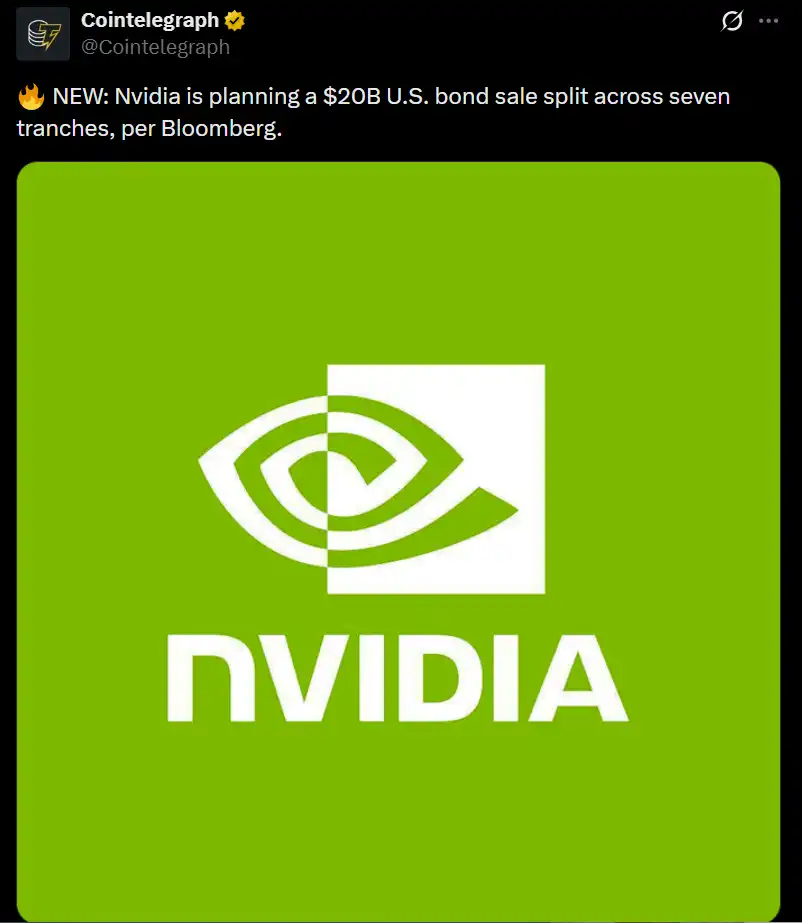
来源 Cointelegraph

英伟达是驱动大语言模型的 GPU 的头号供应商,坐在整个 AI 生态的中心。它的芯片被各家超大规模云厂商和云服务商大量采用,所以它的资本开支计划一向被当作整个行业的风向标来盯。

这场持续不断的 AI 建设潮,也让越来越多的比特币矿工受益。这些矿工开始把自己那些高耗能的厂房和电力设施,改造成高性能计算和 AI 托管的场地。

HIVE Digital、TeraWulf、Hut 8、CleanSpark 这些公司,过去几乎只靠比特币挖矿收入活着,现在则把自己重新包装成数据中心算力的提供方,靠手里现成的基础设施和电力协议,去吃算力需求增长的红利。

挖矿这门生意,利润还在被挤压

矿工们之所以拼命往 AI 上转,是因为加密本行的经济账越来越难算,2024 年 4 月减半之后尤其明显。减半叠加居高不下的挖矿难度和运营成本,把利润空间压得很薄。

有分析师把这段时间形容为「史上最残酷的利润环境」。结果就是不少矿工开始抛掉一部分比特币库存、降低杠杆,到挖矿之外去找新的收入来源。

根据 TheEnergyMag 的数据,去年 10 月到今年 3 月这段时间,比特币矿工合计卖掉了超过 1.5 万枚 BTC。
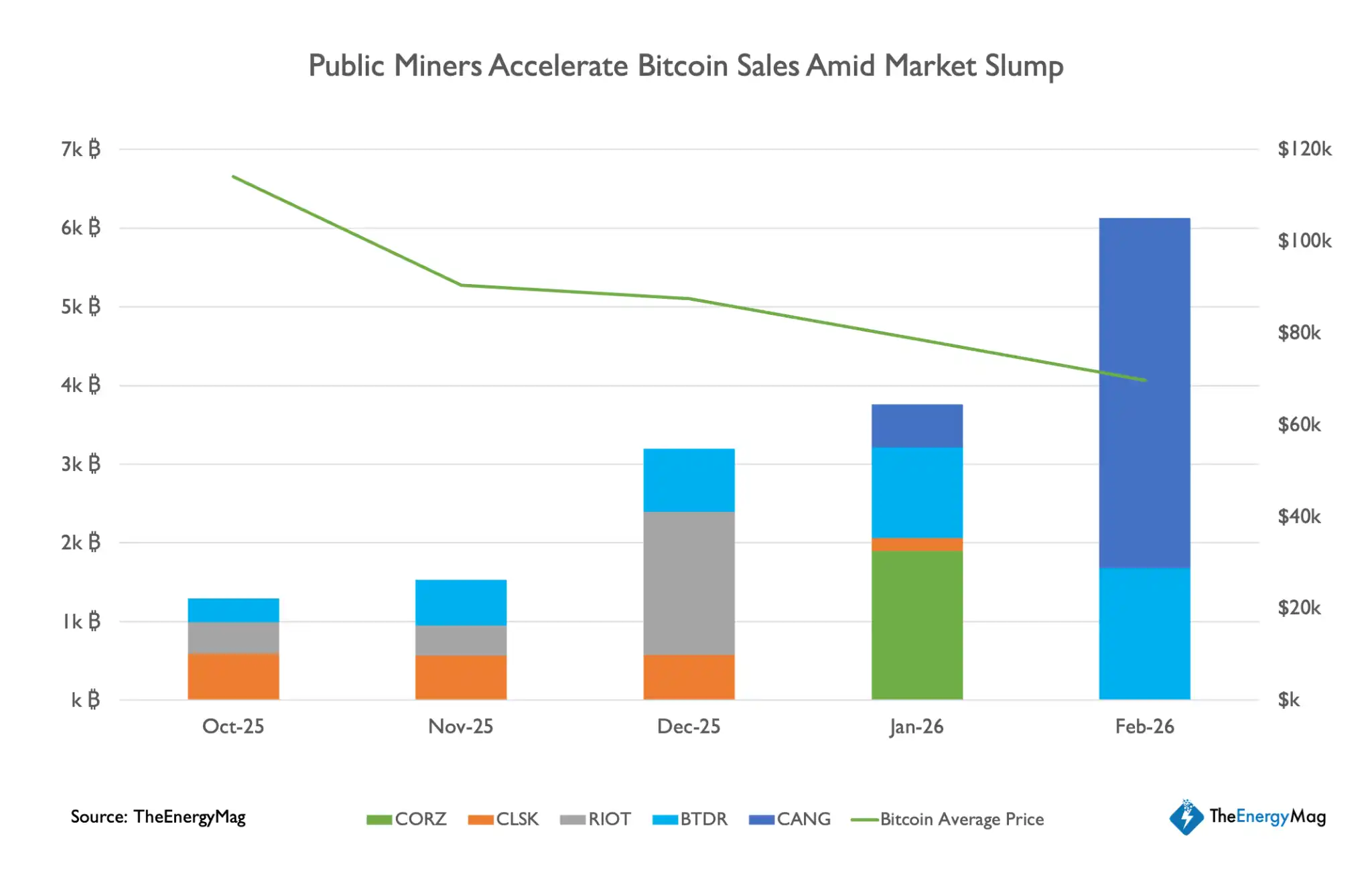
图注:自去年 10 月 BTC 冲到 12.6 万美元以上的高点后,矿企的库存抛售开始加速

来源 TheEnergyMag

在这样的背景下,分析师预期大矿企会逐渐变成 AI 基础设施的供应商。比如伯恩斯坦(Bernstein)近期就表示,他们认为 IREN 未来的价值绝大部分会来自 AI 基础设施,理由是这家公司的云端 AI 业务增长很快。


Related Questions

Q英伟达计划发行债券募资的主要目的是什么?

A英伟达计划发行至少200亿美元的债券,其募资的主要目的是用于AI相关的投资以及偿还现有的债务,这反映了其对持续高企的AI基础设施和数据中心需求的信心。

Q文章中提到哪些比特币矿工公司正在向AI数据中心业务转型?

A文章中提到正在向AI数据中心和高性能计算业务转型的比特币矿工公司包括HIVE Digital、TeraWulf、Hut 8以及CleanSpark。

Q比特币矿工们为什么要转型进入AI领域?

A比特币矿工转型进入AI领域的主要原因是挖矿业务的利润空间持续受到挤压。尤其是在2024年4月比特币减半之后,叠加居高不下的挖矿难度和运营成本,挖矿经济性变得很差。他们希望利用现有的大规模电力和基础设施,去抓住AI算力需求的增长红利,寻找新的收入来源。

Q根据文章,比特币矿工在面临利润压力时采取了什么行动?

A面对利润压力,许多比特币矿工开始抛售手中持有的部分比特币库存以回笼资金,同时降低自身的财务杠杆,并积极在挖矿业务之外(如AI基础设施服务)开拓新的收入来源。根据数据,从去年10月到今年3月,矿工们合计卖出了超过1.5万枚BTC。

Q分析师对像IREN这样的矿企未来估值有何看法?

A伯恩斯坦(Bernstein)等分析师认为,像IREN这样的大矿企的未来价值将绝大部分来自AI基础设施业务,而不是传统的比特币挖矿。他们做出这一判断的理由是这些公司在云端AI业务上展现出了快速增长的趋势。

Related Reads

Pricing OpenAI Pre-IPO: A New, Life-or-Death Business on Hyperliquid Lasting Half a Year

Pricing OpenAI Pre-IPO: Hyperliquid's High-Stakes, Six-Month Business Venture The article analyzes the nascent market for pre-IPO perpetual contracts on the Hyperliquid blockchain, exemplified by two contrasting teams: Trade.xyz and Ventuals. Trade.xyz, an anonymous team, successfully built the largest pre-market on Hyperliquid. Its strategy focused on near-term events, like the SpaceX IPO. By listing a SpaceX contract with a known launch date and price, the market had a tangible "anchor" (the eventual Nasdaq opening price) to converge upon, which kept speculation in check. This approach fueled significant growth. In stark contrast, Ventuals, backed by Paradigm, failed despite holding coveted contracts for OpenAI and Anthropic. Its critical flaw was its pricing mechanism for these companies, which have no imminent IPO. Ventuals' oracle price was half-derived from infrequent private market transactions and half from its own contract's moving average. This created a self-reinforcing loop where buying pressure artificially inflated the price, disconnecting it from real supply and demand. The market became illiquid and structurally skewed. Ventuals shut down nine months after launch, reportedly through an acquisition. Its final settlement prices—OpenAI at ~$1,341 and Anthropic at ~$1,618—were thus partially products of its flawed model. Ironically, some company employees and late-stage VCs reportedly used these prices for valuation reference, highlighting the desperate demand for price discovery in opaque private markets. The failure of Ventuals exposes the core challenge of this business: price for illiquid, non-public assets requires a robust, self-correcting market, which is absent without a definitive public listing event. Nevertheless, demand is driving major players like Coinbase and traditional finance (e.g., Citi) to enter the space, aiming to provide 24/7 trading for coveted private company shares. The venture's ultimate viability, however, hinges on solving the fundamental pricing problem Ventuals could not.

marsbit58m ago

Pricing OpenAI Pre-IPO: A New, Life-or-Death Business on Hyperliquid Lasting Half a Year

marsbit58m ago

Trading

Spot
Futures

Hot Articles

What is $BITCOIN

DIGITAL GOLD ($BITCOIN): A Comprehensive Analysis Introduction to DIGITAL GOLD ($BITCOIN) DIGITAL GOLD ($BITCOIN) is a blockchain-based project operating on the Solana network, which aims to combine the characteristics of traditional precious metals with the innovation of decentralized technologies. While it shares a name with Bitcoin, often referred to as “digital gold” due to its perception as a store of value, DIGITAL GOLD is a separate token designed to create a unique ecosystem within the Web3 landscape. Its goal is to position itself as a viable alternative digital asset, although specifics regarding its applications and functionalities are still developing. What is DIGITAL GOLD ($BITCOIN)? DIGITAL GOLD ($BITCOIN) is a cryptocurrency token explicitly designed for use on the Solana blockchain. In contrast to Bitcoin, which provides a widely recognized value storage role, this token appears to focus on broader applications and characteristics. Notable aspects include: Blockchain Infrastructure: The token is built on the Solana blockchain, known for its capacity to handle high-speed and low-cost transactions. Supply Dynamics: DIGITAL GOLD has a maximum supply capped at 100 quadrillion tokens (100P $BITCOIN), although details regarding its circulating supply are currently undisclosed. Utility: While precise functionalities are not explicitly outlined, there are indications that the token could be utilized for various applications, potentially involving decentralized applications (dApps) or asset tokenization strategies. Who is the Creator of DIGITAL GOLD ($BITCOIN)? At present, the identity of the creators and development team behind DIGITAL GOLD ($BITCOIN) remains unknown. This situation is typical among many innovative projects within the blockchain space, particularly those aligning with decentralized finance and meme coin phenomena. While such anonymity may foster a community-driven culture, it intensifies concerns about governance and accountability. Who are the Investors of DIGITAL GOLD ($BITCOIN)? The available information indicates that DIGITAL GOLD ($BITCOIN) does not have any known institutional backers or prominent venture capital investments. The project seems to operate on a peer-to-peer model focused on community support and adoption rather than traditional funding routes. Its activity and liquidity are primarily situated on decentralized exchanges (DEXs), such as PumpSwap, rather than established centralized trading platforms, further highlighting its grassroots approach. How DIGITAL GOLD ($BITCOIN) Works The operational mechanics of DIGITAL GOLD ($BITCOIN) can be elaborated on based on its blockchain design and network attributes: Consensus Mechanism: By leveraging Solana’s unique proof-of-history (PoH) combined with a proof-of-stake (PoS) model, the project ensures efficient transaction validation contributing to the network's high performance. Tokenomics: While specific deflationary mechanisms have not been extensively detailed, the vast maximum token supply implies that it may cater to microtransactions or niche use cases that are still to be defined. Interoperability: There exists the potential for integration with Solana’s broader ecosystem, including various decentralized finance (DeFi) platforms. However, the details regarding specific integrations remain unspecified. Timeline of Key Events Here is a timeline that highlights significant milestones concerning DIGITAL GOLD ($BITCOIN): 2023: The initial deployment of the token occurs on the Solana blockchain, marked by its contract address. 2024: DIGITAL GOLD gains visibility as it becomes available for trading on decentralized exchanges like PumpSwap, allowing users to trade it against SOL. 2025: The project witnesses sporadic trading activity and potential interest in community-led engagements, although no noteworthy partnerships or technical advancements have been documented as of yet. Critical Analysis Strengths Scalability: The underlying Solana infrastructure supports high transaction volumes, which could enhance the utility of $BITCOIN in various transaction scenarios. Accessibility: The potential low trading price per token could attract retail investors, facilitating wider participation due to fractional ownership opportunities. Risks Lack of Transparency: The absence of publicly known backers, developers, or an audit process may yield skepticism regarding the project's sustainability and trustworthiness. Market Volatility: The trading activity is heavily reliant on speculative behavior, which can result in significant price volatility and uncertainty for investors. Conclusion DIGITAL GOLD ($BITCOIN) emerges as an intriguing yet ambiguous project within the rapidly evolving Solana ecosystem. While it attempts to leverage the “digital gold” narrative, its departure from Bitcoin's established role as a store of value underscores the need for a clearer differentiation of its intended utility and governance structure. Future acceptance and adoption will likely depend on addressing the current opacity and defining its operational and economic strategies more explicitly. Note: This report encompasses synthesised information available as of October 2023, and developments may have transpired beyond the research period.

374 Total ViewsPublished 2025.05.13Updated 2025.05.13

What is $BITCOIN

Discussions

Welcome to the HTX Community. Here, you can stay informed about the latest platform developments and gain access to professional market insights. Users' opinions on the price of BTC (BTC) are presented below.

活动图片