Après l'interdiction de Fable 5 par les États-Unis, la valeur de Zhipu AI a bondi de 47 %

marsbitPublished on 2026-06-15Last updated on 2026-06-15

Abstract

Le 15 juin, l'action de Zhipu AI a connu une hausse spectaculaire de 47,6% à Hong Kong, pour finalement clôturer avec une progression de 32,82%. Cette envolée fait suite à deux annonces majeures dans le secteur de l'IA. Le 12 juin, Anthropic a suspendu l'accès mondial à ses modèles phares Claude Fable 5 et Claude Mythos 5, suite à une directive de contrôle des exportations du gouvernement américain. Cet arrêt soudain a perturbé les flux de travail de nombreux développeurs et entreprises dépendant de ces modèles. Le lendemain, le 13 juin, Zhipu AI a annoncé l'ouverture de son dernier modèle open-source, GLM-5.2, à tous les utilisateurs de son « Coding Plan », avec une publication sous licence MIT prévue la semaine suivante. Ce modèle met l'accent sur les « tâches de long horizon », avec une fenêtre de contexte d'1 million de tokens pour maintenir la cohérence dans les projets complexes et longs. L'événement a mis en lumière un changement dans les priorités de l'industrie : au-delà des performances pures, la stabilité, la disponibilité continue et le contrôle des modèles d'IA deviennent des critères essentiels, surtout lorsqu'ils sont intégrés comme infrastructure critique. L'annonce de Zhipu, promouvant une « intelligence de pointe accessible et non révocable », résonne avec cette nouvelle réalité. Les analystes estiment que cet incident pourrait accélérer l'adoption de modèles locaux et open-source par les entreprises, pour plus de résilience. Le marché réévalue ainsi les...

Le 15 juin, à l'ouverture du marché de Hong Kong, l'action de Zhipu AI a connu une hausse continue, atteignant une croissance intrajournalière maximale de 47,6%, établissant un nouveau record de volume de transactions quotidien depuis son introduction en bourse. À la clôture, la hausse s'est réduite à 32,82%, et la capitalisation boursière totale a dépassé 649,6 milliards de dollars de Hong Kong.
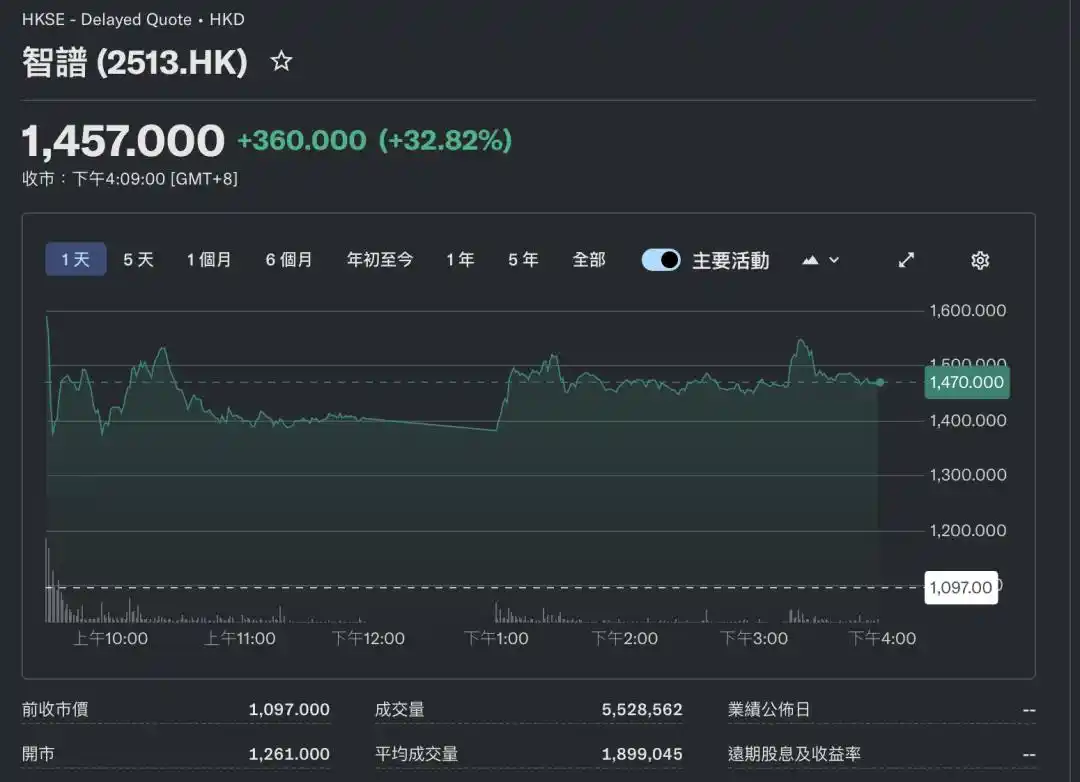
L'élément déclencheur direct provient de deux nouvelles de l'industrie deux jours auparavant.

Le 12 juin, Anthropic, en raison des exigences de contrôle des exportations du gouvernement américain, a suspendu l'accès à ses derniers modèles phares, Claude Fable 5 et Claude Mythos 5 ; un jour plus tard, Zhipu AI a annoncé que son dernier modèle open source, GLM-5.2, serait accessible à tous les utilisateurs de Coding Plan, et que l'API ainsi que les poids du modèle seraient mis en ligne la semaine suivante, sous licence MIT.

Quand les modèles les plus avancés commencent à devenir « pas nécessairement disponibles »

Le 12 juin, Anthropic a publié un communiqué officiel indiquant que le gouvernement américain, sur la base de pouvoirs liés à la sécurité nationale, avait émis une directive de contrôle des exportations exigeant la suspension de l'accès de tous les ressortissants étrangers à Claude Fable 5 et Claude Mythos 5, la restriction s'appliquant aux utilisateurs étrangers tant à l'intérieur qu'à l'extérieur des États-Unis, y compris les employés étrangers d'Anthropic.

Dans l'incapacité technique de distinguer en temps réel avec précision la nationalité des utilisateurs, Anthropic a finalement choisi de désactiver temporairement les deux modèles pour tous ses clients dans le monde afin de garantir la conformité. Cela s'est produit seulement trois jours après la sortie officielle des deux modèles. À ce jour, les deux modèles apparaissent comme indisponibles sur le site web d'Anthropic, et la date de reprise n'est pas précisée.

En tant que modèle propriétaire de première ligne en termes de performances actuelles, la série Claude est largement intégrée par de nombreux développeurs et entreprises pour des tâches de longue durée, de développement de code, de traitement de documents complexes, etc. L'arrêt soudain du service a directement perturbé les flux de travail de nombreuses équipes, et les discussions dans la communauté sur les alternatives ont rapidement gagné en popularité.

Le lendemain même de la diffusion de la nouvelle de l'arrêt, le 13 juin, Zhipu AI a annoncé que son modèle phare open source, GLM-5.2, serait accessible à tous les utilisateurs de Coding Plan, couvrant les versions Lite, Pro, Max et Team, tout en annonçant que l'API et les poids du modèle seraient mis en ligne la semaine suivante, sous licence MIT open source.

Au cours des dernières années, la concurrence dans l'industrie des grands modèles s'est principalement articulée autour des capacités.

Qui a un meilleur raisonnement, de meilleures capacités en programmation, qui peut franchir en premier de nouvelles frontières en matière de capacités, déterminait presque le choix des développeurs et des clients entreprises.

Mais l'événement Anthropic a révélé un autre problème jusqu'alors facilement négligé : au-delà des capacités, la question de savoir si l'accès au modèle peut être maintenu de manière continue et stable.

Dans le cas d'Anthropic, pour de nombreux développeurs et entreprises dépendant de modèles étrangers pour leurs travaux de recherche et développement, même s'ils possèdent un compte et une éligibilité de paiement, ils peuvent faire face au risque d'une indisponibilité soudaine du modèle.

C'est aussi pourquoi cet événement a suscité dans la communauté des développeurs des discussions bien plus intenses que pour une simple mise à jour de produit.

Alors que l'IA passe progressivement d'un outil de discussion à une infrastructure dans le développement logiciel, les opérations d'entreprise et même les processus de production, la stabilité, la durabilité et la contrôlabilité des modèles commencent à devenir des indicateurs aussi importants que leurs capacités.

Zhipu AI a déclaré dans son annonce que « l'intelligence de pointe ne devrait pas appartenir qu'à une minorité, ni pouvoir être retirée à tout moment par quelques règles ». Cette phrase fait également écho à la nouvelle réalité à laquelle l'industrie mondiale de l'IA est confrontée.

De « qui est le plus fort » à « qui est le plus accessible »

La réaction rapide du marché des capitaux est essentiellement une anticipation de l'évolution de la logique industrielle. Par rapport à la performance des actions, le marché s'intéresse davantage au signal émis par GLM-5.2 lui-même.

Selon les informations divulguées par Zhipu AI, GLM-5.2 est son modèle open source le plus performant à ce jour, prenant en charge une fenêtre contextuelle de 1 million de tokens et renforçant notamment ses capacités pour les tâches de programmation de longue durée. Zhipu AI le positionne comme un modèle « véritablement utilisable avec un contexte de 1M », visant à résoudre le problème de l'oubli du contexte par le modèle lors de tâches d'ingénierie longues et à multiples étapes.

Parmi cela, un mot-clé central est « Long Horizon Task (tâche à long horizon) ». À mesure que les Agents IA évoluent d'outils de conversation vers des outils d'exécution, les modèles doivent traiter en continu des milliers d'appels d'outils, des dizaines de milliers de lignes de code ainsi qu'une grande quantité d'informations sur les états intermédiaires. Plus la fenêtre contextuelle est longue, plus la capacité du modèle à maintenir l'état du projet et la continuité de la tâche est forte.

La concurrence dans l'industrie est passée de « répondre aux questions » à « travailler continuellement ». Pour les développeurs, ce qui importe vraiment n'est pas l'échelle des paramètres, mais la capacité du modèle à maintenir cohérence et fiabilité sur des tâches complexes pouvant durer des heures, voire des jours.

À en juger par la réaction du marché, les investisseurs ont clairement pris conscience de ce changement.

Dans un rapport de recherche, la banque Orient Securities indique que l'incident du modèle Anthropic a révélé le risque lié au fait que l'accès aux modèles propriétaires soit soumis à une seule juridiction, ce qui pourrait pousser davantage d'entreprises à orienter leurs capacités d'IA clés vers des modèles de base nationaux et des déploiements localisés. Parallèlement, la publication open source de GLM-5.2 sous licence MIT réduit également davantage le seuil d'essai et d'intégration pour les entreprises.

Au cours de la dernière année, l'évaluation des entreprises de grands modèles par le marché des capitaux s'est davantage basée sur les capacités des modèles et les parts de marché. Aujourd'hui, alors que l'évolution de l'environnement réglementaire mondial s'intensifie, une nouvelle dimension d'évaluation est en train d'émerger : qui peut offrir aux développeurs et aux entreprises des capacités d'IA stables à long terme et durablement accessibles.

Lorsque l'accès aux modèles les plus avancés au monde commence à être affecté par des facteurs externes, l'ouverture, l'accessibilité et la maîtrise autonome sont en train de devenir de nouveaux atouts dans la concurrence en matière d'IA.

Cet article provient du compte officiel WeChat « Geek Park » (ID: geekpark), auteur : Lian Ran, éditeur : Zheng Xuan

Related Questions

QQuel événement a directement provoqué la forte hausse de l'action de Zhipu le 15 juin ?

ALa hausse directe a été déclenchée par la suspension par Anthropic de ses modèles Claude Fable 5 et Claude Mythos 5 suite à une directive de contrôle des exportations américaine le 12 juin, suivie de l'annonce par Zhipu le 13 juin de l'ouverture de son dernier modèle open source GLM-5.2.

QQuels modèles d'Anthropic ont été temporairement désactivés et pourquoi ?

ALes modèles Claude Fable 5 et Claude Mythos 5 d'Anthropic ont été temporairement désactivés. Cela est dû à une directive de contrôle des exportations émanant du gouvernement américain, fondée sur des préoccupations de sécurité nationale, qui exigeait la suspension de l'accès pour tous les ressortissants étrangers.

QQuelles sont les principales caractéristiques techniques du modèle GLM-5.2 annoncé par Zhipu ?

ALe GLM-5.2 de Zhipu est son modèle open source le plus puissant, prenant en charge une fenêtre de contexte de 1 million de tokens (1M). Il se concentre sur le renforcement des capacités pour les tâches de codage de longue durée et vise à résoudre le problème de l'oubli du contexte lors de tâches d'ingénierie longues et multi-étapes.

QSelon l'article, comment le paysage concurrentiel de l'IA a-t-il évolué récemment ?

ALa concurrence est passée d'une focalisation sur 'qui est le plus puissant' en termes de capacités de réponse, à une importance accrue pour 'qui est le plus accessible', la stabilité, la durabilité et le contrôle. La disponibilité continue et fiable des modèles devient aussi cruciale que leurs performances, surtout lorsqu'ils deviennent une infrastructure d'entreprise.

QQuel impact potentiel l'événement Anthropic pourrait-il avoir sur les choix des entreprises en matière de modèles d'IA, selon l'analyse de marché citée ?

ASelon l'analyse de l'Institut des Valeurs Mobilières de l'Est (东方证券), l'incident expose le risque pour les modèles propriétaires d'être soumis à une seule juridiction. Cela pourrait pousser davantage d'entreprises à se tourner vers des modèles de base locaux (comme en Chine) et des déploiements sur site pour leurs capacités d'IA centrales, afin d'assurer un accès stable et contrôlable.

Related Reads

Solana Privacy Ecosystem Panorama: A Complete Privacy Stack from Compute to AI

**Title: The Solana Privacy Ecosystem: A Full-Stack View from Compute to AI** **Summary:** This article provides a comprehensive overview of the emerging privacy landscape on the Solana blockchain, characterizing it as still in early development. It identifies two primary verticals—Neobanks and Private DeFi—as key drivers, while noting gaps in tooling and user experience. The discussion centers on two main approaches to private computation: Arcium, which utilizes Multi-Party Computation (MPC) networks (Multi-Party eXecution Environments) to process encrypted data with final settlement on Solana; and Magic Block, which leverages Trusted Execution Environments (TEEs) via its Private Ephemeral Rollup (PER). Both enable confidential applications like dark pools and private DeFi with minimal code changes. Building on this infrastructure, projects are creating privacy-focused applications. Umbra, built on Arcium, offers Encrypted Token Accounts (ETAs) for private balances, transfers, and selective disclosure for compliance. Other wallets like Privacy Cash and Hush provide mixer-like functionality for SOL. For private trading, encifherio uses TEEs to encrypt swap details routed through Jupiter, while VanishTrade and Darklake focus on shielding transaction intent and liquidity routing, with Darklake introducing a "blind slippage pool" to prevent front-running. Further applications include private prediction markets (e.g., Melee Markets using Arcium's encrypted order books) and private AI. Loyal exemplifies the latter, using both Magic Block and Arcium to enable decentralized AI agents that store user data, conversations, and transactions confidentially on-chain. The article concludes by framing privacy not as a single technology but as an evolving "ultimate privacy stack," with experts like Helius's Mert envisioning a future combination of Fully Homomorphic Encryption (FHE) and Zero-Knowledge proofs (ZK). Helius Privacy itself is developing a ZK-based UTXO privacy layer for Solana.

Foresight News1m ago

Solana Privacy Ecosystem Panorama: A Complete Privacy Stack from Compute to AI

Foresight News1m ago

7 Key Questions Regarding 'DeepSeek Completes Over 50 Billion Yuan in Financing'

DeepSeek, the prominent Chinese AI company, has reportedly completed its first external funding round, raising over 50 billion RMB (approximately $6.9 billion USD), according to foreign media reports. This financing values the company at over $50 billion USD, a significant increase from a $10 billion valuation when the round began in April 2026. Founder Liang Wenfeng personally contributed 20 billion RMB, with other investors including Tencent, CATL (Contemporary Amperex Technology), JD.com, NetEase, and IDG Capital. Notably, the National Artificial Intelligence Industry Investment Fund also participated with a direct investment of 1 billion RMB. The funding round is distinctive for its structure. Most investors' capital is channeled into a limited partnership controlled by CEO Liang Wenfeng, rather than directly into DeepSeek. These investors face a five-year lock-up period, have no voting rights, but receive priority financial information and future investment rights. This arrangement is seen as a measure to ensure Liang's absolute control over the company's direction, aligning with its stated principles of prioritizing groundbreaking AGI (Artificial General Intelligence) research over short-term profitability. The report highlights strategic reasons for key investors. Tencent's involvement is viewed as a strategic alignment, building on existing collaborations. CATL's investment is linked to the critical energy and power infrastructure needed for AI data centers, a key growth area for the battery giant. The participation of a state-backed fund underscores the national strategic importance of AI development. Post-funding, DeepSeek is expected to accelerate infrastructure development, including building its own data centers, hire more talent, and release new model versions with enhanced capabilities like image and audio support. While this marks a major step, the company's long-term journey towards AGI remains a challenging path that will require balancing its foundational ideals with the expectations of its new investors.

marsbit47m ago

7 Key Questions Regarding 'DeepSeek Completes Over 50 Billion Yuan in Financing'

marsbit47m ago

The World Cup is Here: The Battle for Entry into Prediction Markets Has Begun

The 2026 FIFA World Cup has begun, and alongside the on-field competition, a new off-field battleground is emerging: prediction markets. These blockchain-based platforms, which convert crowd wisdom into tradable probabilities, are gaining significant traction. However, their complexity—involving wallets, gas fees, and smart contracts—has historically limited participation to crypto-native users. Centralized exchanges (CEXs), like Gate, are tackling this adoption barrier. By integrating with leading prediction market protocol Polymarket, Gate simplifies the user experience. Users can participate directly with their exchange account and USDT, bypassing complex Web3 steps. Gate offers a streamlined "Prediction Mode" for casual users and a professional "Trading Mode" with advanced tools. Key features include two-way trading (allowing users to buy or sell positions before event resolution), support for diverse markets (sports, crypto, macroeconomics), and a suite of information tools like a "Smart Money" leaderboard, wallet tracking, and AI-powered insights. For the World Cup, Gate launched a dedicated hub aggregating schedules, standings, and relevant markets. This allows fans to seamlessly follow games and trade on outcomes, transforming passive viewing into active participation where they can monetize their predictions and trade on shifting consensus throughout a match. The article argues that prediction markets have proven their value in event forecasting. The next challenge is mass adoption. The competition is shifting from building effective protocols to creating accessible user entry points. By lowering technical barriers and building a complete ecosystem for information and trading, platforms like Gate aim to transition prediction markets from a niche crypto tool to a mainstream platform for expressing and trading on collective intelligence.

Odaily星球日报57m ago

The World Cup is Here: The Battle for Entry into Prediction Markets Has Begun

Odaily星球日报57m ago

Spain Held to a Draw by Cape Verde, Jucom Prediction Market Witnesses Historic Upset

In a major upset at the 2026 FIFA World Cup, tournament favorites Spain were held to a surprising 0-0 draw by debutants Cape Verde in their Group H opener on June 16, Beijing time. Despite dominating possession (74%) and recording 27 shots with an expected goals figure of 2.16, Spain failed to break down a resilient Cape Verde defense, with their 40-year-old goalkeeper Vozinha making 7 saves to earn Man of the Match. Pre-match predictions on the Jucom prediction market had heavily favored Spain, assigning them a 92% win probability. The actual result, a goalless draw, triggered significant volatility across related prediction markets. This outcome forces a market-wide reassessment of several key probabilities, including Spain's likelihood of winning the group and the tournament itself, while Cape Verde's previously near-zero chance of advancing is now being re-evaluated. The event highlights both the efficiency and the inherent limitations of prediction markets. While prices aggregate known information, football's low-scoring, high-variance nature means unquantifiable in-game factors can lead to unlikely results. The core value of such markets lies not in perfect foresight but in their ability to dynamically reflect how new information is incorporated into collective expectations. Platforms like Jucom, which track outcomes from single matches to the final champion, provide a real-time lens into how global consensus evolves with each game.

链捕手1h ago

Spain Held to a Draw by Cape Verde, Jucom Prediction Market Witnesses Historic Upset

链捕手1h ago

Trading

Spot
Futures

Hot Articles

What is SONIC

Sonic: Pioneering the Future of Gaming in Web3 Introduction to Sonic In the ever-evolving landscape of Web3, the gaming industry stands out as one of the most dynamic and promising sectors. At the forefront of this revolution is Sonic, a project designed to amplify the gaming ecosystem on the Solana blockchain. Leveraging cutting-edge technology, Sonic aims to deliver an unparalleled gaming experience by efficiently processing millions of requests per second, ensuring that players enjoy seamless gameplay while maintaining low transaction costs. This article delves into the intricate details of Sonic, exploring its creators, funding sources, operational mechanics, and the timeline of significant events that have shaped its journey. What is Sonic? Sonic is an innovative layer-2 network that operates atop the Solana blockchain, specifically tailored to enhance the existing Solana gaming ecosystem. It accomplishes this through a customised, VM-agnostic game engine paired with a HyperGrid interpreter, facilitating sovereign game economies that roll up back to the Solana platform. The primary goals of Sonic include: Enhanced Gaming Experiences: Sonic is committed to offering lightning-fast on-chain gameplay, allowing players and developers to engage with games at previously unattainable speeds. Atomic Interoperability: This feature enables transactions to be executed within Sonic without the need to redeploy Solana programmes and accounts. This makes the process more efficient and directly benefits from Solana Layer1 services and liquidity. Seamless Deployment: Sonic allows developers to write for Ethereum Virtual Machine (EVM) based systems and execute them on Solana’s SVM infrastructure. This interoperability is crucial for attracting a broader range of dApps and decentralised applications to the platform. Support for Developers: By offering native composable gaming primitives and extensible data types - dining within the Entity-Component-System (ECS) framework - game creators can craft intricate business logic with ease. Overall, Sonic's unique approach not only caters to players but also provides an accessible and low-cost environment for developers to innovate and thrive. Creator of Sonic The information regarding the creator of Sonic is somewhat ambiguous. However, it is known that Sonic's SVM is owned by the company Mirror World. The absence of detailed information about the individuals behind Sonic reflects a common trend in several Web3 projects, where collective efforts and partnerships often overshadow individual contributions. Investors of Sonic Sonic has garnered considerable attention and support from various investors within the crypto and gaming sectors. Notably, the project raised an impressive $12 million during its Series A funding round. The round was led by BITKRAFT Ventures, with other notable investors including Galaxy, Okx Ventures, Interactive, Big Brain Holdings, and Mirana. This financial backing signifies the confidence that investment foundations have in Sonic’s potential to revolutionise the Web3 gaming landscape, further validating its innovative approaches and technologies. How Does Sonic Work? Sonic utilises the HyperGrid framework, a sophisticated parallel processing mechanism that enhances its scalability and customisability. Here are the core features that set Sonic apart: Lightning Speed at Low Costs: Sonic offers one of the fastest on-chain gaming experiences compared to other Layer-1 solutions, powered by the scalability of Solana’s virtual machine (SVM). Atomic Interoperability: Sonic enables transaction execution without redeployment of Solana programmes and accounts, effectively streamlining the interaction between users and the blockchain. EVM Compatibility: Developers can effortlessly migrate decentralised applications from EVM chains to the Solana environment using Sonic’s HyperGrid interpreter, increasing the accessibility and integration of various dApps. Ecosystem Support for Developers: By exposing native composable gaming primitives, Sonic facilitates a sandbox-like environment where developers can experiment and implement business logic, greatly enhancing the overall development experience. Monetisation Infrastructure: Sonic natively supports growth and monetisation efforts, providing frameworks for traffic generation, payments, and settlements, thereby ensuring that gaming projects are not only viable but also sustainable financially. Timeline of Sonic The evolution of Sonic has been marked by several key milestones. Below is a brief timeline highlighting critical events in the project's history: 2022: The Sonic cryptocurrency was officially launched, marking the beginning of its journey in the Web3 gaming arena. 2024: June: Sonic SVM successfully raised $12 million in a Series A funding round. This investment allowed Sonic to further develop its platform and expand its offerings. August: The launch of the Sonic Odyssey testnet provided users with the first opportunity to engage with the platform, offering interactive activities such as collecting rings—a nod to gaming nostalgia. October: SonicX, an innovative crypto game integrated with Solana, made its debut on TikTok, capturing the attention of over 120,000 users within a short span. This integration illustrated Sonic’s commitment to reaching a broader, global audience and showcased the potential of blockchain gaming. Key Points Sonic SVM is a revolutionary layer-2 network on Solana explicitly designed to enhance the GameFi landscape, demonstrating great potential for future development. HyperGrid Framework empowers Sonic by introducing horizontal scaling capabilities, ensuring that the network can handle the demands of Web3 gaming. Integration with Social Platforms: The successful launch of SonicX on TikTok displays Sonic’s strategy to leverage social media platforms to engage users, exponentially increasing the exposure and reach of its projects. Investment Confidence: The substantial funding from BITKRAFT Ventures, among others, emphasizes the robust backing Sonic has, paving the way for its ambitious future. In conclusion, Sonic encapsulates the essence of Web3 gaming innovation, striking a balance between cutting-edge technology, developer-centric tools, and community engagement. As the project continues to evolve, it is poised to redefine the gaming landscape, making it a notable entity for gamers and developers alike. As Sonic moves forward, it will undoubtedly attract greater interest and participation, solidifying its place within the broader narrative of blockchain gaming.

1.7k Total ViewsPublished 2024.04.04Updated 2024.12.03

What is SONIC

What is $S$

Understanding SPERO: A Comprehensive Overview Introduction to SPERO As the landscape of innovation continues to evolve, the emergence of web3 technologies and cryptocurrency projects plays a pivotal role in shaping the digital future. One project that has garnered attention in this dynamic field is SPERO, denoted as SPERO,$$s$. This article aims to gather and present detailed information about SPERO, to help enthusiasts and investors understand its foundations, objectives, and innovations within the web3 and crypto domains. What is SPERO,$$s$? SPERO,$$s$ is a unique project within the crypto space that seeks to leverage the principles of decentralisation and blockchain technology to create an ecosystem that promotes engagement, utility, and financial inclusion. The project is tailored to facilitate peer-to-peer interactions in new ways, providing users with innovative financial solutions and services. At its core, SPERO,$$s$ aims to empower individuals by providing tools and platforms that enhance user experience in the cryptocurrency space. This includes enabling more flexible transaction methods, fostering community-driven initiatives, and creating pathways for financial opportunities through decentralised applications (dApps). The underlying vision of SPERO,$$s$ revolves around inclusiveness, aiming to bridge gaps within traditional finance while harnessing the benefits of blockchain technology. Who is the Creator of SPERO,$$s$? The identity of the creator of SPERO,$$s$ remains somewhat obscure, as there are limited publicly available resources providing detailed background information on its founder(s). This lack of transparency can stem from the project's commitment to decentralisation—an ethos that many web3 projects share, prioritising collective contributions over individual recognition. By centring discussions around the community and its collective goals, SPERO,$$s$ embodies the essence of empowerment without singling out specific individuals. As such, understanding the ethos and mission of SPERO remains more important than identifying a singular creator. Who are the Investors of SPERO,$$s$? SPERO,$$s$ is supported by a diverse array of investors ranging from venture capitalists to angel investors dedicated to fostering innovation in the crypto sector. The focus of these investors generally aligns with SPERO's mission—prioritising projects that promise societal technological advancement, financial inclusivity, and decentralised governance. These investor foundations are typically interested in projects that not only offer innovative products but also contribute positively to the blockchain community and its ecosystems. The backing from these investors reinforces SPERO,$$s$ as a noteworthy contender in the rapidly evolving domain of crypto projects. How Does SPERO,$$s$ Work? SPERO,$$s$ employs a multi-faceted framework that distinguishes it from conventional cryptocurrency projects. Here are some of the key features that underline its uniqueness and innovation: Decentralised Governance: SPERO,$$s$ integrates decentralised governance models, empowering users to participate actively in decision-making processes regarding the project’s future. This approach fosters a sense of ownership and accountability among community members. Token Utility: SPERO,$$s$ utilises its own cryptocurrency token, designed to serve various functions within the ecosystem. These tokens enable transactions, rewards, and the facilitation of services offered on the platform, enhancing overall engagement and utility. Layered Architecture: The technical architecture of SPERO,$$s$ supports modularity and scalability, allowing for seamless integration of additional features and applications as the project evolves. This adaptability is paramount for sustaining relevance in the ever-changing crypto landscape. Community Engagement: The project emphasises community-driven initiatives, employing mechanisms that incentivise collaboration and feedback. By nurturing a strong community, SPERO,$$s$ can better address user needs and adapt to market trends. Focus on Inclusion: By offering low transaction fees and user-friendly interfaces, SPERO,$$s$ aims to attract a diverse user base, including individuals who may not previously have engaged in the crypto space. This commitment to inclusion aligns with its overarching mission of empowerment through accessibility. Timeline of SPERO,$$s$ Understanding a project's history provides crucial insights into its development trajectory and milestones. Below is a suggested timeline mapping significant events in the evolution of SPERO,$$s$: Conceptualisation and Ideation Phase: The initial ideas forming the basis of SPERO,$$s$ were conceived, aligning closely with the principles of decentralisation and community focus within the blockchain industry. Launch of Project Whitepaper: Following the conceptual phase, a comprehensive whitepaper detailing the vision, goals, and technological infrastructure of SPERO,$$s$ was released to garner community interest and feedback. Community Building and Early Engagements: Active outreach efforts were made to build a community of early adopters and potential investors, facilitating discussions around the project’s goals and garnering support. Token Generation Event: SPERO,$$s$ conducted a token generation event (TGE) to distribute its native tokens to early supporters and establish initial liquidity within the ecosystem. Launch of Initial dApp: The first decentralised application (dApp) associated with SPERO,$$s$ went live, allowing users to engage with the platform's core functionalities. Ongoing Development and Partnerships: Continuous updates and enhancements to the project's offerings, including strategic partnerships with other players in the blockchain space, have shaped SPERO,$$s$ into a competitive and evolving player in the crypto market. Conclusion SPERO,$$s$ stands as a testament to the potential of web3 and cryptocurrency to revolutionise financial systems and empower individuals. With a commitment to decentralised governance, community engagement, and innovatively designed functionalities, it paves the way toward a more inclusive financial landscape. As with any investment in the rapidly evolving crypto space, potential investors and users are encouraged to research thoroughly and engage thoughtfully with the ongoing developments within SPERO,$$s$. The project showcases the innovative spirit of the crypto industry, inviting further exploration into its myriad possibilities. While the journey of SPERO,$$s$ is still unfolding, its foundational principles may indeed influence the future of how we interact with technology, finance, and each other in interconnected digital ecosystems.

57 Total ViewsPublished 2024.12.17Updated 2024.12.17

What is $S$

What is AGENT S

Agent S: The Future of Autonomous Interaction in Web3 Introduction In the ever-evolving landscape of Web3 and cryptocurrency, innovations are constantly redefining how individuals interact with digital platforms. One such pioneering project, Agent S, promises to revolutionise human-computer interaction through its open agentic framework. By paving the way for autonomous interactions, Agent S aims to simplify complex tasks, offering transformative applications in artificial intelligence (AI). This detailed exploration will delve into the project's intricacies, its unique features, and the implications for the cryptocurrency domain. What is Agent S? Agent S stands as a groundbreaking open agentic framework, specifically designed to tackle three fundamental challenges in the automation of computer tasks: Acquiring Domain-Specific Knowledge: The framework intelligently learns from various external knowledge sources and internal experiences. This dual approach empowers it to build a rich repository of domain-specific knowledge, enhancing its performance in task execution. Planning Over Long Task Horizons: Agent S employs experience-augmented hierarchical planning, a strategic approach that facilitates efficient breakdown and execution of intricate tasks. This feature significantly enhances its ability to manage multiple subtasks efficiently and effectively. Handling Dynamic, Non-Uniform Interfaces: The project introduces the Agent-Computer Interface (ACI), an innovative solution that enhances the interaction between agents and users. Utilizing Multimodal Large Language Models (MLLMs), Agent S can navigate and manipulate diverse graphical user interfaces seamlessly. Through these pioneering features, Agent S provides a robust framework that addresses the complexities involved in automating human interaction with machines, setting the stage for myriad applications in AI and beyond. Who is the Creator of Agent S? While the concept of Agent S is fundamentally innovative, specific information about its creator remains elusive. The creator is currently unknown, which highlights either the nascent stage of the project or the strategic choice to keep founding members under wraps. Regardless of anonymity, the focus remains on the framework's capabilities and potential. Who are the Investors of Agent S? As Agent S is relatively new in the cryptographic ecosystem, detailed information regarding its investors and financial backers is not explicitly documented. The lack of publicly available insights into the investment foundations or organisations supporting the project raises questions about its funding structure and development roadmap. Understanding the backing is crucial for gauging the project's sustainability and potential market impact. How Does Agent S Work? At the core of Agent S lies cutting-edge technology that enables it to function effectively in diverse settings. Its operational model is built around several key features: Human-like Computer Interaction: The framework offers advanced AI planning, striving to make interactions with computers more intuitive. By mimicking human behaviour in tasks execution, it promises to elevate user experiences. Narrative Memory: Employed to leverage high-level experiences, Agent S utilises narrative memory to keep track of task histories, thereby enhancing its decision-making processes. Episodic Memory: This feature provides users with step-by-step guidance, allowing the framework to offer contextual support as tasks unfold. Support for OpenACI: With the ability to run locally, Agent S allows users to maintain control over their interactions and workflows, aligning with the decentralised ethos of Web3. Easy Integration with External APIs: Its versatility and compatibility with various AI platforms ensure that Agent S can fit seamlessly into existing technological ecosystems, making it an appealing choice for developers and organisations. These functionalities collectively contribute to Agent S's unique position within the crypto space, as it automates complex, multi-step tasks with minimal human intervention. As the project evolves, its potential applications in Web3 could redefine how digital interactions unfold. Timeline of Agent S The development and milestones of Agent S can be encapsulated in a timeline that highlights its significant events: September 27, 2024: The concept of Agent S was launched in a comprehensive research paper titled “An Open Agentic Framework that Uses Computers Like a Human,” showcasing the groundwork for the project. October 10, 2024: The research paper was made publicly available on arXiv, offering an in-depth exploration of the framework and its performance evaluation based on the OSWorld benchmark. October 12, 2024: A video presentation was released, providing a visual insight into the capabilities and features of Agent S, further engaging potential users and investors. These markers in the timeline not only illustrate the progress of Agent S but also indicate its commitment to transparency and community engagement. Key Points About Agent S As the Agent S framework continues to evolve, several key attributes stand out, underscoring its innovative nature and potential: Innovative Framework: Designed to provide an intuitive use of computers akin to human interaction, Agent S brings a novel approach to task automation. Autonomous Interaction: The ability to interact autonomously with computers through GUI signifies a leap towards more intelligent and efficient computing solutions. Complex Task Automation: With its robust methodology, it can automate complex, multi-step tasks, making processes faster and less error-prone. Continuous Improvement: The learning mechanisms enable Agent S to improve from past experiences, continually enhancing its performance and efficacy. Versatility: Its adaptability across different operating environments like OSWorld and WindowsAgentArena ensures that it can serve a broad range of applications. As Agent S positions itself in the Web3 and crypto landscape, its potential to enhance interaction capabilities and automate processes signifies a significant advancement in AI technologies. Through its innovative framework, Agent S exemplifies the future of digital interactions, promising a more seamless and efficient experience for users across various industries. Conclusion Agent S represents a bold leap forward in the marriage of AI and Web3, with the capacity to redefine how we interact with technology. While still in its early stages, the possibilities for its application are vast and compelling. Through its comprehensive framework addressing critical challenges, Agent S aims to bring autonomous interactions to the forefront of the digital experience. As we move deeper into the realms of cryptocurrency and decentralisation, projects like Agent S will undoubtedly play a crucial role in shaping the future of technology and human-computer collaboration.

731 Total ViewsPublished 2025.01.14Updated 2025.01.14

What is AGENT S

Discussions

Welcome to the HTX Community. Here, you can stay informed about the latest platform developments and gain access to professional market insights. Users' opinions on the price of S (S) are presented below.

活动图片