Las acciones de Zhipu se disparan un 47% tras la prohibición de Fable 5 por parte de Estados Unidos

marsbitPublished on 2026-06-15Last updated on 2026-06-15

Abstract

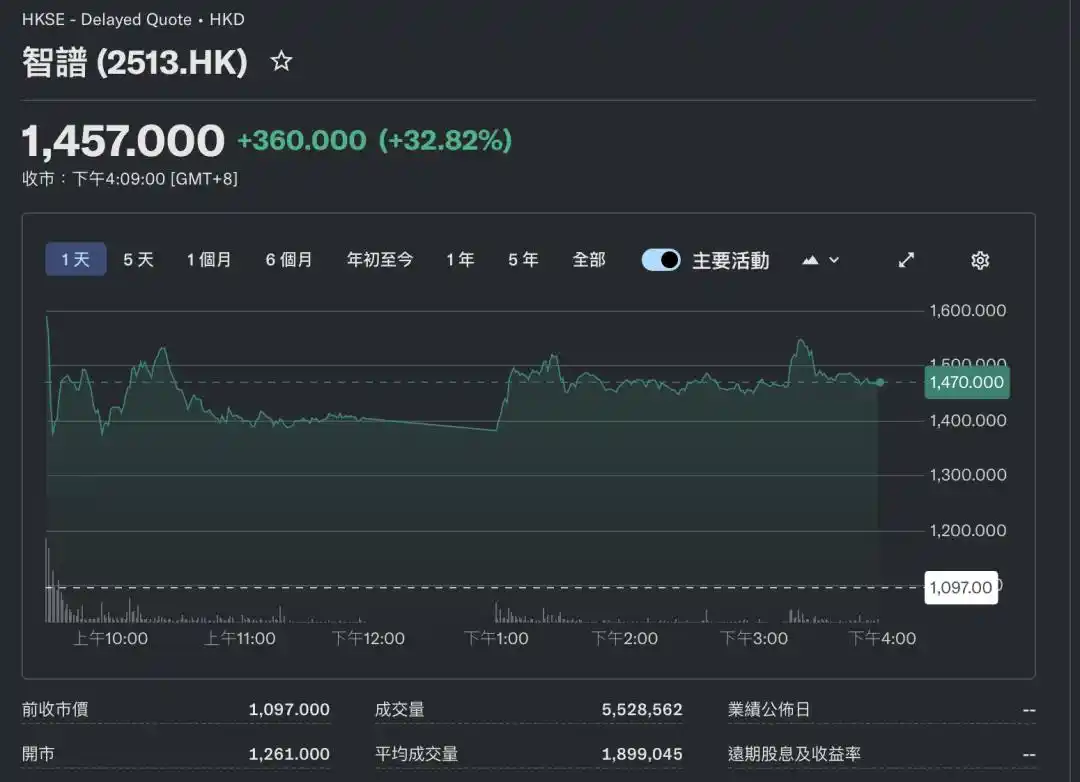
El 15 de junio, la acción de Zhipu AI se disparó hasta un 47.6% en el mercado de valores de Hong Kong, cerró con una ganancia del 32.82% y su valor de mercado superó los 649.600 millones de HKD. El detonante directo fueron dos noticias de la industria. El 12 de junio, Anthropic suspendió el acceso a sus modelos insignia Claude Fable 5 y Claude Mythos 5 para usuarios extranjeros debido a una orden de control de exportaciones del gobierno estadounidense. Al día siguiente, Zhipu AI anunció que su último modelo de código abierto, GLM-5.2, estaba disponible para todos los usuarios de Coding Plan, con planes de lanzar la API y los pesos del modelo bajo la licencia MIT la semana siguiente. Este incidente destacó un problema más allá del rendimiento del modelo: la disponibilidad y estabilidad continuas del acceso. Para muchos desarrolladores y empresas que dependen de modelos de IA como infraestructura crítica, el riesgo de una interrupción repentina se ha vuelto una preocupación clave. La reacción del mercado refleja un cambio en la lógica de la industria: de "quién es mejor" a "quién es más accesible". GLM-5.2, presentado como un modelo de código abierto con una ventana de contexto de 1M para tareas de larga duración, representa para los inversores una alternativa más estable y controlable. Los analistas señalan que los riesgos de dependencia de modelos propietarios sujetos a una sola jurisdicción podrían acelerar la adopción de modelos base locales y de código abierto. En la n...

El 15 de junio, al abrir la sesión del mercado de valores de Hong Kong, el precio de las acciones de Zhipu subió rápidamente, alcanzando un máximo intradía del 47,6%, estableciendo un nuevo récord en el volumen negociado desde su salida a bolsa. Al cierre, la subida se moderó al 32,82%, y su capitalización bursátil superó los 649.600 millones de dólares de Hong Kong.
El detonante directo fueron dos noticias del sector ocurridas dos días antes.

El 12 de junio, Anthropic, debido a los requisitos de control de exportaciones del gobierno estadounidense, suspendió el acceso a sus modelos insignia más recientes, Claude Fable 5 y Claude Mythos 5. Un día después, Zhipu anunció que su último modelo de código abierto, GLM-5.2, estaría disponible para todos los usuarios de Coding Plan, y que la API y los pesos del modelo se lanzarían la semana siguiente bajo la licencia MIT.

Cuando los modelos más avanzados comienzan a volverse "no necesariamente accesibles"

El 12 de junio, Anthropic publicó un anuncio oficial indicando que el gobierno de EE. UU., en virtud de poderes relacionados con la seguridad nacional, emitió una orden de control de exportaciones exigiendo la suspensión del acceso a Claude Fable 5 y Claude Mythos 5 para todos los ciudadanos extranjeros. El alcance de la restricción incluía a usuarios extranjeros tanto dentro como fuera de EE. UU., e incluso a empleados extranjeros dentro de Anthropic.

Limitado por la imposibilidad técnica de distinguir con precisión y en tiempo real la nacionalidad de los usuarios, Anthropic optó finalmente por deshabilitar temporalmente ambos modelos para todos los clientes globales para garantizar el cumplimiento. En ese momento, solo habían pasado tres días desde el lanzamiento oficial de ambos modelos. Hasta la fecha, ambos modelos aparecen como no disponibles en el sitio web de Anthropic, y no se ha especificado un tiempo de recuperación.

Como modelos de código cerrado de primer nivel en cuanto a rendimiento, la serie Claude ha sido profundamente integrada por una gran cantidad de desarrolladores y empresas en escenarios como tareas de larga duración, desarrollo de código y procesamiento de documentos complejos. La interrupción repentina del servicio impactó directamente los flujos de trabajo de muchos equipos, y en la comunidad aumentó rápidamente la discusión sobre alternativas.

Justo al día siguiente de que la noticia de la suspensión del servicio ganara fuerza, el 13 de junio, Zhipu anunció que su modelo insignia de código abierto, GLM-5.2, estaría disponible para todos los usuarios de Coding Plan, cubriendo las versiones Lite, Pro, Max y Team. Además, anunció que la API y los pesos del modelo se lanzarían la semana siguiente, bajo la licencia de código abierto MIT.

En los últimos años, la competencia en la industria de los modelos grandes se ha centrado principalmente en las capacidades.

Quién tiene mejor razonamiento, quién tiene mejores habilidades de codificación, quién puede superar primero nuevos límites de capacidad, casi ha determinado la elección de desarrolladores y clientes empresariales.

Pero el incidente de Anthropic ha expuesto otro problema que antes se pasaba por alto fácilmente: más allá de las capacidades, si un modelo puede obtener acceso de manera continua y estable.

En este incidente de Anthropic, para muchos desarrolladores y empresas que dependen de modelos extranjeros para llevar a cabo trabajos de I+D, incluso teniendo cuenta y derechos de pago, pueden enfrentar el riesgo de que el modelo deje de estar disponible de repente.

Por eso este evento ha generado una discusión en la comunidad de desarrolladores que va mucho más allá de una actualización de producto ordinaria.

A medida que la IA pasa gradualmente de ser una herramienta de chat a una infraestructura en el desarrollo de software, las operaciones empresariales e incluso los procesos de producción, la estabilidad, sostenibilidad y controlabilidad del modelo comienzan a convertirse en indicadores tan importantes como las capacidades del modelo.

Zhipu declaró en su anuncio: "La inteligencia de vanguardia no debería pertenecer solo a unos pocos, ni debería ser retirada en cualquier momento por unas pocas reglas". Esta frase refleja, de hecho, la nueva realidad a la que se enfrenta la industria global de la IA.

De "quién es más fuerte" a "quién es más accesible"

La rápida reacción del mercado de capitales es esencialmente una valoración anticipada del cambio en la lógica de la industria. En comparación con el desempeño del precio de las acciones, el mercado está más atento a la señal que emite el propio GLM-5.2.

Según la información revelada por Zhipu, GLM-5.2 es su modelo de código abierto más potente hasta la fecha, compatible con una ventana de contexto de 1M, y ha reforzado especialmente su capacidad para tareas de codificación de larga duración. Zhipu lo posiciona como un modelo de "contexto de 1M realmente utilizable", con la esperanza de resolver el problema del olvido del contexto por parte del modelo en tareas de ingeniería largas y de múltiples pasos.

Entre ello, una palabra clave es "Tarea de Horizonte Largo (Long Horizon Task)". A medida que los Agentes de IA evolucionan gradualmente de herramientas de conversación a herramientas de ejecución, los modelos necesitan manejar de manera continua miles de llamadas a herramientas, decenas de miles de líneas de código y una gran cantidad de información de estado intermedio. Cuanto más larga sea la ventana de contexto, mayor será la capacidad del modelo para mantener el estado del proyecto y la continuidad de la tarea.

La competencia actual en la industria ha pasado de "responder preguntas" a "trabajar de manera continua". Para los desarrolladores, lo realmente importante no es la escala de parámetros, sino si el modelo puede mantener la coherencia y confiabilidad en tareas complejas que duran horas o incluso días.

A juzgar por la reacción del mercado, los inversores también parecen haber notado este cambio.

En un informe de investigación, Oriental Securities señaló que el incidente del modelo de Anthropic expuso el riesgo de que el acceso a modelos de código cerrado esté sujeto a una única jurisdicción, lo que podría impulsar a más empresas a trasladar sus capacidades centrales de IA hacia modelos básicos nacionales y despliegues localizados. Al mismo tiempo, el hecho de que GLM-5.2 se lance como código abierto bajo la licencia MIT también reduce aún más el umbral para que las empresas lo prueben e integren.

Durante el último año, la valoración que el mercado de capitales ha dado a las empresas de modelos grandes se ha basado más en las capacidades del modelo y la cuota de mercado. Hoy, a medida que los cambios en el entorno regulatorio global se intensifican, está surgiendo otra nueva dimensión de valoración: quién puede ofrecer a desarrolladores y empresas capacidades de IA estables a largo plazo, sostenibles y accesibles.

Cuando el acceso a los modelos más avanzados del mundo comienza a verse afectado por factores externos, la apertura, la accesibilidad y el control autónomo se están convirtiendo en nuevas cartas en la competencia de la IA.

Este artículo proviene del WeChat público "Parque Geek" (ID: geekpark), autor: Lian Ran, editor: Zheng Xuan.


Related Questions

Q¿Cuál fue el aumento en el precio de las acciones de la empresa china Zhipu el 15 de junio, y cuál fue el evento clave que lo provocó?

AEl 15 de junio, el precio de las acciones de Zhipu en el mercado de valores de Hong Kong alcanzó un aumento máximo intradía del 47,6 %, aunque cerró con un aumento del 32,82 %. El evento clave que desencadenó esta subida fue el anuncio de que el gobierno estadounidense suspendió el acceso a los modelos Claude Fable 5 y Claude Mythos 5 de Anthropic para ciudadanos extranjeros. En respuesta, Zhipu anunció que abriría su modelo de código abierto GLM-5.2 a todos los usuarios de Coding Plan con licencia MIT.

Q¿Qué decisión tomó Anthropic el 12 de junio y por qué motivo?

AEl 12 de junio, Anthropic anunció que suspendía el acceso de todos los usuarios extranjeros (incluyendo clientes y empleados no ciudadanos estadounidenses) a sus modelos de última generación Claude Fable 5 y Claude Mythos 5. Esta decisión fue tomada para cumplir con una orden de control de exportaciones emitida por el gobierno de Estados Unidos, basada en consideraciones de seguridad nacional. Debido a las dificultades técnicas para verificar la nacionalidad de los usuarios en tiempo real, la medida se aplicó de manera global.

Q¿Qué alternativa ofreció Zhipu un día después del anuncio de suspensión de Anthropic y bajo qué licencia?

AUn día después del anuncio de suspensión de Anthropic, Zhipu anunció que su modelo de código abierto de última generación, GLM-5.2, estaría disponible para todos los usuarios de su servicio 'Coding Plan' (incluyendo versiones Lite, Pro, Max y de equipo). Además, comunicó que la API y los pesos del modelo se lanzarían la semana siguiente y se distribuirían bajo la licencia de código abierto MIT.

QSegún el análisis del artículo, ¿cuál es la nueva dimensión importante que surge en la competencia de modelos de IA, además de la capacidad?

ASegún el análisis del artículo, además de la capacidad del modelo (poder de razonamiento, generación de código, etc.), surge una nueva dimensión crucial en la competencia de IA: la garantía de un acceso estable, sostenible y controlable a la tecnología. La interrupción forzada del acceso a los modelos de Anthropic puso de relieve que incluso modelos de alto rendimiento pueden volverse inaccesibles repentinamente debido a factores regulatorios externos. La accesibilidad, la apertura y el control autónomo se están convirtiendo en factores clave para desarrolladores y empresas.

Q¿Qué capacidad específica del modelo GLM-5.2 destacó Zhipu y por qué es importante en la evolución actual de la IA?

AZhipu destacó que su modelo GLM-5.2 tiene una ventana de contexto de 1 millón de tokens y está optimizado para manejar 'tareas de largo horizonte' (Long Horizon Tasks). Esta capacidad es fundamental porque, a medida que los asistentes de IA evolucionan de herramientas conversacionales a agentes ejecutores, necesitan procesar secuencias muy largas de acciones, miles de llamadas a herramientas y decenas de miles de líneas de código manteniendo la coherencia y el estado del proyecto. Una ventana de contexto grande es esencial para la ejecución fiable de tareas complejas y prolongadas.

Related Reads

Warsh's Debut: Will the FED Chair Who Knows Crypto Best Bring Surprises or Shocks to the Market?

Kevin Warsh, the new Federal Reserve Chairman, prepares for his inaugural press conference amidst a challenging macroeconomic landscape: resurgent inflation, a bond market sell-off, and political pressure from President Trump for rate cuts. Uniquely, Warsh holds indirect investments in over 20 crypto and Web3 entities (e.g., Solana, dYdX), making him the first Fed Chair with disclosed crypto exposure. His stance may combine a hawkish, inflation-focused monetary policy with a crypto-friendly regulatory philosophy that shifts from Powell’s “same risk, same rule” approach toward a framework acknowledging blockchain’s productivity value. Warsh’s leadership could impact crypto markets across three dimensions: a paradigm shift in regulation (potentially accelerating pro-innovation legislation and stable币 rules), a re-pricing of risk premiums based on clearer communication and his view of AI as a structural disinflationary force, and a long-term reallocation of global institutional capital driven by increased legitimacy. Two potential scenarios for the press conference are outlined. A “positive surprise” would involve a dovish-leaning tone on rates coupled with signals of regulatory openness, potentially boosting crypto asset valuations. Conversely, a “negative shock” would see a more hawkish-than-expected stance on inflation and rates, triggering a broad risk-asset selloff that crypto markets would not escape. While ethics rules required Warsh to divest his crypto holdings upon confirmation, his deep understanding of the technology may fundamentally lower policy uncertainty and build a more receptive long-term foundation for digital assets’ integration into the mainstream financial system.

marsbit48m ago

Warsh's Debut: Will the FED Chair Who Knows Crypto Best Bring Surprises or Shocks to the Market?

marsbit48m ago

Trading

Spot
Futures

Hot Articles

What is SONIC

Sonic: Pioneering the Future of Gaming in Web3 Introduction to Sonic In the ever-evolving landscape of Web3, the gaming industry stands out as one of the most dynamic and promising sectors. At the forefront of this revolution is Sonic, a project designed to amplify the gaming ecosystem on the Solana blockchain. Leveraging cutting-edge technology, Sonic aims to deliver an unparalleled gaming experience by efficiently processing millions of requests per second, ensuring that players enjoy seamless gameplay while maintaining low transaction costs. This article delves into the intricate details of Sonic, exploring its creators, funding sources, operational mechanics, and the timeline of significant events that have shaped its journey. What is Sonic? Sonic is an innovative layer-2 network that operates atop the Solana blockchain, specifically tailored to enhance the existing Solana gaming ecosystem. It accomplishes this through a customised, VM-agnostic game engine paired with a HyperGrid interpreter, facilitating sovereign game economies that roll up back to the Solana platform. The primary goals of Sonic include: Enhanced Gaming Experiences: Sonic is committed to offering lightning-fast on-chain gameplay, allowing players and developers to engage with games at previously unattainable speeds. Atomic Interoperability: This feature enables transactions to be executed within Sonic without the need to redeploy Solana programmes and accounts. This makes the process more efficient and directly benefits from Solana Layer1 services and liquidity. Seamless Deployment: Sonic allows developers to write for Ethereum Virtual Machine (EVM) based systems and execute them on Solana’s SVM infrastructure. This interoperability is crucial for attracting a broader range of dApps and decentralised applications to the platform. Support for Developers: By offering native composable gaming primitives and extensible data types - dining within the Entity-Component-System (ECS) framework - game creators can craft intricate business logic with ease. Overall, Sonic's unique approach not only caters to players but also provides an accessible and low-cost environment for developers to innovate and thrive. Creator of Sonic The information regarding the creator of Sonic is somewhat ambiguous. However, it is known that Sonic's SVM is owned by the company Mirror World. The absence of detailed information about the individuals behind Sonic reflects a common trend in several Web3 projects, where collective efforts and partnerships often overshadow individual contributions. Investors of Sonic Sonic has garnered considerable attention and support from various investors within the crypto and gaming sectors. Notably, the project raised an impressive $12 million during its Series A funding round. The round was led by BITKRAFT Ventures, with other notable investors including Galaxy, Okx Ventures, Interactive, Big Brain Holdings, and Mirana. This financial backing signifies the confidence that investment foundations have in Sonic’s potential to revolutionise the Web3 gaming landscape, further validating its innovative approaches and technologies. How Does Sonic Work? Sonic utilises the HyperGrid framework, a sophisticated parallel processing mechanism that enhances its scalability and customisability. Here are the core features that set Sonic apart: Lightning Speed at Low Costs: Sonic offers one of the fastest on-chain gaming experiences compared to other Layer-1 solutions, powered by the scalability of Solana’s virtual machine (SVM). Atomic Interoperability: Sonic enables transaction execution without redeployment of Solana programmes and accounts, effectively streamlining the interaction between users and the blockchain. EVM Compatibility: Developers can effortlessly migrate decentralised applications from EVM chains to the Solana environment using Sonic’s HyperGrid interpreter, increasing the accessibility and integration of various dApps. Ecosystem Support for Developers: By exposing native composable gaming primitives, Sonic facilitates a sandbox-like environment where developers can experiment and implement business logic, greatly enhancing the overall development experience. Monetisation Infrastructure: Sonic natively supports growth and monetisation efforts, providing frameworks for traffic generation, payments, and settlements, thereby ensuring that gaming projects are not only viable but also sustainable financially. Timeline of Sonic The evolution of Sonic has been marked by several key milestones. Below is a brief timeline highlighting critical events in the project's history: 2022: The Sonic cryptocurrency was officially launched, marking the beginning of its journey in the Web3 gaming arena. 2024: June: Sonic SVM successfully raised $12 million in a Series A funding round. This investment allowed Sonic to further develop its platform and expand its offerings. August: The launch of the Sonic Odyssey testnet provided users with the first opportunity to engage with the platform, offering interactive activities such as collecting rings—a nod to gaming nostalgia. October: SonicX, an innovative crypto game integrated with Solana, made its debut on TikTok, capturing the attention of over 120,000 users within a short span. This integration illustrated Sonic’s commitment to reaching a broader, global audience and showcased the potential of blockchain gaming. Key Points Sonic SVM is a revolutionary layer-2 network on Solana explicitly designed to enhance the GameFi landscape, demonstrating great potential for future development. HyperGrid Framework empowers Sonic by introducing horizontal scaling capabilities, ensuring that the network can handle the demands of Web3 gaming. Integration with Social Platforms: The successful launch of SonicX on TikTok displays Sonic’s strategy to leverage social media platforms to engage users, exponentially increasing the exposure and reach of its projects. Investment Confidence: The substantial funding from BITKRAFT Ventures, among others, emphasizes the robust backing Sonic has, paving the way for its ambitious future. In conclusion, Sonic encapsulates the essence of Web3 gaming innovation, striking a balance between cutting-edge technology, developer-centric tools, and community engagement. As the project continues to evolve, it is poised to redefine the gaming landscape, making it a notable entity for gamers and developers alike. As Sonic moves forward, it will undoubtedly attract greater interest and participation, solidifying its place within the broader narrative of blockchain gaming.

1.7k Total ViewsPublished 2024.04.04Updated 2024.12.03

What is SONIC

What is $S$

Understanding SPERO: A Comprehensive Overview Introduction to SPERO As the landscape of innovation continues to evolve, the emergence of web3 technologies and cryptocurrency projects plays a pivotal role in shaping the digital future. One project that has garnered attention in this dynamic field is SPERO, denoted as SPERO,$$s$. This article aims to gather and present detailed information about SPERO, to help enthusiasts and investors understand its foundations, objectives, and innovations within the web3 and crypto domains. What is SPERO,$$s$? SPERO,$$s$ is a unique project within the crypto space that seeks to leverage the principles of decentralisation and blockchain technology to create an ecosystem that promotes engagement, utility, and financial inclusion. The project is tailored to facilitate peer-to-peer interactions in new ways, providing users with innovative financial solutions and services. At its core, SPERO,$$s$ aims to empower individuals by providing tools and platforms that enhance user experience in the cryptocurrency space. This includes enabling more flexible transaction methods, fostering community-driven initiatives, and creating pathways for financial opportunities through decentralised applications (dApps). The underlying vision of SPERO,$$s$ revolves around inclusiveness, aiming to bridge gaps within traditional finance while harnessing the benefits of blockchain technology. Who is the Creator of SPERO,$$s$? The identity of the creator of SPERO,$$s$ remains somewhat obscure, as there are limited publicly available resources providing detailed background information on its founder(s). This lack of transparency can stem from the project's commitment to decentralisation—an ethos that many web3 projects share, prioritising collective contributions over individual recognition. By centring discussions around the community and its collective goals, SPERO,$$s$ embodies the essence of empowerment without singling out specific individuals. As such, understanding the ethos and mission of SPERO remains more important than identifying a singular creator. Who are the Investors of SPERO,$$s$? SPERO,$$s$ is supported by a diverse array of investors ranging from venture capitalists to angel investors dedicated to fostering innovation in the crypto sector. The focus of these investors generally aligns with SPERO's mission—prioritising projects that promise societal technological advancement, financial inclusivity, and decentralised governance. These investor foundations are typically interested in projects that not only offer innovative products but also contribute positively to the blockchain community and its ecosystems. The backing from these investors reinforces SPERO,$$s$ as a noteworthy contender in the rapidly evolving domain of crypto projects. How Does SPERO,$$s$ Work? SPERO,$$s$ employs a multi-faceted framework that distinguishes it from conventional cryptocurrency projects. Here are some of the key features that underline its uniqueness and innovation: Decentralised Governance: SPERO,$$s$ integrates decentralised governance models, empowering users to participate actively in decision-making processes regarding the project’s future. This approach fosters a sense of ownership and accountability among community members. Token Utility: SPERO,$$s$ utilises its own cryptocurrency token, designed to serve various functions within the ecosystem. These tokens enable transactions, rewards, and the facilitation of services offered on the platform, enhancing overall engagement and utility. Layered Architecture: The technical architecture of SPERO,$$s$ supports modularity and scalability, allowing for seamless integration of additional features and applications as the project evolves. This adaptability is paramount for sustaining relevance in the ever-changing crypto landscape. Community Engagement: The project emphasises community-driven initiatives, employing mechanisms that incentivise collaboration and feedback. By nurturing a strong community, SPERO,$$s$ can better address user needs and adapt to market trends. Focus on Inclusion: By offering low transaction fees and user-friendly interfaces, SPERO,$$s$ aims to attract a diverse user base, including individuals who may not previously have engaged in the crypto space. This commitment to inclusion aligns with its overarching mission of empowerment through accessibility. Timeline of SPERO,$$s$ Understanding a project's history provides crucial insights into its development trajectory and milestones. Below is a suggested timeline mapping significant events in the evolution of SPERO,$$s$: Conceptualisation and Ideation Phase: The initial ideas forming the basis of SPERO,$$s$ were conceived, aligning closely with the principles of decentralisation and community focus within the blockchain industry. Launch of Project Whitepaper: Following the conceptual phase, a comprehensive whitepaper detailing the vision, goals, and technological infrastructure of SPERO,$$s$ was released to garner community interest and feedback. Community Building and Early Engagements: Active outreach efforts were made to build a community of early adopters and potential investors, facilitating discussions around the project’s goals and garnering support. Token Generation Event: SPERO,$$s$ conducted a token generation event (TGE) to distribute its native tokens to early supporters and establish initial liquidity within the ecosystem. Launch of Initial dApp: The first decentralised application (dApp) associated with SPERO,$$s$ went live, allowing users to engage with the platform's core functionalities. Ongoing Development and Partnerships: Continuous updates and enhancements to the project's offerings, including strategic partnerships with other players in the blockchain space, have shaped SPERO,$$s$ into a competitive and evolving player in the crypto market. Conclusion SPERO,$$s$ stands as a testament to the potential of web3 and cryptocurrency to revolutionise financial systems and empower individuals. With a commitment to decentralised governance, community engagement, and innovatively designed functionalities, it paves the way toward a more inclusive financial landscape. As with any investment in the rapidly evolving crypto space, potential investors and users are encouraged to research thoroughly and engage thoughtfully with the ongoing developments within SPERO,$$s$. The project showcases the innovative spirit of the crypto industry, inviting further exploration into its myriad possibilities. While the journey of SPERO,$$s$ is still unfolding, its foundational principles may indeed influence the future of how we interact with technology, finance, and each other in interconnected digital ecosystems.

57 Total ViewsPublished 2024.12.17Updated 2024.12.17

What is $S$

What is AGENT S

Agent S: The Future of Autonomous Interaction in Web3 Introduction In the ever-evolving landscape of Web3 and cryptocurrency, innovations are constantly redefining how individuals interact with digital platforms. One such pioneering project, Agent S, promises to revolutionise human-computer interaction through its open agentic framework. By paving the way for autonomous interactions, Agent S aims to simplify complex tasks, offering transformative applications in artificial intelligence (AI). This detailed exploration will delve into the project's intricacies, its unique features, and the implications for the cryptocurrency domain. What is Agent S? Agent S stands as a groundbreaking open agentic framework, specifically designed to tackle three fundamental challenges in the automation of computer tasks: Acquiring Domain-Specific Knowledge: The framework intelligently learns from various external knowledge sources and internal experiences. This dual approach empowers it to build a rich repository of domain-specific knowledge, enhancing its performance in task execution. Planning Over Long Task Horizons: Agent S employs experience-augmented hierarchical planning, a strategic approach that facilitates efficient breakdown and execution of intricate tasks. This feature significantly enhances its ability to manage multiple subtasks efficiently and effectively. Handling Dynamic, Non-Uniform Interfaces: The project introduces the Agent-Computer Interface (ACI), an innovative solution that enhances the interaction between agents and users. Utilizing Multimodal Large Language Models (MLLMs), Agent S can navigate and manipulate diverse graphical user interfaces seamlessly. Through these pioneering features, Agent S provides a robust framework that addresses the complexities involved in automating human interaction with machines, setting the stage for myriad applications in AI and beyond. Who is the Creator of Agent S? While the concept of Agent S is fundamentally innovative, specific information about its creator remains elusive. The creator is currently unknown, which highlights either the nascent stage of the project or the strategic choice to keep founding members under wraps. Regardless of anonymity, the focus remains on the framework's capabilities and potential. Who are the Investors of Agent S? As Agent S is relatively new in the cryptographic ecosystem, detailed information regarding its investors and financial backers is not explicitly documented. The lack of publicly available insights into the investment foundations or organisations supporting the project raises questions about its funding structure and development roadmap. Understanding the backing is crucial for gauging the project's sustainability and potential market impact. How Does Agent S Work? At the core of Agent S lies cutting-edge technology that enables it to function effectively in diverse settings. Its operational model is built around several key features: Human-like Computer Interaction: The framework offers advanced AI planning, striving to make interactions with computers more intuitive. By mimicking human behaviour in tasks execution, it promises to elevate user experiences. Narrative Memory: Employed to leverage high-level experiences, Agent S utilises narrative memory to keep track of task histories, thereby enhancing its decision-making processes. Episodic Memory: This feature provides users with step-by-step guidance, allowing the framework to offer contextual support as tasks unfold. Support for OpenACI: With the ability to run locally, Agent S allows users to maintain control over their interactions and workflows, aligning with the decentralised ethos of Web3. Easy Integration with External APIs: Its versatility and compatibility with various AI platforms ensure that Agent S can fit seamlessly into existing technological ecosystems, making it an appealing choice for developers and organisations. These functionalities collectively contribute to Agent S's unique position within the crypto space, as it automates complex, multi-step tasks with minimal human intervention. As the project evolves, its potential applications in Web3 could redefine how digital interactions unfold. Timeline of Agent S The development and milestones of Agent S can be encapsulated in a timeline that highlights its significant events: September 27, 2024: The concept of Agent S was launched in a comprehensive research paper titled “An Open Agentic Framework that Uses Computers Like a Human,” showcasing the groundwork for the project. October 10, 2024: The research paper was made publicly available on arXiv, offering an in-depth exploration of the framework and its performance evaluation based on the OSWorld benchmark. October 12, 2024: A video presentation was released, providing a visual insight into the capabilities and features of Agent S, further engaging potential users and investors. These markers in the timeline not only illustrate the progress of Agent S but also indicate its commitment to transparency and community engagement. Key Points About Agent S As the Agent S framework continues to evolve, several key attributes stand out, underscoring its innovative nature and potential: Innovative Framework: Designed to provide an intuitive use of computers akin to human interaction, Agent S brings a novel approach to task automation. Autonomous Interaction: The ability to interact autonomously with computers through GUI signifies a leap towards more intelligent and efficient computing solutions. Complex Task Automation: With its robust methodology, it can automate complex, multi-step tasks, making processes faster and less error-prone. Continuous Improvement: The learning mechanisms enable Agent S to improve from past experiences, continually enhancing its performance and efficacy. Versatility: Its adaptability across different operating environments like OSWorld and WindowsAgentArena ensures that it can serve a broad range of applications. As Agent S positions itself in the Web3 and crypto landscape, its potential to enhance interaction capabilities and automate processes signifies a significant advancement in AI technologies. Through its innovative framework, Agent S exemplifies the future of digital interactions, promising a more seamless and efficient experience for users across various industries. Conclusion Agent S represents a bold leap forward in the marriage of AI and Web3, with the capacity to redefine how we interact with technology. While still in its early stages, the possibilities for its application are vast and compelling. Through its comprehensive framework addressing critical challenges, Agent S aims to bring autonomous interactions to the forefront of the digital experience. As we move deeper into the realms of cryptocurrency and decentralisation, projects like Agent S will undoubtedly play a crucial role in shaping the future of technology and human-computer collaboration.

731 Total ViewsPublished 2025.01.14Updated 2025.01.14

What is AGENT S

Discussions

Welcome to the HTX Community. Here, you can stay informed about the latest platform developments and gain access to professional market insights. Users' opinions on the price of S (S) are presented below.

活动图片