¿Qué tan difícil es hacer un chip? Un error en una operación de división le costó 475 millones de dólares.

marsbitPublished on 2026-06-15Last updated on 2026-06-15

Abstract

El desarrollo de chips es un proceso extremadamente complejo y costoso. Un pequeño error en una unidad de división de coma flotante en un chip Intel Pentium provocó un gasto de 475 millones de dólares en su retirada global en los años 90. Esto ilustra la dificultad central: un chip debe funcionar correctamente desde el primer intento, a diferencia del software que puede parchearse posteriormente. Según estudios, solo el 24% de los proyectos de chips tienen éxito en el primer "tape-out" (fabricación). Más del 70% del ciclo de diseño se dedica a la verificación, un proceso crucial para detectar errores. Verificar exhaustivamente un núcleo de CPU con las tecnologías actuales más avanzadas podría llevar miles de años, lo que es inviable. El campo de la verificación de chips se enfrenta a un "triángulo de imposibilidad" entre alto rendimiento, buena capacidad de depuración y bajo coste. A pesar de ser un trabajo arduo y menos glamuroso que áreas como la IA, es fundamental. El autor, investigador y divulgador, lidera un equipo que desarrolla la plataforma ágil de verificación ENCORE, basada en FPGAs, para mejorar la eficiencia. También realiza divulgación científica para hacer esta compleja tecnología más accesible, argumentando que vale la pena perseverar en tareas difíciles y a largo plazo como la investigación en verificación y la divulgación técnica.

Hola a todos, soy Shi Kan del Instituto de Tecnología de la Computación de la Academia China de Ciencias, un "profesional de la tecnología con múltiples facetas". Tengo más de diez años de experiencia en la industria de los chips, y actualmente me dedico a la investigación académica relacionada con los chips en la Academia China de Ciencias; pero al mismo tiempo, también soy un creador de contenido tecnológico en Bilibili llamado "Lao Shi Tan Xin" (El viejo Shi habla de chips), y mis espectadores me llaman "Lao Shi".

Chips: La piedra angular de la sociedad moderna

Cuando se mencionan los chips, todos sabemos lo importantes que son.
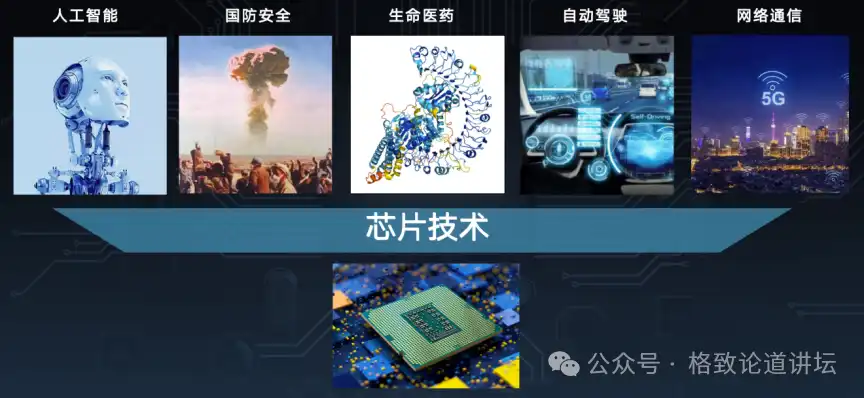
Ya sea la inteligencia artificial, que está muy de moda, o la medicina, la conducción autónoma, las comunicaciones por red, etc., prácticamente todas las tecnologías modernas que puedas imaginar dependen de los chips, una tecnología fundamental de la era de la información.

Llevo mucho tiempo trabajando en el desarrollo de chips, y el proceso es realmente interesante, principalmente por dos razones.

En primer lugar, los chips tienen aplicaciones muy amplias. Si te dedicas a esta industria, es poco probable que te preocupes por quedarte sin trabajo, ya que muchas industrias necesitan tecnología de chips.

La segunda razón puede ser más importante: el desarrollo de chips es algo extremadamente difícil. Como ingenieros de chips, necesitamos seguir aprendiendo y enriqueciéndonos constantemente para enfrentar y aprovechar esta era llena de oportunidades y desafíos.

Entonces surge la pregunta: ¿en qué radica exactamente la dificultad de la tecnología de chips?

¿Por qué son tan difíciles los chips?

Completado: 10% //////////

Quizás sepan que el proceso de fabricación de un chip es, en esencia, el viaje de evolución de un grano de arena. La arena es probablemente uno de los recursos más abundantes e inagotables del planeta; pero convertir la arena de bajo valor en un chip de alto valor añade únicamente la sabiduría humana.
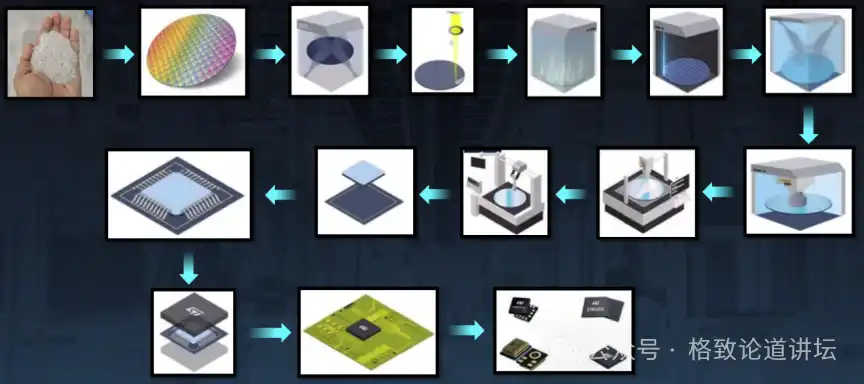
A partir de la arena, necesitamos purificarla para obtener obleas (wafers). Luego, las obleas pasan por una serie de etapas como fotolitografía, implantación iónica, grabado, empaquetado, etc., para convertirse finalmente en un pequeño chip a partir de la arena abundante e inagotable.

Después de todo esto, con tantos pasos, la fabricación de chips es solo una parte de todo el proceso de desarrollo de chips, no es lo mismo que el desarrollo de chips en sí.
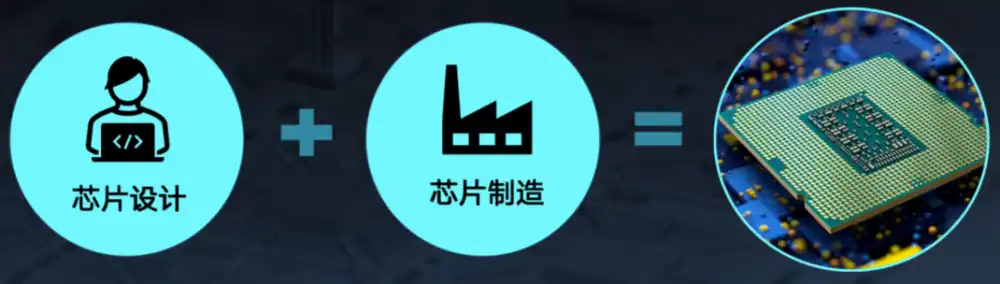
Hay otro eslabón muy importante: el diseño de chips. Se refiere a completar el diseño del circuito según los requisitos y hacer que funcione correctamente. Luego, entregamos el circuito diseñado al fabricante de chips para que realice la fabricación posterior y finalmente obtenga la entidad física del chip.

Pero aquí hay otro problema: ¿cómo asegurar que la funcionalidad del chip sea la misma que la del diseño inicial?
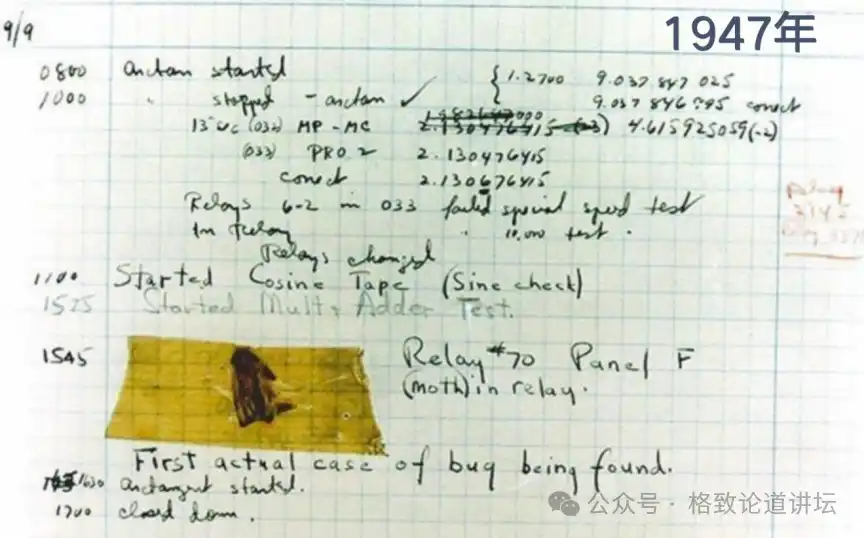
Aquí hay una pequeña historia interesante. En 1947, una programadora muy famosa, Grace Hopper, descubrió que su computadora no funcionaba. Después de una investigación y exploración cuidadosa, descubrió que una polilla se había metido en un relé de la computadora. Así que, con unas pinzas, extrajo cuidadosamente la polilla y la pegó en un papel.

Este podría ser el primer "bug" (insecto), o sea, fallo, descubierto en toda la historia del desarrollo de la computación.

Si el ejemplo anterior es demasiado antiguo, en realidad tenemos más ejemplos. Les planteo un problema matemático: ¿cuál es el resultado final de esta expresión? En realidad, este problema es muy simple, porque en la expresión posterior, el numerador y el denominador son iguales y se cancelan; y el número antes del signo menos y después también son iguales, por lo que al restar números iguales, la respuesta final debería ser 0. Sin embargo, en una computadora y chip reales, es posible que el resultado obtenido no sea así.
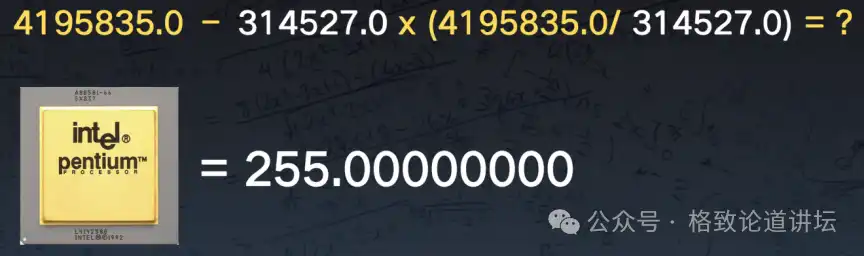
Por ejemplo, en un chip Pentium de Intel, el resultado obtenido fue 255.00000000. ¿Qué pasó? Resulta que un científico estadounidense, mientras realizaba investigaciones científicas, al ejecutar esta expresión, no obtenía el resultado correcto. Finalmente descubrió que en la unidad de división de punto flotante de este chip había un error de diseño que no se había detectado.

No subestimen este error de diseño, sus consecuencias fueron muy graves. En la década de 1990, Intel gastó 475 millones de dólares para retirar globalmente todos los chips Pentium que presentaban este problema.

Volviendo a la pregunta anterior: ¿en qué radica exactamente la dificultad de la tecnología de chips?

En mi opinión, la dificultad de los chips radica en que necesitan tener éxito a la primera. Hacer chips no es como el software, donde puedes corregir diversos problemas posteriormente mediante parches. En contraste, una vez que un chip ha completado su viaje evolutivo desde la arena hasta el chip, es posible que ya hayas gastado decenas o cientos de millones, e incluso miles de millones, para completar el tape-out y fabricación del chip, y es muy difícil modificarlo después.

Entonces, la siguiente pregunta es: ¿cuántos proyectos de chips pueden lograr el éxito a la primera?

La verificación de chips: Un cuello de botella

Completado: 40% //////////

Según los datos de resultados de la investigación, solo el 24% de los proyectos de chips logran tener éxito a la primera. Es decir, 3/4 de los proyectos de chips, debido a la existencia de diversos errores de diseño, grandes y pequeños, no detectados, necesitan al menos realizar un tape-out adicional, lo que consume mucho tiempo y dinero.
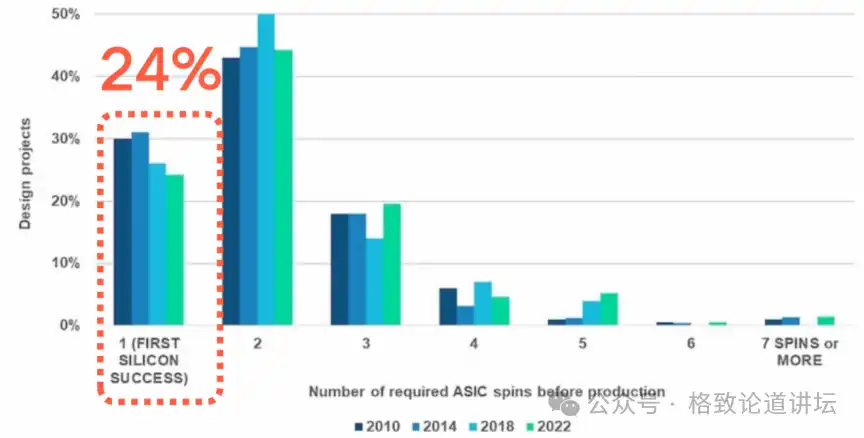
Por lo tanto, la clave del problema es: ¿cómo podemos asegurar, en la medida de lo posible, que el chip tenga la menor cantidad posible, o idealmente ninguno, de bugs o errores de diseño antes del tape-out y fabricación? Esta es precisamente la dirección en la que he estado investigando durante los últimos años.
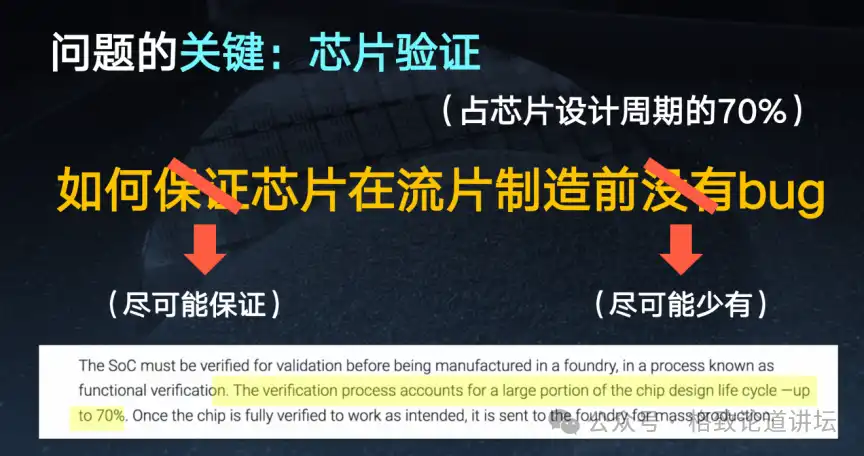
De acuerdo con estos mismos datos de investigación, en todo el proceso de desarrollo de chips, especialmente con el desarrollo actual de la inteligencia artificial y diversas tecnologías de vanguardia, los chips se están volviendo cada vez más complejos. La verificación de chips se ha convertido así en un eslabón que ocupa una proporción muy alta en el ciclo de desarrollo total de los chips, incluso superando la mitad, alcanzando el 70% del ciclo total de diseño de chips.

Pero lamentablemente, la verificación de chips también es algo muy difícil. Aquí enumero algunos números astronómicos, como la circunferencia de la Tierra, la cantidad posible de estrellas en la Vía Láctea o la longitud de un año luz.

En la verificación de chips, también existe un número astronómico: la cantidad de ciclos necesarios para verificar completamente un núcleo de CPU. ¿Qué representa este número astronómico?

Si usamos la tecnología de simulación de software más avanzada actual para verificar completamente un núcleo de CPU, se necesitan al menos 15,000 años. Usando la tecnología de emulación de hardware más avanzada actual, podemos acortar este tiempo ligeramente a 30 años. Pero todos sabemos que desarrollar un chip no puede esperar 15,000 años, ni 30 años.
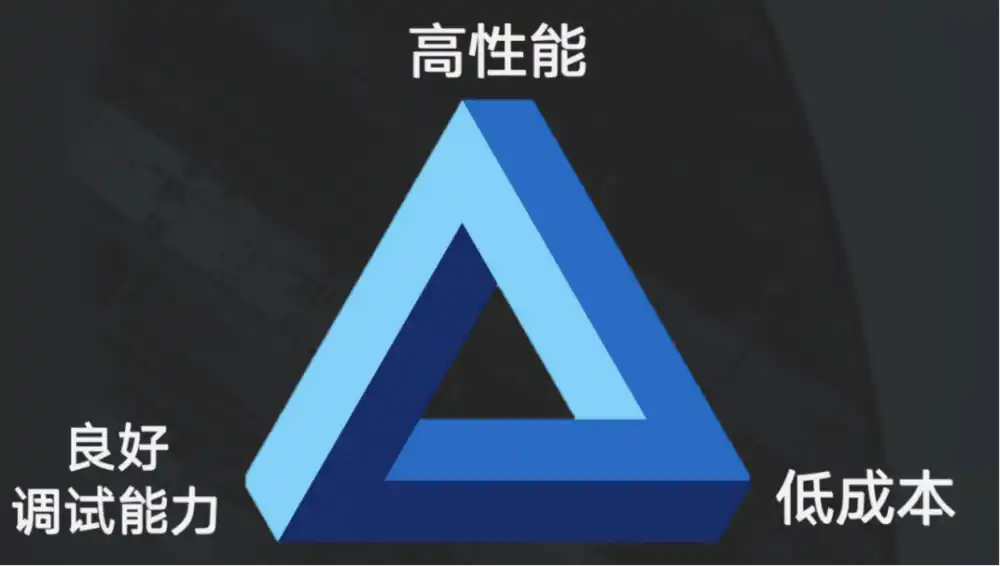
Entonces, ¿cuál es la esencia del problema? En realidad, lo hemos estado investigando en los últimos años. Descubrimos que en la verificación de chips existe un llamado "triángulo imposible", es decir, el alto rendimiento de la verificación, una buena capacidad de depuración y el bajo costo; y estos tres factores cruciales para la verificación de chips no pueden satisfacerse simultáneamente. Para los métodos o investigaciones principales actuales, como máximo se pueden lograr dos de los tres, y esta es precisamente la razón fundamental por la cual la eficiencia de la verificación de chips es muy baja.

Alguien tiene que hacer algo diferente

Completado: 60% //////////

Debido a estas razones, la verificación de chips no ha tenido un gran desarrollo en el pasado.

En las empresas de chips, los ingenieros de chips pueden estar más enfocados en escribir casos de prueba y ejecutar regresiones de verificación. En esencia, es un trabajo duro y tedioso. Lo mismo ocurre en el ámbito académico: hay muy pocos académicos dedicados a la investigación en verificación de chips, especialmente en comparación con áreas candentes como la inteligencia artificial, la investigación relacionada con la verificación de chips es muy escasa.

Por eso, un académico destacado me dijo que en el mismo tiempo, podría publicar tres o incluso más artículos en el campo de la inteligencia artificial, pero en verificación de chips, quizás no publique ni uno.

Lamentablemente, tenía razón.

Sin embargo, alguien tiene que hacer algo diferente.
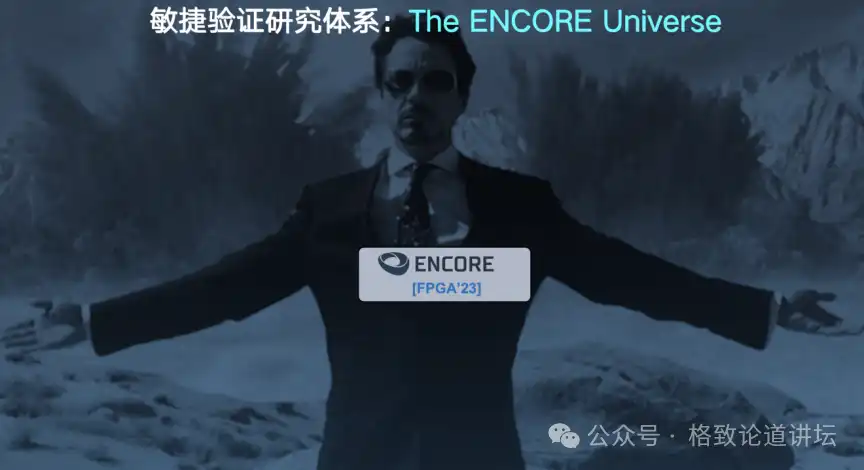
Por lo tanto, durante los últimos años, he dirigido a un equipo dedicado a la investigación relacionada con la verificación de chips, y hemos construido desde cero un sistema de investigación de verificación ágil. El núcleo de este sistema de investigación es una plataforma de verificación llamada ENCORE, basada en un chip especial: las matrices de puertas programables en campo (FPGA). ENCORE puede mejorar significativamente la eficiencia de la verificación y lograr una buena capacidad de depuración.
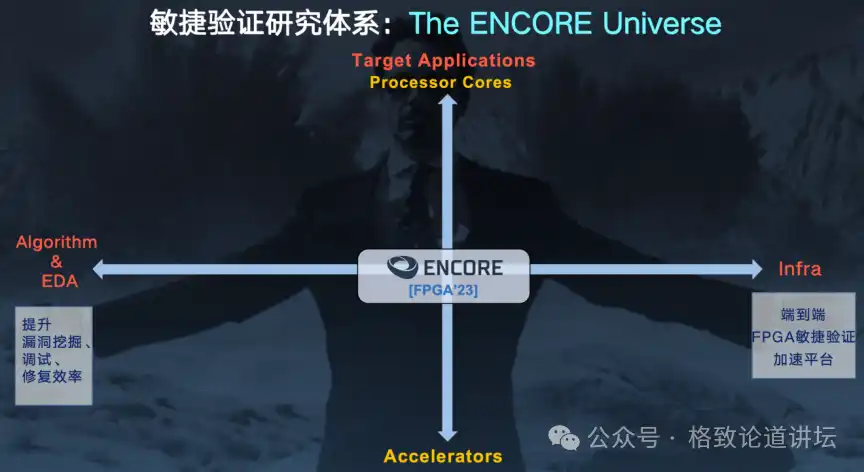
Para construir este sistema de investigación de verificación ágil, por un lado, necesitamos optimizar constantemente la eficiencia de la detección, depuración y corrección de errores a nivel algorítmico; por otro lado, también esperamos construir una plataforma de aceleración de verificación ágil de extremo a extremo basada en chips de lógica programable (FPGA). A nivel de aplicación, esperamos que esta plataforma sea aplicable tanto para la verificación de procesadores de propósito general, como CPU o GPU, como para la verificación de chips de aplicación específica, como los aceleradores de IA, muy populares en la actualidad.
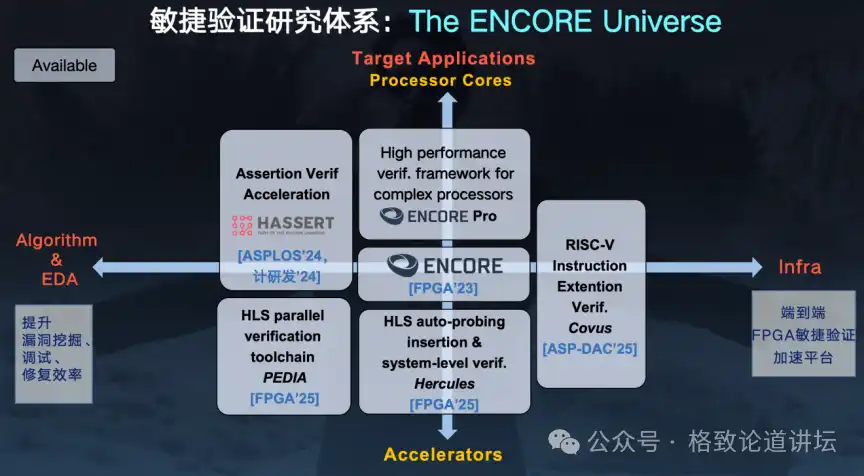
En el pasado, hemos realizado mucho trabajo de exploración de vanguardia en este campo, incluyendo el mencionado ENCORE y muchas nuevas investigaciones. También hemos publicado estos resultados de investigación en muchas conferencias académicas internacionales reconocidas.
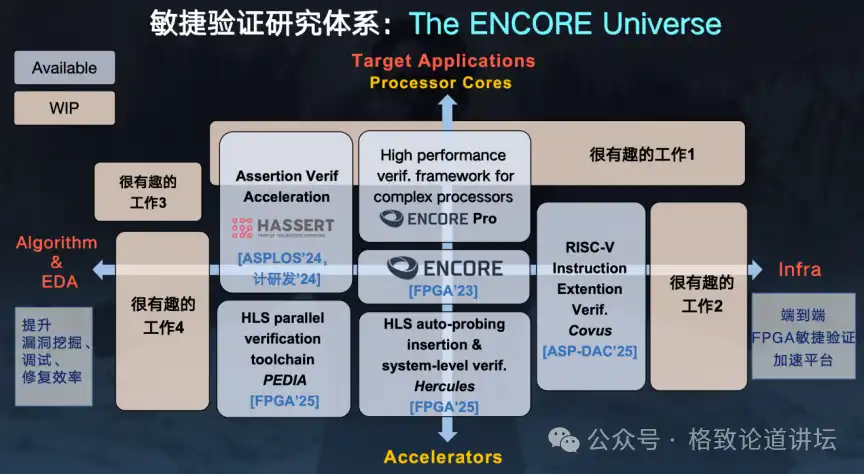
Posteriormente, también hemos estado realizando trabajos muy interesantes, pero como aún no se han publicado, no los compartiré por ahora.

Hacer que más personas comprendan mejor los chips

Completado: 80% //////////

Sin embargo, durante el proceso de investigación, gradualmente descubrí que estos resultados científicos o académicos están dirigidos principalmente a un pequeño círculo de personas que solo entienden la verificación de chips y campos relacionados. Entonces, ¿cómo hacer que más personas vean nuestro trabajo, comprendan nuestra investigación científica e incluso participen en él?
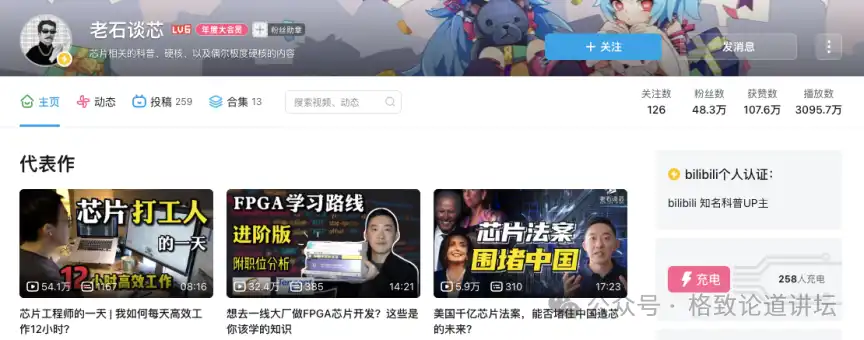
Naturalmente, se me ocurrió la divulgación científica sobre chips, lo que también me parece muy interesante. Llevo cuatro o cinco años dedicándome a la divulgación, desde textos al principio, hasta luego hacer videos en Bilibili. La divulgación sobre chips no solo me ha traído muchos aprendizajes, sino que también me ha ayudado a conocer a muchos amigos afines, así como a espectadores que me aprecian y apoyan.
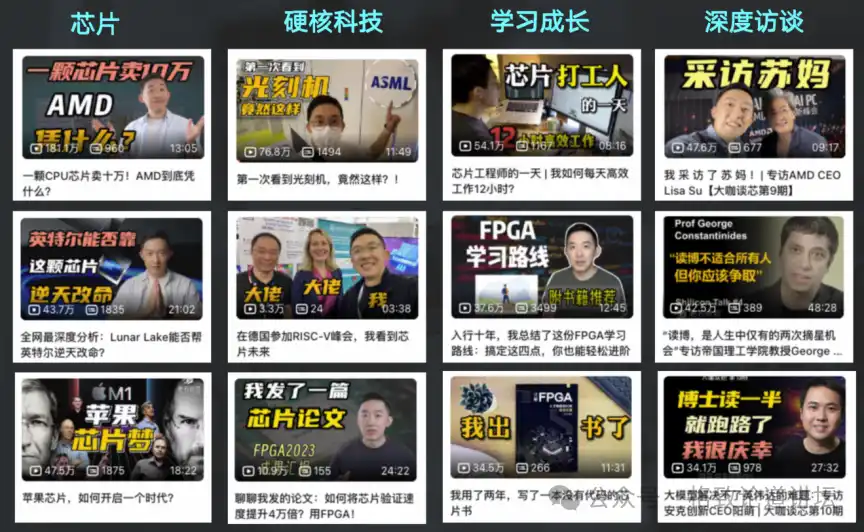
Sin embargo, hacer videos de divulgación sobre chips no es algo simple, especialmente en la actualidad con la proliferación de videos cortos. Otro destacado creador de contenido científico también me dijo que en el mismo tiempo que yo hago un video largo y profundo sobre divulgación de chips, él podría hacer 10, o incluso más videos cortos relacionados con temas candentes, y su audiencia podría ser muchas veces mayor.

Lamentablemente, también tenía razón.

Pero sobre esta base, creo que aún necesitamos personas que insistan en hacer cosas difíciles. Espero poder combinar la divulgación sobre chips y la verificación de chips, dos cosas igualmente difíciles pero interesantes, y mostrarles a través de videos y textos lo que hacemos, los artículos que hemos publicado y contenidos como los chips de código abierto que nuestro gran equipo está investigando.

Además de los chips, también compartiré con ustedes tecnología dura como la inteligencia artificial y la informática, así como mis experiencias de crecimiento, los libros que he leído y el conocimiento que he adquirido. Sé que en realidad no soy un genio, ni un experto omnisciente y todopoderoso. Más bien, espero poder ser una especie de "guía" para todos, compartiendo el camino que he recorrido.

Así que, volviendo a la pregunta que quería compartir hoy: la investigación científica sobre chips y la divulgación sobre chips, ¿cuál es más interesante? Por supuesto, para mí ambas son igualmente interesantes. La razón es simple: porque ambas son igualmente difíciles. Al mismo tiempo, ambas requieren que las mantenga a largo plazo, de manera persistente.

Mucha gente dice que debemos hacer cosas difíciles pero correctas. Pero el problema real es: ¿cómo juzgas si algo es correcto antes de hacerlo? Si algo es considerado por otros como sentarse en un banco frío, como hacer trabajo duro y tedioso, ¿seguirías insistiendo en hacerlo?

Por lo tanto, prefiero hacer cosas difíciles y a largo plazo, como la investigación académica en verificación de chips, como hacer videos largos y profundos de divulgación sobre chips. Porque si algo es difícil y requiere persistencia a largo plazo, es muy probable que sea correcto.

Esto es todo lo que quería compartir con ustedes hoy. Soy Lao Shi, ¡gracias a todos!

Este artículo proviene del WeChat Official Account: Gezhi Lundao Jiangtan (Foro de Ciencia) , autor: Shi Kan, título original: 《¿Qué tan difícil es hacer un chip? Un error en una operación de división le costó 475 millones de dólares | Shi Kan》


Related Questions

Q¿Por qué es tan difícil el desarrollo de chips y cuál es un ejemplo de las graves consecuencias de un error en el diseño?

AEl desarrollo de chips es difícil principalmente porque requiere un éxito inmediato. A diferencia del software, los chips no pueden ser corregidos fácilmente después de la fabricación. Un ejemplo es el error en la unidad de división de punto flotante del chip Pentium de Intel, que llevó a un costo de 475 millones de dólares para retirar todos los chips afectados en los años 90.

Q¿Cuál es el porcentaje de proyectos de chips que logran el éxito en el primer intento según los datos presentados en el artículo?

ASegún los datos de la investigación mencionada en el artículo, solo el 24% de los proyectos de chips logran el éxito en el primer intento. Esto significa que tres cuartas partes de los proyectos requieren al menos una nueva iteración de fabricación, lo que conlleva enormes costos adicionales de tiempo y dinero.

Q¿Qué es el 'triángulo imposible' en la verificación de chips y por qué es un problema fundamental?

AEl 'triángulo imposible' en la verificación de chips se refiere a la imposibilidad de satisfacer simultáneamente tres factores cruciales: alto rendimiento, buena capacidad de depuración y bajo costo. Los métodos actuales solo pueden lograr dos de estos tres a la vez, lo que limita fundamentalmente la eficiencia del proceso de verificación.

Q¿Qué es la plataforma ENCORE desarrollada por el autor y su equipo, y cuál es su objetivo principal?

AENCORE es una plataforma de verificación de chips desarrollada por el autor y su equipo. Está basada en FPGA (Field-Programmable Gate Array) y forma el núcleo de un sistema de investigación de verificación ágil. Su objetivo principal es aumentar drásticamente la eficiencia de la verificación mientras mantiene una buena capacidad de depuración, abordando así los desafíos del 'triángulo imposible'.

QSegún el autor, ¿por qué combina la investigación en verificación de chips con la divulgación científica (como hacer videos en Bilibili)?

AEl autor combina la investigación en verificación de chips con la divulgación científica porque cree que ambas son 'cosas difíciles y a largo plazo' que vale la pena hacer. La divulgación le permite compartir su trabajo, investigaciones (como los chips de código abierto) y conocimientos sobre tecnología con un público más amplio, más allá del pequeño círculo académico, actuando como una guía para los interesados.

Related Reads

M&A Deals in the Crypto Market Are Unusually Active

Title: M&A Activity in Crypto Market Becomes Unusually Active A rare signal is emerging in the crypto primary market: mergers and acquisitions (M&A) are nearing half of all financing deals. According to RootData, this month, M&A cases in the crypto industry reached 10, while financing rounds numbered only 14, meaning M&A accounts for approximately 42% of primary market transactions—the highest level in history. This does not signal a sudden industry boom. Instead, the rapid rise in M&A share primarily reflects the continued downturn in the financing market. Since November 2024, monthly crypto M&A deals have remained between 10-20, while financing deals have plummeted from around 100 to about 50, possibly hitting a new low this month. For project teams, this means the traditional path of relying on narratives, token expectations, and ecosystem subsidies to maintain valuations is narrowing. For leading companies, it presents a rare window to acquire teams, licenses, technology, liquidity, and market access at lower prices, with less competition and stronger bargaining power. Key active buyers include Coinbase, Kraken, Ripple, MoonPay, Polymarket, Kaiko, Sol Strategies, GSR, Keyrock, Jupiter, Paxos, and Ondo Finance. Their M&A logic is consistent: acquiring key capabilities at lower costs during the industry downturn. This is driven by more attractive valuations, reduced time and trial-and-error costs, the acquisition of licenses and compliance resources, and the integration of industry upstream and downstream segments. Current M&A focuses are concentrated in four areas: trading infrastructure (e.g., Coinbase acquiring Deribit, Kraken acquiring NinjaTrader), payments and stablecoins (e.g., MoonPay, Ripple expanding payment networks), compliance licenses, and asset issuance/distribution (e.g., acquisitions related to RWA and token issuance platforms like Coinbase's purchases of Liquifi and Echo). The rise in M&A is altering the primary market's exit logic. It provides an alternative path to the token-dependent model, encouraging teams to build tangible products, revenue, and strategic value that can be integrated. This could inject confidence into the market, showing that asset buyers and exit possibilities still exist, albeit with a stricter focus on real utility. However, this trend also indicates the crypto industry is becoming more centralized. As asset issuance, trading, market-making, custody, payments, and data gradually consolidate in the hands of a few major players, the industry's initial emphasis on openness and anti-monopoly is being reshaped by commercial realities. Coupled with rising compliance barriers, this signals the end of the low-barrier era for crypto entrepreneurship.

链捕手4m ago

M&A Deals in the Crypto Market Are Unusually Active

链捕手4m ago

M&A Deals Are Exceptionally Active in the Crypto Market

Mergers and acquisitions (M&A) activity in the cryptocurrency primary market has reached a historic high, accounting for approximately 42% of total deals in the current month, nearly matching the number of financing rounds. This shift does not signal a new boom cycle but rather reflects a severe contraction in the venture capital funding environment. As financing dwindles, established industry giants—including major exchanges, payment firms, and infrastructure providers—are seizing the opportunity to acquire strategic assets at lower valuations. Key drivers behind the surge in M&A include depressed project valuations, the need to quickly acquire talent and technology to capture short market windows, the pursuit of crucial regulatory licenses, and the strategic expansion into adjacent business verticals such as derivatives, payments, stablecoins, and real-world asset (RWA) issuance. Major acquisitions, like Coinbase's purchase of Deribit and Kraken's acquisition of NinjaTrader, exemplify the push to expand into high-margin areas like derivatives and multi-asset trading. This trend is reshaping the industry's exit landscape, offering an alternative to token-based exits and incentivizing startups to build tangible products and revenue streams with inherent strategic value for acquisition. However, it also points toward increasing centralization, as critical functions—trading, custody, payments, compliance—become concentrated within a few large, well-capitalized platforms, potentially raising barriers to entry for new ventures.

marsbit4m ago

M&A Deals Are Exceptionally Active in the Crypto Market

marsbit4m ago

Solana Privacy Ecosystem Panorama: A Complete Privacy Stack from Compute to AI

**Title: The Solana Privacy Ecosystem: A Full-Stack View from Compute to AI** **Summary:** This article provides a comprehensive overview of the emerging privacy landscape on the Solana blockchain, characterizing it as still in early development. It identifies two primary verticals—Neobanks and Private DeFi—as key drivers, while noting gaps in tooling and user experience. The discussion centers on two main approaches to private computation: Arcium, which utilizes Multi-Party Computation (MPC) networks (Multi-Party eXecution Environments) to process encrypted data with final settlement on Solana; and Magic Block, which leverages Trusted Execution Environments (TEEs) via its Private Ephemeral Rollup (PER). Both enable confidential applications like dark pools and private DeFi with minimal code changes. Building on this infrastructure, projects are creating privacy-focused applications. Umbra, built on Arcium, offers Encrypted Token Accounts (ETAs) for private balances, transfers, and selective disclosure for compliance. Other wallets like Privacy Cash and Hush provide mixer-like functionality for SOL. For private trading, encifherio uses TEEs to encrypt swap details routed through Jupiter, while VanishTrade and Darklake focus on shielding transaction intent and liquidity routing, with Darklake introducing a "blind slippage pool" to prevent front-running. Further applications include private prediction markets (e.g., Melee Markets using Arcium's encrypted order books) and private AI. Loyal exemplifies the latter, using both Magic Block and Arcium to enable decentralized AI agents that store user data, conversations, and transactions confidentially on-chain. The article concludes by framing privacy not as a single technology but as an evolving "ultimate privacy stack," with experts like Helius's Mert envisioning a future combination of Fully Homomorphic Encryption (FHE) and Zero-Knowledge proofs (ZK). Helius Privacy itself is developing a ZK-based UTXO privacy layer for Solana.

Foresight News10m ago

Solana Privacy Ecosystem Panorama: A Complete Privacy Stack from Compute to AI

Foresight News10m ago

7 Key Questions Regarding 'DeepSeek Completes Over 50 Billion Yuan in Financing'

DeepSeek, the prominent Chinese AI company, has reportedly completed its first external funding round, raising over 50 billion RMB (approximately $6.9 billion USD), according to foreign media reports. This financing values the company at over $50 billion USD, a significant increase from a $10 billion valuation when the round began in April 2026. Founder Liang Wenfeng personally contributed 20 billion RMB, with other investors including Tencent, CATL (Contemporary Amperex Technology), JD.com, NetEase, and IDG Capital. Notably, the National Artificial Intelligence Industry Investment Fund also participated with a direct investment of 1 billion RMB. The funding round is distinctive for its structure. Most investors' capital is channeled into a limited partnership controlled by CEO Liang Wenfeng, rather than directly into DeepSeek. These investors face a five-year lock-up period, have no voting rights, but receive priority financial information and future investment rights. This arrangement is seen as a measure to ensure Liang's absolute control over the company's direction, aligning with its stated principles of prioritizing groundbreaking AGI (Artificial General Intelligence) research over short-term profitability. The report highlights strategic reasons for key investors. Tencent's involvement is viewed as a strategic alignment, building on existing collaborations. CATL's investment is linked to the critical energy and power infrastructure needed for AI data centers, a key growth area for the battery giant. The participation of a state-backed fund underscores the national strategic importance of AI development. Post-funding, DeepSeek is expected to accelerate infrastructure development, including building its own data centers, hire more talent, and release new model versions with enhanced capabilities like image and audio support. While this marks a major step, the company's long-term journey towards AGI remains a challenging path that will require balancing its foundational ideals with the expectations of its new investors.

marsbit55m ago

7 Key Questions Regarding 'DeepSeek Completes Over 50 Billion Yuan in Financing'

marsbit55m ago

Trading

Spot
Futures

Hot Articles

What is LINON

Linde plc Tokenized Stock (Ondo): Revolutionizing Traditional Equity Access Through Blockchain Innovation The emergence of Linde plc Tokenized Stock (Ondo), represented by the ticker $LINON, signifies a monumental shift in the fusion of traditional financial structures and decentralized finance (DeFi). This innovative financial instrument showcases the tremendous potential of blockchain technology to democratize access to traditional equity markets while ensuring the security and regulatory compliance necessary for institutional-grade financial products. Through Ondo Finance's pioneering tokenization platform, $LINON provides a seamless pathway for global investors to engage with one of the world's leading industrial gas companies, Linde plc, creating a blockchain-native representation of the underlying equity. Introduction to Linde plc Tokenized Stock The landscape of financial markets is witnessing a groundbreaking transformation through the tokenization of real-world assets. Linde plc Tokenized Stock (Ondo) epitomizes this revolutionary approach by bridging the gap between conventional stock ownership and blockchain-enabled financial infrastructure. The $LINON token allows investors to gain exposure to one of the prominent industrial companies worldwide through decentralized technology. Operating within Ondo Finance's comprehensive ecosystem, $LINON symbolizes a practical application of tokenization technology that enhances accessibility, efficiency, and global connectivity in traditional financial markets. By leveraging blockchain infrastructure, this tokenized stock enables international investors to participate in U.S. equity markets, overcoming traditional barriers associated with cross-border investing. The significance of $LINON goes beyond technological innovation; it represents a fundamental shift in asset structuring, distribution, and trading in the digital age. This tokenized stock maintains all the economic benefits associated with traditional Linde plc shares while offering improved liquidity, programmable compliance features, and seamless integration with decentralized finance protocols. The development of $LINON indicates a growing acceptance of blockchain technology as a viable means for traditional finance, exemplifying how even well-established assets like Linde plc can integrate into blockchain systems. This approach preserves the core attributes that appeal to investors while introducing advanced capabilities that enhance the overall investment proposition. Project Overview and Objectives Linde plc Tokenized Stock (Ondo) encapsulates a strategic effort to democratize access to traditional equity markets through advanced blockchain technologies. The primary objective of $LINON is to provide approved global investors seamless access to the economic exposure associated with Linde plc shares, furthering an effort to create a more inclusive financial ecosystem. Beyond the digital representation of traditional assets, $LINON endeavors to eliminate barriers of geography and time zones that limit investor participation. Its design ensures that blockchain technology can elevate traditional investment vehicles without undermining the security or compliance requirements expected by investors. Key goals of the project include enhanced liquidity provision, programmable compliance mechanisms, and interoperability with other blockchain networks. Each $LINON token is fortified by actual Linde plc securities housed at U.S.-registered broker-dealers, allowing holders to reap economic advantages akin to traditional stockholders, such as dividend reinvestment. Furthermore, $LINON aims to establish new industry standards for institutional-grade tokenized securities, paving the way for traditional assets to embrace blockchain technology while remaining compliant with regulatory frameworks. By associating itself with a company as reputable as Linde plc, the project opens avenues for exploring tokenized equities catering to both conservative institutional players and daring retail investors. Project Creator and Development Team The vision for Linde plc Tokenized Stock (Ondo) comes from Nathan Allman, founder and CEO of Ondo Finance. His background in traditional finance coupled with expertise in blockchain technology positions him uniquely to navigate the complexities of asset tokenization. Allman's academic journey began at Brown University, focusing on Economics and Biology, equipping him with valuable analytical skills. His time at Goldman Sachs in the Digital Assets division strengthened his understanding of the interplay between financial institutions and emerging technologies, laying the groundwork for his later endeavors in alternative investment strategies. Under Allman's guidance, Ondo Finance has emerged as a leader in asset tokenization, launching $LINON as a flagship example of the company's larger mission towards revolutionizing traditional financial systems using blockchain technology. His commitment to leveraging blockchain for creating institutional-grade financial products has shaped the landscape of real-world asset tokenization. Investment and Funding Structure The growth of Ondo Finance, the platform powering Linde plc Tokenized Stock (Ondo), is bolstered by robust financial backing from prestigious venture capital firms and strategic investors. This strong investment foundation underpins the development of the key infrastructure essential for compliant tokenized securities like $LINON. In August 2021, Ondo Finance secured $4 million in seed funding led by a major venture capital firm, which enabled the company to commence platform development and establish the necessary regulatory processes for tokenizing real-world assets. This early investment cemented Ondo Finance's credibility within the industry. The Series A funding round followed, garnering $20 million with participation from renowned firms committed to transformative technology companies. This backing demonstrated substantial institutional confidence in Ondo Finance's vision, allowing it to hone its approach to asset tokenization through mechanisms that ensure compliance and accessibility. Noteworthy contributors, including institutional investors and experienced partners, have added significant value to Ondo Finance’s development efforts. Their involvement underscores the confidence across sectors in Ondo Finance's approach to bridging traditional finance with blockchain innovations. Technical Infrastructure and Innovation The technical architecture that underpins Linde plc Tokenized Stock (Ondo) represents a sophisticated melding of traditional finance systems and cutting-edge blockchain technology. The architecture's foundation is built on the Ethereum network, renowned for its security and programmability—both critical for intricate financial instruments. The $LINON tokenization process comprises creating a blockchain-native representation of Linde plc shares that preserves economic benefits while augmenting investor capabilities. Each token corresponds to actual shares held at U.S.-registered broker-dealers, creating a compliant custody structure that legitimizes the asset's existence and value. Automated compliance systems are integrated into the tokenization process, managing critical components such as know-your-customer (KYC) verification and anti-money laundering (AML) protocols. This incorporation of programmable compliance empowers $LINON to uphold regulatory standards essential for institutional proliferation. Cross-chain interoperability characterizes the advanced technical features of $LINON. While initially deployed on Ethereum, the framework is designed for expansion to other networks such as Solana and BNB Chain. This adaptability enhances liquidity and accessibility, allowing investors to select their preferred blockchain ecosystems. Historical Timeline and Development Crafting the history of Linde plc Tokenized Stock (Ondo) unfolds in parallel with the evolution of Ondo Finance's tokenization platform. The timeline's inception dates back to March 2021 when Nathan Allman laid the foundations for creating institutional-grade financial products on blockchain infrastructure. The initial funding round in August 2021 provided crucial resources for developing the platform and establishing partnerships necessary for effective tokenization. By January 2023, Ondo Finance launched its tokenized treasury products, establishing mechanisms that would facilitate future tokenized equities such as $LINON. A pivotal milestone arose in February 2025 when Ondo Chain—a Layer 1 blockchain designed specifically for asset tokenization—was introduced. This infrastructure enhances capabilities vital for institutional markets, demonstrating Ondo Finance's long-term commitment to tokenization. Subsequently, the launch of Ondo Global Markets in September 2025 marked the official debut of $LINON. This milestone showcased the successful transition from development to active trading, enabling investors around the world to access American financial markets seamlessly. Ongoing development plans include a targeted expansion of available tokenized assets to over 1,000 by the end of 2025, pointing to a bright future for Ondo Finance's ecosystem and its mission to broaden tokenized equity accessibility. Regulatory Compliance and Legal Framework The legal architecture governing Linde plc Tokenized Stock (Ondo) emphasizes a sophisticated approach to regulatory compliance, allowing tokenized securities to be implemented within a blockchain-based framework. The legal structure governing $LINON spans multiple jurisdictions while maintaining a robust legal footing. Compliance systems ensure that only eligible investors can access the token, enforced through automated verification that aligns with international regulations. This innovative regulatory technology promises real-time enforcement of complex requirements, considerably enhancing efficiency in operating within the regulatory landscape. The custody framework undergirding $LINON ensures that the underlying shares are securely held at U.S.-registered broker-dealers, complying with necessary regulations while delivering blockchain-driven access to investors. The token maintains its economic equivalency and security through this carefully structured custody arrangement. KYC and AML compliance systems are embedded within the smart contract architecture, ensuring integrity and adherence to regulatory practices while fostering transparency for investors. The jurisdictional restrictions mark a commitment to navigating the evolving landscape of international securities laws. Market Impact and Industry Significance The advent of Linde plc Tokenized Stock (Ondo) holds profound implications for the broader financial landscape, symbolizing a clear shift towards blockchain-enabled markets. $LINON serves as a proof-of-concept for integrating traditional companies into blockchain ecosystems, showcasing the potential benefits such as broader accessibility and improved efficiency. The market's response to $LINON indicates a growing acceptance of tokenization among institutional investors, contributing to the emergence of an expanding sector wherein traditional assets can be interconnected with blockchain innovations. The success of $LINON further solidifies market confidence, indicating an overarching shift towards recognizing asset tokenization as a transformative force in finance. Future Development and Expansion Plans The future trajectory for Linde plc Tokenized Stock (Ondo) centers around the expansion of the tokenization ecosystem and enhanced infrastructure supporting blockchain-enabled financial services. Plans for cross-chain integration usher in new opportunities for liquidity and flexibility within the investment framework, with existing capabilities poised for continuous enhancement. With the introduction of Ondo Chain, Ondo Finance aims to transition $LINON to an optimized blockchain environment specifically designed for asset tokenization. This new infrastructure heralds exciting prospects for the development of institutional-grade financial products, ensuring ongoing compatibility with contemporary investment strategies. Further integration with decentralized finance protocols signifies a commitment to empowering $LINON holders through advanced financial strategies. The anticipated expansion of available tokenized assets promises to broaden investor access, enhancing the utility and appeal of the platform. In alignment with ambitions for regulatory expansion, ongoing efforts to secure approvals for new jurisdictions will enhance investor access, further positioning $LINON at the forefront of the burgeoning tokenization market. Conclusion Linde plc Tokenized Stock (Ondo), as represented by the $LINON token, stands at the intersection of traditional finance and blockchain innovation. It embodies a transformative milestone in how financial assets are structured, distributed, and engaged within modern investment ecosystems. The technical sophistication behind $LINON, combined with its regulatory compliance framework, illustrates that asset tokenization can improve financial infrastructure rather than simply digitizing existing products. This pioneering effort not only enhances investor access to U.S. equity markets but also signifies an evolution of how traditional financial services can integrate blockchain technology. As the asset tokenization market grows exponentially, with prospects suggesting significant valuation increases, $LINON paves the way for a future where tokenized securities become standard fixtures in the financial landscape. The trajectory of $LINON will undoubtedly influence how traditional finance adapts to a transformed, blockchain-powered world.

3.2k Total ViewsPublished 2025.12.05Updated 2025.12.05

What is LINON

What is CRMON

Salesforce Tokenized Stock (Ondo): Revolutionising Traditional Equity Access Through Blockchain Innovation The emergence of Salesforce Tokenized Stock (CRMON) marks a pivotal advancement in integrating traditional financial markets with blockchain technology. This innovative approach offers investors unprecedented access to equity exposure through tokenisation. Developed by Ondo Finance, CRMON provides tokenholders with economic exposure equivalent to holding Salesforce stock (CRM) while automatically reinvesting dividends. This effectively bridges the gap between conventional equity markets and decentralised finance (DeFi). Introduction and Comprehensive Overview of Salesforce Tokenized Stock In recent years, the financial landscape has dramatically transformed due to blockchain technology, fundamentally altering how investors access and interact with traditional assets. The development of Salesforce Tokenized Stock (CRMON) is a prime example of this evolution, representing a sophisticated fusion of conventional equity markets with cutting-edge distributed ledger technology. CRMON is a tokenised version of Salesforce stock, emerging from the innovative work of Ondo Finance, a leading platform in the real-world asset tokenisation sector that positions itself as a bridge between traditional finance and decentralised systems. Designed to provide tokenholders with economic exposure that mirrors the performance of the underlying Salesforce stock, CRMON incorporates automatic dividend reinvestment mechanisms. This eliminates many traditional barriers associated with international equity investment, such as complex brokerage relationships, currency conversion challenges, and restricted trading hours. The tokenisation process reimagines stock ownership as a blockchain-native asset while maintaining its economic equivalence with the underlying security, offering enhanced portability and integration capabilities within decentralised finance ecosystems. CRMON transcends its individual utility as an investment instrument to represent a fundamental shift in how financial markets can operate in an increasingly digital world. By maintaining full backing through U.S.-registered broker-dealers and implementing robust compliance frameworks, CRMON demonstrates that tokenised securities can achieve the regulatory standards necessary for institutional adoption while delivering the technological advantages of blockchain infrastructure. Understanding Tokenized Real-World Assets and CRMON's Strategic Position Tokenised real-world assets signify one of the most significant innovations in modern finance, fundamentally reimagining how traditional securities are represented, traded, and utilised within digital ecosystems. CRMON operates as a tokenised equity instrument correlating directly with Salesforce stock while optimising accessibility and efficiency. This aligns with Ondo Finance's broader mission to democratise access to institutional-grade financial products through innovative tokenisation strategies. The tokenisation process guarantees complete economic equivalence with the underlying Salesforce equity. Each CRMON token represents a proportional claim on Salesforce stock held by qualified custodians, with dividend payments automatically reinvested to maintain continuous exposure to total return performance. This structure simplifies dividend management and ensures that tokenholders receive the full economic benefit of their equity exposure, encompassing both capital appreciation and income generation. Ondo Finance's strategy in tokenising Salesforce stock demonstrates its expertise in creating compliant, institutional-grade products that meet traditional financial markets' stringent requirements. The platform’s focus on merging regulatory compliance with blockchain benefits positions it at the forefront of decentralised finance, captivating both institutional and retail investors seeking blockchain-native solutions. The Technology and Innovation Framework Behind CRMON The technological infrastructure supporting CRMON integrates blockchain technology with traditional financial mechanisms, delivering institutional-grade security and compliance while maintaining the operational advantages of decentralised systems. Built on the Ethereum blockchain, CRMON utilises robust smart contract capabilities to ensure transparent, secure operations. The smart contract architecture incorporates layered security and compliance mechanisms, enabling automated compliance checks and real-time asset backing verification. Integration with oracle services maintains accurate pricing and dividend information, ensuring CRMON reflects the underlying Salesforce stock's accurate performance. This architecture delivers automated dividend reinvestments and other corporate actions, eliminating manual processing requirements and directly enhancing tokenholder benefits. Ondo Finance ensures CRMON's security structure includes daily third-party verification of holdings, independent collateral agents, and a multiple-layer custody system through partnerships with established financial institutions. This framework safeguards tokenholder interests against operational risks while providing robust asset backing. The user interface enhances integration capabilities, allowing seamless interaction between CRMON and various decentralised finance protocols, as well as cryptocurrency exchanges. This interoperability enables users to leverage their tokenised equity across multiple platforms, creating sophisticated investment strategies that marry traditional equity characteristics with blockchain-native innovation. Leadership and Corporate Structure of Ondo Finance The leadership team behind CRMON and Ondo Finance blends expertise from traditional finance and blockchain technology, presenting a robust combination of skills essential for successfully bridging conventional markets with decentralised finance. Nathan Allman, the founder and CEO, emerged from a distinguished financial background before establishing Ondo Finance in 2021. Allman's experience includes notable roles at major financial institutions, including significant contributions to developing cryptocurrency market services. His insights into regulatory compliance were paramount in developing products like CRMON that successfully unify traditional securities with blockchain technology. With a team of professionals boasting substantial experience in both conventional finance and blockchain sectors, Ondo Finance's leadership comprises diverse expertise that covers every aspect of tokenised asset development. Justin Schmidt serves as President and COO, contributing unique operational expertise, while Chris Tyrell brings essential compliance knowledge. Investment Landscape and Funding History The investment landscape surrounding Ondo Finance reflects significant institutional confidence in its mission to tokenise real-world assets. The company has raised substantial funds through various investment rounds, attracting leading venture capital firms and strategic investors that recognise the transformative potential of tokenised securities like CRMON. Notably, Ondo Finance completed a successful Series A funding round in 2022, led by well-known venture capital firms. This funding success validates Ondo Finance's innovative approach to creating compliant, institutional-grade tokenised products. In total, Ondo Finance has successfully secured substantial funding, raising significant capital for product development and market expansion, including a noteworthy token sale that reinforced its governance structure through the establishment of the ONDO token. The diverse composition of investors reflects broad market confidence in Ondo Finance's business model, demonstrating support from both traditional and blockchain-native organisations. Operational Mechanics and Technical Implementation The operational framework supporting CRMON exemplifies sophisticated integration of traditional financial mechanisms with blockchain technology. The technical implementation introduces multiple layers of security, compliance, and operational efficiency to meet institutional standards while enhancing accessibility. The tokenisation process begins by acquiring actual Salesforce stock through U.S.-registered broker-dealers, ensuring each CRMON token maintains direct correlation with the underlying equity performance. Smart contracts automate operational processes, including dividend reinvestment and corporate action processing, facilitating a streamlined user experience. The Minting and redemption processes allow authorised participants to manage CRMON tokens effectively. During U.S. trading hours, institutions can mint new tokens by depositing stablecoins that are used to purchase corresponding Salesforce equity. This structure maintains a tight correlation with underlying assets, enhancing liquidity and price discovery. Additionally, the infrastructure supports twenty-four-hour token transfer capabilities, providing CRMON holders with operations outside traditional market hours. This represents a significant advantage over conventional securities ownership, thus promoting integration with decentralised finance applications. Plans for cross-chain compatibility through partnerships signal further ambitions for CRMON's market reach. By expanding to other blockchain networks, Ondo Finance aims to enhance accessibility and user engagement with tokenised equity products. Timeline and Historical Development of Tokenized Equity Innovation The timeline of CRMON's development and Ondo Finance's broader tokenised capabilities demonstrates a systematic innovation process beginning with the company's founding in 2021. 2021: Ondo Finance is founded by Nathan Allman and co-founders, launching initial products focused on structured vault offerings on the Ethereum blockchain. 2022: The company completes substantial funding rounds—both equity and token sales—totaling significant capital and launching initial tokenised U.S. Treasury products. 2023-2024: Ondo Finance experiences substantial growth, establishing partnerships with major financial institutions while expanding its product offerings beyond fixed-income securities. February 2025: Ondo Global Markets is announced, marking the transition into equity tokenisation with plans for accessing over one hundred U.S. stocks and ETFs. September 2025: The official launch of Ondo Global Markets includes CRMON alongside other tokenised equity offerings, marking a significant evolution in Ondo Finance's product ecosystem. This timeline highlights the organisation's rapid growth and its capability to adapt its technological and compliance frameworks to accommodate different asset classes effectively while maintaining security and regulatory integrity. Regulatory Framework and Compliance Approach Ondo Finance's regulatory framework showcases a sophisticated compliance strategy, essential for achieving institutional adoption in the tokenised securities market. The company's strong partnerships with U.S.-registered broker-dealers promote adherence to Securities and Exchange Commission regulations and apply robust investor protections. Acquisitions, such as Oasis Pro—a registered broker-dealer—significantly enhance Ondo Finance's compliance capabilities, ensuring thorough alignment with existing regulatory structures. The company employs independent verification procedures that foster transparency, aiming for a solid performance standards reputation. Furthermore, Ondo Finance's commitment extends to international regulatory compliance, ensuring token access remains restricted to eligible investors while adhering to pertinent cross-border securities regulations. Comprehensive attention to tax implications and reporting requirements fortifies the security and compliance landscape of CRMON, ensuring that investor obligations remain manageable. Future Prospects and Market Positioning The forward-looking landscape for CRMON and Ondo Finance illustrates substantial growth opportunities driven by institutional adoption of blockchain technology and escalating demand for efficient alternatives to conventional securities ownership. Market projections indicate the tokenised asset sector could value multiple trillion dollars by 2030. With plans to scale CRMON offerings significantly and integrate it with a dedicated blockchain infrastructure—Ondo Chain—Ondo Finance aims to elevate its institutional-grade tokenised asset operations. Additionally, the development of strategic partnerships enhances distribution capabilities while establishing the company's credibility in the financial market. Furthermore, the integration of tokenised equity with decentralised finance protocols offers new potential for innovative financial products and strategies previously impossible with traditional securities. These factors underscore CRMON's positioning to effectively capture increased market share and deliver innovative solutions for international investment exposure. Conclusion Salesforce Tokenized Stock (CRMON) symbolises a transformative development within financial markets, successfully bridging traditional equity ownership with blockchain technology to create unprecedented accessibility for global investors. Through Ondo Finance's sophisticated tokenisation framework, CRMON provides complete economic exposure to Salesforce equity performance while enhancing operational advantages that exceed traditional ownership. The launch of CRMON reflects the broader evolution of financial markets towards blockchain infrastructures that maintain regulatory compliance while delivering increased efficiency. Ondo Finance's extensive approach to regulatory adherence, institutional-grade security, and technological innovation solidifies CRMON as a model for future tokenised securities, delivering access previously unattainable in conventional brokerage structures. As the tokenised asset sector continues to develop, CRMON is well-positioned to address historical inefficiencies in capital markets while providing investors with innovative solutions for accessing traditional securities. The outlook for CRMON looks exceptionally promising, supported by ambitious expansion plans, technological innovations, and strategic partnerships, thereby representing a pioneering model of modern financial infrastructure evolving through blockchain integration.

3.3k Total ViewsPublished 2025.12.05Updated 2025.12.05

What is CRMON

What is SHOPON

Shopify Tokenized Stock (Ondo): A Comprehensive Analysis of Real-World Asset Tokenization in Web3 This article delves into the Shopify Tokenized Stock (Ondo), recognised by its ticker symbol $SHOPON, exploring its implications at the intersection of traditional finance and blockchain technology. As a part of Ondo Finance's tokenized securities platform, Shopify’s tokenized stock exemplifies advancements in democratizing access to global capital markets through innovative digital assets. Introduction and Overview of Shopify Tokenized Stock (Ondo) Shopify Tokenized Stock (Ondo), or $SHOPON, portrays a pivotal innovation in the realm of tokenized securities, allowing investors to gain economic exposure akin to directly owning shares of Shopify Inc. This token, developed under the umbrella of Ondo Finance, not only provides investors with the ability to hold digital representations of the company’s stock but also integrates features such as automatic reinvestment of dividends. This advancement represents a substantial shift in the landscape of decentralized finance (DeFi), linking conventional equity markets with blockchain solutions designed to enhance accessibility, transparency, and liquidity. By eliminating geographical barriers and enabling 24/7 trading capabilities, $SHOPON is positioned as a bridge connecting traditional financial instruments and the emerging Web3 ecosystem. What is Shopify Tokenized Stock (Ondo), $SHOPON? The $SHOPON token serves as a digital manifestation of Shopify Inc.'s shares, engineered to provide a direct correlation to the underlying asset's performance. Through the utilization of blockchain technology, the token gives holders a mechanism to participate in the economic benefits associated with equity ownership, including capital appreciation and dividend distribution. The unique aspect of $SHOPON lies in its automatic dividend reinvestment mechanism, which allows returns to compound without necessitating active management by the investor. This feature inherently enhances its attractiveness as an investment vehicle, particularly for individuals seeking passive income growth alongside exposure to high-performing equities. The tokenization process is facilitated by the custody of actual Shopify shares through regulated intermediaries, ensuring that every $SHOPON token is verifiably backed by real equity. This structure empowers investors with the dual advantages of both traditional financial characteristics and the innovative benefits tied to blockchain technology. Who is the Creator of Shopify Tokenized Stock (Ondo)? The creator of Shopify Tokenized Stock (Ondo), Nathan Allman, is an experienced figure in the finance sector, formerly associated with Goldman Sachs. His rich background includes significant expertise in digital asset development, bridging the gap between traditional finance and cryptocurrencies. Allman’s educational journey, marked by studies at Brown University, provided him with a deep understanding of economics and biology, equipping him with analytical skills that inform his strategic vision. In 2021, he founded Ondo Finance, committing to developing tokenized securities that meet institutional-grade standards while leveraging blockchain's transformative capabilities. Under Allman's leadership, Ondo Finance has focused on creating compliant and innovative financial products that empower a diverse investor base. Who are the Investors of Shopify Tokenized Stock (Ondo)? The investment landscape surrounding Shopify Tokenized Stock (Ondo) is notably robust, underpinned by significant institutional support. Primarily, Pantera Capital stands out as a strategic partner through the Ondo Catalyst initiative, a $250 million commitment aimed at accelerating the development of on-chain capital markets. This partnership not only signifies institutional confidence in the potential of tokenized assets but also reinforces Ondo Finance's operational capabilities and market positioning. The funding pathways have included earlier rounds that amassed millions in seed funding and further structural investments, solidifying relationships with both venture capital firms and private investors. Moreover, the financial framework is complemented by strategic partnerships with established financial institutions and technology companies, enhancing Ondo’s infrastructure and operational expertise. How Does Shopify Tokenized Stock (Ondo), $SHOPON Work? At the core of $SHOPON's operational framework is a sophisticated system integrating traditional finance mechanisms with blockchain technology. The custody of actual Shopify shares ensures that token holders retain authentic economic exposure, safeguarding their investments in line with recognized legal structures. The smart contracts employed in managing $SHOPON handle various functions, including automatic dividend reinvestment and ownership transfer, offering instant settlement and increased liquidity, marking a significant departure from conventional trading systems plagued by multi-day settlement delays. By providing interoperability with other decentralized finance applications, $SHOPON empowers holders with potentially lucrative opportunities for advanced investment strategies, including lending and automated market making. This complex integration presents a unique value proposition, catering to both traditional and crypto-native investors. The innovative structure of $SHOPON also allows for real-time settlements and transactions documented on the blockchain, delivering unparalleled transparency and security—a major advancement over standard equity trading practices. Timeline of Shopify Tokenized Stock (Ondo) March 2021: Nathan Allman establishes Ondo Finance, initially focusing on decentralized finance yield optimization. August 2021: Completion of a $4 million seed funding round led by Pantera Capital. January 2023: Launch of initial tokenized treasury security products, laying the groundwork for future equity tokenization. July 2025: Announcement of the Ondo Catalyst initiative, a strategic investment program valued at $250 million, aimed at propelling the development of tokenization in capital markets. September 3, 2025: Launch of Ondo Global Markets featuring over 100 tokenized U.S. stocks and ETFs, including $SHOPON. Technical Implementation and Blockchain Infrastructure Shopify Tokenized Stock (Ondo) operates on a technical architectural framework that marries blockchain protocols with traditional financial custody arrangements. The ecosystem leverages Ethereum's smart contract capabilities, providing seamless transaction management while ensuring compliance with regulatory standards through established financial custodians. Central to this architecture are security measures and transparent transaction records that affirm the legitimacy of each tokenholder's economic stake. With automated features managed by intricate smart contracts, $SHOPON not only streamlines ownership transfers but also allows for the tactical reinvestment of dividends—a hallmark of modern investment strategies. Moreover, the incorporation of LayerZero technology facilitates cross-chain interoperability, making $SHOPON accessible across multiple blockchain environments while preserving its functional robustness. This forward-thinking technical design positions $SHOPON as an adaptable asset within the larger DeFi milieu. Regulatory Framework and Compliance Architecture $SHOPON's regulatory framework is built upon the meticulous navigation of existing financial regulations that govern securities. The custody arrangements for the underlying Shopify shares are managed by U.S.-regulated broker-dealers, ensuring compliance and protection for investors. By maintaining a separation between the blockchain tokenization process and traditional custody, $SHOPON adheres to legal requirements while offering innovative functionalities that challenge conventional constraints. This dual-layered compliance approach enhances investor confidence and underscores Ondo Finance's commitment to regulatory integrity. Notably, the availability of $SHOPON is tailored to international investors from regions such as Asia-Pacific, Europe, and Africa, as regulatory parameters in the U.S. and U.K. present challenges in accessing tokenized securities. Market Access and Global Distribution Strategy The distribution strategy of $SHOPON is keenly designed to optimize global access while conforming to regulatory standards. The platform aims to establish comprehensive coverage for eligible investors across multiple regions, effectively dismantling traditional barriers through the implementation of blockchain technology. Integration with various cryptocurrency wallets and exchanges also promotes user-friendliness and accessibility, establishing a streamlined experience for investors to manage their holdings. Moreover, the 24/7 trading capabilities afforded by the tokenized model allow participants to react promptly to market shifts, fundamentally transforming how global equities are accessed and traded. Technology Integration and Cross-Chain Functionality The remarkable technological underpinnings of $SHOPON propagate its multi-chain functionality, set to expand its reach beyond Ethereum to networks such as Solana and BNB Chain. Such cross-chain capabilities allow users flexibility when navigating between blockchains, concurrently leveraging distinct network attributes to optimize their trading experience. LayerZero serves as the backbone for ensuring decentralized transfers between networks while providing the requisite security and speed, quintessential for maintaining investor trust. This comprehensive interoperability illustrates $SHOPON's commitment to being a versatile, user-centric asset in the evolving investment landscape. Ecosystem Integration and DeFi Compatibility Incorporating $SHOPON into broader DeFi protocols signifies its potential beyond traditional stock ownership. Token holders can leverage their holdings for various sophisticated strategies and applications, enhancing investment returns and liquidity management. By establishing a presence in lending protocols and automated trading systems, $SHOPON effectively democratizes access to advanced financial strategies previously limited to institutional investors. Such integration contributes to a more competitive and dynamic financial landscape, where individual investors can capitalize on tools typically reserved for larger entities. Risk Management and Security Framework Security remains paramount in the operational infrastructure of $SHOPON. The tokenization framework employs multiple layers of protection—beginning with regulated custody of the underlying Shopify shares. The operational protocols establish rigorous auditing, key management, and transaction monitoring standards, thus safeguarding against potential vulnerabilities. Moreover, meticulous adherence to evolving regulatory requirements provides an extra layer of security, fortifying investor protections and institutional compliance. Market Impact and Industry Implications The introduction of Shopify Tokenized Stock (Ondo) heralds a transformative shift in how financial markets operate, emphasizing the potential of tokenized securities to reshape traditional investment paradigms. The successful integration of $SHOPON encapsulates the efficiencies inherent in blockchain technology and opens avenues for new user demographics previously barred from extensive market participation. The impact extends beyond the immediate benefits to token holders, indicating broader trends that may challenge the status quo of investment services, particularly in addressing geographic restrictions and operational costs typically associated with traditional brokerage platforms. Undeniably, $SHOPON encapsulates the potential for traditional institutions to innovate further, leveraging the increasing demand for seamless blockchain access to complement existing financial infrastructure. Future Development Roadmap and Strategic Vision As Ondo Finance looks forward, the trajectory of $SHOPON rests on ambitious goals aimed at broadening the spectrum of available tokenized assets significantly. Over the next few years, plans are in place to expand to more than 1,000 tokenized securities, further enhancing market participation and investment options for individuals worldwide. Continued integration with traditional financial actors, development of specialized institutional products, and enhancements in automated trading capabilities will ensure that $SHOPON maintains its position at the forefront of financial innovation. Regulatory collaboration will also remain a focal point, establishing a framework that not only supports the compliance requirements but also promotes a healthy environment for tokenized asset proliferation. Conclusion and Market Significance In summary, Shopify Tokenized Stock (Ondo), represented by the ticker $SHOPON, is more than merely a tokenized equity offering; it embodies the innovation possible when traditional finance collides with modern blockchain applications. With a robust technical architecture, a commitment to compliance, and a clear strategic vision, $SHOPON exemplifies the potential for tokenized assets to enhance liquidity, accessibility, and functionality in capital markets. As the global investment landscape evolves, the transformative implications of $SHOPON extend beyond individual investors to revolutionize how financial instruments are perceived, traded, and utilized within both traditional and decentralized frameworks.

3.2k Total ViewsPublished 2025.12.05Updated 2025.12.05

What is SHOPON

Discussions

Welcome to the HTX Community. Here, you can stay informed about the latest platform developments and gain access to professional market insights. Users' opinions on the price of CHIP (CHIP) are presented below.

活动图片