AI竞争新战场:长期记忆成痛点,用户如何守住自己的上下文所有权

marsbitPublished on 2026-06-02Last updated on 2026-06-02

Abstract

随着AI从一次性问答工具转变为长期协作的私人数字助手,用户在各平台积累的工作习惯、偏好等“长期记忆”成为关键体验,却受限于各平台封闭的“记忆孤岛”,无法在切换模型时迁移。这使用户对自身上下文的所有权问题日益凸显。 为此,原跨链基础设施项目ZetaChain战略转型,提出构建“隐私记忆层”和“AI消费层”,旨在通过其产品Anuma让用户加密存储私有记忆与上下文,并能在ChatGPT、Claude等不同模型间携带使用,保持协作的连续性。其底层基础设施致力于实现用户对记忆、身份和权限的控制,支持可编程、可审计、可撤销的访问授权,所有权限变更可链上追溯。 此外,ZetaChain设想未来由多个AI助手代表用户协同工作的场景,需要统一的内存、权限、身份和支付框架。其代币ZETA的效用也随之扩展,计划用于支付AI服务调用、Agent间结算、链上权限操作及创作者经济激励。ZetaChain的核心叙事是争夺用户上下文与记忆的所有权,试图将其从平台控制中夺回,交还用户手中。

作者:Zen,PANews

你花了半年时间,让 ChatGPT 理解你的工作习惯、写作风格与长期项目。它知道你习惯怎样修改文章,知道你经常关注哪些公司,也逐渐理解你对内容结构、语气和信息密度的偏好。

但某天,更强的新模型出现了。你打开 Claude、Gemini 或 DeepSeek,发现一切又要重新开始。新的模型不认识你,不知道你过去几个月积累下来的工作上下文,也不知道你如何思考、如何写作、如何做决策。

过去两年,AI 行业最重要的竞争围绕“模型能力”展开。谁的推理更强、上下文更长、代码能力更好,几乎决定了一切。但现在,一个新的问题正在浮现:AI 越来越懂你,但这些“理解”究竟属于谁?

角色转变,AI从聊天工具变成私人数字助手

2022年11月,AI聊天机器人ChatGPT横空出世。其上线后在全球掀起了一股聊天热,仅两个月便月活破亿,成为史上增长最快的消费者应用程序。那时,大模型更像一种“高级搜索”。用户向 AI 提问,它即时生成答案,对话结束后,关系也随之中断。

但最近两年,AI 的角色正在发生明显变化。随着推理能力、代码能力和工具调用能力不断提升,AI 已经开始深入真实工作流。越来越多人开始用它写代码、整理资料、分析数据、规划行程、管理日程,甚至长期参与内容创作与商业决策。

很多情况下,用户已经不再只是“向 AI 提问”,而是在与 AI 长期协作。它开始理解你的工作方式、表达习惯与长期目标,也开始持续参与同一个项目、同一套工作流,甚至逐渐承担部分执行任务。某种程度上,AI 正在从一次性问答工具,逐渐变成一种长期存在的私人数字助手。

而随着模型能力的大幅提高,头部产品力越来越接近,以及AI长期、广泛的使用,新的问题开始浮现。

一旦 AI 开始长时间协作,作为系统存储并召回过去经验,以改进决策和整体表现的“记忆”,就不再只是无关痛痒的数据库。在很多应用场景里,瓶颈已经不再是模型的推理水平,而是关于长期记忆、上下文管理的能力。Cloudflare 也直接把 agentic memory 称为当下 AI 基础设施里面临的最大挑战、同时也是发展最快的领域之一。

头部 AI 公司也已经意识到,长期记忆正在成为产品体验的一部分。OpenAI 将 ChatGPT 的记忆拆成 saved memories 与 Reference chat history,前者保存用户希望长期保留的信息,后者则允许 ChatGPT 从过往对话中提取有用内容,用于后续个性化回答。Gemini 也开始基于此前对话学习用户偏好。Claude 则推出 memory,并支持记忆导入与导出。

平台孤岛让AI“记忆”成为行业新战场

但问题在于,这些记忆能力总体上仍围绕各自平台展开,只属于平台独立的账号体系、产品环境,仍是一座座孤岛。Anthropic虽已支持记忆导入导出,但目前更像是面向 Claude 的迁移工具,而不是被各家共同采用的一套通用记忆标准。

而 ZetaChain想切入的,正是这部分空白。彻底转向 AI 后,ZetaChain 开始将“所有权”这一原本属于加密世界的概念,进一步扩展到 AI 记忆与用户上下文之中。它希望构建的,不只是一个聊天产品,而是一套独立于模型平台之外的隐私记忆层(Private Memory Layer),让用户能够真正拥有自己的长期记忆、行为偏好与 AI 上下文。
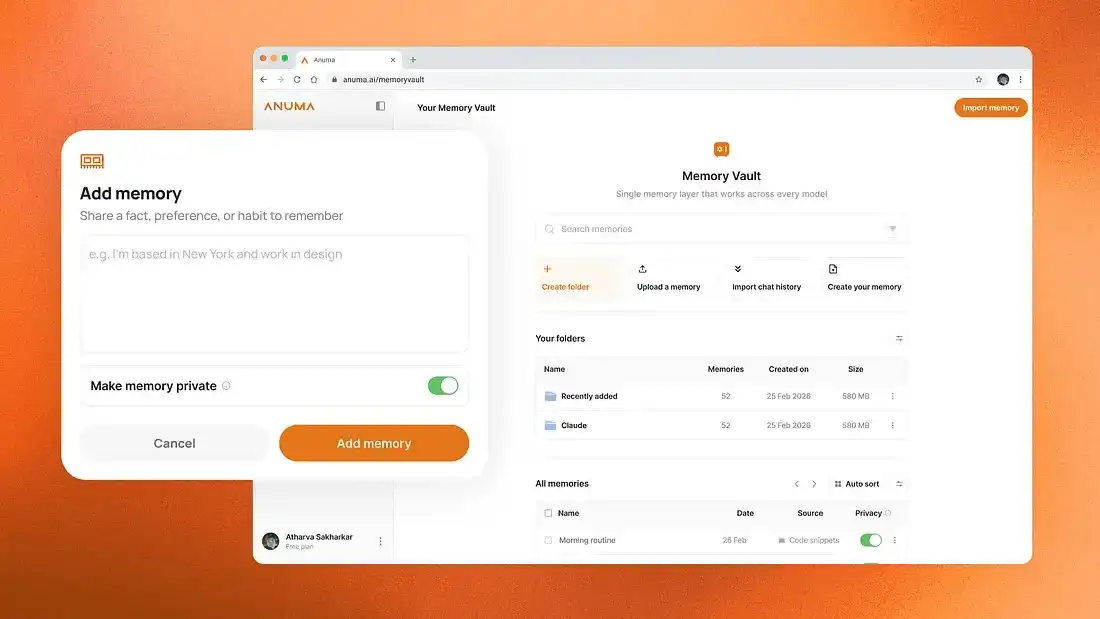
ZetaChain的AI消费级产品Anuma主张让用户拥有一套加密的私有记忆,并支持在ChatGPT、Claude、Gemini等主流不同AI模型之间无缝衔接使用。用户不必每次切换模型都重新建立背景、偏好和工作习惯,而是由用户控制访问权限,将自己的历史记忆带到不同模型和 Agent 之中。

随着 AI 逐步积累用户的使用偏好、写作习惯、工作流程和历史对话,所谓的“记忆”会越来越像一层“人格镜像”。它不仅能决定模型回答是否符合用户偏好,还可能决定模型将来替你做决定时,是不是沿着你的习惯和价值观行动。

而除了让用户拥有记忆所有权,以及面对不同任务可选择不同特长的模型外,Anuma 还在构建一种可编程、可审计、可撤销的权限系统,其允许AI agent一次性读取记录,且随时可对权限进行撤销,而所有权限变更都可以在链上被记录与追踪。

不仅如此,用户的记忆与知识图谱,也都将能够成为可共享、授权、货币化的资产,且无需暴露原始数据。这使得投资人、医生、律师以及开发者等职业的用户,可以把自己的专业知识封装成 Agent,并发布到 Agent Marketplace,在他人调用时获得收益。

从跨链到跨AI平台,ZetaChain为何转型?

使Anuma能够实现上述功能的,得益于ZetaChain开发的底层基础设施Private Memory Layer。作为一个面向 AI 的私有记忆、身份、权限、支付与智能体基础设施,其旨在让应用与智能体能够跨模型协作,同时用户始终保持控制权。

ZetaChain曾一直专注于跨链互操作基础设施,核心目标是解决不同区块链之间的资产与消息传递问题。在“统一多链入口”这件事上,其做出了相当规模的网络和叙事。据其官方数据,该区块链上有1190 万独立地址和 2.41 亿笔交易。

但随着 Anuma 于今年 4 月 27 日公开上线,并在首月用户数突破 5 万后,ZetaChain开始决定全面转向 AI,并逐步关闭跨链互操作业务。而这次转型背后,也存在着一条相对清晰的内在逻辑。
过去,ZetaChain主要处理的是链与链之间无法互通的问题。而在今天的 AI 世界里,类似的割裂同样存在。某种程度上,数字资产之于区块链,就像记忆与上下文之于AI。不同模型拥有各自封闭的记忆体系,用户一旦切换平台,长期积累的上下文与行为偏好往往也会随之中断。

随着近些年发展,ZetaChain认为,如今其面临的最大的挑战已不再是区块链之间的跨链转账,而是不同模型、不同 Agent 之间的连续性,以及用户对自身上下文的所有权问题。

a16z crypto 此前也在分析文章中提到,agent 已经开始成为经济参与者,但它们还缺少可移植的身份、可编程的支付、可验证的授权,以及跨环境协作所需的公共协调层。因此,与很多AI+Crypto项目生硬地寻找应用场景相比,ZetaChain转型的逻辑要顺畅得多。

而在商业史上,基础设施公司的成功转型并不罕见。此类公司往往不是单纯换赛道,而是基于产品逻辑追逐新的瓶颈。英伟达最初最重要的叙事是图形计算与游戏显卡,但随着 AI 兴起,其 GPU 架构最终成为整个 AI 产业的核心基础设施。基础设施从来不会永远围绕同一个约束点展开,而真正的赢家,往往是最早识别出“下一个约束点”正在出现的人。

从隐私记忆层到AI 消费层

随着 AI 的爆发式发展,未来 AI 的形态显然不会只停留在聊天窗口,而会逐渐演变成大量长期存在、彼此协作的 AI 助手。基于这一判断,ZetaChain 在提出“隐私记忆层”,并试图解决 AI 如何长期理解用户的问题之外,又进一步提出了 “AI消费层(AI Consumer Layer)”的概念,希望重新定义 AI 长期代表用户工作后,用户与 AI 之间的关系。

在 ZetaChain 的设想里,未来 AI 不只是回答问题,而会深度参与用户的工作流与日常决策。不同 AI 助手会负责不同任务,有的处理代码,有的整理财务,有的负责行程规划,还有的长期参与内容创作与研究分析。而这些 AI 如果想真正协同工作,就需要共享同一套长期上下文、身份与权限体系。

因此,所谓的“AI消费层”,本质上是在尝试把原本分散的能力整合成一套统一框架。其中,Memory 负责长期上下文,Permissions 负责权限控制,Identity 负责身份体系,Payments 负责 AI 之间的调用与支付,而 Agents 则是最终代表用户执行任务的 AI 网络。

这也是为什么“所有权”会成为 ZetaChain 反复强调的核心概念。

因为在这个体系里,用户是否仍然拥有自己的上下文、权限与身份成为了最重要的事。例如,未来一个负责代码审查的 AI,可以被临时授权读取 GitHub 仓库;一个负责税务整理的 AI,可以一次性读取报税材料;一个负责旅行安排的 AI,则只能访问出行历史与日历信息权限不再由平台统一控制,而是由用户动态分配,并能够随时撤回。

而这,也正是区块链开始重新与 AI 发生联系的原因。

当越来越多 AI 同时代表用户工作后,“谁能访问什么”、“权限是否可撤回”、“调用是否可追踪”会逐渐变成新的基础设施问题。而链上权限系统,天然适合处理这种多方协作关系。

“AI 基础设施代币”ZETA,随转型带来效用增长

随ZetaChain战略一同调整的,还有ZETA代币的功能与效用。过去,ZETA 更像传统公链代币,主要承担 Gas、验证与跨链网络安全功能,机制设计上并无太多新意。但在新叙事下,ZETA将成为一种“AI 基础设施代币”,效用也将大幅提升。

按照 ZetaChain 当前的描述,未来 ZETA 将承担几类用途:

首先是 AI 模型与 Agent 的访问权限。部分高级模型、专业 AI 工具或 Agent 服务,需要通过 ZETA 解锁或支付调用费用。

其次是 Agent 之间的支付结算。ZetaChain 提到未来不同 AI 与应用之间的交互,会通过 x402 协议完成链上支付。它的目标其实很明确:如果未来 AI 会自动调用其他 AI,那么机器之间也需要原生支付系统。
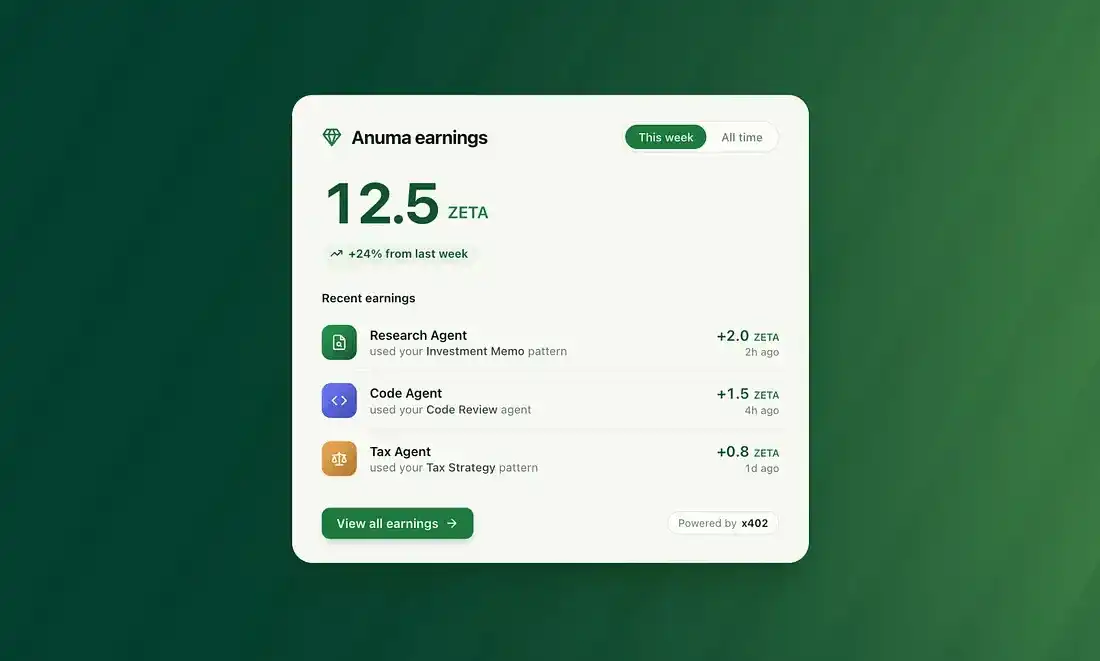
第三是权限与记忆更新的链上操作。用户对权限、访问控制与记忆状态的修改,未来可能都会变成链上记录。

第四则是创作者经济。ZetaChain 希望未来开发者、研究员、律师、医生等专业人士,可以把自己的知识封装成 AI 工具或 Agent,并通过调用获得收入,而 ZETA 则承担其中的价值流转角色。

不过,需要说明的是,这部分目前仍然更多停留在叙事阶段。因为 AI Agent 经济本身还远未成熟,真正大规模的“AI 调用 AI”、“Agent 自主支付”也还没有出现。包括 x402、链上权限、AI 身份这些概念,现在更多仍然属于基础设施预埋,而非已经被验证的大规模需求。

但 ZetaChain 及其产品逻辑之所以值得关注,并不只是因为它做了一个基础设施,配套了 AI 产品,更在于它试图重新定义未来用户的记忆、身份、上下文与 AI 权限,究竟属于平台,还是属于用户自己。而 ZetaChain想做的,本质上是让这些东西不再被平台掌控,而重新回到用户手里。


Related Questions

Q文章中提到AI竞争的新战场是什么?其核心问题是什么?

A文章中提到,AI竞争的新战场是长期记忆能力。核心问题是,AI在长期使用中逐渐积累的关于用户的工作习惯、偏好和项目背景等“记忆”和上下文,其所有权和控制权归属不清,目前被各大AI平台分割成孤岛,用户难以在不同AI模型间迁移和保留这些记忆。

QZetaChain为解决AI长期记忆的孤岛问题提出了什么核心概念和产品?

AZetaChain提出了“隐私记忆层”和“AI消费层”等核心概念,并推出了消费级产品Anuma。Anuma致力于让用户拥有一套加密的私有记忆,并能将这套记忆在不同的AI模型间无缝衔接使用,从而确保用户对自身上下文的所有权和控制权。

Q根据文章,为什么说ZetaChain从跨链业务转向AI领域有其内在逻辑?

A因为ZetaChain过去解决的是不同区块链之间的资产与消息传递问题,而当前AI领域面临类似的割裂问题:不同AI模型拥有各自封闭的记忆体系。ZetaChain认为,如今最大的挑战已从跨链转账转变为不同AI模型/Agent之间的连续性问题以及用户对上下文的所有权问题,其底层互操作性的技术逻辑可以在新的战场发挥作用。

Q在ZetaChain的设想中,未来的“AI消费层”如何重新定义用户与AI的关系?

A在“AI消费层”的设想中,未来会有大量长期存在、彼此协作的AI助手代表用户工作。用户与AI的关系将从“一次性问答”转变为“长期协作”。用户通过一个统一框架(包括记忆、权限、身份、支付和Agent网络)动态控制和管理所有AI助手,决定不同AI能访问什么信息、执行什么任务,并随时可以撤回权限,让AI真正成为受用户掌控的数字助手。

Q文章中提到,随着ZetaChain向AI转型,其代币ZETA的效用将如何变化?

A随着战略转型,ZETA将从传统的公链代币转变为“AI基础设施代币”。其效用将大幅扩展,包括用于解锁或支付高级AI模型和Agent服务的调用费用、作为未来AI之间自动调用的支付结算媒介、记录和更新用户权限与记忆的链上操作费用,以及成为AI创作者经济(如专业Agent被调用产生的收益)中的价值流转角色。

Related Reads

After Tokenization of Assets, How to Exit?

Title: How to Exit After Asset Tokenization? Author: Symbiotic Compiled by: Hu Tao, ChainCatcher Summary: Tokenization addresses how assets go on-chain but largely leaves the redemption question unresolved. While tokenized assets can settle instantly, the underlying redemption for assets like treasuries, private credit, or real estate can take from T+1 to 180 days. This gap hinders DeFi adoption of Real World Assets (RWAs). Three emerging models aim to provide instant exit liquidity, differing primarily in their capital structure and efficiency: 1. **Balance Sheet Model (e.g., Grove Basin):** A single entity (like Sky) provides immediate liquidity from its balance sheet, acting as a bridge during the settlement period. It offers simplicity and deep initial liquidity but is constrained by a single entity's capacity and risk appetite. 2. **Asset-Specific Vault Model (e.g., Upshift Clear):** Independent liquidity providers fund dedicated vaults for each supported asset, earning fees. It decentralizes capital sources but isolates liquidity and capital per asset, leading to potential fragmentation. 3. **Shared Liquidity Layer Model (e.g., Symbiotic Liquid Lane):** A shared capital pool supports multiple RWA types simultaneously. Funds remain productive between redemptions (e.g., earning yield in lending markets). Exits are settled via a competitive RFQ market. This model aims for higher capital efficiency, scalability across assets, and serves longer-duration assets like private credit. Key differentiators are: 1) Source of capital and risk bearer, 2) Redemption pricing mechanism, 3) Capital efficiency, 4) Scalability to new asset types, and 5) Composability. The shared liquidity layer model represents a move from piecemeal solutions toward scalable infrastructure, enabling T+0 exits by pooling capital, maintaining yield, and using competitive pricing, thus enhancing RWA utility in DeFi.

marsbit10m ago

After Tokenization of Assets, How to Exit?

marsbit10m ago

After Tokenizing Assets, How to Exit?

After tokenization, a key unresolved issue is providing holders with a reliable exit mechanism, as underlying asset settlement (taking days to months) lags far behind on-chain token settlement. Three primary models for instant liquidity have emerged, differing in their capital structure and efficiency: 1. **Balance Sheet Model (e.g., Grove Basin):** A single, well-capitalized entity (like Sky) provides immediate liquidity from its own reserves. This offers simplicity and deep initial liquidity but is constrained by that single balance sheet's capacity and risk appetite, limiting scalability. 2. **Dedicated Vault Model (e.g., Upshift Clear):** Independent liquidity providers (LPs) fund separate vaults for each supported asset. This decentralizes capital sources but isolates liquidity and capital, which becomes inefficient as the number of tokenized assets grows. 3. **Shared Liquidity Layer Model (Symbiotic Liquid Lane):** Independent capital providers fund shared vaults that can support multiple tokenized assets simultaneously. Capital remains productive between redemptions (e.g., earning yield in DeFi markets). Exits are settled via a competitive RFQ market where market makers bid. The article argues that the shared layer model offers superior capital efficiency and scalability. It transforms exit liquidity from an asset-specific patch into shared market infrastructure, allowing liquidity capacity to grow with overall market participation rather than being fragmented per asset. This is particularly valuable for longer-duration assets like private credit, where reliable T+0 exits can significantly enhance their utility in DeFi.

链捕手23m ago

After Tokenizing Assets, How to Exit?

链捕手23m ago

Anthropic's Triple Moment: Code Leak, Government Confrontation, and Weaponization

This article analyzes Anthropic's recent conflicts and strategic moves following the U.S. government's emergency halt of its new Fable model, citing national security concerns over potential "jailbreaks." The author argues this incident reveals deeper tensions between AI labs, governments, and the software industry. While critics view Anthropic's safety-focused rhetoric as marketing fear, the author suggests it serves as a commercial moat masking the company's core economic imperative: moving closer to end-users and their valuable data to avoid being commoditized. The piece outlines a coming clash between frontier AI labs like Anthropic and established software companies. Labs need real-world usage data for model improvement via reinforcement learning, creating a cycle where better products attract more users and more data. This threatens software firms who, as Microsoft's Satya Nadella warns, risk having their value captured by a few dominant models. Anthropic's controversial policy changes—initially secretly degrading Fable's performance for LLM development and expanding data retention—are framed as assertions of control, justified by its safety narrative. The company's foundational belief that it alone is sufficiently concerned about superintelligent AI dangers legitimizes its actions, from resisting government demands to shaping usage policies. The author concludes that this alignment of mission, talent, and business strategy is powerful but concerning, as it concentrates immense potential power in the hands of those convinced of their own righteous understanding.

marsbit33m ago

Anthropic's Triple Moment: Code Leak, Government Confrontation, and Weaponization

marsbit33m ago

Xpeng and NIO Compete on Computing Power, Li Auto Shifts Architecture

On June 15, 2026, Li Auto unveiled details of its self-developed chip, Mahe M100, for its new L9 Livis model. CTO Xie Yan stated the goal was not just a faster chip, but a fundamentally different one, targeting the chip architecture itself. While competitors like NIO, Xpeng, and Huawei highlight TOPS (computing power) figures for their self-developed chips, Li Auto’s Mahe M100 focuses on redesigning the underlying architecture. It employs a "dynamic data flow architecture" to address memory bandwidth bottlenecks in large model inference, claiming up to 3x the effective computing power of Nvidia's Thor U for its specific workloads and a 40% reduction in latency. The chip's design was peer-reviewed and accepted at ISCA 2026. However, this performance is highly optimized for Li Auto's own VLA2.1 algorithm, meaning it may not generalize as well to other tasks. Li Auto aims to achieve full-stack in-house development with Mahe M100, covering chip, compiler, OS, AI algorithms, and domain controller—a level of vertical integration few competitors match. Beyond the chip, CEO Li Xiang introduced a new strategic narrative: the "embodied intelligent vehicle," defined as an integration of an EV, a professional driver, an AI computer, and a life assistant. This shifts competition from features like large screens to systemic AI capabilities. A key commitment was that Li Auto's Mahe VLA autonomous driving model will match Tesla's FSD V14 by Q4 2026, with specific OTA milestones set for July, September, and December. Financially, Li Auto faces pressure with declining revenue and vehicle gross margins since Q4 2025, while maintaining high R&D investment (approx. ¥12B in 2026, 50% AI-related). Its 2026 sales target is 550,000 vehicles, up from 406,000 in 2025. The new L9 Livis garnered over 10,000 pre-orders in two weeks. The effectiveness of these strategic moves—new products, OTAs, and the novel chip architecture—will begin to show in Q3 2026 financial results, with the year-end FSD V14 benchmark being the ultimate test.

marsbit1h ago

Xpeng and NIO Compete on Computing Power, Li Auto Shifts Architecture

marsbit1h ago

Trading

Spot
Futures

Hot Articles

How to Buy ZEN

Welcome to HTX.com! We've made purchasing Horizen (ZEN) simple and convenient. Follow our step-by-step guide to embark on your crypto journey.Step 1: Create Your HTX AccountUse your email or phone number to sign up for a free account on HTX. Experience a hassle-free registration journey and unlock all features.Get My AccountStep 2: Go to Buy Crypto and Choose Your Payment MethodCredit/Debit Card: Use your Visa or Mastercard to buy Horizen (ZEN) instantly.Balance: Use funds from your HTX account balance to trade seamlessly.Third Parties: We've added popular payment methods such as Google Pay and Apple Pay to enhance convenience.P2P: Trade directly with other users on HTX.Over-the-Counter (OTC): We offer tailor-made services and competitive exchange rates for traders.Step 3: Store Your Horizen (ZEN)After purchasing your Horizen (ZEN), store it in your HTX account. Alternatively, you can send it elsewhere via blockchain transfer or use it to trade other cryptocurrencies.Step 4: Trade Horizen (ZEN)Easily trade Horizen (ZEN) on HTX's spot market. Simply access your account, select your trading pair, execute your trades, and monitor in real-time. We offer a user-friendly experience for both beginners and seasoned traders.

3.2k Total ViewsPublished 2024.03.29Updated 2026.06.02

How to Buy ZEN

Discussions

Welcome to the HTX Community. Here, you can stay informed about the latest platform developments and gain access to professional market insights. Users' opinions on the price of ZEN (ZEN) are presented below.

活动图片