Elon Musk 'exprimiendo a los jubilados'

marsbitPublished on 2026-05-28Last updated on 2026-05-28

Abstract

Con el título "马斯克 '崩老头'", el artículo expone cómo la próxima mega-OPI de SpaceX, valorada en billones, podría crear el primer billonario del mundo, Elon Musk, y generar enormes ganancias para inversores iniciales como Google y Founders Fund. Sin embargo, plantea una crítica: esta narrativa espacial, respaldada por una compañía con pérdidas masivas y una estructura de gobierno donde Musk controla el 85% del voto, necesitará nuevos compradores. La respuesta, según el artículo, está en los fondos de pensiones estadounidenses. Reglas modificadas en índices como el Nasdaq 100 (reduciendo el tiempo de inclusión a 15 días hábiles) y el S&P 500 (considerando acortar el período de cotización requerido) allanarían el camino para que SpaceX entre rápidamente en los principales ETF e índices. Esto obligaría a los billones de dólares en fondos de inversión pasiva (como los de los planes 401(k) y pensiones) a comprar acciones automáticamente, sin evaluar la valoración o la rentabilidad de la empresa. El artículo advierte que este mecanismo transfiere el riesgo y el costo de la "salida" de los primeros inversores a los ahorradores pasivos, como los jubilados. Grandes fondos de pensiones públicos, como CalPERS, ya han expresado su oposición a la extrema estructura de control de Musk. En esencia, el artículo sostiene que los ahorros para la jubilación de los estadounidenses podrían terminar financiando el sueño espacial de Musk, en lo que califica como el mayor juego de "崩老头" (explotar a l...

Autora: Nancy, PANews

Mientras el sector del almacenamiento está en plena efervescencia, con Micron y SK Hynix superando la barrera del billón de dólares en capitalización bursátil, Elon Musk también está acelerando su leyenda personal hacia un patrimonio billonario.

SpaceX, con su estratosférica valoración, acelera su camino hacia el mercado de capitales. Esta super-OPV que podría reescribir la historia de la riqueza está impulsando a Musk hacia el primer trillón del mundo, al tiempo que permite a sus primeros aliados obtener rendimientos asombrosos, de cien o incluso mil veces su inversión.

Sin embargo, para que esta narrativa espacial más cara de la historia humana pueda continuar, al final se necesitan nuevos pagadores. Con la "compra forzosa" de los voluminosos fondos de pensiones, las pensiones de los estadounidenses se convierten en el combustible del sueño espacial de Musk.
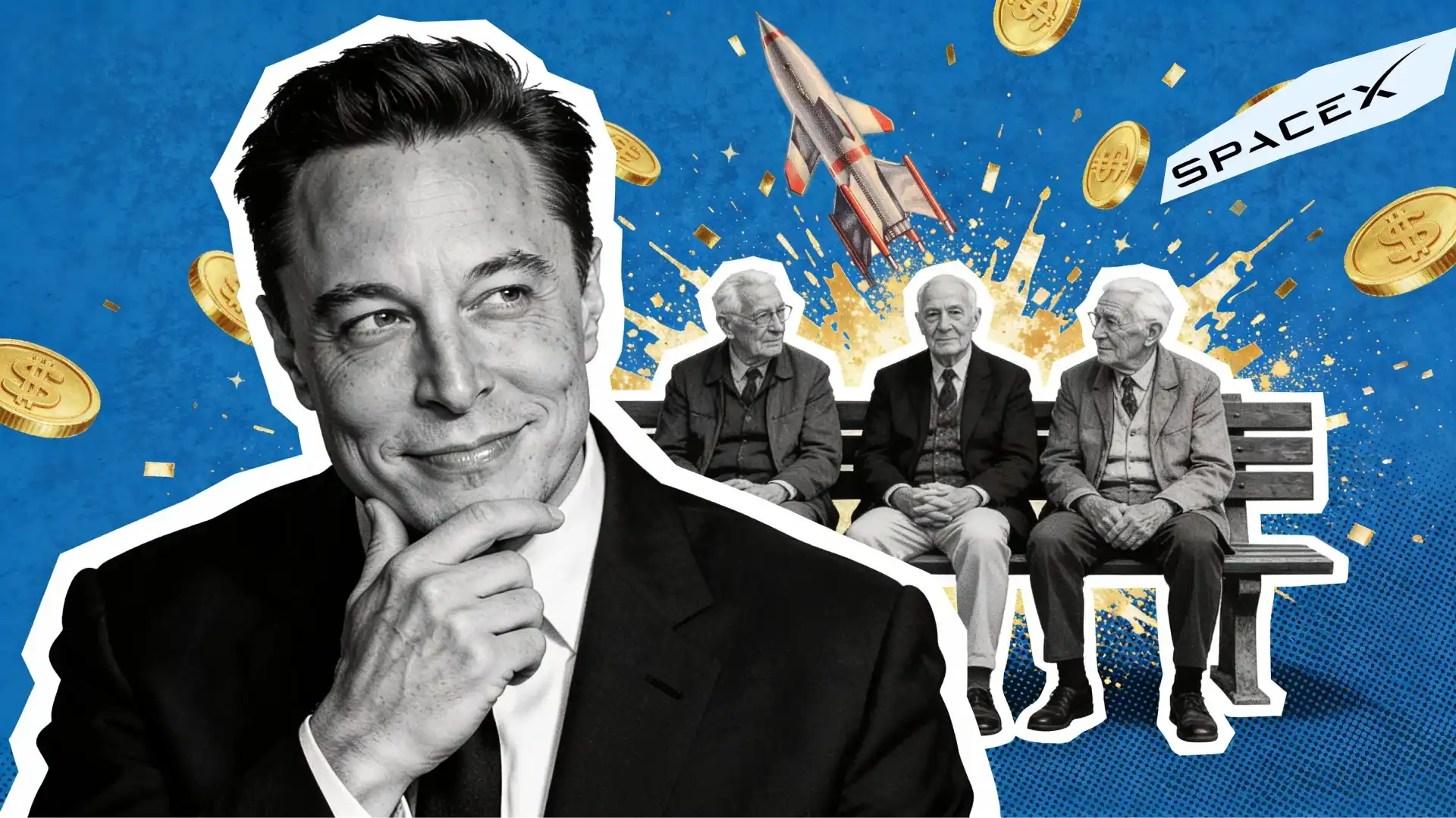
Elon Musk está haciendo que los jubilados estadounidenses "suelten la pasta".

La cuenta atrás de la mayor OPV de la historia: los primeros aliados se forran

Wall Street lleva años esperando la salida a bolsa de SpaceX.

En la última década, la compañía ha pasado de ser una startup valorada en solo 27 millones de dólares a convertirse en un superunicornio con una valoración cercana a 1,75-2 billones de dólares, una de las empresas privadas más valiosas del mundo.

Ahora, esta super-OPV finalmente podría comenzar a cotizar oficialmente el 12 de junio. No solo es el mayor evento de OPV de la historia humana, sino que también significa que el festín de riqueza entra en su fase de realización. Los seguidores de largo plazo de Musk finalmente reciben suculentas recompensas.

Por ejemplo, Google, a través de su inversión temprana, podría ser el mayor ganador externo. A finales de 2025, poseía aproximadamente un 6,11% de las acciones de SpaceX. Su inversión de solo 9000 millones de dólares de entonces ahora tiene un valor cercano a los 1200 billones; Valor Equity Partners, como el accionista más importante después de Musk, posee más de 500 millones de acciones de clase A de SpaceX, con un valor patrimonial estimado entre 90 y 140 billones de dólares; El Founders Fund de Peter Thiel, mediante múltiples rondas de inversión adicionales, posee aproximadamente un 3,5% de las acciones, con ganancias en papel superiores a los 60 billones de dólares; Fidelity, como uno de los principales inversores institucionales en la ronda conjunta de 2015, tiene participaciones valoradas en unos 35 billones de dólares; Incluso Sequoia Capital, que entró relativamente tarde, obtendrá rendimientos considerables, esperándose más de 20 billones de dólares.

En cuanto al propio Musk, tiene el potencial de convertirse en el primer billonario del mundo.

El estratega de Bank of America, Michael Hartnett, advirtió en un informe reciente que una vez que se materialicen super-OPV como las de SpaceX y OpenAI, el peso de las acciones tecnológicas en los índices de referencia bursátil superará fácilmente el 48%, superando los niveles de concentración del mercado en todos los períodos de burbujas importantes de la historia, como los "locos años 20", los "Nifty Fifty" de los 70, la burbuja japonesa de los 80 y la burbuja de las puntocom de los 90.

Sin embargo, una valoración tan descomunal, ¿quién deberá asumirla al final?

Para reducir la presión vendedora después de la salida a bolsa y mantener estable el precio de las acciones, SpaceX también ha realizado algunos ajustes. Por ejemplo, las acciones de los 'insiders' estarán sujetas a un mecanismo de desbloqueo escalonado, en lugar del período de bloqueo unificado de 6 meses común en las OPV tradicionales; al mismo tiempo, la compañía también aprobó una división (split) de acciones ordinarias de 1 por 5 para reducir la barrera psicológica de los pequeños inversores y mejorar la liquidez. Musk incluso declaró públicamente que no venderá ninguna acción de SpaceX.

Pero la preocupación del mercado no desaparece por ello. Dejando a un lado la incertidumbre de la gran narrativa de Marte, mirando solo los datos financieros, SpaceX sigue siendo una empresa que quema dinero a gran velocidad. El prospecto muestra que solo en el primer trimestre de 2026, SpaceX tuvo una pérdida neta de casi 4.300 millones de dólares, casi equivalente a las pérdidas de todo el año anterior. Al mismo tiempo, Musk controla el 85% de los votos absolutos, lo que significa que es prácticamente imposible que la junta directiva lo despida, y los accionistas externos casi no pueden impulsar ninguna decisión comercial importante.
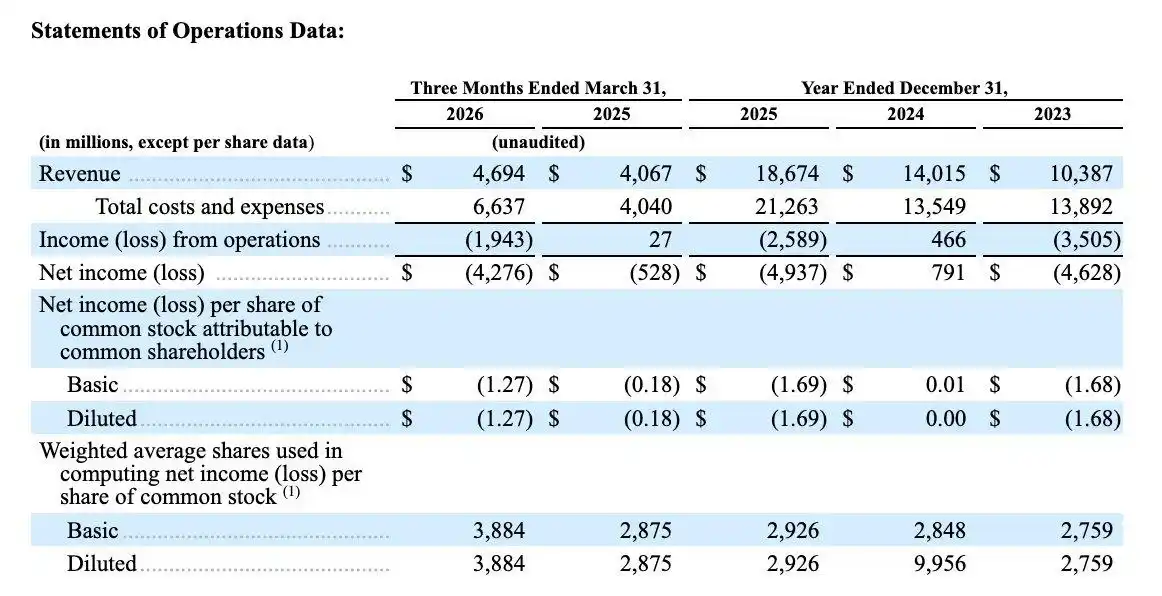
En cierta medida, SpaceX es una empresa altamente "muskizada"; su valoración, gobernanza e incluso sus expectativas futuras están profundamente ligadas a la persona de Musk.

Cuando todos los primeros inversores ya han ganado dinero a espuertas, ¿quién estaría dispuesto a comprar a precio elevado este billete para la nave espacial que ya es absurdamente caro?

Wall Street prepara el carril rápido de los índices: los fondos de pensiones estadounidenses se convierten en el "tonto útil"

Las pensiones de los estadounidenses podrían convertirse en el combustible potencial del sueño espacial de Musk.

Wall Street ya ha comenzado a abrir un carril rápido para las super-OPV. El 1 de mayo de este año, entraron en vigor las nuevas reglas de Nasdaq, según las cuales las nuevas empresas que cotizan en bolsa y se sitúan entre las 40 primeras del Nasdaq 100 pueden ser incluidas en el índice en solo 15 días hábiles, en lugar de los aproximadamente 3 meses de espera habituales.

S&P también inició una consulta en mayo, proponiendo reducir el tiempo mínimo de cotización requerido para la inclusión de 12 a 6 meses, y considerando eximir a las empresas supergrandes del requisito de rentabilidad. FTSE Russell también ha relajado sus restricciones, permitiendo que las grandes OPV sean evaluadas para su posible inclusión en los índices Russell U.S. Equity Indexes (incluidos Russell 1000, Top 200, etc.) a partir del quinto día hábil tras su salida a bolsa, sin necesidad de esperar a la revisión trimestral.

El relajamiento silencioso de las reglas por parte de los principales índices estadounidenses prepara, sin duda, una pista de aterrizaje exclusiva para SpaceX.

Según reveló Business Insider, SpaceX podría entrar rápidamente en los índices principales y los ETF tras su salida a bolsa. La velocidad de asignación de capital pasivo podría ser muy superior a la de grandes OPV anteriores. Por ejemplo, el índice CRSP, que siguen el VTI de Vanguard y el ETF de crecimiento VUG, podría incluir a SpaceX tan pronto como 5 días hábiles después de su OPV; el Nasdaq 100, seguido por el QQQ, podría incluirlo en 15 días hábiles; el S&P 500, seguido por el SPY, podría incluirlo en 2027 tras la modificación de las reglas, etc.

En el sistema de jubilación estadounidense, una gran cantidad de cuentas 401(k), fondos de pensiones y ahorros a largo plazo utilizan estrategias de inversión pasiva indexada. Los fondos suelen asignar automáticamente activos según los componentes del índice y su ponderación en la capitalización bursátil.

Esta estrategia se originó con el primer fondo índice para inversores minoristas lanzado en 1976 por el padre de los fondos índice, John Bogle, con el principio central de "replicar el mercado en lugar de vencerlo". Gracias a sus bajísimas comisiones de gestión y su alta diversificación, se convirtió en la opción preferida para las cuentas de pensiones y 401(k). Hasta la fecha, el total de activos para la jubilación en EE.UU. supera los 49 billones de dólares.
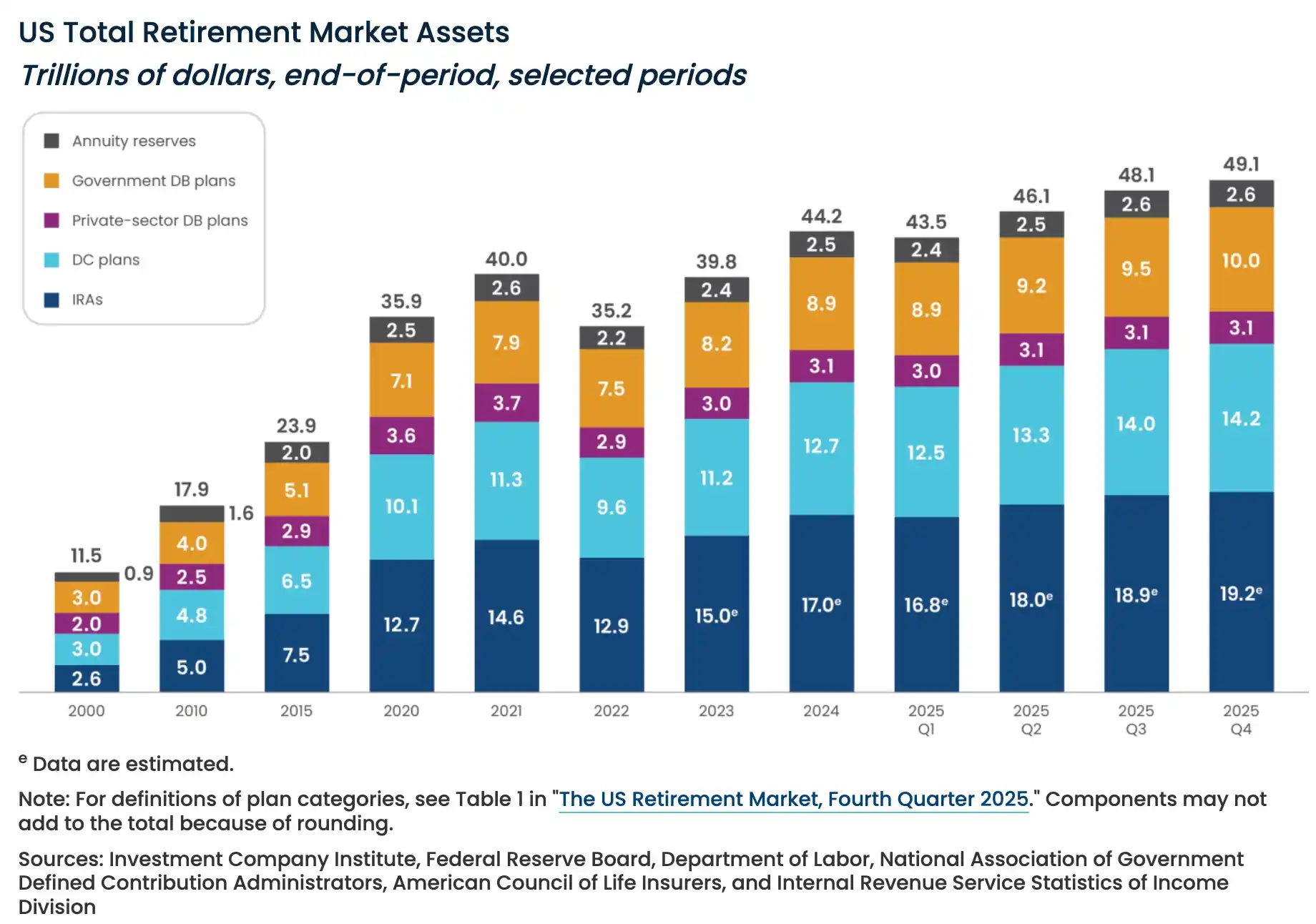
Esto significa que una vez que SpaceX sea incluida en un índice, todos los fondos que sigan ese índice de referencia comprarán por obligación según su ponderación, sin analizar la valoración, sin juzgar si hay burbuja, e incluso sin importarles si la empresa es rentable.

Sin embargo, este juego ya ha provocado un fuerte descontento en el sistema de pensiones.

Hace poco, la Federación Americana de Profesores envió una carta a la SEC instando a un mayor escrutinio de la salida a bolsa de SpaceX, advirtiendo que los ahorros de toda una vida de los trabajadores podrían quedar controlados por una empresa que se parece más a una empresa familiar de los Musk que a una empresa pública transparente.

Al mismo tiempo, tres de los mayores fondos de pensiones públicos de EE.UU. (CalPERS, y los sistemas de pensiones del estado y la ciudad de Nueva York), que gestionan activos por más de un billón de dólares, también enviaron una carta conjunta a Musk expresando su firme oposición a la extrema estructura de gobierno de SpaceX, incluidos los superderechos de voto, el poder de veto sobre su propio despido como CEO y el derecho a estar exento de demandas.

Señalaron que Musk dirige simultáneamente SpaceX, Tesla, xAI, Neuralink y otras compañías, lo que supone un enorme riesgo de dispersión de atención. La carta exige a SpaceX que avance gradualmente hacia una acción-un voto en los próximos siete años, establezca una junta directiva con mayoría de accionistas externos, separe los cargos de CEO y presidente, y elimine el poder de veto de Musk sobre sí mismo.

Este cambio de reglas diseñado por Wall Street para las super-OPV vincula finalmente los ahorros para la jubilación de decenas de millones de estadounidenses con el grandioso sueño espacial de Musk. Después de que los primeros inversores disfruten de rendimientos multiplicados por cien, el costo restante de "recoger el testigo" se transfiere a los inversores pasivos que no tienen capacidad de elección.

El mayor juego de "exprimir a los jubilados" de la historia, amparado en el nombre de los índices, está levantando oficialmente el telón.


Related Questions

Q¿Cuál es el posible impacto de la OPV de SpaceX en los fondos de pensiones estadounidenses según el artículo?

ASegún el artículo, los fondos de pensiones estadounidenses, gestionados a través de estrategias de inversión pasiva en índices, podrían convertirse en los principales compradores (o 'soportes') de las acciones de SpaceX una vez que la empresa se incluya en los principales índices bursátiles. Esto se debe a que los fondos que replican esos índices se verían obligados a comprar las acciones automáticamente, independientemente de la valoración o la rentabilidad de la empresa, vinculando potencialmente los ahorros para la jubilación de millones de personas con el riesgo y la narrativa de SpaceX.

Q¿Por qué algunos fondos de pensiones importantes han expresado su preocupación por la estructura de gobierno de SpaceX?

AGrandes fondos de pensiones públicos como CalPERS han expresado su preocupación por la extrema estructura de gobierno de SpaceX, que incluye acciones con superderecho a voto para Elon Musk (control del 85% de los votos), su poder para vetar su propio despido como CEO, y su inmunidad frente a demandas. Consideran que esta estructura, similar a la de una empresa familiar, carece de transparencia y protección para los accionistas externos, y supone un riesgo dado el reparto de atención de Musk entre múltiples empresas.

Q¿Qué cambios en las reglas de los índices bursátiles menciona el artículo que beneficiarían la OPV de SpaceX?

AEl artículo menciona que Nasdaq, S&P y FTSE Russell han modificado o están considerando modificar sus reglas para acelerar la inclusión de grandes OPVs en sus índices. Por ejemplo, Nasdaq redujo el tiempo mínimo para entrar en el Nasdaq-100 a 15 días hábiles si la empresa está entre las 40 primeras por capitalización. Estos cambios allanan el camino para que SpaceX, dada su enorme valoración, entre rápidamente en los índices principales, desencadenando así compras automáticas por parte de fondos indexados.

Q¿Qué ganancias obtuvieron los primeros inversores en SpaceX según el texto?

ALos primeros inversores en SpaceX obtuvieron retornos extraordinarios. Por ejemplo, la inversión inicial de Google de 900 millones de dólares ahora valdría unos 120.000 millones. Otros como Valor Equity Partners, Founders Fund (de Peter Thiel), Fidelity y Sequoia Capital también han visto multiplicar el valor de sus participaciones, con ganancias que van desde los 200.000 millones hasta cientos de miles de millones de dólares, convirtiendo esta OPV en un momento de gran liquidación de ganancias para los aliados iniciales.

Q¿Cómo describe el artículo la situación financiera actual de SpaceX antes de su OPV?

AEl artículo describe que SpaceX sigue siendo una empresa con altas pérdidas financieras. Según el prospecto, en el primer trimestre de 2026 la compañía registró una pérdida neta de aproximadamente 4.300 millones de dólares, cifra cercana a las pérdidas de todo el año anterior. Esto subraya la desconexión entre su enorme valoración de mercado (cerca de 1,75-2 billones de dólares) y sus resultados financieros actuales, lo que genera dudas sobre quién asumirá el riesgo a estos precios una vez que los inversores iniciales cobren sus ganancias.

Related Reads

Warsh's Debut: Will the FED Chair Who Knows Crypto Best Bring Surprises or Shocks to the Market?

Kevin Warsh, the new Federal Reserve Chairman, prepares for his inaugural press conference amidst a challenging macroeconomic landscape: resurgent inflation, a bond market sell-off, and political pressure from President Trump for rate cuts. Uniquely, Warsh holds indirect investments in over 20 crypto and Web3 entities (e.g., Solana, dYdX), making him the first Fed Chair with disclosed crypto exposure. His stance may combine a hawkish, inflation-focused monetary policy with a crypto-friendly regulatory philosophy that shifts from Powell’s “same risk, same rule” approach toward a framework acknowledging blockchain’s productivity value. Warsh’s leadership could impact crypto markets across three dimensions: a paradigm shift in regulation (potentially accelerating pro-innovation legislation and stable币 rules), a re-pricing of risk premiums based on clearer communication and his view of AI as a structural disinflationary force, and a long-term reallocation of global institutional capital driven by increased legitimacy. Two potential scenarios for the press conference are outlined. A “positive surprise” would involve a dovish-leaning tone on rates coupled with signals of regulatory openness, potentially boosting crypto asset valuations. Conversely, a “negative shock” would see a more hawkish-than-expected stance on inflation and rates, triggering a broad risk-asset selloff that crypto markets would not escape. While ethics rules required Warsh to divest his crypto holdings upon confirmation, his deep understanding of the technology may fundamentally lower policy uncertainty and build a more receptive long-term foundation for digital assets’ integration into the mainstream financial system.

marsbit8h ago

Warsh's Debut: Will the FED Chair Who Knows Crypto Best Bring Surprises or Shocks to the Market?

marsbit8h ago

Trading

Spot
Futures

Hot Articles

What is SONIC

Sonic: Pioneering the Future of Gaming in Web3 Introduction to Sonic In the ever-evolving landscape of Web3, the gaming industry stands out as one of the most dynamic and promising sectors. At the forefront of this revolution is Sonic, a project designed to amplify the gaming ecosystem on the Solana blockchain. Leveraging cutting-edge technology, Sonic aims to deliver an unparalleled gaming experience by efficiently processing millions of requests per second, ensuring that players enjoy seamless gameplay while maintaining low transaction costs. This article delves into the intricate details of Sonic, exploring its creators, funding sources, operational mechanics, and the timeline of significant events that have shaped its journey. What is Sonic? Sonic is an innovative layer-2 network that operates atop the Solana blockchain, specifically tailored to enhance the existing Solana gaming ecosystem. It accomplishes this through a customised, VM-agnostic game engine paired with a HyperGrid interpreter, facilitating sovereign game economies that roll up back to the Solana platform. The primary goals of Sonic include: Enhanced Gaming Experiences: Sonic is committed to offering lightning-fast on-chain gameplay, allowing players and developers to engage with games at previously unattainable speeds. Atomic Interoperability: This feature enables transactions to be executed within Sonic without the need to redeploy Solana programmes and accounts. This makes the process more efficient and directly benefits from Solana Layer1 services and liquidity. Seamless Deployment: Sonic allows developers to write for Ethereum Virtual Machine (EVM) based systems and execute them on Solana’s SVM infrastructure. This interoperability is crucial for attracting a broader range of dApps and decentralised applications to the platform. Support for Developers: By offering native composable gaming primitives and extensible data types - dining within the Entity-Component-System (ECS) framework - game creators can craft intricate business logic with ease. Overall, Sonic's unique approach not only caters to players but also provides an accessible and low-cost environment for developers to innovate and thrive. Creator of Sonic The information regarding the creator of Sonic is somewhat ambiguous. However, it is known that Sonic's SVM is owned by the company Mirror World. The absence of detailed information about the individuals behind Sonic reflects a common trend in several Web3 projects, where collective efforts and partnerships often overshadow individual contributions. Investors of Sonic Sonic has garnered considerable attention and support from various investors within the crypto and gaming sectors. Notably, the project raised an impressive $12 million during its Series A funding round. The round was led by BITKRAFT Ventures, with other notable investors including Galaxy, Okx Ventures, Interactive, Big Brain Holdings, and Mirana. This financial backing signifies the confidence that investment foundations have in Sonic’s potential to revolutionise the Web3 gaming landscape, further validating its innovative approaches and technologies. How Does Sonic Work? Sonic utilises the HyperGrid framework, a sophisticated parallel processing mechanism that enhances its scalability and customisability. Here are the core features that set Sonic apart: Lightning Speed at Low Costs: Sonic offers one of the fastest on-chain gaming experiences compared to other Layer-1 solutions, powered by the scalability of Solana’s virtual machine (SVM). Atomic Interoperability: Sonic enables transaction execution without redeployment of Solana programmes and accounts, effectively streamlining the interaction between users and the blockchain. EVM Compatibility: Developers can effortlessly migrate decentralised applications from EVM chains to the Solana environment using Sonic’s HyperGrid interpreter, increasing the accessibility and integration of various dApps. Ecosystem Support for Developers: By exposing native composable gaming primitives, Sonic facilitates a sandbox-like environment where developers can experiment and implement business logic, greatly enhancing the overall development experience. Monetisation Infrastructure: Sonic natively supports growth and monetisation efforts, providing frameworks for traffic generation, payments, and settlements, thereby ensuring that gaming projects are not only viable but also sustainable financially. Timeline of Sonic The evolution of Sonic has been marked by several key milestones. Below is a brief timeline highlighting critical events in the project's history: 2022: The Sonic cryptocurrency was officially launched, marking the beginning of its journey in the Web3 gaming arena. 2024: June: Sonic SVM successfully raised $12 million in a Series A funding round. This investment allowed Sonic to further develop its platform and expand its offerings. August: The launch of the Sonic Odyssey testnet provided users with the first opportunity to engage with the platform, offering interactive activities such as collecting rings—a nod to gaming nostalgia. October: SonicX, an innovative crypto game integrated with Solana, made its debut on TikTok, capturing the attention of over 120,000 users within a short span. This integration illustrated Sonic’s commitment to reaching a broader, global audience and showcased the potential of blockchain gaming. Key Points Sonic SVM is a revolutionary layer-2 network on Solana explicitly designed to enhance the GameFi landscape, demonstrating great potential for future development. HyperGrid Framework empowers Sonic by introducing horizontal scaling capabilities, ensuring that the network can handle the demands of Web3 gaming. Integration with Social Platforms: The successful launch of SonicX on TikTok displays Sonic’s strategy to leverage social media platforms to engage users, exponentially increasing the exposure and reach of its projects. Investment Confidence: The substantial funding from BITKRAFT Ventures, among others, emphasizes the robust backing Sonic has, paving the way for its ambitious future. In conclusion, Sonic encapsulates the essence of Web3 gaming innovation, striking a balance between cutting-edge technology, developer-centric tools, and community engagement. As the project continues to evolve, it is poised to redefine the gaming landscape, making it a notable entity for gamers and developers alike. As Sonic moves forward, it will undoubtedly attract greater interest and participation, solidifying its place within the broader narrative of blockchain gaming.

1.7k Total ViewsPublished 2024.04.04Updated 2024.12.03

What is SONIC

What is $S$

Understanding SPERO: A Comprehensive Overview Introduction to SPERO As the landscape of innovation continues to evolve, the emergence of web3 technologies and cryptocurrency projects plays a pivotal role in shaping the digital future. One project that has garnered attention in this dynamic field is SPERO, denoted as SPERO,$$s$. This article aims to gather and present detailed information about SPERO, to help enthusiasts and investors understand its foundations, objectives, and innovations within the web3 and crypto domains. What is SPERO,$$s$? SPERO,$$s$ is a unique project within the crypto space that seeks to leverage the principles of decentralisation and blockchain technology to create an ecosystem that promotes engagement, utility, and financial inclusion. The project is tailored to facilitate peer-to-peer interactions in new ways, providing users with innovative financial solutions and services. At its core, SPERO,$$s$ aims to empower individuals by providing tools and platforms that enhance user experience in the cryptocurrency space. This includes enabling more flexible transaction methods, fostering community-driven initiatives, and creating pathways for financial opportunities through decentralised applications (dApps). The underlying vision of SPERO,$$s$ revolves around inclusiveness, aiming to bridge gaps within traditional finance while harnessing the benefits of blockchain technology. Who is the Creator of SPERO,$$s$? The identity of the creator of SPERO,$$s$ remains somewhat obscure, as there are limited publicly available resources providing detailed background information on its founder(s). This lack of transparency can stem from the project's commitment to decentralisation—an ethos that many web3 projects share, prioritising collective contributions over individual recognition. By centring discussions around the community and its collective goals, SPERO,$$s$ embodies the essence of empowerment without singling out specific individuals. As such, understanding the ethos and mission of SPERO remains more important than identifying a singular creator. Who are the Investors of SPERO,$$s$? SPERO,$$s$ is supported by a diverse array of investors ranging from venture capitalists to angel investors dedicated to fostering innovation in the crypto sector. The focus of these investors generally aligns with SPERO's mission—prioritising projects that promise societal technological advancement, financial inclusivity, and decentralised governance. These investor foundations are typically interested in projects that not only offer innovative products but also contribute positively to the blockchain community and its ecosystems. The backing from these investors reinforces SPERO,$$s$ as a noteworthy contender in the rapidly evolving domain of crypto projects. How Does SPERO,$$s$ Work? SPERO,$$s$ employs a multi-faceted framework that distinguishes it from conventional cryptocurrency projects. Here are some of the key features that underline its uniqueness and innovation: Decentralised Governance: SPERO,$$s$ integrates decentralised governance models, empowering users to participate actively in decision-making processes regarding the project’s future. This approach fosters a sense of ownership and accountability among community members. Token Utility: SPERO,$$s$ utilises its own cryptocurrency token, designed to serve various functions within the ecosystem. These tokens enable transactions, rewards, and the facilitation of services offered on the platform, enhancing overall engagement and utility. Layered Architecture: The technical architecture of SPERO,$$s$ supports modularity and scalability, allowing for seamless integration of additional features and applications as the project evolves. This adaptability is paramount for sustaining relevance in the ever-changing crypto landscape. Community Engagement: The project emphasises community-driven initiatives, employing mechanisms that incentivise collaboration and feedback. By nurturing a strong community, SPERO,$$s$ can better address user needs and adapt to market trends. Focus on Inclusion: By offering low transaction fees and user-friendly interfaces, SPERO,$$s$ aims to attract a diverse user base, including individuals who may not previously have engaged in the crypto space. This commitment to inclusion aligns with its overarching mission of empowerment through accessibility. Timeline of SPERO,$$s$ Understanding a project's history provides crucial insights into its development trajectory and milestones. Below is a suggested timeline mapping significant events in the evolution of SPERO,$$s$: Conceptualisation and Ideation Phase: The initial ideas forming the basis of SPERO,$$s$ were conceived, aligning closely with the principles of decentralisation and community focus within the blockchain industry. Launch of Project Whitepaper: Following the conceptual phase, a comprehensive whitepaper detailing the vision, goals, and technological infrastructure of SPERO,$$s$ was released to garner community interest and feedback. Community Building and Early Engagements: Active outreach efforts were made to build a community of early adopters and potential investors, facilitating discussions around the project’s goals and garnering support. Token Generation Event: SPERO,$$s$ conducted a token generation event (TGE) to distribute its native tokens to early supporters and establish initial liquidity within the ecosystem. Launch of Initial dApp: The first decentralised application (dApp) associated with SPERO,$$s$ went live, allowing users to engage with the platform's core functionalities. Ongoing Development and Partnerships: Continuous updates and enhancements to the project's offerings, including strategic partnerships with other players in the blockchain space, have shaped SPERO,$$s$ into a competitive and evolving player in the crypto market. Conclusion SPERO,$$s$ stands as a testament to the potential of web3 and cryptocurrency to revolutionise financial systems and empower individuals. With a commitment to decentralised governance, community engagement, and innovatively designed functionalities, it paves the way toward a more inclusive financial landscape. As with any investment in the rapidly evolving crypto space, potential investors and users are encouraged to research thoroughly and engage thoughtfully with the ongoing developments within SPERO,$$s$. The project showcases the innovative spirit of the crypto industry, inviting further exploration into its myriad possibilities. While the journey of SPERO,$$s$ is still unfolding, its foundational principles may indeed influence the future of how we interact with technology, finance, and each other in interconnected digital ecosystems.

58 Total ViewsPublished 2024.12.17Updated 2024.12.17

What is $S$

What is AGENT S

Agent S: The Future of Autonomous Interaction in Web3 Introduction In the ever-evolving landscape of Web3 and cryptocurrency, innovations are constantly redefining how individuals interact with digital platforms. One such pioneering project, Agent S, promises to revolutionise human-computer interaction through its open agentic framework. By paving the way for autonomous interactions, Agent S aims to simplify complex tasks, offering transformative applications in artificial intelligence (AI). This detailed exploration will delve into the project's intricacies, its unique features, and the implications for the cryptocurrency domain. What is Agent S? Agent S stands as a groundbreaking open agentic framework, specifically designed to tackle three fundamental challenges in the automation of computer tasks: Acquiring Domain-Specific Knowledge: The framework intelligently learns from various external knowledge sources and internal experiences. This dual approach empowers it to build a rich repository of domain-specific knowledge, enhancing its performance in task execution. Planning Over Long Task Horizons: Agent S employs experience-augmented hierarchical planning, a strategic approach that facilitates efficient breakdown and execution of intricate tasks. This feature significantly enhances its ability to manage multiple subtasks efficiently and effectively. Handling Dynamic, Non-Uniform Interfaces: The project introduces the Agent-Computer Interface (ACI), an innovative solution that enhances the interaction between agents and users. Utilizing Multimodal Large Language Models (MLLMs), Agent S can navigate and manipulate diverse graphical user interfaces seamlessly. Through these pioneering features, Agent S provides a robust framework that addresses the complexities involved in automating human interaction with machines, setting the stage for myriad applications in AI and beyond. Who is the Creator of Agent S? While the concept of Agent S is fundamentally innovative, specific information about its creator remains elusive. The creator is currently unknown, which highlights either the nascent stage of the project or the strategic choice to keep founding members under wraps. Regardless of anonymity, the focus remains on the framework's capabilities and potential. Who are the Investors of Agent S? As Agent S is relatively new in the cryptographic ecosystem, detailed information regarding its investors and financial backers is not explicitly documented. The lack of publicly available insights into the investment foundations or organisations supporting the project raises questions about its funding structure and development roadmap. Understanding the backing is crucial for gauging the project's sustainability and potential market impact. How Does Agent S Work? At the core of Agent S lies cutting-edge technology that enables it to function effectively in diverse settings. Its operational model is built around several key features: Human-like Computer Interaction: The framework offers advanced AI planning, striving to make interactions with computers more intuitive. By mimicking human behaviour in tasks execution, it promises to elevate user experiences. Narrative Memory: Employed to leverage high-level experiences, Agent S utilises narrative memory to keep track of task histories, thereby enhancing its decision-making processes. Episodic Memory: This feature provides users with step-by-step guidance, allowing the framework to offer contextual support as tasks unfold. Support for OpenACI: With the ability to run locally, Agent S allows users to maintain control over their interactions and workflows, aligning with the decentralised ethos of Web3. Easy Integration with External APIs: Its versatility and compatibility with various AI platforms ensure that Agent S can fit seamlessly into existing technological ecosystems, making it an appealing choice for developers and organisations. These functionalities collectively contribute to Agent S's unique position within the crypto space, as it automates complex, multi-step tasks with minimal human intervention. As the project evolves, its potential applications in Web3 could redefine how digital interactions unfold. Timeline of Agent S The development and milestones of Agent S can be encapsulated in a timeline that highlights its significant events: September 27, 2024: The concept of Agent S was launched in a comprehensive research paper titled “An Open Agentic Framework that Uses Computers Like a Human,” showcasing the groundwork for the project. October 10, 2024: The research paper was made publicly available on arXiv, offering an in-depth exploration of the framework and its performance evaluation based on the OSWorld benchmark. October 12, 2024: A video presentation was released, providing a visual insight into the capabilities and features of Agent S, further engaging potential users and investors. These markers in the timeline not only illustrate the progress of Agent S but also indicate its commitment to transparency and community engagement. Key Points About Agent S As the Agent S framework continues to evolve, several key attributes stand out, underscoring its innovative nature and potential: Innovative Framework: Designed to provide an intuitive use of computers akin to human interaction, Agent S brings a novel approach to task automation. Autonomous Interaction: The ability to interact autonomously with computers through GUI signifies a leap towards more intelligent and efficient computing solutions. Complex Task Automation: With its robust methodology, it can automate complex, multi-step tasks, making processes faster and less error-prone. Continuous Improvement: The learning mechanisms enable Agent S to improve from past experiences, continually enhancing its performance and efficacy. Versatility: Its adaptability across different operating environments like OSWorld and WindowsAgentArena ensures that it can serve a broad range of applications. As Agent S positions itself in the Web3 and crypto landscape, its potential to enhance interaction capabilities and automate processes signifies a significant advancement in AI technologies. Through its innovative framework, Agent S exemplifies the future of digital interactions, promising a more seamless and efficient experience for users across various industries. Conclusion Agent S represents a bold leap forward in the marriage of AI and Web3, with the capacity to redefine how we interact with technology. While still in its early stages, the possibilities for its application are vast and compelling. Through its comprehensive framework addressing critical challenges, Agent S aims to bring autonomous interactions to the forefront of the digital experience. As we move deeper into the realms of cryptocurrency and decentralisation, projects like Agent S will undoubtedly play a crucial role in shaping the future of technology and human-computer collaboration.

732 Total ViewsPublished 2025.01.14Updated 2025.01.14

What is AGENT S

Discussions

Welcome to the HTX Community. Here, you can stay informed about the latest platform developments and gain access to professional market insights. Users' opinions on the price of S (S) are presented below.

活动图片