谁来扛旗?失去“大哥”后,以太坊如何在后基金会时代前行

marsbitPublished on 2026-05-26Last updated on 2026-05-26

Abstract

以太坊基金会(EF)正主动退居二线,其核心人才持续流失、多次出售ETH,引发社区不满。Vitalik Buterin回应称,EF当前仅持有约0.16%的ETH供应量,未来将精简并专注于技术研究,但维护ETH价格不属于其职责。EF的角色转变标志着以太坊进入依赖社区自驱和多元协作的“后基金会时代”。 与其他新兴公链(如Solana、Base)基金会积极主导生态扩张的模式不同,EF坚持长期主义,更依赖开发者理想主义而非高额激励。Vitalik强调,以太坊应避免陷入性能竞赛,而需专注CROPS(抗审查、抗掠夺、开放、隐私、安全)核心价值,保持独特性。 尽管面临价格压力,以太坊主流化进程加速,两家相关公司有望纳入Russell指数,带来潜在资金流入。社区期待新领袖出现,例如持有大量ETH的BitMine。未来,以太坊需在技术路线与社区价值观间取得平衡,以开启新的增长阶段。

作者:Nancy,PANews

当Solana、Base等头部公链正全力下场抢开发者、抢流量、扩张生态时,以太坊基金会(EF)却选择主动退居二线。

核心人才持续流失,叠加多轮ETH卖压,围绕EF的FUD情绪不断升温。如此佛系策略,正在持续消耗市场对EF的信任。

5月25日,Vitalik Buterin发表长文回应近期争议,提出EF只是带着特殊使命的普通节点,并明确EF接下来的精简战略,以及未来的技术路线,更直言维护ETH价格不属于EF的职责范畴。

在失去“带头大哥”之后,以太坊将如何在后基金会时代继续前行?

从执行主义到长期主义,公链基金会风格分化

近期,基金会核心成员流失、频繁的ETH出售行为,以及生态执行力争议不断发酵,使得外界对EF的质疑不断升温,甚至出现了另起炉灶的声音。

与此同时,Vitalik最新披露,当前EF仅持有占ETH总供应量约0.16%,远低于许多公链基金会常见的10%—50%区间。
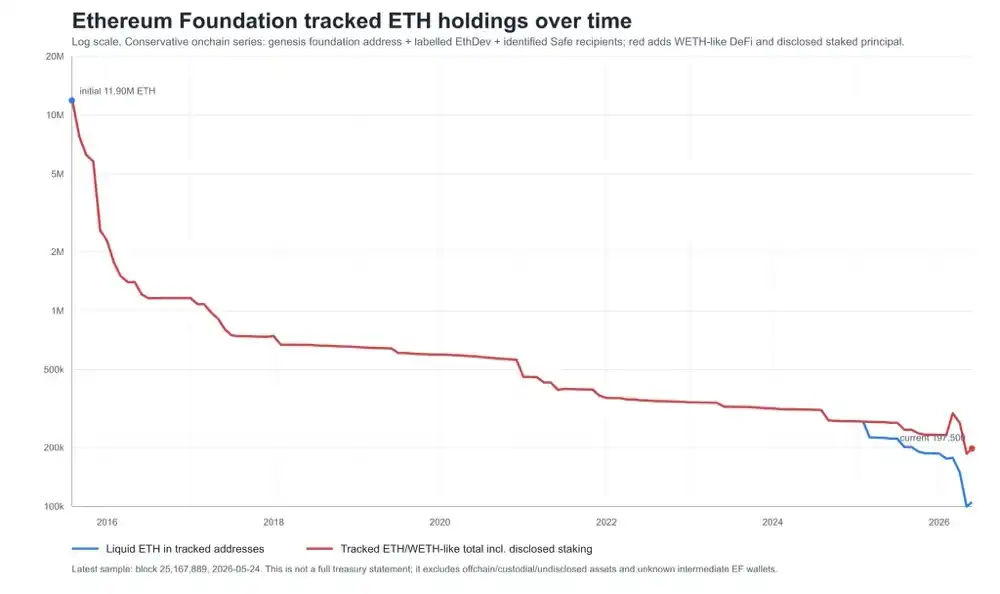
换句话说,EF最初约600万枚ETH分配(占初始总供应量的8.3%),已在过去十年消耗剩余约10万枚ETH。如今EF无论在资金储备,还是人员规模与组织执行力方面,已难以继续承担支撑庞大生态高速运转的角色。

作为行业最具代表性的纯基金会之一,EF长期专注于协议研究、公共产品开发与开源生态扶持。尽管EF并不直接控制以太坊网络,但凭借早期积累的ETH储备以及Vitalik等关键开发者的持续影响,其长期被视为以太坊生态的重要协调与推动力量。

然而,随着以太坊生态逐步走向成熟,EF与Vitalik正有意弱化其中心化影响力,转向更低调的幕后支持角色。这一转变,一方面源于对中立性与长期主义立场的坚持,另一方面也受限于现实压力。

随着EF的角色在以太坊中弱化,对于生态项目而言,过去那种高度依赖基金会资源扶持的单一增长路径正在逐渐失效,生态扩张正转向以社区自驱创新与多元外部协作。

其实,不同公链的基金会模式,不仅塑造了各自的治理文化,也决定了生态的成熟度、去中心化程度与长期演进路径。

相比之下,其他新兴公链仍处于激烈扩张阶段,基金会在其中扮演着更为激进且主导性的角色。例如Solana、Aptos、TON等新兴公链,采用更灵活的基金会驱动模式,通过早期持有较高比例的代币储备,实施高强度资源投入、持续激励计划,以及DAT公司支持等,甚至创始团队直接下场推动,维持较高的执行效率与增长速度。

Base则代表了另一种路径。作为Coinbase支持的L2,其并未依赖传统独立基金会结构,而是通过母公司资源与商业网络驱动生态发展,并辅以生态系统基金推动开发者与应用集成。这种模式的优势在于资源整合效率极高,能够快速实现用户增长与产品落地。

Polygon和Avalanche等则采用基金会与Labs并行的混合架构,基金会负责治理透明度和社区公共事务,Labs则专注产品开发与商业执行,既避免了单一实体过度集权,又提升了决策与落地速度;Hyperliquid基金会则走更金融原生的治理路径,通过代币机制将治理权、经济激励与生态发展基金深度绑定,并将部分资源用于政策研究与外部沟通,增强了生态的自生性和适应性。

更为重要的是,由于新兴公链仍处于激烈的扩张竞争阶段,它们普遍采用高额现金薪资与丰厚代币激励,大举吸引开发者资源,在短期人才争夺战中占据明显优势。相比之下,以太坊在薪酬层面不具备竞争力,更依赖开发者的理想主义驱动、开源文化认同,以及长期生态声誉来维系贡献。与此同时,早期进入以太坊生态的核心开发者,大多已在上一轮牛市中获得可观的财富回报。部分成员逐渐从一线开发与维护岗位退出,导致生态持续性执行人力出现明显不足。

可以说,ETF的转型,既是以太坊发展演进的结果,也是在资金与执行力受限后的长期生存选择。

基金会将减少卖币,ETH价值增长需更多大户

“以太坊基金会干了很多技术的活,不过市场把它看成公司,所以这种预期的差距导致大家不满。话说,都是价格惹的。”加密KOL蓝狐笔记一语道破重点。

对于以太坊社区而言,几乎所有争议最终都绕不开ETH价格低迷的问题。
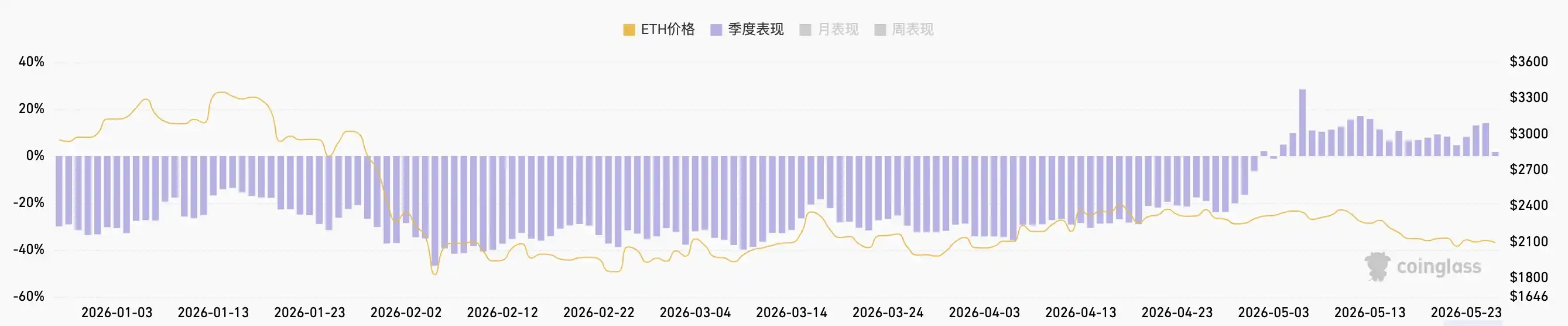
加密记者Laura Shin指出,自坎昆升级以来,以太坊的一系列路线选择始终缺乏对代币经济学的充分考量,过度侧重意识形态而忽略资本市场与价格表现,导致社区与投资者产生不满。而让外部组织参与只能帮助业务拓展,并非从根本上解决ETH资产层面的市场问题。

更重要的是,竞争才刚刚开始。Laura Shin认为,当下正处于现实世界采用的关键阶段。然而,相比竞争对手积极抢占市场、吸引开发者与资本,以太坊基金会却越来越像是在依赖过去的成功。尤其当生态内最具竞争力的人才持续流失时,这种放任式态度最终反而可能帮助竞争对手壮大,甚至催生新的挑战者。

Vitalik在长文中也回应了市场质疑。他强调,ETH是以太坊区块链最有价值的产品,目前以太坊网络所承载和保护的ETH价值规模已达到约2500亿美元。而他自己超过90%的个人净资产也都配置在ETH中,其余部分则主要为约4000万美元的链上法币资产,并已全部投入开源生物科技、软件及硬件项目。

但Vitalik同时表示,尽管基金会未来会减少出售ETH,但维护ETH价格并不属于EF的职责范围。在他看来,以太坊生态中已经存在大量资金实力远超EF的个人与机构,真正推动ETH资产价值增长,需要更多生态“英雄”一同努力。EF也正规划与这类组织建立联系,为其提供必要的初期扶持。

区块链研究员William Mougayar也表达了类似观点。他认为,ETH本质上是一种资产,以太坊则是共享计算基础设施,而以太坊基金会只是负责推动协议发展的非营利组织。其长期目标之一,甚至是“让创始人本身逐渐变得不再重要”。

随着EF正主动退居幕后,ETH也正在进入一个更加依赖生态自驱的新阶段

社区对于ETH价格焦虑的同时,以太坊的主流化进程正在加速。两家以太坊DAT公司BitMine和Sharplink有望在今年6月29日被纳入美国Russell指数。其中,BMNR将被纳入Russell 1000 Index和Russell 3000 Index,SBET将被纳入 Russell 2000 Index和Russell 3000 Index。

据BitMine董事长Tom Lee表示,按照BitMine当前107.5亿美元市值计算,若成功纳入,BitMine将迎来至少21.5亿美元买盘资金。

蓝狐笔记则进一步指出,全球跟踪Russell 2000与Russell 3000指数的资金规模高达万亿美元级别。一旦正式纳入,相关指数基金便必须配置对应股票,这相当于给SBET和BMNR打开了被动资金的闸门,让大量原本并不接触加密市场的普通投资者可以自动持有,把以太坊推向了传统金融的主流通道。被动基金的买入会形成真实需求,尤其在纳入生效前后,往往会带来股价的短期支撑,长期看也会提升股票的流动性和机构持有比例。需要说明的是,虽然这些资金买入的是股票,而非ETH本身,但可能会间接强化ETH的市场需求。

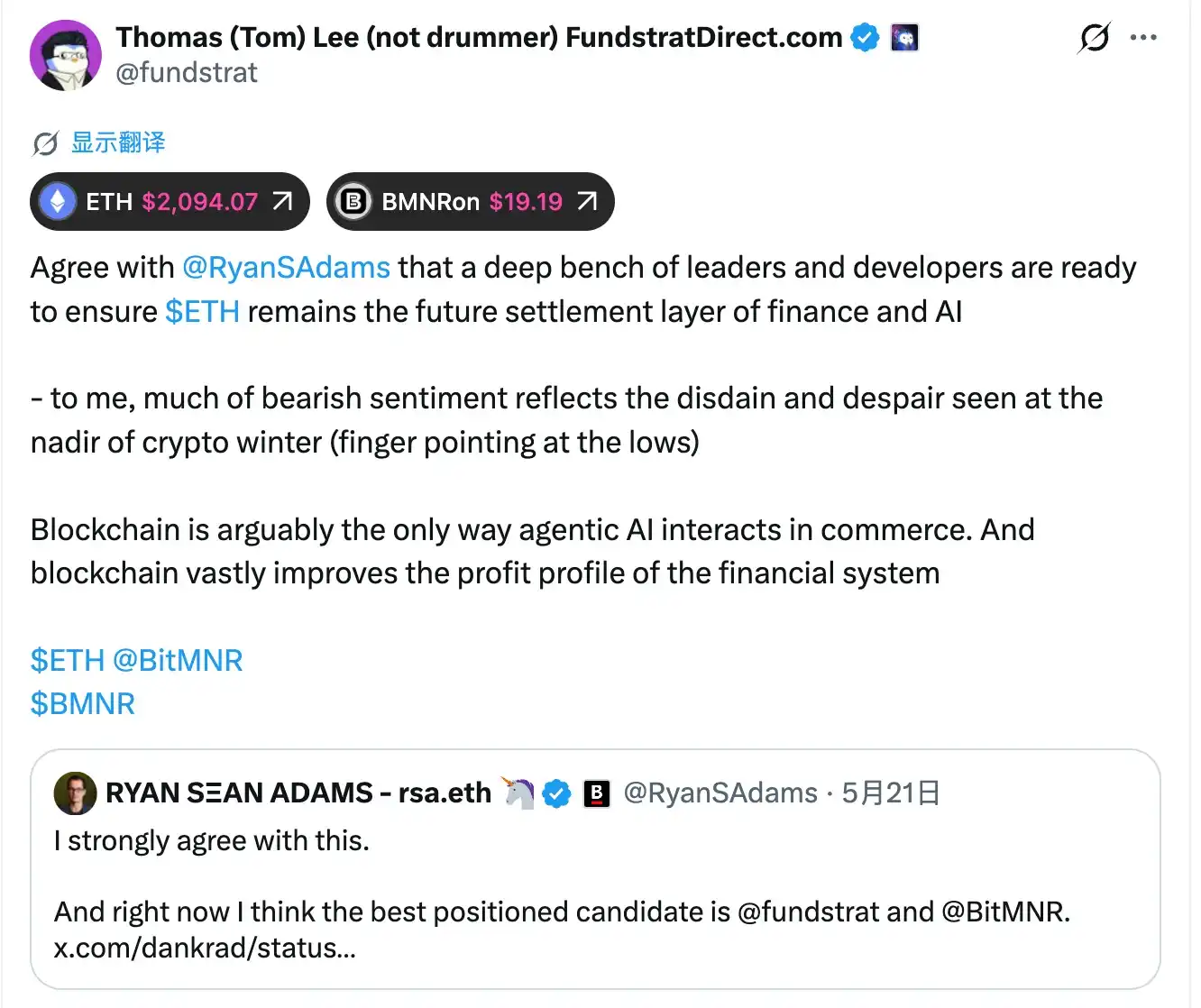
后基金会时代,以太坊社区下一个领袖可能是谁?Tom Lee开始自告奋勇,他背后的Fundstrat和BitMine被社区视为最佳候选者,BitMine已持有约528万ETH,占总供应量的4.37%,是全球最大的ETH金库。
拒绝性能战争,坚守CROPS价值观

除了以太坊基金会的新定位,Vitalik还分享了对以太坊未来技术路线的个人思考。

在Vitalik看来,以太坊必须打造独特且难以复制的竞争力。当下AI技术飞速迭代,整个科技行业迎来爆发式增长,如果以太坊仅固守现有EVM架构,每年仅通过周期性硬分叉来满足短期用户需求,将逐渐失去吸引力。

他认为,单纯追逐高速扩容,仅比其他公链在去中心化程度上略有优势,最终只会让以太坊沦为平庸。以太坊需要扩容,更要注重CROPS,即抗审查、抗掠夺、开放、隐私、安全五个维度。

事实上,过去几年,市场对于公链竞争的关注重点,几乎全部集中在性能、成本与用户增长上。无论是Solana、Sui还是各类模块化叙事,本质上都在围绕“更快、更便宜、更易用”展开竞争。

但Vitalik显然并不希望以太坊继续陷入这场性能竞赛。因为从现实结果来看,以太坊其实很难在性能层面彻底战胜新一代高性能公链,而如果为了性能不断牺牲自身特性,又会逐渐失去其最核心的价值基础。

Vitalik特别强调,对于以太坊与比特币这类底层基础设施级公链而言,即便出现34%节点离线,绝不能依赖社会共识或硬分叉“救场”,这对Hyperledger、BNB、Solana等链或许可接受,但对以太坊、比特币、Zcash等是不可接受的。

与此同时,状态扩容也是以太坊的重点研究方向。而设计合理的L2网络,仍然能够持续为生态提供价值。尤其是在交易、隐私等垂直场景中,专属L2依然具有重要意义。此外,随着纠删码P2P技术以及其他优化方案推进,以太坊未来的区块间隔也有望进一步缩短。

相比生态繁荣,如今的Vitalik似乎更关注以太坊保持不可替代性,一种带有Vitalik价值观的技术路线。

在Vitalik看来,如果一家公司为了坚持原则而显得过于教条,最坏的结果也只是自身发展放缓,但技术进步依旧会由其他公司继续推动。而最好的结果则是,一家真正与社区价值观深度契合的公司,能够获得社区自发的支持、人才和营销资源,这种支持是单纯通过金钱难以获得的。其认为,此前部分AI公司尝试通过有效利他主义实现类似效果,但由于后果主义容易被腐蚀,最终效果有限。

后基金会时代,尽管EF以中立和长期主义为名逐步淡出以太坊的中心舞台,但它能否真正平息市场负面舆论,仍是一个未知数。更关键的问题在于,处于下跌周期的以太坊,如何通过路线改革开启上涨通道,是市场更为关心的课题。


Related Reads

The Hottest 00s Generation on Wall Street

"Wall Street's Hottest '00s Phenom: The 25-Year-Old Fund Manager Who Bet on AI's 'Boring' Backbone" At just 25, Leopold Aschenbrenner, once fired by OpenAI, now runs a hedge fund worth $13.7 billion. His strategy? Betting against the consensus. While others chased AI chips, he invested early in the physical infrastructure powering the AI boom: electricity, data centers, and energy. Expelled from OpenAI's safety team in 2024, Aschenbrenner foresaw the coming bottleneck. He argued that AI progress would be limited not by algorithms, but by power, chip capacity, and space. Acting on this, he founded Situational Awareness LP to go long on these "old economy" assets. His bets have paid off spectacularly. His fund's assets soared from $255 million in late 2024 to $13.7 billion by Q1 2026. His portfolio is a direct reflection of his thesis: major long positions in fuel cell company Bloom Energy and data center/bitcoin mining firms like CleanSpark and Riot Platforms, which control critical land and power resources. Conversely, he holds massive put options against overheated semiconductor giants like NVIDIA and AMD. A notable exception was his bullish bet on storage company SanDisk, which surged ~160% in Q2. Aschenbrenner's vision is materializing. Tech giants like Amazon, Alphabet, and Meta are ramping up colossal capital expenditure on data centers. Global data center power consumption is projected to skyrocket, with AI accounting for over half by 2030. The demand for enabling technologies like optical fiber and modules is also exploding. His story underscores a fundamental truth of the AI era: the ethereal intelligence of algorithms rests on a very physical, heavy, and power-hungry foundation. The future is being built not just in code, but in concrete, copper, and kilowatts.

marsbit18m ago

The Hottest 00s Generation on Wall Street

marsbit18m ago

Review of Cathie Wood's Masterstroke Operation on Circle

A Recap of Cathie Wood's Masterful Trading in Circle's IPO This article analyzes the strategic moves made by ARK Invest's Cathie Wood around the IPO of Circle (CRCL). Despite her typical long-term, narrative-driven investment style, Wood executed a textbook "buy low, sell high" trade. Wood secured a core position of approximately 4.49 million shares at the $31 IPO price. The stock debuted at $69, surged to a high of $299 in June 2025 fueled by stablecoin regulatory news (the GENIUS Act), and then entered a prolonged decline. During this rally, ARK systematically sold around 1.7 million shares at an average price near $210, driven partly by internal fund rebalancing rules triggered by the stock's soaring weight. This move locked in substantial profits. As the stock later fell due to lockup expirations, new share issuance, and interest rate concerns—even dipping below $50—Wood began repurchasing shares. Starting in November 2025 around $86, she continued buying on the way down, eventually rebuilding her position to roughly the original size by Q1 2026. Key takeaways include: 1) Having a strong, independent long-term thesis (viewing Circle as critical digital dollar infrastructure). 2) Trading in tranches instead of trying to time exact tops or bottoms. 3) Maintaining strict position-sizing discipline, using rules to force profit-taking and preserve buying power. For most retail investors, chasing the dramatic "pop" at open is dangerous, as the subsequent 83% drawdown showed. Wood's success hinged on pre-IPO access, a clear investment thesis, and disciplined execution.

marsbit1h ago

Review of Cathie Wood's Masterstroke Operation on Circle

marsbit1h ago

Sharplink CEO: Ethereum's Future is Unfolding Now

In an article titled "Sharplink CEO: Ethereum's Future is Unfolding," Joseph Chalom, a former BlackRock executive and current Sharplink CEO, argues that the current debates surrounding the Ethereum Foundation (EF) and ETH price miss the bigger picture. He asserts that Ethereum's long-term institutional adoption is secured by its foundational strengths: trust, security, and liquidity. Chalom highlights Ethereum's dominance in settling stablecoin value, tokenizing real-world assets (RWA), and facilitating high-value DeFi transactions as evidence of its winning position. He defends the Ethereum Foundation's focus on rigorous protocol development and a decade-long track record of major upgrades (The Merge, EIP-1559, Dencun, etc.), viewing its upcoming technical roadmap as the most ambitious in the industry. Contrary to critics, Chalom posits that Ethereum's decentralization and reliable neutrality are core strengths for institutional adoption, not weaknesses, as they prevent control by any single entity. Drawing a parallel to Amazon's early days, he suggests that ETH's intrinsic value is tied to the expansion of its network, which is poised for a step-change in transaction volume across stablecoins, RWAs, DeFi, and agentic finance. Chalom advocates for a "be greedy when others are fearful" approach, citing historical examples from Warren Buffett and his own experience at BlackRock during the crypto winter. He concludes that while the EF should remain focused on core protocol attributes (CROPS: Censorship Resistance, Capture Resistance, Open Source, Privacy, Security), there is a leadership gap in market outreach. Chalom calls for ecosystem participants, including Sharplink and other key players, to become more vocal advocates to support the coming institutional adoption supercycle, asserting that "Ethereum's future is unfolding now."

marsbit1h ago

Sharplink CEO: Ethereum's Future is Unfolding Now

marsbit1h ago

6 Questions to Understand the Business Trends of AI

The AI industry has entered its "summer" phase, according to a six-dimensional scoring framework assessing its development cycle. Each dimension—narrative vs. delivery, system connectivity, delivery capability, ROI rationalization, common industry trends, and capital environment—scores 1 point, totaling 6 points. This places the industry firmly in summer (5-7 points), characterized by a coexistence of grand promises and tangible deliverables, with increasing pressure to demonstrate value and profitability. Key signals mark this shift. ByteDance's Doubao launched paid subscriptions, while OpenAI introduced an advertising platform. These moves are driven by dual forces: immense cost pressures from scaling user bases and massive compute requirements, and the maturation of commercial opportunities. Major players like Anthropic report explosive growth, highlighting AI's transition into core productivity infrastructure. For businesses, the path forward involves three strategic steps. First, identify a small, high-impact use case to quickly demonstrate a closed-loop value proposition, such as automating customer service or content generation. Second, systematically replicate successful pilots across the organization by standardizing processes, building shared AI capabilities, and aligning talent, incentives, and leadership. Finally, move beyond simply adding AI to existing workflows and undertake systemic reconstruction—redesigning processes for parallel AI-human collaboration, implementing real-time dashboards, and establishing automated trigger chains. The era where storytelling alone secured funding is over. The focus has shifted to delivering measurable efficiency gains, cost savings, and new revenue streams, as evidenced by real-world implementations in companies like Semir, Anta, and Midea. Success now depends on starting with a focused proof point, scaling it organization-wide, and ultimately allowing AI to redefine operational paradigms.

marsbit7h ago

6 Questions to Understand the Business Trends of AI

marsbit7h ago

Trading

Spot
Futures

Hot Articles

Discussions

Welcome to the HTX Community. Here, you can stay informed about the latest platform developments and gain access to professional market insights. Users' opinions on the price of ETH (ETH) are presented below.

活动图片