Ilya comparece en el tribunal para vengarse, demuestra que Altman mintió, sosteniendo 70 mil millones y diciendo 'No quiero que OpenAI sea destruido'

marsbitPublished on 2026-05-13Last updated on 2026-05-13

Abstract

El testimonio de Ilya Sutskever, ex científico jefe de OpenAI, en el juicio de Elon Musk contra la compañía, reveló nuevos detalles sobre la turbulenta salida de Sam Altman en 2023. Sutskever afirmó que pasó un año recopilando un expediente de 52 páginas documentando el supuesto comportamiento de Altman, incluyendo mentiras habituales y sembrar discordia entre ejecutivos. Aunque confirmó su voto para destituir a Altman, expresó arrepentimiento por la forma en que el directorio manejó la crisis, que casi llevó a la desintegración de OpenAI y a una posible fusión con Anthropic. Reveló también que su participación en OpenAI está valorada en 7.000 millones de dólares. El testimonio pinta un cuadro de luchas internas, influencia de Microsoft y el conflicto entre la misión original sin fines de lucro y la actual búsqueda de ganancias. Altman testificará la próxima semana en un caso que podría redefinir el futuro de la empresa valorada en 850.000 millones.

¡El gran caso de Musk contra OpenAI finalmente ha esperado a que Ilya testifique en el tribunal!

11 de mayo de 2026, Tribunal Federal de Oakland, California.

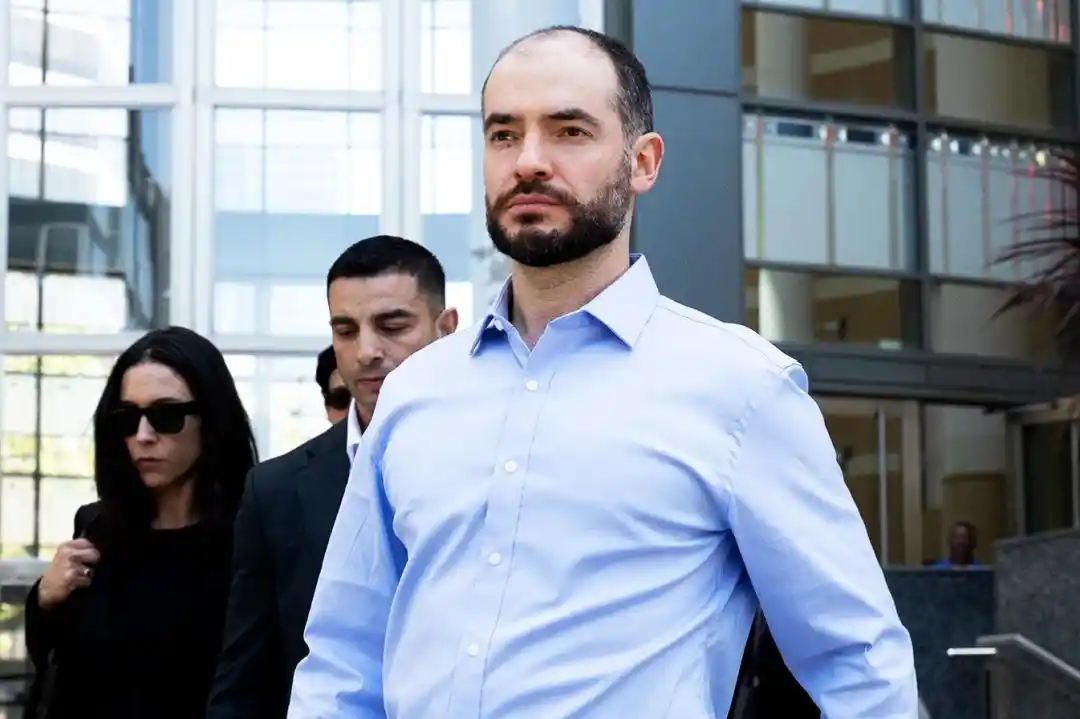
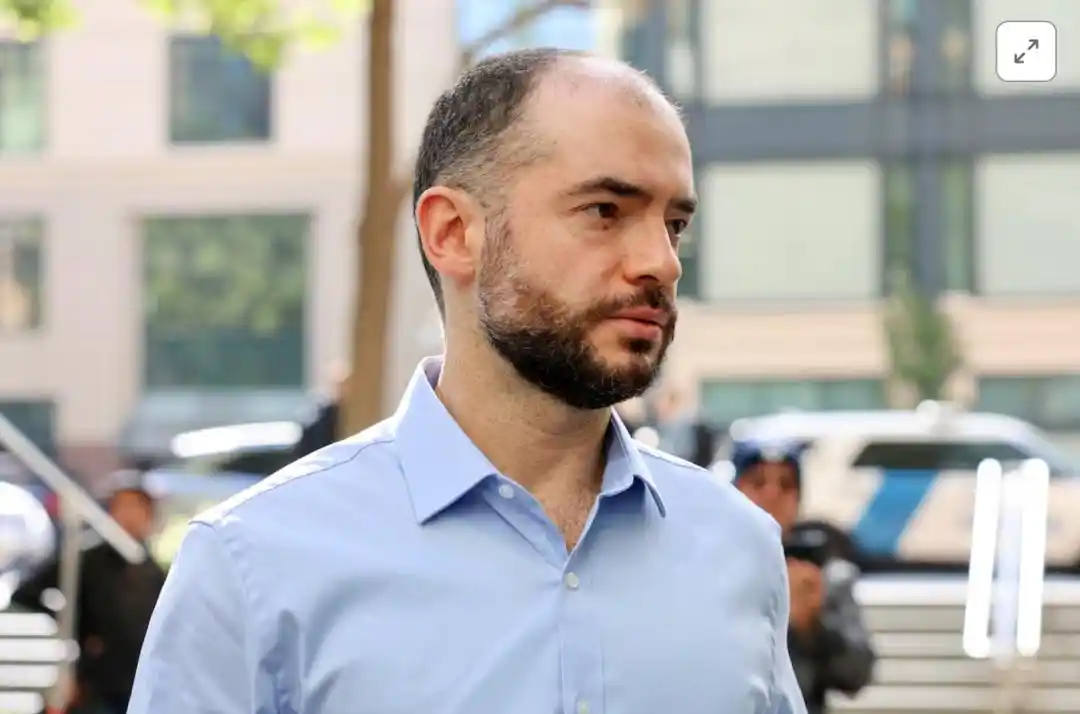
Cuando el genio científico de cabello rizado y mirada ligeramente melancólica, Ilya Sutskever, subió lentamente al estrado de los testigos, todos los presentes contuvieron la respiración.
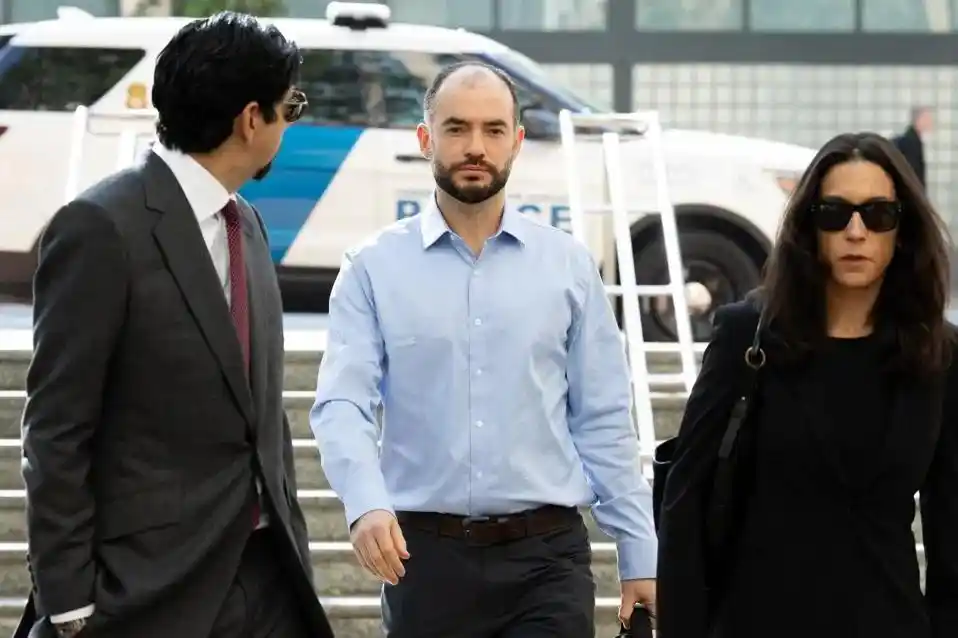
Dondequiera que aparezca, Ilya atrae la atención de todos, y más aún aquí, en el juicio de Musk contra OpenAI.

Esta vez, Ilya ya no es el que se disculpaba en las redes sociales diciendo 'Lo siento profundamente', sino un vengador que regresa con una 'bomba explosiva'.

No solo confirmó personalmente la tendencia a mentir de Altman, sino que también reveló al mundo el vacío de poder bajo el esplendoroso exterior de OpenAI.

Este es el capítulo final de una 'intriga palaciega de IA' que sin duda pasará a la historia.

Este juicio podría determinar el futuro de OpenAI, una empresa que se prepara para una OPV de billones de dólares y está valorada en 850 mil millones de dólares.

Altman comparecerá en persona como muy tarde el martes para responder.

52 páginas de 'evidencia de mentiras': cómo ve Altman el hombre

'Miente habitualmente, siembra discordia entre ejecutivos y socava la gobernanza de la empresa.'

Cuando Ilya dijo esto bajo juramento, los directivos actuales de OpenAI sentados en el banquillo de los acusados palidecieron.

Esto ya no es un rumor, sino el testimonio en el tribunal del ex científico jefe de OpenAI.
Esta vez, Ilya reveló un detalle impactante nunca antes divulgado: antes del 'golpe de noviembre' de 2023 que conmocionó al mundo, ya había estado recopilando pruebas en secreto durante un año entero.

Este archivo de evidencia tiene 52 páginas.
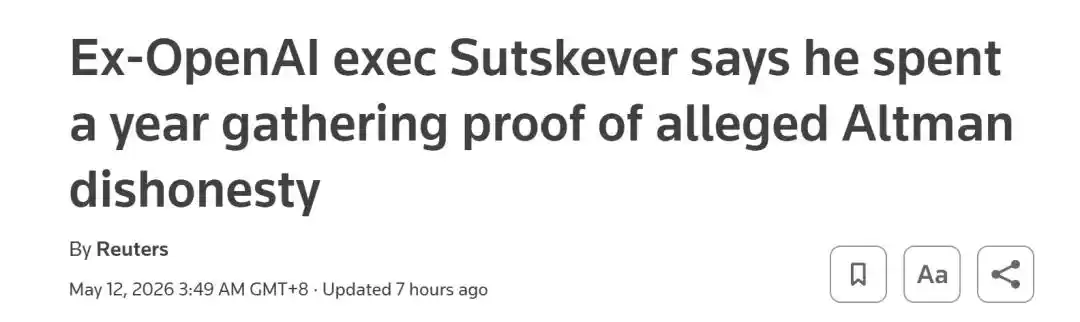
En este 'archivo completo de datos negativos de Altman', se registra detalladamente la rutina de cómo Altman jugaba con las intrigas de poder.

Por ejemplo, su especialidad es sembrar discordia.

A menudo creaba conflictos entre la directora de tecnología, Mira Murati, y otros ejecutivos, haciéndoles desconfiar unos de otros para establecer así su autoridad absoluta.

Además, es muy hábil en la manipulación de información.

Ilya testificó que Altman creaba un entorno en el que 'los ejecutivos no podían obtener información correcta'. En tal entorno, cualquier discusión seria sobre la seguridad de la IA era diluida por Altman con falsas visiones de mercado.

Esta vez, Ilya declaró sin rodeos que el comportamiento de Altman 'no es propicio para lograr ningún objetivo grandioso', especialmente el desarrollo de una AGI segura.

'Pasé un año observando y pensando, y finalmente consideré apropiado despedirlo.'

El tono de Ilya era tranquilo, pero cada palabra era contundente. Admitió que había hablado en detalle varias veces con Murati, y ambos sentían una inquietud visceral por el comportamiento de Altman.

70 mil millones de dólares del 'traidor': el precio caro del idealista

Lo siguiente fue otro punto culminante del juicio.

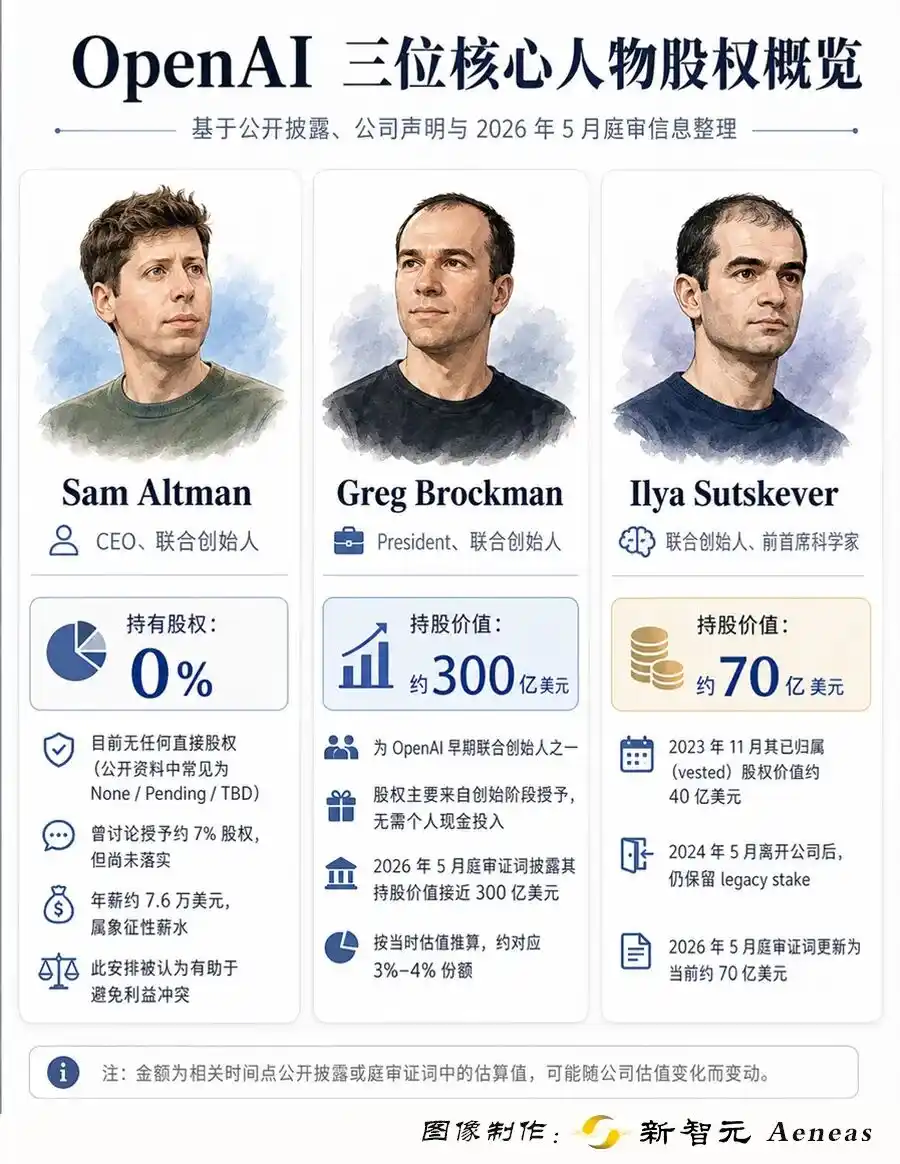
Como cofundador de OpenAI, Ilya siempre ha sido considerado un 'científico puro'. Pero cuando el juez le preguntó sobre el valor de sus acciones, la cifra sorprendió a la sala: 70 mil millones de dólares.
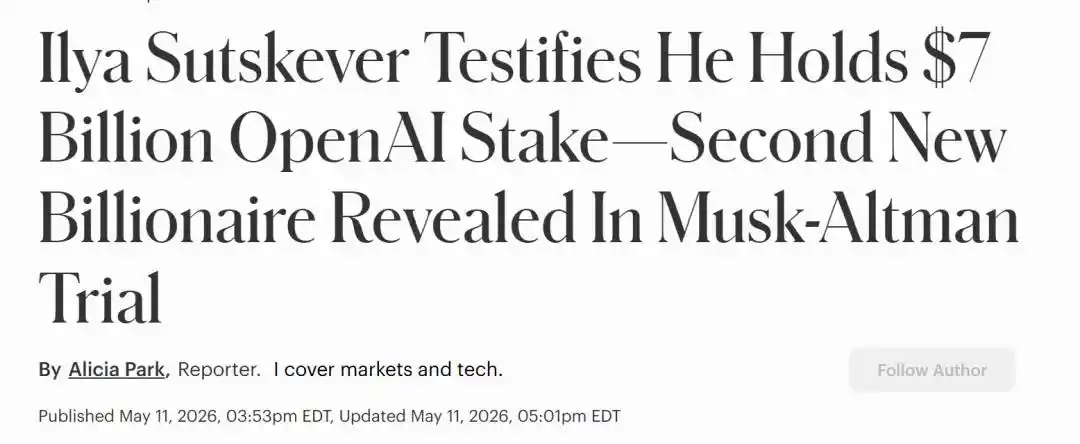
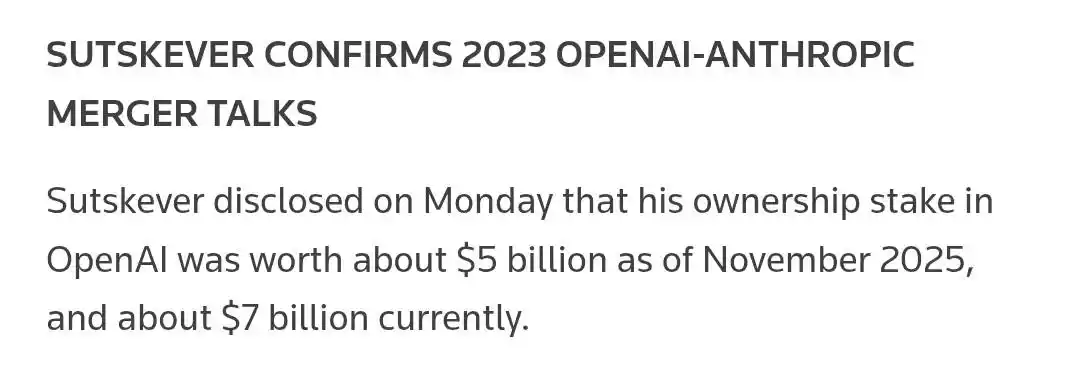
Justo una semana antes, el presidente de OpenAI, Greg Brockman, había admitido que poseía acciones por valor de 30 mil millones de dólares.

Y Altman, a quien Musk acusa de estar 'cegado por el interés', tiene un patrimonio neto de aproximadamente 35 mil millones de dólares (principalmente de sus inversiones externas).

Surgió una ironía: estos antiguos creyentes que se proclamaban 'sin ánimo de lucro' se han convertido ahora en los multimillonarios que más rápido han acumulado riqueza en la historia de la humanidad.
Pero Ilya mostró en el tribunal una sensación de contradicción casi trágica.

Mencionó que en su día, para unirse a OpenAI, rechazó una oferta de renovación de Google de 6 millones de dólares anuales; en aquel momento, para él, eso era una 'cifra astronómica'.

Explicó por qué, el fin de semana del golpe, de repente cambió de rumbo y firmó la carta conjunta pidiendo el regreso de Altman.

'Fue una oración de 'último recurso' (Hail Mary), dijo Ilya con voz baja. 'Vi que la empresa estaba a punto de colapsar, Microsoft estaba preparada para tragarnos a todos.'

En ese momento, la situación se deterioraba más rápido de lo que nadie esperaba. Muchos empleados decían que se irían con Altman. La empresa se enfrentaba a la desintegración.

Ilya dijo más tarde que se arrepentía; no de recopilar pruebas o de votar para destituir, sino de 'haber participado en las acciones de la junta'. Criticó a sus colegas de la junta por su falta de experiencia, por aceptar 'asesoramiento legal no muy bueno' y por actuar con demasiada precipitación.

El lunes en el tribunal, cuando dijo estas palabras, toda la sala de audiencias quedó en silencio.

'Siento un fuerte sentido de pertenencia a OpenAI. Siento que he entregado mi vida a ello. Solo me preocupo por ello. No quiero que sea destruido.'

Panorama de la 'mafia' de OpenAI

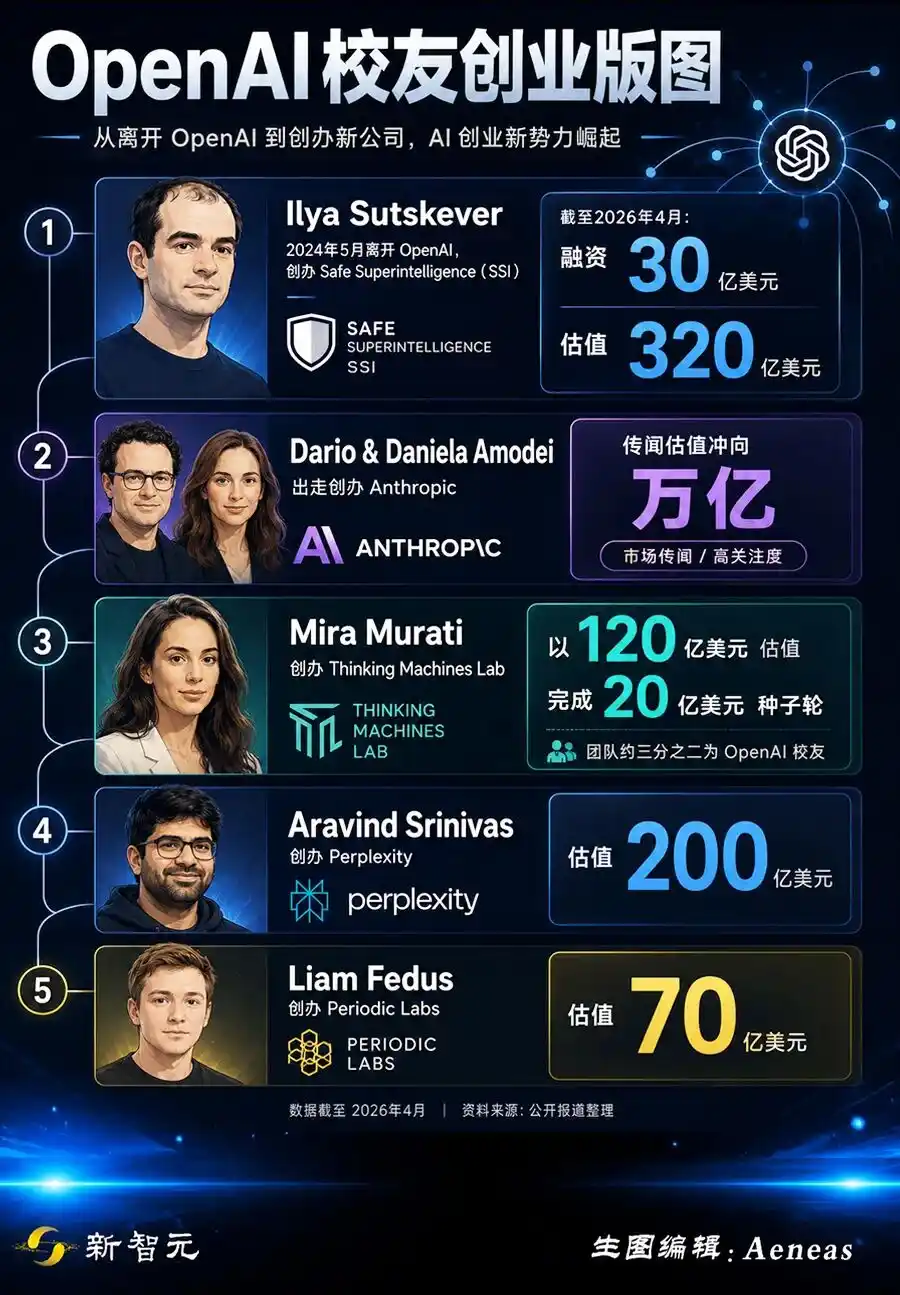
Además, este juicio también reveló un panorama completo de la 'mafia de OpenAI'.

En mayo de 2024, dejó OpenAI y fundó Safe Superintelligence. Para abril de 2026, esta empresa ya había recaudado 30 mil millones de dólares en financiación, con una valoración de 320 mil millones.

Dario y Daniela Amodei se fueron y fundaron Anthropic, rumoreada con una valoración rumbo al billón de dólares.

Mira Murati fundó Thinking Machines Lab, que completó una ronda inicial de 2 mil millones de dólares el año pasado con una valoración de 12 mil millones, y dos tercios del equipo son exalumnos de OpenAI.

Aravind Srinivas fundó Perplexity, valorada en 20 mil millones. Liam Fedus fundó Periodic Labs, valorada en 7 mil millones.

Es significativo que las razones por las que cada uno se fue son diferentes, pero casi todas están relacionadas con el estilo de liderazgo de Altman.
La fusión con Anthropic que casi ocurre

El testimonio de Ilya no solo trata de Altman.

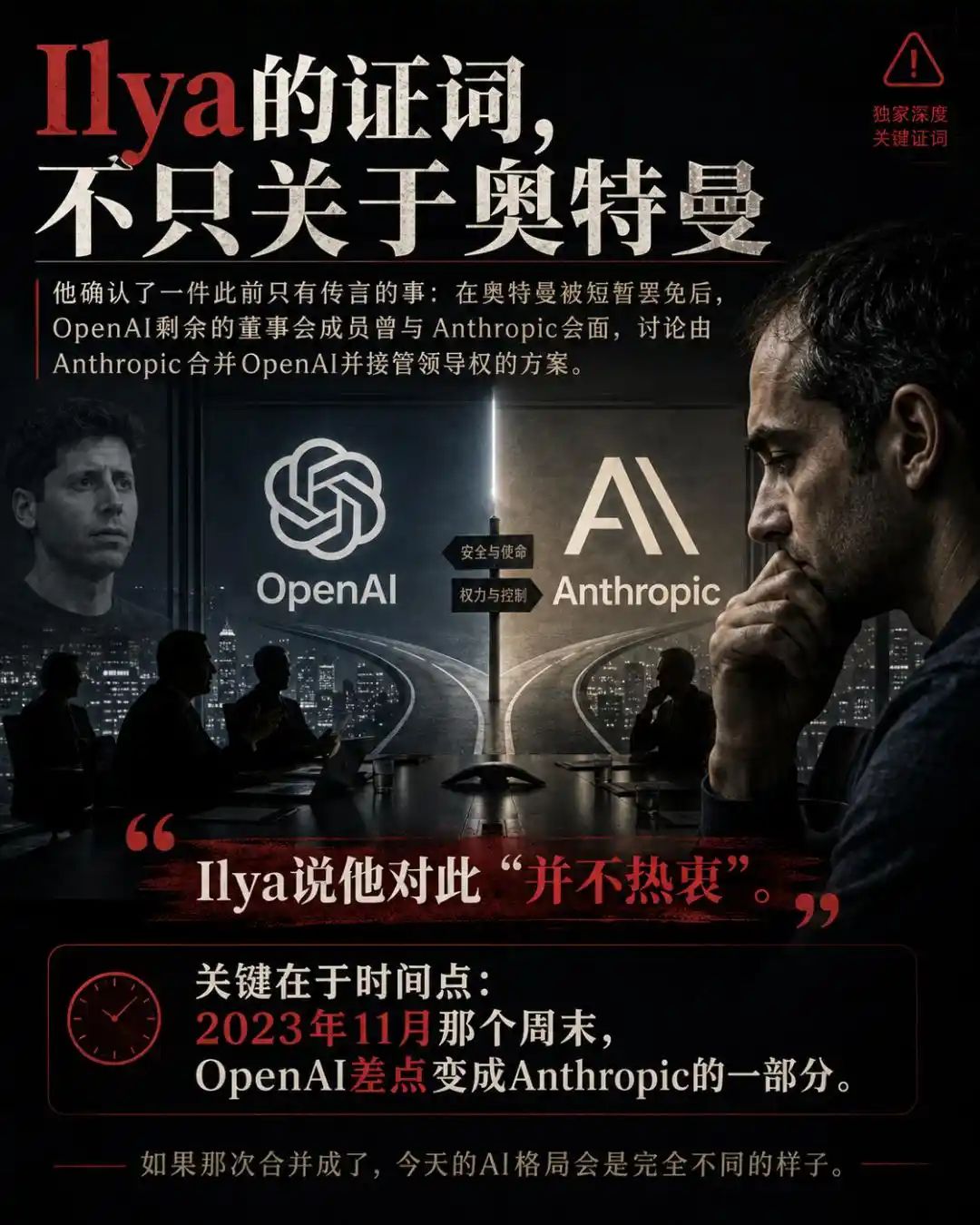
Confirmó algo que antes solo era un rumor: después de la breve destitución de Altman, los miembros restantes de la junta directiva de OpenAI se reunieron con Anthropic para discutir un plan en el que Anthropic se fusionaría con OpenAI y asumiría el liderazgo.
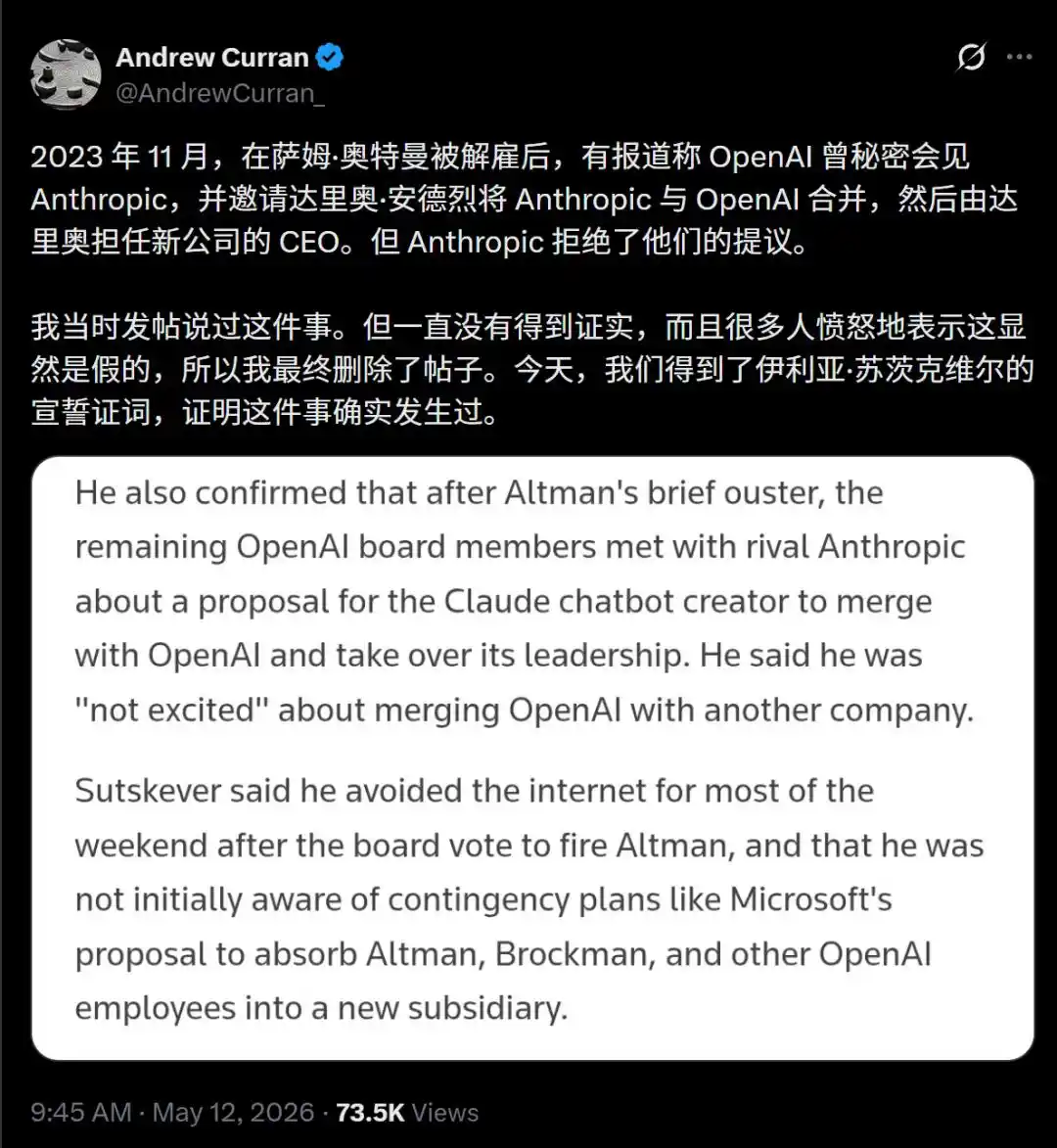
Ilya dijo que no estaba 'muy entusiasmado' con ello.

El poder destructivo de este detalle radica en el momento: ese fin de semana de noviembre de 2023, OpenAI estuvo a punto de convertirse en parte de Anthropic.

Si esa fusión hubiera tenido éxito, el panorama actual de la IA sería completamente diferente.
La sombra de Microsoft: la ambición de 'toma de poder' de Nadella

Si lo que Ilya reveló fue la podredumbre interna, entonces la posterior aparición del CEO de Microsoft, Satya Nadella, mostró la lógica fría del capital.

Nadella describió el incidente de destitución de entonces como 'amateur city' (absurdamente aficionado), diciendo que 'nunca recibió una explicación clara'.

Pero los documentos judiciales revelan otra faceta del propio Nadella.
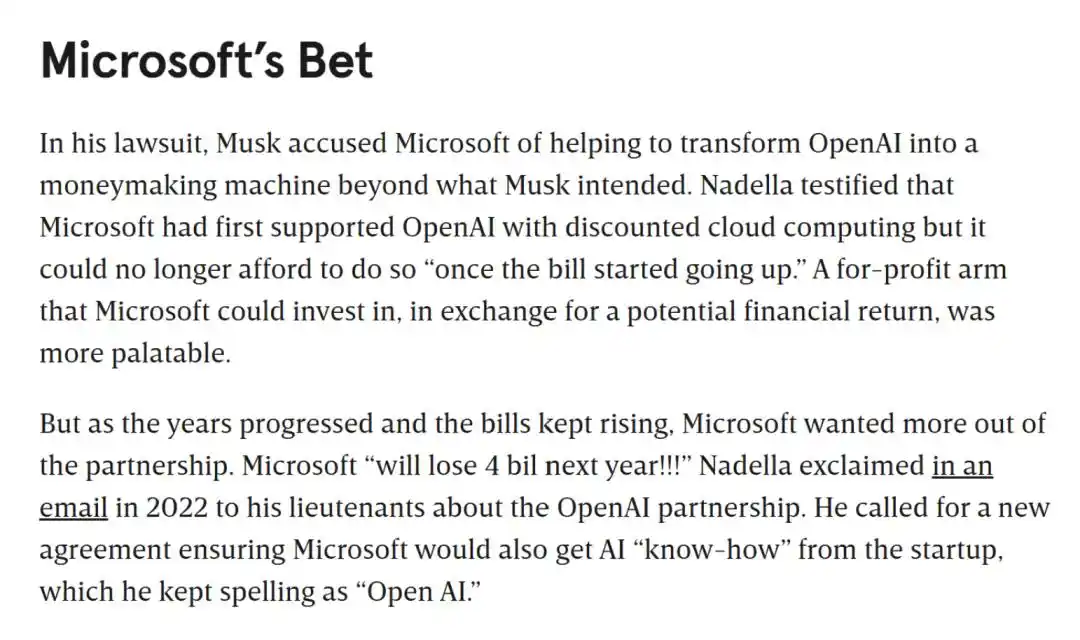
Un correo electrónico de 2022 hecho público por el tribunal mostraba a Nadella gritando frenéticamente a sus subordinados: '¡Si invertimos tanto dinero y no tenemos control, no tiene ningún sentido!'

Bajo el interrogatorio del abogado de Musk, Nadella admitió que cuando ocurrió el golpe en 2023, Microsoft ya tenía preparada una lista de 14 personas para la 'junta directiva de toma de control' y había ejercido de facto un 'derecho de veto' sobre los nuevos miembros de la junta de OpenAI.

Lo más explosivo es que Nadella había enviado mensajes de texto continuos a Altman a principios de 2023 instándole: 'Lanza la versión de suscripción de pago de ChatGPT lo antes posible. Cuanto antes, mejor.'

Dos semanas después, estaba preguntando por el número de registros.

Esto confirma directamente la acusación de Musk: OpenAI ya no es un laboratorio de investigación, sino el 'departamento de TI' y la máquina de monetización de Microsoft.

Y esto es precisamente el núcleo de la acusación de Musk: OpenAI se ha desviado de su misión sin ánimo de lucro.

La ira de Musk: ¿Un sueño 'explotado'?

Sentado entre el público, Musk quizás esbozó una sonrisa compleja.

El núcleo de este juicio es: ¿Engañó Altman a Musk con promesas falsas de ser 'sin ánimo de lucro' para obtener su inversión inicial y respaldo de marca, y luego vendió los resultados a Microsoft?

Aunque Ilya en su testimonio no se puso completamente del lado de Musk (negó haber prometido a Musk que OpenAI nunca sería lucrativo), sus ataques a la personalidad de Altman sin duda proporcionaron la munición más fuerte para la demanda de Musk.
Ilya mencionó que él también se opuso en su día a la propuesta de Musk de fusionar OpenAI con Tesla, considerando que Musk era demasiado 'agresivo'.

La acusación central de Musk es: Altman y Brockman incumplieron la promesa de que OpenAI siempre permanecería sin ánimo de lucro, y en su lugar buscaron beneficios.

El testimonio de Ilya en esta cuestión fue más bien favorable para OpenAI.

Dijo que 'nunca le prometió a Musk que OpenAI se mantendría sin ánimo de lucro'.

Pronunció una frase que probablemente será citada repetidamente: 'La misión de OpenAI es más grande que su estructura sin ánimo de lucro o lucrativa.'

Este caso, llegado a este punto, ya no tiene héroes absolutos. Se parece más a un grupo de genios que, en su camino hacia el Olimpo, libran la pelea más sucia por intereses, poder y el derecho a definir el futuro de la humanidad.

Se acerca el final: ¿OpenAI o OpenMoney?

El juicio continúa.

Este martes, Altman comparecerá en persona.

La situación actual es extremadamente peligrosa para OpenAI.

Si el juez finalmente determina que OpenAI violó el contrato original sin ánimo de lucro, su entidad lucrativa valorada en 850 mil millones de dólares podría enfrentarse a una reestructuración.

Ilya estuvo sentado en el estrado de los testigos durante aproximadamente una hora. Según la observación de un periodista de Wired, apenas hizo contacto visual con nadie durante todo el tiempo.

Este hombre, que alguna vez fue el alma de OpenAI, el líder que en las reuniones de la empresa guiaba a los empleados en el grito de 'Siente la AGI'.

Ahora, lleva una camisa sin chaqueta de traje, pareciendo solo y desaliñado. Dijo en el tribunal: 'He entregado mi vida a OpenAI, no quiero que sea destruido.'

Pero la realidad es que ese OpenAI puro y amado por él, quizás murió ya en la primera página de las 52 páginas de evidencia.

Este juicio no juzga el éxito o el fracaso de una empresa, sino la contradicción central de Silicon Valley hoy: cuando la tecnología (AGI) que otorga el poder divino choca con la codicia humana extrema, ¿podemos aún mantener la última pizca de integridad?

El jueves de la próxima semana, el juez pronunciará las conclusiones finales.

Y el derecho a definir el futuro de la IA para la humanidad, quizás se reescriba silenciosamente en estas pocas páginas de testimonio.

Referencias:

https://www.reuters.com/business/former-openai-executive-sutskever-discloses-nearly-7-billion-stake-ai-firm-2026-05-11/

https://www.forbes.com/sites/aliciapark/2026/05/11/Ilya-sutskever-testifies-he-holds-7-billion-openai-stake-second-new-billionaire-revealed-in-musk-altman-trial/

https://www.wired.com/story/Ilya-sutskever-testifies-musk-v-altman-trial/

Este artículo proviene de la cuenta pública de WeChat 'New Zhiyuan', autor: New Zhiyuan, editor: Aeneas

Related Questions

Q¿Quién es Ilya Sutskever y qué papel jugó en el juicio de Elon Musk contra OpenAI?

AIlya Sutskever es el ex científico jefe y cofundador de OpenAI. En el juicio de Elon Musk contra OpenAI, testificó como testigo, proporcionando evidencia clave sobre el comportamiento de Sam Altman y revelando detalles internos sobre la gobernanza y las luchas de poder dentro de la empresa.

Q¿Qué reveló Ilya Sutskever sobre Sam Altman durante su testimonio?

AIlya Sutskever testificó que Sam Altman tenía un hábito de mentir, sembrar discordia entre los ejecutivos y manipular información para consolidar su poder. También declaró que Altman creaba un ambiente donde los ejecutivos no podían obtener información precisa, lo que dificultaba las discusiones serias sobre seguridad de la IA.

Q¿Cuál es el valor de las acciones de Ilya Sutskever en OpenAI y cómo contrasta esto con la misión inicial de la empresa?

AIlya Sutskever reveló que el valor de su participación en OpenAI es de aproximadamente 7 mil millones de dólares. Esto contrasta fuertemente con la misión inicial sin fines de lucro de OpenAI y refleja la rápida acumulación de riqueza entre sus fundadores, a pesar de sus principios originales.

Q¿Qué papel jugó Microsoft, según el testimonio y los documentos presentados en el juicio?

ASegún los documentos del juicio y el testimonio, Microsoft, bajo el liderazgo de Satya Nadella, ejerció una influencia significativa, presionando por el lanzamiento rápido de productos comerciales como ChatGPT Plus y preparándose para tomar el control del consejo de OpenAI durante la crisis de noviembre de 2023. Esto respalda la acusación de que OpenAI se convirtió en una extensión comercial de Microsoft.

Q¿Cuál es la acusación central de Elon Musk contra OpenAI y Sam Altman en este juicio?

ALa acusación central de Elon Musk es que Sam Altman y Greg Brockman engañaron a los inversores iniciales, incluido él mismo, con la promesa de que OpenAI sería una organización sin fines de lucro dedicada a desarrollar IA para el beneficio de la humanidad, pero luego traicionaron esa promesa al convertirla en una entidad con fines de lucro y aliarse estrechamente con Microsoft para obtener ganancias.

Related Reads

Warsh's Debut: Will the FED Chair Who Knows Crypto Best Bring Surprises or Shocks to the Market?

Kevin Warsh, the new Federal Reserve Chairman, prepares for his inaugural press conference amidst a challenging macroeconomic landscape: resurgent inflation, a bond market sell-off, and political pressure from President Trump for rate cuts. Uniquely, Warsh holds indirect investments in over 20 crypto and Web3 entities (e.g., Solana, dYdX), making him the first Fed Chair with disclosed crypto exposure. His stance may combine a hawkish, inflation-focused monetary policy with a crypto-friendly regulatory philosophy that shifts from Powell’s “same risk, same rule” approach toward a framework acknowledging blockchain’s productivity value. Warsh’s leadership could impact crypto markets across three dimensions: a paradigm shift in regulation (potentially accelerating pro-innovation legislation and stable币 rules), a re-pricing of risk premiums based on clearer communication and his view of AI as a structural disinflationary force, and a long-term reallocation of global institutional capital driven by increased legitimacy. Two potential scenarios for the press conference are outlined. A “positive surprise” would involve a dovish-leaning tone on rates coupled with signals of regulatory openness, potentially boosting crypto asset valuations. Conversely, a “negative shock” would see a more hawkish-than-expected stance on inflation and rates, triggering a broad risk-asset selloff that crypto markets would not escape. While ethics rules required Warsh to divest his crypto holdings upon confirmation, his deep understanding of the technology may fundamentally lower policy uncertainty and build a more receptive long-term foundation for digital assets’ integration into the mainstream financial system.

marsbit7h ago

Warsh's Debut: Will the FED Chair Who Knows Crypto Best Bring Surprises or Shocks to the Market?

marsbit7h ago

Trading

Spot
Futures

Hot Articles

What is SONIC

Sonic: Pioneering the Future of Gaming in Web3 Introduction to Sonic In the ever-evolving landscape of Web3, the gaming industry stands out as one of the most dynamic and promising sectors. At the forefront of this revolution is Sonic, a project designed to amplify the gaming ecosystem on the Solana blockchain. Leveraging cutting-edge technology, Sonic aims to deliver an unparalleled gaming experience by efficiently processing millions of requests per second, ensuring that players enjoy seamless gameplay while maintaining low transaction costs. This article delves into the intricate details of Sonic, exploring its creators, funding sources, operational mechanics, and the timeline of significant events that have shaped its journey. What is Sonic? Sonic is an innovative layer-2 network that operates atop the Solana blockchain, specifically tailored to enhance the existing Solana gaming ecosystem. It accomplishes this through a customised, VM-agnostic game engine paired with a HyperGrid interpreter, facilitating sovereign game economies that roll up back to the Solana platform. The primary goals of Sonic include: Enhanced Gaming Experiences: Sonic is committed to offering lightning-fast on-chain gameplay, allowing players and developers to engage with games at previously unattainable speeds. Atomic Interoperability: This feature enables transactions to be executed within Sonic without the need to redeploy Solana programmes and accounts. This makes the process more efficient and directly benefits from Solana Layer1 services and liquidity. Seamless Deployment: Sonic allows developers to write for Ethereum Virtual Machine (EVM) based systems and execute them on Solana’s SVM infrastructure. This interoperability is crucial for attracting a broader range of dApps and decentralised applications to the platform. Support for Developers: By offering native composable gaming primitives and extensible data types - dining within the Entity-Component-System (ECS) framework - game creators can craft intricate business logic with ease. Overall, Sonic's unique approach not only caters to players but also provides an accessible and low-cost environment for developers to innovate and thrive. Creator of Sonic The information regarding the creator of Sonic is somewhat ambiguous. However, it is known that Sonic's SVM is owned by the company Mirror World. The absence of detailed information about the individuals behind Sonic reflects a common trend in several Web3 projects, where collective efforts and partnerships often overshadow individual contributions. Investors of Sonic Sonic has garnered considerable attention and support from various investors within the crypto and gaming sectors. Notably, the project raised an impressive $12 million during its Series A funding round. The round was led by BITKRAFT Ventures, with other notable investors including Galaxy, Okx Ventures, Interactive, Big Brain Holdings, and Mirana. This financial backing signifies the confidence that investment foundations have in Sonic’s potential to revolutionise the Web3 gaming landscape, further validating its innovative approaches and technologies. How Does Sonic Work? Sonic utilises the HyperGrid framework, a sophisticated parallel processing mechanism that enhances its scalability and customisability. Here are the core features that set Sonic apart: Lightning Speed at Low Costs: Sonic offers one of the fastest on-chain gaming experiences compared to other Layer-1 solutions, powered by the scalability of Solana’s virtual machine (SVM). Atomic Interoperability: Sonic enables transaction execution without redeployment of Solana programmes and accounts, effectively streamlining the interaction between users and the blockchain. EVM Compatibility: Developers can effortlessly migrate decentralised applications from EVM chains to the Solana environment using Sonic’s HyperGrid interpreter, increasing the accessibility and integration of various dApps. Ecosystem Support for Developers: By exposing native composable gaming primitives, Sonic facilitates a sandbox-like environment where developers can experiment and implement business logic, greatly enhancing the overall development experience. Monetisation Infrastructure: Sonic natively supports growth and monetisation efforts, providing frameworks for traffic generation, payments, and settlements, thereby ensuring that gaming projects are not only viable but also sustainable financially. Timeline of Sonic The evolution of Sonic has been marked by several key milestones. Below is a brief timeline highlighting critical events in the project's history: 2022: The Sonic cryptocurrency was officially launched, marking the beginning of its journey in the Web3 gaming arena. 2024: June: Sonic SVM successfully raised $12 million in a Series A funding round. This investment allowed Sonic to further develop its platform and expand its offerings. August: The launch of the Sonic Odyssey testnet provided users with the first opportunity to engage with the platform, offering interactive activities such as collecting rings—a nod to gaming nostalgia. October: SonicX, an innovative crypto game integrated with Solana, made its debut on TikTok, capturing the attention of over 120,000 users within a short span. This integration illustrated Sonic’s commitment to reaching a broader, global audience and showcased the potential of blockchain gaming. Key Points Sonic SVM is a revolutionary layer-2 network on Solana explicitly designed to enhance the GameFi landscape, demonstrating great potential for future development. HyperGrid Framework empowers Sonic by introducing horizontal scaling capabilities, ensuring that the network can handle the demands of Web3 gaming. Integration with Social Platforms: The successful launch of SonicX on TikTok displays Sonic’s strategy to leverage social media platforms to engage users, exponentially increasing the exposure and reach of its projects. Investment Confidence: The substantial funding from BITKRAFT Ventures, among others, emphasizes the robust backing Sonic has, paving the way for its ambitious future. In conclusion, Sonic encapsulates the essence of Web3 gaming innovation, striking a balance between cutting-edge technology, developer-centric tools, and community engagement. As the project continues to evolve, it is poised to redefine the gaming landscape, making it a notable entity for gamers and developers alike. As Sonic moves forward, it will undoubtedly attract greater interest and participation, solidifying its place within the broader narrative of blockchain gaming.

1.7k Total ViewsPublished 2024.04.04Updated 2024.12.03

What is SONIC

What is $S$

Understanding SPERO: A Comprehensive Overview Introduction to SPERO As the landscape of innovation continues to evolve, the emergence of web3 technologies and cryptocurrency projects plays a pivotal role in shaping the digital future. One project that has garnered attention in this dynamic field is SPERO, denoted as SPERO,$$s$. This article aims to gather and present detailed information about SPERO, to help enthusiasts and investors understand its foundations, objectives, and innovations within the web3 and crypto domains. What is SPERO,$$s$? SPERO,$$s$ is a unique project within the crypto space that seeks to leverage the principles of decentralisation and blockchain technology to create an ecosystem that promotes engagement, utility, and financial inclusion. The project is tailored to facilitate peer-to-peer interactions in new ways, providing users with innovative financial solutions and services. At its core, SPERO,$$s$ aims to empower individuals by providing tools and platforms that enhance user experience in the cryptocurrency space. This includes enabling more flexible transaction methods, fostering community-driven initiatives, and creating pathways for financial opportunities through decentralised applications (dApps). The underlying vision of SPERO,$$s$ revolves around inclusiveness, aiming to bridge gaps within traditional finance while harnessing the benefits of blockchain technology. Who is the Creator of SPERO,$$s$? The identity of the creator of SPERO,$$s$ remains somewhat obscure, as there are limited publicly available resources providing detailed background information on its founder(s). This lack of transparency can stem from the project's commitment to decentralisation—an ethos that many web3 projects share, prioritising collective contributions over individual recognition. By centring discussions around the community and its collective goals, SPERO,$$s$ embodies the essence of empowerment without singling out specific individuals. As such, understanding the ethos and mission of SPERO remains more important than identifying a singular creator. Who are the Investors of SPERO,$$s$? SPERO,$$s$ is supported by a diverse array of investors ranging from venture capitalists to angel investors dedicated to fostering innovation in the crypto sector. The focus of these investors generally aligns with SPERO's mission—prioritising projects that promise societal technological advancement, financial inclusivity, and decentralised governance. These investor foundations are typically interested in projects that not only offer innovative products but also contribute positively to the blockchain community and its ecosystems. The backing from these investors reinforces SPERO,$$s$ as a noteworthy contender in the rapidly evolving domain of crypto projects. How Does SPERO,$$s$ Work? SPERO,$$s$ employs a multi-faceted framework that distinguishes it from conventional cryptocurrency projects. Here are some of the key features that underline its uniqueness and innovation: Decentralised Governance: SPERO,$$s$ integrates decentralised governance models, empowering users to participate actively in decision-making processes regarding the project’s future. This approach fosters a sense of ownership and accountability among community members. Token Utility: SPERO,$$s$ utilises its own cryptocurrency token, designed to serve various functions within the ecosystem. These tokens enable transactions, rewards, and the facilitation of services offered on the platform, enhancing overall engagement and utility. Layered Architecture: The technical architecture of SPERO,$$s$ supports modularity and scalability, allowing for seamless integration of additional features and applications as the project evolves. This adaptability is paramount for sustaining relevance in the ever-changing crypto landscape. Community Engagement: The project emphasises community-driven initiatives, employing mechanisms that incentivise collaboration and feedback. By nurturing a strong community, SPERO,$$s$ can better address user needs and adapt to market trends. Focus on Inclusion: By offering low transaction fees and user-friendly interfaces, SPERO,$$s$ aims to attract a diverse user base, including individuals who may not previously have engaged in the crypto space. This commitment to inclusion aligns with its overarching mission of empowerment through accessibility. Timeline of SPERO,$$s$ Understanding a project's history provides crucial insights into its development trajectory and milestones. Below is a suggested timeline mapping significant events in the evolution of SPERO,$$s$: Conceptualisation and Ideation Phase: The initial ideas forming the basis of SPERO,$$s$ were conceived, aligning closely with the principles of decentralisation and community focus within the blockchain industry. Launch of Project Whitepaper: Following the conceptual phase, a comprehensive whitepaper detailing the vision, goals, and technological infrastructure of SPERO,$$s$ was released to garner community interest and feedback. Community Building and Early Engagements: Active outreach efforts were made to build a community of early adopters and potential investors, facilitating discussions around the project’s goals and garnering support. Token Generation Event: SPERO,$$s$ conducted a token generation event (TGE) to distribute its native tokens to early supporters and establish initial liquidity within the ecosystem. Launch of Initial dApp: The first decentralised application (dApp) associated with SPERO,$$s$ went live, allowing users to engage with the platform's core functionalities. Ongoing Development and Partnerships: Continuous updates and enhancements to the project's offerings, including strategic partnerships with other players in the blockchain space, have shaped SPERO,$$s$ into a competitive and evolving player in the crypto market. Conclusion SPERO,$$s$ stands as a testament to the potential of web3 and cryptocurrency to revolutionise financial systems and empower individuals. With a commitment to decentralised governance, community engagement, and innovatively designed functionalities, it paves the way toward a more inclusive financial landscape. As with any investment in the rapidly evolving crypto space, potential investors and users are encouraged to research thoroughly and engage thoughtfully with the ongoing developments within SPERO,$$s$. The project showcases the innovative spirit of the crypto industry, inviting further exploration into its myriad possibilities. While the journey of SPERO,$$s$ is still unfolding, its foundational principles may indeed influence the future of how we interact with technology, finance, and each other in interconnected digital ecosystems.

58 Total ViewsPublished 2024.12.17Updated 2024.12.17

What is $S$

What is AGENT S

Agent S: The Future of Autonomous Interaction in Web3 Introduction In the ever-evolving landscape of Web3 and cryptocurrency, innovations are constantly redefining how individuals interact with digital platforms. One such pioneering project, Agent S, promises to revolutionise human-computer interaction through its open agentic framework. By paving the way for autonomous interactions, Agent S aims to simplify complex tasks, offering transformative applications in artificial intelligence (AI). This detailed exploration will delve into the project's intricacies, its unique features, and the implications for the cryptocurrency domain. What is Agent S? Agent S stands as a groundbreaking open agentic framework, specifically designed to tackle three fundamental challenges in the automation of computer tasks: Acquiring Domain-Specific Knowledge: The framework intelligently learns from various external knowledge sources and internal experiences. This dual approach empowers it to build a rich repository of domain-specific knowledge, enhancing its performance in task execution. Planning Over Long Task Horizons: Agent S employs experience-augmented hierarchical planning, a strategic approach that facilitates efficient breakdown and execution of intricate tasks. This feature significantly enhances its ability to manage multiple subtasks efficiently and effectively. Handling Dynamic, Non-Uniform Interfaces: The project introduces the Agent-Computer Interface (ACI), an innovative solution that enhances the interaction between agents and users. Utilizing Multimodal Large Language Models (MLLMs), Agent S can navigate and manipulate diverse graphical user interfaces seamlessly. Through these pioneering features, Agent S provides a robust framework that addresses the complexities involved in automating human interaction with machines, setting the stage for myriad applications in AI and beyond. Who is the Creator of Agent S? While the concept of Agent S is fundamentally innovative, specific information about its creator remains elusive. The creator is currently unknown, which highlights either the nascent stage of the project or the strategic choice to keep founding members under wraps. Regardless of anonymity, the focus remains on the framework's capabilities and potential. Who are the Investors of Agent S? As Agent S is relatively new in the cryptographic ecosystem, detailed information regarding its investors and financial backers is not explicitly documented. The lack of publicly available insights into the investment foundations or organisations supporting the project raises questions about its funding structure and development roadmap. Understanding the backing is crucial for gauging the project's sustainability and potential market impact. How Does Agent S Work? At the core of Agent S lies cutting-edge technology that enables it to function effectively in diverse settings. Its operational model is built around several key features: Human-like Computer Interaction: The framework offers advanced AI planning, striving to make interactions with computers more intuitive. By mimicking human behaviour in tasks execution, it promises to elevate user experiences. Narrative Memory: Employed to leverage high-level experiences, Agent S utilises narrative memory to keep track of task histories, thereby enhancing its decision-making processes. Episodic Memory: This feature provides users with step-by-step guidance, allowing the framework to offer contextual support as tasks unfold. Support for OpenACI: With the ability to run locally, Agent S allows users to maintain control over their interactions and workflows, aligning with the decentralised ethos of Web3. Easy Integration with External APIs: Its versatility and compatibility with various AI platforms ensure that Agent S can fit seamlessly into existing technological ecosystems, making it an appealing choice for developers and organisations. These functionalities collectively contribute to Agent S's unique position within the crypto space, as it automates complex, multi-step tasks with minimal human intervention. As the project evolves, its potential applications in Web3 could redefine how digital interactions unfold. Timeline of Agent S The development and milestones of Agent S can be encapsulated in a timeline that highlights its significant events: September 27, 2024: The concept of Agent S was launched in a comprehensive research paper titled “An Open Agentic Framework that Uses Computers Like a Human,” showcasing the groundwork for the project. October 10, 2024: The research paper was made publicly available on arXiv, offering an in-depth exploration of the framework and its performance evaluation based on the OSWorld benchmark. October 12, 2024: A video presentation was released, providing a visual insight into the capabilities and features of Agent S, further engaging potential users and investors. These markers in the timeline not only illustrate the progress of Agent S but also indicate its commitment to transparency and community engagement. Key Points About Agent S As the Agent S framework continues to evolve, several key attributes stand out, underscoring its innovative nature and potential: Innovative Framework: Designed to provide an intuitive use of computers akin to human interaction, Agent S brings a novel approach to task automation. Autonomous Interaction: The ability to interact autonomously with computers through GUI signifies a leap towards more intelligent and efficient computing solutions. Complex Task Automation: With its robust methodology, it can automate complex, multi-step tasks, making processes faster and less error-prone. Continuous Improvement: The learning mechanisms enable Agent S to improve from past experiences, continually enhancing its performance and efficacy. Versatility: Its adaptability across different operating environments like OSWorld and WindowsAgentArena ensures that it can serve a broad range of applications. As Agent S positions itself in the Web3 and crypto landscape, its potential to enhance interaction capabilities and automate processes signifies a significant advancement in AI technologies. Through its innovative framework, Agent S exemplifies the future of digital interactions, promising a more seamless and efficient experience for users across various industries. Conclusion Agent S represents a bold leap forward in the marriage of AI and Web3, with the capacity to redefine how we interact with technology. While still in its early stages, the possibilities for its application are vast and compelling. Through its comprehensive framework addressing critical challenges, Agent S aims to bring autonomous interactions to the forefront of the digital experience. As we move deeper into the realms of cryptocurrency and decentralisation, projects like Agent S will undoubtedly play a crucial role in shaping the future of technology and human-computer collaboration.

732 Total ViewsPublished 2025.01.14Updated 2025.01.14

What is AGENT S

Discussions

Welcome to the HTX Community. Here, you can stay informed about the latest platform developments and gain access to professional market insights. Users' opinions on the price of S (S) are presented below.

活动图片